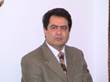
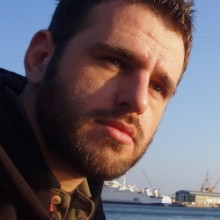
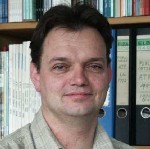
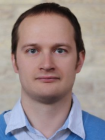
José Luis Chávez is a Professor in Civil and Environmental Engineering at Colorado State University. He specializes in irrigation engineering, water management, and remote sensing applications in agriculture. His academic career includes a B.S. from Universidade Federal da Paraiba (1992), an M.S. in Irrigation Engineering (Utah State University, 1999), and a Ph.D. in Biological and Agricultural Engineering (Utah State University, 2005). Dr. Chávez’s research focuses on optimizing irrigation practices through evapotranspiration (ET) modeling, remote sensing technologies, and precision irrigation strategies. He explores crop water use efficiency, soil moisture dynamics, and the integration of multispectral imaging for irrigation scheduling. His work bridges hydrology, agronomy, and engineering to address water scarcity challenges in agricultural systems. Key contributions include advancing SEBAL-A algorithms for ET estimation under advective conditions, developing crop coefficient models using remote sensing, and improving irrigation management techniques in semi-arid regions. He teaches courses on irrigation systems design, water management, and drainage engineering. His professional affiliations include the American Society of Civil Engineers and the U.S. Commission on Irrigation and Drainage. While no awards are explicitly mentioned, his extensive publications reflect significant contributions to agricultural water management and remote sensing science.
Dr. Mojtaba Kahrizi is a Professor in the Department of Electrical and Computer Engineering at Concordia University, Montreal, Canada. His research focuses on Material Sciences, Solid State Devices, Microelectromechanical Systems (MEMS), and Nanotechnology with applications in biomedical sensors, energy storage, and greenhouse gas detection. He leads the Nanodevice and MEMS laboratories, overseeing interdisciplinary projects involving micro/nanostructure fabrication and sensor development. His work integrates experimental and computational methods, yielding over 200 journal/conference publications. Research Interests: - Micro/Nano Fabrication Techniques - Gas Ionization Sensors (e.g., ZnO/Si nanowires) - Photonic Sensors (Fiber Bragg Gratings, Surface Plasmon Resonance) - Energy Applications (Solar Cell Efficiency Enhancement) - Structural Health Monitoring Lab Members: Supervises 15+ graduate students (PhD/M.A.Sc.) across nanodevices, MEMS, and photonics domains Key Projects: Low-cost nanowire fabrication, FBG sensor networks, and graphene-based biosensors Expertise: SEM/TEM characterization, finite element modeling, and multiparameter sensing systems Lab Infrastructure Conducts research in two core labs: Nanodevice Lab : Nanofabrication, nanowire growth, and advanced material characterization MEMS Lab : Microstructure etching, optical sensor prototyping, and vibration analysis Publication Trends Recent works emphasize: Graphene-based biosensors for viral/bacterial detection FBG sensors for simultaneous strain/temperature/vibration monitoring Nanowire-enabled low-voltage gas sensors Perovskite solar cell interface engineering
Dillon Pranger serves as an Assistant Professor at the Illinois Institute of Technology, directing the interdisciplinary Deconstruction/Reconstruction Lab focused on sustainable building material recovery and circular construction techniques. As a licensed architect, he founded the award-winning Office of Dillon Pranger (ODP) in Chicago, specializing in small-scale contextual projects that integrate material, labor, and energy lifecycles into design processes. Pranger's educational background includes a B.S. in Architecture from the University of Cincinnati and an M.Arch. from Cornell University, where he received the Henry Adams Certificate and Richmond Herold Shreve Award for distinguished thesis work. His teaching experience extends to Cornell University, Harvard GSD, and Syracuse University prior to his current position. His research centers on sustainable material systems and circular economy principles within architecture, challenging traditional waste paradigms through projects like Taking Stock and The Architecture of Waste publication. Pranger's work investigates finite material resources, design for disassembly methodologies, and urban mining concepts, emphasizing temporary material states and reversible construction techniques that preserve material value throughout multiple lifecycles. His recent design projects demonstrate consistent exploration of material reuse across scales—from the BYOB temporary structure using reclaimed Chicago bricks to Woodstack's friction-fit lumber assemblies. These works collectively examine construction waste reduction through innovative disassembly systems, QR-code material tracking, and context-specific material lifecycles, establishing him as a leading voice in circular architectural practice. Silver Medal for Best Young Architect, The Architect’s Newspaper (2023) Architizer A+ Awards (2023, 2024) Rethinking the Future Award (2023) Tallinn Architecture Biennale (2022) Henry Adams Certificate, Cornell University Richmond Herold Shreve Award, Cornell University Pranger actively mentors students through his Deconstruction/Reconstruction Lab while maintaining ODP's client-based practice. His studio courses like ARCH 497: Material Narratives and ARCH 497: The Architecture of Waste directly translate research into pedagogy, with students developing alternative building assemblies through physical prototyping. The lab investigates material scarcity through projects tracking lumber price fluctuations and exploring circular housing solutions for Amsterdam's urban context. The Deconstruction/Reconstruction Lab operates as both academic research unit and design incubator, with projects like Arcadian Anthropocene examining circular system logic for high-density housing and Design for Disassembly prototyping reversible construction techniques. Collaborative efforts involving students and practitioners test material reuse at full scale, from Woodstack's temporary pavilion to BYOB's modular brick assembly, creating tangible demonstrations of circular architectural principles.
Dr. Droulias Sotiris is a PostDoctoral Fellow at the Institute of Electronic Structure and Laser (IESL) within the Foundation for Research and Technology - Hellas (FORTH). He is affiliated with the Photonic-, Phononic- and Meta-materials (PPM) Group, focusing on advanced material science and optoelectronic systems. His research explores metamaterials, photonic structures, and phononic applications. Research interests include designing novel metamaterials for light manipulation, phononic crystal engineering, and nanoscale optoelectronic devices. His work bridges theoretical modeling with experimental validations in cutting-edge photonic systems. No academic awards, grants, or advised students are explicitly mentioned in the provided information. His current position emphasizes foundational research within FORTH's IESL infrastructure.
Dr. Zacharakis Giannis is a Research Professor and Research Director at the Institute of Electronic Structure and Laser (IESL) of the Foundation for Research and Technology (FORTH). He heads the Laboratory for Biophotonics and Molecular Imaging, focusing on developing advanced imaging technologies for biomedical and cultural heritage applications. He served as Vice President and President of the European Society for Molecular Imaging (ESMI) and holds leadership roles at FORTH. Education: BSc in Physics (1997), PhD in Biomedical Imaging (2002), both from the University of Crete. Postdoctoral Research Fellow at Harvard University (2003-2004). Research Interests: Biophotonics, optoacoustic imaging, biomedical optics, and non-invasive diagnostic tools. His work spans label-free imaging techniques, hybrid microscopy systems, and applications in healthcare, art conservation, and plant biology. Key Achievements: Over 60 peer-reviewed journal articles, 48 conference papers, 2 book chapters, 2 patents, and an h-index of 19 (Google Scholar). Awards include 3 first prizes at international conferences and 20+ invited talks globally. Labs & Groups: Leads the Biophotonics and Molecular Imaging Lab at FORTH-IESL, collaborating on projects like optical projection tomography, adaptive light-sheet microscopy, and optoacoustic technologies for cultural heritage diagnostics.
Professor David Lidzey is a faculty member at the University of Sheffield's School of Mathematical and Physical Sciences, where he holds the position of Professor of Physics. His research focuses on the development and characterization of advanced photovoltaic materials and optoelectronic devices, including organic and hybrid photovoltaics, semiconductor materials, and exciton-polariton systems. His work spans from fundamental material science to applied device engineering, with a strong emphasis on solution-processed technologies and scalable manufacturing methods. Research interests include: development of high-efficiency organic and perovskite solar cells, investigation of light-matter interactions in microcavities, and structural analysis of thin-film semiconductor materials. He has contributed to advancements in spray-coating techniques, material stability, and device architecture optimization. His studies often integrate experimental and theoretical approaches to understand charge transport, exciton dynamics, and interface engineering. Notable contributions include the exploration of DIO-driven vertical segregation in organic photovoltaics, the design of flexible and scalable perovskite solar modules, and the study of ultrafast energy transfer mechanisms in strongly coupled organic microcavities. His research has implications for sustainable energy technologies and next-generation optoelectronic devices.
Prof. Dante Kennes is a University Professor at RWTH Aachen University, leading the Chair of Theoretical Physics of Condensed Matter. His research focuses on quantum materials, strongly correlated systems, and cavity quantum electrodynamics. Key areas include superconductivity in twisted bilayer systems, moiré heterostructures, and non-equilibrium phenomena in low-dimensional materials. He explores theoretical frameworks such as functional renormalization group methods and topological phase transitions. Recent work emphasizes cavity-coupled systems, light-induced superconductivity, and the interplay between electronic correlations and topological properties. His publications address topics like van Hove singularity heterogeneity in graphene, nematicity in kagome metals, and experimental signatures of moiré-engineered phases. Kennes' research bridges theoretical predictions with experimental observability through advanced modeling techniques. His contributions span advanced computational methods for many-body systems and proposals for novel quantum materials characterization. Despite his prolific output, no formal student advisees or awards are explicitly listed in the provided materials.
Dr. Marieke Klijn is an Assistant Professor at the Department of Biotechnology, Faculty of Applied Sciences, Delft University of Technology. Her research focuses on data-driven bioprocess development, leveraging process analytical technology (PAT) to enhance real-time monitoring and control of bioprocessing strategies across industries. She leads the Marieke Klijn Group, which develops frameworks for integrating data from process analyzers to improve process understanding and product quality in continuous and intensified bioprocessing environments. Her work emphasizes flexibility in bioprocessing approaches, including monitoring, control, and technology development. Recent studies highlight applications in stem cell culture bioreactors, synthetic co-culture systems, and PAT miniaturization for biopharmaceuticals. She advises multiple PhD candidates researching topics like CFD modeling, off-gas measurements, and microbial cell factories for cellular agriculture. Key research directions include optimizing bioreactor designs, enhancing Raman spectroscopy models for fermentation monitoring, and predicting protein behavior in chromatography. Her group collaborates on projects funded by industry and academic partnerships, addressing challenges in bioprocess scalability and real-time quality assessment.
Bhupesh Kumar is a Research Fellow at the School of Physics and Astronomy, University of St Andrews. His work focuses on advancing optical and photonic technologies through disorder engineering, particularly in random lasers and spectrometers. He has contributed to studies on solid-state polymer lasers, temperature-controlled spectral tuning, and multifractal scattering media applications. His research bridges fundamental physics with practical engineering solutions. His research interests include developing high-throughput optical devices, exploring localized modes in disordered systems, and applying light-based techniques to biomaterials like silk. These interests span Optics, Photonics, Lasers, and Materials Science, with a strong emphasis on interdisciplinary applications. Recent articles highlight advancements in tunable lasers, disorder-enhanced spectrometers, and the mechanics of silk. Collaborations with international researchers have been active in the last five years, though specific details are not provided here. No scientific awards are mentioned in the provided texts. His advising and grant activities are not detailed, but his research outputs include datasets related to speckle spectrometers. He is affiliated with the University of St Andrews’ School of Physics and Astronomy, contributing to both experimental and theoretical research.
Ronnie Hoekstra is a Full Professor at the University of Groningen's Faculty of Science and Engineering, leading the Quantum Interactions and Structural Dynamics group within the Zernike Institute for Advanced Materials. He holds a PhD in Physics and has extensive postdoctoral experience in atomic and molecular physics, including roles at AMOLF (Netherlands), the JET fusion reactor (UK), and the University of Osnabrück (Germany). His research focuses on ion interactions, plasma dynamics, and EUV light sources for semiconductor applications. He is a founding member of the Advanced Research Center for Nanolithography (ARCNL) and serves as group leader there. Education: Studied Applied Physics at the University of Groningen, completed his PhD under Prof. Frits de Heer (AMOLF). Postdoctoral work at JET and Osnabrück University. Research Interests: Electron capture mechanisms, laser-driven plasmas, EUV nanolithography, and surface science. His work contributes to the development of next-generation semiconductor manufacturing technologies and fundamental plasma physics. Grants & Collaborations: Secured multiple EU, EURATOM, and NWO grants. Collaborates with ASML, ARCNL, and international institutions like the European Physical Society. Leads projects on plasma dynamics and ion-beam interactions. Labs/Teams: Heads the Quantum Interactions and Structural Dynamics lab at the Zernike Institute and the EUV Plasma Dynamics group at ARCNL.
Albert Guskov is an Associate Professor at the University of Groningen's Faculty of Science and Engineering, leading the Biomolecular X-ray Crystallography Lab. He holds an honorary professorship at Moscow Institute of Physics and Technology and has received numerous awards, including the Medal of Excellence (2021) and NWO VIDI Grant (2015). His research focuses on membrane transporters, protein translation in pathogenic fungi, and structural biology using X-ray crystallography and cryo-EM. He has published over 50 peer-reviewed papers with >3,800 citations. Education: PhD in Chemistry (Free University Berlin, 2009), Dipl. Chem. in Medicinal Chemistry (Summa cum laude). Research Interests: Structural characterization of SLC1 transporters, bacterial metallohomeostasis, and fungal ribosome mechanisms. His lab has pioneered studies on the structural basis of episodic ataxia 6 and Candida albicans ribosome resistance to cycloheximide. He actively contributes to educational standards as Chair of the Biomolecular Sciences MSc Program Committee.
Dr. Elena De Vita is a Lecturer in Synthetic Biology and Biotechnology at Queen Mary University of London (QMUL), affiliated with the School of Biological and Behavioural Sciences and the Centre for Molecular Cell Biology. She holds a position in the Department of Biochemistry and leads the EDV-Lab research group. Her research focuses on covalent ligand discovery and development for chemical biology and drug discovery applications, particularly targeting protein phosphorylation dynamics in cancer. Education and Career: Dr. De Vita earned her MSc in Pharmaceutical Chemistry from the University of Pisa (2014). She completed her PhD at the German Cancer Research Center (DKFZ, Heidelberg) under Dr. Aubry Miller, developing covalent inhibitors of KLK6. Postdoctoral roles included a CRUK Research Associate position with Prof. Edward Tate, followed by a Marie Skłodowska Curie Fellowship (2020) and funding from Worldwide Cancer Research (2022). She joined QMUL in 2023. Research Interests: Her group develops chemical tools like PHOSTACs (PHOSphorylation TArgeting Chimeras) to study protein dephosphorylation via covalent ligand-induced proximity. Current projects target the unknown phosphoproteome in cancer, exploring therapeutic opportunities through targeted protein dephosphorylation. Key areas include covalent drug design, protein phosphatase recruitment, and translational chemical biology. Grants and Recognition: She leads Royal Society-funded projects on covalent probes for protein phosphatase 1 (PP1) and PHOSTACs for K-Ras-driven tumors. Awards include the Merck Innovation Cup (2021) and L’Oréal-UNESCO UK Women In Science shortlist (2022). Labs and Collaborations: Her lab (EDV-Lab) focuses on interdisciplinary approaches combining synthetic chemistry, biochemistry, and cell biology. Collaborations involve Imperial College London, DKFZ, and global cancer research institutions. Future directions include scaling PHOSTAC technologies for clinical translation and expanding covalent ligand applications in precision oncology.
Professor Jianzhen Ou is a faculty member at the School of Engineering, RMIT University, Australia. His research focuses on advanced materials, nanotechnology, and their applications in electronics, environmental monitoring, and biomedical engineering. Key areas include 2D materials for gas sensors, optoelectronic devices, and sustainable waste-to-materials conversion. Research interests encompass materials engineering, nanotechnology, and interdisciplinary fields like condensed matter physics. His work bridges fundamental material science with practical applications in sensors, energy systems, and environmental solutions. Recent studies highlight innovations in gas sensor arrays, neuromorphic devices, and sustainable nanomaterial synthesis. He actively supervises research projects on topics like upcycling waste into high-value materials and optoelectronic sensor development. Collaborations involve cross-disciplinary teams and industry partnerships to advance technological solutions.
Dr. Daniel Wangpraseurt is an Associate Researcher at Scripps Institution of Oceanography, University of California, San Diego, where he leads the Coral Reef Ecophysiology and Engineering Lab. He joined Scripps in summer 2024 and co-founded Hybrid Reef Solutions, a startup developing sustainable coral reef protection technologies. Wangpraseurt serves as associate editor for Frontiers in Marine Science: Coral Reefs and sits on the Coral Restoration Consortium advisory board. His educational background includes: PhD from University of Technology Sydney, Australia MSc from Max Planck Institute for Marine Microbiology & Leibniz Center for Tropical Marine Ecology, Germany BSc from James Cook University, Australia Wangpraseurt's research bridges coral reef science, engineering, and biophysics with core interests in coral ecophysiology, restoration engineering, benthic photosynthesis, and blue technology. His work develops innovative tools for reef restoration while investigating fundamental coral physiological processes and optical properties. Analysis of his 2024-2025 publications reveals dominant themes in coral restoration technology development, including biomimetic settlement substrates, acoustic larval enrichment, and engineered biofilms. His optical research focuses on coral microstructure imaging via the Benthic Underwater Microscope (BUMP) and light-harvesting mechanisms across depth gradients. No specific scientific awards are mentioned in the source material. He directs the Coral Reef Ecophysiology and Engineering Lab and leads Hybrid Reef Solutions. His collaborative research includes NSF-BSF projects on Red Sea mesophotic corals and IntBIO grants integrating nanobiotechnologies for coral symbiosis studies. Wangpraseurt maintains active roles in the Coral Restoration Consortium advisory board and Frontiers in Marine Science editorial board, driving both technological innovation and scientific discourse in coral reef conservation.
Jordan Knapp-Wilson is a Researcher affiliated with the Institute of Plant Breeding, Genetics and Genomics (IPBGG) within the College of Agricultural & Environmental Sciences. Their work focuses on advancing 3D phenotyping techniques for fruit tree architecture using terrestrial laser scanning (TLS) and computational modeling. Specializes in peach tree morphology and crown architecture analysis Develops novel quantitative indices for plant phenotyping Applies TLS technology for high-resolution agricultural monitoring Recent research emphasizes computational modeling of tree architecture to improve genetic trait mapping and precision agriculture strategies. Their work bridges plant biology with advanced imaging technologies to enhance crop breeding programs. Focus areas: Genotype-phenotype correlations, precision phenotyping, agricultural robotics integration