Katriina Byström is a Professor at Oslo Metropolitan University's Faculty of Social Sciences, Department of Archivistics, Library and Information Science. Her work focuses on information practices in digital workplaces, trust-based management, and organizational knowledge systems. Public and private administration Information and communication systems Political science and organizational theory Knowledge retrieval and organization Her research explores: Information flow dynamics in trust-based management reforms Digital workplace transformation during pandemic lockdowns Task-based information seeking in organizational contexts Contextual knowledge in enterprise search systems Gatekeeping structures in public sector organizations Medical records as mediators in healthcare information sharing Recent publications show trends in: Trust-based organizational governance ICT-induced workplace information practices Historical and contextual knowledge in search systems
Miria A. Pigato is a Visiting Professor at the Department of Economics, Ca' Foscari University of Venice, teaching "The Economics of Climate Change" (EM1501) during March-June periods from 2023 through 2025. She brings over 30 years of international experience from the World Bank, where she served in various senior positions including Lead Economist and Climate Lead in the Macroeconomics, Trade, and Investment Global Practice (2017-2022). Her educational background includes a Ph.D. in Economics from University College London (1985), a Master in Economics from the London School of Economics and Political Science (1981), and a Laurea degree in Economics, magna cum Laude, from Ca' Foscari University (1979). She has also completed additional training including Climate Change Policy at the Kennedy School (2021) and a Sustainable Development Leadership Program at Oxford (2008). Pigato's research focuses on climate economics, macroeconomic and fiscal reforms, trade policies, poverty reduction, and income redistribution. Her work bridges theoretical economic frameworks with practical policy implementation in developing countries. She has extensive experience integrating climate considerations into macroeconomic frameworks and fiscal policy design, particularly through her leadership in creating the Climate Action Peer Exchange (CAPE) and the Coalition of Finance Ministers for Climate Action. Her publication record demonstrates consistent contributions to development economics, with recent work heavily focused on climate economics and low-carbon development. The trend in her research shows an evolution from traditional development economics and trade policy toward the integration of climate considerations into macroeconomic and fiscal frameworks, reflecting the growing importance of climate action in development policy. Pigato has supervised approximately 50 development policy operations across Africa, South Asia, Central Asia, North Africa, and the Caribbean during 2005-2017. She has led major initiatives including the first Economic Rehabilitation Support Credit for Ethiopia post-conflict and the Country Assistance Strategy for Tanzania. Her work with the Coalition of Finance Ministers for Climate Action has brought together fiscal policymakers from over 80 countries to advance global climate response. She has been instrumental in organizing numerous high-level workshops and conferences on climate economics, including the Climate Action Peer Exchange workshops on Environmental Fiscal Policies for Climate Action in Shanghai, Arusha, and Marseille, as well as technical workshops on the Macroeconomics of Climate Change in Washington D.C.
Gregor Decristoforo is a plasma physics researcher at UiT The Arctic University of Norway specializing in computational modeling of magnetically confined fusion plasmas. His work focuses on turbulence and transport phenomena in scrape-off layers, particularly studying blob dynamics and intermittent fluctuations critical for fusion energy development. His research interests span plasma turbulence modeling , computational physics , and fusion boundary layer phenomena . Using advanced numerical simulations and stochastic modeling techniques, he investigates coherent structures in magnetized plasmas, developing blob tracking algorithms and GPU-accelerated computation methods to analyze cross-field particle transport mechanisms. His publication record shows consistent research output from Master's research (2016) through doctoral work (2021) to recent first-author journal articles (2024), demonstrating ongoing contributions to understanding plasma exhaust processes in magnetic confinement devices. Current work examines RF-induced flow effects during ion cyclotron resonance heating, addressing key challenges in mitigating scrape-off layer transport for viable fusion energy production.
Rachel Mary Mc Loughlin is a Professor in Immunology and Biochemistry at Trinity College Dublin . Her research focuses on Staphylococcus aureus pathogenesis, T cell biology , neutrophil responses , and vaccine development . She has led numerous projects funded by institutions such as Science Foundation Ireland , Wellcome Trust , and GlaxoSmithKline . Education : Not explicitly detailed in the text. Research Interests include: Host-Pathogen Interactions with Staphylococcus aureus Immunomodulation via cytokines (IL-10, IL-6, Type I IFN) Vaccine Design targeting skin and respiratory immunity Neutrophil Apoptosis and autophagy during infections T Cell Memory in bacterial infections Her peer-reviewed publications (over 90) span immunology, microbiology, and vaccinology , with recent work on Staphylococcus aureus immune evasion mechanisms and IL-22 regulation. She has received multiple honors, including the TCD Faculty of STEM Award (2023) and Science Foundation Ireland Early Career Researcher of the Year (2017) . Grants and Projects : Skin delivery and tissue-resident T cell responses (GSK, 2021–2025) Characterisation of skin resident memory CD4 T cells (GSK, 2019–2024) Vaccination: Knowledge is Power (HRB, 2018–2022) Staphylococcus aureus immunosuppressive memory (Wellcome Trust, 2017–2021)
Kelly Bradbury serves as a Professional Practice Associate Professor and Graduate Program Coordinator in the Department of Geosciences at Utah State University. Her research and teaching focus on structural geology, with particular emphasis on fault zone dynamics and earthquake processes. She maintains an active role in graduate education and geoscience workforce development from her office in Geology 112. Her educational background comprises: PhD in Geology, Utah State University (2012). Dissertation: Rock properties and structure within the San Andreas Fault Observatory at Depth (SAFOD) borehole northwest of Parkfield California: in situ observations of rock deformation processes and fluid-rock interactions of the San Andreas Fault zone at 3 km depth. MS in Geology (Hydrogeology), Utah State University (1999). Thesis: Structural and Hydrogeological Analyses of Deformed Sedimentary Bedrock Aquifers in the Pinebrook Subdivision, Western Summit County, Utah. BS in Geology (Mathematics), Western Michigan University (1993). Dr. Bradbury's research program investigates fault zone studies, earthquake geology, and hydrothermal mineralization through meso-to nano-scale analysis of rock textures and chemical alterations. Her work elucidates deformation mechanisms and fluid-rock interactions in active fault systems, contributing to seismic hazard assessment and understanding of earthquake cycles. She employs experiential teaching methods for structural geology, Earth system science, and natural hazards courses. Analysis of her publication record (2007-2022) reveals consistent focus on the San Andreas Fault system using SAFOD borehole data and natural analogs. Her research integrates thermochronometry, micro-scale petrology, and multi-proxy analyses to study hematite mineralization, fault slip mechanisms, and thermal signatures during seismic events, bridging structural geology with seismology and geochemistry. As a dedicated educator, Dr. Bradbury mentors graduate students including Genna Baldassarre (2021-2024) and Kayla Smith (2018-2021). She teaches diverse courses ranging from Applied Geoscience Techniques (GEO 3800) and Communicating Geoscience (GEO 3400) to interdisciplinary offerings like Yoga and Nature (KIN 4015), demonstrating commitment to holistic geoscience education and workforce development.
Petra Sinagl is an Assistant Professor of Finance at the University of Iowa Tippie College of Business. She earned her PhD in Finance from the University of Sydney, MSc in Financial Economics from Maastricht University, and BA in Economics from Charles University of Prague. Prior to her PhD studies, she worked in the banking industry in various credit risk management roles. Her research focuses on the intersection of equilibrium asset pricing, macro-finance, and information processing. Specifically, she studies how financial markets respond to macroeconomic developments, how investor beliefs shape asset prices, and how information flows impact market efficiency. Her work combines theoretical modeling and empirical analysis to better understand risk premia, price formation, and market frictions. Her research interests include asset pricing, macroeconomics, market frictions, agent heterogeneity, financial speculation, and FX OTC markets. Dr. Sinagl's research examines asymmetric dependence in investment returns across international markets, the relationship between cash-flow risk and asset pricing during economic crises like the COVID-19 pandemic, and the impact of new risk awareness on asset pricing dynamics during recessions. Her work reveals how industries with high cash-flow risk performed worst during the pandemic and how CEO incentives affect innovation during economic downturns. EPRA Prize for the Best Paper in Listed Real Estate - European Real Estate Annual Conference (2016) Best Discussant Award - International Accounting & Finance Doctoral Symposium (2017) Runner-up, Best Paper Award - Financial Markets and Corporate Governance PhD Symposium (2018) Dean's Citation for Teaching - University of Sydney (2018) Top 3% of Best Students Award - Maastricht University (2011) At the University of Iowa, Dr. Sinagl teaches Investment Management (FIN:3200) and has been teaching this course since Fall 2019. Her teaching at the University of Sydney included Derivative Securities and Capital Markets and Corporate Finance, where she received recognition for her teaching excellence.
Martin Pfeiffer is a senior scientist and group leader at the Institute of Biotechnology and Bioprocess Engineering of Graz University of Technology (TU Graz) , Austria. Holding the credentials Dipl.-Ing. Dr.techn. BSc , he combines deep expertise in enzymology, biocatalysis and glycoscience to develop sustainable enzymatic and continuous-flow processes for valuable nucleosides and glycosides. His research addresses fundamental mechanistic questions in sugar-transforming enzymes and translates these insights into practical synthetic cascades. Particular emphases include: Mechanistic enzymology of GDP-fucose synthase, sugar-phosphate phosphatases and dehydrogenases Design of multi-enzyme cascades for C-nucleoside and pseudouridine synthesis Engineering of sucrose phosphorylase and related glycosidases for tailored transglycosylation Continuous microreactor technology and enzyme immobilization for scalable biocatalytic processes Across the last decade his group has published >25 peer-reviewed papers that collectively advance the biocatalytic toolbox for nucleoside and glycoside modification, with a clear trend toward cascade and flow-chemistry solutions that minimize waste and maximize selectivity. Dr. Pfeiffer currently supervises bachelor and master theses at TU Graz and is accessible for consultation during announced office hours at Petersgasse 10-12/I, 8010 Graz.
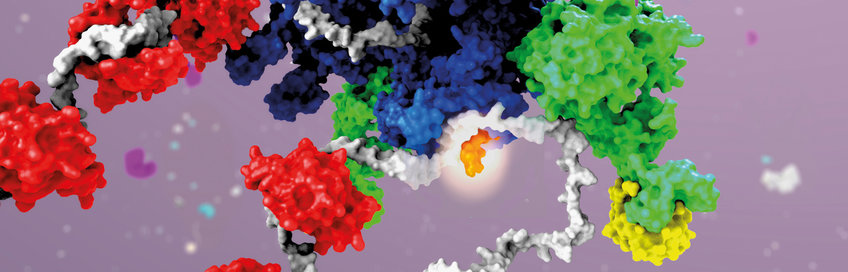
Karl Duderstadt is a Professor of Experimental Biophysics at Technische Universität München and an Independent Research Group Leader at the Max Planck Institute of Biochemistry since 2015. His research focuses on understanding the Structure and Dynamics of Molecular Machines involved in DNA replication, particularly the replisome and its coordination with chromatin dynamics. He employs advanced single-molecule imaging and biophysical techniques to address challenges in genome integrity and replication mechanics. B.A. in Physics, Oberlin College (2004) Ph.D. in Biophysics, University of California, Berkeley (2011) Postdoctoral Fellow, Rijksuniversiteit Groningen (2015) His research interests span chromatin replication , topological stress resolution , and replisome stability . Current projects include ReplisomeBypass (ERC-funded) and ChromoMemInMotion (ERC Consolidator Grant). His work has produced groundbreaking insights into replisome dynamics and nucleosome inheritance , with implications for genome stability and epigenetic regulation. Scientific awards include the ERC Starting Grant (2018) and ERC Consolidator Grant (2023) . The group utilizes novel single-molecule platforms to study replication under stress conditions and develop tools like the MARS software for bioimage analysis. Collaborative efforts involve characterizing molecular barriers in DNA replication and understanding how protein complexes coordinate dynamic events during chromosome duplication.
Bilal Ahmad serves as a Teaching Fellow in the Department of Mechanical and Aerospace Engineering at the University of Strathclyde, United Kingdom. His academic role combines teaching responsibilities with research in advanced materials joining technologies, focusing on computational modeling of welding processes for structural and polymeric materials. Education PhD in Mechanical Engineering from University of Strathclyde (awarded March 2019) with thesis titled Numerical Optimisation of low alloy steel friction stir welding supervised by Professors Galloway and Toumpis Dr Ahmad's research centers on friction stir welding (FSW) and laser-assisted variants, employing numerical modeling to optimize weld quality in structural steel and polyethylene applications. His work addresses critical challenges in material flow dynamics, thermal management, and mechanical property enhancement during joining processes, contributing to advancements in manufacturing efficiency for automotive and aerospace sectors. Analysis of his 2019-2023 publications reveals consistent focus on computational optimization of welding parameters, with significant citation impact (25+ Scopus citations) for his structural steel research. His work bridges theoretical modeling with practical industrial applications, particularly in joining dissimilar materials where conventional techniques face limitations. Dr Ahmad actively contributes to departmental quality initiatives as Academic Staff on the EGCF project (active since June 2024), developing standardized exam guidelines and quality assurance frameworks for Mechanical and Aerospace Engineering programs. He also engages in educational outreach through activities like the MAE Egg Drop Program, demonstrating commitment to engineering education at multiple levels.
Prof. Dr. Philip Hahn serves as Professor of Early Modern History at Saarland University's Faculty of Philosophy since 2023, leading the Chair of Early Modern History. His research examines critical intersections of urban development, migration patterns, and emerging global labor systems across 17th-18th century Europe. His scholarly focus centers on urban history and the history of migration and mobility in Europe, with particular emphasis on connections between intra-European migration flows and global labor markets during the early modern period. This research bridges social, economic, and spatial historical methodologies to analyze how mobility shaped European societal structures. As chairholder, he supervises doctoral researchers including Anne Sauder (studying Venetian single women's self-representation circa 1600) and Sarah Minor (researching German migration to the Russian Empire 1763-1825). His team operates from Campus B3 1, Room 3.30 in Saarbrücken, maintaining collaborative academic networks across European historical research institutions.
Dr. Matt Hindle is a Senior Lecturer in the School of Health at Leeds Beckett University, specializing in Biomedical Science. He joined the university in 2023, bringing extensive expertise in platelet biology, flow cytometry, and cell signaling. His research focuses on understanding the roles of platelets in disease progression, particularly examining both direct actions like thrombosis and multi-cellular responses such as platelet-leukocyte interactions during inflammation. Dr. Hindle completed his academic journey with an IBMS-accredited BSc (Hons) in Biomedical Science from Nottingham Trent University in 2013, followed by an MSc in Infection Biology from the University of Glasgow in 2016. He earned his PhD from the University of Leeds in 2019, researching diverse platelet functions measured by fluorescent flow cytometry. After his doctoral studies, he served as a British Heart Foundation-funded postdoctoral research fellow at the University of Leeds, focusing on platelet bioenergetics and fatty-acid metabolism. His research expertise centers on: Platelet activation mechanisms in thrombosis Role of platelets in inflammatory responses Flow cytometry applications for platelet function analysis Impact of metabolic disorders on platelet function Platelet signaling pathways involving CD36, PDE3A, and reactive oxygen species Translational research using patient samples to understand disease mechanisms Dr. Hindle's work demonstrates significant impact in understanding how platelets contribute to cardiovascular diseases, particularly in the context of diabetes, inflammation, and dyslipidemia. His research bridges basic science with clinical applications, providing insights that could lead to improved diagnostic approaches and therapeutic interventions. He is affiliated with the Centre for Biomedical Science Research and teaches across multiple Biomedical Science programs: BSc (Hons) Biomedical Sciences: Practical Study Skills, Professional Scientific Practice, Haematology and Transfusion Science, Clinical Biochemistry, Blood Diseases, and Project Supervision MSc Biomedical Sciences: Diagnostic Biochemistry and Project Supervision Dr. Hindle has established a productive research career with numerous publications focusing on platelet function, particularly examining how metabolic conditions like diabetes and dyslipidemia affect platelet reactivity. His work often employs advanced flow cytometry techniques to analyze platelet responses with high precision. His research has important implications for understanding cardiovascular complications in metabolic disorders and developing targeted therapeutic approaches.
Raphael De Vittoris is Associate Professor in Management Sciences at Clermont School of Business, Université Clermont Auvergne. With over 15 years of crisis & risk management experience in multinational corporations, he focuses on crisis management learning, cognitive biases in decision-making, and organizational resilience. His research bridges practical crisis cell insights with academic theory, examining psychological contracts in consumer-brand relationships and serious games' role in crisis preparedness. Education PhD in Management Sciences (2020), Université Le Havre Normandie Master's in Extreme Environment Physiology Master's in Business Administration Master's in Occupational Health & Safety Research Themes His work explores antifragility (Taleb's theory application), cognitive bias impacts on crisis decisions, and psychological contract violations during brand scandals. He analyzes serious games' effectiveness in crisis training sequences and organizational responses to global crises like pandemics and industrial disasters. Advising & Methodology While not explicitly listing advisees, his research involves qualitative crisis simulations with multinational corporations. He employs autoethnographic methods and serious game frameworks for organizational learning.
Matthias Meier is a Professor of Economics at the University of Mannheim, holding a Heisenberg Professorship funded by the German Research Foundation (DFG). He is a project leader (C05) in the Collaborative Research Center (CRC) TR 224 at Universität Bonn, focusing on quantitative macroeconomic analysis. Research Interests : Macroeconomics, Monetary Economics, International Economics, and Econometrics. His work bridges theoretical models with empirical evidence, particularly in monetary policy transmission, firm heterogeneity, supply chain disruptions, and labor market dynamics. Recent Research Trends : His articles explore the interplay between monetary policy and aggregate productivity, the labor market implications of ECB policy, and the economic impact of global supply chain shocks during the pandemic. Methodological contributions include novel approaches to set-identified structural vector autoregressions (SVARs). Lamfalussy Fellowship, European Central Bank Best Paper Award in Applied Economics, Econometric Society European Meeting Best Student Paper Award, Real Options Group Conference Best Paper Award (runner-up), Spring Meeting of Young Economists Best Paper Award (runner-up), European Workshop on Efficiency and Productivity Analysis Workshop Leadership : Organizer of annual workshops on firm heterogeneity and macroeconomics since 2018, including events in Bonn and Mannheim. These workshops focus on intersections between firm-level dynamics and macroeconomic outcomes.
Professor Elena Sergeevna Vakulenko is a distinguished academic at the National Research University Higher School of Economics (HSE), where she serves as Professor in the Department of Applied Economics within the Faculty of Economic Sciences. She has been with HSE since 2008, accumulating 16 years of scientific and teaching experience. Currently, she holds the position of Academic Director of the Economic Analysis educational program and heads the research working group on economic and mathematical modeling of demographic processes. Professor Vakulenko earned her Doctor of Economics degree from HSE in 2021, following her Candidate of Economic Sciences degree (2013) with dissertation on "Modeling migration flows at the level of regions, cities and municipalities." Her educational journey includes dual Master's degrees (2010) and a Bachelor's degree (2008), all in Economics from HSE. She has consistently pursued advanced training, most recently in AI applications (2024) and Python for data analysis (2024). Her research focuses on labor market dynamics, econometric modeling, migration patterns, spatial econometrics, and fertility trends . Professor Vakulenko employs sophisticated quantitative methods to analyze demographic processes, particularly examining how economic shocks affect reproductive behavior and migration patterns in Russia. Her work bridges theoretical econometrics with practical policy applications, often utilizing innovative data sources like Google Trends for real-time migration forecasting. Professor Vakulenko's publications reveal a strong emphasis on Russian demographic transitions, policy evaluation (particularly maternity capital programs), and the intersection of economic conditions with family formation . Her recent work examines fertility intentions during periods of high uncertainty (2022-2023), mortgage effects on reproductive behavior, and the connection between spousal educational/financial differences and marital stability. Honorary title "Honored Worker of Science and High Technologies of the Russian Federation" (2022) Laureate of the "Kolba" prize 2025 for women in science in the "Mathematics" category Laureate of the Moscow Government Prize 2018 in Social Sciences Multiple HSE Rector's Letters of Appreciation (2021-2024) Best Academic Supervisor in the nomination "Attracting students" (2023-2024) Professor Vakulenko actively supervises doctoral candidates working on cutting-edge demographic research, including projects on reproductive behavior during shock periods, migration forecasting using digital data, and the relationship between mortgages and childbirth. She has successfully led multiple research grants, including an RFBR grant "Research of birth rate dynamics in Russia: econometric approach" (2022-2023). Her laboratory work focuses on the economic and mathematical modeling of demographic processes, contributing significantly to understanding Russia's demographic challenges.
Craig B Clements is a Professor in the Department of Meteorology and Climate Science and Director of the Wildfire Interdisciplinary Research Center at San José State University . He specializes in wildfire meteorology, fire weather, and extreme fire behavior, with a focus on turbulence and meteorological instrumentation. Education: B.S. in Geography (University of Nevada, Reno), M.S. in Meteorology (University of Utah), Ph.D. in Geophysics (University of Houston) Key Research Areas: Fire-Atmosphere Interactions, Plume Dynamics, Boundary-Layer Meteorology, and Climate-Wildfire Feedback Clements leads the Fire Weather Research Laboratory , which develops mobile Doppler lidar systems for real-time wildfire monitoring. His work includes the FireFlux II and RaDFIRE experiments, and he has collaborated on international projects like New Zealand's field-scale burns. He has been featured in Scientific American , NPR , and PBS NOVA . Scientific Awards: Erskine Fellowship (2024) NSF CAREER Award (2012) SJSU Early Career Investigator Award (2010) His courses include Wildfire in the Earth System , Meteorological Instrumentation , and Mountain Meteorology . He has mentored students on smoke dynamics, turbulence during wildfires, and fire-induced wind systems.