Jennifer J. Vannest is a cognitive neuroscientist at the University of Cincinnati, specializing in functional MRI (fMRI) studies of language, memory, and neurodevelopmental disorders. Her research focuses on brain connectivity, epilepsy, and developmental conditions like speech sound disorders and Down syndrome. Education : PhD from Ohio State University, postdoctoral training at University of Michigan and University of Rochester Affiliation : University of Cincinnati (via email domain) Research Interests : Cognitive Neuroscience of Language and Memory Epilepsy and Neurodevelopmental Disorders fMRI and Brain Connectivity Analysis Article Trends : Her recent publications examine language outcomes in preterm children, white matter organization in epilepsy, neural changes post-stroke, and neuroimaging in opioid-exposed infants. Topics include neurodevelopmental impacts, rehabilitation strategies, and cognitive deficits in chronic conditions. Collaborations : She works with experts in neurology, speech pathology, and pediatric neuroimaging across institutions like University of Michigan, Ohio State University, and Cincinnati Children's Hospital.
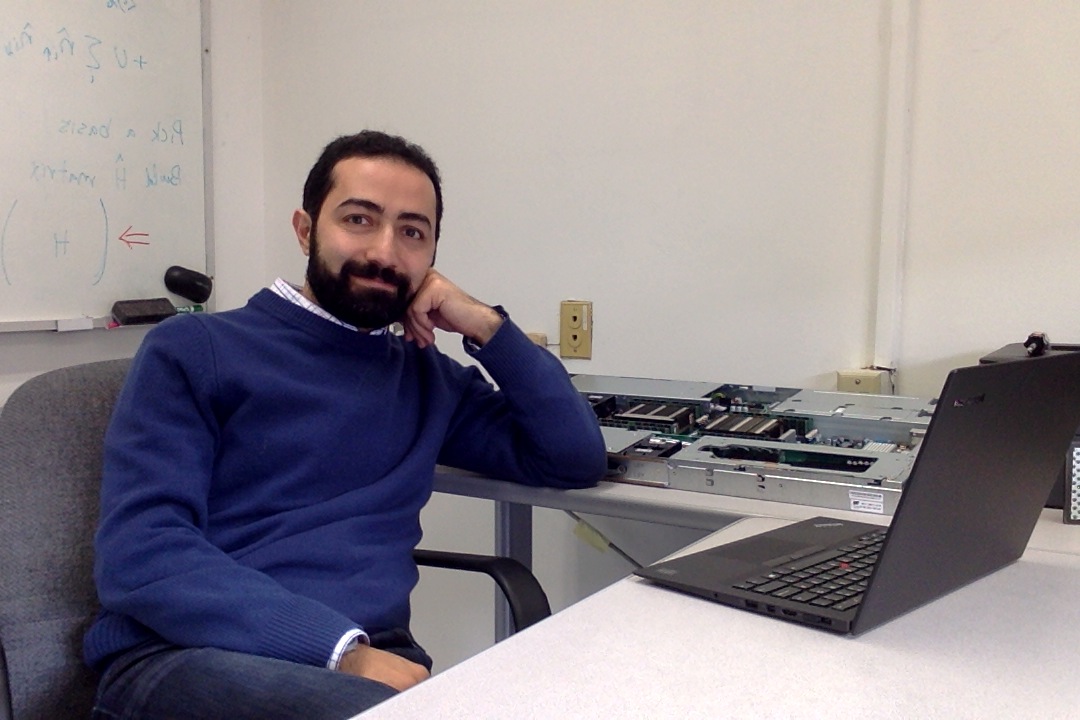
Ehsan Khatami is an Assistant Professor at the Department of Physics, Charles W. Davidson College of Engineering, San Jose State University. His research focuses on theoretical and computational studies of strongly correlated electron systems, particularly the effects of disorder on electronic properties in materials, utilizing quantum Monte Carlo simulations and machine learning techniques. Khatami’s research interests include: Disorder-driven phase transitions in solids Quantum many-body systems (Hubbard and Holstein models) Machine learning applications in condensed matter physics Quantum simulations using cold atoms and quantum dots High-temperature expansions and numerical methods His recent work, supported by an NSF RUI grant ($171,000), explores the interplay between disorder and electron organization in materials, with applications in superconductivity and exotic insulating phases. He also contributed to the NSF MRI grant ($900K) for acquiring High-Performance Computing infrastructure. His publications span topics such as kinetic magnetism, Nagaoka polarons, and AI-assisted discovery in quantum systems. Scientific contributions include: NSF RUI Grant for theoretical investigations NSF MRI Grant as Co-PI for computational infrastructure Pioneering work on neural network-based simulations of quantum systems Khatami actively involves students in his research, with NSF grant funding supporting two undergraduate and one graduate student to develop parallel computing codes and analyze quantum simulation results.
Professor Akihiko Hirata is a distinguished faculty member at Waseda University's School of Fundamental Science and Engineering, specializing in Materials Science and Engineering. With a Doctor of Engineering degree from Waseda University, he has established himself as a leading researcher in the field of materials characterization, particularly focusing on metallic glasses, amorphous materials, and electron microscopy techniques. His research interests span a wide range of topics in materials science, with particular emphasis on electron microscopy , metallic materials , amorphous structures , and nanoporous materials . Professor Hirata's work combines advanced experimental techniques with computational modeling to unravel the complex structures of disordered materials. His research group has made significant contributions to understanding the topological features of silica glasses, metallic glasses, and other amorphous systems, revealing connections between atomic-scale structures and macroscopic properties. Analysis of his recent publications shows a strong focus on topological analysis of glass structures , local atomic environment characterization , and advanced electron diffraction techniques . His work frequently employs persistent homology methods, angstrom-beam electron diffraction, and molecular dynamics simulations to extract structural information from disordered materials. The research spans fundamental understanding of glass formation to practical applications in energy storage and conversion. Best Poster Young Researcher Presentation Award in BMGV (2006) Professor Hirata's research has significant implications for the development of advanced materials with tailored properties. His work on nanoporous materials, metallic glasses, and solid-state electrolytes contributes to advancements in energy storage technologies, catalysis, and functional materials design. Through his extensive publication record and innovative methodologies, he has established important connections between atomic-scale structures and macroscopic material properties, providing valuable insights for materials design and engineering.
Xichao Zhang is an Assistant Professor at Waseda University's Faculty of Science and Engineering, Research Institute for Science and Engineering. He holds a Ph.D. from Shinshu University (2018) and has worked at institutions including the Chinese University of Hong Kong, Shenzhen (2016-2020), and the University of Hong Kong (2014-2016). His research focuses on topological spin textures (skyrmions, bimerons, antiskyrmions) and their applications in spintronics , with recent work on current-driven dynamics, magnetic confinement, and interdisciplinary connections to quantum computing and biological physics . Education: Ph.D. (2018), Shinshu University, Interdisciplinary Graduate School of Science and Technology B.Sc. (2014), Sichuan Normal University, Department of Physics Dr. Zhang's research spans bulk chiral magnets , synthetic antiferromagnets , and low-dimensional systems , emphasizing electric field control and spin-orbit torque for energy-efficient devices. His recent publications highlight skyrmion Hall effect suppression , heterostructure manipulation , and quantum computing with merons . Over 40 first-author papers in journals like Nature Physics , Nature Electronics , and Nano Letters demonstrate his impact. Key scientific awards include: Waseda Research Award (2025) IEEE Senior Member (2024) MSJ Distinguished Paper Award (2023) Presidential Postdoctoral Fellowship (2019) IOP Publishing China Top Cited Author (2018) He serves as a reviewer for prestigious journals and is a member of IEEE, APS, JPS, JSAP, and MSJ.
David C. Williams, Jr. is a Professor in the Department of Pathology and Laboratory Medicine at the University of North Carolina at Chapel Hill School of Medicine, where he holds a dual MD/PhD appointment. He is a member of the UNC Lineberger Comprehensive Cancer Center, focusing his research on structural and biophysical mechanisms of epigenetic regulation. His laboratory investigates protein-protein and protein-DNA interactions central to macromolecular complexes involved in gene expression control, with particular emphasis on the NuRD complex and MBD2 protein. Williams' research program centers on understanding how epigenetic signals, particularly DNA methylation, regulate gene expression through structural mechanisms. His laboratory employs nuclear magnetic resonance (NMR) spectroscopy , isothermal titration calorimetry , circular dichroism , and surface plasmon resonance to characterize the structure and dynamics of protein complexes. A major focus has been the methyl-cytosine binding domain protein 2 (MBD2) and its role in recruiting the NuRD complex to methylated DNA, leading to gene silencing. His work has revealed critical structural details of how MBD2 binds DNA, interacts with other NuRD components through coiled-coil domains, and how these interactions can be targeted therapeutically. Analysis of Williams' recent publications reveals a consistent trajectory toward increasingly sophisticated structural characterization of epigenetic regulatory complexes. His work spans from fundamental biophysical characterization of protein-DNA interactions to translational applications in cancer therapy, particularly in understanding how epigenetic silencing contributes to tumor suppressor gene inactivation. The research demonstrates growing integration of single-molecule techniques, nanofluidic analysis, and cross-species evolutionary perspectives to understand conserved epigenetic mechanisms. PRAT Fellowship, National Institute of General Medical Sciences (2001-2004) Medical Scientist Training Program, University of Virginia (1990-1998) Keystone Award for Outstanding Scientific Contribution, Keystone Symposium (1996) Alpha Omega Alpha national medical honor society (1992) Graduated with Highest Honors, College of William and Mary (1990) Williams leads an active research program investigating the structural basis of epigenetic regulation, with implications for developing inhibitors of methylation-dependent gene silencing. His laboratory has established critical structure-function relationships for MBD2-NuRD interactions, demonstrating that disrupting specific protein-protein interfaces can block tumor cell growth. The research has potential applications in reactivating silenced tumor suppressor genes in cancer therapy. Williams collaborates extensively with researchers across multiple institutions, evidenced by co-authorship on numerous interdisciplinary studies spanning structural biology, cancer research, and hematology. The Williams Laboratory maintains a strong focus on the structural and dynamic properties of epigenetic regulatory complexes, particularly examining how MBD2 recognizes methylated DNA and recruits the NuRD complex. Current research directions include developing peptide inhibitors targeting critical protein-protein interfaces within the NuRD complex, studying the distribution of MBD proteins on methylated DNA, and investigating the role of intrinsically disordered regions in complex assembly. The lab's work bridges fundamental structural biology with potential therapeutic applications in cancer and other diseases involving epigenetic dysregulation.
Naroa Ibarretxe Bilbao is a Professor in the Department of Psychology at the Faculty of Health Sciences, University of Deusto. She serves as Director of the University Master's Degree in Clinical Neuropsychology and is Principal Investigator of the Neuropsychology of Severe Medical Disorders research group. Her work focuses on neuroimaging and neuropsychology related to Parkinson's disease, multiple sclerosis, and cognitive rehabilitation. Dr. Ibarretxe Bilbao earned her Psychology degree from the University of Deusto in 2005 and her Doctor of Medicine from the University of Barcelona in 2009. During her doctoral studies, she conducted research at the Oxford Centre for Functional Magnetic Resonance Imaging of the Brain (FMRIB) at the University of Oxford in 2007. Her doctoral thesis examined limbic brain changes and their consequences on emotional, olfactory, and memory dysfunctions in Parkinson's disease patients using magnetic resonance imaging, for which she received the Lluis Barraquer i Bordas award in 2010. Psychology Degree: University of Deusto (2005) Doctor of Medicine: University of Barcelona (2009) Research Stay: Oxford Centre for Functional Magnetic Resonance Imaging of the Brain, University of Oxford (2007) Dr. Ibarretxe Bilbao's research primarily focuses on neuropsychological assessment and neuroimaging in neurodegenerative disorders. Her work investigates brain structural and functional changes associated with cognitive, emotional, and sensory dysfunctions in Parkinson's disease and multiple sclerosis. She has made significant contributions to understanding how cognitive rehabilitation can improve outcomes for patients with neurological disorders. Her recent work has expanded to include studies on preterm birth outcomes and the application of non-invasive brain stimulation techniques for cognitive enhancement. Analysis of Dr. Ibarretxe Bilbao's recent publications reveals a strong focus on multimodal neuroimaging approaches to understand brain structure-function relationships in neurological disorders. Her work frequently examines Parkinson's disease from multiple angles including cognitive decline, fatigue, emotional processing, and quality of life impacts. There's also a growing interest in the application of transcranial stimulation techniques for cognitive enhancement and rehabilitation. Her research increasingly incorporates longitudinal designs and multi-site collaborations to enhance the robustness of findings. Lluis Barraquer i Bordas 2010 award for best doctoral thesis Dr. Ibarretxe Bilbao has supervised multiple doctoral theses focused on cognitive rehabilitation in Parkinson's disease, multiple sclerosis, and schizophrenia. She has been involved in numerous research projects investigating brain-behavior relationships in neurological conditions. Her work often involves interdisciplinary collaborations with neurologists, psychiatrists, and neuroscience researchers across Spain. She has contributed to the standardization of neuropsychological assessment tools for Spanish-speaking populations, including the Montreal Cognitive Assessment and Wisconsin Card Sorting Test. As principal investigator of the Neuropsychology of Severe Medical Disorders research group at the University of Deusto, Dr. Ibarretxe Bilbao leads a team employing various methodologies including structural and functional MRI, cognitive assessment, and non-invasive brain stimulation techniques. Current research directions include understanding the neural mechanisms of cognitive rehabilitation, identifying biomarkers for cognitive decline in Parkinson's disease, and developing interventions to improve quality of life for patients with neurological disorders.
Adeel Razi is a Professor of Computational Neuroscience at the Turner Institute for Brain and Mental Health , School of Psychological Sciences, Monash University, Australia. He directs the Computational Neuroscience Laboratory , focusing on multiscale Bayesian methods and active inference frameworks to decode brain dynamics in health and disease. Education : B.E. in Electrical Engineering (Gold Medal, N.E.D. University, Pakistan); M.Sc. in Communications Engineering (RWTH Aachen, Germany); Ph.D. in Electrical Engineering (University of New South Wales, Australia, 2012) Postdoc : Wellcome Centre for Human Neuroimaging, University College London (2012-2018) Research Themes span three pillars: (1) Dynamic Causal Modeling (DCM) of brain pathologies using fMRI/dMRI/EEG; (2) Designing active inference-based artificial neural networks; (3) Psychedelic-assisted therapies for psychiatric disorders via neuroimaging. His work bridges NeuroAI , Neurodegenerative Disease Modeling , and Consciousness Studies . Recent Publications emphasize context-dependent brain activity under psychedelics, neuroimaging tool development (e.g., Network Correspondence Toolbox), and Bayesian frameworks for spiking networks. Collaborations span UNSW , UCL , CIFAR , and clinical partners like Wellcome Leap . Scientific Awards : ARC Future Fellowship, NHMRC Investigator (Emerging Leadership), CIFAR Azrieli Global Scholar Supervision : Seeks interdisciplinary students in Quantitative Sciences (Engineering/CS/Physics) or Neuroscience/Medicine for PhD projects Labs : Computational Neuroscience Laboratory at Monash, international partnerships with neuroimaging centers
Dr. Tomasz Ligęza is a Lecturer at the Department of Psychophysiology, Jagiellonian University's Faculty of Philosophy. A graduate of the Institute of Psychology, he completed his doctorate in 2019 and specializes in exercise neuroscience, combining psychophysiology, cognitive neuroscience, and emotional neuroscience. His research explores how physical exercise improves mental functioning through brain mechanism analysis. Graduate of Columbia University, Northeastern University, University of Illinois, Radboud University, and University of Münster internships Head of National Science Center-funded projects (SONATA 17, SONATINA, ETIUDA, PRELUDIUM programs) Active Brain Research special interest group member Ligęza's research focuses on: • Aerobic exercise effects on emotional processing • Brain connectivity during cognitive tasks • Neural mechanisms of mood improvement • Interoception and mental health • Sedentary behavior interventions • Neuroimaging-based exercise neuroscience His recent publications demonstrate interdisciplinary trends in exercise-induced brain plasticity, with emphasis on: • Cognitive aging interventions • Metabolic health and neural efficiency • Prefrontal cortex modulation • Emotional regulation techniques • Sedentary behavior reduction 2021: Minister of Education and Science Scholarship 2018: START Scholarship (Foundation for Polish Science) Ligęza contributes to academia through: • Experimental design development • International research collaborations • Student mentorship in psychophysiological methods • Advanced EEG/fMRI analysis techniques
Todd Constable is the Elizabeth Mears and House Jameson Professor of Radiology and Biomedical Imaging and Professor of Neurosurgery at Yale School of Medicine. He serves as Co-Director of the MRI Research Center within the Magnetic Resonance Research Center. His primary appointment is in Radiology & Biomedical Imaging with secondary appointments in Neurosurgery. He is affiliated with numerous research centers including the Alzheimer's Disease Research Center, Bioimaging Sciences Center, Center for Brain & Mind Health, and the Yale Biomedical Imaging Institute. Dr. Constable received his PhD in Medical Physics from the University of Toronto in 1990. He joined Yale as a postdoctoral fellow and has remained at the institution since. His research primarily focuses on functional magnetic resonance imaging and understanding cognitive processes related to language and memory, and how these processes may be altered in different disease states or with different medications. An important aspect of his work involves developing techniques to separate indirect physiologic changes associated with particular diseases or medications from those that directly impact neuronal processes. His research spans two main areas: a neuroscience lab focused on mapping the functional organization of the brain through functional MRI measurements and understanding the relationship between this functional organization and behavior; and a lab focused on developing novel MRI devices, particularly low-field MRI systems that could be placed in doctors' offices to make MRI more accessible. His work has significant applications in subtyping brain disorders and disease. Analysis of his recent publications reveals a strong emphasis on functional connectivity across various conditions including bipolar disorder, opioid use disorder, Alzheimer's disease, and adolescent brain development. His work increasingly incorporates multimodal approaches, integrates machine learning techniques, and focuses on translating neuroimaging findings into clinical applications for diagnosis and treatment prediction. Scientific Awards and Honors: Gold Medal from ISMRM (2023) Elizabeth Mears & House Jameson Professorship (2023) Distinguished Alumni Award from University of Winnipeg (2019) Distinguished Investigator Award from The Academy of Radiology Research (2015) Fellow of the International Society of Magnetic Resonance in Medicine (2014) Dr. Constable serves as Principal Investigator for the 'COVID-19 Outpatient Study of Brain Function Across the Lifespan' and is a Sub Investigator on several other clinical trials related to adolescent suicidality, Long COVID, obesity, and bipolar disorder. His frequent collaborators include Dustin Scheinost, Robert Fulbright, Corey Horien, Abigail Greene, Xenophon Papademetris, and Xilin Shen. His research is supported by grants from NIMH and other sources, with recent funding advancing research into Long COVID and related brain changes. His laboratories are part of the Magnetic Resonance Research Center at Yale, which received an ARPA-H Award for Affordable Breast MRI. His work bridges basic neuroscience, technology development, and clinical applications, with particular emphasis on making advanced neuroimaging more accessible through innovative low-field MRI approaches.
Ziqiang Wang is a Professor of Physics at the Department of Physics, Boston College. His research focuses on theoretical condensed matter physics, particularly correlated electron systems including high-temperature superconductors, complex oxides, topological phases, and quantum spin systems. He holds a Ph.D. from Columbia University. His research interests span: High-temperature superconductivity in materials like UTe2 and cuprates Topological phases such as Chern magnets and quantum Hall systems Mott transitions in transition metal oxides ELECTRONIC INHOMOGENEITY and competing orders in strongly correlated systems THEORETICAL ANALYSIS of quantum criticality and topological edge states Recent publications (2020-2005) emphasize experimental/theoretical work on chiral superconductivity in heavy fermion systems, topological magnet discovery, and correlated insulating phases in twisted bilayer graphene. These studies bridge microscopic theory with advanced material characterization techniques like scanning tunneling microscopy. No scientific awards are explicitly listed in the provided text. His work has been published in top journals including Nature, Science Advances, and Physical Review Letters. While no student advisees are listed, his research group likely focuses on advanced computational modeling and material-specific theoretical frameworks. No grants or lab affiliations are detailed in this text.
Dr. Matthew D. Budde serves as Associate Professor in the Department of Neurosurgery at the Medical College of Wisconsin, where he develops advanced magnetic resonance imaging (MRI) techniques for diagnosing and monitoring central nervous system injuries and diseases. His work bridges preclinical and clinical neuroimaging with emphasis on traumatic brain and spinal cord injuries. His educational background includes: Postdoctoral Fellowship in Radiology and Imaging Sciences, National Institutes of Health (2011) PhD in Neuroscience, Washington University in St. Louis (2008) BS in Psychology, University of Wisconsin-Madison (2001) Dr. Budde's research centers on diffusion-based MRI methodologies , particularly diffusion tensor imaging (DTI) and tensor-valued encoding techniques. He investigates microstructural changes in traumatic brain injury, spinal cord trauma, stroke, and neurodegenerative conditions using both human and animal models. His work establishes critical links between MRI findings and underlying histopathology while exploring comorbid factors like sleep disruption and pharmacological interventions in neurological recovery. His publication record demonstrates consistent innovation in neuroimaging methodology, with recent work focusing on oscillating gradient diffusion MRI, spinal cord perfusion imaging, and biomechanical modeling of spinal cord stress. Key trends include translation of advanced diffusion MRI techniques to clinical stroke and trauma applications, multi-center validation of neuroimaging biomarkers, and integration of finite element modeling with in vivo imaging. Professional recognition includes: Young Investigator Award Finalist, International Society for Magnetic Resonance in Medicine (2006) Junior Fellow Recipient, International Society for Magnetic Resonance in Medicine (2010) Fellows Award for Research Excellence (FARE), National Institutes of Health (2011) As an active Junior Fellow of the International Society for Magnetic Resonance in Medicine and member of the Society for Neuroscience, Dr. Budde collaborates across disciplines through MCW's Center for Imaging Research and Neuroscience Research Center. His work incorporates multi-center studies and animal models to validate imaging biomarkers, with ongoing projects examining sleep-TBI interactions and spinal cord biomechanics. Current research leverages high-field MRI and computational modeling to establish prognostic capabilities for acute neurological trauma.
Józef R. Lewandowski is a Professor of Physical Chemistry at the University of Warwick, leading the Lewandowski Group within the Department of Chemistry. His research focuses on solid-state NMR methodology and its application to studying structure-dynamics-function relationships in biomolecular systems , particularly membrane proteins , amyloid fibrils , and trans-AT polyketide synthases . He has held his position since 2019, following promotions from Assistant to Associate Professor between 2011 and 2019. His group specializes in solid-state NMR for insoluble systems atomic resolution dynamics characterization antibiotic biosynthesis mechanisms protein complex structural analysis
Hanefi Yekta GÜRLERTOP is a Professor of Cardiology at Trakya University School of Medicine, specializing in advanced cardiac imaging and echocardiographic techniques. His academic career spans over three decades since completing his bachelor's degree in 1991 and post-doctoral studies in 1997. His research focuses primarily on echocardiography applications including strain imaging, speckle tracking, and tissue Doppler analysis for assessing cardiac function in various pathologies. Key research areas include: Myocardial infarction and coronary artery disease Valvular heart disease and rheumatic carditis Right ventricular function in critical illness Congenital cardiac anomalies Cardiac complications of systemic diseases His recent publication trends (2022-2024) demonstrate continued innovation in cardiac imaging techniques, particularly layer-specific strain analysis for coronary disease diagnosis, comprehensive assessment of rheumatic mitral stenosis, and investigation of rare conditions like immune myocarditis and cardiac fistulas. His work bridges clinical cardiology with advanced imaging methodology. GÜRLERTOP serves as a referee for major cardiology journals including The Anatolian Journal of Cardiology, Balkan Medical Journal, and MN Kardiyoloji, reflecting his standing in the academic community. His editorial roles in Turkish Cardiology Association publications further demonstrate his leadership in the field. His academic contributions include numerous national and international publications, book chapters including "Kardiyoloji Hekiminin Hukuk Rehberi" (2020), and presentations at major cardiology conferences such as the 34th International Turkish Cardiology Congress (2018).
Per Madsen serves as a Professor at the University of Copenhagen with dual appointments in the Department of Clinical Medicine (Internal medicine: Cardiology) and the Department of Nutrition, Exercise and Sports. His research investigates cardiovascular health outcomes in children conceived through assisted reproductive technology (ART) and patients with type 2 diabetes, utilizing advanced magnetic resonance imaging methodologies. Research Interests: His work centers on pediatric cardiology and diabetic cardiovascular complications , examining autonomic nervous function, myocardial blood flow, and long-term metabolic effects of ART. Key methodologies include cardiac MRI for non-invasive assessment of heart structure/function and comparative studies of frozen versus fresh embryo transfer outcomes. Research spans bone mineralization, adipose tissue distribution, and microvascular dysfunction. Publication Trends: Recent articles (2024-2025) reveal dual research trajectories: (1) Cardiovascular/metabolic outcomes in ART-conceived children, focusing on comparative embryo transfer techniques; (2) Early myocardial dysfunction in type 2 diabetes, emphasizing microvascular disease mechanisms and SGLT2 inhibitor effects. This work bridges reproductive medicine, pediatrics, and diabetology through advanced imaging, with publications in Human Reproduction Open , American Journal of Physiology , and Cardiovascular Diabetology .
Anand Kumar, M.D., MHA is the Lizzie Gilman Professor and Head of the Department of Psychiatry at the University of Illinois Chicago (UIC). He leads the department within UI Health, UIC's academic health enterprise, with his office located at the School of Public Health / Psychiatric Institute in Chicago. Dr. Kumar received his medical degree from Madras Medical College in Madras, India. He completed his Psychiatry Residency training at the University of Michigan, Ann Arbor, and subsequently served as a Medical Staff Fellow in the Laboratory of Neurosciences at the National Institute on Aging. Dr. Kumar's research primarily focuses on late-life depression and mental disorders of the elderly, including Alzheimer's disease and dementia. His work bridges clinical psychiatry with neuroscience to understand the neurobiological underpinnings of geriatric mental health conditions. He has made significant contributions to understanding the structural and functional brain changes associated with depression in older adults. His publication record shows consistent focus on neuroimaging techniques (particularly MRI and PET) applied to geriatric depression and dementia. The research demonstrates evolving methodologies from structural MRI studies in the 1990s to more sophisticated biochemical and metabolic analyses in later years, reflecting advancements in neuroimaging technology and geriatric psychiatry research. Jack Weinberg Award for Geriatric Psychiatry from the American Psychiatric Association Dr. Kumar has been consistently funded by NIH research grants for over 18 years and is author or co-author of more than 100 peer-reviewed journal articles and book chapters. As an educator and mentor, he has trained numerous psychiatrists who have gone on to prestigious positions at institutions including UCLA, Brown, Emory, Duke, Johns Hopkins, Harvard, and Yale University. His former trainees have secured clinical, research, and training positions at these esteemed institutions, demonstrating his significant impact on the field of geriatric psychiatry. Dr. Kumar serves as an active thought leader in his field, contributing op-eds on mental health topics to major publications including the Chicago Tribune, Chicago Sun Times, and Orlando Sentinel, particularly addressing issues related to adolescent mental health, Alzheimer's disease, and athlete mental health.