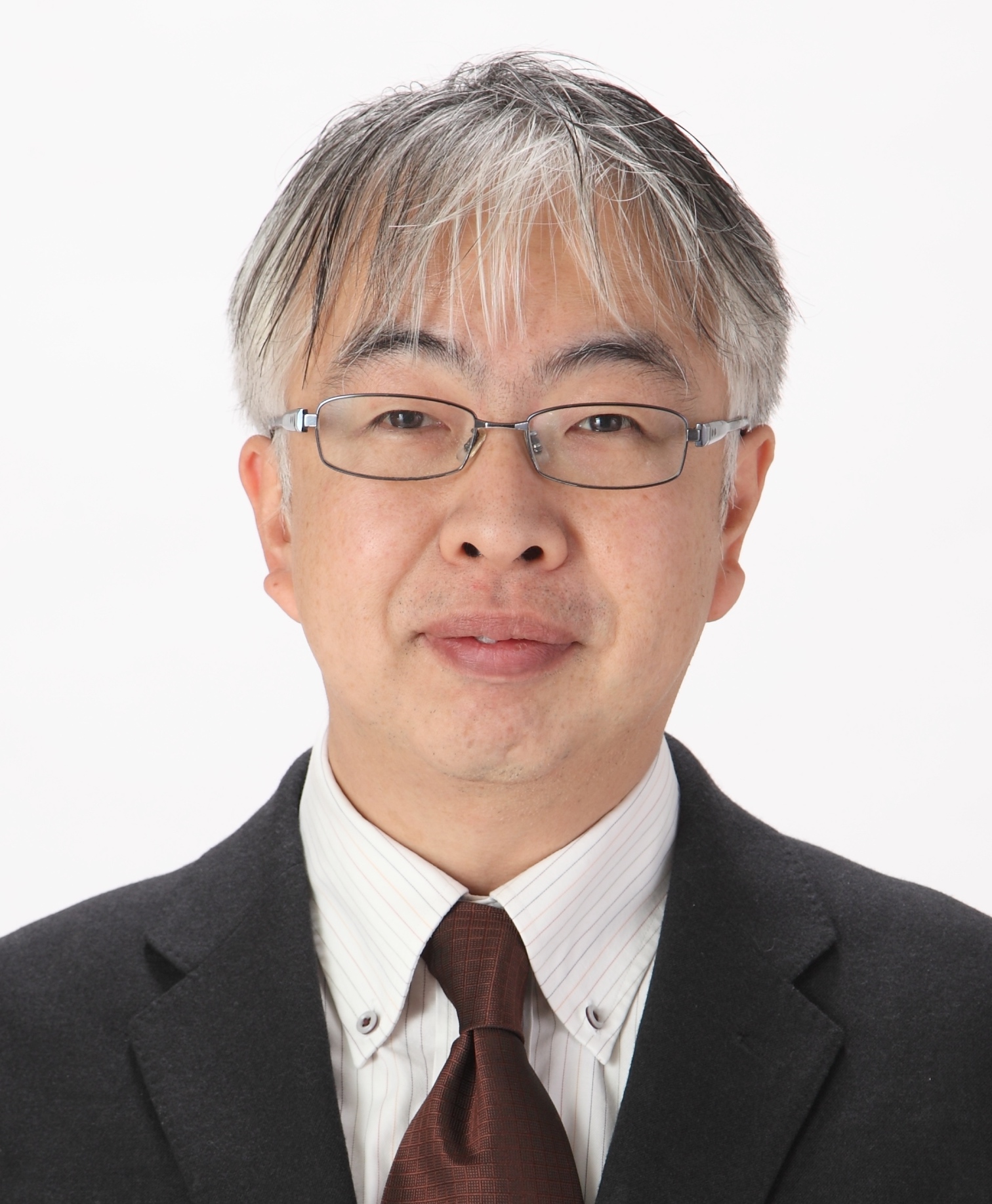
KATO ShinyaView profile
Associate Professor
Shinya Kato is an Associate Professor in the Department of Electrical and Electronic Engineering at Nagoya Institute of Technology's Faculty of Engineering. His research focuses on nanosilicon-based energy materials and devices, including fuel cell separators, thermoelectric conversion elements, and lithium-ion batteries, through the ShinYa Kato Lab. Dr. Kato's educational background includes: Doctor of Engineering, Tokyo Institute of Technology (2013) Master of Engineering, Nagoya Institute of Technology (2010) Bachelor of Engineering, Nagoya Institute of Technology (2008) His primary research areas involve nanosilicon applications in energy systems: Fabrication of silicon nanostructures for novel physical properties Development of oxide thin film-based fuel cell separators Nanosilicon anodes for high-energy-density lithium-ion batteries Thermoelectric conversion elements using bulk nanosilicon Perovskite and silicon-based photovoltaic devices Recent publications (2024) demonstrate a strong focus on bismuth-based solar cells and oxide semiconductor thin films , with key trends including: Lead-free perovskite alternatives like $$((\text{CH}_3\text{NH}_3)_{1-x}\text{Cs}_x)_3\text{Bi}_2\text{I}_9$$ Spin-coating techniques for heterostructure fabrication Optimization of annealing processes for bismuth vanadate films Exploration of $$\text{Ag}_3\text{Bi}\text{I}_6$$ solar cells His scientific awards include: Tanaka Precious Metals Encouragement Award (2023) Nagoya Institute of Technology Excellent Awards (2019, 2020) Young Research Innovator Award (2018) International Conference Best Oral Presentation (2017) Dr. Kato actively mentors graduate students and leads multiple competitive research projects: Principal Investigator for Ministry of Internal Affairs millimeter-wave silicon lens project (2024-2027) Team leader for JST's Innovative GX Technology Creation Project on solid-state batteries (2024-2026) Principal Investigator for NEDO Startup Support Project on nanosilicon anodes (2023) His laboratory collaborates with JST's Innovative Energy Research Center and will expand through his upcoming Visiting Associate Professor role at Nagoya University's Institute for Innovation for Future Society (April 2025).