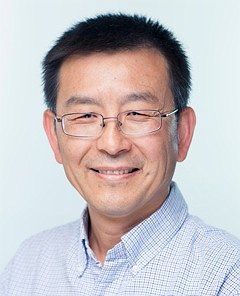
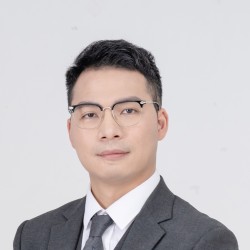
Tara Zirakbash serves as a Lecturer at Murdoch University's School of Engineering and Energy, leveraging extensive cross-sector experience from consulting, government, and academia in hydrological analysis, urban water management, and GIS applications for sustainable engineering solutions. Her work directly addresses critical global challenges including water scarcity, climate change impacts, and water safety through interdisciplinary approaches. Her academic credentials include: Doctor of Philosophy in Environmental Engineering from Murdoch University, Western Australia Research focuses on environmental modelling optimisation, sustainable water systems, spatial/time series analysis, and uncertainty-informed planning. She champions systems thinking integrated with practical field applications and multi-stakeholder collaboration to develop innovative solutions for complex environmental challenges, emphasizing real-world relevance in all scholarly work. Scientific Awards: No scientific awards documented in source materials Advising and grants information is not specified in available documentation, though her teaching methodology emphasizes workshop-based learning connecting theoretical concepts to practical implementation. Professional networks reflect strong industry-academia linkages developed through diverse sector engagements. Laboratory facilities and research team structures are not described in the provided institutional profile.
Jingling Xue is a Scientia Professor at the School of Computer Science and Engineering at the University of New South Wales (UNSW) in Sydney, Australia. As an IEEE Fellow of the Computer Society, he leads the Programming Languages and Compilers research group, focusing on practical applications of compiler optimization and program analysis techniques. His work bridges theoretical foundations with real-world software systems, particularly in developing open-source tools for large-scale program analysis. Professor Xue received his B.Eng and M.Eng degrees from Tsinghua University in 1984 and 1987, respectively, followed by a PhD from the University of Edinburgh in 1992. His academic journey has established him as a leading figure in programming languages and compiler technology. Xue's research spans programming languages, compiler technology, and program analysis with emphasis on practical relevance. His current projects include compiler techniques for improving parallelism and locality, pointer/alias analysis for million-line-scale programs, and static/dynamic analysis for detecting bugs and security vulnerabilities in real-world applications like web browsers and Android apps. His group actively develops open-source tools to support scientific replicability and reproducibility in these areas. His recent publications demonstrate a strong focus on applying program analysis techniques to modern challenges including AI compilers, homomorphic encryption, security vulnerability detection, and graph processing systems. The work shows evolution from traditional compiler optimization to addressing emerging domains like privacy-preserving computation and deep learning systems while maintaining rigorous theoretical foundations. Scientific Awards: Best Paper Award at CGO'13 Best Paper Award at CGO'16 Distinguished Paper Award at ECOOP'16 Distinguished Paper Award at ICSE'18 Distinguished Paper Award at ISSTA'19 Distinguished Paper Award at ASE'19 Distinguished Artifact Award at ISSTA'23 Best Artifact Award at FSE'23 Distinguished Paper Award at ASE'23 Test-of-Time Award at CGO'21 Professor Xue has successfully supervised 30 PhD students to completion, many of whom now work as professors or researchers in academia and industry. He has served as Program Chair for major conferences including LCTES'13, CC'18, CGO'20, and General Chair for LCTES'20. His group currently focuses on memory safety in Rust, smart contract analysis, AI compilers, compilation for privacy-preserving computation, and adversarial attacks in deep learning. The Programming Languages and Compilers group maintains strong connections with industry partners, translating theoretical advances into practical tools for real-world software development challenges. Their work on pointer analysis, memory safety, and compiler optimizations continues to influence both academic research and industrial practice.
Dr. Yinglong He is a Lecturer in Automated Electrified Transport (AcT) Systems at the School of Mechanical Engineering Sciences, University of Surrey, UK, and an Honorary Assistant Professor at the School of Engineering, University of Birmingham. His research focuses on intelligent transportation systems, energy management, vehicle dynamics, and AI-driven optimisation. He has held positions including Postdoctoral Research Associate at the University of Cambridge and Technology Expert at the European Commission's Joint Research Centre (JRC). Research interests include autonomous vehicle control, traffic simulation, hybrid/electric vehicle dynamics, and sustainable transport solutions. Notable contributions include advancing microscopic traffic models for automated vehicles and optimising energy systems for hybrid powertrains. His work integrates machine learning, multi-agent systems, and data-driven approaches to address challenges in transport decarbonisation and safety. Recent publications highlight advancements in hybrid vehicle dynamics simulation, lithium-air battery modelling, and energy mapping of urban buildings. He has received the Chinese Government Award for Outstanding Self-Financed Students (2022) and is a Fellow of the Institute for Sustainability (IfS). His expertise spans interdisciplinary collaborations in automotive engineering, energy systems, and smart infrastructure.
Dr. Christopher Stokes is a Grant-Funded Researcher (B) at the University of Adelaide , affiliated with the Centre for Automotive Safety Research (CASR) under the Faculty of Sciences, Engineering and Technology . He holds a PhD in Water Resources Optimisation (2014) and a degree in Civil and Structural Engineering (2009) from the same institution, with prior industry experience in civil construction. Research Focus: Road infrastructure safety, Safe System thinking, and strategies for achieving zero road deaths/injuries (aligned with the Decade of Action for Road Safety 2011-2020). Affiliation: Centre for Automotive Safety Research (CASR), University of Adelaide. Contact: Floor/Room 1, Engineering Annex, North Terrace; email: christopher@casr.adelaide.edu.au . Supervision: Eligible to supervise Master’s and PhD candidates.
Dr Benjamin Cerfontaine is an Associate Professor in Geotechnical Engineering at the University of Southampton. His research focuses on geotechnical solutions for offshore renewable energy infrastructure, particularly floating and bottom-fixed offshore wind turbines. He specializes in numerical and physical modeling techniques such as finite elements, DEM, and centrifuge testing, aiming to uncover fundamental mechanisms governing foundation behavior. Education: PhD in Geotechnical Engineering from the University of Liège (2014), followed by postdoctoral research at the University of Dundee (2017–2020). Research Interests: Offshore renewable energy systems, constitutive modeling of geomaterials, and innovative anchoring solutions. Projects: Leads the ROBOCONE and TAILWIND projects, focusing on robotic ground characterization and sustainable anchor designs. Key achievements include the Geotechnical Research Medal (2023) and the Bright Spark Lecture Award (2023). He supervises three PhD students and actively collaborates with industry partners on offshore energy infrastructure. Dr. Cerfontaine is part of the Infrastructure Group and the Southampton Marine and Maritime Institute, contributing to interdisciplinary research on ocean energy and coastal communities.
Samuel Fiorini is Associate Professor in the Department of Mathematics at the Université libre de Bruxelles (ULB) , member of the Algebra and Combinatorics group (CP 216). His research centres on polyhedral combinatorics, extended formulations, combinatorial optimisation and approximation algorithms , with frequent overlap into structural graph theory. Research in depth: Fiorini’s work explores how high-dimensional polytopes can sometimes be expressed compactly through extended formulations, proving exponential lower bounds when they cannot. He has contributed new approximation algorithms for classical problems such as vertex cover, clique transversal and odd-cycle packing, and has advanced the understanding of sorting and entropy in partially ordered sets. His papers often combine tools from graph minors, communication complexity and polyhedral theory. Scientific recognition: Best Paper Award, 44th ACM Symposium on Theory of Computing (STOC 2012) Programme committees: FOCS, IPCO, APPROX, STACS, WAOA Organiser, Sixth Cargese Workshop on Combinatorial Optimization Advising & grants: He currently supervises PhD students Carole Muller and Matthew Drescher and has mentored six completed PhDs as well as more than a dozen post-doctoral researchers. His group has been supported by an ERC starting grant and other national and international projects focusing on polyhedral approaches to hard optimisation problems. Lab & team: Fiorini leads a vibrant team within the Algebra and Combinatorics cluster at ULB, maintaining active collaborations with researchers worldwide and hosting frequent visitors working on discrete optimisation and polyhedral combinatorics.
Sven Schewe is a Professor in the Department of Computer Science at the University of Liverpool, affiliated with the School of Electrical Engineering, Electronics and Computer Science. He leads the AI Section and is a founding member and former leader of the Verification Group. He also has secondary affiliations with the Algorithms, Complexity Theory and Optimisation Group and the Institute for Risk and Uncertainty. Research Interests: His research centers on automata theory and game theory, particularly their applications in the verification and synthesis of reactive and safety-critical systems. He investigates infinite-duration games, automata over infinite words and trees, and develops algorithms and tools for automated verification, synthesis, and learning of optimal control strategies. His work extends to reinforcement learning with formal guarantees, cyber-physical systems, and AI safety. Recent Research Trends: His recent publications demonstrate a strong integration of formal methods with machine learning, particularly in adversarial training, neural network robustness, and model-free reinforcement learning under omega-regular objectives. He also applies formal reasoning to interdisciplinary domains such as chemical space exploration and materials science. Scientific Awards: Finalist for the ERCIM Cor Baayen Award 2010 Dr. Eduard Martin Preis 2009 GI Dissertation Award 2008 Advising and Grants: He actively supervises numerous PhD students and postdoctoral researchers. He is Principal Investigator (PI) or Co-Investigator (CI) on multiple major grants, including EPSRC Programme Grants, Royal Society Fellowships, and Horizon Europe projects. His funded research spans topics such as game theory, verification, synthesis, reinforcement learning, and risk analysis. He has hosted visiting researchers and collaborated internationally with institutions in Germany, France, India, Taiwan, and the US. Labs and Teams: He co-founded and led the Verification Group and previously led the AI Section at the University of Liverpool. These groups focus on formal methods, automata, games, and their applications in AI and safety-critical systems.
Professor Robert Mason is a Professor of Logistics in the Logistics and Operations Management section at Cardiff Business School, Cardiff University. He has over 25 years of experience in academia and is actively involved in research, teaching, and leadership. He supervises PhD and dissertation students and is available for postgraduate supervision. University: Cardiff University School: Cardiff Business School Department: Logistics and Operations Management Academic Rank: Professor Email: MasonRJ@cardiff.ac.uk Phone: +44 29208 75511 Office: Aberconway Building, Second Floor, Room C46, Colum Road, Cathays, Cardiff, CF10 3EU Robert Mason holds a PhD (2009) from Cardiff University on 'Collaborative Logistics Triads in Supply Chain Management' and an MBA with distinction (2000) from Cardiff Business School, focusing on e-commerce in the UK grocery industry. He has been recognized with multiple awards, including the Best Dissertation Supervisor award in 2012 and multiple National Transport Awards from the Chartered Institute of Logistics and Transport (Wales) between 2008 and 2013. His research focuses on the decarbonisation of logistics, supply chain optimisation, inter-organisational relationships (vertical and horizontal), and the organisation of enterprise to deliver customer value, with a particular emphasis on retail logistics. He has published over 100 papers and co-authored three books, including The Lean Supply Chain , which won the prestigious Les Plumes des Achats - Prix des Associations in 2016. His recent publications explore topics such as lean projects in SMEs, supply chain resilience amid geopolitical risks, freight driver behaviour, and distributed manufacturing. These works reflect a strong trend toward sustainable, technology-integrated, and collaboratively managed supply chains. His scientific accolades include: Les Plumes des Achats - Prix des Associations (2016) James Cooper Cup for best PhD (2015) Best Cardiff Business School Dissertation Supervisor (2012) National Transport Award Winner (2008, 2009, 2011, 2013) Robert Mason has supervised several doctoral students, including Dong-Wook Kwak (winner of the James Cooper Cup), and currently mentors Yingkai Wang, Seungmin Lee, and Zhuowu Zhang. He has also served as an internal and external PhD examiner and has extensive experience in external examining and course validation for UK and international universities. His leadership roles include Head of the Logistics and Operations Management section (2019–2023), Chair of the Shadow Management Board (2018–2019), and Programme Director for MSc Logistics and Sustainable Supply Chain Management. He is affiliated with: British Academy of Management (BAM) Chartered Institute of Logistics and Transport (CILT)
Rosario Ceravolo is a Full Professor in the Department of Structural, Building and Geotechnical Engineering (DISEG) at the Polytechnic University of Turin , where he conducts cutting-edge research in structural dynamics, earthquake engineering, and structural health monitoring with a focus on architectural heritage. He is a member of the Interdepartmental Center R3C (Responsible Risk Resilience Center) and the University Quality Assurance Committee, reflecting his leadership in academic and research governance. His research interests include: Dynamic identification of structures Seismic assessment and protection of cultural heritage Structural health monitoring (SHM) Natech (natural-technological) risk Earthquake engineering and structural control His recent publications demonstrate a strong trend toward integrating advanced computational techniques, satellite data, and experimental monitoring for assessing historical and modern structures. Key themes include modal tracking, digital twinning, ferrocement durability, and data fusion for heritage conservation. His work bridges civil engineering and heritage science, often involving interdisciplinary collaborations. Scientific Awards and Recognitions: Keeping it Modern Implementation Grant, Getty Foundation (2019) Fellow, ICOMOS (2024–) Fellow, ISCARSAH (2014–) Fellow, American Society of Civil Engineers (1999–) Evaluator, Rita Levi Montalcini Program (2018) Advising and Grants: He supervises multiple PhD students in architectural and civil engineering programs and leads several major research initiatives, including EU-funded and national projects such as REcube (Erasmus+), OPTIMISE, SAT4SHM, and CAMELOT. He serves as Scientific Director for numerous research contracts with public and private institutions, including long-term monitoring projects at the Vicoforte Sanctuary and Torino Esposizioni. Research Labs and Teams: He leads activities in the Dynamics and Seismic Laboratory (DISEG) and is involved in research networks such as ICOMOS-ISCARSAH and IASS-WG17, fostering international collaboration in structural analysis and heritage conservation.
Payam Khazaeinejad is Associate Professor of Solid Mechanics at Kingston University London, where he also serves as School Director of Learning & Teaching and leads the IMechE-accredited Monitored Professional Development Scheme. A Chartered Engineer & Scientist, he is Senior Fellow of Advance HE, Fellow of IMechE, Senior Member of AIAA and sits on multiple national boards including IMechE Council and EPSRC Peer Review College. Education & Continuous Development PhD Engineering, University of Edinburgh (2016) MSc Mechanical Engineering – Applied Mechanics (2006) BEng Mechanical Engineering – Solid Mechanics (2004) MIT Professional Education – Machine Learning for Materials Informatics (2024) Chartered Manager Bootcamp, CMI Level 5 Diploma (2023) Certificate in Innovation in Teaching, Laspau/Harvard (2021) Chartered Engineer & Chartered Scientist status (2021, 2024) Research Interests His research integrates computational solid mechanics with bio-inspired design to create architected materials and structures that are lightweight, adaptive and resilient. Using high-fidelity finite-element and discrete-element modelling he investigates failure mechanisms under extreme thermomechanical environments, with applications spanning pharmaceutical tablet compaction, biomedical scaffolds for bone regeneration, floating solar-panel arrays, fire-exposed steel plates and subsea riser systems. Across 50+ peer-reviewed works he has advanced analytical solutions for functionally graded shells, nonlinear thermo-elastic plates, vibration of micro-composite skew plates and efficient riser elements, while recent outputs concentrate on additive-manufactured aerospace mounts, 3-D printed biodegradable scaffolds and data-driven engineering curricula. Honours & Recognition Provost's Award for Learning & Teaching Excellence 2025 Enterprising Value Award, Kingston People Awards 2024 Senior Fellow, Advance HE Fellow, Institution of Mechanical Engineers Senior Member, AIAA Chartered Engineer & Chartered Scientist (UK Engineering & Science Councils) Leadership & External Examining He is Chief External Examiner at UWE Bristol (2024-present) and External Examiner at Manchester Met and University of East London, having served on programme-revalidation panels nationwide. At Kingston he directs learning & teaching for the School of Engineering, chairs the IMechE Structural Technology & Materials Group, and founded the Engineering Simulation Group.
Hardik Rajpal is a Researcher in the Mathematics Department at Imperial College London, affiliated with the Faculty of Natural Sciences. His work bridges applied mathematics, cognitive sciences, and complex systems. He completed his PhD at Imperial's Center for Complexity Science, focusing on modelling social, ecological, and brain dynamics using statistical mechanics and information theory. His research explores emergent phenomena in systems ranging from neuroscience to music performance. Education: Bachelor's in Physics at Indian Institute of Technology Kharagpur, India PhD in Complexity Science at Imperial College London Research Interests: His work centers on information-theoretic tools for analyzing brain complexity, social systems, and creative processes. Notable areas include: Neuroscience: Consciousness disorders and psychedelic effects Social Dynamics: Opinion formation and network nodality Music Science: Improvisation's impact on performer-audience synchrony Mathematical Modelling: High-order information in complex systems His recent publications (2020-2025) focus on: Interdisciplinary studies of music performance and biophysics Network analysis of political discourse on social media Machine learning applications in medical diagnostics Affiliations include the Center for Complexity Science and Mathematics Research Group at Imperial College.
Dr. Deborah Do-Rosario-Benros is a Senior Lecturer in Technical Studies and Representation at the University of East London (UEL), serving as a Cluster Leader in the Department of Architecture & Visual Arts within the School of Architecture, Computing and Engineering. She is a UK-registered architect (ARB/RIBA) with advanced research expertise in computational design methodologies. Educational Background: Doctorate from University College London (The Bartlett School) Master's in Architecture from the University of Lisbon Visiting student at Massachusetts Institute of Technology (MIT) Her research focuses on Design and Computation , Shape Grammars , and Mass Customisation in architecture. Recent work explores 3D printing , robotic manufacturing , and modular design for sustainable housing solutions. Research Publications Trends: Her 2024-2023 articles analyze computational frameworks like multilingual shape grammars, apply robotic construction to micro-housing, critically review 3D printing in large-scale construction, and investigate modular systems using bent metal pipes and space-filling solids. Collaborative co-design with AI and participation in international competitions like the Orange County Sustainability Decathlon are recurring themes. Professional Experience: Prior roles include teaching at the University of Lisbon, visiting faculty at Cornell University, and professional practice at architectural firms Foster and Partners and Arup. She has presented at major conferences including SIGraDi, ZEMCH, and SEEDS. Labs and Teams: As Cluster Leader at UEL, she coordinates research efforts in architecture and computational design, collaborating with institutions like MIT and Cornell.
Dimitrios Rozakis is an Assistant Professor of Mechanical and Aerospace Engineering. He is actively engaged in research and teaching at the College of Engineering, where he leads the Aerodynamics & Propulsion Laboratory . Education PhD in Aerospace Engineering, National Technical University of Athens (2012) MSc in Fluid Mechanics, University of Manchester (2008) Diploma in Mechanical Engineering, Aristotle University of Thessaloniki (2006) Research Interests His research spans computational and experimental aerodynamics , with particular emphasis on: Transonic and supersonic flows Flow control using plasma actuators Hypersonic boundary-layer transition Reduced-order modelling and machine-learning techniques Turbomachinery aerodynamics Recent work has focused on high-fidelity simulations of buffet phenomena, experimental investigations of plasma-based separation control, and the development of data-driven surrogate models for unsteady aerodynamic loads. Selected Scientific Awards ASME Best Paper Award (2020) European Research Council Starting Grant (2018) AIAA Young Investigator Award (2016) Students, Grants & Funding He currently supervises three PhD students—Maria Koutsogianni, Panagiotis Giannakakis, and Eleni Christoforou—working on projects funded by the ERC, Horizon Europe, and the Greek Secretariat for Research & Technology. Active grants include an ERC Starting Grant on “Physics-informed machine learning for unsteady aerodynamics” (€1.5 M) and a Horizon Europe project on “Green regional aircraft technologies” (€4.2 M). Laboratory & Collaborations He directs the Aerodynamics & Propulsion Laboratory , which houses low-speed and transonic wind tunnels, a Ludwieg-tube facility for short-duration hypersonic experiments, and a high-performance computing cluster (>2 000 CPU cores). Ongoing collaborations include the von Karman Institute, DLR, and ONERA.
Laura Dee is an Adjunct Assistant Professor jointly affiliated with the University of Minnesota and the University of Colorado Boulder . She is a conservation and global change ecologist whose work sits at the intersection of ecology, economics, and decision science. Education Ph.D. in Environmental Science & Management, University of California Research Focus Laura’s research aims to understand how ecosystems provide benefits to people under accelerating global change, and how management can be adapted to sustain both biodiversity and ecosystem services. She uses statistical and mathematical modelling to tackle questions such as: How biodiversity and species interactions drive ecosystem services. How climate variability and extremes alter service provision. How to design conservation strategies that remain robust under uncertainty. Her work spans forests, grasslands, and marine & coastal systems from local to global scales. Publication Trends Across 15 recent publications (2012–2018), Laura has advanced understanding of biodiversity–ecosystem-function relationships, climate impacts on fisheries, ecosystem-service valuation, and decision-analytic conservation planning. Studies appear in high-impact journals such as Ecology Letters , Journal of Applied Ecology , and Global Change Biology , reflecting a strong interdisciplinary footprint across ecology, conservation, and environmental economics. Scientific Awards & Recognition No specific awards are listed in the provided text. Students, Grants & Collaborations No individual students are named, but Laura collaborates extensively with international teams; co-authors include researchers from Australia, France, Sweden, and the USA. Grant details are not provided. Labs & Teams Laura leads an active research group that integrates global change ecology, community ecology, and conservation science, employing quantitative tools from multiple disciplines to support evidence-based environmental management.
Professor Sandra Leaton Gray is a distinguished academic at University College London (UCL), where she serves as Professor of Education Futures at the UCL Institute of Education (IOE) within the Curriculum, Pedagogy & Assessment department. She also holds significant governance roles as a member of the UCL Council, the main governing body of the university, and as a Senior Member of Wolfson College, University of Cambridge. Her academic career spans multiple institutions including the University of East Anglia and the University of Cambridge, with a consistent focus on the intersection of education, technology, and social policy. Professor Leaton Gray's educational background includes: Doctor of Philosophy from University of Cambridge (2004) Master of Philosophy from University of Cambridge (1999) ATQ07 - Holder of a PGCE in higher education, secondary education, further education, lifelong learning from Roehampton University (1993) Her research interests center on the sociology of technology and its impact on children and young people, with particular emphasis on AI ethics in educational contexts. She explores education futures, the future of assessment, educational testing, and curriculum reform through a critical lens that considers digital ethics, children's biometrics, and the knowledge economy. Her work addresses pressing contemporary issues including the recovery from the COVID-19 pandemic's impact on education systems, with a strong commitment to addressing educational inequality and promoting democratic values in technologically mediated learning environments. Professor Leaton Gray approaches these topics through the frameworks of sociology, policy analysis, and educational futures thinking, always with attention to the lived experiences of learners in digital contexts. Professor Leaton Gray's extensive publication record reveals a clear trajectory of increasing focus on digital technologies in education, particularly AI and biometrics, while maintaining her foundational interest in educational sociology and policy. Her recent work demonstrates a sophisticated understanding of how technological systems intersect with power structures in educational assessment and how these dynamics impact equity and access. The growing emphasis on AI in her recent publications reflects both the rapid development of educational technologies and her strategic positioning at the forefront of critical analysis of these innovations. Professor Leaton Gray has received numerous professional recognitions: Fellow of the College of Teachers (since 2007) Fellow of the Incorporated Society of Musicians (since 1993) Fellow of the London College of Music (since 1990) Principal Fellow of the Higher Education Academy (since 2005) Senior Member of Wolfson College, University of Cambridge (since 2006) As an advisor and consultant, Professor Leaton Gray has significantly influenced education policy at national and international levels, working with organizations including the UN, UK Government, EU Commission, OECD, Royal Colleges of Medicine, British Dental Association, International Baccalaureate Organisation, BBC, Channel 4, Pearson, and the Biometrics Institute. Her current role as Researcher in Residence at the University of Passau, Germany (2024-2025) leading the project 'Education Futures: Visions of Artificial Intelligence, Biometrics and Digital Surveillance within Bavarian Schools' demonstrates her ongoing commitment to shaping educational practices through research. She has also directed significant projects including the 'My Life Online' research project, the 'Future of the Artificially Intelligent Examination,' and the 'Optimising 2020 secondary school transition processes during the Covid-19 pandemic.' Professor Leaton Gray is actively involved in several important governance and advisory roles that extend her influence beyond traditional academic boundaries. She serves as a member of the UK Government's College of Experts in the Ministry of Culture, Media and Sport (DCMS), the UK Ministry of Science, Innovation and Technology, the Privacy Expert Group of the Biometrics Institute, the UK Cabinet Office's International Best Practice Advisory Group, and as an expert advisor to the UK Government's Centre for Data Ethics and Innovation. Her participation in the OECD's ONE AI working group further demonstrates her international standing in the field of educational technology policy.