Ole BallingView profile
Professor
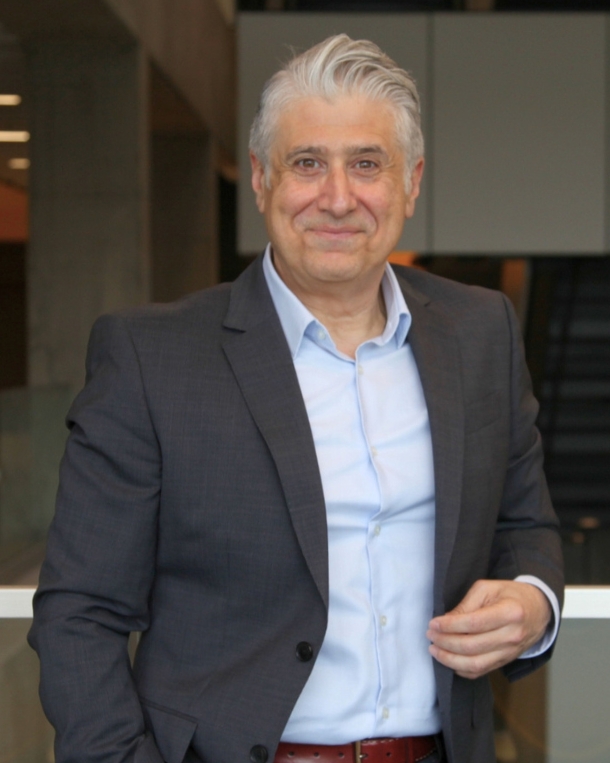
Ole Balling is a Professor at the Department of Mechanical and Production Engineering, Aarhus University, Denmark, specializing in multibody dynamics and vibration analysis. His work bridges theoretical mechanics with practical applications in renewable energy and agricultural systems, leveraging advanced computational modeling for industrial-scale engineering challenges. His primary research interests include Multibody Dynamics for structural simulation, Operational Modal Analysis in rotating machinery, Wind Turbine Engineering (focusing on gearboxes and blades), and Soil-Vehicle Interaction for agricultural/military applications. He also develops Digital Twin frameworks for agricultural vehicles and investigates Vibration Control in robotic systems, with strong emphasis on experimental validation and energy-efficient design. Recent publications (2020-2023) reveal concentrated expertise in offshore wind turbine reliability (gear microgeometry, tower vibrations), soil mechanics modeling (aggregate fracture, drawbar pull testing), and autonomous vehicle mobility frameworks. A recurring theme is the application of operational modal analysis to diverse systems—from parallel manipulators to wind turbine hubs—demonstrating cross-domain adaptability of his core methodologies in dynamics and control. Scientific Awards: No awards documented in source materials. Grants and project leadership highlight sustained NATO collaboration, including the ongoing Next Generation NATO Reference Mobility Model (NG-NRMM) (extending to August 2025) and Mobility Assessment Methods for Autonomous Military Ground Systems . Past projects include INNOMILL (2015-2018) for large-component machining, BioXtek (2014-2017) for agricultural technology, and Low Bottom Soft Soil Modeling (2013-2017) for terrain damage reduction. He operates within the Mechatronics and Dynamics section of the department, utilizing laboratories for vibration testing, soil mechanics experiments, and multibody simulation. Current work focuses on autonomous military vehicle assessment and wind turbine gearbox optimization, with future projects targeting energy-efficient accelerator magnets and large-scale machining cell development.