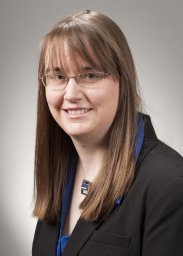
Anna Birely serves as the Williams Brothers Construction Company Associate Professor within the Department of Civil & Environmental Engineering at Texas A&M University, with her office located in DLEB 710E. She holds a core faculty position in structural engineering disciplines requiring advanced infrastructure resilience expertise. Educational Background: Ph.D., University of Washington, 2012 Her research portfolio centers on structural integrity under extreme conditions, with emphasis on reinforced concrete behavior during seismic events, performance-based design methodologies, and fire resistance mechanisms in construction materials. These interconnected fields address critical safety challenges in modern civil infrastructure through experimental and analytical approaches. No scientific awards, student advisees, or recent publications were documented in the provided text. Lab affiliations and grant details remain unspecified in available materials.
Yahya Kurama is a Professor in the Department of Civil and Environmental Engineering and Earth Sciences at the University of Notre Dame's College of Engineering. His research focuses on seismic performance of concrete buildings, precast/prestressed concrete systems, fire effects on structures, and sustainable construction materials. A registered engineer in Indiana and Michigan, he leads advanced structural testing initiatives. Ph.D., Civil Engineering, Lehigh University (1997) M.S., Civil Engineering, Lehigh University (1993) B.S., Civil Engineering, Bogazici University (1990) Prof. Kurama investigates seismic resilience , structural energy dissipation , and material efficiency in concrete systems. His work spans experimental testing, numerical modeling, and sustainable design innovations. His recent publications examine precast posttensioned walls, shear wall comparisons, and material strength impacts on nuclear structures. Key trends include earthquake-resistant systems and transformative wind/sustainable nuclear applications. Precast/Prestressed Concrete Institute (PCI) Charles C. Zollman Award (2015, 2018) ASCE State-of-the-Art of Civil Engineering Award (2012) National Science Foundation CAREER Award (1999) PCI Distinguished Educator Award (2014) Notre Dame Joyce Award for Undergraduate Teaching (2013, 2008) As a Kaneb Center Faculty Fellow (2010), he integrates education innovation with structural engineering advances. His research receives funding from federal agencies and industry partners like PCI, supporting both academic and practical applications in earthquake and fire resilience.
Vladimirs Yemeļjanovs serves as Professor and leading researcher at Riga Technical University's Institute of Management and Security, where he directs the Fire Safety and Civil Protection study program. Holding a PhD in Engineering (Dr.sc.ing.), he joined RTU in 2004 after 16 years in Latvia's State Fire and Rescue Service (SFS), including roles as Deputy Chief (1986-2002) and Director of the SFS Fire Safety and Civil Protection College (2002-2004). Education: PhD in Engineering (Dr.sc.ing.) His research centers on fire safety engineering, civil protection planning, and risk assessment methodologies. Key focus areas include developing civil protection plans for local governments, building safety systems (lightning protection, smoke detectors), emergency response algorithms, and occupational safety in construction. His work consistently bridges theoretical engineering principles with practical public safety applications, particularly in Latvian infrastructure contexts. Analysis of his 15 publications from 2019-2024 reveals a strong emphasis on localized risk modeling for Latvian institutions. Recurring themes include civil protection plan development for municipalities, building safety compliance (especially in schools), industrial accident consequence assessment, and health impact evaluations. He frequently employs simulation tools like Pathfinder and fault tree analysis for practical training and risk quantification. Professor Yemeļjanovs actively leads research projects including: ERASMUS+ project for unified social security study courses (2020-2023) Environmental risk plan development for Jelgava/Sauliai cities (2018-2019) Ongoing LATAK fire safety institution evaluations (2017-present) Stearic acid combustion experiment (2023) ESF professional competence development project (2022) Benzene unloading explosion-risk calculations (2020) New firefighting technology research (2019)
Professor Mahendran Mahen is a distinguished academic in Structural Engineering at Queensland University of Technology's School of Civil Engineering. With over two decades of research excellence, his work has significantly advanced the understanding of cold-formed steel structures under extreme conditions, particularly fire and bushfire scenarios. His leadership in the field is evidenced by his extensive publication record and supervision of numerous doctoral students. Professor Mahen's research interests center on structural performance under fire conditions, with particular emphasis on light steel framing systems, bushfire-resistant construction, and numerical modeling of structural behavior. His work bridges theoretical analysis with practical applications, focusing on developing safer building systems that comply with stringent safety standards while maintaining structural integrity during extreme events. His research has directly influenced building codes and safety standards for steel construction in fire-prone regions. The publication portfolio reveals a clear research trajectory focused on fire resistance of light steel frame systems, with recent work expanding into bushfire protection for residential structures. His articles demonstrate sophisticated integration of experimental testing with advanced numerical modeling techniques, providing comprehensive insights into structural behavior under thermal stress. The consistent high citation counts across his publications indicate significant impact within the structural engineering community. Professor Mahen has received recognition through substantial research funding and collaborative projects with industry partners, though specific awards aren't detailed in the publication record. His work has formed the foundation for several building code provisions related to steel construction in fire conditions. As a dedicated educator and mentor, Professor Mahen has supervised numerous PhD and Master's students, many of whom have become prominent researchers in their own right. His laboratory facilities support cutting-edge research in structural fire engineering, with specialized equipment for full-scale fire testing of building components. Current research directions include developing innovative safe room designs for bushfire protection and enhancing the fire resistance of steel structural systems through novel material applications.
Davide Papurello serves as an Associate Professor in the Department of Energy (DENERG) at Politecnico di Torino, where he is a member of the Interdepartmental Center Ec-L - Energy Center Lab. He actively participates across multiple academic colleges including the College of Chemical and Materials Engineering (as invited member), College of Electrical and Energy Engineering (as full member), and College of Mechanical, Aerospace, and Automotive Engineering (as invited member). His research spans multiple critical energy domains including concentrated solar power, hydrogen and SOFC systems, lithium-ion battery technologies, tunnel safety, and thermodynamic systems. His specific research lines focus on syngas production through solar power, biogas purification for SOFC systems, battery stress abuse analysis, and safety of new energy carriers in confined spaces like road tunnels. Dr. Papurello's recent publications reveal strong emphasis on safety aspects of emerging energy technologies, particularly concerning battery electric vehicles and hydrogen applications in tunnel environments. His work bridges experimental and modeling approaches across renewable energy conversion, storage, and safety engineering. Mentoring Polito Project (M2P) certification (July 2023) Learning to Teach (L2T) certification (February 2023) He supervises approximately 20 master's theses, 40 bachelor's theses, and 10 curricular internships annually. His teaching spans multiple courses including Ventilation and Tunnel Safety (PhD level), Energy Systems Laboratory, New Battery Systems for Mobility, and Applied Thermodynamics across various engineering programs. He is actively involved in international collaborations through the UNITE! Alliance, developing summer schools on energy carrier safety in tunnels.
Federico Carosio is an Associate Professor at the Department of Applied Science and Technology (DISAT) of the Polytechnic University of Turin , affiliated with the College of Chemical and Materials Engineering . His work focuses on designing nanostructured functional coatings using polyelectrolytes and nanoparticles for industrial applications. Research Interests: Flame retardancy of polymers, sustainable structural materials, graphene nanoplatelets, layer-by-layer assembly, nanocellulose, and polymer nanocomposites. Recent publications highlight his expertise in fire-safe materials, biobased coatings, and nanocomposite engineering. Key projects include GAIA (green cellulose-based insulating materials) and PANACEA (nanostructured cellulose recovery). He supervises PhD students working on layer-by-layer assembly and flame-retarded composites. Laboratories: Functional Coatings Laboratory, Chemical Synthesis Laboratory, Fire Testing Laboratory, and others within DISAT. Carosio contributes to commercial patents on flame-retardant coatings for polymers, soft magnetic materials, and foam impregnation processes.
Peter Wilkinson is the Royal Academy of Engineering Visiting Professor in Fire Safety Design at the School of Architecture, Building and Civil Engineering, Loughborough University. He focuses on integrating fire safety expertise into architectural and built-environment curricula. With nearly 30 years of experience, he is a Chartered Engineer, Chartered Scientist, and Registered Fire Risk Assessor. He founded Pyrology Limited in 2012, a consultancy specializing in fire engineering, risk assessments, and expert witness services. He co-leads the CROSS scheme, a confidential safety reporting initiative expanded to include fire safety, and serves as a Designated Person for anonymizing reports. He chairs multiple BSI technical committees, including FSH/024 (Fire Safety Engineering) and FSH/009 (Fire Terminology), and leads revisions to fire safety vocabulary standards (BS4422). Academically, he holds a BEng (Civil Engineering, Loughborough, 1995), MSc (Fire and Explosion, Leeds, 2003), and an EngD (Resilient Fire Engineering Design, Loughborough, 2013). His professional honors include Honorary Fellowships from the Institution of Structural Engineers and multiple memberships in fire engineering and technology societies. His research emphasizes resilient building design, structural fire safety, fire compartmentation, and evacuation strategies. Notable contributions include advancing BS 7974 standards, BIM-driven fire safety, and probabilistic modeling. He advocates for global fire safety education and chairs Engineering Council initiatives to standardize professional competency for building safety engineers under the Building Safety Act. Awards include Fellowship from the Institution of Fire Engineers and recognition for his role in shaping fire engineering practices. His voluntary roles include IFE International President (2022/23) and trustee roles, highlighting his industry leadership. He collaborates across academia and industry to enhance fire safety through standards, education, and innovative practices.
Professor Maurice Guerrieri is a leading researcher in structural fire engineering and materials science at Victoria University (VU), affiliated with the Institute for Sustainable Industries & Liveable Cities (ISILC). He holds the title of Professor and leads the NATA-accredited VU Structural Fire Testing Facility. His expertise includes fire performance of geopolymer concrete, tunnel fire safety, and large-scale structural testing. He has pioneered infrastructure fire testing for major projects like Melbourne’s Metro Tunnel and Sydney Metro, and authored the EFNARC 459 International Standard. Education: BEng (Hons), Monash University (2000) PhD (Civil), Monash University (2005) Research Focus: Experimental fire engineering, concrete spalling under fire, tunnel structural safety, and sustainable construction materials. Collaborations include AECOM, Transurban, and international institutes like France’s CSTB and Sweden’s RISE. His work integrates AI for predictive modeling in geotechnical research. Awards: 2019 Vice-Chancellor’s Award for Engagement with Industry 2024 ISILC Building Research Capacity Award Funding & Grants: Secured over $2.1M in research funding since 2021, including ARC LIEF grants and industry partnerships. Projects include fire testing for the Westgate Tunnel and North East Link. Labs/Teams: Director of VU’s large-scale fire testing facility and head of the Structural Fire Engineering group within ISILC.
Charles Fontanier is an Associate Professor in the Department of Horticulture & Landscape Architecture at Oklahoma State University. He holds a Ph.D. (2015), M.S. (2010), and B.S. (2007) in Agronomy-related fields from Texas A&M University. His research focuses on applied physiology in turf sustainability, emphasizing water conservation, irrigation science, cultivar development, and abiotic stress management. Key projects include breeding stress-tolerant turfgrasses and optimizing rootzone systems. His grants include initiatives like 'Crucial Capacity Building Through Graduate Training In Advancing Climate-Resilient Horticulture' (2025–2030) and 'Precision Irrigation To Improve Water Use Efficiency' (2022–2025). Fontanier collaborates widely, with over 55 peer-reviewed publications since 2020, covering topics like shade tolerance in warm-season grasses, genetic mapping of stress traits, and sustainable urban horticulture practices. Research highlights include identifying shade-tolerant bermudagrass cultivars, mapping QTLs for cold and drought resistance, and evaluating novel irrigation techniques. His work bridges molecular genetics with practical turf management, aiming to enhance ecological resilience in managed landscapes.
Prof. Marion Gelien is a Professor in Civil Engineering at Hochschule Ruhr West, leading the Bauingenieurwesen study program and teaching Massivbau (mass concrete construction) and Tragwerkslehre (structural design). She holds a Dr.-Ing. from Bergische Universität Wuppertal, with a PhD focusing on fire engineering of concrete columns. Her career includes roles as project engineer at firms like IGH International GmbH and Kempen Krause Hartmann, specializing in structural design for high-rise buildings, bridges, and tunnel rehabilitation. Academic Background: Dipl.-Ing. (FH) from Fachhochschule Köln, with a music degree in Violin Pedagogy from Hochschule für Musik Köln. Research Focus: Structural analysis under fire conditions, concrete construction techniques, and advanced structural design methodologies. She leads the KIB-Labor (Konstruktiver Ingenieurbau) and has published works on thermal behavior of concrete elements. Awards include the Perthel-Preis for academic excellence. Teaching responsibilities span B.Sc. and M.Sc. modules in structural engineering and construction projects.
Andrés I. Ávila is an Associate Professor in the Department of Mathematical Engineering at the University of La Frontera, Chile. He holds a Ph.D. in Mathematics (1999) and a postdoctoral fellowship (1999) from the University of Missouri. His research focuses on Partial Differential Equations , Numerical Methods for PDEs , High Performance Computing , and Mathematical Modeling . Education Ph.D. in Mathematics (1999), University of Missouri Postdoctoral Fellow (1999–2000), Universidade Estadual de Campinas His work spans nonlinear PDEs (e.g., Schrödinger systems, combustion theory), high-performance computing (Xeon Phi coprocessors, agent-based models), and environmental modeling (floods, wildfires, crop optimization). Articles highlight interdisciplinary applications in physics, biology, and engineering. He has supervised 8 Master’s and 2 Ph.D. students, advised national projects (e.g., Corfo Innovation , Fondef grants), and co-led the National Laboratory for High-Performance Computing (EMC-02) . Collaborations include institutions in Germany, Brazil, and France.
Efthymios Altsitsiadis is an Associate Professor at the Department of Management, Society and Communication, Copenhagen Business School. His research focuses on sustainability, renewable energy transition, wildfire management, stakeholder engagement, and social network analysis. He has contributed to interdisciplinary projects such as TREEADS, addressing holistic fire management ecosystems and organizational structural factors in disaster response. His work intersects environmental science, public policy, and information systems innovation. Key areas include developing frameworks for social acceptance of renewable energy and analyzing drivers of wildfire evacuation stakeholder collaboration. Recent studies also explore virtual agents' trustworthiness in human-agent interactions. Altsitsiadis collaborates with institutions like ACCELIGENCE Ltd and Marin Energi Testsenter AS. His research spans both academic and applied domains, including pandemic-related food systems resilience and optimization algorithms in manufacturing. He has supervised 2 academic works and contributed to EU-funded deliverables and policy reports. Notable projects include the Thessaloniki Metro Study on public transport innovations and analyses of market trends in collaborative production. His diverse portfolio reflects expertise in bridging organizational behavior with environmental and technological challenges.
Alan Druschitz is a Professor of Practice and Eminent Scholar in the Department of Materials Science and Engineering at Virginia Tech. He serves as Director of the Kroehling Advanced Materials Foundry and the Virginia Tech Foundry Institute for Research and Education (VT FIRE). His research focuses on advanced casting processes, alloy development, and materials testing, with emphasis on ballistic materials, corrosion resistance, and non-destructive evaluation. Dr. Druschitz holds a B.S. and Ph.D. in Metallurgical Engineering from Illinois Institute of Technology. He has been recognized with the 2018 College of Engineering Dean's Award for Excellence in Service. His work spans cutting-edge areas such as additive manufacturing for casting molds, advanced heat treatments for ferrous alloys, and the development of lightweight metal cellular structures. He has pioneered novel sacrificial anode technologies and explored the mechanical properties of intercritically austempered ductile irons through neutron diffraction studies. Dr. Druschitz's research also addresses industrial challenges like mitigating porosity in castings, optimizing lost foam casting processes, and improving the performance of automotive components through material innovation. His contributions bridge academic research with practical applications in manufacturing and materials engineering.
Jan Karlshøj is an Associate Professor in the Department of Civil and Mechanical Engineering at the Technical University of Denmark (DTU). With over 20 years of experience in consulting engineering and research, he specializes in Building Information Modeling (BIM), interoperability, and sustainable construction solutions. His work bridges academic research with industry standards, contributing to international organizations like buildingSMART and ISO. Education: MBA, DTU Business (2018–2020) Ph.D., Technical University of Denmark (1989–1994) MSc., Technical University of Denmark (1983–1988) Research Interests: Dr. Karlshøj focuses on BIM implementation, interoperability standards, and holistic design strategies. His work emphasizes sustainable construction practices and the integration of digital technologies like OpenBIM and process modeling. He actively contributes to standardization efforts, including ISO and buildingSMART frameworks. Publications: His recent work includes critical overviews of BIM best practices, analyses of building lifecycle models, and studies on OpenBIM adoption. These publications highlight trends in digitalization, interoperability challenges, and the integration of BIM with sustainability goals. Awards: buildingSMART Fellow (2017) Advising & Grants: Dr. Karlshøj supervises multiple PhD students, including those exploring digital twins, green construction, and fire safety design. He leads projects funded by initiatives like the Interreg program and collaborates on international standards for BIM and construction processes. Labs/Teams: His research aligns with DTU’s focus on Digital Building Technologies, emphasizing interdisciplinary collaboration between engineering, IT, and sustainability disciplines.
Qingliang Yu is an Associate Professor at Eindhoven University of Technology (TU/e), specializing in cement-bound materials and structural behavior across micro-, meso-, and macro-levels. His research focuses on safety (fire safety, impact resistance, air quality) and energy-related topics (thermal comfort, energy conservation). He holds a PhD from TU/e and has authored over 190 journal papers and 100 conference papers. He serves as Editor-in-Chief of Journal of Building Engineering and holds editorial roles in multiple journals. Education: Bachelor's and Master's in Civil Engineering from Wuhan University of Technology (2003, 2006) PhD in Materials Science from TU/e (2012) Research Interests: Cementitious materials, ultra-high-performance concrete (UHPC), fire and impact resistance, thermal properties of construction materials, and sustainable building solutions. His work contributes to UN SDGs related to sustainable cities and climate action. Recent Research Trends: Articles emphasize material durability under extreme conditions, additive manufacturing of sustainable concrete, and carbonation-activated binders. Key themes include improving UHPC performance, optimizing fiber-reinforced composites, and enhancing material recyclability. Awards: 2019 NWO Prize for Additive Manufacturing of Functional Construction Materials 2019 NWO Prize for Sustainable Concrete in Zero-Energy Buildings Professional Contributions: Advised 31 students, editorial roles in 5+ journals, and active in technical committees (CEC, CAM, ADC, ECS). Teaches courses on building physics, material science, and sustainable construction. Labs/Teams: Part of the EIRES Research group and collaborates internationally on sustainable construction materials and disaster-resistant infrastructure.