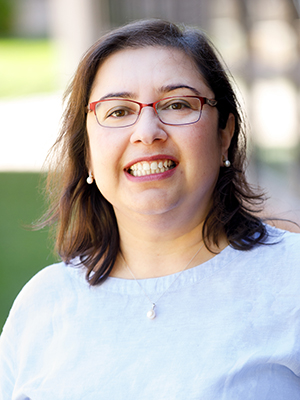
Dr. Eylem Asmatulu is an Associate Professor in the Department of Mechanical Engineering at Wichita State University (WSU), part of the College of Engineering. She joined WSU as an educator in 2015, became an Assistant Professor in 2017, and was promoted to her current rank in 2023. Previously, she worked in Environmental Health and Safety at WSU. She currently advises three PhD, three MS, and two BS students, having graduated 13 students since 2015. Her research focuses on recycling and reuse of materials, composite materials engineering, nanotechnology safety, and sustainable manufacturing. She has secured over $1.7 million in grants, published 131+ articles (h-index 26), and contributed to fields like thermal energy storage, biomedical nanomaterials, and aerospace material science. Her work emphasizes interdisciplinary approaches, combining machine learning for material property prediction and addressing safety concerns in nanotechnology across industries. Key projects include flame-retardant composites, biogas production optimization, and superhydrophobic nanofiber applications for water treatment. She actively promotes sustainability through recycling innovation and lean manufacturing practices in aerospace. Dr. Asmatulu’s research has been cited over 2,870 times. Her contributions span academia and industry, with a focus on translating innovations into practical solutions for environmental and industrial challenges.
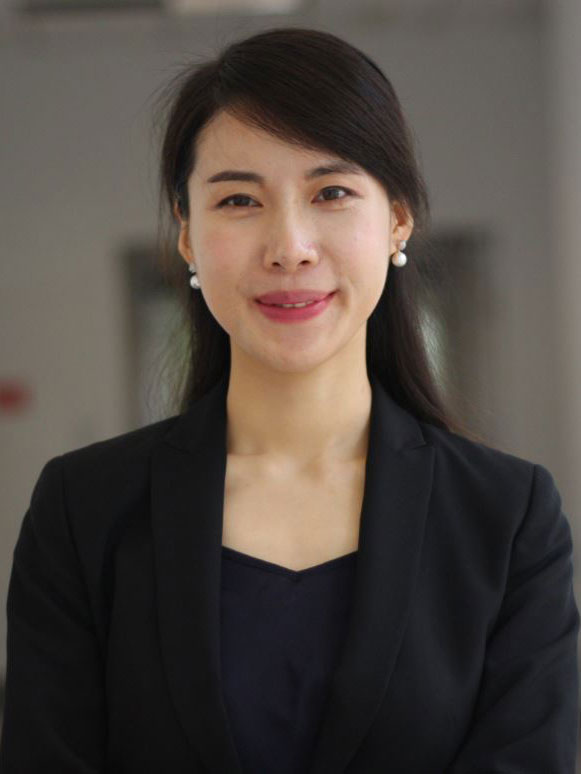
Dr. Hongli (Julie) Zhu is an Associate Professor in the Department of Mechanical and Industrial Engineering at Northeastern University's College of Engineering. Her research focuses on sustainable energy storage, multifunctional materials, and advanced manufacturing, with emphasis on developing environmentally friendly biomass-derived materials, all solid-state batteries, and flow batteries. She leads the ZHU Lab at Northeastern University, which is dedicated to creating safer, cheaper, and higher performance energy storage solutions while exploring multifunctional materials derived from nature. Dr. Zhu received her PhD from South China University of Technology and Western Michigan University (2004-2009). She conducted postdoctoral research at KTH Royal Institute of Technology in Sweden (2009-2011), focusing on biodegradable and renewable biomaterials from natural wood, followed by additional postdoctoral work at the University of Maryland (2012-2015), where she researched nanocellulose and energy storage. Dr. Zhu's research spans multiple disciplines at the intersection of materials science, energy storage, and sustainable manufacturing. Her work addresses critical challenges in energy storage technology, including developing all solid-state batteries, flow batteries, and high energy density battery systems. She has pioneered research in sustainable biomass-derived materials, particularly investigating cellulose, hemicellulose, and lignin for applications in bendable, implantable, and biocompatible electronics. Her lab also focuses on advanced manufacturing techniques, including high-speed roll-to-roll processing for emerging advanced materials and devices. Analysis of Dr. Zhu's publication record reveals a strong focus on next-generation battery technologies, particularly solid-state systems. Her research demonstrates significant contributions to understanding and improving lithium dendrite suppression, electrode architecture optimization, and interface stabilization in solid-state batteries. She has also made substantial advances in sustainable materials derived from natural resources, developing applications for cellulose nanostructured fibers, paper, and aerogel/hydrogel systems. MRS Communications Early Career Distinguished Presenters and JMR Distinguished Invited Speakers (2024) Selected in Stanford University List of Top 2% Scientists Worldwide (2021-2024) College of Engineering Faculty Fellow (2023) Soren Buus Outstanding Research Award (2022) Women in Materials Science, Advanced Materials (2021 and 2022) Women Scientists at the Forefront of Energy Research, ACS Energy Letters (2020) Innovator of the Year 2013, Maryland Jakob Wallenberg Scholarship, Sweden Dr. Zhu has secured significant research funding from various sources, including the National Science Foundation and Department of Energy. Her current projects include "Uncovering the mechano-electro-chemo mechanism of fresh Li in sulfide based all solid-state batteries through operando studies" (NSF), "Enabling Advanced Electrode Architecture through Printing Technique" (DOE), and "Engineering the Metal Sulfide Interface in All Solid State Batteries through Operando Study" (NSF). She collaborates with industry partners including Rogers Corporation and has developed patented technologies related to sustainable materials and energy storage. Dr. Zhu serves as Codirector of Advanced & Intelligent Manufacturing, Editor of Progress in Materials Science, and on the Editorial Advisory Board of Chemical Society Reviews. The ZHU Lab at Northeastern University is a highly interdisciplinary research group that bridges scales from the nanoscopic to macroscopic and system level. The lab's work has led to numerous patents, including "Natural fiber composites as a low-cost plastic alternative" and "Fire-retardant Nanocellulose Aerogel, and Methods of Preparation and Uses Thereof." The group focuses on making energy storage safer, cheaper, and higher performing while exploring multifunctional materials derived from nature, with particular emphasis on applying high-speed roll-to-roll manufacturing to emerging advanced materials and devices.
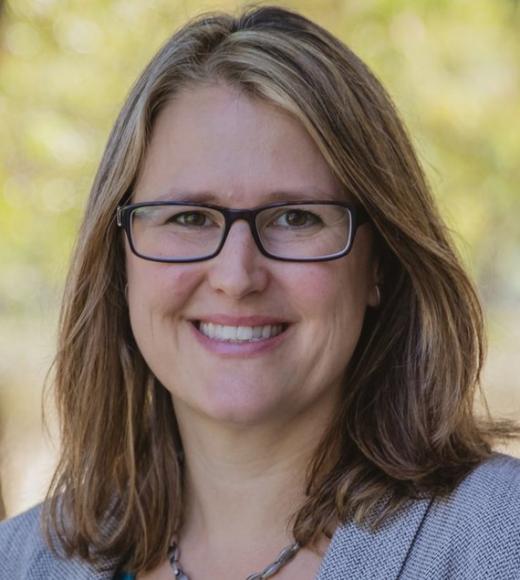
Barbara Linke is a Professor in the Department of Mechanical and Aerospace Engineering at the University of California Davis, affiliated with the College of Engineering. She leads the Laboratory for Manufacturing and Sustainable Technologies Research (MASTeR) and serves as Principal Investigator at the Advanced Highway Maintenance and Construction Technology (AHMCT) Research Center. Her research focuses on sustainable manufacturing processes, abrasive machining, and smart manufacturing technologies, with applications in aerospace, biomedical, and automotive sectors. Dr. Linke holds a Dr.-Ing. habil. and has been recognized with the UC Davis Chancellor’s Fellow (2021-2022) and the Outstanding Junior Faculty Award from the College of Engineering. She advises the UC Davis Student Chapter of the Society of Manufacturing Engineers (SME) and the Women Machinists’ Club. She collaborates with the Fire Research Group at UC Berkeley and the Wildfires Research Working Group at UC Davis, integrating sustainability into wildfire-related infrastructure projects. Her research interests include energy-efficient manufacturing systems, lifecycle assessments, and the integration of Industry 4.0 technologies. Notable contributions include developing frameworks for sustainable additive and subtractive manufacturing, analyzing residual stresses in aluminum alloys, and advancing mobile 3D printing for disaster response. Her work bridges engineering education with cutting-edge research, emphasizing hands-on projects like the Shigley Hauler design competition. Dr. Linke’s labs and affiliations include the Materials Decarbonization and Sustainability Center and the UC Davis AI Center in Engineering, reflecting her commitment to interdisciplinary innovation. She has authored over 50 peer-reviewed articles, with recent focus on smart manufacturing systems, renewable energy integration in machining, and sustainable biomedical implant production.
Professor Ashish Sharma is a Professor of Hydrology and Water Resources in the School of Civil and Environmental Engineering at the University of New South Wales, Sydney, Australia. With a PhD in Civil Engineering from Utah State University and extensive experience in hydrological research, he has established himself as a leading expert in his field. Dr. Sharma's research focuses on hydrological uncertainty, with particular emphasis on the impact of climate change and variability on hydrological practice. His work spans multiple areas including remote sensing applications, stochastic hydrological modeling approaches, development of hydrological models, and addressing key hydrology challenges such as design flood estimation and water resources management. He has made significant contributions to understanding how climate change affects hydrological extremes and water availability. His publications reveal a strong trend toward advanced modeling techniques for climate change impact assessment, with recent work focusing on spectral transformation methods, multivariate bias correction in climate models, flood forecasting improvements, and the relationship between temperature and precipitation extremes. His research increasingly integrates remote sensing data with hydrological modeling to address challenges in data-scarce regions. Professor Sharma has held significant leadership positions including President of the International Commission of Hydrologic Sciences (IAHS) Commission on Statistical Hydrology (STAHY) since 2016, service on the Australian Research Council's College of Experts twice, and participation on the Technical Committee for the Australian Rainfall and Runoff Design Flood Estimation guidelines (ARR2016). In addition to his research leadership, Professor Sharma actively mentors students and collaborates with researchers globally, as evidenced by his extensive publication record across top hydrology and climate journals. His work bridges theoretical hydrology with practical applications for water resources management under changing climate conditions.
Véronique Michaud is an Associate Professor at the École Polytechnique Fédérale de Lausanne (EPFL), affiliated with the Laboratory for Processing of Advanced Composites (LPAC) within the School of Engineering (STI). Her research focuses on polymer composite processing, adaptive composites (e.g., shape memory alloys, self-healing mechanisms), and material science. She also contributes to teaching in Materials Science and Engineering, including courses like 'Materials: From Chemistry to Properties' and 'Composite Materials Processing.' Her academic roles include Associate Professorships in SMX, EDMX, and EDAM teaching units, and she serves as a PhD program committee member for the Doctoral Program in Advanced Manufacturing. She has advised numerous PhD students, including Michele Bonacina, Pierre-Alexandre Boschert, and Jean-Baptiste Desbrest, among others. Research highlights include sustainable composite material development, defect mitigation in composites, and advanced manufacturing techniques. Her work often addresses challenges in aerospace and renewable energy applications, emphasizing sustainability and material innovation.
Professor Andrea Frangi is affiliated with the Institute of Structural Engineering at ETH Zurich, where he leads research and teaching in Structural Timber Engineering , Hybrid Structures , and Fire Safety Engineering . Education: Dipl. in Civil Engineering (ETH Zurich, 1995), Ph.D. in Technical Science (ETH Zurich, 2001). His research interests focus on timber structures, hybrid systems, and fire safety. Recent work explores rate-dependent connections, adhesive bonding in timber-mortar composites, and fire resistance of cross-laminated timber. Notable publication trends include: Advancements in strip-reinforced timber beams and epoxy hybrid-adhesives . Fire safety studies on charring rates , compartment fires , and progressive collapse in timber structures. Material testing under cyclic loading , high-speed loads , and moisture exposure . He teaches courses such as Timber Structures I/III , Fire Science , and Structural Fire Design , and collaborates with organizations like Eurocode 5 committees and the International Association for Fire Safety Science.
Jonathan Cullen is Professor of Sustainable Engineering at the University of Cambridge and President of Fitzwilliam College, specializing in resource efficiency and decarbonization through top-down analysis of industrial material and energy systems. His work bridges academic research with industry applications across energy-intensive sectors. Education: Bachelor's in Chemical and Process Engineering, University of Canterbury, New Zealand MPhil in Engineering for Sustainable Development, University of Cambridge PhD in Engineering Fundamentals of Energy Efficiency, University of Cambridge His research develops metrics for quantifying energy and material consequences of production systems, focusing on circular economy implementation, minimum energy requirements, and zero-carbon transition pathways. Key applications target cement, steel, plastics, and petrochemicals where he pioneers methods like exergetic analysis and material flow accounting to expose carbon lock-ins and circularity opportunities. Recent publications reveal three dominant trends: (1) Frameworks for theoretical minimum energy requirements across industrial processes, (2) Geopolitical analysis of critical mineral flows and ownership structures, and (3) Circular economy metrics for plastics and construction materials. These consistently employ system-scale modeling validated through industry partnerships. Research Funding: Lead: C-THRU ($4M, VKRF) - carbon clarity in petrochemical supply chains Co-I: UK FIRES (£5.2M, EPSRC) - industrial decarbonization program Co-I: CirPlas (£1.25M, UKRI) - plastic waste elimination 7+ projects (EPSRC, Innovate UK, Horizon 2020) Academic Leadership: Teaching: Energy Systems and Policy (MPhil in Energy Technologies) Undergraduate supervision in Materials/Mathematics Graduate Tutor at Fitzwilliam College IPCC AR6 Lead Author (Industry Chapter) He directs the Resource Efficiency Collective, which develops open-source tools like Mat-dp for material demand projections and Starter Data Kits for energy planning. Current work focuses on scaling circular business models for construction retrofitting and quantifying geopolitical risks in critical mineral supply chains.
Markku Karjalainen is a Professor in the Department of Architecture at Tampere University's Faculty of Built Environment. With over 80 research publications spanning from 2016 to 2025, he has established himself as a leading expert in timber construction and wooden building systems in Finland. Professor Karjalainen's research primarily focuses on timber construction , particularly multi-story wooden buildings, dovetail wood construction techniques, and sustainable building practices. His work spans architectural design, structural engineering, fire safety, and environmental impact assessment of wooden structures. He has conducted extensive statistical analyses of Finnish timber residential buildings, examining construction practices from 1995 to the present. His research demonstrates a strong commitment to advancing wooden construction technologies while addressing practical challenges in fire safety, structural performance, and building physics. Analysis of his recent publications (2023-2025) reveals a consistent focus on dovetail construction techniques for mass timber elements, with numerous studies examining structural performance, fire properties, and air permeance. His work bridges theoretical research with practical applications in the construction industry, particularly in Finland where wooden multi-story construction has seen significant growth. Karjalainen's research often involves international collaboration, with studies comparing practices across different countries and examining global perspectives on timber construction. His scholarly output demonstrates a methodical progression from basic statistical analysis of building practices to increasingly sophisticated investigations of specific construction techniques and their performance characteristics. This evolution reflects both his growing expertise and the maturation of timber construction as a field of academic inquiry.
Francine Battaglia is a Professor and Chair of the Department of Mechanical and Aerospace Engineering at the University at Buffalo, part of the School of Engineering and Applied Sciences. She directs the Advanced Simulations for Computing ENergy Transport (ASCENT) Laboratory. Her research focuses on computational fluid dynamics (CFD) applications in building energy systems, renewable energy, turbulent multiphase flows, and combustion. She holds a PhD in Mechanical Engineering from Pennsylvania State University (1997), and MS/BS degrees from SUNY Buffalo (1992, 1991). Research interests include CFD modeling for HVAC optimization, natural ventilation design, pathogen dispersion mitigation, and biomimetic aerodynamics inspired by insect flight. Her work bridges engineering, biology, and environmental science, addressing challenges in energy efficiency, public health, and sustainable architecture. Key contributions include developing predictive models for hydroplaning safety, solar chimney systems, and microbial fuel cells. She has received accolades such as the ASME Fellow distinction (2009), MAC Academic Leadership Fellowship (2019-2020), and Virginia Tech’s Teaching Excellence Award (2016). Her articles span CFD advancements in fluidization, combustion, and ventilation strategies, emphasizing practical applications in energy systems and public health. The ASCENT Lab collaborates on adaptive HVAC technologies and eco-friendly building designs, reflecting her dedication to interdisciplinary innovation. Awards: MAC Leadership Fellow, ASTFE Fellow, ASME Dedicated Service Award Education: PhD (Penn State), MS/BS (SUNY Buffalo) Labs: ASCENT Lab (focusing on CFD and energy transport)
Markus König is a Professor of Informatics in Civil Engineering at Ruhr University Bochum, where he has been researching and teaching since October 2009. His work focuses on Building Information Modeling (BIM), digital construction technologies, and civil engineering informatics, with significant contributions to the development and implementation of digital methods in German construction industry. Dr. König earned his degree in civil engineering with a focus on applied computer science at Leibniz University Hannover, where he also completed his doctorate on cooperative building planning at the Institute for Building Informatics. He subsequently held a junior professorship for Theoretical Methods of Project Management at Bauhaus University Weimar before joining Ruhr University Bochum. His research spans multiple cutting-edge areas including Building Information Modeling (BIM), construction process simulation, tunneling informatics, infrastructure asset management, and the application of artificial intelligence and computer vision in civil engineering. As chair of the Building Informatics Working Group from 2012-2016, he played a key role in developing the first national BIM curriculum for German universities and serves as editor of the book 'Building Information Modeling: Technological Foundations and Industrial Practice.' Analysis of his recent publications reveals a strong trend toward semantic technologies, digital twins, automated compliance checking, and the integration of AI in construction processes. His work increasingly focuses on information containers, ontology development, and the application of large language models to infrastructure data, reflecting the evolving landscape of digital construction. Dr. König's significant contributions to digital construction have been recognized with prestigious awards: Lower Saxony-Bremen Construction Industry Award (2017) for 'services in the development and introduction of digital construction in Germany' Konrad Zuse Medal (2020) While specific details about his advising and grant activities aren't explicitly mentioned in the provided text, his extensive publication record with numerous co-authors suggests active supervision of doctoral students and research staff. His involvement in multiple collaborative research projects is evident from his publication history. At Ruhr University Bochum, Professor König leads a research group focused on civil engineering informatics, with particular emphasis on BIM, digital construction technologies, and their application across the building lifecycle. His team appears to work at the intersection of computer science and civil engineering, developing innovative solutions for construction process optimization, infrastructure management, and digital transformation of the AEC industry.
Prof. Sam Salem, Ph.D., P.Eng., is a Full Professor in the Department of Civil Engineering at Lakehead University's Faculty of Engineering. He founded the Canada Foundation for Innovation (CFI)-sponsored Fire Testing and Research Laboratory (LUFTRL), the only facility of its kind in a Canadian university. Ph.D. in Structural Fire Engineering, Carleton University M.A.Sc. in Structural Engineering, Zagazig University (Egypt) B.A.Sc. (Honors) in Civil Engineering, Zagazig University (Egypt) Dr. Salem specializes in structural fire engineering, focusing on performance-based fire resistance design, large-scale fire endurance testing, and finite element modeling of steel/concrete/timber structures. His research program investigates structural fire performance of innovative building systems, particularly mass timber construction, through experimental testing and computational modeling. His work has attracted over $2.1 million in research grants from NSERC, CFI, OMRI, NOHFC, MNRF, MTI, and other agencies. He has authored/co-authored 60+ peer-reviewed publications and holds two patents (Canada/USA) for beam-end connection mechanisms in mass timber buildings. Lakehead University 2023 Research Excellence Award Lakehead Merit Awards (Research 2022, Teaching & Research 2020/2015) Contribution to Teaching Awards (2022, 2018, 2014) ASFE 2019 Outstanding Paper Award Dr. Salem trained 40+ highly qualified personnel through a balanced approach emphasizing academic excellence, practical implementation, professional development, and career skills. He served as Dept. Chair (2021-2023), graduate program coordinator (2017+), and sits on multiple university and technical committees including ULC Standards Technical Committee and Canadian Commission on Building and Fire Codes.
Paolo Riva is a Full Professor of Structural Engineering at the Department of Design and Technologies of the Faculty of Engineering, University of Bergamo. He has served as Dean of the Faculty of Engineering (2009-2012) and Director of the Department of Engineering at the same university since 2012. His expertise lies in seismic engineering and structural analysis of reinforced concrete structures. Professor Riva graduated in Civil Engineering from Politecnico di Milano in 1984 and earned his Ph.D. in Civil Engineering from the University of Waterloo, Canada in 1987. He began his academic career as a researcher at the University of Brescia (1991-2001), became Associate Professor there in 2001, and joined the University of Bergamo as Full Professor in 2005. His primary research interests focus on the seismic behavior of reinforced concrete structures, particularly structural walls and prefabricated structures. He also specializes in seismic retrofitting of historic buildings, nonlinear analysis of reinforced concrete structures, and fire behavior of reinforced concrete structures. His work bridges theoretical analysis with practical applications for enhancing structural safety in earthquake-prone regions. Professor Riva's recent publications demonstrate a strong focus on seismic damage assessment, structural retrofitting solutions, and sustainability in structural engineering. His research often addresses practical challenges in post-earthquake scenarios, including damage identification through advanced monitoring techniques and development of innovative retrofit strategies for existing structures. A notable trend is his increasing emphasis on integrating sustainability principles into seismic retrofitting practices. Seismic Reliability of Structures (WP3 - Reluis), 2022, 24 months Structural vulnerability models for natural hazards and industrial cascading effects, 2024, 33 months Sustainable Approaches For Earthquake Resistant_REhabilitation solutions for the BUILT environment, 2024, 15 months Professor Riva has directed all these research projects as Scientific Director. His expertise has been recognized through appointments to post-seismic emergency commissions following major earthquakes in Italy, where he provided critical guidance on intervention methods for seismic repairs and improvements for public and monumental buildings.
Anastasios P. Vassilopoulos is an Adjunct Professor and Head of the Composite Mechanics Group (GR-MEC) at the École Polytechnique Fédérale de Lausanne (EPFL) within the School of Architecture, Civil and Environmental Engineering (ENAC). He holds additional roles as Director of the Doctoral Program in Civil and Environmental Engineering (EDCE) and is affiliated with multiple research groups and committees at EPFL. His expertise spans composite materials, structural adhesives, and offshore renewable energy systems. Education: PhD in Mechanical Engineering, University of Patras, Greece (2001) Dipl. Mechanical Engineer, University of Patras, Greece (1995) Erasmus Exchange, University of Bristol, UK (1994–1995) Research Interests: Offshore renewables, particularly wind turbine blade materials and joints Fatigue analysis of composite materials and adhesive joints Experimental and analytical methods for composite structures Design of composite constructions and structural integrity His work emphasizes practical applications in engineering, including wind energy systems and fiber-reinforced polymer (FRP) composites. Teaching & Labs: Teaches courses on structural mechanics, advanced composites, and floating offshore renewables Leads the GR-MEC lab, focusing on composite mechanics and joint behavior Supervised over 15 PhD students at EPFL Grants & Projects: Swiss National Science Foundation-funded projects on bonded composite structures and wind turbine blade materials Research on fire-resistant composite bridge decks and lightning effects on composite structures
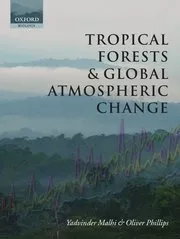
Professor Yadvinder Malhi is a leading ecosystem scientist at the University of Oxford , holding the Professor of Ecosystem Science chair at the Environmental Change Institute (ECI) within the School of Geography and the Environment. He also serves as Jackson Senior Research Fellow at Oriel College , Director of the Leverhulme Centre for Nature Recovery , and President of the British Ecological Society . Active researcher in tropical and temperate forest dynamics Advises UK and Scottish governments on nature restoration Global research across Amazon, Andes, Africa, and UK Research Focus: Malhi investigates how terrestrial ecosystems respond to global atmospheric changes, with emphasis on tropical forests , climate change adaptation , and nature-based solutions . His work integrates field physiology, remote sensing, and ecosystem modeling, notably through the GEM and RAINFOR networks. Recent Trends: Recent publications highlight cross-disciplinary approaches combining terrestrial laser scanning , trait-based ecology , and social-ecological analysis . Research spans from Arctic tundra to tropical coral reefs , with growing emphasis on UK nature recovery and global carbon cycling . Scientific Recognition: 2025: Ramon Margalef Prize in Ecology 2023: Fellow of the Royal Society (FRS) 2022: British Ecological Society President-Elect Academic Leadership: As Programme Leader of the Ecosystems & Biodiversity Research group and member of the ECI , Malhi mentors 24 graduate students while directing large-scale initiatives like the Wytham Woods monitoring station. His lab develops innovative tools for ecosystem assessment through projects like GEM Field Manual and TLS2trees algorithms.
Sunday Oyadiji is an Associate Professor in the Department of Mechanical and Aerospace Engineering at The University of Manchester. He holds a BSc (First Class) and PhD in Mechanical Engineering from the same institution (1979 and 1983). Before joining the University of Manchester in 1991, he served as a Lecturer at Obafemi Awolowo University, Nigeria, and conducted postdoctoral research at Heriot-Watt University and the University of Manchester. His research focuses on viscoelasticity, smart materials for vibration isolation, structural fault identification, and composite materials. Key areas include fracture mechanics, multibody dynamics, and biomechanics. He contributes to the Aerospace Research Institute and Digital Futures platforms, advancing aerospace engineering and structural fire safety. Recent work involves stress-intensity factor analysis using 3D-DIC and finite element methods, constitutive modeling of elastomeric foams, and graphene-based energy storage systems. His publications span high-impact journals like Engineering Fracture Mechanics and Polymer .