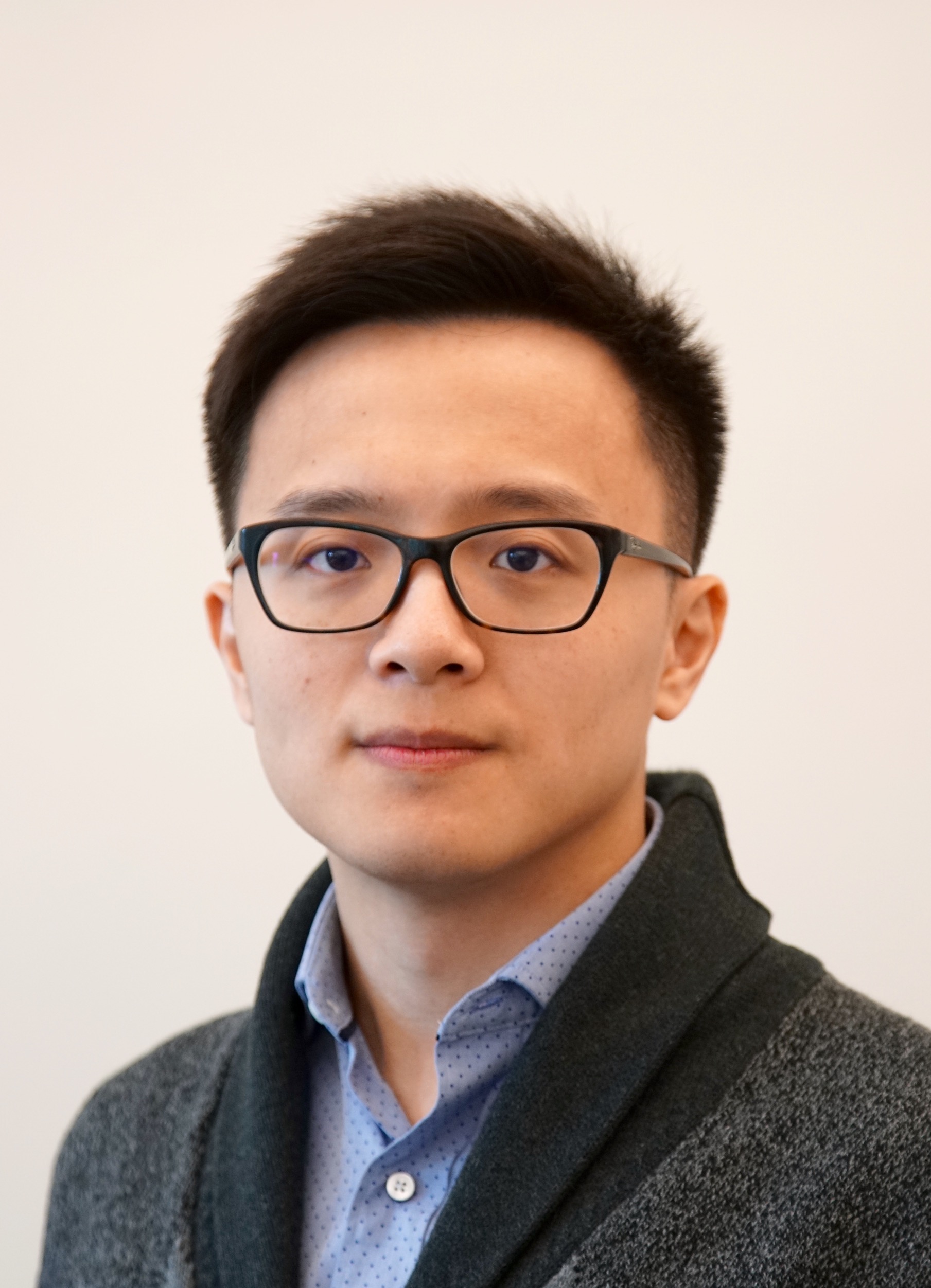
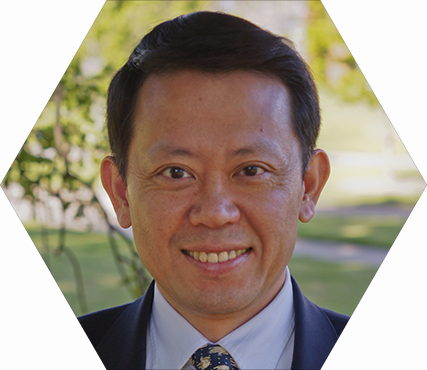
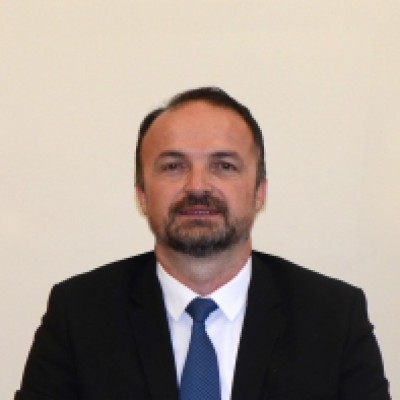
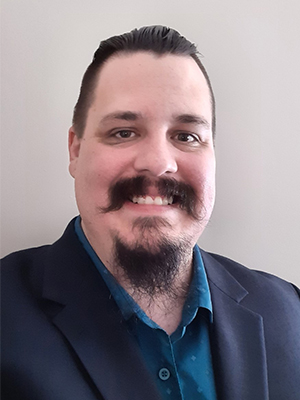
Torgeir Welo is a Professor at the Department of Mechanical and Industrial Engineering , Norwegian University of Science and Technology (NTNU) . He specializes in metal forming , particularly aluminum alloy structures , with a focus on plastic bending behavior , dimensional stability , and 3D forming technologies . His research also encompasses Lean Product Development , emphasizing knowledge reuse and maximizing customer value in automotive and aerospace applications. Key Research Areas : Metal Forming, Aluminum Processing, Springback Control, Lean Development, Additive Manufacturing, Material Substitution Teaching : Courses on Aluminum Technology , Metal Forming Analysis , and Machine Element Design Publications (15 most recent): Focus on springback monitoring , charge weld evolution , flexible forming , machine learning applications , and circular economy frameworks in metal manufacturing.
Dr. Min Sun is an Associate Professor and Director of the Undergraduate Program in the Department of Civil Engineering at the University of Victoria (UVic). He holds a PhD from the University of Toronto. His research focuses on structural engineering and steel structures, particularly in the areas of steel connections, seismic resilience, and numerical modeling. Dr. Sun has extensive academic and professional experience, including roles as Assistant Professor at UVic (2016–2022), Lecturer at the University of Toronto, and structural design roles in industry. His research interests emphasize the performance of steel structures under extreme loads, including earthquake engineering and material behavior. Recent work includes studies on stress concentration factors in steel connections, thermal integrity of piles, and wood-frame building reliability under lateral loads. He actively contributes to professional organizations, such as serving as Vice President (Western Region) for the Canadian Society for Civil Engineering (2018–2020). Dr. Sun teaches courses including Advanced Structural Analysis (CIVE 421) and Solid Mechanics (CIVE 220) at UVic. He currently supervises graduate students in structural steel design and construction. His publications span experimental and numerical analyses, with a focus on improving design standards for steel and wood structures. Labs/Teams: Affiliated with UVic's Engineering and Computer Science faculty and the IESVIC (Institute for Energy Systems and Sustainability at UVic), though specific lab names are not explicitly stated in the text.
Ed Pickering is a Senior Lecturer in Metallurgy and Materials Engineering at the University of Manchester. He has held roles since 2015, advancing to Reader in 2023. His affiliations include the Henry Royce Institute (Research Area Lead for Advanced Metals Processing), the Advanced Metallics System CDT and Fusion CDT Management Boards, and industrial technical advisory panels. Ed’s work bridges academic and industrial collaboration with Rolls-Royce, UKAEA, Airbus, EDF, and Sheffield Forgemasters. Ed completed his undergraduate studies (2011) and PhD (2014) in Materials Science at the University of Cambridge, followed by a Research Associate role in Cambridge’s Rolls-Royce UTC. His academic trajectory includes: Senior Lecturer (2019–present) Reader (2023–present) Ed’s research focuses on phase transformations, microstructural characterization, and alloy development for nuclear (fission/fusion) and aerospace applications. Key themes include optimizing processing routes to enhance material properties while minimizing waste and environmental impact. His studies frequently address steel, high-entropy alloys, and novel refractory alloys, emphasizing their service performance under extreme conditions. His scientific contributions span structural integrity assessment of welded joints, machine learning applications in metallurgy, and material flow uncertainties in forging. He has also advanced heat treatment optimization for reactor steels and explored cobalt-free hardfacing alloys. Frank Fitzgerald Medal (2017) Grunfeld Memorial Medal (2021) In advising and grants, Ed leads the Materials Performance Centre (MPC) and co-leads the NEWAM project on wire-additive manufacturing. He supervises research across these initiatives and collaborates with over 30 PGR students in interdisciplinary teams. His work also involves managing technical facilities like the Advanced Metal Processing platform. Ed’s laboratory affiliations include the MPC and WAAM-based Engineering and Process Metallurgy groups, where he explores sustainable materials solutions for energy and aerospace industries.
Steven Y. Liang , Regents' Professor at the Georgia Institute of Technology 's Woodruff School of Mechanical Engineering, focuses on precision manufacturing , additive manufacturing , and materials-driven process optimization . His research program bridges materials science and computational mechanics to develop predictive models for advanced manufacturing systems. Ph.D., University of California, Berkeley (1987) M.S., Michigan State University (1984) B.S., National Cheng-Kung University, Taiwan (1980) Dr. Liang's work emphasizes physics-based modeling of thermal-mechanical interactions in machining and additive manufacturing, particularly for Ti6Al4V and Inconel 718 alloys. Recent publications highlight tool wear prediction , laser-assisted micro-milling , and residual stress modeling using machine learning and analytical mechanics. His research has been recognized with the ASME Milton C. Shaw Manufacturing Research Medal (2016) , SME Gold Medal (2021) , and Outstanding Lifetime Service Award of NAMRI/SME (2021) , among others. Funded by federal agencies and aerospace/automotive industries, his work provides scientific foundations for process planning and optimization.
Hannah Blum serves as the Alain H. Peyrot Associate Professor in Structural Engineering within the Department of Civil and Environmental Engineering at the University of Wisconsin-Madison. Her research program focuses on infrastructure resilience, next-generation structural design methodologies, and advanced visualization techniques including extended reality applications, supported by funding from federal agencies, industry associations, and private companies. Her academic credentials include a PhD in Civil Engineering from the University of Sydney (2017), complemented by MS (2012) and BS (2010) degrees in Civil Engineering from Johns Hopkins University. Dr. Blum's research program spans critical domains in structural engineering with particular emphasis on steel systems. Key focus areas include: Steel, cold-formed steel, and stainless-steel structural systems Steel deck and joist system behavior Structural stability and reliability analysis Virtual and augmented reality applications in structural steel fabrication Data-driven approaches to structural engineering problems Analysis of her 15 most recent publications (2023-2025) reveals a concentrated research trajectory centered on data-driven design methodologies, advanced material systems (particularly stainless steel and high-strength alloys), and immersive technology integration. Notable trends include machine learning applications for buckling prediction, experimental validation of novel structural systems, and mixed-reality solutions for fabrication processes. Her distinguished recognition includes: University of Wisconsin-Madison Chancellor’s Teaching Innovation Award (2024) College of Engineering Harvey Spangler Award for Innovative Teaching (2023) American Institute of Steel Construction Terry Peshia Early Career Faculty Award (2023) Structural Stability Research Council McGuire Award for Junior Researchers (2022) Structural Stability Research Council Yoon Duk Kim Young Researcher Award (2021) Dr. Blum actively mentors graduate students through CIV ENGR 790 (Master's Research) and 890 (Pre-Dissertator's Research) courses while securing diverse research funding streams. Her professional service includes active participation in steel design standards committees for structural, cold-formed, and stainless-steel systems through organizations like the Structural Stability Research Council. Her experimental and computational research requires specialized facilities for structural testing and digital visualization, though specific laboratory names are not documented in the provided materials. Current projects demonstrate strong industry collaboration, particularly with steel manufacturing and construction technology firms.
Michel Bruneau is a SUNY Distinguished Professor at the University at Buffalo's Department of Civil, Structural and Environmental Engineering within the School of Engineering and Applied Sciences. His research focuses on earthquake-resistant design, blast-resistant structures, multi-hazard engineering, and seismic evaluation of infrastructure. He has authored influential books such as The Blessings of Disaster , exploring disaster resilience and societal adaptation. Bruneau's career includes leadership roles in NSF-funded research centers and over 20 prestigious awards for engineering innovation. Beyond academia, he has published novels and composed music, blending technical expertise with creative pursuits. Education: PhD (1987), MS (1984) in Structural Engineering from UC Berkeley; BS in Civil Engineering from Université Laval (1983). Research emphasizes resilient infrastructure, including seismic retrofitting of bridges and buildings. His work bridges engineering, policy, and sociology, advocating for proactive disaster preparedness. Notable contributions include advances in buckling-restrained braces and composite plate shear walls for structural resilience.
Shahrzad Esmaeili is a Professor in the Department of Mechanical and Mechatronics Engineering at the University of Waterloo. She holds a PhD in Materials Engineering from the University of British Columbia (2002), and master’s and bachelor’s degrees in Materials Science and Engineering from Shiraz University (1988, 1980). Her research focuses on processing-structure-property relationships in light alloys, metallic biomaterials, and additive manufacturing. She has expertise in phase transformations, surface modifications, and multi-length scale characterization. Notably, she received an Early Researcher Award from the Ontario Ministry of Research and Innovation. Her work bridges experimental and computational methods to study microstructural phenomena in aluminum and magnesium alloys. Recent publications emphasize non-isothermal annealing, precipitation hardening, and bio-structure fabrication. Education: PhD, Materials Engineering, University of British Columbia (2002) MSc, Materials Science and Engineering, Shiraz University (1988) BSc, Materials Science and Engineering, Shiraz University (1980) Research Interests: Her work integrates experimental and modeling approaches to study nanostructured materials, including metallic biomaterials and light alloys. Key areas include: Precipitation hardening mechanisms in Al-Mg-Si and Mg-Zn alloys Surface functionalization via laser-assisted deposition Additive manufacturing of porous titanium bio-structures Thermal-mechanical processing of aluminum composites Publications: Over 100 peer-reviewed articles span microstructural analysis, alloy behavior under thermal treatments, and biomedical applications. Recent trends focus on non-isothermal processing effects, microalloying strategies, and advanced surface modification techniques. Awards: Early Researcher Award (Ontario Ministry of Research and Innovation) Grants & Collaboration: Her research involves interdisciplinary collaborations, though specific grants are not detailed here. She leads studies on novel processing routes for high-performance alloys and biomaterials. Labs/Teams: Active in materials characterization and computational modeling groups at the University of Waterloo, focusing on multi-scale material analysis.
Dr Winifred (Wini) Obande serves as a Lecturer and Elizabeth Georgeson Fellow within the Department of Mechanical Engineering at the University of Edinburgh's School of Engineering. Her research focuses on sustainable composite materials development through circular engineering principles. Her academic credentials include a PhD in Mechanical Engineering from the University of Edinburgh, an MRes in Mechanical Engineering from the University of Limerick, and a BEng in Biomedical Engineering from the same institution. Professional memberships encompass the Institution of Engineering and Technology (IET), Society for the Advancement of Material and Process Engineering (SAMPE), and Institute of Materials, Minerals and Mining (IOM3). Dr Obande leads the Circular Composites Engineering Group , pioneering resource-efficient lightweight materials through life-cycle assessment integration. Her work emphasizes waste valorisation and bio-based feedstocks as virgin material alternatives, with rigorous functionality/durability testing. Current research spans thermoplastic composites for marine applications, manufacturing process innovation, and end-of-life recycling strategies. Analysis of her publication record reveals dominant themes in marine-grade thermoplastic composites and sustainable manufacturing . Key trends include room-temperature resin infusion techniques, seawater ageing effects on glass-fibre composites, and thermal reshaping for composite recycling – all targeting tidal energy infrastructure applications. Her scientific recognition includes the prestigious Elizabeth Georgeson Fellowship. She actively serves on the SAMPE UK & Ireland Committee and co-founded the Edinburgh Materials Society. Dr Obande supervises PhD candidates through the Circular Composites Engineering Group, currently offering projects on recycled fibre alignment and sustainable manufacturing processes. Her Royal Academy of Engineering-funded project "Alignment and Functionalisation of Waste Fibres into High-Value Composite Materials" (2025-2030) represents significant grant leadership. The Circular Composites Engineering Group operates at the intersection of materials science and environmental sustainability, collaborating with tidal energy developers and waste management specialists to advance circular economy implementation in composite manufacturing.
Prof. Dr. Hasan Göçmez is a Professor in the Department of Materials Science and Engineering at Dumlupinar University's Faculty of Engineering. With over two decades of academic experience, he has established himself as a leading researcher in ceramic materials and nanotechnology. His career spans multiple prestigious institutions including Rutgers University and Stevens Institute of Technology, where he served as a Research Assistant and Post-Doc respectively before joining Dumlupinar University in 2003. Dr. Göçmez earned his Bachelor's degree in Metallurgical and Materials Engineering from Middle East Technical University (1989-1994). His academic journey progressed from Research Assistant (1995-2002) to Assistant Professor (2003-2006), Associate Professor (2006-2011), and finally to Professor (2011-present) at Dumlupinar University. He has also held significant administrative roles including Institute Director (2012-2018), Deputy Institute Director (2009-2012), and Deputy Head of Department (2005-2011). Dr. Göçmez's research interests span multiple areas of materials science with a particular focus on advanced ceramics and nanomaterials. His work encompasses: Ceramic Materials: Zirconia-based ceramics, boron compounds, and perovskite structures Energy Applications: Battery technologies, supercapacitors, and solar cell materials Sustainable Materials: Waste recycling in composite production and eco-friendly manufacturing processes Nanostructured Materials: Nanopowder synthesis, nanocomposites, and surface engineering Advanced Processing Techniques: Spark plasma sintering, hydrothermal synthesis, and citrate gel methods His extensive publication record spanning over two decades demonstrates a consistent focus on materials characterization and development. Dr. Göçmez has made significant contributions to the understanding of zirconia ceramics, perovskite materials for energy applications, and sustainable composite manufacturing. His work bridges fundamental materials science with practical industrial applications, particularly in the automotive and energy sectors. Dr. Göçmez has received several notable awards including the Micro Enterprise Productivity Project Award from the Ministry of Science, Industry and Technology (2016), a JSPS fellowship (2006), and the YLS scholarship from the Higher Education Board (1995). As an active researcher, Dr. Göçmez has led numerous projects funded by various institutions, focusing on advanced materials development for energy storage, structural applications, and sustainable manufacturing. His editorial work for the Journal of the Ceramic Society of Japan demonstrates his standing in the international ceramics community.
Assoc. Prof. Dr. Arife Yurdakul is a faculty member in the Department of Metallurgical and Materials Engineering at Düzce University’s Faculty of Engineering, Turkey. She currently holds the academic rank of Associate Professor and actively contributes to both teaching and research in advanced ceramics and composite materials. Research Focus: Ceramic matrix composites and zirconia-based toughening mechanisms Processing of yttria-, ceria-, and magnesia-stabilized zirconia powders and sintered bodies Glass-fiber reinforcement in cementitious and polymer matrices Microstructural characterization from macro to atomic scale using electron microscopy Industrial applications including welding pins, ceramic bushings, and dental ceramics Across sixteen peer-reviewed publications (2009-2025), Dr. Yurdakul demonstrates a sustained trajectory in engineering high-performance ceramics. Her recent work emphasizes co-doped zirconia composites that achieve simultaneous gains in hardness and fracture toughness, while earlier studies systematically explored glass fiber durability in alkaline environments and novel glass compositions optimized for fiber drawing. Scientific Awards & Distinctions: No specific awards or honors are mentioned in the provided materials. Advising & Funding: No named graduate students, ongoing projects, or grant details are supplied. Laboratories & Teams: While the Faculty of Engineering at Düzce University hosts modern ceramics and microscopy laboratories, explicit laboratory affiliations or research group names are not stated.
Dr. Spencer Jeffs is an Associate Professor in Aerospace Engineering at Swansea University's School of Aerospace, Civil, Electrical and Mechanical Engineering. Based in the Institute of Structural Materials, his research focuses on advanced high-temperature materials including ceramic matrix composites (CMCs), titanium alloys, and nickel superalloys, with applications in gas turbines and nuclear reactors. He is a Chartered Engineer (CEng) and Fellow of the Higher Education Academy (FHEA), teaching across foundation, aerospace, mechanical, and materials engineering modules. Current roles: Admissions Tutor (2017-present), Honorary Editor for the Engineering Integrity Society (2020-present) Research aligns with SDGs 7 (Affordable Clean Energy) and 9 (Industry Innovation) His work employs experimental and computational techniques like mechanical testing, electron microscopy, and X-ray CT, often in collaboration with industrial partners. Recent publications emphasize small punch testing for additive manufacturing, process optimization, and structural integrity of advanced materials. Supervision includes PhD projects on CMCs, corrosion-fatigue interactions, and hybrid composite driveshafts.
Albert E. Patterson is an Assistant Professor in the Department of Engineering Technology and Industrial Distribution at Texas A&M University's College of Engineering. He is also affiliated with Materials Science & Engineering, Mechanical Engineering, and Multidisciplinary Engineering. His research focuses on mechanical design methods, additive manufacturing processes, and fracture mechanics. He holds a Ph.D. in Industrial Engineering from the University of Illinois at Urbana-Champaign (2021), an M.S. in Industrial Engineering (2014), and a B.S. in Mechanical Engineering (2013), both from the University of Alabama in Huntsville. Key research areas include design under manufacturability constraints, additive manufacturing (e.g., FDM/FFF, SLS, SLM), and systems engineering for manufacturing and aerospace applications. His work emphasizes optimizing material properties, process-driven constraints, and sustainable manufacturing practices. Dr. Patterson leads the Manufacturability-Driven Design Lab (MDDL), exploring topics like additive manufacturing for energetic materials, repair strategies for plastic components, and energy-efficient production systems. He has contributed to over 60 publications on fracture mechanics, material characterization, and manufacturing systems optimization. His research integrates experimental methods with computational modeling to address challenges in design, manufacturability, and sustainability.
Tatyana Konkova is a Senior Lecturer in the Department of Design, Manufacturing and Engineering Management at the University of Strathclyde, Faculty of Engineering, Glasgow, UK. She is actively engaged in research, teaching, and professional leadership in the field of Materials Science and Engineering, with a focus on metallurgy and advanced manufacturing techniques. Education: Doctor of Science, Mechanisms of cryogenic plastic deformation and features of microstructure formation in technically pure copper, Institute for Metals Superplasticity Problems, Russian Academy of Sciences (awarded 2011) Master of Business Administration (MBA), Strathclyde Business School (awarded 2023) PG Certificate in Learning and Teaching in Higher Education, University of Strathclyde (awarded 2021) MSc (Hons) in Materials Science and Engineering, Ufa State Aviation Technical University (awarded 2005) BSc in Engineering, Ufa State Aviation Technical University (awarded 2004) Research Interests: Her research spans Severe Plastic Deformation (SPD), cryogenic deformation, additive manufacturing, microstructure evolution, and advanced characterization using EBSD, TEM, and SEM. She focuses on materials such as titanium alloys, copper, and nickel-based superalloys, aiming to bridge fundamental science with industrial applications. Her work emphasizes grain boundary engineering, abnormal grain growth, and deformation-induced boundaries. Publication Trends: Recent publications highlight her growing interdisciplinary work combining additive manufacturing with electric machine design, as well as continued deep microstructural investigations in aerospace and microelectronic materials. Her research integrates data-driven optimization and advanced characterization to improve material performance and manufacturing efficiency. Scientific Awards and Honors: Fellow of the Institute of Materials, Minerals and Mining (FIMMM) Chartered Engineer (CEng) by the Engineering Council Member of the Institution of Mechanical Engineers (MIMechE) Fellow of the Higher Education Academy (FHEA) PG Certificate in Learning and Teaching in Higher Education Advising and Grants: She has supervised undergraduate, postgraduate, and PhD students and serves as Principal Investigator on multiple research projects, including EPSRC-funded CDT in AI-enabled Digital High-Value Manufacturing and AFRC projects on titanium alloy forgeability. She has secured funding from national and international sources, including the Russian Foundation for Fundamental Research. Her leadership in industrial collaboration and knowledge exchange is evident through her roles in Catapult projects and industrial group supervision. Labs and Teams: She has led the Materials Characterisation Theme at AFRC and represented the center in Cross-Catapult forums on additive manufacturing. She is part of the Horizon Europe Working Group with the University of Waterloo and actively collaborates with national and international research teams.
Dr. Ahmed Elkady is an Associate Professor in Structural Engineering at the University of Southampton's Faculty of Engineering and Physical Sciences, Department of Civil, Maritime and Environmental Engineering. His research focuses on structural performance under seismic hazards with specialization in steel and composite structures. He leads the Infrastructure Research Group and actively supervises PhD students while developing innovative computational tools for structural analysis. Elkady's research interests center on Performance-Based Earthquake Engineering, Collapse Risk and Loss Assessment of Steel and Composite Buildings, and Resilience-based design of Existing Structures. His work combines advanced numerical modeling with large-scale experimental testing to develop robust predictive models for structural behavior under extreme loading conditions. He has made significant contributions to the understanding of structural connections, particularly steel endplate and bolted connections. His recent publications demonstrate a strong trend toward integrating machine learning with traditional structural engineering methods, particularly in modeling steel connections and predicting structural behavior. The research spans both fundamental mechanics and practical applications for seismic risk assessment, with several of his 2023-2025 publications focusing on data-driven approaches to structural analysis. Raymond C Reese Research Prize (2022) Multiple Outstanding Reviewer awards from ASCE Journal of Structural Engineering (2019-2020) First Place Award in NIST-ATC Blind Prediction Contest (2018) Alexander Graham Bell graduate scholarship from NSERC Canada (2014) Multiple best presentation awards at engineering conferences (2012-2015) Elkady currently supervises three PhD students (Weiran Li, Zizhou Ding, and Aran Naserpour) and leads the EPSRC-funded project 'Seismic Resilience of Egypt's Built Environment: A GIS-Based Framework for Assessment and Mitigation.' He has also secured funding from Research England for the 'EGYGIS: GIS Mapping in Support of Egypt's Disaster Risk Management' project. His research has resulted in several open-source software tools including EaRL (Earthquake Risk, Loss & Lifecycle Assessment), FM-2D (Frame Modeler 2D), and SCRonED (Semi-Rigid Connections Experimental Database), which are widely used in the structural engineering community for performance-based earthquake engineering.
Jianxiong Li serves as an Assistant Professor in the Department of Mechanical Engineering at Texas A&M University's College of Engineering, where he leads research in advanced manufacturing and materials mechanics. His work bridges fundamental materials science with practical engineering applications in aerospace, biomedical devices, and energy systems. Educational Background: Ph.D. in Welding Engineering, Ohio State University (2022) M.Eng. in Materials Processing Engineering, Tianjin University (2017) B.E. in Materials Shaping and Controlling Engineering, Tianjin University (2014) Research Focus: Dr. Li's investigations span Cold Spray Additive Manufacturing , Extreme Mechanics , and Dynamic Mechanical Testing of nanocrystalline alloys and metal matrix composites. His lab develops novel solid-state joining techniques like impact welding for dissimilar materials, with emphasis on microstructural evolution under high strain rates (up to $10^9$ s$^{-1}$) and interfacial phenomena in biomedical-grade joints. Current projects explore chemical strengthening of glass powders, refractory high-entropy alloy coatings, and synchrotron-based load transfer analysis in composites. Publication Trends: Analysis of his 15 most recent publications (2020-2025) reveals three dominant themes: (1) Biomedical applications of microwelded NiTi-stainless steel joints with interfacial liquid control, (2) Fundamental studies of dislocation dynamics in nanocrystalline alloys at extreme strain rates, and (3) Process development for vaporizing foil actuator and laser-augmented impact welding of challenging material combinations. His work increasingly integrates advanced imaging techniques with mechanical testing. Scientific Recognition: Ohio State University Presidential Fellowship (2021) Research Infrastructure: Dr. Li directs the IM3D Lab (Imaging and Mechanics for Multi-scale Manufacturing), which specializes in high-speed imaging, synchrotron characterization, and mechanical testing of materials under extreme conditions. His group collaborates with national laboratories on vaporizing foil actuator technology and develops manufacturing solutions for next-generation biomedical devices and structural components.