Professor David Thompson is a globally recognized expert in railway noise and vibration reduction at the University of Southampton's Institute of Sound and Vibration Research (ISVR). He holds a part-time role in ISVR Consulting while continuing full-time research. His research focuses on low-noise railway design, ground vibration control, and aerodynamic noise from high-speed trains. He leads collaborative EU projects and advises industry partners. David earned his MA and PhD from the University of Cambridge and the ISVR, respectively. His career includes roles at British Rail Research and TNO in the Netherlands, where he developed the influential TWINS rolling noise model. He has authored over 250 papers and a seminal textbook translated into Chinese, with a second edition in 2024. Awards include the 2018 Rayleigh Medal for outstanding contributions to acoustics. Research Highlights: Modelling noise sources (rolling, aerodynamic, curve squeal), vehicle interior noise transmission, and ground-borne vibration. Collaborations: Partnerships with EU initiatives, Korean Railroad Research Institute, and Chinese universities. Teaching: Courses on noise control engineering, railway systems, and acoustic design. His work bridges theoretical models with practical solutions, aiming to reduce railway noise through innovative designs and mitigation strategies.
Professor Khac Duc Do is a faculty member at Curtin University, holding a position in the School of Civil and Mechanical Engineering within the Faculty of Science and Engineering. He serves in the Office of the Provost and is based at Curtin Perth campus. His research focuses on advanced control systems, nonlinear dynamics, and robotics applications in marine, aerospace, and mechanical systems. He earned a PhD with distinction in 2003 and has held prestigious fellowships including ARC Postdoctoral Fellow (2004) and ARC Australian Research Fellow (2009). His teaching includes courses like Advanced Control and Mechatronics, Navigation and Marine Control Systems, and Advanced Control Engineering. Key research interests encompass control of nonlinear systems, stochastic systems, formation control of mobile agents, fluid-structure interaction, and boundary control of PDE-governed systems. His funded projects include wave-energy converter development (2023-2026), inerter-based damper research (2019-2021), and ocean vehicle control systems. Scientific awards include ARC grants totaling over AUD 2 million. Current opportunities include scholarships in control systems/fluid-structure interaction and a postdoc position in wave-energy conversion.
Dr. Yuri Rostovtsev is a Professor at the University of North Texas, specializing in quantum optics and atomic physics. He holds a Ph.D. from the Russian Academy of Sciences (1991). His office is located in GAB 525I and he can be contacted at (940) 565-3281. Research Interests: Dr. Rostovtsev's research focuses on quantum coherence phenomena, electromagnetically induced transparency, and matter-field interactions. His work spans theoretical and experimental investigations in quantum optics, including studies of quantum refraction, biophotons, and ultrafast processes in atomic and molecular systems. Recent Publications: His recent articles explore advanced quantum phenomena including single-photon interactions with atoms, quantum state engineering, plasmonic structures, and ultrafast dynamics in molecular systems. These publications demonstrate a consistent focus on quantum coherence effects and light-matter interactions at the quantum level. Scientific Awards: No awards mentioned in the provided text. Advising and Labs: No information available about students or research laboratories.
Samuel Jean Bassetto is an Associate Professor in the Department of Mathematics and Industrial Engineering at Polytechnique Montréal. He serves as Director of the Continuous Improvement Laboratory (LABAC) and holds membership in multiple prestigious research groups including the Research Group on Globalisation and Management of Technology (GMT), Poly-Industries 4.0 Laboratory, Interuniversity Research Centre on Enterprise Networks, Logistics and Transportation (CIRRELT), and Institute for Data Valorization (IVADO). Dr. Bassetto's research spans multiple disciplines, focusing on continuous improvement through the integration of engineering, artificial intelligence, cognitive science, psychology, and design. His primary sphere of excellence is in New Frontiers in Information and Communication Technologies, with secondary expertise in Modeling and Artificial Intelligence and Human Health. He develops tools that place humans at the center of technology to enhance organizational performance while respecting human rhythms and cognitive limitations. His recent publication portfolio reveals a strong interdisciplinary approach, with research bridging industrial engineering, cognitive neuroscience, and AI ethics. His work addresses practical challenges in lean manufacturing assessment, racial bias in medical AI systems, cognitive data collection in natural environments, and condition monitoring for industrial machinery. The research consistently demonstrates a commitment to developing practical solutions that integrate human factors with technological innovation. NSERC Synergy Prize for Innovation recipient Principal investigator on multiple research grants from NSERC, FRQ, and MITACS Collaborations with over a dozen institutions across multiple countries Supervision of over 150 highly qualified personnel throughout his career Dr. Bassetto teaches specialized courses including CAP7011 (Creativity in Research), IND8444 (Continuous Improvement), IND8203 (Industrial Launch), and previously taught IND8178 (Production). His teaching philosophy emphasizes practical application, with courses featuring hands-on exercises, real-world scenarios, and gamification techniques to enhance learning. His supervision portfolio includes numerous Ph.D. and Master's students working on topics ranging from human-technology collaboration to reinforcement learning for production management. Through LABAC, Dr. Bassetto leads research initiatives focused on developing human-centered tools for continuous improvement in organizational settings. The laboratory conducts projects related to industrial IoT applications, cognitive aspects of process improvement, and the development of practical frameworks for organizations to enhance performance while maintaining respect for human rhythms and cognitive capabilities.
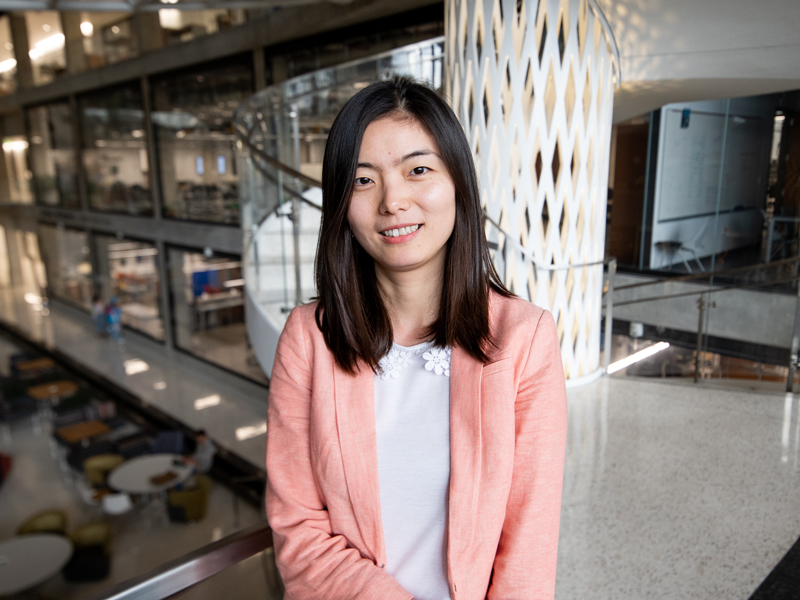
Yunlan (Emma) Zhang is an Assistant Professor in the Department of Civil, Architectural, and Environmental Engineering at the University of Texas at Austin, part of the Cockrell School of Engineering. Her research focuses on architected materials, deployable structures, nature-based solutions, and extraterrestrial materials. She holds a B.S. from The Ohio State University (2012), M.S. and Ph.D. from Purdue University (2014, 2019), and completed a postdoc at the University of Oxford (2022). Her work bridges mechanical metamaterials with biomedical and environmental applications, including deployable medical devices and sustainable infrastructure. Education: B.S., The Ohio State University, 2012 M.S., Purdue University, 2014 Ph.D., Purdue University, 2019 Postdoc, University of Oxford, 2022 Her research interests emphasize biomimetic materials inspired by natural systems (e.g., avian feathers) and their translation into engineered solutions. Current projects include developing lightweight superalloys for aerospace, shape-memory materials for medical devices, and artificial reefs for marine conservation. She leads the UT Metamaterials and Advanced Structures Lab (UTMASLab), accessible at https://sites.utexas.edu/utmaslab/ . Recent publications explore novel applications of architected materials in healthcare, disaster-resistant structures, and environmental sustainability. Her work frequently appears in top journals across mechanical engineering, materials science, and biomedical engineering disciplines.
Zenghu Chang is a Distinguished Professor of Physics and Optics at the University of Central Florida, leading the Institute for the Frontier of Attosecond Science and Technology. He holds the UCF Trustee Chair and Pegasus Professor titles. His research focuses on ultrafast laser science, attosecond phenomena, and high-order harmonic generation. Chang earned his PhD from the Chinese Academy of Sciences and has held academic positions at the University of Michigan and Kansas State University. Education: BSc from Xi’an Jiaotong University (1982), PhD from Xi’an Institute of Optics and Precision Mechanics (1988). Postdoctoral research at the Rutherford Appleton Laboratory (1991-1993) and the University of Michigan (post-1996). Research Interests: Attosecond science, terawatt femtosecond lasers, ultrafast atomic physics, coherent XUV/X-ray sources, high-order harmonic generation, and advanced laser technology. His work includes pioneering contributions like the Double Optical Gating technique and generating the world-record 67-attosecond laser pulse. Awards: APS Fellow, Pegasus Professor (2016), Mercator Professorship (2007), and multiple national and international honors. His publications exceed 150 articles in top journals like Optics Letters and Nature Communications . Advising & Grants: Supervised numerous PhD students in optics and physics. Active in securing research grants for attosecond science and laser development. Collaborates internationally on projects involving ultrafast X-ray sources and advanced laser systems. Labs/Teams: Directs the Florida Attosecond Science and Technology group and leads the Institute for the Frontier of Attosecond Science and Technology, advancing cutting-edge laser and X-ray technologies.
Prof. Dr. Hakkı Polat Gülkan is a Professor at Başkent University's Civil Engineering Department. With a PhD (1971) and Master's (1968) from the University of Illinois in Civil Engineering and a Bachelor's (1966) from METU, his career spans over five decades in earthquake engineering, structural dynamics, and disaster management. PhD: University of Illinois, Civil Engineering (1971) Master's: University of Illinois, Civil Engineering (1968) Bachelor's: Middle East Technical University, Civil Engineering (1966) His research focuses on seismic risk assessment, structural behavior under extreme loads, and disaster mitigation strategies. Key contributions include earthquake simulator development, ground motion analysis, and retrofitting techniques for masonry and reinforced concrete structures. He has published extensively on deformation limits, response spectra, and historical building preservation. Recent work includes 15+ articles from 2024-2012 analyzing Istanbul's seismic hazards, Marmara region dynamics, and post-earthquake structural integrity. Conference papers address Turkey's endemic building vulnerabilities and deformation thresholds for seismic isolation systems. Scientific Achievements: Elected to U.S. National Academy of Engineering (2023) As an active journal reviewer for 13+ publications (2023-2024), he contributes to advancing earthquake engineering discourse. His teaching portfolio includes advanced structural analysis, concrete mechanics, and seismic design courses.
Emine Ayaz is a Professor at Istanbul Technical University's Department of Electrical Engineering. Her research spans fault detection in electric motors, signal processing, and nuclear power plant monitoring, with recent work integrating deep learning (e.g., dual RNN architectures) and medical applications (e.g., parasitology, plant-based wound healing). Key Collaborations : International partnerships in motor diagnostics and nuclear engineering. Projects : Led grants on high-voltage training and predictive maintenance for TEİAŞ and industrial processes. Research Trends : Recent publications emphasize neural networks for motor fault classification, coherence analysis for insulation diagnostics, and interdisciplinary work in plant biotechnology and parasitology. Labs & Teams : Involved in projects analyzing vibration signals, wavelet transforms, and sensor fusion for industrial and nuclear systems.
Weiwei Lin is an Associate Professor in the Department of Civil Engineering at Aalto University, specializing in structural engineering with a focus on bridge systems, composite materials, and structural health monitoring. His research explores fatigue behavior of steel structures, seismic performance of composite systems, and innovative repair techniques. He holds a PhD from Waseda University (2012), MSc from Southeast University (2009), and BEng from Southwest Jiaotong University (2006). Key research areas include: steel-concrete composites, bridge redundancy evaluation, replaceable energy dissipaters, and AI-driven infrastructure diagnostics. Lin leads projects like CCU Structure (EU Horizon Europe) and RCF Mobility initiatives, focusing on sustainable construction and material recyclability. He has published 120+ peer-reviewed articles and secured 6 major grants. Lin has received prestigious awards including the IABMAS Young Award (2014) and Outstanding Reviewing Award (2017). His lab collaborates globally, hosting researchers from institutions like Israel Institute of Technology and Tsinghua University. Current work emphasizes crowdsourcing-based bridge monitoring and physics-guided AI frameworks for infrastructure diagnostics.
Amir R. Nejad is a Professor at the Department of Marine Technology, NTNU, and leads the Marine Energy Systems and Autonomics (MESA) research group. He chairs the EAWE WindEurope Scientific Track Committee and co-founded the Drivetrain Technical Committee at the European Academy of Wind Energy (EAWE). He is also involved in ISO committees, editorial boards of journals like Wind Energy Science , and contributes to standards for offshore wind energy. Education: Ph.D. in Marine Technology, NTNU (top 10% international ranking) M.Sc. Subsea Engineering, University of Aberdeen (Distinction) B.Sc. Mechanical Engineering, Tehran University (Honors) Research Interests: Focus on stochastic and reliability-based design, dynamic modeling of electro-mechanical systems, fault detection, and condition monitoring in marine and offshore renewable energy applications. Key areas include wind turbine drivetrains, floating offshore systems, and digital twin technology. Awards: 2x Best Lecturer, NTNU (2015-2016, 2019-2020) Best Poster Award, Torque Conference 2016 Nowitech Ph.D. Fellowship, 2012-2015 Advising & Grants: Supervises Ph.D. students in drivetrain design and offshore systems. Leads projects on marine system dynamics and vibration through the MD Lab. Collaborates with industry on drivetrain testing and reliability. Labs & Teams: Director of the Marine System Dynamics and Vibration Lab (MD Lab), fostering innovation in offshore renewable energy systems and digital twin applications.
Stefan Vandewalle is a full professor at the Department of Computer Science, Faculty of Engineering Sciences, KU Leuven. His research focuses on numerical analysis, applied mathematics, and computational methods for stochastic differential equations, wind energy modeling, and uncertainty quantification. Department Chair, KU Leuven Member, Subdivision Numerical Analysis and Applied Mathematics Member, iSi Health Institute Observer, Faculty Council of Sciences Chair, Department Council for Computer Science His recent work explores multiscale modeling, Monte Carlo methods, and data assimilation techniques. Projects include micro-macro Parareal algorithms, wind turbine aeroelasticity, and turbulent flow reconstruction for wind farms. He supervises PhD candidates and collaborates on interdisciplinary studies involving structural mechanics and renewable energy systems. Publications highlight advancements in parallel-in-time methods, stochastic optimization for tokamak reactors, and DNS-based control of turbulent flows. Key keywords: Multiscale numerical methods Uncertainty quantification Wind energy simulation Monte Carlo algorithms PDE-constrained optimization Stochastic differential equations He contributes to academic governance as a member of extended faculty boards and evaluation committees.
Associate Professor Judy Hart is a materials scientist at the School of Materials Science & Engineering, UNSW Sydney , specializing in the development of semiconducting materials for renewable energy applications. Her work integrates computational (DFT) and experimental approaches to understand composition-property relationships in systems like solid solutions , heterostructures , and doped materials for photocatalysis and solar cells . She leads projects funded by ARC Discovery and Linkage grants , including work on photo-electro-catalysis systems and stabilizing ceramic materials . Education: PhD in Materials Engineering (Monash University, 2007), BEng (Materials) (Monash, 2002) Professional Experience: Senior Lecturer (UNSW, 2017–), Lecturer (UNSW, 2013–2017), University of Bristol (2007–2012) Research Interests Her research focuses on designing materials for renewable energy , particularly photoelectrochemical water splitting and organic oxidation reactions . Key areas include Density Functional Theory (DFT) , defect engineering , band gap tuning , and nanostructured materials . She investigates ferroelectric polarization effects , metal oxide heterostructures , and stability of battery components , with applications in hydrogen production , CO2 conversion , and advanced battery materials . Scientific Awards Ramsay Memorial Fellowship (University of Bristol, 2007–2009) Teaching Contributions She is co-author of the 1st Australian & New Zealand edition of "Materials Science and Engineering: An Introduction" , and teaches courses on computational materials science , corrosion-resistant surfaces , mechanical behavior of metals , and materials design .
Steven Ceron is an Assistant Professor in Robotics at the University of Michigan's College of Engineering. His research focuses on swarm robotics, multi-agent systems, and programmable self-organization of micro- and macro-scale robot swarms. He leads the Synergetic Adaptive Machinas (SAM) Lab, which develops reconfigurable robot swarms for biomedical applications and smart materials integration. Key research areas include microrobot fabrication, heterogeneous swarm coordination, and self-reconfigurable modular systems. His work envisions seamless integration of robot swarms into daily life through innovations in design, control, and scalability. Recent publications emphasize swarmalator dynamics, strain-based coordination in soft robots, and scalable fabrication methods. His lab explores both theoretical frameworks and practical implementations, bridging micro-scale and macro-scale robotics applications. Though no awards were explicitly listed, his contributions to novel fabrication techniques and modular robotics suggest ongoing recognition in the field. Advising and grant details are not provided here, but his lab's focus on biomedical and aerospace applications indicates active collaborative projects.
Nicolas Joly is a Researcher at the Le Mans University 's Institute of Acoustics , affiliated with the Transducers team. His work focuses on numerical modeling of acoustics and vibroacoustics, particularly thermoviscous diffusion phenomena in boundary layers. Research Areas : MEMS Transducers, Thermoviscous Fluid Dynamics, Inverse Methods, Composite Material Analysis Recent Contributions : Modeling micro-scale acoustic devices, homogenization of complex elastic moduli in curved beams, and fluid-loaded microbeam dynamics. Scientific Production Trends : Recent publications highlight advanced numerical simulations for miniaturized transducers, inverse methods in material characterization, and thermoviscous effects in MEMS devices. His work bridges acoustics with structural mechanics and sensor design.
Leon Shpanin is a Senior Lecturer in Electronic and Electrical Engineering at Sheffield Hallam University, where he serves as Course Leader for MSc Automation Control and Robotics. He holds an MSc in Radio Frequency Engineering and a PhD in Electrical Engineering from the University of Liverpool. His research focuses on electrical engineering applications including renewable energy systems, HVDC circuit interruptions, and electromagnetic techniques for current interruption. He received the RAEng Award (2020) for developing next-generation circuit breakers for rail networks. Key projects: Development of Novel Energy Efficient Magnetic Scroll Air Motor (EPSRC) Smart control of multirotor drone propellers for vibration energy harvesting