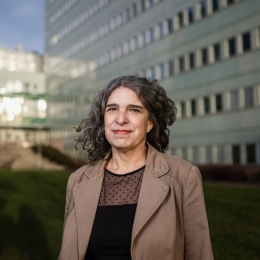
Professor Ling Li is a faculty member at Curtin University's School of Electrical Engineering, Computing and Mathematical Sciences (EECMS), within the Faculty of Science and Engineering. Their research focuses on interdisciplinary applications of machine learning, computer vision, and deep learning in structural engineering and materials science. Notable contributions include advancements in structural health monitoring, blast loading prediction, and 3D displacement measurement using monocular vision. Professor Li has authored numerous peer-reviewed articles and collaborates on projects involving civil infrastructure resilience, smart materials, and AI-driven solutions for engineering challenges. They hold an office in the New Technologies Building at Curtin Perth and can be reached at L.Li@curtin.edu.au.
Madelaine Adelman is a Professor of Justice and Social Inquiry at Arizona State University's School of Social Transformation. She holds affiliations with the Mary Lou Fulton College for Teaching and Learning Innovation, Institute for Social Science Research, Jewish Studies, and Center for the Study of Religion and Conflict. Her work bridges cultural anthropology, law, and education with a focus on gender violence, LGBTQ+ rights, and social justice in schools. Adelman earned her Ph.D. in Cultural Anthropology (1997) and A.B. in Anthropology and Political Science (1989) from Duke University. Her research examines domestic violence policies, school climate reforms, and transnational social movements. Notable works include Battering States: The Politics of Domestic Violence in Israel (2017) and co-edited Jerusalem: Conflict and Cooperation (2014). Her interdisciplinary studies address anti-LGBTQ bullying interventions, gaps between workplace equality and safe schools policies, and legal frameworks impacting marginalized groups. She co-founded GLSEN Phoenix and advised Arizona's education policies through the Morrison Institute. Adelman's research spans topics like transdisciplinary approaches to gender violence, Middle Eastern conflict studies, and U.S. education justice. Her over 30 peer-reviewed articles and book chapters emphasize policy advocacy, ethnographic methods, and intersectional analysis.
Prof. Dr. Jann Lay is a Lead Research Fellow and Head of the Research Programme "Globalisation and Development" at the German Institute for Global and Area Studies (GIGA). He has held this position since 2009, initially as Head of GIGA Research Programme 3 "Socio-Economic Development in the Context of Globalisation." Since 2015, he has also served as an Apl. Prof. (Extraordinary Professor) at the Georg-August-Universität Göttingen. Between October 2015 and October 2018, he acted as Director of the GIGA Institute of African Affairs. His educational background includes: Doctoral Studies at Georg-August-University, Göttingen, Germany; Dr.rer.pol. (summa cum laude) Dissertation on 'Evaluating the Poverty and Distributional Impact of Economic Policies and External Shocks Combining Macro and Micro Approaches: Three Case Studies from Latin America' Master in Economics (Diplom-Volkswirt) at Christian-Albrechts-University, Kiel, Germany Undergraduate Studies at Otto-Friedrich-University, Bamberg, Germany Additional studies at University of Alcalá, Alcalá de Henares, Spain and University of California, Los Angeles, United States Prof. Lay's research focuses on development economics, with particular emphasis on informal entrepreneurship in developing countries, structural change and its poverty and distributional implications, and the relationship between natural resources, economic development and conflict. His work primarily centers on Africa, where he has conducted extensive research on labor markets, economic policies, and development challenges. He has examined how digital technologies are tailored to local needs in Africa's emerging tech sector, the impact of global supply chains on decent work, and the effects of special economic zones on local labor markets in developing countries. Prof. Lay's recent publications demonstrate a strong focus on empirical research addressing key development challenges. His work spans labor economics, agricultural development, digital transformation, and environmental sustainability within the context of global value chains. A notable trend is his use of rigorous impact evaluation methods, including randomized controlled trials, to assess the effectiveness of development interventions. His research often addresses policy-relevant questions about formalization of employment, skills training, land acquisitions, and sustainable supply chains, with implications for development policy formulation. His scientific contributions include: Membership in the Rat für nachhaltige Entwicklungspolitik der Stadt Hamburg (RANEP), 2018-2020 Advisory board member of W3 - Werkstatt für internationale Kultur und Politik e.V. (W3), 2015-2022 Membership in the Entwicklungsökonomischer Ausschuss, Verein für Socialpolitik, since 2010 Membership in the International Association for Research in Income and Wealth (IARIW), since 2009 Prof. Lay has supervised doctoral researchers, including Tevin Tafese, with whom he has co-authored several publications on Africa's tech sector and sustainable supply chains. His research has been supported by various grants from organizations including the German Federal Ministry for Economic Cooperation and Development (BMZ), the Federal Foreign Office (FFO), the German Ministry for Education and Research (BMBF), and GIZ. Current projects include research on platforms and online workers in India and Africa, land-based investments in global supply chains, digital transformation for diplomacy, and the Merian Institute for Advanced Studies in Africa. Prof. Lay leads and contributes to several research teams and initiatives, including the Research Network Sustainable Global Supply Chains and the Merian Institute for Advanced Studies in Africa (MIASA) based at the University of Legon, Ghana. His work through the Digital Transformation Lab (DigiTraL) explores how digitalization creates new opportunities and challenges for foreign policy.
Xiaolin Zhu, MD, PhD is an Adjunct Lecturer in the School of Medicine at the University of California, San Francisco (UCSF), specializing in the Genitourinary Medical Oncology Program. His clinical focus is on prostate, bladder, and kidney cancers, while his research explores cancer evolution mechanisms through patient biospecimen analysis. He holds roles as Principal Investigator on grants from the Department of Defense, Prostate Cancer Foundation, and Conquer Cancer Foundation. Education: Bachelor of Medicine (MD equivalent) in Clinical Medicine, Shanghai Jiao Tong University School of Medicine (2011) PhD in Genetics and Genomics, Duke University (2017) Internal Medicine Residency, UT Southwestern Medical Center (2020) Hematology/Oncology Fellowship, UCSF (2024) Research Interests: Focuses on precision oncology, genomic profiling of treatment resistance, and translational research in prostate and urothelial cancers. Key areas include epigenetic evolution in cancer progression, biomarker discovery, and developing novel therapeutic strategies. Awards: ASCO Young Investigator Award (2022-2023) PCF Young Investigator Award (2022-2025) Department of Defense Physician Research Award (2024-2028) Grants: Investigating SSTR1 as a novel biomarker for advanced prostate cancer (DOD, 2024-2028) Resistance mechanisms to androgen receptor inhibitors (PCF, 2022-2025) Genomic profiling of metastatic castration-resistant prostate cancer (ASCO, 2022-2023) Labs/Teams: Active in UCSF's Genitourinary Oncology research teams and collaborates with the West Coast Prostate Cancer Dream Team.
Felix Otto is a Director at the Max Planck Institute for Mathematics in the Sciences and an Honorary Professor for Analysis and Mathematical Modeling at the University of Leipzig. His research focuses on pattern formation, energy landscapes, and scaling laws, with contributions to stochastic homogenization, PDEs, and optimal transport. He has held academic positions at the University of California and the Hausdorff Center for Mathematics. Notable grants include projects on microstructure formation in thin coatings and stochastic homogenization. He has organized conferences such as the ICM satellite conference on Probability and Mathematical Physics. His work bridges pure and applied mathematics, with implications for materials science and fluid dynamics. Education: Diplom (1990), PhD (1993) from Bonn University. Postdoctoral roles at Bonn, Courant Institute, and CMU. Tenured faculty roles at UCSB (1998–2010) and Bonn (1999–2010). Research interests span stochastic PDEs, calculus of variations, and the mathematical theory of materials. Grants include BMBF and DFG projects on microstructure modeling and homogenization.
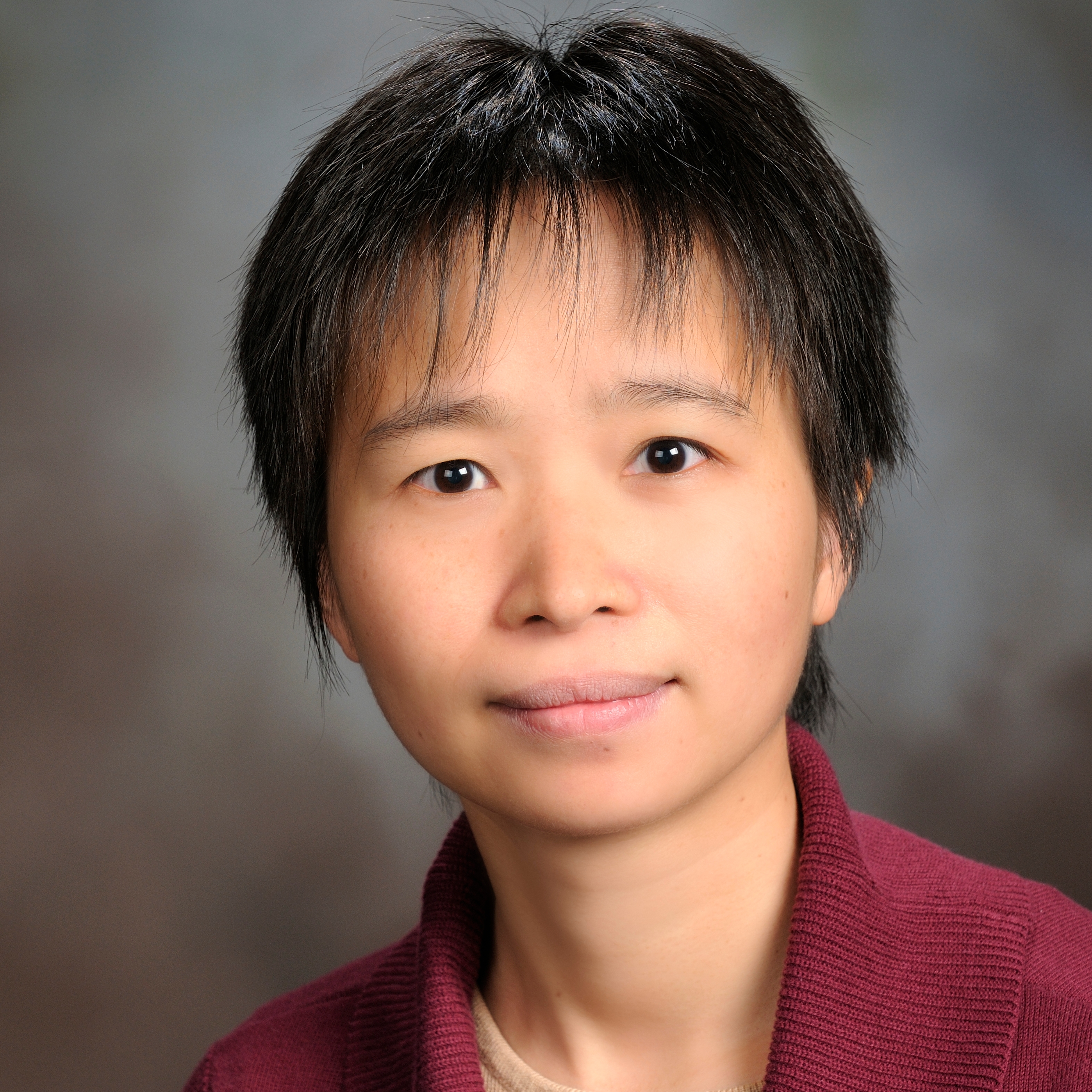
Zhou Ying is an Associate Professor of Geophysics at Virginia Tech's College of Science, Department of Geosciences. Her research focuses on understanding seismic heterogeneities in the Earth's interior through finite-frequency wave propagation theory and diffractional tomography. Ph.D. in Geophysics from Princeton University (2005) Her research interests include: Seismic Wave Propagation in Heterogeneous Media Global and Computational Seismology Finite-Frequency Seismic Tomography 3-D Anelasticity (Q) Structure in the Mantle Seismic Anisotropy in the Upper Mantle and Transition Zone Core-Diffracted Waves and Core-Mantle Boundary Structure Signal Processing and Array Data Analysis Zhou's 15 most recent publications span seismology, geophysics, and unexpected interdisciplinary topics like molecular biology. Most studies focus on mantle discontinuities, finite-frequency tomography, and outer core dynamics, with specific attention to 410-km/660-km discontinuities and surface-wave sensitivity kernels. Current graduate advisee: Zhen Guo (Ph.D. candidate in Geophysics). Former advisees include Youyi Ruan (Ph.D. 2012), Kui Liu (Ph.D. 2014), Kai Deng (MS 2014), and Jing Xue (MS 2014). She teaches undergraduate courses in Physical Geology and Earthquake Seismology, and graduate courses in Theoretical Seismology, Advanced Seismology, and Seismic Data Analysis.
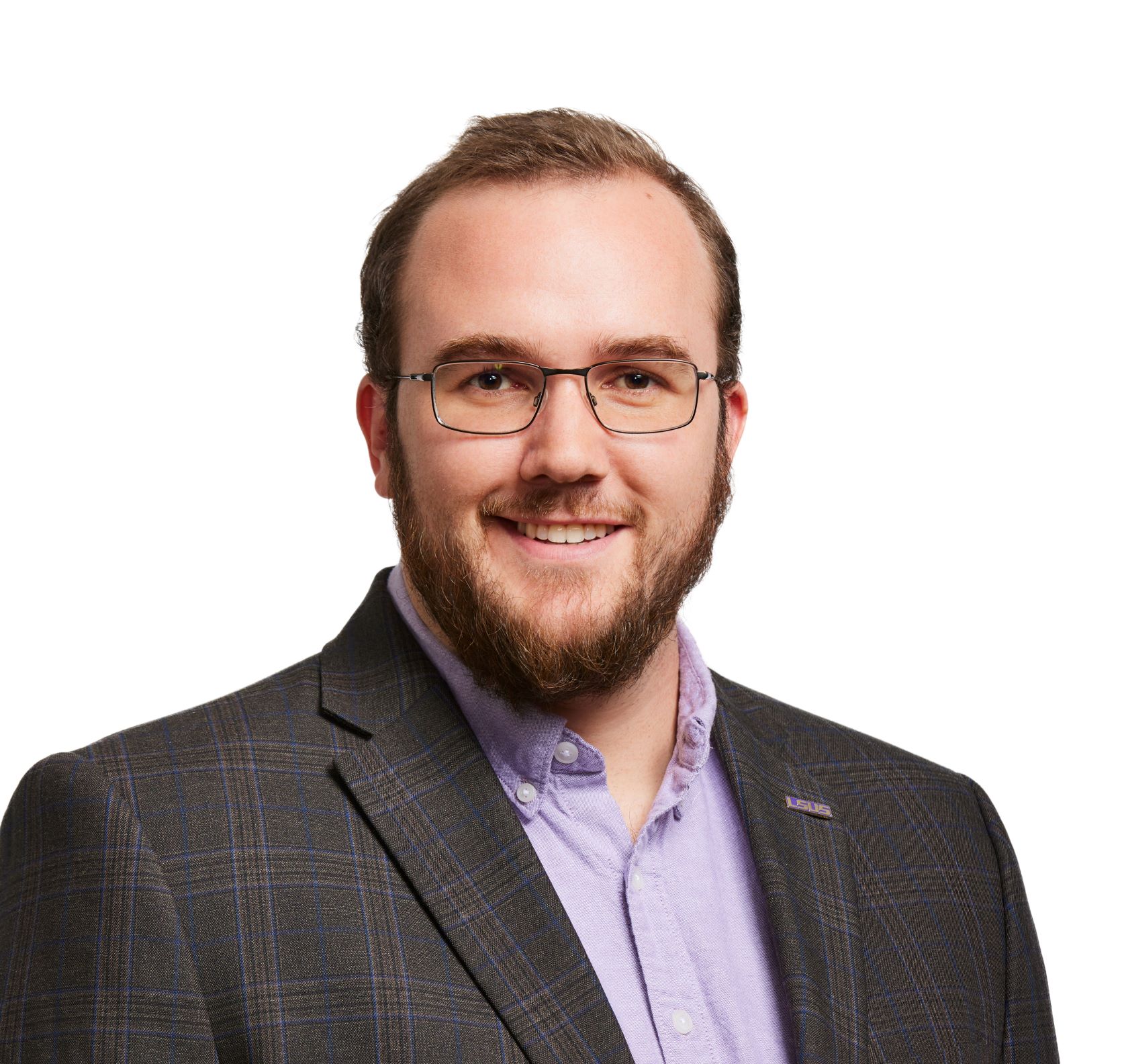
Dr. Matthew Pollock is an Assistant Professor of Linguistics and Spanish at Louisiana State University in Shreveport (LSUS), serving as Interim Chair of the Department of English and Foreign Languages. He holds dual PhDs in Hispanic Linguistics and Linguistics from Indiana University (2023), with prior teaching experience in Germany via a Fulbright Scholarship and Spain through the IU Honors Program. His research focuses on sociolinguistics, phonetics/phonology, bilingualism, second language acquisition, and usage-based approaches. Education: PhD in Spanish/Hispanic Linguistics (Indiana University, 2023) PhD in Linguistics (Indiana University, 2023) MA in Hispanic Linguistics (Indiana University, 2018) BA in Spanish and English Literature (Auburn University, 2015) Research Interests: Dr. Pollock examines political speech, sociophonetic variation (e.g., Andalusian/Caribbean Spanish), bilingual acquisition, and corpus-based methodologies. His work bridges theoretical linguistics with applied sociolinguistics, emphasizing style-shifting in political contexts and perceptual sociolinguistics. Teaching: At LSUS, he instructs courses in Linguistics, Spanish language, and Hispanic linguistics. He has extensive experience teaching across multiple levels, including high school abroad and university-level courses in the U.S. and Spain. Professional Contributions: He serves as an editor for major linguistic handbooks (e.g., The Oxford Handbook of the Spanish Language ), reviews for journals like Hispania , and actively participates in academic conferences globally. His research has been funded through grants and presented at institutions such as the Linguistic Society of America and NWAV.
Rajeev Tyagi is a Professor of Marketing and holds the Walter B. Gerken Chair in Enterprise and Society at the Paul Merage School of Business, University of California, Irvine. He has been a faculty member since 1996, progressing from Assistant Professor to full Professor, and has held significant leadership roles including Interim Dean and Senior Associate Dean for Academic Affairs. PhD, MA, Marketing – The Wharton School, University of Pennsylvania (1996) MBA – Indian Institute of Management, Calcutta (1992) BE, Electronics Engineering – National Institute of Technology, Surat (1988) His research focuses on the economics of marketing strategy, particularly competitive marketing strategies, distribution channels, and new product introduction. He develops quantitative and game-theoretic models to analyze strategic interactions in markets. His work spans pricing, product positioning, channel design, and consumer welfare implications of technological change. His recent publications in Marketing Science , Management Science , and Journal of Marketing Research reflect a consistent focus on strategic decision-making in competitive environments. Key themes include bundling of time-sensitive events, channel decentralization benefits, pricing under uncertainty, and the impact of entry on market dynamics. His research often reveals counterintuitive outcomes, such as how technological advances can reduce consumer surplus or how entry can soften competition through strategic differentiation. Multiple school- and university-wide awards for excellence in teaching Rajeev Tyagi teaches courses at the PhD, MBA, and Master’s levels, including Marketing Analytics, Marketing Strategies in High-Tech Markets, New Product Development, Business Economics, and Multivariate Statistics. While specific advisees are not listed, his extensive publication record with co-authors suggests active mentorship and collaboration. His research has been supported by his academic appointments and institutional affiliations, with no external grants explicitly mentioned. He maintains an active research agenda, with publications as recent as 2022, indicating ongoing scholarly contributions. His work bridges theoretical rigor with practical implications for marketing and strategy.
Leo Wanner is a prominent Professor at Universitat Pompeu Fabra's Department of Information and Communication Technologies, specializing in Natural Language Processing. With a research career spanning over three decades, he has made significant contributions to computational linguistics, particularly in natural language generation, collocations, and hate speech detection. He has served as editor for multiple editions of the International Conference on Computational Linguistics (COLING) including the 2025 edition. Wanner's research interests encompass a wide range of topics in computational linguistics, with recent work focusing on hate speech detection, multilingual processing, and the capabilities of large language models. His work bridges theoretical linguistics with practical applications, addressing challenges in lexical semantics, syntax, and discourse analysis. Notably, he has pioneered research in collocation processing and has contributed to the development of frameworks for analyzing thematic progression in texts. His publication record demonstrates consistent productivity with significant contributions across multiple subfields. Recent work shows a strong focus on contemporary challenges in NLP, particularly hate speech detection and the capabilities of large language models. His research often takes a multilingual perspective, addressing challenges across different language families including Romance and Slavic languages. Wanner has led significant research projects including the development of FORGe, a multilingual deep sentence generator based on the Meaning-Text Theory, which achieved top performance in the WebNLG challenge. His work on multilingual surface realization has established important benchmarks in the field through shared tasks that have engaged researchers worldwide. As an academic leader, Wanner has mentored numerous researchers and contributed to building research infrastructure through corpus development and annotation schema design. His work on collocation resources, thematic progression analysis, and hate speech detection frameworks has provided valuable resources for the broader NLP community.
Jian Tang is an Assistant Professor at HEC Montreal and the Montreal Institute for Learning Algorithms (MILA), as well as an Associate Professor at the Department of Computer Science and Operations Research (DIRO) at Université de Montréal. He is also affiliated with IVADO (Institut de valorisation des données) as a member. His research spans multiple institutions including collaborations with leading biology labs worldwide and access to extensive computational resources through industry partners. Ph.D. in Computer Science, Peking University (2009-2014) Visiting Ph.D. student, University of Michigan (2011.10-2013.8) B.S. in Mathematics, Beijing Normal University (2005-2009) Professor Tang's research focuses on the intersection of deep learning and graph theory, with particular emphasis on geometric deep learning, knowledge graph reasoning, and applications in drug discovery. His work bridges symbolic and neural approaches to create robust reasoning systems that can handle complex structured data. He has pioneered techniques in graph representation learning that have significantly advanced the field of molecular property prediction and protein design. His publication record shows a clear trajectory toward applying geometric deep learning to biological problems, with a growing emphasis on protein design, molecular conformation generation, and multi-omics analysis. Recent work demonstrates sophisticated integration of 3D geometry with deep learning architectures to model complex biomolecular interactions. Canada CIFAR Artificial Intelligence Chairs (CCAI Chair) Tencent AI Lab Rhino-Bird Gift Fund Amazon Faculty Research Award Microsoft-Mila collaboration grant National Research Council Canada (NRC) Collaborative Research and Development Grant Professor Tang actively mentors doctoral and master's students, with six recent graduates working on cutting-edge topics including graph neural networks for reasoning, protein design, and molecular representation learning. His research is supported by substantial funding from industry partners including Microsoft, Amazon, and Tencent, as well as government agencies like NRC. He collaborates extensively with biology labs worldwide, applying AI to solve real-world biomedical challenges. He leads a research group focused on geometric deep learning for drug discovery, with active projects in protein design using geometric-aware models and large language models for multi-omics analysis. The group has access to thousands of GPUs through industry collaborations, enabling large-scale experiments in molecular simulation and generative modeling.
Jacob Monroe is an Assistant Professor at the University of Arkansas in the Ralph E. Martin Department of Chemical Engineering. He earned his B.S. from the University of Virginia (2014) and Ph.D. from the University of California, Santa Barbara (2019), followed by an NRC Postdoctoral Fellowship at NIST. His research integrates machine learning with statistical mechanics to enable predictive molecular simulations of biomaterials. Education: B.S. (2014) and Ph.D. (2019) in Chemical Engineering Research Interests focus on: VAE-based multiscale simulation techniques Advanced solvation free energy calculations Computational design of membrane and chromatographic interfaces Protein self-assembly and water-mediated interactions Publication Trends demonstrate expertise in merging machine learning with molecular simulation to address thermodynamic challenges in biomaterial systems. His work spans applications in renewable energy , pharmaceutical formulation , and eco-friendly electronics . Scientific Awards : DOE Early Career Award (2023) NRC Postdoctoral Fellowship (2019) NSF Graduate Research Fellowship (2015) AICHE COMSEF Graduate Student Award (2017) Laboratory : Leads the Monroe Molecular Simulation Group, which specializes in developing machine learning methods grounded in statistical mechanics for biomolecular modeling. Recent projects include salt aggregation analysis in water-purification membranes and protein-interface binding energy predictions.
Ronald M Peshock is a Professor of Radiology and Internal Medicine at the University of Texas Southwestern Medical Center (UTSW), with a career spanning over four decades since completing medical school at UT Southwestern in 1976. His academic journey includes Internal Medicine training at Parkland Health & Hospital System (internship 1977, residency 1979) followed by a Cardiology fellowship (1982). Dr. Peshock's research focuses on cardiac imaging, particularly using MRI and CT technologies to assess cardiovascular risk and disease. His work heavily involves the Dallas Heart Study, examining left ventricular hypertrophy, atherosclerosis, and cardiovascular risk factors across diverse populations. In recent years, he has become a prominent researcher in artificial intelligence applications for radiology, with numerous publications on AI implementation in clinical workflows, diagnostic accuracy improvement, and integration of AI into radiology training programs. His publication record shows consistent productivity from 1979 through 2025, with 218 total publications according to available records. Recent work demonstrates particular expertise in cardiac CT, pulmonary embolism imaging, and developing quantitative imaging biomarkers for cardiovascular disease. His Scopus profile indicates an h-index of 67 with 14,914 citations, reflecting significant scholarly impact in his fields. Dr. Peshock maintains active clinical and research affiliations with Parkland Health & Hospital System and serves as a key researcher in the Dallas Heart Study. His work examining ethnic differences in cardiovascular disease, left ventricular hypertrophy patterns, and aortic stiffness has contributed significantly to cardiovascular imaging literature.
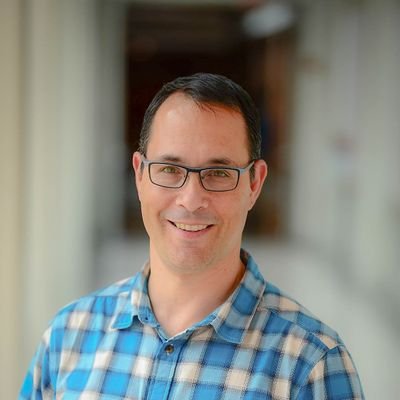
Yoseph Barash is an Associate Professor at the University of Pennsylvania, jointly appointed in the Perelman School of Medicine's Department of Genetics and the School of Engineering and Applied Science's Department of Computer and Information Science. He leads the BioCiphers Lab, integrating machine learning with experimental biology to decode RNA biogenesis and splicing regulation in human disease. Education: B.Sc. in Physics and Computer Science, Hebrew University Ph.D. in Machine Learning, Hebrew University (2006) His research spans Machine Learning , Computational Biology , and Bioinformatics , focusing on predictive models for RNA splicing and its role in diseases like cancer and neurological disorders. He pioneered the splicing code (Barash et al., Nature 2010) and extended it to genetic variations (Xiong et al., Science 2015). Recent publications emphasize RNA splicing variations in cancer, tool development (e.g., MAJIQ V3, MAJIQ-CLIN), and machine learning for drug discovery (e.g., trametinib sensitivity in AML). His work bridges computational innovation with wet-lab validation, enabling novel high-throughput assays. Scientific Awards: Lap-Chee Tsui Publication Award (2010) NSERC EWR Steacie Fellowship Canadian Institute for Advanced Research Fellowship He advises companies in RNA therapeutics and has licensed splicing quantification tools to Pfizer, GSK, and Biogen. His lab collaborates extensively, training students and postdocs in interdisciplinary approaches to RNA biology.
Laura Alvarez Lopez , Vice Dean and Professor at Stockholm University 's Faculty of Humanities , specializes in Portuguese sociolinguistics and language contact dynamics. She leads the Language and Power research network and contributes to Romance Linguistics (RomLing) . Her research explores how social and linguistic forces interact in multilingual contexts, particularly focusing on: Language variation in Latin America and Africa Power structures in linguistic landscapes Gender-neutral language policy debates Notable administrative roles include Vice Dean (2024-2027) and leadership in international projects like: Law and Policy Proposals on Gender-Neutral Language (Lars Hiertas Minnesfond, 2025) Language Policies in Higher Education (with UC Berkeley, 2022-2025) Swedish Migration to South America (Stockholm University & Åke Wibergs Stiftelse) She teaches Language Contact , Multilingualism , and Portuguese Sociolinguistics at the Master's level, while supervising doctoral theses in Portuguese and Spanish Linguistics.
Kinohi Nishikawa is an Associate Professor jointly appointed in the Department of African American Studies and the Department of English at Princeton University. His scholarly work bridges literary criticism, book history, and African American cultural studies, with a strong emphasis on the material forms of literature. A.B., Dartmouth College (summa cum laude, High Honors in English) M.A., Literature, Duke University Ph.D., Literature, Duke University His research focuses on 20th- and 21st-century African American literature, particularly the roles of book design, publishing practices, and paratextual elements in shaping literary reception. He explores how print culture, independent presses, and visual aesthetics contribute to Black literary expression and archival formation. His work intersects with Black aesthetic theory, humor, and popular culture. His recent publications reveal a consistent thematic thread: the materiality of African American texts. Across journals like PMLA , American Literary History , and Papers of the Bibliographical Society of America , he investigates how design, format, and publishing context influence meaning-making in works by authors such as Ralph Ellison, Gwendolyn Brooks, Ishmael Reed, and Percival Everett. Nishikawa is actively involved in public scholarship, curating the Black Independent Film series at the Princeton Garden Theatre and advising on the Sites of Memory exhibition of the Toni Morrison Papers. He is co-authoring a book with Professor Autumn Womack on Morrison’s archiving practices. Curator, Black Independent Film series, Princeton Garden Theatre Advisor, Sites of Memory exhibition, Toni Morrison Papers Collaborator on Morrison archiving project with Autumn Womack