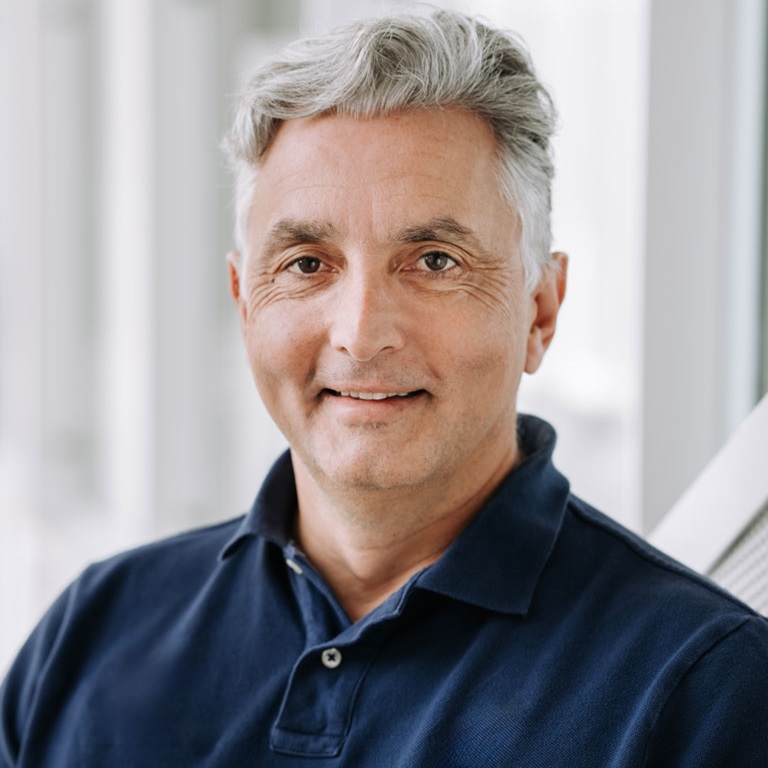
Anne-Sophie Chauvin is a Senior Lecturer and Researcher at École Polytechnique Fédérale de Lausanne (EPFL), School of Basic Sciences, within the Institute of Chemical Sciences and Engineering and the Supramolecular Chemistry Laboratory. She actively engages in supramolecular and inorganic chemistry, focusing on f-element (lanthanides and actinides) coordination polymers and luminescent bioprobes for biological and technological applications, including invisible inks and dye-sensitized solar cells. PhD in Bioinorganic Chemistry from University Paris V-René Descartes (thesis on Nitrile Hydratase mimetics) Postdoctoral work at University of Geneva on chiral alcohol configuration analysis Habilitation à Diriger des Recherches (HDR) from University René Descartes (2006) Her research spans Lanthanide and Actinide Chemistry , Luminescence , Coordination Polymers , Metallacages , and Photovoltaic Materials . Recent publications emphasize catalytic spiro stereocenter formation, actinide coordination polymers, and photoredox-enabled biomolecule functionalization. She has supervised PhD students including Andrei Andreichenko , Julien Andrès , Steve Comby , and Aurélien Willauer . Recognitions include Fellowship of the Royal Society of Chemistry (FRSC) and membership in the Swiss Chemical Society (SCS). Current roles include teaching General and Analytical Chemistry to first-year Pharmacy and Biology students at the University of Lausanne (UNIL), overseeing practical sessions, and serving on the EPFL School of Basic Sciences Faculty Council.
Hassan Z. Ashtiani is an Associate Professor in the Department of Computing and Software within the Faculty of Engineering at McMaster University. His academic profile shows consistent engagement in both teaching and research activities, with evidence of active participation in major machine learning conferences and journals through 2025. Dr. Ashtiani's research focuses on the theoretical foundations of machine learning, with particular expertise in privacy-preserving algorithms, Gaussian mixture models, and adversarial robustness. His work bridges statistical learning theory with practical algorithm design, often addressing fundamental questions about sample complexity and computational efficiency in learning systems. A significant portion of his recent work explores the intersection of differential privacy with statistical learning, developing methods for private density estimation and distribution learning. Analysis of his publication record reveals a strong trend toward increasingly sophisticated theoretical frameworks for private and robust learning. His work consistently appears in top-tier venues including NeurIPS, ICML, COLT, and ALT, with recent contributions extending into agnostic private density estimation and robust learning with tolerance. The research demonstrates progression from foundational work on nearest neighbor search and clustering algorithms toward more complex problems in private learning of high-dimensional distributions. Dr. Ashtiani teaches across multiple levels of computer science education, including undergraduate courses in Automata and Computability (COMPSCI 2AC3) and Principles of Programming (COMPSCI 2S03), as well as graduate-level courses such as Fundamentals of Machine Learning (COMPSCI 4ML3) and Theoretical Foundations of Unsupervised Learning (CAS 775). His teaching portfolio shows consistent involvement in machine learning education since at least 2019, with evidence of teaching multiple sections each academic year. His scholarly impact is reflected in mentions across 3 news outlets, reference in 1 policy source, engagement from 7 X users, and 90 readers on Mendeley, suggesting growing recognition of his contributions to theoretical machine learning.
Professor B M Azizur Rahman is a distinguished academic in the field of photonics at City University London, where he has served as Professor of Photonics in the Department of Electrical and Electronic Engineering since 2000. Previously, he was Reader in Photonics (1996-2000) and Lecturer (1988-1996) at the same institution. His academic journey began with a BEng (1971-1976) and MSc (1976-1979) from Bangladesh University of Engineering and Technology, followed by a PhD from University College London (1979-1982). His educational background laid the foundation for his extensive research career focusing on photonics, integrated waveguides, and optical sensors. Professor Rahman has made significant contributions to fields including plasmonic biosensors, fiber optic sensing technologies, supercontinuum generation, and metamaterial-based sensing systems. His research bridges theoretical modeling with practical applications in environmental monitoring, healthcare diagnostics, and engineering solutions. An analysis of his most recent publications (2022-2025) reveals a strong focus on advanced sensing technologies with applications across multiple domains. His work demonstrates expertise in combining photonics principles with nanotechnology, artificial intelligence, and novel materials to develop highly sensitive detection systems. Key research trends include the integration of deep learning with optical sensing, development of plasmonic-enhanced biosensors, and innovative waveguide designs for improved optical performance. Professor Rahman has maintained a highly productive research career with over 443 publications documented in his ORCID profile. His work shows extensive international collaboration with researchers from institutions in the UK, Bangladesh, Thailand, and other countries. While specific grant information is not provided in the available data, his sustained publication record across high-impact journals indicates successful research funding and supervision of numerous research projects over his career. His research group appears to focus on experimental photonics, computational modeling of optical systems, and development of novel sensing platforms.
Sean Andersson is a Professor in Mechanical Engineering and Systems Engineering at the College of Engineering, Boston University, and serves as Director of the BU Robotics Lab. His research bridges systems and control theory with applications in nanotechnology , atomic force microscopy , and robotics . His work in nanobioscience focuses on single molecule tracking and high-speed imaging in atomic force and fluorescence microscopy, leveraging control theory to enhance imaging capabilities. In robotics, he develops stochastic control methods for autonomous systems operating in complex environments, emphasizing multi-agent systems , sparsely sampled data , and symbolic control frameworks . Recent publications highlight trends in receding horizon control , persistent monitoring , neural style transfer for imaging , and stochastic policy optimization . The Andersson Lab also explores compressive sensing and optimal control for sensor networks and nanoscale fluid dynamics.
Silvia Cavagnero is a Professor in the Department of Chemistry at the University of Wisconsin–Madison, with a research focus on protein folding and misfolding in cellular contexts. Her work integrates biomolecular spectroscopy, chemical biology, and computational methods to address fundamental questions in structural biology. B.S., First University of Rome ‘La Sapienza’ (1988) M.S., University of Arizona (1990) Ph.D., California Institute of Technology (1996) Her research explores the role of molecular chaperones like Hsp70 in protein biogenesis, the development of laser-driven NMR techniques for enhanced sensitivity, and the implications of protein aggregation in neurodegenerative diseases. Key projects include cotranslational folding studies at ribosomal exit tunnels and hyperpolarization methods for low-concentration NMR analysis. The 15 most recent publications highlight interdisciplinary advances in NMR spectroscopy optimization Protein folding kinetics Cryo-EM structural analysis Chaperone-client interactions Hsp70 antimicrobial design Hydration dynamics in folding Scientific contributions include A Prize for Going in Vivo (2017) Recognition for Diversity and Inclusion Efforts Students from the Cavagnero Group have pursued careers in academia, pharmaceutical industries, and national laboratories. Her lab emphasizes interdisciplinary training, blending physical chemistry, biology, and computational analysis.
Ilaria Perugia is a University Professor (Univ.-Prof.) and Chair of Numerics of PDEs at the Department of Mathematics, Faculty of Mathematics, University of Vienna. She also serves as Deputy Head of the Research Platform Erwin Schrödinger International Institute for Mathematics and Physics. Her research focuses on numerical methods for partial differential equations with applications in computational physics and engineering. Professor Perugia's primary research interests include: Numerical methods for PDEs Finite element methods Discontinuous Galerkin methods Trefftz methods Virtual element methods Space-time methods Computational electromagnetics Wave propagation problems Nonlinear reaction-diffusion problems Her work spans theoretical analysis, algorithm development, and practical implementation of numerical methods for solving complex physical phenomena. Her recent publications demonstrate a strong focus on space-time methods, virtual element methods, and structure-preserving discretizations for wave equations, heat equations, and other PDEs. She has made significant contributions to the development of stable and efficient numerical schemes that preserve important physical properties of the underlying continuous problems, particularly in the context of wave propagation and computational electromagnetics. Professor Perugia leads a research group comprising several researchers and students including Mattia Corti, Matteo Ferrari, Monica Nonino, Andrea Scaglioni, Paul Stocker, Enrico Zampa, and Marco Zank. Her group actively collaborates on projects related to numerical analysis and scientific computing, with particular emphasis on developing novel discretization techniques for challenging PDE problems.
Jennifer Ryan is a Professor of Numerical Analysis and Division Head of Numerical Analysis, Optimization, and Systems Theory at the Department of Mathematics, KTH Royal Institute of Technology. Her research focuses on designing and developing numerical schemes to extract accuracy from simulations, particularly through superconvergence properties and computational efficiency improvements. She applies these techniques to applications such as imaging, fluid visualization, and plasma dynamics. Education: PhD in Applied Mathematics, Brown University; MS in Mathematics, Courant Institute; BA in Applied Mathematics, Rutgers University. Professional Activities: Member of editorial boards for BIT Numerical Mathematics, ESAIM:M2AN, and Communications on Applied Mathematics and Computation; Steering committee member of AWM's Women in Numerical Analysis and Scientific Computing (WINASc). Her publications emphasize discontinuous Galerkin methods, SIAC filtering, and applications in fluid dynamics. She has served on multiple grant review panels and received awards for diversity and inclusion initiatives. Grants: Principal Investigator for projects funded by the Swedish Research Council, NSF, and US Air Force Office of Scientific Research. Awards: Fellow of UK Higher Education Academy, DAAD Fellowship, and Householder Fellowship.
Trond Vidar Hansen is a Professor at the Department of Pharmacy, University of Oslo , and leads the LIPCHEM research group . He collaborates with institutions including the University of Bergen and Vestlandets Innovasjonsselskap through the VITADEL project, which recently received NOK 5,000,000 in verification support from the Research Council of Norway. His research focuses on the synthesis and biological evaluation of specialized pro-resolving lipid mediators derived from omega-3 fatty acids, with applications in inflammation resolution, neuroinflammation, and drug development. University : University of Oslo Department : Department of Pharmacy Research Group : LIPCHEM Collaborations : University of Bergen, Vestlandets Innovasjonsselskap Research Interests : H Hansen's work centers on the organic synthesis of bioactive lipid derivatives, particularly pro-resolving mediators from omega-3 polyunsaturated fatty acids. His team investigates their roles in inflammatory disease models , neuroinflammation , and PPAR receptor activation , aiming to develop therapeutic agents for conditions like chronic pain, diabetes, and neurodegenerative disorders. The research integrates stereoselective chemistry , biochemical profiling , and pharmacological evaluation to validate these mediators' clinical potential. Recent Awards : 2025: NOK 2,000,000 verification support from Research Council of Norway 2025: Co-leader of NOK 5,000,000 VITADEL project Publications : His articles (2015–2024) reveal a focus on stereoselective synthesis of resolvins, protectins, and maresins, with applications in anti-inflammatory and neuroprotective therapies . Key subfields include omega-3 metabolite profiling , PPAR agonist design , and biosynthetic pathway elucidation , often utilizing human cell models and mouse disease models . Collaborative projects emphasize commercialization of academic research and translational medicine .
Stefano Grivet-Talocia is a Full Professor at the Department of Electronics and Telecommunications at the Polytechnic University of Turin, where he also serves as Director of the Doctoral School and President of the Doctoral School Council. He is a member of the Interdepartmental Center SmartData@PoliTO - Big Data and Data Science Laboratory, the University Committee for Research, Technology Transfer and Services to the Territory, and the Commission for the Promotion of Library, Archive and Museum Heritage. His academic career spans over two decades at Politecnico di Torino, where he has established himself as a leading researcher in electromagnetic modeling and signal integrity. Grivet-Talocia earned his Laurea degree (summa cum laude) in Electronic Engineering in 1994 and his Ph.D. in Electronic and Communication Engineering in 1998, both from the Polytechnic University of Turin. Between 1994 and 1996, he conducted research at NASA/Goddard Space Flight Center in Greenbelt, Maryland. His educational background laid the foundation for his expertise in electromagnetic modeling, wavelet analysis, and signal processing. His research focuses on behavioral modeling, electromagnetic compatibility, macromodeling, model order reduction, numerical modeling, passivity, power integrity, signal integrity, transmission lines, and wavelets . Grivet-Talocia is particularly renowned for his work on passive macromodeling of interconnect structures, development of the TOPLine technique for transmission line simulation, and pioneering contributions to passivity enforcement algorithms. He has co-authored the first book entirely dedicated to Macromodeling (2016) and developed innovative approaches to waveform relaxation and wavelet-based signal processing. His recent publications (2024-2025) demonstrate continued leadership in model order reduction, with significant contributions to data-driven modeling of linear and nonlinear systems, power integrity analysis, and electromagnetic compatibility. His work spans both theoretical advances in numerical methods and practical applications in circuit design, with strong industry relevance particularly for semiconductor and electronic design automation companies. IEEE Fellow (2018-present) Three Intel SRS Grants (2022-2024) Three IBM SUR Grant Awards (2007-2009) Best Associate Editor Award - IEEE Transactions on Components, Packaging and Manufacturing Technology (2020) Multiple Best Conference Paper Awards (2006-2020) URSI Young Scientist Awards (1999) Ranked among the "top 2% worldwide researchers" (Stanford) since 2019 Grivet-Talocia actively supervises doctoral students including Michele Cusano, Sara Paknezhad Panahi, Antonio Carlucci, and Kun Zhao. He has secured numerous research grants from competitive national calls (PRIN) and commercial contracts with industry partners including Intel, IBM, Nokia, Hitachi, Infineon, and Cadence. His technology transfer activities include co-founding the spin-off IdemWorks (2007-2016), which was acquired by CST in 2016. He also developed the autoCircuits web service for automated circuit problem generation, widely used in electrical engineering education. He leads the EMC Group (Electromagnetic Compatibility) at DET and has been instrumental in establishing the Compact Dynamical Modeling research area. His work has practical applications in high-speed electronics design, with algorithms embedded in commercial tools like IBM PowerSPICE. Grivet-Talocia maintains strong industry connections through his research projects and serves as Associate Editor for IEEE Transactions on Components, Packaging and Manufacturing Technology.
Wen He is a Professor of Accounting at the Department of Accounting, Monash Business School, Monash University. He holds an MBA from Lancaster University and a PhD from National University of Singapore (NUS). Prior to joining Monash in 2020, he worked at UNSW and the University of Queensland. His research focuses on auditing, corporate governance, corporate social responsibility, dividends, financial reporting, and financial analysts. He has published in top journals such as Contemporary Accounting Research and Journal of Business Finance and Accounting , with recent works exploring regulatory cooperation, climate risk, and cross-border financial policies. Research Interests include: Auditing methodologies and regulatory enforcement Corporate governance in China Climate risk and financial flexibility Dividend policies and payout strategies Financial reporting transparency Recent articles highlight themes such as cross-border regulatory frameworks, auditor performance metrics, and shareholder dissent mechanisms in digital voting systems. His work contributes to UN Sustainable Development Goals through studies on corporate social responsibility and environmental accountability. He is actively supervising PhD students and accepting new candidates, particularly in auditing and governance contexts. He has held visiting positions at NUS and Xiamen University, fostering collaborative research networks in Asia. Labs/Teams: Impact Labs (Monash Business School).
Professor Andrew Berry is an Associate Professor and Head of the Geochemistry Research Area at the Research School of Earth Sciences, Australian National University (ANU). He holds a D.Phil. from the University of Oxford and a B.Sc. (Hons) from the University of Sydney. His research focuses on experimental petrology, geochemical processes in high-temperature environments, and the use of synchrotron-based techniques like X-ray absorption spectroscopy (XAS) to study element speciation in melts and minerals. Key areas include mantle metasomatism, oxidation state analysis of metals (Fe, Ti, Cr), and the geochemistry of carbonatites and rare earth elements. Education: D.Phil. (University of Oxford, 1997), B.Sc. (University of Sydney, 1991). Employment: Senior Fellow/Associate Professor at ANU (2012–present), Senior Lecturer at Imperial College London (2005–2011), and Research Fellow/Postdoctoral roles at ANU (2000–2005). Research Interests: Experimental studies of melt connectivity, oxidation state controls on element partitioning, and applications of synchrotron techniques. Current projects include investigating Fe³+/Fe²+ ratios in MORB, Ti oxidation states in hibonite, and REE behavior in carbonatites. Scientific Awards: Humboldt Research Fellowship (Universität Frankfurt, 2005). Advising & Grants: Supervised numerous PhD projects on topics like mantle metasomatism and zircon oxy-barometry. Active in collaborative projects on critical metals and carbonate melt geochemistry. Labs/Teams: Leader of the Experimental Petrology group at ANU, contributing to facilities like the Australian Synchrotron.
Kirby Nielsen is a Professor of Economics and William H. Hurt Scholar at the California Institute of Technology (Caltech), affiliated with the Division of the Humanities and Social Sciences. His research focuses on Experimental Economics, Decision Theory, and Microeconomic Theory. Contact him via kirby@caltech.edu (note: Gmail may be more reliable currently). Research interests emphasize experimental methods to study decision-making under uncertainty, preference structures, and behavioral anomalies. Recent work explores common ratio effects, gender confidence gaps, and team dynamics in economic contexts. Publications (2017–2024) address topics ranging from risk preferences to comparative analysis of human and primate decision-making. Notable themes include systematic testing of axiomatic models and the timing of information in strategic interactions. No awards or grants are explicitly listed in the provided materials. Education history is not detailed here, though his affiliation with Caltech suggests a strong academic pedigree in economics.
Dr. Aaron Schurger is an Assistant Professor in the Psychology Department at Chapman University’s Crean College of Health and Behavioral Sciences. He is also a member of the Institute for Interdisciplinary Brain and Behavioral Sciences. Schurger holds a BA from Indiana University, and MA and PhD from Princeton University. His research focuses on the neuroscience of volition, consciousness, and decision-making, particularly exploring the readiness potential (RP) and its implications for free will debates. His work challenges classical interpretations of the RP using computational models, suggesting it reflects stochastic neural processes rather than preconscious decisions. Recent contributions include studies on the origins of the RP in spiking neural networks, critiques of causal structure theories of consciousness, and interdisciplinary analyses of free will. His findings emphasize that the RP may not indicate preconscious decision-making but instead arise from natural neural fluctuations during decision thresholds. Schurger collaborates across neuroscience, philosophy, and cognitive science, contributing to debates on consciousness, action initiation, and neural correlates of subjective experience. His research also addresses methodological rigor in studying unconscious processing and integrates computational models with empirical data, as seen in studies on movement timing and neural stability during perception. While no specific grants or labs are explicitly listed, his affiliations suggest involvement in interdisciplinary projects at Chapman.
Affiliations: Domenico Fiorenza is an Associate Professor at the Department of Mathematics, University of Rome La Sapienza since October 2015. Previously, he held roles as Assistant Professor (2005–2015) and PostDoc Researcher at the Universities of Rome Tor Vergata and La Sapienza. Education: Laurea in Mathematics (University of Rome La Sapienza, 1996); PhD in Mathematics (University of Pisa, 2002). Research Interests: His work focuses on mathematical physics, algebraic geometry, and topology, with contributions to deformation theory, higher structures in quantum field theory, and categorical constructions. Notable areas include T-duality in rational homotopy theory, M-theory, and derived algebraic geometry. Publications: Over 60 peer-reviewed articles, including studies on C-infinity algebras, twistor spaces, and the geometric interpretation of M5-branes. Recent work emphasizes connections between homotopy theory and physics, such as twisted Cohomotopy and anomaly cancellation in M-theory. Labs/Teams: Collaborations with Hisham Sati and Urs Schreiber on topics like super-exceptional geometry and higher TQFTs. Visiting positions at IHÉS, MPIM, and ETH Zurich highlight his international engagement.
Thierry Warin is a Full Professor of Data Science for International Business at HEC Montréal, directing the Department of International Business. He holds the Professorship in Data Science for International Business and is a Principal Investigator at CIRANO, leading the World Economy theme. His roles include affiliations with Harvard Business School’s Microeconomics of Competitiveness program and the International Trade and Finance Association presidency (2020-2022). Education: PhD from ESSEC Business School (France, 2000). Professional development includes the Harvard Business Analytics Program (2018-2020) and GIS training at Harvard. Research Interests: Data science applications in global economic transformations, including network theory, natural language processing, and computational methods. Focus areas: algorithmic collusion, platform economies, and metadata-driven analyses. He develops open-source tools like the statcanR package and advocates for reproducible research. Articles Trends: Recent work explores AI regulation, algorithmic competition, climate transition plans, and central bank speech analysis. Methodologies span structural topic modeling, social media analytics, and entropy-based frameworks. Awards: Honored with the Highly Commended Paper Award (2017-2018) and Emerald Literati Award (2018) for reverse innovation research. Recognized for contributions to computational social science and regulatory frameworks. Advising & Grants: Supervised 16 master’s projects since 2019, focusing on data science applications in global business challenges. Active in interdisciplinary initiatives like the St. Lawrence–Great Lakes corridor data hub. Labs & Philanthropy: Founded quantum simulations and leads Ed’Haîti , an NGO addressing education in Haiti. Collaborates on Science des données au féminin en Afrique , empowering 200 African women with data science skills.