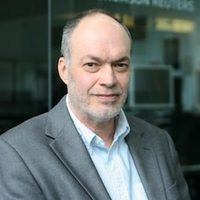
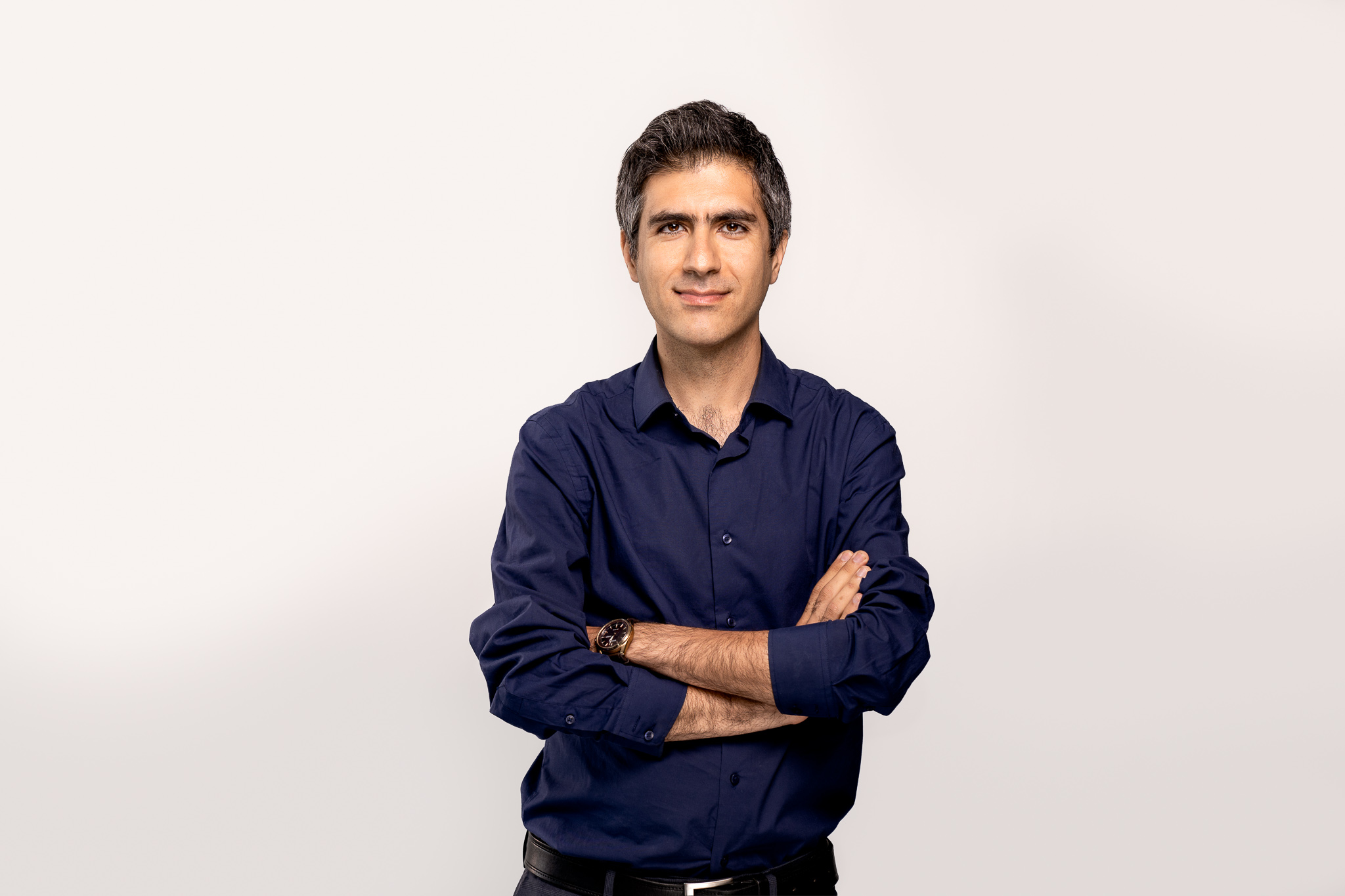
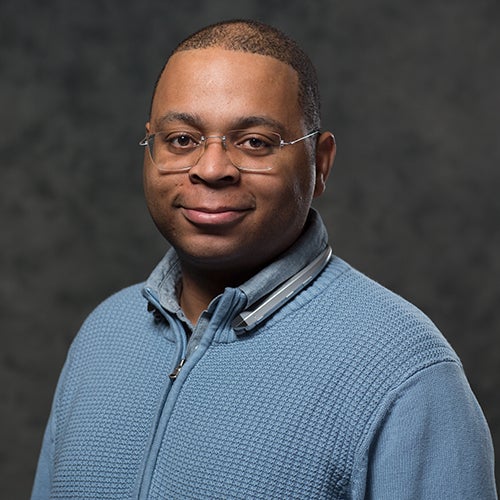
Professor Michael P. Clements is a leading econometrician at the ICMA Centre , Henley Business School, University of Reading. His research focuses on time-series econometrics, forecasting methodologies, and macroeconomic uncertainty. A DPhil graduate from Nuffield College, Oxford (1993), he held roles at Warwick University (1995–2007) before becoming a full professor in 2007 and joining Reading in 2013. Research Themes : Data revisions, mixed-frequency models, survey expectations, factor models, and macroeconomic forecasting. Editorial Roles : Former Editor of International Journal of Forecasting (2001–2012), current Associate Editor. Scientific Contributions include over 100 journal articles and 5 books. Key awards: Journal of Applied Econometrics Distinguished Author (2008) Honorary Fellow, International Institute of Forecasters (2014) Fellow, International Association for Applied Econometrics (2018) Palgrave Texts in Econometrics Series Editor (2017–) Collaborations with Ana Beatriz Galvão, David Hendry, and others have advanced real-time forecasting and uncertainty analysis. His work bridges econometric theory with practical applications in inflation, GDP growth, and financial markets.
Hanna Boström is an Assistant Professor at the Department of Chemistry, Stockholm University , leading a research group focused on crystal engineering and structure-property relationships in coordination polymers, particularly Prussian blue analogues and Hofmann complexes . Her work bridges fundamental crystallography with application-driven materials science, emphasizing switchable properties under variable conditions like temperature and pressure. She employs techniques such as X-ray crystallography and magnetic measurements to explore materials for environmental and sustainable chemistry applications. Research Focus : Spin crossover, polar materials, synthesis-structure correlations, Jahn-Teller distortions Group Members : PhD students Lara Janus and Elina Elvelo Key Projects : "Tilt engineering of Prussian blue analogues towards multiferroic materials" Publications highlight her contributions to understanding negative thermal expansion, X-ray/radiation effects, and defect-driven properties in molecular frameworks. While no specific awards are listed, her work has attracted attention in sustainable material synthesis and environmental applications.
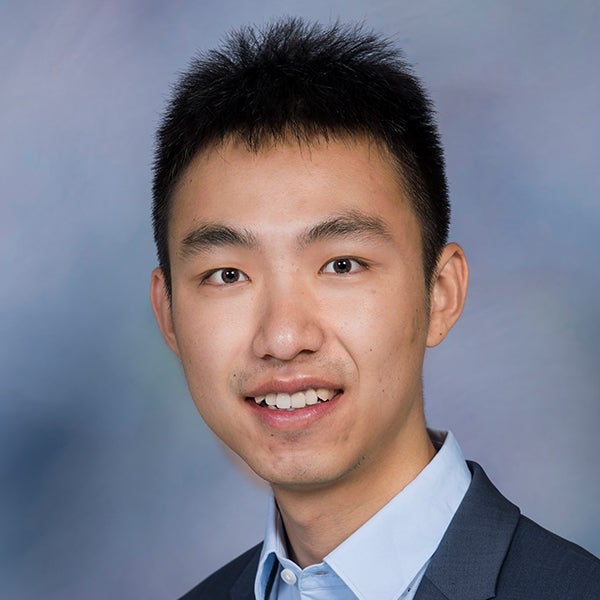
Bin Yao is a Professor of Mechanical Engineering at Purdue University, located in West Lafayette, Indiana. He holds positions within the School of Mechanical Engineering and has affiliations with Purdue's broader Engineering College. His research focuses on adaptive and robust control systems, nonlinear control, precision mechanical systems, vehicle control, and robotics, with applications in human-machine interaction, transportation, and advanced robotics. Yao earned his B.Eng. from Beijing University of Aeronautics & Astronautics (1987), M.Eng. from Nanyang Technological University (1992), and Ph.D. from UC Berkeley (1996). He has received numerous awards, including the 2010 Changjiang Chair Professorship and the 2007 ASME Outstanding Young Investigator Award. His work emphasizes theoretical advancements in control systems and their practical implementation in industrial and robotic applications. Key research trends in his publications include precision motion control of gantry systems, adaptive strategies for hydraulic manipulators, and teleoperation systems with haptic feedback. His articles often bridge theoretical control methodologies with real-world mechanical systems, emphasizing robustness and adaptability. Awards: Over 10 prestigious awards spanning from 1985 to 2010, including international recognitions in control systems and academic excellence. Grants: Secured major funding through NSF CAREER Award (1998) and other industrial collaborations. His research lab focuses on advanced control systems integration in mechanical and robotic platforms, with ongoing projects in precision manufacturing and autonomous vehicle dynamics.
Jianlin Xia is a Professor of Mathematics at Purdue University, with a courtesy appointment in the Department of Computer Science. He joined the university in 2014. Xia holds a Ph.D. in Applied Mathematics from the University of California, Berkeley (2006). His research focuses on numerical linear algebra, fast algorithms for structured matrices, and their applications in computational science and engineering. His work addresses challenges in solving large-scale linear systems, eigenvalue problems, and partial differential equations (PDEs) using innovative methods like fast multipole techniques, hierarchical structures, and randomized algorithms. Key areas of research include: Design and analysis of fast algorithms for structured matrices (e.g., hierarchical, semiseparable, Cauchy matrices) Efficient direct and iterative solvers for PDEs, especially Helmholtz equations in seismic modeling Stability and robustness of numerical methods in high-performance computing Applications in wave propagation, inverse problems, and machine learning Xia’s contributions include advancements in low-rank approximations, divide-and-conquer eigenvalue decomposition, and scalable preconditioning techniques. His work emphasizes both theoretical analysis and practical implementation, often leveraging parallel computing architectures. Contact: xiaj@purdue.edu .
Hanyu Zhu is an Assistant Professor of Materials Science and NanoEngineering at Rice University, holding the William Marsh Rice Chair. He leads the Emerging Quantum and Ultrafast Activity Laboratory (EQUAL), focusing on engineering quantum materials at the atomic level using light. His research explores the interplay of lattice structures, electrons, and electromagnetic waves to create materials with quantum behaviors for advanced technologies. Dr. Zhu earned his B.S. in Physics and Mathematics from Tsinghua University and his Ph.D. in Applied Science and Technology from UC Berkeley. His postdoctoral work at Berkeley involved developing novel optical spectroscopy techniques for phonon studies. He joined Rice in 2018 to establish the EQUAL lab. His research interests span quantum materials, ultrafast spectroscopy, and photonics, with applications in robust information technology and quantum detectors. Recent work emphasizes 2D materials, chiral phonons, and topological photonic cavities. His scientific achievements include pioneering studies on chiral phonons and developing wafer-scale aligned carbon nanotube systems. Awards include the endowed William Marsh Rice Chair. Advising and grants: Dr. Zhu’s lab focuses on experimental and theoretical studies of quantum materials, with ongoing projects in ultrafast dynamics and nonlinear optics. His work aligns with future advancements in quantum-enabled sensors and extreme environment electronics.
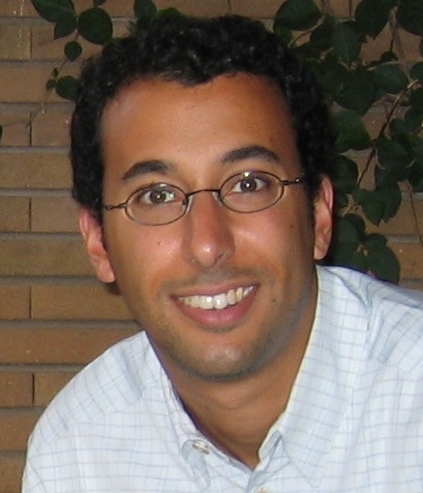
Youssef Marzouk is a Professor of Aeronautics and Astronautics at MIT, serving as co-director of the MIT Center for Computational Engineering and director of the Aerospace Computational Design Laboratory. His research focuses on integrating physical modeling with statistical inference, emphasizing Bayesian computation, uncertainty quantification, and optimal experimental design. He holds a SB, SM, and PhD from MIT and has been recognized with prestigious awards including the DOE Early Career Award and the Junior Bose Teaching Prize. Education: PhD in Aeronautics and Astronautics, MIT SM in Aeronautics and Astronautics, MIT SB in Aeronautics and Astronautics, MIT Research Interests: Uncertainty Quantification techniques for complex systems Bayesian computational methods and inverse problem solutions Optimal experimental design strategies Interdisciplinary applications in geophysics, environmental science, and engineering Awards: 2022: Report to the President, Center for Computational Science and Engineering 2021: Bayesian Inference Software Framework (hIPPYlib-MUQ) 2012: MIT School of Engineering Junior Bose Award 2010: DOE Early Career Research Award Labs & Leadership: Aerospace Computational Design Laboratory (Director) MIT Center for Computational Engineering (Co-Director) Editorial Board roles: SIAM Journal on Scientific Computing, Advances in Computational Mathematics
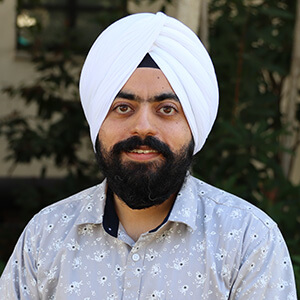
Dr. Amneet Bhalla serves as an Associate Professor in the Department of Mechanical Engineering within the College of Engineering at San Diego State University (SDSU). His primary contact email is asbhalla@sdsu.edu, with office located in Engineering Building Room 323-G, and phone number (619) 594-2043. Education: Ph.D., Mechanical Engineering, Northwestern University (2013) M.S., Mechanical Engineering, Indian Institute of Technology Kharagpur (2009) B.S., Mechanical Engineering, Indian Institute of Technology Kharagpur (2004-2008) Postdoctoral Training: University of North Carolina at Chapel Hill (Mathematics Department) and Lawrence Berkeley National Laboratory (Computational Research Division) Research Interests: Dr. Bhalla develops advanced numerical methods and high-performance computing techniques for computational fluid dynamics (CFD) and fluid-structure interaction (FSI) problems. His work spans aquatic locomotion, renewable energy device modeling, multiphase flows, vehicular aerodynamics, and bioengineering applications. He creates mathematical models to interrogate underlying flow physics for engineering design optimization, with emphasis on open-source software development through the IBAMR library. Publication Trends: Recent publications (2023-2025) focus on robust numerical frameworks for multiphase flows with phase change, acoustic streaming, and fluid-structure interaction. Key themes include mass conservation in level set methods, adaptive mesh refinement, and solvers for non-isothermal gas-liquid-solid systems. Applications range from aquatic locomotion and renewable energy devices to microfluidics and biomedical flows, demonstrating commitment to both theoretical advances and practical engineering solutions. Scientific Awards: No awards mentioned in the provided text Advising and Grants: Dr. Bhalla secured an NSF CAREER award (2023) for "Consistent Continuum Formulation and Robust Numerical Modeling of Non-Isothermal Phase Changing Multiphase Flows". As PI of the CFD Lab, he mentors graduate students in computational mechanics, leveraging prior industrial experience at ExxonMobil Upstream Research Company. His research integrates industrial practicality with academic rigor through collaborations with national laboratories. Laboratory and Team: The Computational Fluid Dynamics and Flow Physics Laboratory (CFD Lab) develops the open-source IBAMR software—a distributed-memory parallel implementation of the immersed boundary method with adaptive mesh refinement. The lab emphasizes transparency, community engagement, and reproducibility, establishing cross-institutional collaborations while advancing computational methods for complex flow phenomena in engineering and biological systems.
Seulip Lee is a Norbert Wiener Assistant Professor in the Department of Mathematics at Tufts University, School of Arts and Sciences. His research focuses on scientific computing, numerical analysis, and computational fluid dynamics, with an emphasis on multiphysics simulations using finite element methods. He holds a PhD in Mathematics from the University of California, Irvine (2021), and degrees from Yonsei University (M.Sc., 2015; B.Sc., 2013). Lee’s work bridges theoretical analysis and computational experimentation, addressing challenges in partial differential equations and optimization. He has published extensively on enriched Galerkin methods and numerical techniques for fluid dynamics. Teaching responsibilities include MATH 51 (Differential Equations) and MATH 125 (Numerical Analysis). His courses emphasize both analytical rigor and computational implementation, using tools like MATLAB for practical problem-solving. Professional experience includes a Limited Term Assistant Professor role at the University of Georgia (2021–2024), with research collaborations under mentors like Xiaozhe Hu and James Adler. His lab and team activities focus on advancing numerical algorithms for complex physical systems.
A. Erdem Sariyuce is an Associate Professor in the Department of Computer Science and Engineering at the University at Buffalo, part of the School of Engineering and Applied Sciences. His research focuses on graph mining, network science, and distributed computing. He holds a PhD from Ohio State University (2015) and a BS from Middle East Technical University (2010). His work explores temporal network analysis, social network dynamics, and algorithm design for large-scale systems. Notable contributions include methods for motif detection, core decomposition, and stream processing in bipartite networks. Sariyuce has received prestigious awards such as the NSF CAREER Award (2023) and the UB Exceptional Scholar—Young Investigator Award (2023). His research is supported by grants including the LDRD Project at Sandia National Laboratories (2016-2017). Education: PhD, Computer Science and Engineering, Ohio State University, 2015 BS, Computer Engineering, Middle East Technical University, 2010 Research interests emphasize graph algorithms, network resilience, and parallel computing. His recent projects include analyzing financial networks, identifying cohesive communities, and developing efficient algorithms for temporal data. His work bridges theoretical foundations with practical applications in social media, cybersecurity, and bioinformatics. Awards: UB Exceptional Scholar—Young Investigator Award (2023) NSF CAREER Award (2023) SEAS Early Career Researcher of the Year (2020) Advising and grants highlight his leadership in collaborative projects, including the NSF-funded Collaborative Research: OAC Core: Fast Tools for Complex Event Detection over Bipartite Graph Streams (2021). His research often involves industry partnerships and government labs, such as Sandia National Laboratories.
Dr. HanQin Cai is the Paul N. Somerville Endowed Assistant Professor in the Department of Statistics and Data Science at the University of Central Florida (UCF), also serving as Director of the Data Science Lab. He holds a joint appointment with the Department of Computer Science. His research focuses on theoretical and algorithmic foundations of mathematical optimization, data science, and machine learning, with emphasis on non-convex algorithms, adversarial attacks, signal/image processing, and deep learning integration. He has secured NSF grants totaling over $2.6M, including a $121K single-PI grant and a $2.49M co-PI grant. His work has been recognized with the UCF OSCaR Award (2025) and IEEE Senior Member status (2024). Education: PhD in Applied Mathematical and Computational Sciences from University of Iowa (2018), with M.S. in Mathematics (2014) and M.C.S. in Computer Science (2017). Previously served as a Postdoc at UCLA Mathematics Department under Dr. Wotao Yin. Research highlights include: query-efficient zeroth-order optimization, robust signal processing with corrupted data, adversarial attacks on neural networks, and tensor-based methods for high-dimensional data analysis. His recent publications explore advanced techniques in matrix recovery, tensor decompositions, and explainable AI. Grants & Awards: NSF DMS-2304489 (2022–2025), NSF DUE-2321986 (2024–2029), UCF OSCaR Award, IEEE Senior Membership. Labs & Teams: Directs UCF's Data Science Lab, collaborates across disciplines in statistics, computer science, and engineering.
Shahin Kamali is an Associate Professor in the Department of Electrical Engineering & Computer Science at York University's Lassonde School of Engineering. Previously, he served as an Assistant Professor at York University (2022-2024) and the University of Manitoba (2017-2022), where he continues to hold an Adjunct Professor position. He completed his Ph.D. in Computer Science at the University of Waterloo in 2014 and was a postdoctoral fellow at MIT's CSAIL lab from 2015-2017. Dr. Kamali received his B.Sc. from the University of Tehran and his M.Sc. from Concordia University, both in Computer Science. He has earned teaching certifications including the Kaufman Teaching Certificate Program from MIT and the Certificate in University Teaching from the University of Waterloo. His research focuses on algorithms' design, analysis, and limitations, with particular emphasis on online problems such as bin packing, paging, list update, and k-Server. His work extends to big-data applications of algorithms in data compression, graph partitioning, resource allocation in the cloud, and algorithmic aspects of blockchain technology. His recent publications (2023-2025) demonstrate a strong focus on learning-augmented algorithms, online computation with predictions, and novel applications in blockchain and graph theory. His research has been supported by multiple NSERC grants since 2010, with recent projects investigating models, applications, and limitations of online algorithms. He has successfully supervised numerous graduate students and serves on various committees related to algorithms conferences and academic governance. University of Waterloo Doctoral Thesis Completion Award (2014) University of Waterloo Mathematics Graduate Experience Award (2008) Dr. Kamali teaches advanced courses in algorithms and data structures and is scheduled to teach Design and Analysis of Algorithms (EECS 3101) in Fall 2025 and Advanced Data Structures (EECS 4101/5101) in Winter 2026. He is actively involved in organizing major conferences, including CCCG and WADS 2025 at York University.
Kangkook Jee is an Assistant Professor in the Department of Computer Science at the Erik Jonsson School of Engineering and Computer Science, University of Texas at Dallas. His work focuses on cybersecurity, machine learning applications in security, data provenance analysis, and graph neural networks. He has developed systems like ProvIoT for IoT security and UTrack for enterprise user tracking. His research addresses challenges in adversarial machine learning, malware detection, and robust graph classification under adversarial conditions. He also explores federated learning, confidential computing, and blockchain-based secure data sharing. Key contributions include techniques for detecting stealthy attacks in IoT, improving graph neural network robustness against adversarial node modifications, and enhancing intrusion detection through provenance-based analysis. His work bridges theoretical advancements in machine learning with practical enterprise security solutions. Notable systems include AIQL for efficient attack investigation and SEAL for storage-efficient causality analysis in enterprise logs. Research trends across his publications emphasize combining provenance tracking with modern ML techniques to address evolving cybersecurity threats. Work in 2024-2025 focuses on decompilation challenges, federated edge-cloud security, and graph abstraction methods for robust classification. No scientific awards are explicitly listed in the provided texts. His grants and advising activities are not detailed here, though his extensive publication record suggests active collaborative research. His lab works on tools like Nodoze for automated threat triage and APTrace for agile causality analysis in enterprise systems.
Alex Gittens is an Assistant Professor in the Department of Computer Science at Rensselaer Polytechnic Institute (RPI), joined in 2017. His research focuses on algorithmic trade-offs between computational efficiency and accuracy in large-scale linear algebra and machine learning contexts. He has expertise in kernel methods, randomized numerical linear algebra, and low-rank approximation techniques. Education: PhD in Applied and Computational Mathematics, Caltech (2013) Industry Postdoc at eBay Research Labs (2013-2015) Postdoctoral Scholar at International Institute of Computer Science (2015-2016) His research explores scalable machine learning algorithms, nonlinear and multilinear sketching applications, and sampling for low-rank tensor/matrix approximation. Current technical interests include attention mechanisms for knowledge graph completion, federated learning trade-offs, and causal inference in adversarial settings. Recent publication trends show active contributions in federated learning (privacy-fairness optimization), causal information extraction (financial text analysis), and adversarial machine learning (robustness-security trade-offs). His work emphasizes trustworthy ML systems and computational efficiency in high-dimensional data processing. Teaching includes foundational discrete mathematics (CSCI 2200) and advanced machine learning courses (CSCI 6968/4968). He offers advising through Slack channels and via email, focusing on course selection, research opportunities, and graduate school preparation.
Somayeh Moazeni is an Associate Professor at the School of Business, Stevens Institute of Technology. She holds a PhD in Computer Science from the University of Waterloo and has held academic appointments including Visiting Associate Professor at Northwestern University and Postdoctoral Research Associate at Princeton University. Her research focuses on Reinforcement Learning, Stochastic Dynamic Optimization, and applications in Energy Markets, Inventory Management, and Algorithmic Trading. She has authored over 30 peer-reviewed articles and serves as an associate editor for INFOR and PLOS One . Education: PhD (Computer Science, 2012), University of Waterloo; Postdoc (Operations Research, 2012-2014), Princeton University Industry Experience: Senior Risk Analyst at RBC (2011-2012), Risk Analyst at BMO (2010) Awards: IEEE Senior Member (2019), Anita Borg Institute GHC Faculty Scholar (2017), MITACS Poster Competition First Place (2009) Her research spans Bayesian Optimization , Resilient Network Design , and Energy Efficiency . Current funded projects include PSEG Foundation grants for energy resilience and NSF funding for distributed energy resource controls. She advises PhD students in Operations Research and Energy Systems and teaches graduate courses in Reinforcement Learning and Financial Engineering. Key Contributions: Developed stochastic optimization frameworks for energy storage, contact center reliability modeling, and risk-aware trading strategies. Her work on sequential learning for consumer-driven demand response programs has advanced smart grid applications.
Jun Bai is an Assistant Professor in the Department of Computer Science at the University of Cincinnati's College of Engineering and Applied Science. His research focuses on Machine Learning, Deep Learning, Medical Image Analysis, AI-driven diagnostics for cancer and diseases, and drug discovery. He holds a Ph.D. in Computer Science and Engineering from the University of Connecticut (2023), an M.S. in Computer Science from the University of Dayton (2019), and an M.S. in Interdisciplinary Studies in Education (2015). His work emphasizes applying AI to healthcare challenges, such as robust mammogram classification, 3D biomedical image registration, and peptide generation for drug discovery. Recent studies include hybrid transformer models for medical imaging and weakly-supervised systems for prostate cancer diagnosis. His computational methods span molecular dynamics simulations and graph neural networks. Despite his prolific research output, no specific grants, advising roles, or lab affiliations are explicitly listed in the provided data. Contact: Rhodes Hall 891, Cincinnati, OH | Email: baiju@ucmail.uc.edu