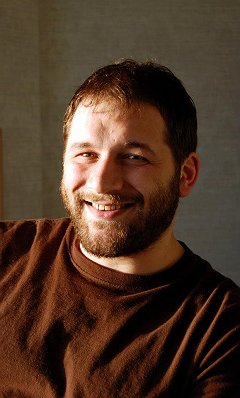
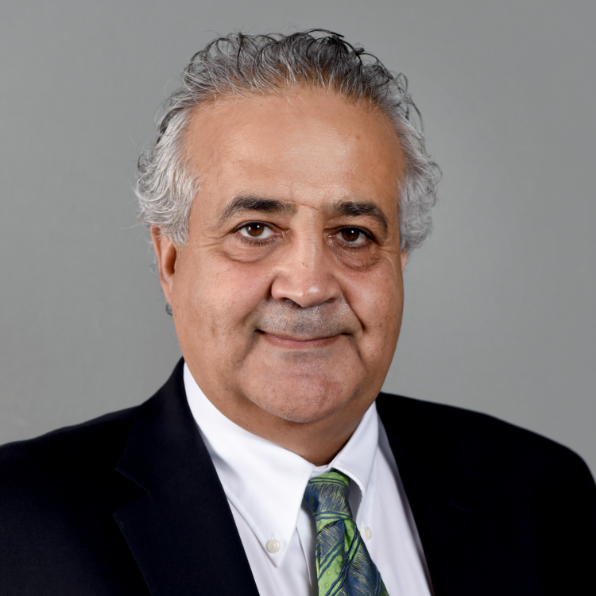
Raul Briones Llorente is an Assistant Professor at the University of Burgos, affiliated with the Faculty of Sciences and Department of Mathematics and Computer Science. He is a member of the iENERGIA Energy Engineering Research Group, focusing on building energy simulation, sustainable construction, and renewable energy integration. Academic Rank: Assistant Professor Research Group: iENERGIA University: University of Burgos Department: Mathematics and Computer Science His research spans energy efficiency in building rehabilitation, thermophysical material characterization, and educational innovations in energy simulation. Recent work explores AI applications in renovation diagnostics and cross-border district-level sustainability strategies. Key trends in his publications include: Building energy simulation tools validation Phase change material thermal behavior analysis Bioclimatic vernacular architecture studies International collaboration impacts on doctoral training Renewable energy integration at urban scale Supervised by Dr. Eduardo Montero García and Dr. Ángel Rodríguez Sáiz, his 2020 PhD thesis focused on energy simulation of buildings for improved efficiency and environmental sustainability.
Dr. Andrew Antiohos is a Teaching Professor in Mechanical Engineering at Victoria University's College of Sport, Health and Engineering. His work integrates academic teaching with research in fluid mechanics, thermodynamics, and biomimicry engineering. PhD in Mechanical Engineering (Victoria University, 2015) BEng(Hons) in Mechanical Engineering with first-class honours (Victoria University, Australia) Research focuses on turbulent flow control, vortex-induced vibrations, and seismic-resistant structural design. Recent projects include passive flow controllers for bluff bodies and self-slitting composite shear walls with energy dissipation systems. His 7 research outputs (2009-2025) span fluid dynamics, structural engineering, and STEM education. Key trends include biomimicry applications in civil infrastructure and innovative teaching methodologies in engineering education. Top student prize in mechanical engineering (annually during undergraduate studies) Industry award for leadership and innovation in international engineering projects Active in collaborative research and industry projects, Andrew contributes to UNSDGs 9 (Industry Innovation), 11 (Sustainable Cities), and 4 (Quality Education). He previously worked as a design engineer in the industry, focusing on fluid dynamics and computational design.
Albert Crispi is a Teaching Professor at the EINA School of Design and Art in Barcelona, where he teaches First Year Drawing Workshop and Ergonomics, Perception and Usability for the Design Degree program. With over two decades of professional experience in architecture and building rehabilitation, he founded AC Arquitectura y Rehabilitación in 2002 and has worked with notable studios including PROA Arquitectura y Rehabilitación since 2002. Teaching: 2003–present at EINA Professional practice: 2002–present as independent architect Research: Industrial architecture (1953–1973), building rehabilitation techniques His research focuses on industrial architectural heritage , with particular emphasis on Barcelona's postwar construction and heritage facade restoration . Recent projects include: Facade restoration of 19th-century buildings in Barcelona Energy rehabilitation of Pla de Montbau residential towers Structural consolidation of historic facades Scientific recognition includes: Premi Estudis Caixa d'Enginyers Accèssit (2014) He published multiple articles on industrial architecture and is currently pursuing his doctorate at Universitat Politècnica de Catalunya (UPC).
Hakim Bendada is a Full Professor at Laval University since 2014, with prior academic roles including Associate Professor (2010-2014) and Assistant Professor (2005-2010) at the same institution. Since 2003, he has concurrently held an Associate Professor position at the University of Quebec in Abitibi-Témiscamingue. His research focuses on infrared thermography , non-destructive testing (NDT) , high-resolution thermal imaging , and opto-thermal inspection of industrial processes, with applications spanning aerospace, civil engineering, and cultural heritage preservation. PhD in Stimulated Infrared Tomography from National Polytechnic Institute of Lorraine (1991-1995) Director of Aerospace Group (GAUL), Laval University (2006-2008) Research Officer at National Research Council of Canada (1997-2005) His research grants include multiple NSERC Discovery and Tools & Instruments awards for advancing infrared vision systems. He has contributed to 30+ peer-reviewed publications and 20+ conference proceedings , emphasizing 3D NDT methods and thermal diagnostics. Bendada received the Andronicos Kantsios Award (2007) and Professeur étoile honors (2007, 2009, 2013). He co-edits journals like Quantitative Infrared Thermography Journal and organizes international conferences including QIRT and AITA .
Dr. Wei Song is an Associate Professor in the Department of Civil, Construction and Environmental Engineering at The University of Alabama, College of Engineering. He directs the Intelligent Systems and Structural Dynamics Laboratory and focuses on developing innovative cyber-physical systems for improving disaster resilience and energy efficiency of structures. Dr. Song's educational background includes: Ph.D., Civil Engineering, Purdue University, 2011 M.S., Systems Science and Mathematics, Washington University in St. Louis, 2008 M.S., Structural Engineering, Tongji University, 2004 B.S., Civil Engineering, Tongji University, 2001 His research interests span structural dynamics under hazardous loads, structural condition assessment, advanced experimental platforms, machine learning applications, and cyber-physical systems design. Dr. Song's work particularly addresses challenges in developing resilient and sustainable communities through civil engineering, with emphasis on next-generation structural condition assessment and retrofitting tools. His laboratory develops innovative systems based on smart damping and sensing devices combined with intelligent algorithms and control strategies. Dr. Song's recent publications demonstrate a strong focus on real-time hybrid simulation techniques, deep learning applications for structural health monitoring, and innovative approaches to structural control. His work bridges traditional civil engineering with cutting-edge computational methods, particularly in crack detection, structural dynamics, and community resilience against natural hazards. Dr. Song has received numerous honors including the 2021 O. H. Ammann Research Fellowship and has advised award-winning students like Shanglian Zhou. He serves as Associate Editor for Engineering Structures and Frontiers in Built Environment, and is actively involved in professional organizations including ASCE technical committees on Structural Identification and Structural Control and Sensing. His laboratory conducts research on structural control systems using MR dampers, mass dampers, base isolation platforms, structural condition assessment of bridges, and real-time hybrid simulation. Dr. Song has also been involved in significant projects related to Alabama's infrastructure, including monitoring the Tuscaloosa Box Girder Bridge and investigating cross-frame behavior in steel girder bridges.
Arturo E. Schultz serves as the Robert F. McDermott Distinguished Chair in Engineering and Professor at the University of Texas at San Antonio (UTSA), where he directs the Civil and Environmental Engineering and Construction Management (CECM) program within the Klesse College of Engineering and Integrated Design. His leadership spans academic administration and cutting-edge structural engineering research. His educational foundation includes: Ph.D. in Civil Engineering from the University of Illinois at Urbana-Champaign M.S. in Civil Engineering from the University of Illinois at Urbana-Champaign B.S. summa cum laude in Civil Engineering from Southern Methodist University Dr. Schultz's research pioneers damage-tolerant structural systems with emphases on earthquake resilience and sustainable construction. His work integrates advanced materials like ultra-high-performance fiber-reinforced concrete with innovative techniques including intermeshed steel connections and unbonded post-tensioning. He develops self-centering structural systems that minimize post-earthquake damage while advancing sustainable practices through earthen masonry and digital manufacturing. His research bridges computational modeling, full-scale structural testing, and real-world applications in seismic zones. Analysis of his 15 most recent publications reveals dominant themes in seismic-resistant masonry systems, steel connection innovation, and digital construction technologies. His work consistently addresses practical industry challenges—particularly in steel erection safety, masonry wall performance, and concrete structural behavior—while pushing boundaries in earthquake engineering through limited-damage design philosophies and advanced material applications. His distinguished accolades include: Collingwood Prize (2015) from the American Society of Civil Engineers Fellow Member Award (2012) from The Masonry Society Outstanding North American Masonry Conference Paper Awards (2007) John B Scalzi Research Award (2007) from The Masonry Society As an academic leader, Dr. Schultz directs the AMASS (Advanced Manufacturing for Assembly of Structural Steel) research initiative and has led multiple post-earthquake reconnaissance missions, including the 2019 Albania and 2015 Nepal earthquakes. His grant portfolio supports experimental testing facilities for structural systems and digital construction innovation, though specific student advisement details aren't documented in available sources. His laboratory program focuses on full-scale structural testing of innovative connections and wall systems, utilizing advanced manufacturing techniques and digital tools to validate performance under extreme loading conditions while developing practical implementation frameworks for industry adoption.
Colin Gordon is a researcher at Drexel University with a focus on type theory, formal verification, and concurrency. His work bridges theoretical and practical aspects of programming languages. His research interests include: Type Theory Separation Logic Verification Concurrency and Parallelism Capabilities Type and Effect Systems Colin's recent publications address challenges in effect systems, formal verification, and programming language design. His work spans conferences like POPL, PLDI, and SPLASH, reflecting a strong commitment to advancing software correctness and language design.
Dr. Van Thuan Nguyen is a Senior Research Technologist (Instrumentation) at the School of Civil Engineering , University of Queensland , focusing on structural engineering, composite materials, and fatigue analysis in civil infrastructure systems. Research Themes: Structural rehabilitation using FRP, fatigue behavior of bonded interfaces, concrete testing instrumentation, and hybrid simulation techniques. Publications: His work includes experimental studies on CFRP-to-concrete and FRP-to-steel bonding under fatigue loading, temperature-stress testing machines, and structural monitoring technologies. Collaborations: Frequently collaborates with researchers like Dilum Fernando, Hao Zhou, and Jian-Guo Dai on composite materials and structural diagnostics.
Dr. Sophia Leng is an Honorary Research Fellow at the School of Civil Engineering, The University of Queensland . Her research focuses on hydraulic engineering and environmental fluid mechanics , particularly in understanding turbulence dynamics , fish passage hydraulics , and transient flow phenomena in open channels and tidal bores. Current affiliation: School of Civil Engineering, The University of Queensland Contact: x.leng@uq.edu.au Her work involves experimental and computational modeling of breaking bores , positive surges , and tidal bore hydrodynamics , with applications to fish-friendly culvert design , sediment transport , and hydraulic structure optimization . She has developed novel guidelines for low-velocity zones in box culverts to assist upstream fish passage, emphasizing cost-effective and ecohydraulic solutions. Recent publications highlight her expertise in unsteady turbulence , air-water interaction in breaking waves, and secondary current analysis in asymmetrical channels. Her research combines laboratory experiments , field observations , and CFD simulations to address challenges in coastal engineering and environmental management . Collaborations with Prof. Hubert Chanson demonstrate her integration into leading research groups, though no specific awards, students, or grants are mentioned in the provided data. Further details about education or future projects remain unspecified.
Santiago Pujol serves as an Assistant Professor in the Department of Civil Engineering within Purdue University's College of Engineering, having joined the faculty in 2005 as part of the structures research group. His academic credentials include: Bachelor of Civil Engineering from the National University of Colombia Master's and Doctorate in Civil Engineering from Purdue University (completed in 2002) Dr. Pujol's research program centers on advanced structural engineering with emphasis on seismic resilience. His work integrates experimental validation through structural testing with practical applications in performance-based earthquake engineering. Key focus areas include vulnerability assessment of aging infrastructure, development of retrofitting techniques using innovative materials like unbonded braces, and real-time structural health monitoring systems for critical facilities. His methodologies directly address challenges in mitigating damage from impulsive loads and improving post-disaster recovery protocols. Prior to his academic appointment, Dr. Pujol gained extensive industry experience at Wiss, Janney, Elstner Associates, Inc. where he conducted international seismic evaluations across Azerbaijan, California, Dominican Republic, and Turkey. His notable projects include forensic analysis for Northridge Earthquake litigation involving Los Angeles County buildings and leading the seismic retrofit of a 13-story San Francisco high-rise. Scientific Awards: No awards specified in source material. Advising and Grants: Source documentation provides no details regarding graduate student mentorship or research funding. Labs and Teams: The text does not identify specific laboratory facilities or research consortium affiliations.
Dr. İlker Kahraman is a researcher at İzmir University of Economics, specializing in sustainable buildings and built environments. He holds degrees from Dokuz Eylül University and contributes to global initiatives like the International Initiative for Sustainable Built Environment. Current academic role: Researcher in Interior Architecture and Environmental Design Key projects: COST CircularB, GIZ sustainable built environment projects, GEF/UNDP integrated building design Research Focus His work spans circular economy implementation, seismic and energy performance assessment, and sustainable material lifecycle analysis. He integrates computational intelligence in façade design and studies CO2 dynamics in educational spaces. Collaborations Led Turkish teams in cross-ministerial projects and contributes to COST Action CA 21103. Co-authored studies on historical building sustainability and algae-based bioreactors.
Barzin Mobasher is a Professor of Civil and Environmental Engineering in the School of Sustainable Engineering and the Built Environment at Arizona State University, where he has been a faculty member since 1991. He also holds an appointment as a Senior Global Futures Scientist with the Global Futures Scientists and Scholars program at ASU. His educational background includes: Ph.D. in Civil Engineering from Northwestern University M.S. in Civil Engineering from Northeastern University B.S. in Civil Engineering from University of Wisconsin-Platteville Professor Mobasher's research program focuses on the intersection of materials science, mechanics of solids, and structural design. His work centers on understanding failure mechanisms to develop safer products and systems across diverse applications including corneal surgery procedures, electric power insulators, jet engines, and earthquake-resistant buildings. His research methodology incorporates experimental stress analysis, constitutive modeling, and durability testing of composite materials to manipulate material toughness and strength. His specific research areas include theoretical and experimental mechanics of solids, development of new construction materials and processes for manufacture, analysis and design, aerospace engine containment systems, biomechanics of refractive surgeries, steel structural systems, durability of building materials, transport properties of solids, fracture mechanics of composites, composites for power delivery systems, and performance-based specifications. Analysis of Professor Mobasher's recent publications reveals a strong focus on fabric-reinforced cement composites, with significant work on pultrusion processes, mechanical properties characterization, and structural applications. His research spans civil engineering, materials science, biomechanics, and aerospace engineering, demonstrating his interdisciplinary approach. Key themes include the development of advanced composite materials for structural applications, understanding failure mechanisms, and applying this knowledge to practical engineering problems across multiple industries. Professor Mobasher has secured substantial research funding from national and international organizations including NSF, FAA, DOT and various industrial entities. His research activities demonstrate a consistent pattern of collaboration with transportation departments, materials manufacturers, and engineering firms to address practical challenges in construction materials and structural systems.
Yuriy Vyacheslavovich Yakimtsov is an Associate Professor at the Department of Labor Protection and Environment within the Faculty of Construction, Architecture and Design at National University Zaporizhzhia Polytechnic. With academic credentials including a Candidate of Technical Sciences degree, he has been actively contributing to the university since 2000. His professional journey reflects a progression from technical engineering fields to specialized safety and civil defense expertise. Zaporizhia State Technical University, Radio Electronics and Telecommunications Zaporizhia State Technical University, Computer Sciences and Technologies Zaporizhia National Technical University, Humanitarian and Legal (2012) Yakimtsov's research interests focus on psychophysiological qualities of humans and their impact on personal safety, energy-efficient technologies and resource conservation, and resource-logistical support for construction and reconstruction. His work demonstrates a significant shift toward addressing safety challenges in conflict zones, particularly examining occupational safety in frontline educational institutions and civil defense during wartime conditions. This evolution reflects both his academic growth and the changing circumstances in Ukraine. His publication record shows consistent scholarly output with 43 scientific works, including 3 textbooks. Recent publications (2023-2025) increasingly address wartime safety challenges, civil defense in conflict zones, and psychological safety in educational settings near frontlines. This represents a clear adaptation of his expertise to Ukraine's current realities. Breastplate "For impeccable work" of the 3rd degree (2020) Certificate of Honor from Zaporizhia City Council (2018) Certificate from Department of Civil Protection (2021) Certificate from Oleksandrivskyi district administration (2022) Gratitude of National University Zaporizhzhia Polytechnic (2023) Yakimtsov actively participates in professional development, with recent certifications in academic integrity, labor protection, and occupational safety. He is an associate member of the European Society for Occupational Safety and Health (ESOSH) and regularly participates in international conferences focused on safety, civil defense, and construction technologies. His teaching responsibilities include Occupational Safety for Specialists, Civil Defense and Labor Protection, and Protection of Population, Territories, Environment, and Production Safety.
Piotr Bogacz is an Assistant Professor at the Institute of Geodesy and Civil Engineering under the Faculty of Geoengineering, University of Warmia and Mazury in Olsztyn. His academic career focuses on civil engineering, geodesy, and transport infrastructure, with a strong emphasis on construction technology, environmental impact, and structural analysis. Faculty: Faculty of Geoengineering Department: Institute of Geodesy and Civil Engineering Rank: Assistant Professor His research spans multiple subfields including flood embankment analysis , building rehabilitation , energy efficiency in construction , and structural diagnostics . He has contributed to understanding vibration propagation from railways, waterproofing solutions, and masonry building repairs. His work integrates environmental considerations with technical construction challenges, particularly in historic buildings and flood defense systems. The 15 most recent publications reflect expertise in geotechnical engineering , construction safety (BHP) , and building energy systems . Common themes include structural behavior under stress, material degradation, and environmental policy compliance. The keyword analysis indicates strong ties to Civil Engineering , Geodesy , and Environmental Science disciplines. While no explicit scientific awards are documented in this dataset, his academic contributions include overseeing 96 promoted theses, suggesting significant mentorship activity. Bibliometric data shows an h-index of 1 (Web of Science), total impact factor of 0.734, and a ministerial score of 297.
Agustín Castillo Martínez is a Professor (Interim Substitute) specializing in Construction Engineering. He obtained his PhD from the Universidad de Granada in 2016, supervised by Dr. José Carlos de San Antonio Gómez and Dr. Miguel Angel León Casas. His doctoral research focused on historical construction systems of Granada's sugar industry. Research Interests: Martínez's work bridges industrial heritage conservation with contemporary sustainability challenges. Key areas include: Rehabilitation of abandoned infrastructures (e.g., 'El Caminito del Rey') for regional development Daylight optimization and grove impacts in urban environments BIM applications in heritage projects Historical analysis of ports, machinery, and construction materials Geometric and geotechnical adaptations in industrial buildings Publication Trends: His 15 most recent articles (2011-2024) reveal a consistent focus on sustainable reuse of historical infrastructures, methodological innovations in heritage documentation (BIM, catalogs), and environmental interactions in urban design. Earlier works emphasize Granada's industrial archaeology, while recent outputs expand into sustainable lighting and infrastructure revitalization.