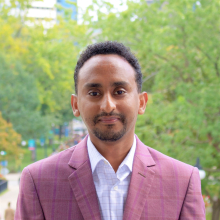
Asst. Tsvetelina Simeonova, PhD, is a faculty member at New Bulgarian University in the Department of Telecommunications. She holds a PhD in Telecommunications and Computer Technology from VTTU "T. Kableshkov" (2013) and transitioned to a regular faculty role in 2022 after serving as an honorar assistant (2020-2022) and teaching at VTTU "T. Kableshkov" (2016-2022). Education: PhD in Telecommunications and Computer Technology (2013), VTTU "T. Kableshkov" Experience: 7 years of teaching across 15+ courses in SCADA systems, IoT, cybersecurity, and network reliability Research Interests: Her work focuses on network reliability, risk analysis, and integration of SCADA systems with IoT. She explores mathematical and simulation modeling of telecommunications structures, cybersecurity protocols, and algorithmic approaches to risk management in transport infrastructure. Recent Publications highlight trends in 6G communication services, Tactile Internet, Digital Twin technology, and SCADA-IoT integration. These align with her expertise in network security and future telecommunications infrastructure.
Witold Henisz is the Vice Dean and Faculty Director of the Impact, Value, and Sustainable Business Initiative at The Wharton School , University of Pennsylvania. He holds the Deloitte & Touche Professor of Management and co-founded the Wharton Political Risk Lab . As an Academy of International Business Fellow , he bridges political economy analysis with corporate strategy. Education: PhD in Business and Public Policy from UC Berkeley Research Focus: Political/social risk management, ESG integration, stakeholder engagement His recent research examines: Populist ideology as recursive systems Indigenous land claims and investment conflicts ESG news impact on sovereign creditworthiness Municipal credit risk associated with ESG outcomes As Academic Director of Wharton’s ESG programs, he has developed executive education content on: Net-zero transformation strategies Corporate diplomacy frameworks Board governance essentials His consultancy work with PRIMA LLC serves clients like: Multinationals (Shell, Rio Tinto) Intergovernmental bodies (IFC) NGOs (World Wildlife Fund)
Prof. Pierluigi Capone serves as Professor and Head of the Flight Mechanics and Flight Control Systems research focus at Zurich University of Applied Sciences (ZHAW) School of Engineering. He teaches core courses including Aircraft Systems - Control Systems, Flight Mechanics and Simulation, and Safety Critical Systems while coordinating drone-related initiatives and the Specific Operations Risk Assessment (SORA) professional development program. His academic credentials include an MSc in Aerospace Engineering from Politecnico di Milano (1988-1994), complemented by a CAS in University Didactic (2022-2023), EASA Design Organisation Approval certification (2021), and leadership training from Bombardier and AgustaWestland. Industry experience spans 20+ years at major aerospace firms including AgustaWestland (Head of Control Laws Design, 2008-2013) and Bombardier Aerospace (Engineer Specialist, 2001-2004). Capone's research centers on flight control system design for fixed/rotary-wing aircraft, parameter estimation, and UAV safety. Recent work emphasizes tilt-rotor transition dynamics, real-time simulation fidelity, and collision avoidance algorithms, with significant contributions to XV-15 tilt-rotor modeling and atmospheric disturbance analysis for complex terrain operations. His team develops novel inceptor designs for compound helicopters and gimballed tilt-rotor systems. Publication trends reveal focused advancement in UAV operational reliability (HORUS project), hybrid-electric tilt-wing EMS aircraft, and human-drone communication interfaces. Key subfields include wake interference modeling, multi-fidelity eVTOL certification frameworks, and rotorcraft model uncertainty quantification. Current projects include White-box Helicopter System Identification (Project Leader), Flight Mechanics of Tilt-Wing Aircraft Under Harsh Conditions (Deputy Leader), and Swiss Drone Base Camp Lodrino (Team Member). Completed initiatives span Digital Transformation for Aviation Safety Standards, Power Reserve Calculators for General Aviation, and Novel Collision Avoidance Algorithms. Capone actively participates in the European Rotorcraft Forum (ERF) International Committee WG-112 on VTOL, Vertical Flight Society, and Swiss Association of Aeronautical Sciences, maintaining industry connections through his ORCID (0009-0006-5395-5670) and professional networks.
Sahra Sedigh is an Associate Professor of Electrical and Computer Engineering at Missouri University of Science & Technology, with a courtesy appointment in the Department of Computer Science. She is a Research Investigator at the Intelligent Systems Center and Faculty Ombuds, while serving as a Senator for ECE in the Faculty Senate. Her research focuses on dependable networks/systems for critical infrastructure, including power grids, water distribution networks, and transportation systems. B.S.E.E. from Sharif University of Technology M.S.E.E. and Ph.D. in Electrical and Computer Engineering from Purdue University Her work involves modeling cyber-physical systems, software-based electromagnetic immunity analysis, and structural health monitoring. She has secured funding from the National Science Foundation, US Department of Transportation, European Commission, Ford, and Samsung. As a Fellow of the National Academy of Engineering's Frontiers of Engineering Education Program and holder of a Purdue Research Foundation Fellowship, she combines academic excellence with industry experience in high-availability network systems. Scientific awards include National Academy of Engineering Fellowship Purdue Research Foundation Fellowship Senior Member IEEE IEEE-HKN and ACM memberships She teaches CpE 5410 Introduction to Computer Communication Networks and contributes to labs like the Center for Intelligent Infrastructure. Her research spans cybersecurity, fault tolerance, and energy-efficient computing, with applications in transportation, education, and environmental monitoring.
Peresetskiy Anatoly Abramovich is a distinguished Research Professor at the National Research University Higher School of Economics (HSE), working within the Faculty of Economic Sciences and Department of Applied Economics. He also holds positions as Senior Research Fellow at the Scientific and educational laboratory of macrostructural modeling of the Russian economy and the Center for Big Data in Economics and Finance. Tenured since 2018, he began his work at HSE in 2006 and has accumulated 51 years of scientific and teaching experience. His educational background includes a Doctor of Economics degree from the Central Economics and Mathematics Institute of the Russian Academy of Sciences (2010), a Candidate of Physical and Mathematical Sciences from Lomonosov Moscow State University (1977), and a Specialist in Mathematics from the same institution (1971). In 2023, he was awarded the academic title of Professor. Professor Peresetskiy's research focuses on applied econometrics, financial market analysis, mathematical modeling, and econometric methods for assessing bank reliability. His work spans banking supervision, volatility forecasting, time series analysis, and cryptocurrency markets. His recent publications demonstrate a strong interest in health economics, particularly regarding women's health and life satisfaction. His scholarly output shows a clear evolution from theoretical mathematical work in the 1970s toward increasingly applied economic research, with a significant focus on Russian financial markets, banking systems, and more recently, cryptocurrency volatility. His work bridges economics, statistics, and practical financial applications, often with a focus on Russian economic conditions. Gratitude from the First Vice-Rector of HSE (December 2023) Honorary Badge of the 2nd Degree of HSE (October 2023) Letter of thanks from the Rector of HSE (December 2022) Medal 'Recognition - 10 years of successful work' (October 2018) Best Teacher award (2015, 2012) Multiple publication bonuses (2013-2025) Professor Peresetskiy has supervised numerous doctoral candidates, including Krasnopeeva (2024), Pogorelova (2024), Golovan (2024), Tsvetkova (2022), Aganin (2020), Ipatova (2017), and Shchetinin (2017), with several currently in their aspirantura (PhD) studies. He serves as Deputy Editor-in-Chief of the journal 'Applied Econometrics' since 2010 and as a member of the editorial board of 'Journal of the New Economic Association' since 2009. He is actively involved with the Scientific and educational laboratory of macrostructural modeling of the Russian economy and the Center for Big Data in Economics and Finance, where his research on economic modeling and big data applications continues to shape economic analysis in Russia.
Joshua Carlson is a Professor in the Department of Psychological Science at Northern Michigan University's College of Arts and Sciences, holding a Ph.D. from Southern Illinois University. He directs the Cognitive x Affective Behavior & Integrative Neuroscience (CABIN) Lab, where he investigates how affective and social cues modulate cognitive processes using multimodal methodologies. His educational background includes: Ph.D. in Psychology, Southern Illinois University Dr. Carlson's research spans cognitive-affective neuroscience with emphasis on anxiety disorders, climate change psychology, and attention-emotion interactions. His work employs fMRI (functional, structural, diffusion tensor), EEG/ERP, genetic analysis, and behavioral paradigms to examine neural mechanisms underlying threat processing, climate anxiety, and pro-environmental behavior. Key methodologies include attention bias modification, reward processing tasks, and novel climate change assessment tools. Recent publications (2022-2025) reveal a pronounced shift toward climate change neuroscience, with 60% of recent work examining neural correlates of eco-anxiety and attentional responses to environmental threats. Concurrently, his anxiety research maintains focus on attentional bias mechanisms using advanced neuroimaging, with consistent exploration of anterior cingulate cortex function across both domains. Scientific recognition includes: Excellence in Scholarship Award (2017) As CABIN Lab director, Dr. Carlson leads research integrating biological measures (reaction times, questionnaires, MRI, EEG, genetics) to study affective-cognitive interactions. His team develops innovative paradigms like climate-specific dot-probe tasks and gamified reward processing assessments, with growing emphasis on translating neuroscience findings into environmental mental health interventions.
Dr. Han Liu serves as an Adjunct Professor within the Department of Organizational Behavior at the Weatherhead School of Management, Case Western Reserve University. His academic appointment bridges business management and technology, reflecting an interdisciplinary profile where his primary institutional affiliation resides in a business school despite his predominant research output in computer science domains. Dr. Liu's research concentrates on Cybersecurity, Software Engineering, and Mobile Security, with significant contributions to system audit log analysis for attack investigation, Android malware detection through program analysis and machine learning, and root cause localization in software build systems. His methodological approach consistently leverages graph-based techniques, causality analysis, and machine learning to address complex security and reliability challenges in computing infrastructure, suggesting practical applications for organizational risk management frameworks within business contexts. Analysis of his 2019-2022 publications reveals a strong thematic concentration on cybersecurity applications, with three of four papers focusing on attack investigation methodologies using graph summarization and system dependency mapping. The consistent integration of program analysis with machine learning across these works demonstrates methodological coherence, while the 2019 study on unreproducible builds extends this expertise into software engineering reliability. Dominant research keywords include Cybersecurity, Computer Science, and Software Engineering, with recurring subfields such as Malware Analysis, Log Analysis, and Root Cause Investigation characterizing his technical contributions. No publicly documented scientific awards, major research grants, or student advising activities are associated with Dr. Liu in the available sources. Similarly, laboratory affiliations or research team structures remain unreported in the current institutional documentation.
Masakazu Yamauchi is a Professor at Waseda University's Faculty of Education and Integrated Arts and Sciences. His career spans roles at the National Institute of Population and Social Security Research (2003–2017) and current faculty positions since 2017. He holds a Master of Science and PhD from the University of Tokyo. Education: PhD (University of Tokyo), Master of Science (University of Tokyo) Key Affiliations: Waseda University, National Institute of Population and Social Security Research Yamauchi's research focuses on Human Geography , Demography , and Population Studies . He explores regional fertility disparities, migration dynamics, and the intersection of social surveys with geospatial data. His work on the Geo-social Survey for Urban Lifestyle Preferences (GULP) demonstrates methods for linking individual behaviors to neighborhood environments. Scientific Awards : 2022 Population Association of Japan Award 2012 Fisheries Economics Association Encouragement Award His recent publications analyze population decline , spatiotemporal demographics , and fishing community sustainability . Collaborative projects with institutions like the Japan Society for the Promotion of Science and comparative studies on aging societies highlight his interdisciplinary approach.
Shunsuke Horii is an Associate Professor at the Center for Data Science, Waseda University. His research spans information theory, coding theory, statistical learning theory, and data science applications. He actively collaborates with industry through initiatives like the Waseda Data Science Consortium. Education: Ph.D. in Science and Engineering from Waseda University (2009), Master's from Waseda University Graduate School of Science and Engineering (2004). Research Focus: Addresses causal effect estimation in data science using Bayesian decision theory, sparse modeling, and optimization techniques like ADMM and variational inference. Develops efficient algorithms for multiuser communication, matrix completion, and privacy-preserving distributed computing. Teaching: Instructs courses on statistics literacy, data science, and programming with Python/R across multiple academic quarters. Grants: Leads projects funded by Japan Society for the Promotion of Science, including causal inference frameworks, product recommendation systems, and business analytics. Publications: 21 papers with 61 Scopus citations, focusing on LP decoding, Bayesian hierarchical models, and statistical causal analysis.
Aysenil Belger, PhD, is a Professor and Director of Neuroimaging Research in Psychiatry at the University of North Carolina at Chapel Hill's School of Medicine, Department of Psychiatry. She holds a joint appointment as Adjunct Associate Professor of Radiology at Duke University's Brain Imaging and Analysis Center. Her research employs multimodal neuroimaging (fMRI, EEG, fNIRS) and neuropsychological methods to investigate cortical circuits underlying attention, executive function, and emotion processing in neuropsychiatric disorders. Dr. Belger completed her BS at Ege University, followed by MA and PhD degrees at the University of Illinois at Urbana-Champaign. Her current work focuses on neural abnormalities in autism, schizophrenia, mood disorders, and PTSD, with recent investigations into stress regulation in adolescence and psychosis risk prediction. Her research integrates experimental psychology with neurophysiological assessments to examine sensory and cognitive impairments across disorders. Key investigations include electrophysiological markers in autism, neural oscillatory abnormalities in schizophrenia, and the impact of early childhood trauma on adult brain function. She actively mentors trainees across academic levels and teaches Cognitive Clinical Neuroscience at UNC. Recent publications demonstrate a methodological focus on dynamic functional connectivity, multimodal data fusion, and neurophysiological biomarker validation. Her work frequently employs machine learning approaches for psychosis prediction and emphasizes translational applications for precision psychiatry. Common themes include neural oscillatory dynamics, stress response systems, cortico-subcortical network interactions, and neurodevelopmental trajectories.
Dr. Andy Guo is a Senior Research Fellow at the Data Science Institute within the Faculty of Engineering and Information Technology at the University of Technology Sydney (UTS). With extensive experience in data science and machine learning applications, he collaborates closely with industry partners on critical infrastructure projects including transportation systems, water management, and financial markets. His work bridges advanced AI research with practical industry solutions. Dr. Guo received his PhD in Computer Science from the Faculty of Engineering and Information Technology at UTS between April 2012 and November 2015. Prior to his current position, he worked at several prestigious research institutions including Data61, CSIRO, and NICTA, building a strong foundation in both theoretical and applied data science. His research focuses on deep learning, graph-based learning, and infrastructure failure prediction, with particular expertise in developing solutions for railway operations optimization, water infrastructure management, and financial market analysis. Dr. Guo's work combines advanced machine learning techniques with domain-specific knowledge to address complex real-world problems across multiple sectors. His research has significant practical implications for improving infrastructure reliability and operational efficiency. Analysis of Dr. Guo's recent publications reveals a strong focus on applying graph neural networks and spatio-temporal modeling to infrastructure and transportation challenges. His work consistently demonstrates how machine learning can be deployed in real-world settings to solve complex problems in railway systems, sewer infrastructure, and financial markets. The trend shows increasing sophistication in handling imbalanced data and developing consensus-based recommendation systems that address both accuracy and fairness concerns. Best Overall Paper Award at PAKDD 2021 Sydney Trains project selected as finalist for ITS Australia National Award 2020 Dr. Guo actively supervises Masters and PhD students and serves on program committees for prestigious conferences including ICDM, IJCAI, KDD, and AAAI. His funded research portfolio includes multiple projects with iMOVE CRC, Sydney Water, Sydney Trains, Telstra, and NBN, focusing on infrastructure analytics, railway operations, and financial market analysis. These projects demonstrate his ability to secure competitive funding and translate research into practical applications. As a core member of the Data Science Institute at UTS, Dr. Guo collaborates with cross-disciplinary teams to develop innovative AI solutions for infrastructure management. His work with industry partners has led to deployed systems that improve railway punctuality, predict sewer failures, and enhance financial market monitoring, demonstrating the real-world impact of his research.
Khaled Shahin is a Clinical Associate Professor in the Department of Civil and Urban Engineering at the Tandon School of Engineering, New York University. His research focuses on structural mechanics and advanced materials in civil engineering contexts. Computational structural mechanics Fatigue and fracture mechanics of adhesively bonded joints Mechanics of fiber reinforced polymer composites Risk and reliability-based structural design methods
Andrea De Lucia serves as Full Professor in the Department of Computer Science at the University of Salerno, Italy, maintaining an active research profile with office hours at Fisciano Campus (Building F2, Room 089) and correspondence via adelucia@unisa.it. His scholarly contributions span software engineering with particular emphasis on security, mobile systems, and emerging quantum applications. His research portfolio demonstrates evolving focus through distinct phases: 2018-2020 : Code smell analysis and mobile energy efficiency (e.g., Android energy consumption studies) 2021-2022 : Security vulnerability lifecycle and quantum software engineering foundations 2023-2025 : Ethical AI integration (fairness in ML engineering) and advanced exploit prediction Recent publications reveal strategic expansion into quantum-computing applications and AI ethics, maintaining core software engineering principles while addressing contemporary challenges in secure, reliable systems development. His work consistently bridges theoretical frameworks with empirical validation through large-scale studies. De Lucia actively contributes to the software engineering community as program committee member for premier conferences including ICSE, ASE, and ICSME across multiple years (2018-2026), demonstrating sustained leadership in the field.
Zhiheng Wang, Ph.D., is an Assistant Professor in the Department of Civil, Environmental, and Construction Engineering at Texas Tech University , affiliated with the Whitacre College of Engineering. His research focuses on uncertainty quantification, scientific machine learning, risk and reliability analysis, sensitivity analysis, and Bayesian inference. Education: Ph.D. in Civil Engineering (University of Southern California, 2022), M.S. in Civil Engineering & Engineering Mechanics (Columbia University, 2016), B.E. (Honors) in Wood Structural Engineering (Nanjing Forestry University, 2014). Contact: zhiheng.wang@ttu.edu | Office: CECE 125 | Phone: (806) 834-4252
Matiyas A. Bezabeh serves as an Assistant Professor in the Department of Civil Engineering within McGill University's Faculty of Engineering. His office is located in Room 475B of the Macdonald Engineering Building at 817 Sherbrooke Street West, Montreal, QC, Canada H3A 0C3. He teaches core structural engineering courses including CIVE 205 (Statics), CIVE 507 (Wind Engineering), and CIVE 628 (Advanced Design of Wood Buildings) for upcoming academic terms. Ph.D., University of British Columbia (2021) M.A.Sc., University of British Columbia (2014) BSc., Addis Ababa University (2011) Professor Bezabeh specializes in performance-based design methodologies for timber and hybrid structures under extreme wind and seismic loads. His research focuses on developing frameworks for wind and seismic design of tall mass timber buildings, including probabilistic serviceability assessment, aeroelastic instability analysis, and near-collapse behavior studies. He investigates wind directionality effects, uncertainty modeling, supplemental damping systems, and experimental techniques for structural validation. His work directly contributes to industry standards including Canada's Technical Guide for the Design and Construction of Tall Wood Buildings and the Modeling Guide for Timber Structures published by FPInnovations. Analysis of his recent publications reveals a concentrated research trajectory toward performance-based wind engineering for tall timber structures. His work integrates wind tunnel testing with advanced computational modeling to address challenges in nonlinear dynamic response, particularly for non-synoptic wind events like tornadoes. The publications demonstrate increasing sophistication in probabilistic methods for structural reliability assessment, with a clear progression from fundamental parametric studies to comprehensive design frameworks applicable to real-world tall timber construction. Young Scientist Excellence Award, World Conference on Timber Engineering (WCTE), 2018 Mitacs Accelerated Ph.D. Fellowship, 2016-2019 Mitacs-JSPS Fellowship, 2018 University Graduate Fellowship, UBC, 2013-2016 Professor Bezabeh actively mentors 16 graduate and undergraduate students across diverse research projects in timber engineering. His research group, the McGill Timber Structures Group (McGill-TSG), maintains active collaborations with FPInnovations, Western University's WindEEE Dome, and international partners. He serves on the ASCE Performance-Based Wind Engineering Task Committee and participates in European COST Action CA20139 (HELEN) for taller timber buildings. His research program addresses critical gaps in tall timber construction standards, particularly for buildings exceeding 30 meters where prescriptive codes fall short. The McGill Timber Structures Group laboratory conducts advanced wind tunnel testing, structural reliability analysis, and development of performance-based design methodologies for timber and hybrid systems. Current projects include multi-hazard analysis of sequential seismic and thunderstorm loads, risk-based wind design frameworks, and development of novel timber-steel hybrid structural systems.