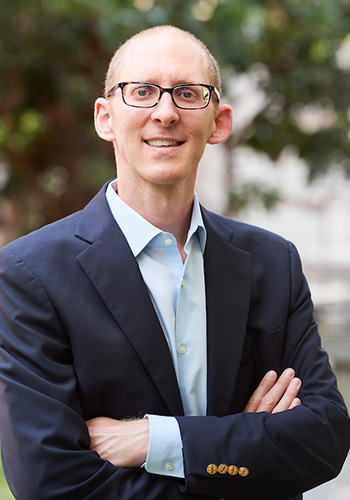
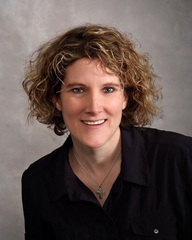
Dr. Berker Bilgin is an Assistant Professor in the Department of Electrical & Computer Engineering at McMaster University. His research focuses on next-generation electric motor drive technologies, including acoustic noise reduction, power electronics, and sustainable electrification. He leads projects sponsored by Fiat Chrysler Automobiles (FCA) and Automotive Partnership Canada (APC), and co-founded a university spin-off company. He teaches courses such as Electric Motor Drives and Switched Reluctance Machine Design. Research Focus: Electric motor drives (46% of global electricity demand), hybrid-electric powertrains, and transportation electrification. His work emphasizes high-efficiency, low-cost solutions and acoustic noise modeling for high-power-density applications like traction motors. He has 10 patents and authored a textbook on Switched Reluctance Motor Drives. Publications Trends: Recent work spans advanced motor designs, acoustic noise mitigation, and thermal/structural modeling of electric machines. Key themes include switched reluctance motor optimization, PWM control strategies, and multi-physics design approaches. Awards: Patented inventions in switched reluctance technology, textbook authorship Grants: FCA/APC-funded hybrid-electric powertrain development Labs/Teams: McMaster University spin-off company for technology commercialization
Dr. Katrina Perehudoff is a Visiting Professor at the University of Amsterdam's Faculty of Law, Department of Health Law. Her research focuses on global health law, pharmaceutical policy, and the intersection of human rights with access to medicines. She investigates how international legal frameworks influence healthcare equity, particularly in low- and middle-income countries (LMICs). Her work emphasizes EU policy impacts, corporate accountability, and pandemic response strategies. Key research areas include: Pharmaceutical governance and corruption prevention Human rights frameworks for vaccine equity Decolonizing health governance Legal mechanisms for universal health coverage Her recent publications analyze the EU's role as a political determinant of global health, the Dutch duty of care standard for pharmaceutical companies, and pandemic treaty proposals. She advocates for transparent medicines pricing and equitable access to health technologies, often engaging with international organizations like the WHO and WTO. No scientific awards or ancillary activities are explicitly listed in the provided texts. Her work bridges legal scholarship with public health practice, addressing structural inequities in healthcare systems worldwide.
Forrest E. Morgan is a Senior Lecturer at the Carnegie Mellon Institute for Strategy & Technology (CMIST), where he has been affiliated since 2017. He retired from the RAND Corporation in 2019 after a 16-year tenure as a senior political scientist specializing in defense strategy and military applications of emerging technologies. Prior to RAND, he spent 27 years in the U.S. Air Force, serving in roles such as signals intelligence analyst, space operations officer, and professor at the Air University School of Advanced Air and Space Studies (SAASS). His research focuses on deterrence theory, crisis stability, military AI ethics, space policy, and nuclear strategy. Morgan holds a PhD in Policy Studies from the University of Maryland. His work bridges academic analysis with operational military challenges, addressing topics such as escalation management in conflicts, the strategic implications of AI, and organizational frameworks for space warfare. He has authored/co-authored influential studies on China's nuclear posture, future warfare scenarios, and the creation of a dedicated U.S. Space Force. His publications (2010–2020) reflect a sustained engagement with cutting-edge defense issues, including space deterrence, AI ethics, and hybrid warfare dynamics. While no formal awards are listed, his extensive contributions to defense policy analysis and military education underscore his impact in strategic studies. His affiliation with CMIST positions him at the intersection of technology and global security challenges.
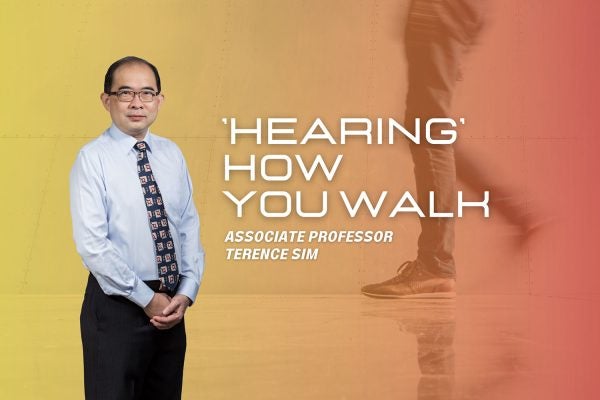
Dr. Terence Sim Mong Cheng is an Associate Professor at the Department of Computer Science within the School of Computing, National University of Singapore . He serves as Vice Dean for Admissions and previously held Vice Dean roles for Communications and Second Vice President of the International Association for Pattern Recognition. His academic journey includes degrees from MIT, Stanford, and Carnegie Mellon University. Ph.D. in Electrical & Computer Engineering (Carnegie Mellon University) M.S. in Computer Science (Stanford University) S.B. in Computer Science & Engineering (MIT) His research focuses on Biometrics and Visual Computing , spanning Deepfake synthesis/detection , Facial image analysis , Continuous authentication , and Multimodal biometrics . He integrates machine learning with physics-based modeling to address complex challenges in these domains. Recent publications highlight advancements in deepfake detection (2023), multi-task learning (2022), and gait-based authentication (2020-2022). These works intersect biometrics, privacy, and machine learning. Face and Gesture 2017 : Test of Time Award Computer Analysis of Images and Patterns 2017 : Best Paper Award NUS Faculty Teaching Excellence Award (2003, 2005) Temasek Young Investigator Award (2005) Dr. Sim has taught diverse courses including Biometrics Authentication , Computer Vision , and Discrete Structures . He provides biometric consultancy in areas like technical assessments and feasibility studies .
Chao Li is a Principal Research Fellow at the University of Cambridge's Faculty of Mathematics, specializing in AI-driven healthcare solutions. His research focuses on precision medicine through image-based AI and multi-omics integration, with applications in neurological disease modeling, surgical oncology, and clinical AI safety. He leads the Centre for Mathematical Imaging in Healthcare , advancing translational AI for personalized medicine. Research Themes: Image-based AI for precision mental health AI in surgical and interventional oncology Multi-omics approaches for disease characterization Evaluation of AI innovations for clinical translation Publications highlight advancements in multimodal fusion for diagnostics, histology-molecular marker integration, and neuroimaging analytics for mental health. His work bridges computational mathematics with clinical challenges, emphasizing real-world healthcare impact. Labs/Teams: Active member of the Centre for Mathematical Imaging in Healthcare , collaborating across departments to develop AI tools for clinical deployment.
Hongwei An is a Senior Lecturer at the University of Western Australia (UWA), affiliated with the School of Engineering's Civil, Environmental and Mining Engineering Department and the UWA Oceans Institute. He holds a PhD from UWA and an ME from Dalian University of Technology. His research focuses on fluid dynamics, coastal engineering, and offshore infrastructure stability, with notable contributions to scour mechanics, sediment transport, and wave-current interactions. Education: PhD in Civil Engineering, University of Western Australia (20xx) Master of Engineering (ME), Dalian University of Technology (20xx) Research Interests: Dr. An’s work centers on fluid-structure interactions, local scour around marine structures, and the dynamics of oscillatory flows. He investigates topics like pipeline stability in coastal environments, wave modeling under ambient currents, and the environmental impacts of offshore renewable energy systems. Grants & Collaborations: Lead investigator in the ARC Research Hub for Transforming Energy Infrastructure (2021–2026) Industry partnerships: Inpex Operations Australia, MMA Offshore, Fugro Australia Labs/Teams: Active member of the UWA Oceans Institute, collaborating on projects related to marine growth stabilization, sediment dynamics, and offshore energy infrastructure resilience.
Dr Mark Meekan is an Adjunct Senior Research Fellow at the UWA Oceans Institute, The University of Western Australia. He holds a PhD in Environmental Sciences from Griffith University (1993), focusing on coral reef fish population dynamics. With over 30 years of expertise, his research spans tropical marine ecosystems, elasmobranch ecology, and coral reef conservation. He supervises post-doctoral and PhD students globally, contributing to projects on sharks and reef fish across the Indian and Pacific Oceans. His research interests include elasmobranch population dynamics, behavioral ecology, and threatened species conservation. He serves as Chief Specialist Editor for Frontiers in Marine Science’s Marine Megafauna section. Key areas of focus are predator-prey interactions, coral reef health, and the ecological impacts of climate change. He has authored over 300 peer-reviewed articles and led collaborative projects on marine megafauna movement, anthropogenic threats, and ecosystem resilience. Recent work highlights include studies on whale shark habitat connectivity, tiger shark distribution drivers, and the ecological consequences of predator removals on coral reefs. He actively engages in global marine conservation initiatives, emphasizing the need for evidence-based management strategies to protect marine biodiversity. His contributions extend to acoustic telemetry networks and large-scale experiments assessing seismic survey impacts on marine life. Dr Meekan collaborates internationally, with projects in Australia, Seychelles, and the Red Sea. His work addresses Sustainable Development Goals related to life below water (SDG 14), particularly marine ecosystem preservation and sustainable fisheries. Grants include studies on shark population dynamics and marine reserve effectiveness, funded by institutions like the Minderoo Foundation and WA Department of Environment. He leads datasets and projects on manta ray behavior, coral reef recovery, and whale shark collision risks with shipping. His research underscores the critical role of marine megafauna in maintaining healthy ecosystems, advocating for integrated conservation approaches to mitigate human-induced environmental changes.
Adam J. Lee is a Professor of Computer Science and Vice Provost for Undergraduate Studies at the University of Pittsburgh's School of Computing and Information. He holds a PhD (2008) and MS (2005) from the University of Illinois at Urbana-Champaign, and a BS (2003) from Cornell University. His research bridges computer security, privacy, and distributed systems, focusing on systems that enable secure cross-domain interactions while preserving user privacy. Notable work includes studies on IoT privacy, cryptographic access control, and user perceptions of privacy in smart environments. Education: PhD in Computer Science, University of Illinois at Urbana-Champaign, 2008 MS in Computer Science, University of Illinois at Urbana-Champaign, 2005 BS in Computer Science, Cornell University, 2003 Research Interests: Explores secure distributed systems, privacy-preserving technologies, and user-centric design for IoT. Recent efforts include tangible privacy controls for smart devices, context-aware messaging agents, and formal analysis of cryptographic enforcement architectures. Supported by NSF and DARPA grants, including an NSF CAREER Award in 2013. Recent Work: Focuses on balancing utility and privacy in sensing systems, with contributions in ephemeral communication, auto-response agents, and privacy-aware smart voice assistants. Recent studies address user perceptions of temporal data redaction and trusted platforms. Awards: NSF Career Award (2013) ACM CSCW 2022 Best Paper ACM DIS 2022 Best Paper Advising & Grants: Advises PhD students in privacy and security research. Active in grant-funded projects on access control, cloud security, and health technology interventions. Collaborates with the Institute for Cyber Law, Policy, and Security on policy-relevant cybersecurity issues. Teaching: Courses include Discrete Structures for Computer Science and Computer and Network Security , emphasizing foundational theory and practical applications. Known for curriculum development in privacy-aware systems and ethical computing practices.
Marco Musiani is an Adjunct Professor in the Department of Biological Sciences at the University of Calgary, with a joint appointment in the Department of Ecosystem and Public Health (Faculty of Veterinary Medicine) and an affiliate position at the University of Montana. His research focuses on landscape and molecular ecology, wildlife conservation, and the impacts of human activities on wildlife behavior and ecosystems. Key study species include caribou, wolves, and grizzly bears. Education: PhD in Applied Animal Ecology (2003), University of Calgary; Laurea in Biological Sciences (1994), Università degli Studi di Roma 'La Sapienza'; Laurea Magistrale in Ecology (1997), Università degli Studi di Siena; and postdoctoral fellowships in Italy and Canada. Research interests include the conservation of evolutionarily significant units, human-wildlife interactions, and disease transmission at the livestock-wildlife interface. Notable projects include genomic studies of caribou migratory behavior and wolf population genetics. Awards include the EMERALD AWARD (2013) and NSERC Discovery Grants. Grants and collaborations span NSERC, NSF, and international partnerships. He advises students on topics like wildlife movement ecology and conservation genomics. His lab, the Musiani Lab, integrates fieldwork, genomics, and modeling to address conservation challenges.
Dr. Agathoklis Giaralis is a Senior Lecturer in Structural Engineering within the Department of Civil Engineering at the School of Engineering and Mathematical Sciences, City, University of London. He earned his PhD in Civil & Environmental Engineering from Rice University, USA, in 2008, following an MSc and a 5-year Diploma (Ptychion) in Structural Engineering from Aristotle University of Thessaloniki, Greece. He is a Fellow of the Higher Education Academy, UK. PhD, Civil & Environmental Engineering, Rice University, USA (2008) MSc, Seismic Design of Structures, Aristotle University of Thessaloniki, Greece (2004) Ptychion (5 yr Diploma), Civil/Structural Engineering, Aristotle University of Thessaloniki, Greece (2003) Dr. Giaralis's research is centered on nonlinear stochastic dynamics and time-frequency signal analysis , applied to critical areas such as earthquake engineering , seismic structural design and assessment , structural health monitoring (SHM) , and passive vibration control . His work is pioneering in the development and application of inerter-based vibration control systems, such as the Tuned Mass-Damper-Inerter (TMDI), for enhancing the resilience of structures. He also explores compressive sensing and low-power wireless sensors for sustainable SHM, as well as digital twinning and machine learning in wind engineering. His recent research has significant implications for offshore wind turbines and urban wind comfort. An analysis of his 15 most recent publications reveals a consistent and cutting-edge research trajectory focused on the optimization and application of inerter-based devices for structural control. The work spans from developing analytical tuning formulas for TMDIs to conducting experimental validation on shaking tables and exploring novel applications in offshore wind turbines and composite floors. A strong emphasis is placed on performance-based design , uncertainty quantification , and practical implementation for real-world infrastructure. His scientific contributions have been recognized by prestigious awards, including the Fulbright Exchange Student Program scholarship for his PhD studies and a Fellowship from the Higher Education Academy . He is also a member of several leading professional organizations such as the American Society of Civil Engineers (ASCE) and the Society for Earthquake and Civil Engineering Dynamics (SECED). Dr. Giaralis is actively involved in research funding and academic mentorship. He has secured significant grants from Innovate UK and the EPSRC to support his work on machine learning-based design and optimal inerter configurations. He supervises a cohort of PhD students whose theses focus on advanced topics like adaptive control of bridge joints, inerter-based energy harvesting, and seismic assessment using digital twins. He also leads the Smart Structures and Structural Health Monitoring Research Unit , driving collaborative research in smart infrastructure technologies.
Barry Jordan is the Vice Dean for Faculty and Academic Affairs and the John B. Milliken Professor of Law and Taxation at the USC Gould School of Law. His research focuses on business law, tax law, and law and economics, with notable publications in Stanford Law Review , Virginia Law Review , and Journal of Political Economy . He teaches courses on corporate finance, tax policy, and law and economics, and has held prior positions at the University of San Diego School of Law and UC Berkeley School of Law. Education: Graduate of Cornell University and Stanford Law School (Managing Editor of the Stanford Law Review ). Awards include the Thorsnes Prize for Excellence in Teaching (twice), Herzog Endowed Scholar designation, and recognition as a “Favorite Faculty Member” by USD Law’s Public Interest Law Foundation. Research interests emphasize regulatory entrepreneurship, corporate governance, and taxation’s impact on innovation, particularly in the sharing economy. His work explores topics like empty voting in derivatives markets, anti-takeover defenses, and cross-jurisdictional tax policies. He frequently contributes to legal debates through amicus curiae briefs and policy analyses. Grants and advising: No specific grants listed, but his academic leadership roles suggest institutional support. No listed students, but extensive teaching and mentorship implied through awards like the Thorsnes Prize. Labs/teams: Led the Center for Corporate and Securities Law at USD and co-directed the graduate tax program. At USC, oversees faculty and academic affairs, implying leadership in institutional academic teams.
Dr. Binbin Weng is an Gerald Tuma Presidential Associate Professor in the Department of Electrical and Computer Engineering at the University of Oklahoma. He holds joint faculty fellow positions with IREES and DISC, and directs the Micro- and Nano-fabrication labs. His research focuses on nanophotonics, mid-infrared optoelectronics, and quantum-inspired photonics, with applications in chemical sensing, renewable energy, and IoT systems. Education: B.S. in Physics, Xiamen University M.S. in Semiconductor Physics, Zhejiang University Ph.D. in Electrical and Computer Engineering, University of Oklahoma Research Interests: Nanophotonic device design and simulation Non-Hermitian PT symmetry and topological photonics Mid-infrared optoelectronic devices Polariton-phonon-photon interactions NDIR gas detection SERR chemical detection Awards: NSF CAREER Award (2021) Grants: $4M DOE grant for methane emission monitoring systems $1.5M NSF PIRE grant for clean energy research $0.25M USGS grant for SERS-based chemical sensors Labs: Nanophotonics Laboratory Micro- and Nano-fabrication labs
Matt Allen is a Professor in the Department of Mechanical Engineering at Brigham Young University (BYU), within the College of Engineering. He previously held faculty positions at the University of Wisconsin-Madison in the Engineering Physics Department, progressing from Assistant to Associate to Full Professor. His research group, the BYU Structural Dynamics Research Group, is actively engaged in experimental and analytical studies of complex dynamic systems. Ph.D. and M.S. in Mechanical Engineering, Georgia Institute of Technology (2005) B.S. in Mechanical Engineering, Brigham Young University (2001) Postdoctoral Appointee, Sandia National Laboratories (2005–2006) Dr. Allen’s research centers on structural dynamics, with a strong emphasis on nonlinear dynamics , experimental mechanics , and vibrations . His team develops innovative methods to characterize and model systems where traditional modeling fails—such as structures with large deformations, frictional joints, or complex interfaces. Key research thrusts include nonlinear normal modes, substructuring for nonlinear systems, damping characterization in bolted joints, and test-based model updating. His work bridges engineering structures and biomechanical systems, such as human gait dynamics. The research publications reflect a consistent focus on nonlinear structural dynamics , experimental system identification , and model validation . Trends show increasing integration of computational methods like harmonic balance and reduced-order modeling with experimental data, particularly for spacecraft, aircraft, and mechanical joints. The work is highly interdisciplinary, intersecting mechanical, aerospace, and civil engineering. Dominick J. DeMichele Award, Society for Experimental Mechanics B. J. Lazan Award, Society for Experimental Mechanics NASA NESC Group Achievement Award for work on nonlinear joints in the MPCV Young Investigator Award, Air Force Office of Scientific Research Dr. Allen has advised numerous graduate students, many of whom appear as co-authors on publications. He has secured over $3.3 million in research funding as principal investigator, with total project funding exceeding $5.5 million when including funds managed by collaborators. He is actively involved in professional service, including editorial roles for Experimental Mechanics and Experimental Techniques , and leadership in the Society for Experimental Mechanics. He teaches core courses in dynamics, vibrations, and modeling at both BYU and previously at UW-Madison. He leads the BYU Structural Dynamics Research Group, which focuses on developing experimental and analytical tools for understanding complex dynamic behavior in engineering and biological systems. The group emphasizes rigorous validation, interdisciplinary collaboration, and real-world application in aerospace, automotive, and biomechanical domains.
Erik Damgaard Christensen is a Professor and Head of Section in Fluid Mechanics, Coastal and Maritime Engineering at the Department of Civil and Mechanical Engineering, Technical University of Denmark (DTU). His research is central to coastal and offshore hydrodynamics, with strong expertise in breaking waves, wave-structure interactions, and offshore wind turbine foundations. His research interests include Fluid Mechanics , Coastal and Maritime Engineering , Computational Fluid Dynamics (CFD) , Sediment Transport , Shoreline Development , and Wave Loads on Offshore Structures . His work applies advanced numerical modeling and experimental analysis to solve real-world coastal engineering challenges. The recent publications indicate a strong trend towards sustainable offshore energy systems, environmental protection (e.g., microplastic retention), and innovative coastal defenses such as artificial reefs. His work integrates high-fidelity simulations with practical applications in offshore wind and marine ecosystems. Scientific Contributions and Projects: Coordinator of EU 7th Framework Project MERMAID Involved in major projects: SASME, DELOS, Safe Offload, SBWI, SDWED, FIELD_AC, FMK, MSBWI Active in research on turbulence in plunging breakers and flow in porous marine structures He has supervised several PhD students, including Y. Zhai, K. D. Göral, and Z. Wei, and is actively involved in advising and collaborative research. His external roles include former Head of Innovation at DHI (2007–2010) and prior positions as Hydrodynamics Specialist and Coastal Engineer at DHI from 1996 to 2010. His laboratory and research team focus on computational and experimental hydrodynamics, with strong links to DTU’s coastal engineering facilities and international collaborations in offshore and coastal research.
Dr. Sue L. Niezgoda is a Professor in the Department of Civil Engineering at Gonzaga University's School of Engineering and Applied Science. She holds a Ph.D. from The Pennsylvania State University and is a licensed Professional Engineer. Her work emphasizes water resources engineering, with a focus on stream restoration, hydraulic modeling, and sustainable infrastructure. Education: Ph.D., Civil and Environmental Engineering, The Pennsylvania State University, 2004 M.S., Civil and Environmental Engineering, The Pennsylvania State University, 1998 B.S., Civil and Environmental Engineering, The Pennsylvania State University, 1997 B.A., Engineering and Physics, Elizabethtown College, 1996 Dr. Niezgoda's research centers on river and stream restoration, particularly the use of natural solutions like beaver dam analogs, risk and uncertainty assessment in design, and low-impact development technologies such as permeable pavements. She advocates for experiential learning, integrating field projects into her courses to engage students in real-world engineering challenges. Her teaching includes Fluid Mechanics, Watershed Modeling, and Stream Restoration. Her recent publications reflect a strong trend in applying process-based, risk-informed approaches to stream restoration, with increasing emphasis on monitoring, education, and professional standards. She has contributed significantly to the development of a national body of knowledge for stream restoration certification. Professional Affiliations and Leadership: ASCE Environmental and Water Resources Institute (EWRI), Hydraulics and Waterways Council, River Restoration Technical Committee Board of Directors, River Restoration Northwest Active contributor to American Society for Engineering Education (ASEE) Dr. Niezgoda has advised numerous undergraduate students on research projects related to stormwater, stream monitoring, and pavement systems. She has led externally funded research initiatives, including the Sharp Avenue Permeable Pavement Feasibility Study for the City of Spokane. She is also an experienced instructor of professional development courses on hydrology, hydraulics, and restoration modeling. She is currently on sabbatical during the 2024–2025 academic year but remains an active researcher and educator.