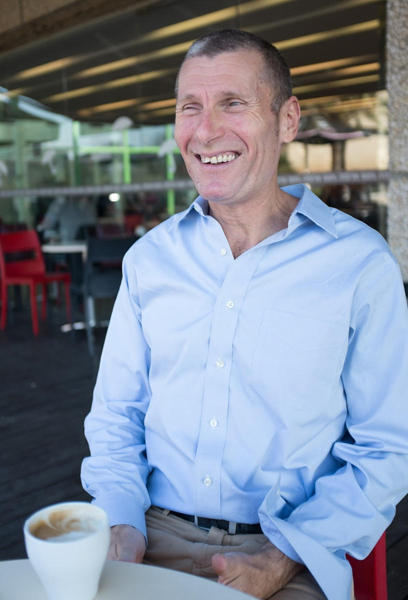
Stefano Quaglia is an Assistant Professor at the Institute of Romance Studies , University of Graz. His research focuses on syntax and its interfaces with morphology and semantics , using Italian as a comparative framework within and beyond Romance languages. Email: stefano.quaglia@uni-graz.at Office: Room 003303056, Merangasse 70/III, Graz, Austria Consultation Hours: Wednesday, 3:30-4:30 p.m. Research interests include: Spatial expressions and functional sentence structure Long-distance dependencies Language contact phenomena Particle verbs and clausal organization Wh-movement and information structure Cross-linguistic syntactic analysis Recent publications highlight empirical and theoretical work on verbal theme vowels , Slavic prefix ordering , and L3 transfer dynamics . His studies integrate synchronic analysis with diachronic and contact linguistics frameworks. Articles demonstrate trends in: Syntax-morphology interfaces : Allomorphy, prefix stacking, particle systems Comparative Romance-Slavic analysis : Extraction patterns, convergence phenomena Language acquisition : CLI effects in bilingual/multilingual contexts Prosodic constraints : Stress and phrasing in particle verbs Information structure : Wh-questions in Romance
Dalina Kallulli is an Associate Professor at the University of Vienna , Department of Linguistics. Since 2012, she has been a leading figure in theoretical and comparative syntax, with a focus on Albanian and Balkan languages . Her work bridges syntax, semantics, and morphology, emphasizing interfaces and universals. Education: PhD in Theoretical Linguistics (University of Durham, 1999), Cand.Philol. in General Linguistics (University of Trondheim, 1995), MA in English (University of Tirana, 1991) Research Interests include grammar theory , comparative syntax , syntax-semantics interfaces , and language cognition . Her publications explore clitic doubling, voice systems, and cross-linguistic morphological phenomena. Notable fellowships include the Hertha Firnberg Fellowship (2004-2007) and APART Fellow (2008-2010). Recent Publications highlight diachronic aspects of voice systems, form copy in wh-dependencies, and the role of diminutives in suppressing root projections. She has been a visiting scholar at institutions like the University of Massachusetts at Amherst and New York University. Awards and Invitations: Hertha Firnberg Fellowship (FWF) APART Fellow (Austrian Academy of Sciences) W3 Professor (acting chair) at Ludwig Maximilian University of Munich Invited talks at major international conferences (GLOW, DGfS, NELS) Teaching encompasses courses in Theory of Grammar , Introductory Linguistics , and seminars on syntactic typology.
Takashi Shogimen is a Professor in the Department of History and Art History at the University of Otago, New Zealand, where he has been employed since 2004. He was promoted to Professor in 2015 after serving as Associate Professor (2012-2015), Senior Lecturer (2007-2012), and Lecturer (2004-2007). From 2015 to 2019, he served as Head of the Department of History and Art History, and from 2013 to 2015, he was Associate Dean (Research) for the Division of Humanities. His educational background includes a PhD from the University of Sheffield (1998) and an LLB from Keio University in Japan (1991). Prior to joining the University of Otago, he was a Research Fellow at Clare Hall, University of Cambridge (1997-2000) and a Research Assistant for the Medieval Texts Editorial Committee of the British Academy (1997-2001). Professor Shogimen's research focuses on comparative political thought between medieval Europe and Tokugawa Japan, with special attention to William of Ockham in medieval European political thought and Yanaihara Tadao in modern Japanese intellectual history. His work explores the linguistic theory of anatomical, physiological, and therapeutic metaphors in intellectual history, particularly the body politic metaphor, and examines patriotism and nationalism across different historical contexts. He approaches historical methodology with attention to conceptual boundaries and contextual analysis. His publication record shows a consistent trajectory of scholarly work connecting European and Japanese political thought through comparative frameworks. A significant portion of his recent work analyzes the body politic metaphor across different historical and cultural contexts, while also examining specific historical events like the Yanaihara Incident in wartime Japan. His scholarship demonstrates a sustained engagement with how political concepts travel across time and cultural boundaries. The 35th Suntory Prize for Social Sciences and Humanities (History and Civilization Section), Japan (2013) Marsden Award, The Royal Society of New Zealand (2008-2010) Fellow, Royal Historical Society (UK) (2006) Early Career Award for Distinction in Research, University of Otago (2006) Marsden Award, The Royal Society of New Zealand (2006-2007) Overseas Research Students Award, Committee of Vice-Chancellors and Principals of the Universities of the United Kingdom (1993-1995) Professor Shogimen has secured multiple research grants including the prestigious Marsden Awards from the Royal Society of New Zealand. His work has been recognized with Japan's Suntory Prize for Social Sciences and Humanities, one of the country's most prestigious academic awards. He has edited several important volumes that bridge European and Asian political thought, including "Visions of Peace: Asia and the West" and "Western Political Thought in Dialogue with Asia." His research operates at the intersection of multiple intellectual traditions, creating dialogues between medieval European political thought and Japanese intellectual history. He leads a scholarly approach that examines how political concepts evolve across different cultural contexts while maintaining certain structural similarities.
Maria Teresa Guasti is a Professor of Linguistics and Psycholinguistics at the University of Milano-Bicocca. She has held academic positions since 1988, including Assistant Professor (2000-2005) and Researcher roles at institutions like the University of Siena and San Raffaele Hospital. Her research bridges theoretical linguistics, child language acquisition, and cognitive disorders like dyslexia and developmental language impairment (DLD). PhD in Linguistics, University of Geneva Guasti’s work focuses on syntax, semantics, and pragmatics in typical and atypical language development, with a special emphasis on bilingual acquisition, DLD, and dyslexia. She has contributed to understanding timing anticipation deficits in dyslexia and has expanded her research into musical cognition and motor control (handwriting). Recently, she collaborated with human-computer interaction scientists to develop language-based interactive technologies. Her publications span 160 works, including 80 peer-reviewed articles and 6 books, with over 7,000 citations and an H-index of 42. Key grants include the ERC Synergy (2019) and Multimind (2017-2022, €516,122). 2019 ERC Synergy Grant for Leibniz’s Dream (€10.2M) 2012-2018 Associate Investigator at ARC Centre of Excellence in Cognition and its Disorders 2005-2009 Italian Representative in European COST A33 Action Guasti has trained 14 PhD students, supervised 12 postdocs, and mentored 100+ master’s students. She has served as Associate Editor for Language Acquisition and Frontiers in Psychology , and on editorial boards including Journal of Child Language . She has delivered keynotes at international conferences and taught at summer schools.
Krishnendu Chatterjee is a Professor at the Institute of Science and Technology Austria (IST Austria) , Department of Computer Science. His research spans formal verification, probabilistic systems, game theory, and evolutionary dynamics, with over 300 peer-reviewed publications in top venues such as DISC, AAAI, LICS, PNAS, Nature , and Journal of the ACM . His research focuses on developing theoretical foundations and practical algorithms for analyzing complex systems, including Markov decision processes, stochastic games, probabilistic programs, and evolutionary models. He has made significant contributions to topics such as reachability analysis, termination of probabilistic programs, synthesis of controllers, and evolutionary game dynamics. Chatterjee's work is highly interdisciplinary, bridging computer science, mathematics, and biology. He has collaborated extensively with leading researchers worldwide and has been involved in editorial roles and program committees for major conferences in formal methods and theoretical computer science.
Patrick Blackburn is a Professor of Formal Philosophy at the University of Roskilde, Denmark, since 2011. Previously, he served as Director of Research at INRIA (France), and held academic positions in Germany, the Netherlands, and the UK. He specializes in philosophical logic, computational semantics, and the application of logic in cognitive science and computing. Education: Habilitation, Computational Linguistics, University of the Saarland (2000) PhD, Cognitive Science, University of Edinburgh (1990) MSc, Logic and Scientific Method, Sussex University (1986) BA, Philosophy & Mathematics, University of Waikato (1981) Research Interests: Blackburn’s work bridges logic, philosophy, and computational linguistics. Key areas include hybrid logics, modal logic applications, formal semantics of natural language, and computational methods in cognitive science. He emphasizes interdisciplinary approaches, integrating mathematical rigor with linguistic and philosophical insights. Publications & Impact: With over 80 journal articles and 3 books—including the seminal Modal Logic (2001)—he has achieved significant scholarly impact (6,376 citations, h-index 35). His work is foundational in hybrid logic and computational semantics. Awards: Elected Member of the Academy of Europe (2014) Editorial Roles: He has edited 10 books and journal issues, and currently serves on editorial boards for Notre Dame Journal of Formal Logic and Logique et Analyse . He also co-edits the Logic and Language section of the Stanford Encyclopedia of Philosophy.
Ao.Univ.Prof. Dr. Matthias Baaz is an Associate Professor at TU Wien's Institute of Discrete Mathematics and Geometry. His research focuses on Mathematical Logic and Theoretical Computer Science, with specialties in Proof Theory, Hilbert's Epsilon-calculus, and Automated Deduction. He leads the FWF-funded project on branching quantifiers and collaborates with the Steklov Institute on proof representation. Key contributions include the CERES method for cut-elimination and foundational work on independence-friendly logics. Prof. Baaz organized major events like the 2014 Vienna Summer of Logic (2500 participants) and the 2018 FISP Workshop on proof systems. He serves as Executive Vice President of the Kurt Gödel Society and has held roles on program committees for LFCS'16, VSL'14, and others. His work bridges structural proof theory with computational applications in parallel computing and program extraction from proofs. Current projects explore Henkin quantifiers' linguistic applications and extensions of CERES to non-classical logics. Academic activities include invited talks at ISRALOG'14, TbiLLC'13, and FLoC'02, alongside supervising research initiatives with international collaborators.
Prof. Nikolaus Augsten is a Professor and Head of the Database Research Group at the Department of Computer Science, University of Salzburg. He previously held positions at the Free University of Bozen-Bolzano, Italy, and visited Technische Universität München (TUM) and Washington State University. His research focuses on data-centric applications, approximate matching techniques for complex data structures, and efficient index structures for similarity search. Education: PhD from Aalborg University (Denmark, 2008), supervised by Prof. Michael Böhlen. Master's from Adam Mickiewicz University (Poland). Research interests include hierarchical data similarity (e.g., tree structures), scalable algorithms for tree edit distance, and applications in e-government and XML search engines. His work emphasizes practical solutions for tree-to-tree matching and similarity joins. Selected Awards: ICDE 2010 Best Paper Award for TASM: Top-k Approximate Subtree Matching Advising includes PhD student Mateusz Pawlik (thesis: Efficient Computation of the Tree Edit Distance). His group develops open-source tools like the RTED algorithm and approximate tree matching libraries. Labs/Teams: Database Research Group at University of Salzburg, collaborating on projects like Tree Edit Distance reference implementations and set similarity join algorithms.
Claudia Naomi Osorio-Kupferblum is a researcher at the Faculty of Philosophy and Education (Department of Philosophy). She holds a BA in Philosophy, Politics, and Economics from the University of Oxford (2005-2007) and completed research positions at the Slovenian Academy of Sciences (2019) and as a Visiting Researcher at Oxford (2023). Her research explores analytical philosophy with focus areas including: Philosophy of language and semantics Logical structures and truth conditions Ontological frameworks Conceptual analysis methodologies Recent publications (2024) demonstrate concentrated work in philosophical logic, semantic theories, and epistemology, examining foundational concepts like aboutness, truth embeddings, and cognitive judgments. She led the research project "Is Meaning a Response-Dependent Property?" (2020-2023) with external funding. No awards, students, or team affiliations are documented.
Maribel Romero is a Professor in the Department of Linguistics at the University of Konstanz, Germany, where she has held a faculty position since 2007. Previously, she was an Associate Professor (2004-2007) and Assistant Professor (1998-2004) at the University of Pennsylvania. She earned her PhD in Linguistics from the University of Massachusetts at Amherst in 1998, following earlier degrees in Latin Linguistics ('Tesi de Llicenciatura') and Classical Philology from the University of Barcelona. Her research program focuses on the architecture of linguistic meaning through multiple interfaces: Formal semantics and pragmatics core mechanisms Syntax-semantics mapping operations Experimental validation of theoretical models Cross-linguistic patterns in quantification and question formation She investigates phenomena including quantifier interpretation, focus effects, negation, superlatives, and epistemic bias. Analyses of her recent publications reveal consistent research trajectories in: Quantifier semantics and scope phenomena Experimental pragmatics of questions and bias marking Formal approaches to comparatives and superlatives Cross-linguistic prosody-syntax interactions Her work integrates theoretical modeling with experimental validation across languages. Honors include: Elected Member, Academy of Europe (Linguistic Studies Section, 2022) LUKS Teaching Excellence Award (University of Konstanz, 2015) Multiple teaching award nominations at University of Pennsylvania Administrative service includes: Equal Opportunity Officer, School of Humanities (2020-2021) Dean of Studies, Linguistics Department (2018-2019) Head of Linguistics Department (2010-2012)
Prof. Sagiv Shmuel is a Full Professor at Tel-Aviv University's Department of Computer Science. He has held various academic roles, including Associate Professor (2004–2005), Senior Lecturer (2000–2004), and visiting positions at institutions such as the University of Chicago and University of Copenhagen. His research focuses on software verification, shape analysis, smart contracts, and programming languages. Education: Ph.D. in Computer Science, Technion (1986–1990) B.A. in Computer Science, Technion (1982–1985), cum laude Research Interests: His work addresses challenges in static analysis, formal verification, and program analysis. Notable areas include invariant inference, smart contract security, and parametric shape analysis. These contributions have led to practical tools like Ivy and the foundation of Certora, a company specializing in smart contract verification. Awards: ACM Fellow (2016) Friedrich Wilhelm Bessel Research Award (2002) Microsoft Outstanding Collaborator Award (2016) Grants & Leadership: Principal Investigator (PI) of a Senior ERC Grant (1.57M Euros) for software composition verification Editor of Foundations and Trends in Programming Languages Chair of program committees for POPL, SAS, and other leading conferences His research has been applied to real-world systems, such as improving the Java concurrent library and ensuring kernel extension security in Linux.
Maria Teresa Espinal is a Full Professor of Linguistics at Autonomous University of Barcelona since 1999. She is affiliated with the Faculty of Arts and the Department of Catalan Philology, and a member of UAB’s Center for Theoretical Linguistics (CLT). She has held leadership roles including Vice Rector for Research (1994-98), CLT Secretary (2006-07), and CLT Director (2007-10). Her postdoctoral research includes stays at UC Berkeley, Stanford, Utrecht University, and Université Paris 7-CNRS, with invited professorships at UNAM (Mexico) and UNICAMP (Brazil). Bachelor’s in Hispanic Philology (UAB, 1978) MA in Linguistics (University College London, 1981) PhD in Theoretical Linguistics (UAB, 1985) Her research focuses on syntax/semantics and semantics/pragmatics interfaces, particularly in Romance languages (Catalan and Spanish). She explores phenomena like negation, negative concord, idiomatic constructions, bare nominals, and expletive elements. Her work combines formal linguistic theory with experimental methodologies. Her 15 most recent publications (2022-2025) span syntax-semantic interfaces, negation, Romance language comparison, and experimental linguistics. Key themes include Catalan/Spanish negation patterns, diachronic changes in discourse markers, and cross-linguistic analysis of definite/indefinite expressions. Narcís Monturiol medal (Catalan government, 2020) ICREA Academia Award (twice, 2016 and 2010) She has led nationally-funded Excellence Network on Meaning and Grammar and served on multiple national/international research evaluation panels. Her editorial work includes co-editing volumes on negation, linguistic interfaces, and experimental data's role in linguistic theory.
Jürgen Dorn is a retired Associate Professor at the Technische Universität Wien (TU Wien), affiliated with the Faculty of Informatics and the Institute of Information Systems. His career includes roles at the Christian Doppler Laboratory for Expert Systems and leadership of the Virtual Enterprises group at the E-Commerce Competence Center. He holds a PhD in knowledge-based real-time planning from TU Berlin (1989). Research focuses on Business Process Management, Knowledge & Competence Management, Service Science, E-Commerce, and Artificial Intelligence. Notable projects include the JIRA Process Mapper (2017-2018), ISIS Papyrus Process Mining System evaluation (2008), and development of the MOVE service composition framework. His work addresses trust in digital services, service classification, and tourism planning. Publications span trust models for e-markets, semantic web technologies, and scheduling systems. He advises numerous students on topics like case-based reasoning, digital badges, and service-oriented architectures. Awards section is currently empty. Grants and collaborations include projects with Catworkx GmbH and ISIS Information Systems GmbH. Active in teaching, including a 2025S Research Seminar for Ph.D. Students.
Univ.Prof. Henderik Proper is a Professor at TU Wien's Department of Business Informatics, specializing in enterprise architecture, conceptual modeling, and digital transformation. His research focuses on advancing enterprise modeling methodologies, AI integration in systems, and governance frameworks for coherent organizational structures. He leads the Network Lab and contributes to academic communities through conference organization and proceedings. Affiliation: TU Wien, Department of Business Informatics (E194-03) Key Research: Digital Transformation, Enterprise Architecture Design, Model-Driven Engineering Recent work includes Next-Generation Enterprise Modeling (2023), exploring advanced architectural designs, and The AI-Enabled Enterprise (2023), investigating AI integration strategies. His publications address challenges in developing economies' e-government frameworks and value co-creation in smart infrastructure like airports. Active in academic service, he co-edited EDOC 2023 proceedings and contributed to BPMDS/EMMSAD 2023 conferences. His work emphasizes practical applications of theoretical models, with a focus on sustainability and scalability in enterprise systems.
Boban Arsenijevic is a Professor at the Institute of Slavic Studies within the Faculty of Humanities at the University of Graz, Austria. His academic position and research profile establish him as a prominent figure in Slavic linguistics. His research interests encompass: Semantics, syntax, and morphology with special focus on their interfaces Verbal aspect and Slavic verb prefixation Agreement mechanisms, particularly gender agreement Clausal embedding and relativization The evolution of language Sociolinguistics and language policy Philosophy of language Professor Arsenijevic employs formal methods in his research, primarily generative grammar and formal semantics, while remaining open to functional considerations when appropriate. His empirical approach combines speaker introspection, corpus analysis, and experimental methods depending on the research question. He is an active member of the "Dimensions of Europe" profile area and participates in the "Heterogeneity and cohesion" and "Language and Plurality" research networks at the University of Graz. His recent publications (2022-2025) demonstrate consistent focus on verbal aspect, agreement phenomena, and morphosyntactic structures in Western South Slavic languages. His work bridges theoretical linguistic frameworks with concrete empirical data, including the development of specialized resources like the WeSoSlaV database for the Western South Slavic verbal system. His research shows particular attention to theme vowels, secondary imperfectivization, and morphosyntactic variation across Slavic languages. Professor Arsenijevic maintains an active research agenda with numerous publications each year, reflecting his significant contribution to the field of Slavic linguistics. His work connects theoretical linguistics with practical applications in language teaching and language policy.