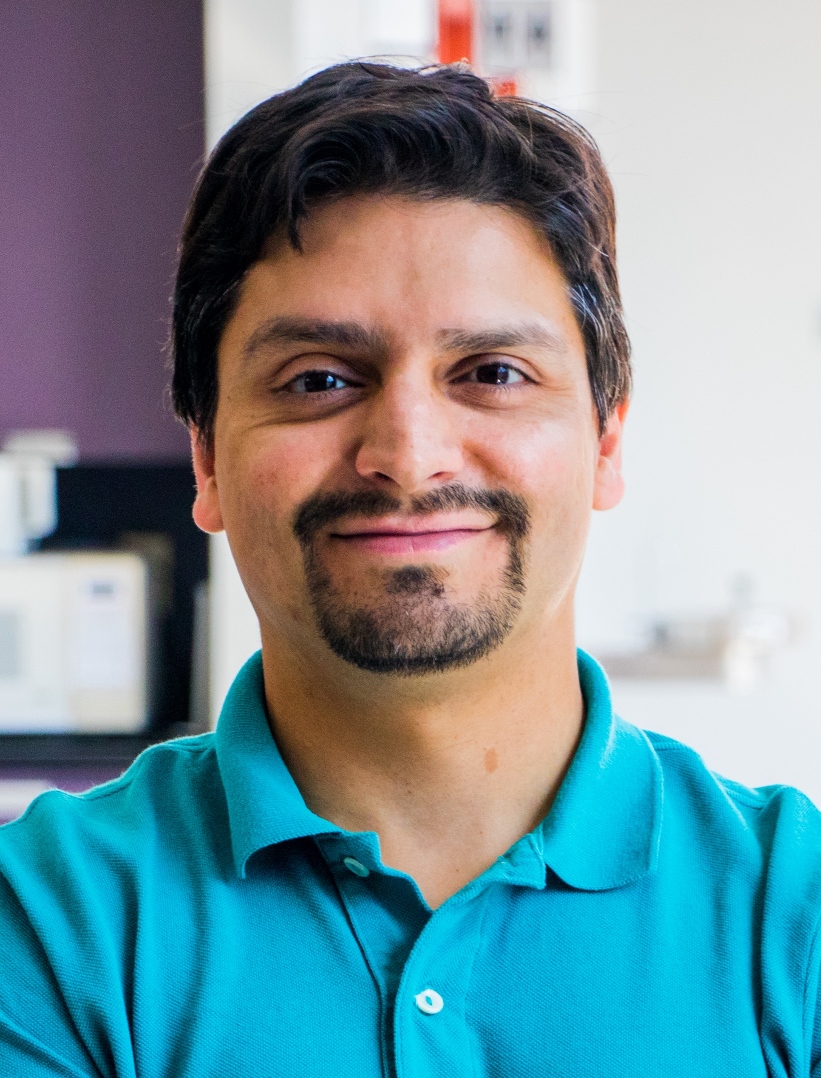
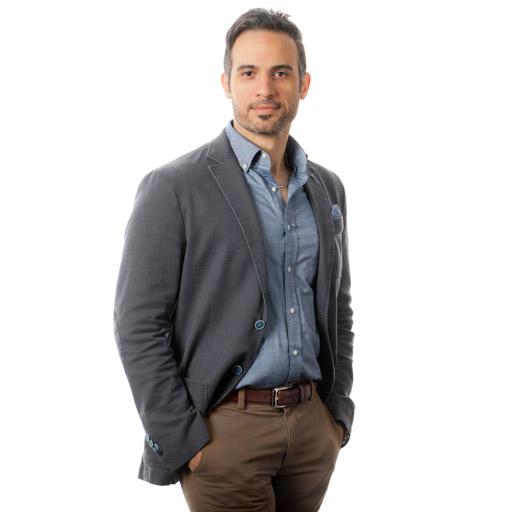
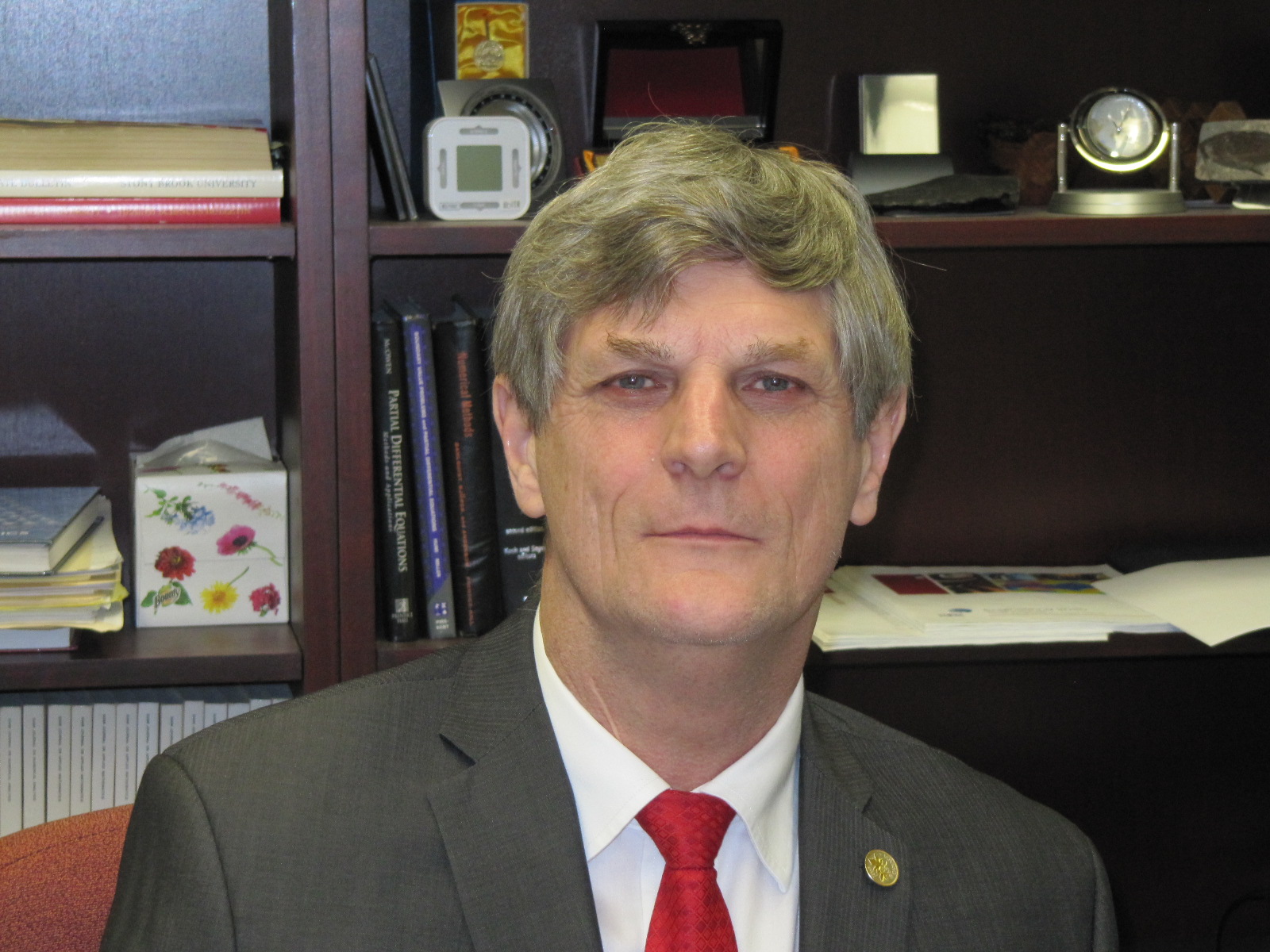
Richard Hind is a Professor in the Department of Mathematics at the University of Notre Dame, part of the College of Science. He holds a B.A. from Cambridge University (1992) and a Ph.D. from Stanford University (1997). His research focuses on differential geometry, particularly complex and symplectic geometry, with an emphasis on the interplay between Riemannian metrics and canonical geometric structures. His work explores symplectic embeddings, Lagrangian submanifolds, and geometric rigidity, utilizing pseudoholomorphic curves as a key tool. Key research areas include symplectic packing problems, Stein manifolds, and the topology of symplectic manifolds. Recent work addresses symplectic barriers, packing stability, and geometric invariants of ellipsoids. His publications span journals like Geom. Funct. Anal., Duke Math. J., and Invent. Math., often collaborating with leading researchers in the field. Teaching includes MATH 10270: Mathematics in Architecture, linking geometric principles to historic structures. Professional roles include service on editorial boards and contributions to conferences. Office: 238 Hayes-Healy Bldg, Email: rhind@nd.edu and hind.1@nd.edu.
Roberto A. Chica is a Full Professor in the Department of Chemistry and Biomolecular Sciences at the University of Ottawa, Faculty of Science. His research focuses on computational and experimental protein engineering, particularly in designing novel enzymes and fluorescent proteins for biotechnological applications. He develops advanced algorithms for protein design and investigates enzyme dynamics using molecular modeling and structural biology approaches. Key research interests include biocatalysis, structural biology, and the application of computational methods to engineer proteins with tailored functions. His lab integrates experimental protein chemistry with computational simulations to understand catalytic mechanisms and design proteins for industrial and biomedical uses. Recent work emphasizes ensemble-based computational enzyme design, exploring how conformational landscapes influence catalytic efficiency. His articles highlight advancements in artificial enzyme creation, substrate specificity modulation, and fluorescent protein optimization. Chica’s contributions bridge fundamental biochemistry with applied innovations in protein engineering. Notable achievements include the design of bright red fluorescent proteins via computational approaches and the development of biosensors for protein expression monitoring. His research has implications for drug discovery, biocatalytic synthesis, and personalized medicine.
Charles A. Bouman is the Showalter Professor of Electrical and Computer Engineering and Biomedical Engineering at Purdue University, with a courtesy appointment in Mathematics. He is a leading researcher in computational imaging, integrating statistical signal processing, physics, and computation for applications in healthcare, scientific, and industrial imaging. Education: B.S.E.E., University of Pennsylvania, 1981 M.S., University of California at Berkeley, 1982 Ph.D. in Electrical Engineering, Princeton University, 1989 His research focuses on computational imaging , including statistical image models, multiscale techniques, tomographic reconstruction, and fast algorithms. Key areas include Model-Based Iterative Reconstruction (MBIR), Plug-and-Play priors, document processing, and multiscale segmentation. His work has led to foundational contributions in total variation regularization and sparse-view reconstruction. The recent publications highlight a strong trend in integrating machine learning with physical models for image reconstruction, particularly through Plug-and-Play methods. His work spans optical tomography, halftoning, image scaling, and document compression, demonstrating consistent innovation in both theory and practical software implementation. Scientific Awards and Honors: Member, National Academy of Inventors Life Fellow, IEEE Fellow, IS&T; Honorary Member (2022); Service Award (2023) Fellow, SPIE and AIMBE IEEE Signal Processing Society Claude Shannon-Harry Nyquist Award (2021) Electronic Imaging Scientist of the Year (2014) SIAM Imaging Science Best Paper Prize (2020) Founder, IS&T Computational Imaging Conference (2003) Co-Founder, IEEE Transactions on Computational Imaging Vice President, IS&T; Former VP of Publications (2000–2004) Bouman has advised numerous graduate students and leads a vibrant research group developing open-source tools like MBIRJAX , SVMBIR , and OpenMBIR . His research has been supported by the National Science Foundation, General Electric, Intel, Xerox, Hewlett-Packard, and the State of Indiana 21st Century Fund. He maintains an active presence through tutorials, conference leadership, and educational resources including video lectures and a textbook on Foundations of Computational Imaging. Labs and Research Teams: His group develops cutting-edge software for tomographic reconstruction, clustering, segmentation, and dynamic sampling. Projects include Gaussian Mixture modeling (GMCluster), Plug-and-Play implementations, Sparse Matrix Transforms, and UAV sensing datasets. The research is highly interdisciplinary, bridging engineering, mathematics, and biomedical applications.
Yan Huang is an Associate Professor in the Department of Computer Science at Indiana University Bloomington, focusing on security and cryptography. His work bridges theoretical foundations with practical systems, emphasizing cryptographic protocols with strong security guarantees for generic computation. University: Indiana University Bloomington School: College of Arts and Sciences Department: Computer Science Academic Rank: Associate Professor His research combines theoretical computer science , program analysis , artificial intelligence , and software engineering to address real-world security problems. Key areas include secure computation , zero-knowledge proofs , and privacy-preserving technologies . Recent publications, such as Phecda (SP'25) and Dubhe (USENIX Security'23), highlight advancements in post-quantum cryptography , AES verification , and privacy-preserving deep packet inspection , reflecting his focus on scalable and practical cryptographic solutions. He has advised notable students including Changchang Ding (PhD, Computer Science) and Ruiyu Zhu (PhD, now at Facebook), and served on program committees for top conferences like ACM CCS and CRYPTO .
Urs Lang is a Full Professor at the Department of Mathematics, ETH Zurich, where he has held a professorship since 2001. His academic journey began with mathematics studies at the University of Berne and the University of Freiburg i.Br., culminating in a doctoral degree focused on hyperbolic geometry and minimal surfaces. Education: University of Berne (undergraduate) University of Freiburg i.Br. (doctoral degree) Lang's research lies at the intersection of differential geometry , metric geometry , and geometric group theory . His work explores non-positive curvature spaces, geometric measure theory, and large-scale Lipschitz analysis. Recent publications examine combinatorial hyperbolicity, isoperimetric inequalities, and rank-rigidity phenomena. The publications overview reveals a consistent focus on geometric structures, including: Higher-rank hyperbolicity in singular spaces Convex geodesic bicombings Injective hulls in geometric group theory Nonlinear potential theory on hyperbolic metric spaces Lipschitz extension problems Curvature comparison theorems Lang actively contributes to academic discourse through editorial roles at journals like Geometry and Topology and Analysis and Geometry in Metric Spaces , as well as organizing major conferences including the 2025 Metric Analysis Trimester Program at Bonn's Hausdorff Institute.
Mazdak Nik-Bakht is an Associate Professor at Concordia University's School of Building, Civil, and Environmental Engineering. His work bridges construction engineering with digital innovation, focusing on smart infrastructure and sustainable development. PhD, Construction Engineering & Mgmt., University of Toronto PhD, Structural Engineering, Iran University of Science & Technology MASc & BASc, Structural and Civil Engineering, Iran University of Science & Technology His research integrates Artificial Intelligence and Social Network Analysis into construction management systems. Key areas include: Smart infrastructure and urban computing Deconstruction and circular economy principles Building Information Modeling (BIM) and digital twinning Process mining in Architecture, Engineering, and Construction (AEC) industry Decision models in construction project management Semantic computing and computational linguistics applications Recent publications show a focus on BIM analytics , urban resilience , and social media's role in infrastructure planning . Papers often combine AI and network theory to solve complex construction challenges. 2015 Outstanding paper award - Built Environment Project and Asset Management journal He teaches courses on: Big Data Analytics for Smart City Infrastructure Building Information Modeling (BIM) for Construction Building Economics Project Cost Estimating
Matthew Bidwell is a Professor of Management at the Wharton School of Business, University of Pennsylvania . His research focuses on evolving employment relationships, career dynamics, and human resource management in modern labor markets. He serves as faculty co-director of the Wharton People Analytics Initiative and faculty director of the Wharton CHRO Program. Ph.D., MIT Sloan School S.M., Political Science, MIT M. Chem, Oxford Bidwell's research examines international career mobility , managerial contracting , and organizational labor market strategies . His work reveals complex relationships between global mobility and compensation, and analyzes how institutions like search firms shape career trajectories. Recent publications show trends in cross-border employment , executive career progression , and status-driven wage dynamics . His studies utilize longitudinal datasets and organizational personnel records to uncover patterns in managerial mobility. Scientific Recognition Wharton Teaching Excellence Award (2020) ASQ Scholarly Contribution Award (2017) John T. Dunlop Outstanding Scholar Award (2014) Sloan Foundation Industry Studies Fellowship (2010-2012) Bidwell has served as Senior Editor at Organization Science and contributes regularly to business media outlets. His teaching emphasizes evidence-based people management through the People Analytics course at Wharton.
Guglielmo Scovazzi is a Professor at Duke University with appointments across multiple departments including the Department of Civil and Environmental Engineering, the Thomas Lord Department of Mechanical Engineering and Materials Science, and as Professor of Mathematics. His interdisciplinary research bridges computational mechanics, scientific computing, and engineering applications. Dr. Scovazzi earned his B.S/M.S. in aerospace engineering (summa cum laude) from Politecnico di Torino (Italy), followed by an M.S. and Ph.D. in mechanical engineering from Stanford University. Prior to joining Duke, he was a Senior Member of the Technical Staff at Sandia National Laboratories' Computer Science Research Institute. His research focuses on developing advanced numerical methods for computational mechanics, particularly finite element methods for fluid and solid mechanics. Key areas include multiphase porous media flows, computational methods for materials under extreme conditions, turbulent flow computations, and instability phenomena. His work emphasizes creating accurate computational approaches that reduce design/analysis costs for complex engineering problems involving fluid-structure interactions and transient phenomena in complex geometries. Dr. Scovazzi's most significant recent contribution is the development of the Shifted Boundary Method, an innovative computational framework that enables efficient simulations on complex geometries without requiring boundary-fitted meshes. This method has found applications in geomechanics, energy systems, and resilient infrastructure design. Kavli Fellow, National Academy of Sciences & Kavli Foundation (2018) Presidential Early Career Award for Scientists and Engineers (PECASE), White House (2017) Early Career Award, U.S. Department of Energy, Advanced Scientific Computing Research Program (2014) Dr. Scovazzi teaches multiple courses in computational mechanics including Nonlinear Finite Element Analysis and Introduction to the Finite Element Method. His research has been supported by substantial federal funding, and he actively collaborates across disciplines to address challenging problems in energy, environment, and infrastructure resilience through advanced computational methods.
Jignesh M. Patel is a Professor in the Computer Science Department at Carnegie Mellon University , focusing on Data Management , System Efficiency (e.g., Scalable Data Platforms), and Human Efficiency (e.g., LLM-Based Query Interfaces). His work bridges Database Systems , Machine Learning , and Human-Computer Interaction . Co-founder of four startups: Paradise (1997), Locomatix (2007), Quickstep (2015), and DataChat (2017). Member of SIGMOD 2025 (AE) , CIDR 2024 (Co-Chair) , and other program committees. Research Interests include efficient data analysis algorithms , LLM-based data interaction , and systems security . His group develops platforms combining scalability and user productivity . Scientific Awards include Best Paper Awards at SIGMOD and VLDB, and Fellowships from AAAS, ACM, and IEEE. He also received Teaching Awards at CMU. Professional Activities feature co-founding startups , serving on program committees , and teaching courses like Database Systems and Advanced Database Systems at CMU.
Dr. Zara Ersozlu is a Senior Lecturer in Mathematics Education within the School of Education at the University of Newcastle, Australia. With a distinguished international career spanning multiple continents, she has held academic positions at prestigious institutions including North Carolina State University (USA), Gazi and Gaziosmanpasa Universities (Turkey), National Taiwan Normal University (Taiwan), The University of Western Australia, Murdoch University, and Deakin University. Her academic journey includes tenured positions as an Associate Professor and leadership roles as Department Head and Chair in teacher education disciplines. Currently, she teaches undergraduate and postgraduate courses in mathematics education, including Effective Pedagogies in Primary Mathematics, K-6 Mathematics, K-6 Numeracy, and Digitally Supported Learning. Dr. Ersozlu earned her Doctor of Philosophy from Firat University in Turkey and her Master of Art from Sakarya University. Her extensive academic preparation is complemented by five years of practical teaching experience in public schools prior to entering academia. This blend of theoretical knowledge and practical classroom experience informs her approach to teacher education and educational research. At the broadest level, Dr. Ersozlu's research investigates solutions to real-life problems impacting people's well-being, success, and capacity to achieve. Her scholarly work spans primary and secondary mathematics education, the psychology of mathematics (including metacognition, self-regulation, and anxiety), cross-cultural educational studies, teacher education, virtual simulated learning environments, and educational assessment. She has increasingly focused on the transformative potential of AI and machine learning in education, exploring how these technologies alter teaching, learning, and research processes. Her methodological expertise encompasses both quantitative and qualitative approaches, allowing her to effectively analyze both small and large educational datasets. Analysis of Dr. Ersozlu's recent publications reveals a strong emphasis on mathematics anxiety, teacher education, and the integration of technology in learning environments. Her work demonstrates a consistent focus on practical applications of educational research to address real-world challenges in mathematics education. The interdisciplinary nature of her research connects educational psychology, technology integration, and cross-cultural perspectives, with particular attention to how these elements intersect in teacher preparation and student learning outcomes. 2023 ATEA Research Recognition Award from the Australian Teacher Education Association 2021 Fellow of the Higher Education Academy (Advance HE, UK) 2010 Fellowship Program for Postdoctoral Researchers from the Council of Higher Education of Turkey Dr. Ersozlu is deeply committed to mentoring the next generation of scholars, currently supervising four PhD students and having successfully guided ten students to completion. Her grant portfolio includes significant funding for projects such as Best Practice Guidelines for RPL in Initial Teacher Education Programs ($60,000), Exploring the Reciprocal Relationship Between Mathematics Anxiety and Mathematical Resilience ($2,599), and multiple conference travel awards. She serves as an Associate Editor for several prominent journals including the International Electronic Journal of Mathematics Education and as Editor for Interdisciplinary STEM Education. Her editorial work reflects her standing as a respected voice in mathematics education research. Dr. Ersozlu's academic leadership extends to her role in developing innovative teaching approaches that integrate virtual simulation technology and learning analytics. Her work with TeachLivE™, a mixed-reality classroom simulation platform, demonstrates her commitment to creating authentic learning experiences for teacher education students. Through these initiatives, she bridges the gap between educational theory and classroom practice, preparing future educators to effectively implement evidence-based teaching strategies in diverse learning environments.
Prof. Dr. Patrick Huber is a leading physicist and Institute Director at the Hamburg University of Technology (TUHH) , heading the Institute for Materials and X-Ray Physics (M-2) . He also leads the High-Resolution X-Ray Analytics of Materials group at DESY through a cooperative professorship. His research spans condensed matter physics , nanoporous materials , and X-ray analytics , with significant contributions to molecular water science and soft matter in confinement . Education: PhD in Physics (1999, Saarland University), Diploma in Physics (1995, Saarland University) Professional Career: Full Professor at TUHH (2020-present), Member of CRC 1615 (2023-present), Spokesperson for CMWS (2024-present), Cluster of Excellence BlueMat (2025) Research Interests focus on multi-scale material behavior under extreme confinement, particularly hierarchical porous silicon and silica systems . His work examines adsorption-induced deformation , elastocapillarity , fluid transport in nanopores, and metamaterial design principles using electrolytes , polymers , and liquid crystals . Fundamental studies include fluid interface thermodynamics and microscopic hydrodynamics . Scientific Awards include the Top Reviewer Award (2018) from Applied Physics Letters and the Dr.-Eduard-Martin Award (2000) for his dissertation. He contributes to 130+ publications with an h-index of 36 (2021). Advising and Grants involve supervising 18 doctoral and master's students , including Manuel Brinker , Marc Thelen , and Stella Gries . He participates in Collaborative Research Centre CRC 1615 , Cluster of Excellence EXC 3120 BlueMat , and the United Nations University Hub on Climate Engineering . Laboratory and Teams include the Institute for Materials and X-Ray Physics (M-2) at TUHH, the High-Resolution X-Ray Analytics group at DESY, and contributions to the Centre for Hybrid Nanostructures (CHyN) .
Michael Mühlebach is a Research Group Leader at the Max Planck Institute for Intelligent Systems in Tübingen, Germany, leading the independent Learning and Dynamical Systems group. His academic journey began at ETH Zurich where he earned his B.Sc. (2010) and M.Sc. (2013) in mechanical engineering, specializing in robotics, systems, and control. He completed his Ph.D. at ETH Zurich in 2018 under Prof. R. D'Andrea, followed by postdoctoral research at UC Berkeley with Prof. Michael I. Jordan. Dr. Mühlebach's research spans machine learning, dynamical systems, control theory, and optimization . His work bridges theoretical foundations with practical applications in robotics, developing methods that incorporate physical constraints and system dynamics into learning frameworks. His group focuses on online learning, physics-informed machine learning, and large-scale optimization for cyber-physical systems, with applications in electromagnetic navigation, robotic table tennis, and energy-efficient flight systems like the shape-changing robot Floaty . His publication record shows a strong focus on constrained optimization, with recent work exploring decision-dependent stochastic optimization, nonlinear feedback, and the theoretical foundations of reinforcement learning. His research integrates perspectives from control theory, dynamical systems, and optimization to develop algorithms with strong theoretical guarantees and practical performance. Outstanding D-MAVT Bachelor Award Willi-Studer prize for best Master's degree ETH Medal and HILTI prize for doctoral thesis Branco Weiss Fellow (2018) Emmy Noether Fellowship (2020) Amazon Fellowship (2024) Dr. Mühlebach actively mentors doctoral researchers and is seeking talented students for PhD and Master's projects. His research group has received funding from multiple prestigious fellowships and maintains collaborations across institutions including ETH Zurich, UC Berkeley, and various Max Planck research units. The group's work spans theoretical developments to practical implementations on robotic systems, demonstrating strong connections between mathematical theory and physical realization.
W. Brent Lindquist is a Professor in the Department of Mathematics and Statistics at Texas Tech University, affiliated with the TTU Mathematical Finance Program. His contact details include office location in the Mathematics & Statistics building (Room 104), phone (+1 806 834 2348), and email brent.lindquist@ttu.edu. His research spans computational financial mathematics, porous media flow, neuroscience applications, and quantum electrodynamics. Key contributions include dynamic asset pricing with market microstructure integration, pore-scale flow modeling using 3D micro-tomography, automated neuron morphology identification, and QED computations for electron magnetic moments. Recent work emphasizes ESG factor incorporation into financial models. Analysis of 2023–2025 publications reveals a dominant focus on sustainable finance, particularly ESG-integrated option pricing and portfolio optimization. Methodologies include random forests for market microstructure analysis, skew random walks for volatility modeling, and Lévy processes for Bitcoin dynamics. Cross-cutting themes involve hedonic real estate models with ESG factors and unified asset pricing frameworks bridging classical finance theories.
Dr. Mario P. Wiesenfeldt is an independent research group leader at Ruhr-Universität Bochum and the Max-Planck-Institut für Kohlenforschung, affiliated with the Cluster of Excellence RESOLV. His laboratory focuses on developing synthetic organic methodologies using photoredox catalysis and radical intermediates to address challenges in medicinal chemistry. Education: PhD in Organic Chemistry (WWU Münster, 2015–2019) M.Sc. Chemistry (Ruprecht-Karls-Universität Heidelberg, California Institute of Technology) B.Sc. Chemistry (Ruprecht-Karls-Universität Heidelberg) Research Interests: Dr. Wiesenfeldt's work integrates physical organic chemistry with synthetic methodology, emphasizing solvent effects, radical stability, and photoredox activation. Key areas include: Development of bioisosteres for drug discovery Stereoselective hydrogenation of (hetero)arenes Mechanistic studies of radical intermediates Sustainable catalysis under mild conditions Publication Trends: His recent work demonstrates a strong focus on photoredox-mediated transformations (2023–2024), expanding into medicinal chemistry applications like cubane bioisosteres. Earlier publications (2017–2020) established expertise in enantioselective hydrogenation and fluoroarene chemistry. Awards and Honors: Thieme Chemistry Journals Award (2022) Liebig Scholarship, Fonds der Chemischen Industrie (2021) GDCH Prize for university innovation (2021) Leopoldina Postdoctoral Scholarship (2019) WWU Dissertation Prize (2018) Evonik Prize (2018) Research Group: Leads the Wiesenfeldt Lab at ZEMOS (Centre for Molecular Spectroscopy), supervising four PhD students. The lab utilizes state-of-the-art facilities for organic synthesis and collaborates with RESOLV for solvation science studies.
Kazushi Ueda is an Associate Professor at the Graduate School of Mathematical Sciences, The University of Tokyo, where he has been since April 2015. His research spans algebraic geometry, symplectic geometry, and mathematical physics, with a focus on homological mirror symmetry and its applications to moduli spaces, Calabi-Yau manifolds, and singularities. He previously held academic positions at Osaka University from 2006 to 2015, including roles as Assistant Professor and Associate Professor. Ueda has also had visiting appointments at institutions such as the University of Oxford, Max Planck Institute for Mathematics, and Korea Institute for Advanced Study. Bachelor of Science, Kyoto University (1997-2001) Master of Science, Kyoto University (2001-2003) Doctor of Science, Kyoto University (2003-2006) Ueda's research explores the deep interplay between complex and symplectic geometry through mirror symmetry, particularly in the context of Calabi-Yau varieties, toric degenerations, and dimer models. His work addresses derived categories, stability conditions, and moduli problems, with recent contributions to noncommutative algebraic geometry and applications in mathematical physics. He has collaborated extensively with researchers like Akira Ishii, Masahiro Futaki, and Shinnosuke Okawa. His publications highlight homological mirror symmetry for K3 surfaces, Grassmannians, and singularities, as well as studies on modular forms, cluster transformations, and the Grothendieck ring. Ueda is a member of the Mathematical Society of Japan and has contributed to educational programs, including graduate lectures on mirror symmetry and symplectic geometry.