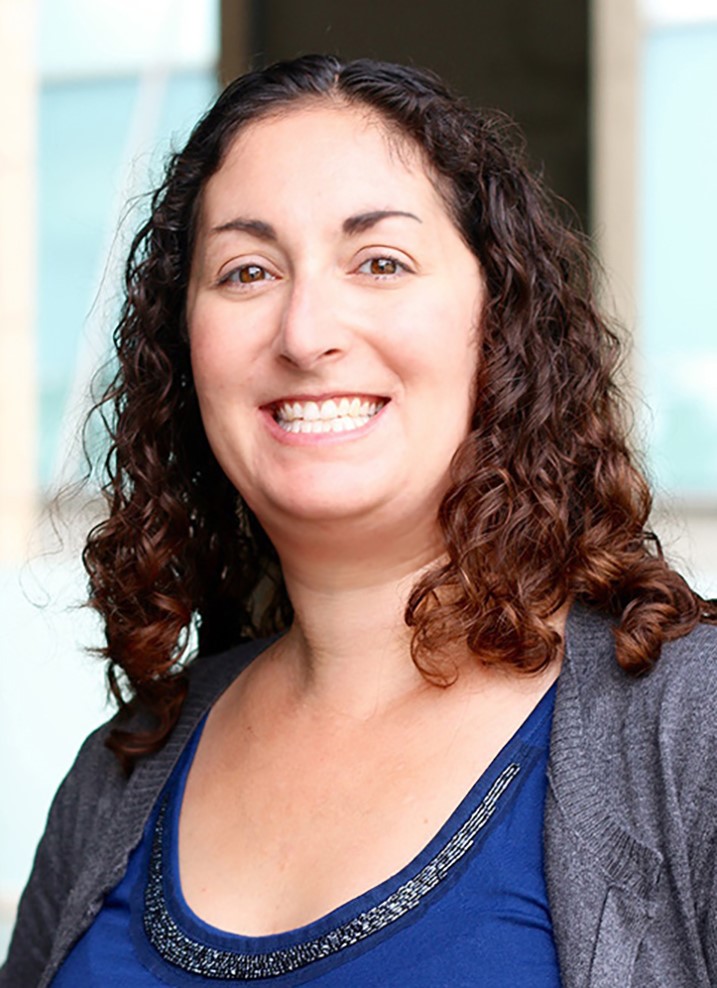
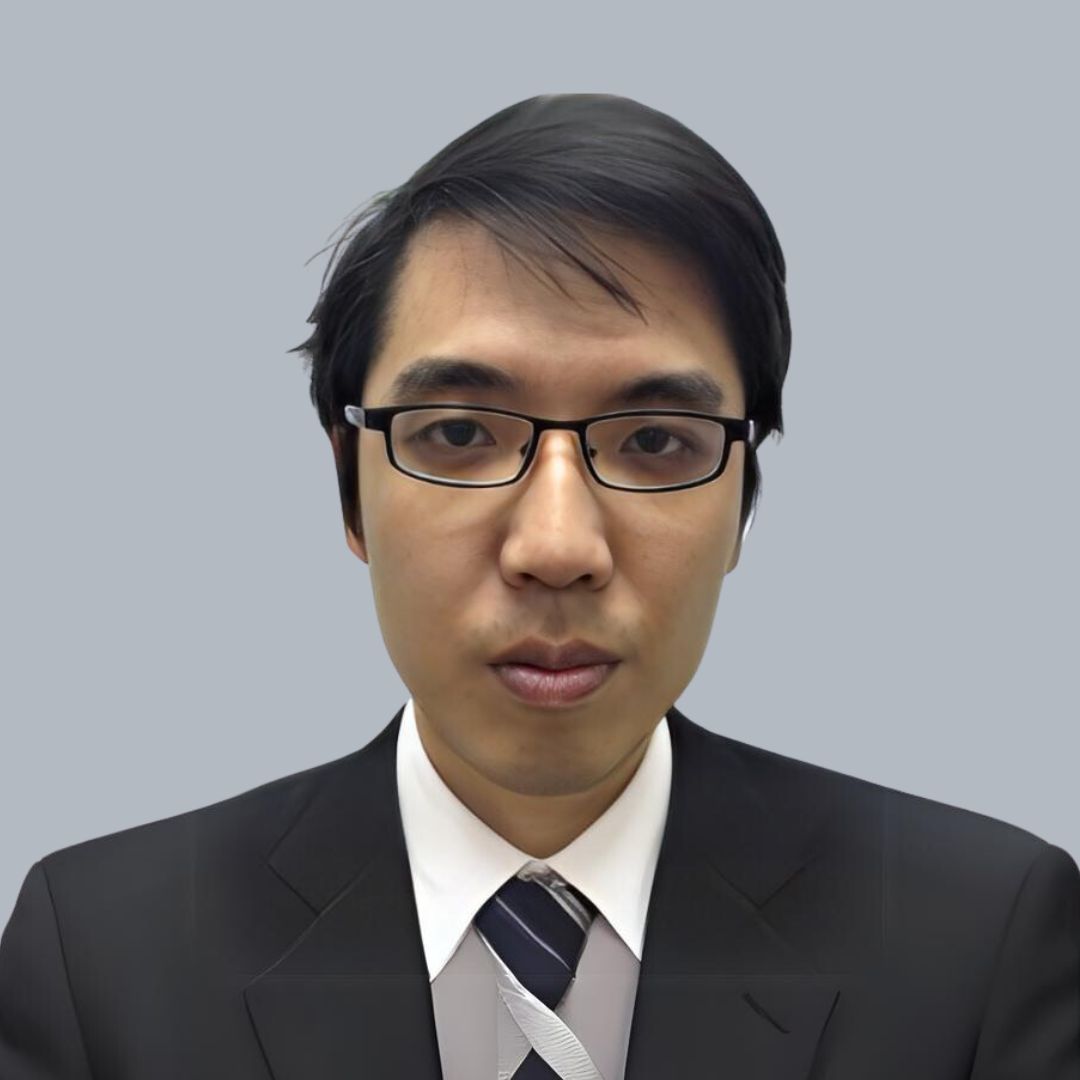
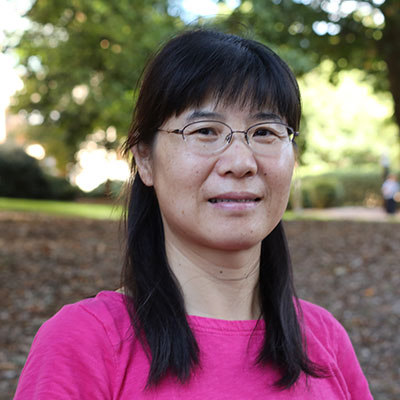
Steven D. Levitt is the William B. Ogden Distinguished Service Professor of Economics at the University of Chicago, where he directs the Becker Center on Chicago Price Theory. He has been affiliated with the university since 1997, following a PhD from MIT and BA from Harvard. Fields of Interest: Economics, Criminology, Education Policy, Real Estate, Political Economy, Social Policy, Game Theory Levitt's research spans empirical economic analysis across diverse domains, including crime, education, politics, and behavioral economics. His work often employs unconventional data sources and focuses on identifying causal relationships through natural experiments. Recent publications highlight intersections between incentives, social behavior, and policy outcomes. Notable awards include the John Bates Clark Medal (2004) and recognition as one of Time magazine's 100 People Who Shape Our World (2006). He is widely known for co-authoring the Freakonomics book series and blog, which popularized the application of economic principles to real-world phenomena. Contact: SLevitt@UChicago.edu
Dr. Rebecca Berlow is an Assistant Professor in the Department of Biochemistry and Biophysics at the UNC School of Medicine , University of North Carolina at Chapel Hill. Holding a PhD from Yale University, her research focuses on intrinsically disordered proteins , protein dynamics and allostery , and NMR spectroscopy to study disease-associated macromolecules. PhD – Yale University Affiliation: UNC School of Medicine, University of North Carolina at Chapel Hill Research Interests include understanding how protein conformational changes and dynamic behavior mediate stress response pathways. The lab employs interdisciplinary approaches combining biophysics , structural biology , and complementary biochemical techniques to identify novel therapeutic strategies for diseases linked to dynamic macromolecular dysfunction. Publication Trends across 2007–2024 highlight consistent focus on protein dynamics , allosteric regulation , and biophysical characterization of disordered systems. Key topics include multivalency , redox-dependent structural changes , and therapeutic targeting of dynamic protein interactions. Training & Environment : Lab members engage in collaborative research across biophysical , structural , and chemical disciplines , with emphasis on professional development, conference participation, and inclusive scientific training.
Mads Albertsen is a Professor in the Department of Chemistry and Life Sciences at the Faculty of Engineering and Science, Aalborg University, Denmark. He leads the Albertsen Lab and is a key member of the Center for Microbial Communities. His research focuses on high-throughput DNA sequencing methods to explore uncultivated microbes and populate the tree of life. He is actively involved in major interdisciplinary projects such as NanoEat , Microflora Danica , and DarkScience , funded by the European Research Council, Villum Foundation, and Poul Due Jensen Foundation. His research interests span metagenomics , long-read sequencing , bioinformatics , microbial ecology , and environmental biotechnology . He develops cutting-edge methods to improve throughput in microbial genome recovery and applies them to diverse areas including wastewater treatment, human microbiome studies, and infectious disease diagnostics. His work has significant implications for public health and sustainability. The recent publications highlight a strong trend in long-read sequencing (Oxford Nanopore), metagenome-assembled genomes (MAGs) , and microbial dark matter . His team has published high-impact papers in Nature , Nature Methods , and Nature Communications , with applications in environmental systems and clinical diagnostics, including SARS-CoV-2 and bloodstream infections. His scientific awards include: The Grundfos Prize (2021) The Fritz Kaufmann Prize (2021) The Rising Star Award by IWA & ISME (2016) Research Result of the Year in Denmark (2015) The Spar Nord Fond Research Prize (2015) Mads Albertsen advises numerous PhD students, leads externally funded research projects, and is involved in technology transfer through his co-founding of DNASense ApS (2014–2020). He also serves on scientific advisory boards and contributes to public policy, including as a member of the Danish SARS-CoV-2 variant risk-assessment group. He teaches courses in Data Science, Bioinformatics, Genomics, and Environmental Microbiology at Aalborg University. His lab, the Albertsen Lab , is part of the Center for Microbial Communities , a leading research center focused on microbial systems biology and environmental applications. The lab collaborates extensively with national and international partners in academia, industry, and public health institutions.
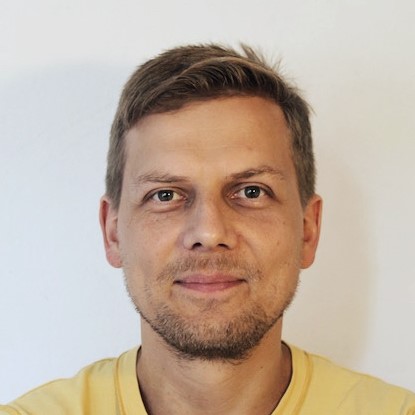
Piotr Zwiernik is an Associate Professor in the Department of Statistical Sciences at the University of Toronto's Faculty of Arts and Science, with a cross-appointment in the Department of Mathematics. Currently on leave from the University of Toronto, he is based in Barcelona following his return in July 2025. His academic journey includes a PhD in Statistics from the University of Warwick (2011), research positions at prestigious institutions including Mittag Leffler Institute, IPAM, TU Eindhoven, UC Berkeley, and the University of Genoa, and an Assistant Professorship at Universitat Pompeu Fabra in Barcelona (2016-2021). His research spans the intersection of statistics, mathematics, and computational methods, with particular emphasis on graphical models, covariance matrix estimation, convex analysis, tensors, and algebraic and combinatorial methods in statistics. Zwiernik's work demonstrates a consistent focus on high-dimensional statistics, mathematical statistics, and elegant theoretical frameworks that bridge abstract mathematics with practical statistical applications. His recent publications reveal a deepening exploration of tensor analysis, algebraic statistics, and the geometric properties of statistical models. Zwiernik serves as an associate editor for leading journals including Biometrika, Scandinavian Journal of Statistics, and Algebraic Statistics. His research program includes the development of the GOLAZO R package for asymmetric regularization of log-likelihood in Gaussian graphical models. As an academic leader, he has served as Associate Chair for Research in his department and actively participates in numerous international conferences and workshops, reflecting his significant standing in the statistical community. His recent publications show a strong trend toward algebraic and geometric approaches to statistical problems, with increasing focus on tensor methods, positivity constraints in statistical models, and the theoretical foundations of graphical models. The work demonstrates remarkable continuity in exploring the mathematical structures underlying statistical models while adapting to emerging challenges in high-dimensional data analysis. Zwiernik is committed to mathematical accessibility and education, guided by Federico Ardila's four axioms which emphasize equitable distribution of mathematical potential, joyful mathematical experiences, mathematics as a malleable tool, and treating every student with dignity and respect. He actively seeks PhD students with strong mathematical backgrounds for research at UPF or the Institute of Mathematics of UPC.
Steven Andrew Culpepper is a Professor of Statistics at the University of Illinois at Urbana-Champaign, holding additional appointments as Professor in the Beckman Institute for Advanced Science and Technology, Psychology, and Educational Psychology. He specializes in quantitative methods for social sciences, focusing on psychometric models, latent class analysis, and statistical computing. Education: PhD, Educational Psychology, University of Minnesota, 2006 BS, Economics, Bowling Green State University, 2001 Research interests include advanced statistical methodologies such as latent class models, high-stakes testing analysis, and applications of Bayesian computing in education and organizational research. His work emphasizes improving large-scale assessment systems through innovative modeling approaches. His publications consistently address latent structure modeling, cognitive diagnosis frameworks, and methodological advancements in educational and behavioral statistics. While no scientific awards are explicitly listed, his contributions to psychometric theory and statistical software development are notable. Steven has grants and consulting projects related to statistical methodologies but specific grant details are not provided in the texts. He has no listed advisees/PhD students in the provided information. He collaborates across disciplines through affiliations with the Beckman Institute and maintains active software development projects, including R packages like 'rrum' and 'pathmodelfit'.
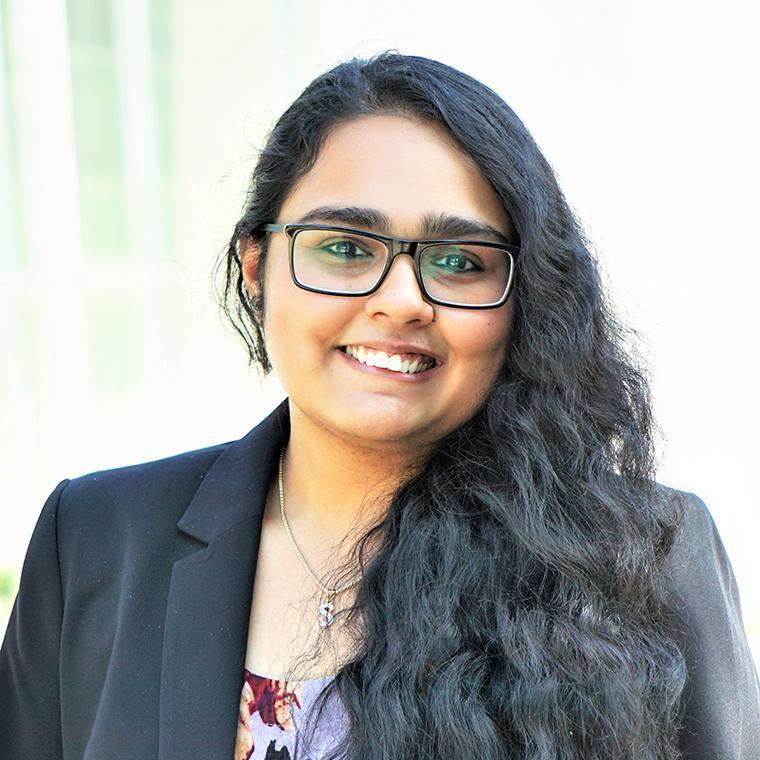
Smita Ghosh is an Assistant Professor in the Department of Mathematics and Computer Science at Santa Clara University, part of the College of Arts and Sciences. Her research focuses on social network analysis, algorithms for information diffusion, and applications in cybersecurity, disaster management, and machine learning. She holds a B.Tech. from the West Bengal University of Technology, India, and an M.S. and Ph.D. from the University of Texas, Dallas. Her work addresses challenges in rumor containment, clickbait detection, and optimizing network models for social media content analysis. Recent publications include studies on hypergraph-based solutions for rumor blocking and stochastic models for emergency response in social networks. She also explores cross-modal topic modeling for enhancing content detection algorithms. Notable contributions include developing data-driven strategies for identifying hate speech spreaders and improving wildfire severity predictions using environmental features. Her research bridges theoretical computer science with real-world applications in public health, education, and disaster management. Her academic contributions include organizing conference proceedings like the 18th International Conference on Algorithmic Aspects in Information and Management (AAIM 2024). She actively contributes to educational initiatives such as the Classroute project, creating multilingual educational content for Punjabi and Urdu speakers.
LING Chun Kai is an Assistant Professor in the Department of Computer Science at the National University of Singapore (NUS), School of Computing. His research focuses on multiagent systems, computational game theory, and machine learning applications in adversarial real-world domains like cybersecurity and logistics. Educational background includes a PhD in Computer Science (2017-2023) from Carnegie Mellon University and a First Class BEng in Computer Engineering (2015) from NUS. Previously, he was a Postdoctoral Research Scientist at Columbia University. Current research interests span computational game theory, machine learning for multi-agent systems, equilibrium characterization in imperfect information settings, and applications in network security, logistics, and recreational games. Key methodological contributions include scalable algorithms for game solving, differentiable game solvers, and copula-based statistical modeling. Recent publications focus on attacker-defender graph games, language negotiation agents, and modeling games with incomplete information. Collaborations include researchers from Columbia University, Carnegie Mellon, and institutions working on GameSec, AAAI, Neurips, and ICML venues. Scientific Awards: IJCAI 2018 Distinguished Paper Award GameSec 2023 Best Paper Award GameSec 2024 Best Paper Award Singapore Teaching and Academic Research Talent Scheme (2024) Teaching includes courses on AI Planning and Decision Making (CS4246, CS5446) and Advanced Topics in Artificial Intelligence (CS6208).
Ben Bloem-Reddy is an Assistant Professor in the Department of Statistics at the University of British Columbia (UBC), Vancouver Campus. His research focuses on statistical theory and applications in machine learning, particularly in causal inference, Bayesian methods, neural networks, and probabilistic models. He advises current students Quanhan (Johnny) Xi, Kenny Chiu, and Gian Carlo Diluvi. His work bridges foundational statistical theory with practical machine learning challenges, including causal discovery, model identifiability, and uncertainty quantification. Recent research explores topics such as latent variable models, generative processes, and symmetry in data and algorithms. His contributions span interdisciplinary areas like particle physics applications and information theory-based compression techniques. Ben’s research trends emphasize advancing theoretical guarantees for modern machine learning systems while addressing real-world problems. His publications frequently intersect with algebraic topology (e.g., cocycles in causal inference) and nonparametric methods. He maintains an active lab within the Department of Statistics, fostering collaborations across UBC’s academic ecosystem. No scientific awards are explicitly listed in the provided information. His advising and grant activities focus on statistical methodology development, as evidenced by his student supervision and published work. His office is located in ESB 3168, and he can be reached at benbr@stat.ubc.ca.
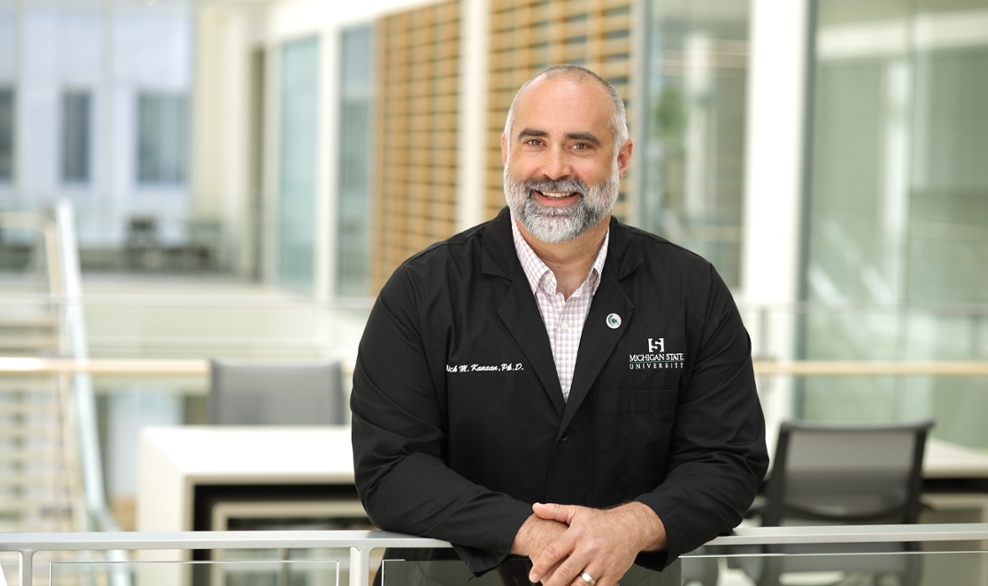
Nicholas M. Kanaan is a Professor of Translational Neuroscience and holds the Maibach Smiley Professorship of Alzheimer's Research at Michigan State University's College of Human Medicine. He serves as Director of Advanced Microscopy and is faculty in both the MSU Neuroscience Program and the MSU BioMolecular Science Gateway. His research is centered at the Grand Rapids Research Center where he leads the Kanaan Laboratory. Dr. Kanaan received his B.S. in Neuroscience, Psychology, and Sociology from Central Michigan University in 2001, followed by a Ph.D. in Neurological Sciences from Rush University Medical Center in 2007. He completed postdoctoral training at Northwestern University from 2007-2010 under Dr. Lester Binder. His research focuses on neurodegenerative diseases, particularly Alzheimer's disease (AD) and Parkinson's disease (PD), with emphasis on tau protein pathology. The Kanaan Lab investigates mechanisms underlying degenerative diseases using a combination of in vitro and in vivo model systems. A major focus is understanding how disease-related alterations in tau cause neuronal dysfunction through disruption of axonal transport. His lab has identified a phosphatase-activating domain (PAD) in tau that inhibits anterograde fast axonal transport. Analysis of Dr. Kanaan's publication record reveals a consistent focus on tau protein biology, with recent work emphasizing iPSC models, CRISPR screening, tau proteostasis, and therapeutic interventions targeting tau phosphorylation and oligomerization. His research spans basic molecular mechanisms to translational applications, with increasing use of primate models and advanced screening technologies in recent years. Scientific Awards and Recognition: Maibach Smiley Alzheimer's Research Professor Maibach Smiley Professor of Alzheimer's Research Dr. Kanaan mentors numerous students and postdoctoral fellows in his laboratory, with research supported by multiple grants focused on understanding and treating neurodegenerative diseases. His lab employs a wide range of technical expertise including recombinant protein purification, cell culture, monoclonal antibody production, various microscopy techniques, and behavioral testing in rodent models. Outside the lab, Dr. Kanaan enjoys photography, woodworking, and fishing.
Deqiong Ma is an Assistant Professor in the Department of Genetics at Yale University School of Medicine and Associate Director of the DNA Diagnostic Laboratory. She holds an MD from Tongji Medical University (1991), a PhD from the University of Tasmania (2003), and completed a postdoctoral fellowship at Duke University and a clinical fellowship at Albert Einstein College of Medicine. Her research focuses on genetic and genomic mechanisms underlying autism spectrum disorders, particularly copy number variants (CNVs), structural variation analysis, and clinical diagnostic methodologies. Key research interests include identifying novel genetic risk factors for autism using advanced genomic techniques, such as homozygosity mapping and fine-scale structural variation analysis. Her work bridges clinical genetics and molecular biology, with applications in diagnostic testing and understanding neurodevelopmental disorders. She collaborates extensively on studies involving autism candidate genes (e.g., MBD5, TBL1X) and genomic pathway analysis. Publications emphasize translational research, including diagnostic improvements for pediatric patients and elucidating genetic architecture in autism. She leads efforts in the DNA Diagnostic Lab to integrate genomic data into clinical practice, focusing on regions of homozygosity and uniparental disomy.
Tom Coates is a Professor of Pure Mathematics in the Department of Mathematics at Imperial College London's Faculty of Natural Sciences. He holds affiliations with the Artificial Intelligence Network, the CNRS-Imperial Abraham de Moivre UMI, and the Pure Mathematics research group. His office is located in the Huxley Building (662) on the South Kensington Campus, London SW7 2AZ, and he can be contacted via email at t.coates@imperial.ac.uk or phone at +44 (0)207 594 3607. Professor Coates' research spans pure mathematics with emphasis on algebraic geometry, mirror symmetry, and Gromov-Witten theory. He investigates quantum cohomology and Fano variety classification to construct a 'Periodic Table for shapes' through computational algebra, data mining, and machine learning. His work integrates geometric methods with cluster-scale computing to identify structural patterns in algebraic varieties, focusing on quantum periods, toric degenerations, and Laurent polynomial applications. His recent publications (2021-2024) demonstrate a strong trend toward computational classification of Fano varieties and polytopes, leveraging machine learning for dimension prediction and database construction. Key themes include mirror symmetry via Laurent inversion, toric geometry applications, and connections between Gromov-Witten invariants and modular forms. These works often utilize custom tools like PCAS and Fanosearch for large-scale algebraic computations. While specific student names are not listed, Professor Coates mentors PhD and Master's students in algebraic geometry and computational mathematics. His research is supported by the Simons Foundation, member institutions, and contributors, enabling international collaborations through networks like the CNRS-Imperial Abraham de Moivre UMI. He leads a research team developing the Periodic Table for shapes framework, utilizing high-performance computing resources. The team maintains open-source tools including PCAS (Periodic Table for Algebraic Shapes) and Fanosearch for Fano variety exploration, with code repositories hosted on Bitbucket and quantum period databases published in Scientific Data.
Xiaodong Wang is a Professor at the Center for Integrative Chemical Biology and Drug Discovery within the Eshelman School of Pharmacy at the University of North Carolina at Chapel Hill. His research program focuses on developing innovative drug leads and candidates targeting novel protein kinases and other molecular targets identified by UNC faculty and external investigators. Dr. Wang's research interests center on structure- and ligand-based drug design approaches for developing therapeutic compounds, particularly kinase inhibitors targeting the TAM family (TYRO3, AXL, MERTK). His laboratory has successfully applied these methodologies to deliver compounds to clinical trials, including MerTK inhibitors and IDH1 inhibitors developed in collaboration with NCATS. Current research continues to focus on structure-based drug design for novel targets, with particular emphasis on cancer therapeutics and molecular imaging agents. Analysis of Dr. Wang's recent publications (2023-2025) reveals a strong focus on developing selective kinase inhibitors, particularly targeting the TAM receptor family (TYRO3, AXL, MERTK) for various cancer types including leukemia, Ewing sarcoma, and melanoma. His work spans multiple disciplines including medicinal chemistry, cancer biology, immunology, and molecular imaging, with recent publications appearing in high-impact journals such as Journal of Medicinal Chemistry, Nature Communications, and Leukemia. Dr. Wang maintains active collaborations across UNC-Chapel Hill and with external institutions, working with researchers in pharmacology, oncology, immunology, and structural biology. His laboratory develops both small molecule inhibitors and imaging agents, with several compounds progressing toward clinical applications. Contact information: xiaodonw@email.unc.edu | Wang Lab website
Dr. Srinivas Prabakar is a Professor of Instruction in the Department of Civil Engineering at The University of Texas at Arlington (UTA). He specializes in water quality, wastewater treatment, and environmental engineering, with a focus on chloramine stability, disinfection by-products, and sustainable water management. Dr. Prabakar holds a PhD in Civil Engineering from UTA (2012), an ME in Chemical Engineering from Annamalai University (2004), and a B.Tech in Chemical Engineering from the University of Madras (2000). Education: PhD, Civil Engineering, UTA (2012) ME, Chemical Engineering, Annamalai University (2004) B.Tech, Chemical Engineering, University of Madras (2000) His research interests center on improving water distribution systems and addressing challenges in wastewater management. Notable projects include investigations into factors affecting chloramine stability in UTA’s water systems and studies on biosorption of heavy metals. Dr. Prabakar has authored or co-authored over 30 publications, including peer-reviewed articles on topics like chlorine decay dynamics and microbial fuel cell applications. His teaching portfolio includes courses such as Principles of Environmental Engineering and Biological Processes, reflecting his commitment to educating future environmental engineers. Dr. Prabakar has advised numerous graduate students and served on dissertation committees, mentoring research in areas like concrete durability and landfill biocovers. Dr. Prabakar’s service roles include Faculty Advisor for Civil Engineering undergraduates, membership in the Texas Water Science & Research Division, and reviewer positions for journals like ASCE Journal of Environmental Engineering . He has received awards including the 2024 Outstanding Faculty Advisor Award and the 2019 Tau Beta Pi-Eminent Engineer distinction. His current grants focus on advancing nanocomposite materials for sewer pipe longevity and identifying critical source areas for non-point pollutants in North Texas watersheds. Dr. Prabakar’s interdisciplinary work bridges environmental engineering challenges with practical solutions for sustainable infrastructure.
Caitlin Mullarkey is an Associate Professor in the Department of Biochemistry and Biomedical Sciences at McMaster University's Faculty of Health Sciences. She teaches across multiple undergraduate programs including Biochemistry, Biomedicine, and Health Sciences, with courses ranging from Cellular and Molecular Biology to Immunological Principles in Practice and Principles of Virology. Dr. Mullarkey's research focuses on immunology and virology with particular emphasis on influenza virus immunity, antibody-mediated responses, and vaccine development. Her work explores intricate mechanisms of antibody function including Fc-mediated effector functions, neutrophil responses to viral infection, and the role of broadly neutralizing antibodies. She also investigates innovative approaches to biomedical education through virtual laboratory simulations and online course development. Analysis of her publication record reveals a strong focus on influenza immunology, with particular expertise in antibody structure-function relationships, hemagglutinin stalk-specific antibodies, and Fc-mediated immune responses. Her work bridges basic immunological mechanisms with practical vaccine development approaches, demonstrating consistent contributions to understanding host-pathogen interactions and immune protection mechanisms. Scientific Awards: Equality of Opportunity Award from the Government of Ontario (2024) for developing and leading McMaster's Biochemistry and Biomedical Sciences Summer Scholars Program Dr. Mullarkey actively supervises undergraduate research through Senior Research Thesis and Senior Thesis courses, providing mentorship to students across multiple academic years. Her teaching portfolio demonstrates significant commitment to both foundational and advanced topics in biochemistry and immunology. Beyond formal teaching, she leads the Summer Scholars Program which provides full research scholarships to students who identify as Black, Indigenous, and/or 2SLGBTQIA+, addressing barriers to participation in STEM research through comprehensive support for training, mentorship, and living expenses. As Chair of the Biochemistry and Biomedical Sciences Summer Scholars Program, Dr. Mullarkey has graduated 17 diverse scholars in just two years, with many continuing research at McMaster and receiving competitive awards. The program, supported by McMaster's Global Nexus and Michael G. DeGroote Institute for Infectious Disease Research, exemplifies her commitment to creating inclusive research opportunities in biomedical sciences.
Joerg Sander is a Professor and Chair of the Department of Computing Science at the University of Alberta's Faculty of Science. His research focuses on knowledge discovery in databases, particularly density-based clustering (e.g., DBSCAN, OPTICS, HDBSCAN*) and outlier detection (e.g., LOF). He is a leading contributor to foundational algorithms in data mining, including the DBSCAN paper which received the 2014 SIGKDD Test-of-Time Award. Education: M.A., Philosophy of Science (University of Munich, 1989) Diploma in Computer Science (University of Munich, 1996) Ph.D., Computer Science (University of Munich, 1998) Research Interests: Design and theoretical analysis of clustering algorithms Outlier detection methodologies Spatial and high-dimensional data mining Algorithm scalability and visualization Key Contributions: DBSCAN (density-based spatial clustering of applications with noise) OPTICS (ordering points to identify the clustering structure) LOF (local outlier factor) Awards: SIGKDD Test-of-Time Award (2014)