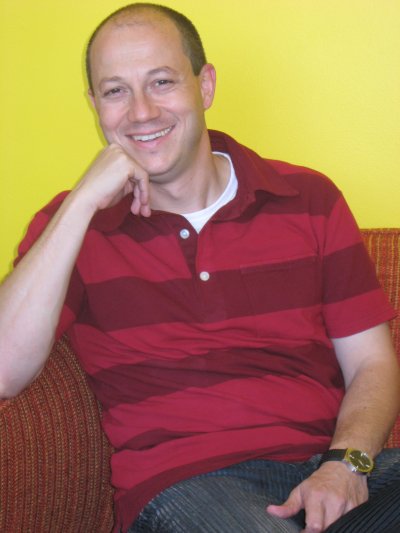
Pascal Frossard is a Full Professor at the Department of Electrical Engineering in the School of Engineering (STI) at EPFL, with a courtesy appointment in the School of Computer and Communication Sciences. He founded and directs the LTS4 laboratory since 2003, co-leads the EPFL AI Center and Swiss Data Science Center, and serves as Associate Dean for Research at STI. Research Focus: Machine Learning, Graph Signal Processing, AI Applications in Healthcare, Computer Vision Academic Leadership: IEEE Fellow, ELLIS Fellow, Conference Chair roles Key Projects: Digital Pathology for Oncology, Cardiac Digital Twins, Robust Machine Learning Research Interests: His work bridges signal processing, machine learning, and applied mathematics, emphasizing biomedical applications. Recent research includes adversarial robustness in classifiers, network representation learning, and 360-degree video analysis. Scientific Awards: IEEE Fellow ELLIS Fellow Leadership in IEEE technical committees Advising & Grants: Supervised 20+ PhD students and postdocs. Secured major grants from PHRT, Hasler Foundation, FNS-Sinergia, Armasuisse, Google, and Cisco.
Pierre Vandergheynst is a Full Professor at the Swiss Federal Institute of Technology Lausanne (EPFL) in the Department of Electrical Engineering, with a courtesy appointment in Computer and Communication Sciences. He serves as EPFL’s Vice-Provost for Education since 2015 and leads the Signal Processing Laboratory 2 (LTS2). His research spans harmonic analysis, sparse approximations, mathematical data processing, and applications in signal/image processing, computer vision, machine learning, and graph-based data analysis. PhD in Mathematical Physics (1998), Université catholique de Louvain Postdoctoral Researcher at EPFL (1998-2001) Assistant Professor at EPFL (2002-2007) His research explores geometry/symmetry in high-dimensional data, redundant dictionaries for dimensionality reduction, and computational harmonic analysis on manifolds. Recent work focuses on protein structure modeling, geometric deep learning, and graph-based signal processing. Key article trends include graph neural networks for protein analysis, geometric deep learning in neuroscience, and structured knowledge priors in neural models. His 2023-2025 publications emphasize interpretable AI, long-range dependencies in graphs, and molecular representation learning. Scientific Awards: IEEE Signal Processing Magazine Best Paper Award (2023) Signal Processing Society Best Paper Award (2022) Apple ARTS Award (2007) De Boelpaepe Prize, Royal Academy of Sciences of Belgium (2009-2010) He has supervised over 30 PhD theses and contributed to foundational work in graph signal processing, compressive sensing, and geometric deep learning. His lab develops tools for data science on non-Euclidean structures, with applications in medicine, astronomy, and wireless systems.
Prof. Dennis Komm is an Associate Professor at ETH Zurich's Department of Computer Science, leading the group for Algorithms and Didactics. He chairs the Center for Computer Science Education (ABZ) and serves on committees such as the Swiss Maturity Board (Schweizerische Maturitätskommission) and the STEM Commission of the Swiss Academies. Previously, he held roles at RWTH Aachen University (Master's, 2008), ETH Zurich (PhD, 2012), University of Zurich (external lecturer, 2014–2020), and PH Graubünden (including department head and professor of 'Fachdidaktik Informatik'). Education: He completed a Master's in Computer Science at RWTH Aachen (2008), a PhD at ETH Zurich (2012), and studies in Information Technology at Queensland University of Technology (2006). His academic journey includes visiting roles at King's College, Stanford, and Comenius University. He has taught extensively across institutions, emphasizing Python and LOGO-based approaches for beginners. Research focuses on algorithm design, approximation algorithms, reoptimization, and advice complexity in theoretical CS. His work in education explores computational thinking, programming pedagogy (especially for K–12), and interdisciplinary approaches (e.g., robotics in math). Recent trends in his articles highlight advancements in online algorithms, optimization under dynamic conditions, and initiatives to integrate CS into Swiss school curricula sustainably. He actively promotes CS education through platforms like WebTigerPython and collaborates on projects such as CyberQuest and MINTerlink. His outreach includes organizing conferences (e.g., STIU 2025) and workshops on programming and cybersecurity for teachers and students. Despite no listed scientific awards, his contributions to education and theoretical CS are recognized through editorial roles in journals like Informatics in Education and contributions to the TigerJython Group. Grant-related advising includes co-supervising doctoral theses on robotics, USOs, and programming didactics. He advocates for equitable educational opportunities via the Passerelle exam and the Swiss Beaver Competition. His team's work spans teacher training, didactic certifications, and bridging university-school collaborations through initiatives like MINTerlink. Labs and teams: Head of ABZ (ETH's CS education center), collaborator with the Computational Robotics Lab, and part of the TigerJython Group. He also co-organizes the Colloquium on Mathematics, Computer Science, and Education with ETH's Mathematics Department.
Konstantinos Karapiperis is a Tenure Track Assistant Professor at EPFL's Laboratory of Multiscale Modeling of Materials (LMD), within the School of Architecture, Civil and Environmental Engineering (ENAC). His research integrates mechanics , multiscale modeling , and data science to study geomaterials and structural materials. PhD in Applied Mechanics (minor in Applied Mathematics), Caltech Postdoctoral Researcher & Lecturer, ETH Zürich (Marie Skłodowska-Curie Fellowship) Research focuses on granular materials , architected materials , and nonlocal modeling using techniques like Level-Set Discrete Element Method (LS-DEM) and machine learning . Recent work explores fracture control via graph neural networks and thermodynamics-informed models. Selected scientific award: Marie Skłodowska-Curie Fellowship Teaches courses in Soil Mechanics and Multiscale Modeling . PhD students include Thomas Henzel and Hrishikesh Gopakumar Menon. His Data-Driven Mechanics Laboratory (LMD) develops predictive tools for granular and structured material behavior.
Christoph Stadtfeld is Associate Professor of Social Networks at ETH Zurich's Department of Humanities, Social and Political Sciences and co-director of the ETH Social Networks Lab. His research examines social network dynamics, focusing on tie formation processes, network effects on individuals, and advanced statistical methodologies for longitudinal network analysis. Education: PhD from Karlsruhe Institute of Technology (2011) Postdoctoral researcher and Marie-Curie fellow at University of Groningen, University of Lugano, and MIT Media Lab (2011-2014) His work bridges sociology, statistics, and computer science to address fundamental questions about how social structures evolve and influence behavior. Key interests include relational event modeling, co-evolution of networks and attributes, and applications in mental health, political polarization, and scientific collaboration. He develops innovative methods for analyzing dynamic networks using cutting-edge computational approaches. Recent publications reveal strong emphasis on methodological rigor in temporal network analysis, with significant contributions to relational event modeling and dynamic network actor frameworks. His work increasingly addresses societal challenges including political polarization, mental health impacts of social isolation, and innovation dynamics in healthcare. Scientific awards: Raymond Boudon Award of the European Academy of Sociology (2017) Freeman Award of the International Network for Social Network Analysis (2021) As co-director of the ETH Social Networks Lab, Stadtfeld leads interdisciplinary research teams developing novel network methodologies. His work has been supported by prestigious fellowships including Marie-Curie funding, and he actively mentors graduate students in network science methodology and applications across diverse domains. The ETH Social Networks Lab serves as a hub for advancing network theory and methodology, with ongoing projects examining student networks during crises, scientific collaboration dynamics, and innovation ecosystems through the lens of network science.
Zsolt Patakfalvi is an Associate Professor at École Polytechnique Fédérale de Lausanne (EPFL), holding positions in the School of Basic Sciences (SB) within the Department of Mathematics (MATH). He is affiliated with the Chair of Algebraic Geometry (CAG) and the Section of Mathematics for Engineers (SMA-ENS). Additionally, he serves as Director of SMA-GE and holds roles in academic governance bodies like the Conference of Section Directors (CDS) and SB Faculty Management. His research focuses on Algebraic Geometry, particularly in birational geometry, positive characteristic methods, moduli theory, and mixed characteristic algebra. He explores topics such as Hodge theory, singularities, and applications to arithmetic geometry. Notable contributions include work on the minimal model program, test ideals, and counterexamples to classical conjectures in positive characteristics. He supervises doctoral students in areas like algebraic geometry and commutative algebra, including Jefferson Baudin, Léo Navarro Chafloque, and Linus Rösler. His past advisees include Emelie Arvidsson and Quentin Posva. Patakfalvi’s publications frequently address foundational questions in geometry, with recent work extending into perfectoid spaces and globally-regular varieties. He coordinates courses such as 'Algebra III - Rings and Fields' and 'Perfectoid spaces' at EPFL, reflecting his commitment to both research and education. His academic service includes managing educational programs within SB-SMA and contributing to institutional decision-making through CDS membership.
Rasmus Kyng is an Assistant Professor in the Department of Computer Science at ETH Zurich, where he has been since 2019. His research focuses on fast algorithms for graph problems, convex optimization, and their applications in machine learning. He has received grants from the Swiss National Science Foundation, including project grants and a starting grant. Education: B.A. in Computer Science from the University of Cambridge (2011), PhD in Computer Science from Yale University (2017), advised by Daniel A. Spielman. Postdoctoral positions included Harvard University (2018–2019) and a research fellowship at the Simons Institute, UC Berkeley (2017). Research Interests: Development of nearly linear-time algorithms for fundamental graph problems (e.g., maximum flow, minimum-cost flow), dynamic graph algorithms, discrepancy theory, and fine-grained complexity. His work bridges numerical linear algebra and combinatorial optimization, emphasizing practical implementations such as the Laplacians.jl package. Awards: FOCS Best Paper Award (2022), Inaugural ICBS Frontiers of Science Award (2022), Machtey Award (Best Student Paper, FOCS 2017). Teaching: Advanced Graph Algorithms and Optimization (ETH Zurich, 2020–2023), Algorithms, Probability, and Computing (ETH Zurich, 2020–2022). Supervised numerous PhD students and mentored postdocs in theoretical computer science. Labs/Teams: Co-leads a research group with Maximilian Probst Gutenberg, focusing on dynamic graph algorithms and optimization. Collaborations include work on sparsification, spectral graph theory, and machine learning applications.
Jian Peng is an Assistant Professor in the Department of Computer Science at the University of Illinois at Urbana-Champaign. His research focuses on computational biology, machine learning, and their applications to protein structure prediction, drug design, and molecular modeling. He has contributed to advancements in antibody engineering, protein-ligand docking, and generative models for biological systems. Key research areas include: Machine Learning for Molecular Modeling Protein Structure Prediction Antibody and Peptide Design Genomics and Single-Cell Analysis Structure-Based Drug Discovery His work emphasizes integrating deep learning techniques with biological datasets to address challenges in precision medicine, drug development, and systems biology. Notable achievements include developing the FastFold system to accelerate AlphaFold training and pioneering flow-based methods for antibody design. Awards include the Overton Prize (2020), recognizing contributions to computational biology. His research has been published in top journals and conferences, spanning topics from protein mutation prediction to geodesic-based immune complex modeling.
Daniel Sage is a Lecturer and Scientific Advisor at École polytechnique fédérale de Lausanne (EPFL) , affiliated with the Biomedical Imaging Laboratory (LIB) under the College of Engineering (STI) and School of Life Sciences (SV) . He specializes in bioimage informatics , structured-illumination microscopy , and deep learning applications for biomedical imaging. His work spans algorithm development for single-molecule localization microscopy (SMLM) , fluorescence imaging , and 3D reconstruction . His research group has developed open-source tools like FlexSIM for light inhomogeneity correction, DeepImageJ for integrating deep learning in ImageJ, and Steer'n'Detect for orientation-accurate template detection. His publications focus on correcting multiple-blinking artifacts in PALM, optimal transport metrics for SMLM evaluation, and contextual feature analysis for xenograft cell classification. He mentors PhD students and contributes to interdisciplinary education through courses such as Bioimage Informatics and Fundamentals of Image Analysis , emphasizing practical software solutions and Java programming for bioimage processing. His collaborations include institutions like Howard Hughes Medical Institute and Centre National de la Recherche Scientifique (CNRS) .
Vincent Dufour-Décieux is a researcher at the Professorship for Energy and Process Systems Engineering at ETH Zürich , focusing on developing computational methods for material screening in separation processes and global net-zero transitions. He earned his Master's in Materials Chemistry from Ecole Polytechnique (France) and a PhD in Materials Science from Stanford University , where he pioneered statistical methods combining Kinetic Monte Carlo and random graph theory to study planetary diamond formation. Research Highlights: Application of Classical Density Functional Theory (cDFT) for 100x faster adsorption property predictions in porous materials Development of science-based definitions for "hard-to-abate" emissions to guide climate action prioritization Integration of Coulombic interactions in cDFT for CO2 adsorption accuracy Article Trends : His work spans computational materials science (cDFT, random graph theory) and climate policy analysis, with recent publications in Joule , AIChE Journal , and Physical Review E . These studies emphasize scalable solutions for carbon capture, material screening efficiency, and accurate thermodynamic modeling. Collaborations : Active in international conferences (FOA15, MolMod, Gordon Research Conference) and cross-institutional projects with teams at Stanford, ETH Zürich, and industry partners.
Sebastijan Dumancic is an Assistant Professor at Delft University of Technology, focusing on neuro-symbolic AI through program synthesis and probabilistic programming. He leads the RAIL lab and collaborates with institutions like Harvard, MIT, and CNRS. His research bridges symbolic AI and machine learning, applying program synthesis to scientific discovery, transportation, and robotics. He holds an FWO-funded PhD from KU Leuven and has participated in initiatives like ELLIS and the Symbolic Computation and Machine Learning Initiative. Program synthesis Probabilistic programming Neuro-symbolic AI Constraint-based learning His recent articles highlight advancements in program synthesis, neuro-symbolic integration, and constraint satisfaction. Projects like Find2Fix and Intelligent Greenhouse Horticulture (funded by NWO) demonstrate practical applications. ELLIS Membership University Teaching Qualification He supervises numerous MSc and PhD students in projects involving logic programming, program synthesis, and probabilistic modeling. Active in workshops and symposia, he contributes to neuro-symbolic AI and scientific discovery.
Tatiana Smirnova-Nagnibeda is an Associate Professor in the Mathematics Section at the University of Geneva, where she obtained her PhD before holding positions at ETH Zurich and KTH Stockholm. She returned to UNIGE where she has established herself as a leading researcher in geometric and combinatorial group theory. Her research focuses on combinatorial, asymptotic and geometric group theory, as well as probabilities on groups and graphs. She has made significant contributions to the understanding of branch groups, self-similar groups, Schreier graphs, and spectral properties of group actions. Her work often bridges algebra, probability, and geometry, revealing deep connections between these areas through the study of Thompson's groups, Grigorchuk's group, and other important group constructions. Her recent publications demonstrate a consistent focus on subgroup structure in various classes of groups, spectral properties of Schreier and Cayley graphs, and connections to dynamical systems. She frequently collaborates with researchers from around the world, particularly with Rostislav Grigorchuk, and has mentored numerous doctoral students who have gone on to successful academic careers. Managing Editor for Groups, Geometry, and Dynamics Editor for L'Enseignement Mathématique Organizer of GAGTA conferences (2022, 2024) Organizer of specialized workshops on high-dimensional expanders (2015, 2016) She leads an active research group comprising postdoctoral fellows and doctoral students working on various aspects of group theory and its applications. Her teaching includes advanced courses on graph theory, random walks on groups, spectral theory of graphs, and amenability at the University of Geneva.
Ulrik Brandes serves as Full Professor and Head of the Department of Humanities, Social and Political Sciences at ETH Zurich, holding the Professorship for Social Networks. He actively teaches courses including Network Analysis and Applied Network Science: Sports Networks for Fall semester 2025, with office location at WEP J 14, Weinbergstr. 109, Zurich. His research spans Social Network Analysis, Graph Theory, and Network Science, with significant applications in sociology, sports analytics (particularly soccer and Australian Football League), and archaeological networks. As a longstanding member of the International Network for Social Network Analysis (since 2001) and the Academy of Sociology (since 2017), he bridges theoretical graph algorithms with practical interdisciplinary applications, recently expanding into sports analytics through the Football Scouting Association (2023). Analysis of his recent publications reveals strong thematic continuity in network centrality, temporal dynamics, and robustness, with increasing application diversity across sports analytics, archaeological trade networks, and decentralized social media platforms. His work consistently emphasizes efficient computational methods for real-world network problems. Honors: Simmel Award (2024) Prof. Brandes maintains active research leadership through departmental oversight and course development, though specific grant details and student advisement records are not publicly documented in available sources. His departmental role indicates substantial administrative responsibilities alongside research and teaching commitments.
Benny Sudakov is a Professor of Mathematics at ETH Zurich, where he conducts research in combinatorics. He has previously held positions at UCLA, Princeton University, and the Institute for Advanced Study. His work is supported by the SNSF grant 200021_196965. Research Interests: His primary research areas include Extremal Graph and Hypergraph Theory, Ramsey Theory, Random Structures, and the application of Algebraic and Probabilistic Methods in Combinatorics, with strong connections to Theoretical Computer Science. He investigates fundamental structural properties of discrete systems, such as the existence of regular subgraphs, extremal configurations, and the behavior of random combinatorial objects. The recent popular science articles on his work highlight a consistent trend of solving long-standing open problems in extremal combinatorics using sophisticated probabilistic and algebraic techniques. His research spans topics like equiangular lines, graph decompositions, and the emergence of cycles in sparse graphs, demonstrating a deep focus on the interplay between structure and randomness. Scientific Awards: No specific awards are mentioned in the provided text. Advising and Grants: He has advised numerous Ph.D. students, many of whom have gone on to become professors at top universities (e.g., Oxford, Stanford, CMU, ETH, Princeton). His research is currently funded by the Swiss National Science Foundation (SNSF). He has organized workshops and seminars, such as the Theory of Combinatorial Algorithms Mittagsseminar at ETH and a workshop at UCLA on Extremal and Probabilistic Combinatorics. Labs and Teams: He is a key member of the combinatorics group at ETH Zurich and co-organizes the Theory of Combinatorial Algorithms Mittagsseminar, a central forum for research discussions in discrete mathematics at the institution.
Michihiro Yasunaga is an Assistant Professor in the Department of Computer Science at Stanford University's School of Engineering. He received his PhD in Computer Science from Stanford, advised by Percy Liang, Jure Leskovec, and Chris Manning. Prior to his faculty position, he worked as a researcher at Google DeepMind and Meta. His research focuses on building LLMs and agents that assist humans in diverse tasks, with particular expertise in post-training techniques (RL, reward models, and evaluation), reasoning systems (AnalogicalReasoner), retrieval and tool use for LLMs (LinkBERT, QAGNN, DRAGON, REPLUG, HippoRAG), and multimodality (RA-CM3, Med-Flamingo, Transfusion). His work spans both theoretical foundations and practical applications of large language models. Yasunaga's publication record demonstrates significant contributions to the field of AI, with 15 recent articles (2023-2025) covering diverse aspects of language model development, evaluation, and application. His research shows a clear trajectory toward building more capable, efficient, and reliable multimodal AI systems, with particular emphasis on knowledge integration and robust evaluation frameworks. Among his notable achievements is the Best Paper Award at AAAI 2023 Deep Learning on Graphs Workshop for the DRAGON paper. He has also been deeply involved in major benchmarking efforts including HELM and HEIM, which provide comprehensive evaluation frameworks for language and vision-language models. Yasunaga actively contributes to the research community through service roles including Organizing Committee for the Workshop on Knowledge-Augmented Methods for NLP (ACL 2024), Workshop on Structured and Unstructured Knowledge Integration (NAACL 2022), and the Workshop on Scientific Document Summarization (SIGIR 2017-2020). He has also served on program committees for top conferences including NeurIPS, ICML, ICLR, ACL, EMNLP, CVPR, and ICCV from 2020-2025.