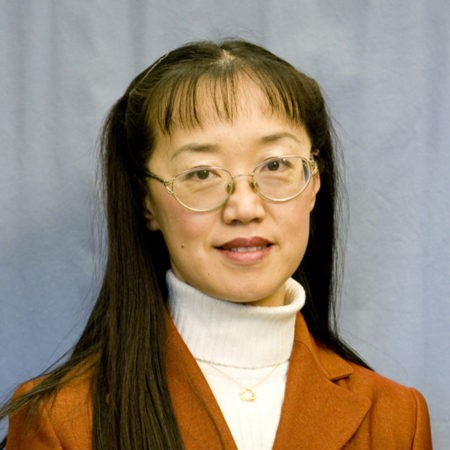
Weihong Zhong is a Professor at the School of Materials Science and Engineering , Washington State University , specializing in polymers, composites, and energy storage materials. With a Ph.D. in Materials Science and Engineering from Beihang University, she has made significant contributions to battery technology and biomaterials engineering. Education: Ph.D., M.S., B.S. in Materials Science and Engineering, Beihang University (1994, 1991, 1988) Research Interests focus on: Battery materials and renewable energy systems Nanocomposites and multifunctional materials Biomaterials for environmental and electronic applications Flexible energy storage devices Publication Trends show expertise in lithium metal/sulfur batteries, protein-based materials, and nanostructured composites for electrochemical applications. Her work bridges materials science, polymer engineering, and sustainable energy technologies. Scientific Recognition includes: Honored Fulbright Scholar (2019-2020) Westinghouse Distinguished Professor (2012-2020) Contact: katie_zhong@wsu.edu | Office: PACCAR (PETB) 252 | Phone: 509-335-7658
Nima Rabiei is an Assistant Professor at the International University of Sarajevo in the Department of Applied Mathematics . His research focuses on computational mathematics, numerical analysis, and their applications to engineering and environmental systems. Education: PhD in Applied Mathematics (2014) from Universitat Politècnica de Catalunya-BarcelonaTech (UPC) His work spans population balance modeling , non-linear optimal control , integro-differential equations , and limit analysis decomposition methods . He has developed numerical schemes for crystallizers and explored statistical methods for hyper-ellipsoids. Recent publications highlight his contributions to adjoint methods , Monte Carlo techniques , and meshless computational approaches .
Associate Professor Bruno C. d. S. Oliveira is affiliated with the Department of Computer Science at The University of Hong Kong, where he leads the HKU PL Group. His research focuses on programming languages , particularly type systems for modularity and the integration of object-oriented and functional paradigms . He has contributed extensively to conferences like POPL, ICFP, ECOOP, and OOPSLA. Key Research Areas : Programming Languages Type Systems Modularity Polymorphism Subtyping Dependent Types His recent work explores bidirectional typing , iso-recursive subtyping , and intersection/union type applications . He has advised numerous PhD and MPhil students, including Wenjia Ye, Baber Rehman, and Yaoda Zhou. Awards include the Distinguished Artifact Award (ECOOP 2021) , Best Paper Awards (Modularity 2016) , and Distinguished Paper Awards (POPL 2020, ICFP 2019) . His teaching includes Functional Programming (CSIS0258/COMP3258) and Principles of Programming Languages (CSIS0259/COMP3259) .
Dana C. Dolinoy serves as NSF International Chair of Environmental Health Sciences and Professor of Nutritional Sciences and Environmental Health Sciences at the University of Michigan School of Public Health. She is also Faculty Director of the Epigenomics Core at Michigan Medicine and leads the Environmental Epigenetics and Nutrition Laboratory. Dr. Dolinoy holds multiple center memberships including the Rogel Cancer Center, Eisenberg Family Depression Center, and Caswell Diabetes Institute. Dr. Dolinoy earned her PhD in Genetics and Genomics and Integrated Toxicology from Duke University, and MSc in Public Health from Harvard University. She completed postdoctoral training in Radiation Oncology at Duke University Health System. PhD, Duke University, 2007 MSc, Harvard Chan School of Public Health, 2003 BA, Duke University, 1998 Dr. Dolinoy's research focuses on environmental epigenomics and the developmental origins of health and disease. Her work integrates toxicology, epidemiology, and bioinformatics to characterize environmental effects on the epigenome while developing precision environmental epigenomics tools. Her research specifically targets metabolic syndrome, neurodevelopmental disorders, and cancer, with emphasis on vulnerable populations and early environmental exposures that influence adult disease risk. She directs the Michigan Center on Lifestage Environmental Exposures and Disease (M-LEEaD) and is a member of the NIEHS TaRGET II Consortia. Dr. Dolinoy's research program examines the effects of perinatal exposures (metals including lead and endocrine active compounds including phthalates) on the epigenome and longitudinal health risks using human-relevant mouse models and human birth cohort samples. Her work evaluates DNA methylation, non-coding RNA, chromatin structure, and gene expression across multiple tissues with sex-specific analyses. Dr. Dolinoy has received numerous awards including the Norman Kretchmer Memorial Award from the American Society for Nutrition (2011), the Classic Paper of the Year Award from Environmental Health Perspectives (2011), the Association of Schools of Public Health (ASPH)/Pfizer Research Award (2012), and the NIH Director's Transformative Research Award (2015). As an educator, Dr. Dolinoy teaches courses including Environmental Epigenetics and Public Health (EHS660) and Professional Development in Environmental Health Sciences (EHS801). She serves as Associate Editor for Environmental Health Perspectives, Environmental Epigenetics, and Toxicological Sciences, and previously chaired the Gordon Research Conference in Cellular & Molecular Mechanisms of Toxicity. Dr. Dolinoy leads the Environmental Epigenetics and Precision Environmental Health NIEHS R35 RIVER Project and is MPI of the Maternal Metabolic and Molecular Changes Induced by Preconception Weight Loss and Their Effects on Birth Outcomes NIDDK R01 study. Her laboratory, the DoGood-Pi Laboratory, investigates how nutritional and environmental factors interact with epigenetic gene regulation to shape health and disease.
Dr. Yaroslava G. Yingling is a Professor in the Department of Materials Science and Engineering at North Carolina State University. She holds adjunct appointments in Physics and Biomedical Engineering, reflecting her interdisciplinary expertise. Her research spans biomimetic materials, nanotechnology, and AI-driven materials discovery. Key Affiliations: NCSU College of Engineering, Joint Biomedical Engineering Department (NCSU-UNC), Triangle Materials Research Science and Engineering Center Research Focus: Combines materials simulations , data science , and biomolecular engineering to develop nanomaterials for environmental remediation, DNA/RNA-based nanostructures, and sustainable technologies. Specializes in molecular dynamics and machine learning for materials design. Scientific Contributions: Pioneered AI methods for materials informatics , DNA self-assembly , and biomimetic nanoparticle design . Her work on phosphorus sustainability and reflectin-inspired materials has received significant attention. Awards: DOE Ten at Ten Scientific Idea Award NSF CAREER Award University Faculty Scholar Leadership Roles: Served as Associate Department Head for Scholarship and Education, Director of Graduate Certificate in Materials Informatics, and Director of Undergraduate Program. Active in editorial boards of Journal of Materials Science and ACS Biomaterials Science .
Ivana Crnjac is an Assistant Professor at the School of Applied Mathematics and Informatics, Josip Juraj Strossmayer University of Osijek. She serves as Head of the Applied Mathematics and Optimization Research Group and maintains an active research program in mathematical optimization and partial differential equations. Her educational background includes a PhD in Mathematics from the University of Zagreb (2019), an MSc in Mathematics from the University of Osijek (2013), and a BSc in Mathematics from the University of Osijek (2011). Dr. Crnjac's research focuses on Partial Differential Equations, Functional Analysis, and Optimal Design, with significant contributions to elasticity theory and structural optimization. Her work bridges theoretical mathematics with practical engineering applications, particularly in the development of numerical methods for optimization problems in solid mechanics. Her recent publications (2023-2024) demonstrate a clear trajectory toward increasingly complex 3D elasticity problems, showing progression from 2D models to more sophisticated three-dimensional frameworks. Her research integrates advanced mathematical techniques like Hashin-Shtrikman bounds with practical applications in structural engineering. Dr. Crnjac actively participates in multiple research projects funded by the Croatian Science Foundation, including the ongoing 'Homogenization and optimization in mechanics of solids' (2023-2027). She regularly presents at international conferences and workshops on applied mathematics. She teaches a variety of mathematics courses including Ordinary Differential Equations, Complex Analysis, and Linear Algebra II. Her academic service includes organizing the Mathos Cup competition and conducting educational workshops for students at various levels.
Dr. Stephan Unger is a researcher at the Faculty of Biology , University of Bielefeld , Germany. He is affiliated with the Biodiversity and Ecosystem Restoration group, focusing on plant-soil interactions, carbon cycling, and Mediterranean ecosystems. Research Interests: His work explores how mycorrhizal fungi influence plant resilience under drought, nutrient dynamics in grasslands and sand dune species, and carbon-water linkages using stable isotopes . He investigates the role of precipitation variability in ecosystem functioning and carbon fluxes. Publications highlight his expertise in fungal symbiosis, plant competition, and climate change impacts on vegetation. He contributes to interdisciplinary teaching methods integrating ecosystem services frameworks. Academic Roles: He serves as Deputy in the Quality Improvement Commission and Faculty Conference of the Faculty of Biology. He is also a member of BiSEd and oversees modules like Basic Practice II and Stress Ecology of Plants .
Vicente Agustín Fernández Carmona is an Associate Professor at the School of Architecture and Design , Pontificia Universidad Católica de Valparaíso, Chile. His work focuses on coastal urbanism, habitability, and integrating cultural and environmental contexts into architectural practice. Specialty: Coastal and urban architectural design Research Themes: Risk management, collective housing, material properties Active since 2019 in workshops and teaching roles His recent publications (as workshop titles) emphasize coastal resilience , urban infrastructure , and historical architectural analysis . Key sub-fields include port city development, void interior design, and sustainable material applications. He contributes to courses like Presentation: The Age of Humanism and Creative Heritage , bridging historical and contemporary design paradigms.
Alen Silva is an Associate Professor at the School of Architecture Design , Pontificia Universidad Católica de Valparaíso, Chile. He focuses on architectural design, spatial representation, and structural methodologies, teaching workshops and courses since 2015. His work explores themes like void analysis, vertical house design, and observational techniques in architecture. Academic Rank: Associate Professor University: Pontificia Universidad Católica de Valparaíso Email: alen.silva@ead.cl Research Interests include architectural design theory, spatial representation frameworks, and the integration of void concepts in built environments. His projects, such as the Vertical House Workshop and Portico of the Arts , emphasize form, altitude, and functional design systems. Teaching Activities span workshops like Act and the Void , Language and Representation , and Architectural Construction from 2016 to 2025. He has mentored students including Erick Caro, focusing on graduation projects and design synthesis. Professional Contributions involve courses and workshops addressing architectural theory, observational techniques, and structural form. His work bridges design education with practical implementation, emphasizing craft, program, and form relationships.
Prof. Dr. Volker Abetz is a full professor (W3) of Physical Chemistry at the University of Hamburg since January 2013 and concurrently serves as Director of the Institute for Polymer Research at the Helmholtz-Zentrum Geesthacht. His career has included professorships at the University of Kiel (2004–2012) and the University of Potsdam, along with visiting roles at Stanford, UC Louvain, and Ben-Gurion University. Education: Habilitation, University of Bayreuth (2000) – “Complex Structures based on ABC Triblock Copolymers” PhD, Albert-Ludwigs-University Freiburg (1990) – “Spectroscopic Polarimetry on Multicomponent Polymer Systems” Diplom, Albert-Ludwigs-University Freiburg (1987) – “FTIR-Dichroism Spectroscopy on Polymer Multicomponent Systems” Research Interests: His group focuses on nanostructured polymers , stimuli-responsive block copolymers , isoporous membranes , vitrimer chemistry , hierarchical polymer composites , and anisotropic gels . A hallmark of his work is translating fundamental self-assembly principles into scalable membrane technologies for water treatment, gas separation, and bioprocessing. Publication Trends: Across >480 peer-reviewed papers, recent output centers on advanced block-copolymer membranes (isoporous, antifouling, ion-selective), reprocessable vitrimer nanocomposites (lignin-based, Au-doped, magnetic), and in-situ diagnostics (synchrotron SAXS, atomic-layer deposition). These studies couple rigorous polymer synthesis with sophisticated characterization and device-level validation. Scientific Awards & Honors: Cover-featured articles in Advanced Materials , ACS Macro Letters , Macromolecular Rapid Communications Keynote & plenary invitations at POLYCHAR, ACS, IUPAC MACRO conferences Patents on isoporous membrane manufacturing (WO, EP, DE filings) Research Funding & Collaborations: His teams secure funding from the German Research Foundation (DFG), Helmholtz Association, EU Horizon programs, and industry partners. The group operates state-of-the-art laboratories at both the University of Hamburg and Helmholtz-Zentrum Geesthacht, hosting a vibrant international cohort of PhD students and postdocs. Laboratories & Facilities: AG Abetz – University of Hamburg Institute of Physical Chemistry Institute for Polymer Research – Helmholtz-Zentrum Geesthacht Access to PETRA-III (DESY), BER II (HZB) & ILL (Grenoble) neutron/synchrotron beamlines
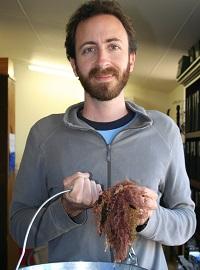
Dr. Patrick T. Martone is a Professor in the Department of Botany at the University of British Columbia, where he has served since 2008. His research focuses on the biomechanics, evolution, and ecophysiology of marine macroalgae, particularly kelps and coralline algae. He leads the Martone Lab, which investigates how seaweeds adapt to wave-swept environments and respond to climate change stressors. His educational background includes: PhD from Stanford University (2001-2007) BS from Duke University (1994-1998) Dr. Martone's research examines biomechanical adaptations of seaweeds in high-flow environments, evolutionary patterns in coralline algae, and impacts of climate change on marine macroalgal communities. His work integrates field studies, laboratory experiments, and phylogenetic analyses to understand how physical forces shape algal morphology and function. Recent projects investigate phenotypic plasticity in kelps, calcification processes in coralline algae, and restoration techniques for declining kelp forests. Analysis of his recent publications reveals a strong focus on climate change impacts on marine macroalgae, particularly examining temperature and pH effects on coralline algae calcification and biomechanics. His work spans from fundamental biomechanical studies of algal joints to applied research on kelp restoration. A consistent theme is understanding how wave-swept environments drive morphological and biomechanical adaptations in seaweeds. Dr. Martone actively mentors students and postdocs: Current students: Alana Breitkreutz (PhD), Elliot Porcher (PhD), Varoon Supratya (PhD), Emma Jourdain (PhD), Ruby Burns (MSc), Emma Hancock (MSc) Notable alumni: Rachael Wade (Postdoc), Brenton Twist (Postdoc), Matt Whalen (Postdoc), Sam Starko (PhD), Kyra Janot (PhD) The Martone Lab maintains strong collaborations with the Bamfield Marine Sciences Centre, where he teaches MRNE425: Ecological Adaptations of Seaweeds. His lab combines field work along the British Columbia coast with laboratory studies on algal biomechanics and physiology, operating from Room 3224 in the Biological Sciences Building at UBC.
Sami Franssila is a Professor in the Department of Chemistry and Materials Science at Aalto University, School of Chemical Engineering. He is also affiliated with the Microfabrication research group. His research spans advanced materials engineering, with a focus on micro- and nanofabrication technologies, surface science, and functional materials. Franssila earned his Doctoral degree in Natural Sciences from Helsinki University of Technology in 1995, a Licentiate degree from the University of Helsinki in 1990, and a Master’s degree from the same institution in 1986. His research interests include Microfabrication, Nanotechnology, MEMS, Microfluidics, Thin Film Technology, Superhydrophobic Materials, and Atomic Layer Deposition . His work often explores the design and application of nanostructured surfaces, particularly black silicon and biomimetic superhydrophobic materials, with applications in biomedical devices, energy, and environmental technologies. His recent publications (2024–2025) highlight advancements in nanojungle black silicon, air plastron stability in biofluids, and anisotropic wetting surfaces inspired by plant structures. These works demonstrate a strong trend toward biomimetic, durable superhydrophobic materials with real-world applications in challenging environments. Member of the Academy for Technical Sciences in Finland (2010) Teaching award based on student response (2009) Textbook of the year award from Helsinki University of Technology (2004) Franssila has supervised 16 theses and actively participates in academic service, including doctoral thesis oppositions, professorship evaluations, and conference organization. He has led major research projects such as N2PCON (EU Horizon Europe), CONNECT WP7, and ARMOR (Business Finland), securing funding from both national and international sources. He has also chaired the Micronano System Workshop and Superhydrophobicity and Wetting Symposium, demonstrating leadership in the research community. His research group collaborates widely across Europe and engages in interdisciplinary work linking materials science, engineering, and life sciences. The team focuses on translating fundamental surface phenomena into scalable technologies, with recent media attention on a revolutionary water-repellent 'armor' surface attracting over 100 companies.
Tuomas Hänninen serves as a Visiting Professor at Aalto University's Department of Information and Communications Engineering, specializing in bio-based acoustic materials research. His work bridges sustainable engineering and acoustic science, focusing on innovative applications of wood and cellulose derivatives. Education Highlights: Doctoral Degree in Engineering and Technology (2011) - Aalto University Master's Degree in Engineering and Technology (2007) - Helsinki University of Technology Hänninen's research centers on sustainable acoustic solutions , particularly developing wood-based pulp fibre foams and cellulosic aerogels for sound absorption. His work demonstrates how natural fiber materials can simultaneously address building acoustics challenges while reducing carbon footprints. Recent publications reveal a strong focus on moisture effects, thermal insulation properties, and industrial scalability of bio-based sound absorbers. His publication trends show consistent output in high-impact journals like Chemical Engineering Journal and Materials Today Sustainability , with increasing emphasis on circular economy applications and multi-functional material design since 2020. Key research themes include waste biomass valorization, anisotropic material engineering, and carbon sequestration through acoustic coatings. Key Recognition: US Patent for improving water tolerance of bio-based CNF-films (2020) Significant media coverage including 4 news outlets and 6 X users for carbon-reducing acoustic solutions (2021) Hänninen actively contributes to academic discourse as a reviewer for the Cellulose journal and has supervised multiple theses. His work aligns with UN Sustainable Development Goals through sustainable material innovation. Current research focuses on optimizing anisotropic pectin cryogels and developing commercial applications for waste-derived acoustic materials through the Virtual Acoustics research group.
Ryan Lively is a Professor in the Department of Chemical and Biomolecular Engineering at Georgia Institute of Technology's College of Engineering, specializing in energy-efficient separation processes using advanced membranes and nanoporous materials. His research focuses on addressing global energy challenges through innovative materials and modular device design. B.S. (2006) Georgia Institute of Technology Ph.D. (2011) Georgia Institute of Technology Research interests include: Membrane and adsorbent development for carbon capture 3D-printed separation devices Polymer of intrinsic microporosity (PIM) modifications Natural gas liquid fractionation and solvent recovery Mechanistic studies of gas transport in hybrid membranes Techno-economic analysis of carbon capture systems Recent publications span 2025 and 2024 , with emphasis on: Direct air capture (DAC) optimization Organic solvent reverse osmosis (OSRO) systems Hybrid membrane synthesis techniques Computational modeling of transport phenomena Porous liquid material design 3D printing for contactor fabrication Scientific recognition includes: 2024 Stratis V. Sotirchos Memorial Award As advisor to PhD students and postdocs including Mingyu Song, Pavithra Shyam, and Younhwa Kim, Lively leads the Lively Lab at Georgia Tech. The lab operates advanced facilities for hollow fiber spinning, BET surface area analysis, membrane testing, and cyclic adsorption processes, while participating in the Georgia Tech Leadership Challenge and AIChE conferences.
Dr. Janet Cronshaw serves as a University Teaching Associate (equivalent to Lecturer) in the School of Biosciences at the University of Sheffield, where she has taught since 2016 with primary responsibility for practical laboratory instruction. Her current leadership roles include Level 1 Practical Lead for Molecular Biosciences, Level 3 Assessments Lead, and Digital Lead, reflecting her commitment to undergraduate education and curriculum development. She earned her PhD at Manchester's Paterson Institute for Cancer Research investigating Nuclear Pore Complex (NPC) proteins, followed by postdoctoral research at Johns Hopkins University and The Rockefeller University where she used mass spectrometry to characterize NPC composition and identify novel transport proteins. Dr. Cronshaw's research expertise centers on nucleocytoplasmic transport mechanisms, particularly NPC structure/function and mRNA export pathways. Her work has explored disease connections including triple A syndrome (via ALADIN protein mislocalization) and DNA damage response pathways involving proteins like RAD18 and ATMIN. She returned to active research in 2014 through a Daphne Jackson Fellowship investigating NPC-bypass mRNA export mechanisms. Her publication record shows evolving focus from fundamental NPC biology (1999-2016) toward bioscience education, culminating in her 2025 co-authored book on hypothesis-driven practicals. Early work established foundational knowledge of NPC protein composition and DNA damage signaling, while recent efforts translate research expertise into innovative teaching methodologies. Her notable recognition includes: Daphne Jackson Career Re-entry Fellowship (2014) Dr. Cronshaw supervises Level 3 Research Projects and Literature Reviews while coordinating practical instruction across multiple modules. Her leadership in developing the Skills in Molecular Bioscience module demonstrates integration of research-derived expertise into undergraduate training, particularly in cultivating essential laboratory competencies for early-career bioscientists.