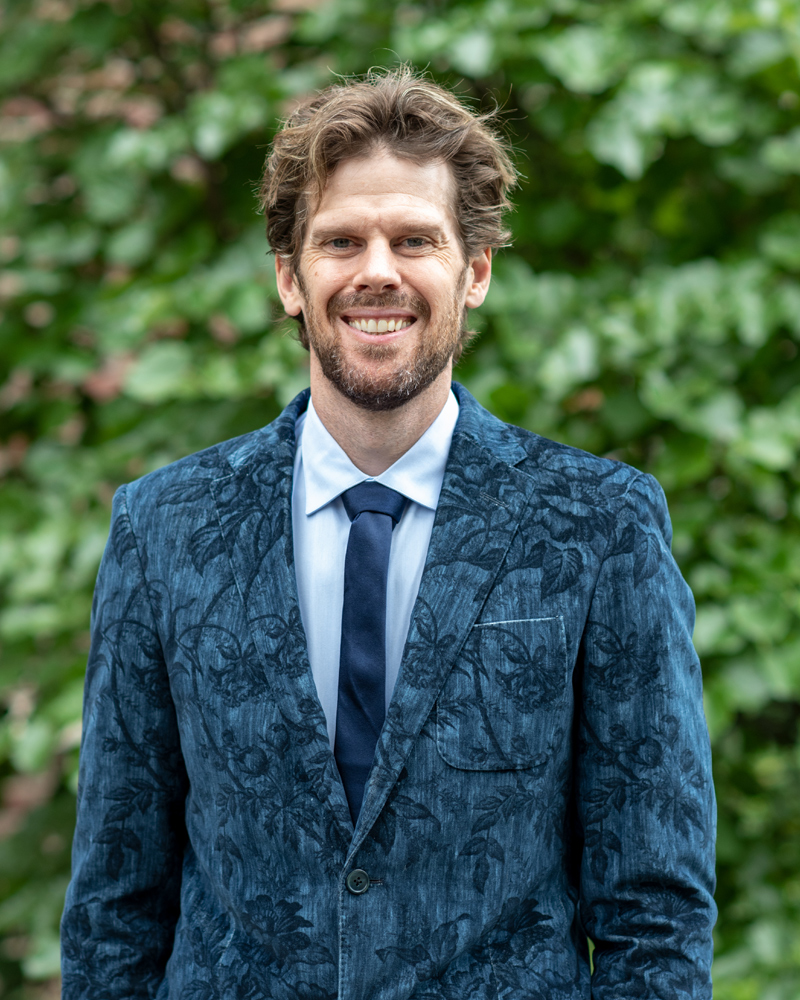
Robert Pringle is a Professor of Ecology and Evolutionary Biology at Princeton University, and Director of Undergraduate Studies in his department. His research focuses on understanding how ecological interactions (predation, herbivory, mutualism) govern species distribution, community structure, and ecosystem functioning. He leads the Pringle Lab, conducting field experiments in African savannas and Caribbean islands to explore topics like spatial vegetation patterns, invasive species dynamics, and the ecological consequences of large mammal extinctions. His work combines DNA metabarcoding with manipulative field studies, addressing questions such as: How do spatial patterns enhance ecosystem stability? Why are large herbivores ecologically critical? How do war and climate change impact biodiversity? Key projects include analyzing warfare-induced wildlife declines in African protected areas and restoring ecosystems post-civil conflict. Pringle’s research spans from micro-scale microbiome studies to large-scale conservation policy, emphasizing the interplay between theoretical frameworks and applied conservation. He collaborates with institutions globally to address pressing ecological challenges, such as rewilding initiatives and mitigating human-wildlife conflicts. His lab’s work has been featured in high-impact journals like Nature and Science , and highlighted in media outlets for its innovative approaches to understanding and preserving Earth’s ecosystems.
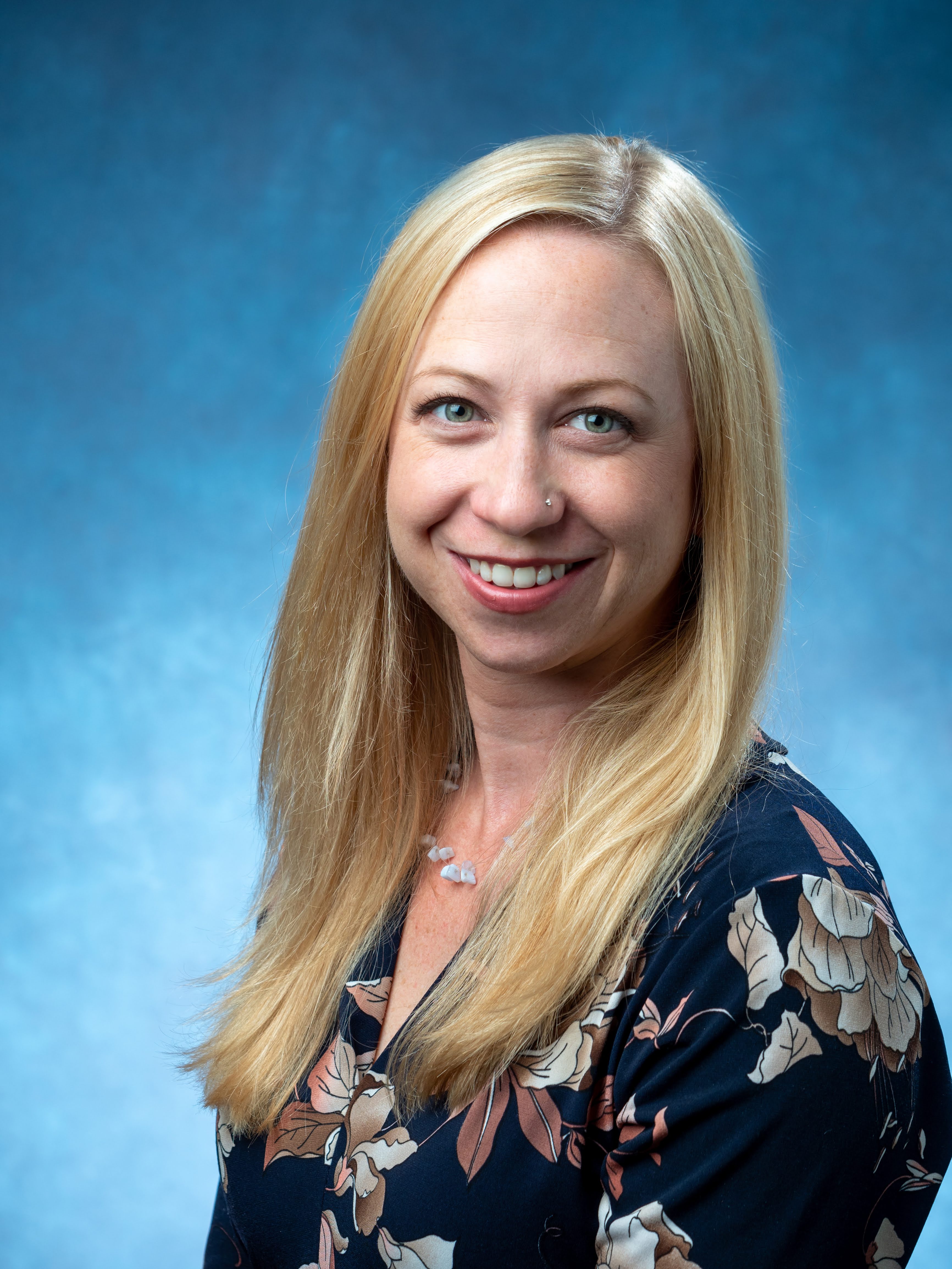
Megan Cattau is an Assistant Professor in the Department of Human-Environment Systems at Boise State University, with affiliations as a Research Scientist at the Cooperative Institute for Research in Environmental Sciences (CIRES), University of Colorado Boulder. Her work focuses on understanding how anthropogenic and biophysical factors alter disturbance regimes, particularly wildfires, and evaluates interventions to enhance social-ecological resilience. She employs geospatial techniques on large datasets, including drone, satellite, and field-based data to study spatial/temporal patterns of disturbance and recovery. Education: Ph.D., Columbia University M.E.M., Duke University B.F.A., University of Georgia Research Interests: Megan’s research integrates remote sensing and ecological modeling to address wildfire management, climate change impacts, and land use dynamics. Her projects emphasize scalable solutions using open-source tools and UAS (drones) for high-resolution data collection. Key themes include wildfire vulnerability assessment, post-fire hydrological responses, and socio-environmental systems analysis. Publications Trends: Her articles (2023–2025) highlight interdisciplinary approaches to wildfire ecology, leveraging UAS and machine learning for precision monitoring. Recent work examines fire severity’s hydrological impacts, climate-driven shifts in plant species, and policy-relevant insights on fire regimes and conservation easements. Awards: NASA New Investigators Program Fellow Fulbright Scholar – Indonesia Scholarship Grants & Collaboration: Funded by NASA’s New Investigators Program, her research engages with institutions like Earth Lab (CU Boulder) and the National Ecological Observatory Network (NEON). She leads projects bridging ecological data science and community resilience strategies. Labs & Teams: Active in interdisciplinary teams at Earth Lab and NEON, focusing on cyberinfrastructure for environmental data science education and open-access ecological monitoring.
Ellen Claudia Rochelmeyer is a PhD candidate at Charles Darwin University's Research Institute for the Environment and Livelihoods, collaborating with CSIRO. Her work focuses on savanna ecology, termite behavior, and fire regime impacts in tropical ecosystems. Supervised by Prof. Brett Murphy, Dr. Shaun Levick, Dr. Anna Richards, and Dr. Alyson Stobo-Wilson. Education: Bachelor of Science (Ecology and Evolutionary Biology), Master of Science (University of Melbourne). Research: Investigates habitat structure, fire management, and termite roles in Australian tropical savannas using UAV-based surveys and tomography. Projects: Explores multi-scaled modeling of savanna diversity, termite abundance under fire regimes, and tree hollow accessibility via drone technology. Methodologies: Integrates remote sensing (UAV-LS, terrestrial laser scanning), fire ecology, and conservation biology to address land management challenges.
Professor Brett Murphy is a prominent academic at Charles Darwin University (CDU) within the Faculty of Science and Technology and Environment department. He holds a PhD in fire ecology from CDU and has extensive postdoctoral experience across multiple institutions. Currently, he serves as a Senior Research Fellow in the Savanna Wildlife Research and Conservation Management group, focusing on fire ecology and biodiversity conservation in tropical savannas. Education: PhD in Fire Ecology (Charles Darwin University, 2006) Postdoctoral roles at University of Tasmania, South Dakota State University, and University of Melbourne Research Interests: Fire regimes and their impact on tropical savanna biota Biodiversity conservation, particularly small mammals and vegetation communities Carbon accounting methodologies for savanna fire management Global environmental change impacts on fire distribution (pyrogeography) Key Projects: Climate change risks to NT ecosystems and biodiversity (2023–2024) Conservation ecology of the greater bilby (2021–2023) Creating safe havens for Top End mammals (2023–2027) Grants & Awards: Rainmaker Start-up grants for Indigenous partnerships (2021–2023) National and international collaborative grants for fire management and biodiversity projects Labs/Teams: Research Institute for the Environment and Livelihoods (CDU) Savanna Wildlife Research and Conservation Management group Collaborations with Indigenous ranger groups and global research networks
Lindsay B. Hutley is a Professor of Environmental Science at Charles Darwin University's Faculty of Science and Technology, where he leads research through the Research Institute for the Environment and Livelihoods. With a PhD in forest hydrology/botany from the University of Queensland, Hutley has established himself as a leading expert in tropical ecosystem dynamics, particularly focusing on carbon and water cycling in savanna and mangrove ecosystems. Institution: Charles Darwin University School: Faculty of Science and Technology Department: Environmental Science Education: PhD, University of Queensland (1997) Professor Hutley's research program centers on understanding the biophysical environment of tropical land and water systems, with expertise spanning plant ecology, ecophysiology, ecohydrology, land-atmosphere exchange, and soil science. His work employs eddy covariance systems to measure surface fluxes of carbon, water, and energy in tropical ecosystems, complemented by expertise in stable isotopes and soil biology. Research spans organizational scales from leaf to ecosystem to regions, incorporating ecosystem modeling and remote sensing techniques. Hutley's recent work has expanded into coastal ecosystems, particularly mangroves, focusing on carbon sequestration, ecosystem loss drivers, and restoration efforts. He collaborates on international initiatives to restore Indonesia's peat forests and has contributed significantly to understanding blue carbon dynamics. His research directly informs water resource management, carbon accounting, and landscape-scale management practices in northern Australia. The analysis of Hutley's publication record reveals consistent contributions to understanding tropical ecosystem responses to climate change, fire, and land use change. His work demonstrates strong interdisciplinary connections between terrestrial and coastal systems, with particular emphasis on carbon-water-energy interactions. Recent publications show increasing focus on mangrove ecosystems, blue carbon, and the impacts of extreme climate events on ecosystem function. Vice-Chancellor's Awards for Exceptional Performance in Research - Individual Award (2008) Vice-Chancellor's Awards for Exceptional Performance in Research CDU - Team Award (2009) National Carrick Institute Citation for innovative postgraduate education (2006) Dean's Research Awards for Superior Publication Outputs (2009) Best Research in NRM, Territory Natural Resource Management Awards (2014) Professor Hutley has successfully supervised numerous research students across diverse topics including mangrove dieback, blue carbon dynamics, frog physiology in monsoonal environments, and savanna land-atmosphere interactions. His current research portfolio includes significant projects such as 'Rainmaker Start-Up: Revisiting ecohydrological processes in the tropics,' 'Assessment of Climate Change Risks to NT Ecosystems and Biodiversity,' and 'Beyond burial: redefining the blue carbon paradigm.' His work contributes directly to multiple UN Sustainable Development Goals, particularly those related to climate action and life on land.
Dr. Luis Herrera is a Lecturer in Computational Engineering at Charles Darwin University's Faculty of Science and Technology. His research focuses on molecular simulation techniques, gas-solid interactions, and the characterization of porous materials for applications like carbon capture and environmental engineering. He holds a PhD from the University of Queensland (2011), a Master's from Universidad Nacional de Colombia (2010), and a Bachelor's from Fundación Universidad de América (1995). His research interests include developing Monte Carlo methods for simulating porous materials, studying adsorption mechanisms under supercritical conditions, and advancing carbon capture technologies. Current projects include investigating carbon capture pathways in the Northern Territory and analyzing asphalt performance in NT roads. Dr. Herrera has contributed to over 30 peer-reviewed articles, with notable work on CO₂ adsorption in zeolitic frameworks and fluorine-free foam rheology. His work aligns with UN Sustainable Development Goals related to affordable and clean energy and climate action. He supervises Higher Degree by Research (HDR) students and collaborates on projects funded by initiatives like the IAS Rainmaker. His expertise spans computational modeling, material characterization, and interdisciplinary environmental engineering.
Dr. Dong Hou is an Assistant Professor in the Department of Materials Science and Engineering at Clemson University, joining in January 2024. His research focuses on energy materials for electrochemical applications, advanced characterization techniques, and ceramics manufacturing. He holds a Ph.D. from North Carolina State University (2017) and a B.Eng. from Central South University, China (2013). Prior to Clemson, he served as a Research Assistant Professor at the University of Louisiana at Lafayette (2022–2023), and conducted postdoctoral research at Virginia Tech (2019–2022) and the Norwegian University of Science and Technology (2018–2019). Research Interests : Dr. Hou’s work spans energy storage materials, electrochemistry, battery design, and advanced characterization methods such as synchrotron X-ray diffraction, neutron scattering, and machine learning-driven data analysis. His projects include optimizing Ni-rich layered cathodes, developing sustainable electrolytes, and studying phase transformations in energy materials. Key Contributions : His recent studies address thermal stability of battery materials, interfacial degradation in solid-state batteries, and cross-length-scale material dynamics. He employs cutting-edge techniques like in situ synchrotron measurements to uncover hidden mechanisms in energy systems. Labs & Collaborations : While no lab name is explicitly stated, his research aligns with Clemson’s Energy Materials and Engineering focus. Collaborations involve institutions like Virginia Tech and the Stanford Synchrotron Radiation Lightsource.
Dillon Fogarty is an Assistant Professor of Rangeland Ecology in North Dakota State University's School of Natural Resource Sciences, part of the College of Agriculture, Food Systems, and Natural Resources. His research investigates woody plant encroachment dynamics in grassland ecosystems, restoration strategies, and conservation planning in working landscapes. Key research areas: Drivers and consequences of woody plant encroachment in grasslands Fire-grazing interactions in rangeland management Social-ecological approaches to conservation Restoration effectiveness assessment His publications focus on developing practical frameworks like RAD (Resist-Accept-Direct) for managing ecosystem transitions, quantifying spot-fire risks in encroached landscapes, and evaluating conservation outcomes on private lands. Recent work emphasizes early detection of encroachment patterns and cross-boundary conservation strategies. Dr. Fogarty teaches courses in range management and contributes to extension publications on woody encroachment mitigation.
Carol P. Jamison is a Professor of English Literature at Georgia Southern University , specializing in Arthurian and Medieval Literature . She earned her PhD from the University of Georgia (1993), MA from the University of South Alabama (1987), and BA from the University of Montevallo (1985). Her research spans Chaucer studies , Early English Literature , and the History of the English Language , with a focus on chivalric codes , medievalism in modern fantasy , and gender dynamics in medieval texts. Education : PhD (University of Georgia), MA (University of South Alabama), BA (University of Montevallo) Departments : Department of Literature and Department of Writing and Linguisitics Research Trends : She bridges medieval narratives with modern works like Game of Thrones and Harry Potter , analyzing themes of chivalry , social satire , and historical pragmatics . Her recent work explores phatic communication and multi-layered medievalisms in contemporary media. Collaborative Work : Includes co-authored research with William Deaver on comparative literature and medievalism.
Daniel Hochstein serves as an Associate Professor in the Department of Civil and Environmental Engineering at Manhattan University, where he has held faculty positions since 2010, progressing from Adjunct Instructor to his current rank. He previously served as an Adjunct Associate Research Scientist at Columbia University from 2014-2015 and maintains licensure as a Professional Engineer in Delaware and Engineering Intern in New York. Hochstein earned his PhD from Columbia University following completion of both his MS and BS degrees at Manhattan University. His educational foundation directly supports his research and teaching in civil engineering materials. His research program focuses on durability mechanisms in construction materials, with particular expertise in asphalt weathering under ultraviolet radiation, thermal properties of lightweight concrete, recycled material integration, and moisture-heat transfer in cementitious systems. This work addresses critical sustainability challenges in infrastructure through material innovation and performance enhancement. Analysis of his recent publications reveals concentrated efforts in thermal energy storage applications for concrete, detailed asphalt degradation modeling under combined UV-moisture exposure, and computational optimization of reinforced concrete structures. He has also contributed significantly to engineering pedagogy through competition-based learning methodologies. Hochstein's scholarly recognition includes: Columbia University Visiting Scientist appointment during sabbatical (2024) New York University Scholar-in-Residence (2022) Professional Development Grant from The Brothers of the Christian Schools (2020) ASEE Unleashed Scholarship (2020) Full Membership in Sigma Xi (2020) ASCE ExCEEd Faculty Fellowship for teaching excellence (2018) NCAT Professor Training Course Travel Stipend (2017) AISC Educator Workshop Travel Grant (2016) He has mentored students including Dominguez O. on recycled waste oil applications for asphalt rejuvenation and Ceconi M. on reinforced concrete shear wall optimization. His research has secured over $40,000 in recent funding from sources including the EPA ($25,000 for asphalt recycling), Manhattan College Summer Grants, and transportation research centers, focusing on sustainability and climate-resilient infrastructure. Professionally, Hochstein contributes through active committee roles in ASTM International (C09, D04, G03), RILEM technical committees (PPB, TES, PHC), and Transportation Research Board working groups. He also serves his community as a Captain in the Mount Kisco Fire Department with national certifications in fire officer and instructor roles.
Natalia Tente serves as a Research Fellow at the Deutsche Bundesbank 's Directorate General Financial Stability. Her work focuses on systemic risk, portfolio credit risk, and macroprudential regulation. Key research themes: Portfolio credit risk modeling, Copulae and tail dependence, Systemic risk measurement, Countercyclical capital buffer frameworks Her publications address critical issues in financial stability, including: Contagion propagation in interconnected banking-fund systems Cross-border resolution mechanisms (e.g., Fortis/Dexia case studies) Enhancements to Basel III/II methodologies Systemic risk contribution metrics Recent 2024 work in Journal of Financial Stability demonstrates how joint bank-fund sector stress testing reveals amplified losses through fire sales and overlapping portfolios. Earlier studies (2013-2019) developed hierarchical copula models for tail risk analysis and contributed to European Banking Union policy frameworks.
Mohammad Jonaidi is a faculty member in the Department of Civil and Construction Engineering at Kennesaw State University , where he has worked since Fall 2016. He previously served as an adjunct professor from Spring 2011 to Fall 2016 and has 40 years of combined industrial and academic experience in structural engineering. Ph.D. in Civil Engineering (1998), University of Sydney MSc in Structural Engineering (1988), Amir Kabir University BSc in Civil Engineering (1985), Amir Kabir University Dr. Jonaidi specializes in structural engineering with expertise in finite element analysis , post-tensioned concrete , steel structures , and earthquake engineering . His work spans industrial projects (e.g., below-grade shoring walls, FRP retrofitting) and academic research (e.g., AI in education, composite medical devices). His recent research trends include seismic response modeling , machine learning applications , and mechanical analysis of sports equipment . Collaborations with Mechanical Engineering students and faculty members highlight his interdisciplinary approach. Dr. Jonaidi has advised students on topics such as concrete structure experiments , finite element method research , and structural connections . He has presented at conferences including CSCE and ASEE and has published extensively on structural analysis and educational innovations.
Todd Petersen is an Associate Professor of Electrical Engineering at the University of Alaska Anchorage (UAA), where he has held academic roles since 2009. He previously earned his Ph.D., M.S., and B.S. in Electrical Engineering from Kansas State University (2000–2009). His research focuses on electromagnetics, instrumentation, materials science, and renewable energy systems, with notable contributions to wireless sensor networks and hydrokinetic device durability. Petersen holds a patent for long-lifespan wireless sensors (2016) and has advised projects like the SAE Baja team. He actively serves on committees, including the CoEng Computers and Software Committee and ACDLITe. His teaching spans foundational electrical engineering courses (EE A203/A204) to advanced topics like electromagnetics (EE A314/A324), instrumentation (EE A308), and communication systems (EE A462). Petersen’s work bridges theoretical research and applied engineering, demonstrated through collaborative projects like acoustic salmon tracking and snowplow real-time monitoring. His publications span journals (Renewable Energy, IEEE Transactions) and conferences, emphasizing practical solutions for energy systems, materials performance, and environmental monitoring. Education: Ph.D. Electrical Engineering, Kansas State University, 2009 M.S. Electrical Engineering, Kansas State University, 2003 B.S. Electrical Engineering, Kansas State University, 2000 Petersen’s research interests include sensor networks, tribology in renewable energy components, and precision engineering systems. His funded projects at Lawrence Livermore National Laboratory (2005–2008) and Honeywell (2004) highlight expertise in defense technology and industrial applications. Future work includes developing in-situ resistivity probes and advancing hydrokinetic device reliability.
Elena Carletti is a Full Professor of Finance at Bocconi University since 2013, serving as Dean for Research since 2022. She holds multiple leadership roles including Director of the Banking, Finance and Regulation Unit at Baffi Carefin Center (since 2015) and Director of CEPR's Banking and Corporate Finance Program (since 2022). Her academic work focuses on banking regulation, systemic risk, financial stability, and international finance. Carletti advises major institutions like the European Parliament (Expert Panel on banking supervision, 2016–2024) and Unicredit Group (Deputy Vice Chair of Board of Directors). Her research explores topics such as interbank liquidity management, capital adequacy frameworks, and systemic risk amplification channels. Educational Background: Not explicitly stated in provided texts, but inferred to hold a PhD in Finance/Economics given her academic rank. Her research interests center on the intersection of financial markets, regulation, and macroeconomic stability. She analyzes systemic risk drivers in banking systems, optimal capital structures for financial institutions, and the design of effective liquidity management frameworks. Recent work includes studies on stakeholder governance impacts on firm value and the implications of mark-to-market accounting practices on liquidity pricing. Carletti participates in policy-oriented research networks such as the CEPR's European Financial Architecture RPN and serves on governance committees at Deutsche Bundesbank and Bloomberg's Women in Finance Initiative. She has contributed to over 20 peer-reviewed articles addressing critical issues in financial regulation and systemic risk mitigation. Professional Activities: Member of Executive Committee at Institute for European Policy Making (IEP) since 2023 Chair of Bruegel’s Scientific Committee since 2017 Research Professor at Deutsche Bundesbank since 2017 Labs/Teams: Active in Bocconi’s Baffi Carefin Center and CEPR networks, focusing on European financial architecture and policy design.
Dr. Xiaohui Zhao serves as a Senior Lecturer at the Institute of Innovation, Science and Sustainability (IISS), Federation University Australia, based at the Mt Helen campus. His academic role bridges business process theory with practical IT implementation, focusing on real-time analytics integration within organizational workflows. His educational foundation includes: Bachelor of Engineering (Computer Science and Technology) Master of Engineering (Computer Science and Technology) PhD in IT from Swinburne University of Technology (2007) Zhao's research centers on Business Process Management with specialized expertise in artifact-centric modeling, situational awareness systems, and real-time business intelligence. His work demonstrates how data analytics can dynamically optimize business operations through context-aware process adjustments. Current projects explore hyper-automation frameworks that merge AI-driven decisioning with traditional BPM workflows. Analysis of his 15 most recent publications reveals a consistent trajectory from foundational process modeling (2010-2015) toward real-time analytics integration (2016-2022). Key thematic clusters include artifact-centric process specialization, resource scheduling under constraints, and RFID-enabled business logic implementation. His interdisciplinary approach spans computer science, operations research, and business analytics. Dr. Zhao actively mentors doctoral candidates including Sira Yongchareon (artifact-centric BPM), Jiajie Xu (resource optimization), and Shangfeng Hu (knowledge networks). His research program is supported by competitive grants from: Ministry of Science and Innovation (New Zealand) Department of Education and Training (Australia) Department of Foreign Affairs and Trade (Australia)