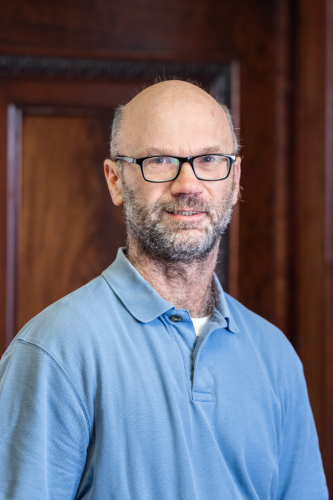
Tony Smith is the William K. Lanman, Jr. Professor of Economics at Yale University, where he previously served as Chair of the Department of Economics from 2019 to 2025. He holds a B.S. in Economics from MIT (1984) and a Ph.D. in Economics from Duke University (1990). He has also taught at Queen's University, Carnegie Mellon University, and the University of Rochester. As a Research Associate at the National Bureau of Economic Research, his research focuses on macroeconomics, particularly income and wealth heterogeneity, and econometrics, including simulation estimation of structural models. His recent work integrates macroeconomics with environmental economics, developing high-resolution global economy-climate models. He currently serves as Co-Editor of Macroeconomic Dynamics and has been an Associate Editor at Review of Economics Dynamics . His scholarly contributions emphasize computational methods and interdisciplinary approaches to economic challenges.
Peter K. Friz is an Einstein Professor in Mathematics at TU-Berlin, affiliated with the Institute of Mathematics, and associated with the Weierstrass Institute for Applied Analysis and Stochastics. His research focuses on stochastic analysis, rough path theory, and mathematical finance, with particular emphasis on volatility modeling and applications to quantitative finance. He has held prestigious grants, including ERC Starting and Consolidator Grants, and coordinates the DFG research unit 'Rough paths, stochastic partial differential equations, and related topics.' Friz's work bridges theoretical stochastic analysis and practical financial applications, emphasizing rough path theory and its implications for differential equations and stochastic processes. His collaborations include organizing international conferences and courses on rough paths, with invited lectures at institutions like Cambridge, Paris, and Bonn. Supported by DFG, the European Research Council, and the Einstein Foundation, his research explores geometric aspects of pathwise analysis and stochastic volatility dynamics. He has advised numerous PhD students and maintains active roles in academic administration, including coordinating Berlin Mathematical School programs and teaching advanced topics in stochastic calculus. His contributions to rough path theory and stochastic finance are recognized through his academic leadership and influential publications, including co-authoring the seminal book Multidimensional Stochastic Processes as Rough Paths .
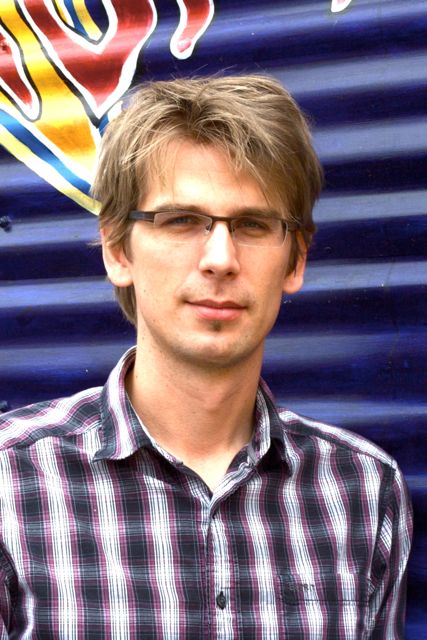
Dr. Tom Boot is an Associate Professor at the Department of Economics, Econometrics & Finance at the University of Groningen. He holds a PhD in Econometrics from Erasmus University Rotterdam (2017) and an MSc in Econometrics from the same institution (2012), along with an MSc in Physics from the University of Groningen (2010). His research focuses on econometric theory applied to macroeconomic forecasting, high-dimensional data analysis, and causal inference. He has been recognized with the Veni grant (2021–2024) for his work on forecasting methodologies. Boot’s research interests include improving forecast accuracy through methods like subspace projections, structural break modeling, and privacy-aware marketing analytics. His recent work explores privacy-utility trade-offs in data-driven marketing and unbiased estimation techniques for clustered errors. He has supervised PhD students including Jhordano Aguilar Loyo and Gilian Ponte, whose theses addressed panel data heterogeneity and differential privacy applications. Boot is also a program director for the MSc Econometrics, Operations Research, and Actuarial Studies (since 2024). His contributions to econometrics span over a dozen peer-reviewed publications, with a focus on advanced statistical techniques for economic forecasting and policy analysis. Collaborations include work with institutions like Harvard/MIT and the organization of workshops on causal inference and machine learning.
Kenichi Shimizu is an Assistant Professor in Econometrics (tenure-track) at the Department of Economics, University of Alberta. He holds a PhD in Economics from Brown University (2021) and previously worked at the Adam Smith Business School, University of Glasgow. His research focuses on Bayesian econometrics, quantitative marketing, industrial organization, and time-series analysis. He teaches courses such as Introductory Econometrics (ECON 399) and Applied Econometrics (ECON 599). Education: PhD in Economics from Brown University (2021). Professional affiliations include roles at the University of Alberta and University of Glasgow. His work emphasizes methodological advancements in econometrics with applications to marketing and industrial organization. Research trends in his publications highlight Bayesian methodologies for dynamic modeling, structural breaks, and high-dimensional data. Key topics include semiparametric estimation, sparse models, and policy evaluation frameworks. Grants: Recipient of SSHRC Insight Development Grant (2024-2026) for research on Bayesian econometric methods in industrial organization and marketing. Active presenter at major conferences including the NBER-NSF Seminar, Canadian Economic Association meetings, and the World Congress of the Econometric Society. Teaching responsibilities include undergraduate and graduate econometrics courses with emphasis on applied regression methods and model specification.
Martin Norgren is a Professor at KTH Royal Institute of Technology, leading the Department of Electromagnetic Fusion Physics. His research focuses on electromagnetic inverse problems, including material characterization, biomedical imaging (e.g., brain current sources), environmental monitoring (e.g., snow and avalanche prediction), and smart grid technologies. He specializes in reconstructing object properties using electromagnetic measurements and has contributed to applications in healthcare, energy systems, and environmental science. His work involves advanced analytical and numerical methods such as mode-matching techniques, perturbation theory, and convex optimization. Notable projects include noncontact current measurement in power grids and transformer diagnostics using microwave radiation. Norgren teaches courses in electromagnetic field theory and electrical engineering design, emphasizing practical applications and interdisciplinary collaboration. Recent research trends highlight advancements in glide/twist symmetry-based metamaterial design, waveguide analysis, and inverse scattering techniques. His studies bridge fundamental physics with applied engineering, addressing challenges in energy infrastructure and medical diagnostics. As a department head, he oversees educational and research programs at KTH, fostering innovation in electromagnetism and fusion physics. His contributions to curriculum development include project-based courses integrating theory and hands-on design.
Samson Zhou is an Assistant Professor in the Department of Computer Science & Engineering at Texas A&M University, part of the College of Engineering. He holds a Ph.D. from Purdue University and dual B.S. and M.Eng. degrees from MIT in Computer Science and Mathematics. His research focuses on theoretical computer science, data science, and machine learning, with specializations in numerical linear algebra, streaming algorithms, and differential privacy. He has held postdoctoral positions at institutions including Carnegie Mellon University and Rice University. Education: Ph.D., Computer Science, Purdue University (2018) M.Eng., Computer Science, MIT (2011) B.S., Computer Science & Mathematics, MIT (2010-2011) Research Interests: Dr. Zhou explores intersections of algorithms, data science, and machine learning, emphasizing numerical linear algebra, streaming algorithms, differential privacy, and adversarial robustness. He designs efficient algorithms for large-scale data processing with provable guarantees. Key Contributions: His work includes advancements in sliding window clustering, adversarially robust streaming algorithms, and privacy-preserving techniques. Notable achievements include the Silver Best Paper Award at ICML 2021 and spotlight presentations at ICLR 2025. Service & Leadership: He organizes workshops (e.g., TTIC 2024 on Learning-Augmented Algorithms) and serves on program committees for SOSA, NeurIPS, and COLT. He also co-leads the TAMU Math Circle's problem-solving sessions and the Algorithms & Data Science Reading Group. Labs/Teams: He collaborates on projects involving co-hosted postdocs (e.g., Chen Wang) and masters students (e.g., Shenghao Xie), focusing on topics like coresets, streaming algorithms, and fair clustering.
Suhasini Subba Rao is a Professor of Statistics at Texas A&M University, affiliated with the Department of Statistics within the College of Arts & Sciences. Her research focuses on time series analysis, nonstationary processes, nonlinear processes, and spatio-temporal models. She holds a prominent academic position and contributes to both theoretical and applied statistical methodologies. Education details are not explicitly provided in the text, but her academic career includes extensive work in statistical theory and methodology. Her research interests emphasize developing robust statistical techniques for analyzing nonstationary and complex time series data, with applications in spatio-temporal modeling and recursive algorithms. Her recent articles highlight advancements in inverse covariance estimation, graphical models for nonstationary time series, and spectral methods for small sample data. She has also explored reconciliation of Gaussian and Whittle likelihoods, enhancing estimation accuracy in frequency domains. No scientific awards are explicitly mentioned. Her advising and grants are not detailed, but her prolific publication record suggests active research collaborations and funding. She maintains a lab/team focused on time series analysis, though specific team names are not provided.
Jonathan Pakianathan is a Professor of Mathematics at the University of Rochester's School of Arts & Sciences, Department of Mathematics. He holds a PhD from Princeton University (1997) and a BS in Mathematics and Physics from Caltech (1992). His research focuses on algebraic topology, cohomology of groups and Lie algebras, geometric combinatorics, and finite fields. He has held leadership roles, including Director of Graduate Studies (2014–2020) and Director of Undergraduate Studies (2003–2010). Notable awards include the Goergen Award for Excellence in Teaching (2014) and the Sloan Foundation Doctoral Dissertation Fellowship (1996). His research explores applications of topology and algebra in discrete geometry, often collaborating with Alex Iosevich and students. Recent work addresses topics like Fuglede's conjecture over finite fields, geometric configurations, and probabilistic methods in combinatorics. His articles frequently intersect harmonic analysis, group theory, and number theory, reflecting interdisciplinary strengths. Education : PhD, Princeton University, 1997 BS in Mathematics and Physics, Caltech, 1992 Awards : Goergen Award for Excellence in Undergraduate Teaching, 2014 Sloan Foundation Doctoral Dissertation Fellowship, 1996 H. J. Ryser Scholarship, 1991 Grants include an NSA Mathematical Sciences Grant (2016–2017, $110,000 total) with A. Iosevich. He advises numerous PhD students, many of whom now hold academic or research positions. His teaching spans undergraduate to graduate courses, including algebra, topology, and financial mathematics. Research groups and collaborations extend to geometric combinatorics, algebraic topology, and applications in physics and data science. Ongoing projects explore topological methods in discrete geometry and probabilistic structures over finite fields.
Professor Javier Hidalgo is a Professor of Econometrics at the Department of Economics, London School of Economics and Political Science (LSE). He holds roles as Co-Director of the STICERD Econometrics Programme and has extensive editorial experience with journals such as Journal of Econometrics and Econometric Theory . His expertise spans econometric theory, with a focus on semiparametric estimation, long-memory processes, and structural change models. Education: PhD in Economics from LSE (1990), M.Sc. in Econometrics and Mathematical Economics (1985), and a Licenciatura in Mathematics from Universidad Complutense de Madrid (1982). Research Interests: Includes semiparametric estimation, dependence in economic analysis, diagnostic testing, and long-memory processes. His work emphasizes methodological advancements in econometric analysis of nonstationary and dependent data. Grants & Awards: Secured ESRC grants totaling over £400k for research on nonstationary economic data and long-memory processes. His 2015 article received the prestigious Tjalling C. Koopmans Econometric Theory Prize. Teaching & Supervision: Teaches advanced econometric courses including EC309 and EC518. Supervised 3 PhD students and served as Program Director for the M.Sc. in Econometrics and Mathematical Economics (2004–2019). Labs/Teams: Active in STICERD’s Econometrics Programme, fostering collaborative research in time series and econometric theory.
Ricardo Reis is the Arthur Williams Phillips Professor of Economics at the London School of Economics and Political Science (LSE), Department of Economics. He specializes in macroeconomics, monetary economics, financial economics, international macroeconomics, and time-series econometrics. His research bridges macroeconomic theory with empirical applications, focusing on inflation dynamics, central bank policies, and financial stability. Reis holds a PhD in Economics from Harvard University. As Director of the Centre for Macroeconomics (CFM), he leads interdisciplinary research initiatives in macroeconomic policy and analysis. He teaches EC210: Macroeconomic Principles and EC539: Macroeconomics for Research Students at LSE, emphasizing rigorous theoretical frameworks and empirical methods. His research explores central bank tools, inflation expectations, and global financial systems. Key themes include the effectiveness of liquidity provision during crises, the design of fiscal-monetary policies, and the implications of long-run interest rate trends. Articles such as Jumpstarting an International Currency and How Likely is an Inflation Disaster? highlight his focus on systemic risks and policy responses. Awards and recognitions are not explicitly listed, but his extensive publications and leadership roles reflect his academic influence. He advises on monetary policy frameworks and contributes to debates on the future of international financial architectures. Reis collaborates with institutions like the Bank of Canada and the Central Bank of Chile, emphasizing practical policy applications of his research. His work often addresses historical crises (e.g., Portugal’s economic history) and contemporary challenges like post-pandemic debt management. Reis’ research datasets and videos, such as his keynote lectures on inflation credibility, underscore his commitment to disseminating economic insights to broader audiences.
Geoffroy Couteau is a CNRS research scientist at IRIF (Institut de Recherche en Informatique Fondamentale), Université Paris Cité, where he conducts research in theoretical and applied cryptography. He obtained his PhD from École Normale Supérieure de Paris in 2017 under the supervision of David Pointcheval and Hoeteck Wee, followed by a postdoctoral position at Karlsruhe Institute of Technology (KIT) from 2017 to 2019. His primary research interests include secure multiparty computation, zero-knowledge proofs, and the theoretical foundations of cryptography, with a particular emphasis on pseudorandom correlation generators and efficiency improvements in cryptographic protocols. He has made significant contributions to fine-grained cryptography, non-interactive zero-knowledge proofs, and post-quantum secure computation. The recent publications reflect a strong trend toward foundational advances in secure computation, with increasing focus on efficiency, practicality, and connections to complexity theory and learning theory. His work often bridges theoretical hardness assumptions with practical protocol design. ERC Starting Grant (2023) for project OBELiSC (Overcoming Barriers and Efficiency Limitations in Secure Computation) Geoffroy Couteau has advised numerous PhD and master’s students, including Dung Bui, Clément Ducros, Eliana Carozza, and Ulysse Léchine. He has also hosted many visiting students and postdocs, fostering a vibrant research group. He has served on the program committees of major conferences such as EUROCRYPT, CRYPTO, TCC, and PKC. He is currently leading research in cryptography at IRIF and is involved in postdoctoral hiring for projects in advanced cryptographic primitives. He maintains a research blog and resource collection for students, including LaTeX templates, a probability cheat sheet, and curated answers to common cryptography questions.
Anna-Karin Tornberg is a Professor in Numerical Analysis at the Department of Mathematics, KTH Royal Institute of Technology. She holds positions as Vice Chair of the Department of Mathematics and previously served as Head of the Numerical Analysis division (2011–2023). Her research focuses on numerical methods for PDEs, particularly boundary integral methods for fluid flows involving particles and drops. She is active in the Linne FLOW Centre and Swedish e-Science Research Center (SeRC). Key roles include membership in the Royal Swedish Academy of Engineering Sciences (IVA), Royal Academy of Sciences, and receipt of awards like the Göran Gustafsson Prize (Mathematics, 2014). She has advised numerous PhD students and postdocs, including current supervisees Anna Broms, David Krantz, and Emanuel Ström. Her work spans theoretical, computational, and applied fluid dynamics with emphasis on microfluidics and high-accuracy numerical techniques. Education includes a PhD in Numerical Analysis from KTH (2000) followed by postdoctoral positions at NYU’s Courant Institute. Promoted to Full Professor at KTH in 2012. Service roles include membership in KTH’s University Board, Faculty Council, and editorial roles at Advances in Computational Mathematics and BIT Numerical Mathematics . Active in international conferences, delivering plenary/invited lectures at ICIAM, ECM, and ICM. Research group projects include development of fast numerical methods for microfluidics and molecular dynamics simulations. Current openings for PhD candidates in numerical methods for non-elliptic PDEs in time-dependent domains. Her lab collaborates on high-performance computing and fluid-structure interaction problems.
Mark Ainsworth is a Francis Wayland Professor of Applied Mathematics at Brown University and holds a joint faculty appointment with Oak Ridge National Laboratory. He obtained his PhD from Durham University (1989) and has held prominent roles such as Director of the Centre for Numerical Algorithms and Intelligent Software (2011-2012). His research focuses on numerical analysis, particularly finite element methods for partial differential equations, a posteriori error estimation, and high-performance computing challenges like resiliency on exascale systems. Education: PhD in Mathematics, Durham University, 1989 BSc in Mathematics, Durham University, 1986 Research Interests: Numerical approximation of PDEs A posteriori error estimation and adaptive methods High order finite element methods Resiliency of numerical algorithms on emerging architectures Fractional PDEs and scientific data compression Awards: SIAM Fellow (2014) FIMA (2010) Whitehead Prize (2004) J.L. Lions Prize (2004) Fellow of Royal Society of Edinburgh (2003) Grants & Leadership: Co-PI for ARO MURI on fractional PDEs (2015-2020) Directed NAIS center (2011-2012), a £5M multi-institutional initiative Organized major international conferences on computational mathematics Labs/Teams: Collaborations include Oak Ridge National Lab and international research networks in numerical analysis and scientific computing.
Margaret Kalacska is an Associate Professor in the Department of Geography at McGill University, leading the Applied Remote Sensing Lab. Her research focuses on advancing remote sensing technologies like hyperspectral imaging, Remotely Piloted Aircraft Systems (RPAS), LiDAR, and thermal imaging for environmental science and natural hazard monitoring. She has pioneered the use of RPAS-HSI systems, including developing Canada’s first fully operational RPAS-HSI for the Canadian Airborne Biodiversity Observatory (CABO) since 2018. Dr. Kalacska holds a PhD and MSc in Earth and Atmospheric Sciences from the University of Alberta. Her interdisciplinary work spans Canada, Brazil, Tanzania, Ghana, the Peruvian Amazon, Panama, Madagascar, and Costa Rica. Notable achievements include being the first Canadian woman to lead an airborne hyperspectral mission (MAC-13) in Costa Rica (2013) and receiving the Silver Medal from the Canadian Remote Sensing Society (2018). Her lab specializes in integrating cutting-edge remote sensing tools for biodiversity conservation, ecosystem monitoring, and disaster response. Recent projects include the Fish + Forest initiative studying aquatic habitats in Brazil and advancing custom RPAS for hyperspectral imaging. She also collaborates with the National Research Council of Canada and international organizations like NATO. Awards: Fessenden Prize (2014), Silver Medal (2018), Steacie Prize Nomination (2020) Key Projects: CABO, Fish + Forest , RPAS-HSI System Development Technologies: UAV LiDAR, Structure-from-Motion Photogrammetry, Satellite Data Validation Her research bridges environmental science and technology, emphasizing global applications in conservation and climate resilience.
Georg Stadler is a Professor of Mathematics and Computer Science at New York University's Courant Institute. His research focuses on computational inverse problems, uncertainty quantification, and PDE-constrained optimization, driven by applications in climate modeling, geophysics, and plasma physics. He holds a PhD from the University of Graz (2004) and has been recognized with awards including the Gordon Bell Prize (2015) and the SIAM Computational Science & Engineering Best Paper Prize (2019). Education: Ph.D. (Dr.), Mathematics, University of Graz, Austria, 2004. M.S. (Mag.), Mathematics, University of Graz, Austria, 2001. M.S., Mathematics and Geometry Education, Graz University of Technology and University of Graz, 2001. Research Interests: Large-scale PDE solvers, Bayesian inverse problems, extreme event probability estimation, and optimization under uncertainty. Applications in climate (sea/land ice, tsunamis), plasma physics (fusion), and computational earth science (mantle flow, plate tectonics). Recent Research Trends: His work emphasizes scalable algorithms for high-dimensional Bayesian inverse problems, with applications to tsunamis, stellarator coil design, and ice sheet dynamics. Recent articles highlight advancements in extreme event probability estimation and robust multigrid solvers for incompressible Stokes equations. Awards: Gordon Bell Prize (2015) for extreme scalability of implicit solvers. SIAM Best Paper Prize (2019) for computational science contributions. Young Scientist ASCINA Award and Springer CSE Prize (2011). Advising & Grants: Current PhD student Sonia Reilly and former advisees include Chen Li and Shanyin Tong. His research is supported by NSF, ONR MURI, and the Simons Foundation. He co-leads the Computational Mathematics and Scientific Computing Seminar at Courant. Labs & Collaborations: Active in Courant’s interdisciplinary groups, focusing on high-performance computing and inverse problems. Collaborates with institutions like UT Austin on mantle dynamics and fusion energy projects.