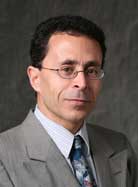
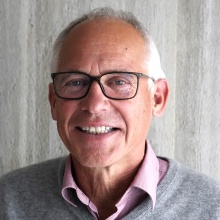
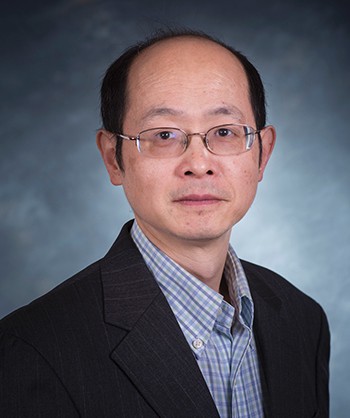
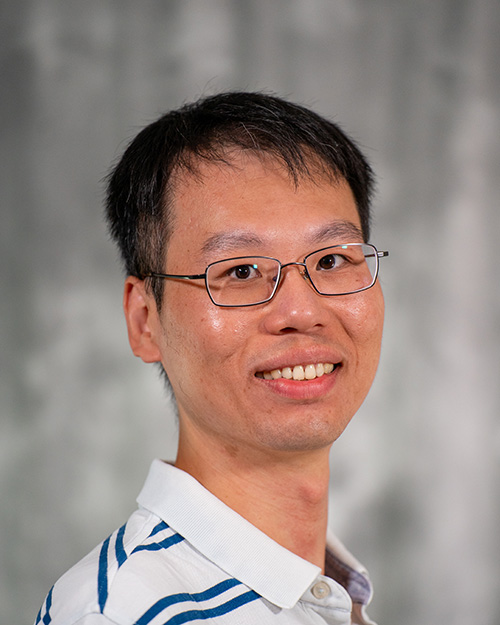
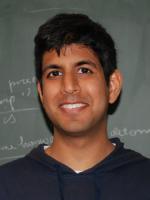
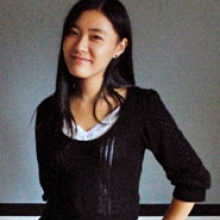
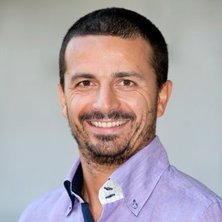
J. Isaac Miller is a Professor and Department Chair in the Department of Economics at the University of Missouri. His research focuses on econometrics, time series analysis, energy economics, and climate change impact assessment. He has developed structural econometric models for climate and energy demand, with applications to policy evaluation and forecasting. Key research areas: Climate econometrics, mixed-frequency time series, energy demand modeling, and economic impacts of climate change. Recent publications highlight statistical frameworks for climate sensitivity analysis, energy consumption forecasting, and mitigation strategy optimization. Teaching includes graduate courses in econometric theory and advanced time series methods.
Dr. Mourad Zeghal is a Professor in the Department of Civil and Environmental Engineering at Rensselaer Polytechnic Institute (RPI). His research focuses on computational geomechanics, seismic response monitoring, and geotechnical system identification. He leads projects addressing liquefaction mitigation, multiscale modeling of geosystems, and development of advanced computational tools for geotechnical analysis. Dr. Zeghal collaborates with RPI's Center for Network for Earthquake Engineering Simulation (CEES), Scientific Computation Research Center (SCOREC), and Inverse Problems Center (IPRPI). His work emphasizes reducing risks from natural hazards through improved design tools and model validation. Key projects include the Liquefaction Experiments and Analysis Projects (LEAP), which use centrifuge testing and machine learning to analyze soil behavior under seismic loads. Dr. Zeghal's research integrates experimental data with numerical simulations to enhance understanding of soil-structure interaction and lateral spreading during earthquakes. Research Interests: Soil liquefaction, multiscale modeling, inverse problem methods, computational geomechanics Key Collaborations: CEES, SCOREC, IPRPI, and global research networks Focus Areas: Centrifuge testing, model validation, seismic hazard mitigation His recent publications (2023–2025) highlight advancements in quantifying uncertainty in soil response, analyzing LEAP centrifuge experiments, and developing machine learning approaches for model calibration. Dr. Zeghal actively engages with industry and government labs to translate research into practical engineering solutions.
Dr. Chong Liu is an Assistant Professor of Computer Science at the State University of New York at Albany (SUNY Albany) in the College of Nanotechnology, Science, and Engineering. He received his PhD in Computer Science from UC Santa Barbara in 2023 and completed a postdoctoral fellowship at the University of Chicago's Data Science Institute (2023-2024). His research focuses on Machine Learning and AI for Science, particularly Bayesian optimization, bandit algorithms, generative models, and AI applications in drug discovery. He has received the SUNY IITG/OER Impact Grant and serves as Associate Editor for IEEE-TNNLS, Area Chair for ICML/AISTATS, and editorial board reviewer for JMLR. PhD: UC Santa Barbara (2023), advised by Yu-Xiang Wang Postdoc: University of Chicago Data Science Institute (2023) Research Interests : Broad: Machine Learning, Optimization, AI for Science Specific: Bayesian optimization, Bandit algorithms, Active learning, Experimental design, Generative models, AI for drug discovery Applications: Binding affinity prediction, Drug screening, Policy optimization Recent Article Trends : His 2024-2025 publications focus on extending Bayesian optimization theory under practical constraints, quantum-accelerated bandit methods, and multi-objective optimization for drug discovery. Earlier works include private learning frameworks and human-in-the-loop systems. Scientific Awards : 2025: SUNY IITG/OER Impact Grant Professional Activities : Organized NeurIPS workshops on AI for Drug Discovery (2023, 2025), co-organizing INFORMS sessions, and serving on program committees for ICML, NeurIPS, ICLR, and AAAI. He has given invited talks at institutions including University of Chicago, UC Santa Barbara, and Genentech. Teaching : Teaching courses like Numerical Methods (CSI 401) and Machine Learning (CSI 436/536) with syllabi spanning 2024-2025 semesters.
Udo Seifert is a Professor in the II. Institute for Theoretical Physics at the University of Stuttgart, part of Faculty 08. His research focuses on stochastic thermodynamics, non-equilibrium statistical mechanics, and entropy production in complex systems. He has contributed significantly to understanding Markov networks, thermodynamic inference, and the interplay between fluctuations and irreversibility. His work bridges theoretical frameworks with experimental techniques, such as single-molecule experiments and motor-bead assays. Key areas of interest include entropy estimation in partially accessible systems, localization of entropy production, and the development of model-free entropy estimators. His recent studies explore the thermodynamic uncertainty relation, active matter systems, and the dynamics of biochemical oscillators. He has published extensively on topics like nonequilibrium fluctuations in chemical reaction networks, driven systems, and the application of stochastic processes to biophysical systems. Seifert's research also extends to membrane mechanics, with studies on fluid vesicle shapes and membrane-mediated interactions. His work emphasizes the integration of theoretical models with experimental data, aiming to uncover fundamental principles governing non-equilibrium phenomena. Despite the absence of listed awards or students in the provided text, his prolific publication record underscores his influential role in advancing stochastic thermodynamics and related fields.
Jana Mareckova is an Assistant Professor of Econometrics at the Swiss Institute for Empirical Economic Research (SIEW), part of the School of Economics and Political Science (SEPS) at the University of St. Gallen. She joined the university in 2020 after completing a postdoc at SEW-HSG following her PhD from the University of Konstanz (2019). Her research focuses on causal machine learning, shrinkage methods, regularization techniques, and labor economics. She explores applications in labor market outcomes and fairness, leveraging econometric tools to address real-world economic questions. Education: PhD in Econometrics, University of Konstanz (2019); Postdoc at SEW-HSG (pre-2020). Research interests include shrinkage estimation for categorical regressors, causal inference via machine learning, and predicting economic outcomes using noncognitive skills. Her work bridges statistical theory with practical policy analysis, as seen in her 2021 Journal of Econometrics publication on shrinkage methods. Recent projects emphasize causal forests and comprehensive frameworks for policy evaluation. No scientific awards are listed, though her contributions to causal ML and econometric methods are notable. She has no documented advising or grant information. Her research is affiliated with SIEW, focusing on empirical economic research.
Dr. Hamid Rabiei is an Assistant Professor in Geography at the School of History and Geography, Dublin City University. He holds a PhD in Spatial Planning and Urban Development from Politecnico di Milano, Italy. His research focuses on sustainable development, spatial inequalities, climate change, and remote sensing/GIS applications. He has secured prestigious grants like the Marie Skłodowska-Curie Fellowship and published extensively in top-tier journals such as Habitat International and Applied Geography . His work bridges engineering, social science, and data science to address global challenges like environmental degradation and urbanization patterns. Key research interests include smart cities, spatial composite indicators, gentrification, and social vulnerability to natural hazards. He has contributed to developing novel models like the Adaptive Inverse Distance Weighting (AIDW) for population estimation and the Ordered Geographically Weighted Averaging (OGWA) for composite indicators. Recent work includes spatial analysis of internal migration impacts in Iran, Afghan immigrant segregation in Tehran, and ensemble modeling of extreme temperatures. He serves on editorial boards of academic journals in environmental studies and urban planning. His research emphasizes policy relevance, collaborating with decision-makers to translate findings into actionable strategies. Publications span 2023-2025, reflecting interdisciplinary approaches to urban sustainability, disaster risk, and big data applications. Grants and fellowships highlight his international recognition, particularly in integrating geospatial techniques with socioeconomic analysis.
Zhijie Xiao is a Professor of Economics at Boston College, affiliated with the Morrissey College of Arts and Sciences. His expertise lies in econometrics and empirical finance, with a focus on quantile regression, financial markets analysis, and statistical inference. Xiao holds a Ph.D. from Yale University, along with multiple advanced degrees from Yale and the University of China. B.Sc., University of China M.Sc., University of China M.A., Yale University M.Ph., Yale University Ph.D., Yale University Xiao's research emphasizes methodological advancements in econometrics, particularly in quantile autoregression and tail risk modeling. His work bridges theoretical econometrics with practical applications in finance, addressing issues like market volatility and asset pricing dynamics. Key contributions include improving kernel estimation efficiency in nonparametric models and developing inference frameworks for quantile regression processes. Selected publications highlight his engagement with financial market tail risks and structural econometric modeling. Though no awards or grants are explicitly listed, his extensive publication record underscores sustained academic impact. Xiao teaches econometrics and contributes to the department’s research initiatives through collaborative projects.
Keke Lai is an Associate Professor of Quantitative Psychology at the University of California, Merced. Previously, she held positions at the University of Houston and Arizona State University. She earned her Ph.D. in Quantitative Psychology from the University of Notre Dame (2012), and a B.A. in English from China (2005). Her research focuses on advanced statistical methodologies in psychology and education, including structural equation modeling (SEM), robust statistical methods, model evaluation, longitudinal/multilevel data analysis, missing data techniques, and Bayesian statistics. She addresses critical gaps in SEM methodology, such as accurate estimation under missing data, nonnormal distributions, and model misspecification. Her recent work emphasizes improving confidence intervals for fit indices (e.g., RMSEA, CFI), comparing nonnested models, and developing methods for standardized parameters in misspecified models. These contributions enhance the reliability of statistical analyses in psychological research. Lai’s publications appear in top journals like Structural Equation Modeling and Psychometrika . She advises graduate students, including X. Zhang. Her website is https://sites.google.com/view/laikeke .
Susan E. Clark is an Assistant Professor of Physics at Stanford University, where she investigates cosmic magnetic fields, magnetohydrodynamic processes, and the interstellar medium (ISM) through observation, simulation, and analytic theory. Prior to Stanford, she was a NASA Hubble Fellow and postdoctoral member at the Institute for Advanced Study in Princeton, New Jersey, after earning her Ph.D. in Astrophysics from Columbia University (2017) and B.S. in Physics from the University of North Carolina at Chapel Hill (2012), supported by a Morehead-Cain scholarship. Education: Ph.D., Astrophysics, Columbia University (2017) — NSF Graduate Fellow B.S., Physics, University of North Carolina at Chapel Hill (2012) — Morehead-Cain scholarship Her research focuses on Galactic and extragalactic magnetism, interstellar turbulence, star formation, and polarized cosmological foregrounds. She leads an interdisciplinary group tackling these problems via observational data, numerical simulations, and machine learning techniques. Current projects include characterizing magnetic field alignment, modeling 3D ISM structure, and analyzing data from experiments like the Atacama Cosmology Telescope, Simons Observatory, CMB-S4, CCAT-Prime, LiteBIRD, and the Galactic Australian SKA Pathfinder (GASKAP). Recent publications highlight her work on dust filament misalignment, HI morphology for gas phase separation, equipartition magnetic field estimation, and tomographic MHD simulations of galactic magnetic fields. These studies integrate astrophysics, computational methods, and observational astronomy to decode the universe's magnetic structure and dynamics. Scientific Awards: Alfred P. Sloan Research Fellowship NSF Graduate Fellowship NASA Hubble Fellowship Clark co-founded the Pan-Experiment Galactic Science Group and co-directs Stanford's Center for Decoding the Universe, fostering interdisciplinary collaborations. Her lab includes postdocs, graduate students, and undergraduates, with alumni transitioning to roles in academia and industry. Funding comes from NSF, NASA, and the Sloan Foundation.
Professor Rajen Shah is a faculty member in the Statistical Laboratory at the University of Cambridge, part of the Department of Pure Mathematics and Mathematical Statistics (DPMMS) within the Faculty of Mathematics. His research focuses on statistical methodology, particularly in high-dimensional data analysis, machine learning, and robust statistical inference. He is known for contributions to areas such as change-point regression, inverse propensity score weighting, and efficient estimation techniques in complex models. Key research interests include developing novel methods for variable selection, robust hypothesis testing, and scalable algorithms for large-scale data. He has collaborated on interdisciplinary projects, such as functional genomics studies (e.g., screening conserved genes of unknown function). His work often emphasizes theoretical rigor alongside practical applications in fields like causal inference and computational statistics. Prof. Shah has published extensively in top-tier journals like The Annals of Statistics , Bernoulli , and Journal of the Royal Statistical Society Series B . His recent articles address challenges in cross-validation for change-point detection, rank-transformed subsampling, and sandwich boosting methods. He is actively involved in the academic community, contributing to the Cambridge Statistics Clinic and supervising research in statistical methodology. His research group is affiliated with the Statistical Laboratory at the Centre for Mathematical Sciences, Cambridge. The lab focuses on advancing statistical theory and applications, with a strong emphasis on high-dimensional and assumption-lean methods.
Linan Chen is an Associate Professor in the Department of Mathematics and Statistics at McGill University since 2014, following a postdoctoral position at the same institution (2011–2014). He holds a Ph.D. from MIT (2011, supervised by Daniel Stroock) and a B.Sc. from Tsinghua University (2006). His research focuses on probability theory and its intersections with analysis and geometry, including partial differential equations, functional analysis, Gaussian measures, and random geometry. He is affiliated with the Probability Lab of the Centre de Recherches Mathématiques (CRM) and the CNRS-Unite Mixte Internationale (CNRS-UMI) since 2014. Chen teaches advanced probability courses such as Honours Probability (Math 356) and Advanced Probability Theory I/II (Math 587/589), alongside special topics courses like Topics in Geometry and Topology (Math 599). He has advised students including Leila Sloman, Reinhold Willcox, Ulysse Blau, and Olivier Nadeau-Chamard through independent study programs. His research explores cutting-edge topics in probability, including Gaussian free fields, degenerate diffusion equations, and asymptotic properties of geometric stochastic structures. Recent work addresses high-dimensional phenomena, stochastic processes in geometry, and applications in mathematical physics. Chen’s contributions span theoretical advancements and methodological innovations, with publications in journals such as the Journal of Theoretical Probability, Annales Henri Poincaré, and SIAM Journal on Mathematical Analysis.
Associate Professor Antonio Peyrache is a Deputy Head of School at the School of Economics, University of Queensland, within the Faculty of Business, Economics and Law. His research focuses on applied economics, econometrics, and productivity/efficiency analysis with particular emphasis on production systems, public sector efficiency, and systemic risk modeling. He leads the Centre for Efficiency and Productivity Analysis (CEPA), driving advancements in efficiency measurement methodologies. Key research interests include judicial system efficiency, banking systemic risk, and multilevel production networks. Recent work explores homothetic production technologies and optimal organizational structures for public institutions. Featured projects include analyzing productivity in Australian horticulture and European judicial systems. His expertise spans both theoretical contributions (e.g., decomposition frameworks) and applied policy analysis (e.g., healthcare delivery efficiency). Publications span journals like European Journal of Operational Research and Omega, with a focus on operational research techniques and their policy applications. He has directed projects funded by the Asian Productivity Organization and collaborated on EU-KLEMS growth accounting initiatives. Professional roles include editorial contributions and leadership in academic productivity analysis.
Zheng (Tracy) Ke is an Associate Professor of Statistics at Harvard University. She holds a Ph.D. from Princeton University (2014) and a B.S. from Tsinghua University (2009). Her research focuses on high-dimensional statistics, machine learning, social network analysis, text mining, and bioinformatics. Notable contributions include advancements in network data analysis (e.g., SCORE normalization), text analysis methodologies, and statistical genetics pipelines. Dr. Ke has received prestigious awards such as the COPSS Emerging Leader Award (2024) and the Sloan Research Fellowship (2023). She has organized major conferences like the Workshop on Statistical Network Analysis and Beyond (2024) and contributed to the MADStat dataset analyzing statisticians' co-authorship networks. Her research interests span theoretical and applied domains, with a focus on developing scalable algorithms and rigorous statistical frameworks for complex data. Recent work emphasizes challenges like severe degree heterogeneity in networks and rare/weak signal detection in high-dimensional settings. Dr. Ke is an Associate Editor for the Journal of the American Statistical Association and actively collaborates on interdisciplinary projects.
Chun Wang is a Professor in the Department of Measurement & Statistics at the University of Washington's College of Education. His research focuses on advancing quantitative methods in educational and psychological measurement, with expertise in item response theory (IRT), computerized adaptive testing (CAT), and cognitive diagnostic modeling. He holds affiliate faculty status at the Center for Statistics and the Social Sciences. Education: B.S. in Psychology, Peking University (China) M.S. and Ph.D. in Quantitative Psychology, University of Illinois at Urbana-Champaign Research Interests: Development and validation of multidimensional/mixture IRT models Computerized adaptive testing optimization Cognitive diagnostic modeling for classroom applications Health measurement and bias detection in assessments Recent Trends in Articles: His work bridges statistical innovation with practical applications, emphasizing fairness and efficiency in assessments. Notable areas include: - Healthcare : Predictive models for discharge disposition and functional outcomes - Education Technology : Adaptive learning systems and diagnostic feedback mechanisms - Methodology : Bias detection (DIF), Bayesian estimation techniques, and computational efficiency Scientific Awards : Includes the Anne Anastasi Award (2020), McKnight Presidential Fellowship (2017), and multiple best reviewer recognitions from leading psychometrics journals. Advising & Grants: Supervised students including Xiao J., Zhu R., and Lu J.* in high-impact projects. Co-led a $10M NIH grant (AmplifyGAIN Center) to advance Gen AI in STEM education. Published extensively in Psychometrika , Journal of Educational and Behavioral Statistics , and other top outlets. Labs/Teams: Directs the Pmetrics Lab ( https://sites.uw.edu/pmetrics/ ), collaborating on cutting-edge measurement tools for education and healthcare.
Dr. Thuc Vo is an Associate Professor in Civil Engineering at La Trobe University, Australia. His expertise lies in structural engineering, composite materials, and machine learning applications. He previously held roles at Northumbria University (UK) and Airbus’ Advanced Composite Training and Development Centre. His research focuses on shear deformation theories for composite structures and machine learning for structural engineering. He has authored over 120 publications in prestigious journals and conferences. Education & Experience: Associate Professor, La Trobe University (2019–present) Senior Lecturer & Program Leader in Civil Engineering, Northumbria University (2013–2019) Lecturer at Airbus’ Advanced Composite Training and Development Centre/Wrexham Glyndwr University (2011–2013) Research Associate, University of Liverpool (2010–2011) Research Interests: Composite material analysis (FGMs, nanoporous materials) Machine learning for structural prediction Vibration and buckling analysis Advanced beam and plate theories Collaboration & Supervision: Offers supervision for masters/PhD students and collaborates on industry projects. His work bridges theoretical mechanics with data-driven approaches, addressing challenges in smart materials and structural optimization.