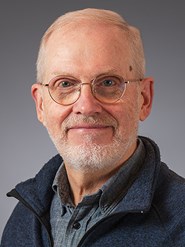
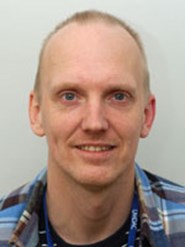
Anna Delin is a Full Professor at KTH Royal Institute of Technology since 2011, leading research on magnetic and quantum phenomena in materials. She heads the WISE research school (wise-materials.org) and served as Deputy Head of the School of Engineering Sciences (SCI) from 2018–2022. Her expertise spans condensed matter physics, with a focus on nanomagnetism, skyrmions, spin-lattice couplings, and topological materials. Education: PhD in Condensed Matter Physics from Uppsala University (1998). Key awards include Naturvetarpriset (1998), Royal Swedish Academy of Sciences Research Fellowship (2007), Thuréus Prize (2018), and Edlundska Prize (2024). She has held visiting roles at ICTP, Los Alamos National Lab, and the Fritz Haber Institute. Research interests include magnetic skyrmions, magnonics, spintronics, and ultrafast demagnetization. Recent publications focus on spin-lattice dynamics, topological materials, and quantum analogs of classical magnetic models. Her work bridges theory and experiment, with contributions to tools like SpinView for computational magnetism analysis. Teaching includes roles as examiner for the Degree Project in Applied Physics and teacher for Sustainable Development in Engineering Physics. She actively participates in materials design initiatives and semantic data processing for big research data. Lab affiliations include her own research group at KTH and collaborations through WISE. Current projects explore skyrmion stabilization, magnon entanglement, and quantum spin systems, with implications for next-generation spintronic devices.
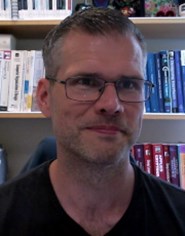
Sara Zahedi is a Professor of Numerical Analysis at the Department of Mathematics, KTH Royal Institute of Technology, working within the Division of Numerical Analysis, Optimization and Systems Theory. She serves as an Associate Editor for the SIAM Journal on Numerical Analysis and contributes to the SCI Faculty Board to enhance collaboration and transparency in academic decision-making. Her educational background includes a doctorate from KTH on numerical methods for fluid interface problems followed by a postdoctoral position at Uppsala University. Doctorate: KTH Royal Institute of Technology Postdoctoral Position: Uppsala University Zahedi's research bridges mathematical theory and practical applications, focusing on computational methods for partial differential equations in evolving domains. She pioneers Cut Finite Element Methods (CutFEM) to eliminate re-meshing requirements in multiphase flow simulations, ensuring accuracy and robustness when interfaces separate immiscible fluids. Her work specifically targets challenges in large deformations and time-dependent geometries. Analysis of her recent publications reveals a concentrated research trajectory in advancing CutFEM for diverse applications including Stokes flow, Darcy flow, Maxwell's equations, and hyperbolic conservation laws. Key trends include high-order conservative schemes, divergence preservation, stabilization techniques for unfitted meshes, and extensions to surface PDEs and multi-physics problems. Her scientific recognition includes: European Mathematical Society Prize (2016) for outstanding contributions by young researchers Wallenberg Fellowship (2019) with extension granted in 2024 Zahedi serves as examiner for Degree Projects in Scientific Computing (SF250X, SF259X) and course responsible for Engineering Mathematics projects (SA120X). Her Wallenberg Fellowship provides substantial research funding supporting her work on numerical algorithm development. While specific lab structures aren't detailed, her research operates within KTH's Division of Numerical Analysis, emphasizing collaborative development of simulation tools for industrial and scientific applications. Her current research focuses on extending CutFEM to complex multi-physics scenarios with emphasis on conservation properties and computational efficiency, with potential applications in aerospace, biomedical engineering, and environmental modeling.
Jonas Faleskog is a Professor in the Department of Materials and Structural Mechanics at KTH Royal Institute of Technology. His research focuses on mathematical modeling of material deformation and failure mechanisms, particularly in metallic and polymeric materials. Key areas include ductile and brittle fracture analysis, fracture mechanics, and computational modeling of material behavior under various stress conditions. He leads a research group collaborating internationally to develop models describing material failure at microscopic scales. Faleskog teaches courses such as Fracture Mechanics (SE2139) and Modeling in FEM (SE2860), emphasizing practical applications of theoretical models. His work spans experimental and numerical methods, addressing challenges in material heterogeneity, porosity effects, and environmental degradation. Notable contributions include advancements in weakest-link modeling for brittle failure, probabilistic fracture models, and strain gradient plasticity analysis. His research bridges material science, applied mechanics, and numerical methods to optimize material utilization in engineering systems like reactor tanks, aircraft, and vehicles. Key collaborations involve international teams exploring microstructural influences on fracture behavior. While no specific awards are listed, his extensive publication record reflects sustained contributions to mechanical and materials engineering.
Jennifer Ryan is a Professor of Numerical Analysis and Division Head of Numerical Analysis, Optimization, and Systems Theory at the Department of Mathematics, KTH Royal Institute of Technology. Her research focuses on designing and developing numerical schemes to extract accuracy from simulations, particularly through superconvergence properties and computational efficiency improvements. She applies these techniques to applications such as imaging, fluid visualization, and plasma dynamics. Education: PhD in Applied Mathematics, Brown University; MS in Mathematics, Courant Institute; BA in Applied Mathematics, Rutgers University. Professional Activities: Member of editorial boards for BIT Numerical Mathematics, ESAIM:M2AN, and Communications on Applied Mathematics and Computation; Steering committee member of AWM's Women in Numerical Analysis and Scientific Computing (WINASc). Her publications emphasize discontinuous Galerkin methods, SIAC filtering, and applications in fluid dynamics. She has served on multiple grant review panels and received awards for diversity and inclusion initiatives. Grants: Principal Investigator for projects funded by the Swedish Research Council, NSF, and US Air Force Office of Scientific Research. Awards: Fellow of UK Higher Education Academy, DAAD Fellowship, and Householder Fellowship.
Martin Berggren is a Professor at the Department of Computing Science , Umeå University , Sweden. His work focuses on Computational Design Optimization , combining computer simulations and numerical optimization to enhance engineering designs for devices like antennas, microwave components, and loudspeakers. Berggren is also active in mathematical modeling of physical phenomena, particularly wave propagation and fluid mechanics, with a strong emphasis on finite-element methods . His research addresses large-scale conceptual design problems using thousands to millions of design variables, relying on gradient-based algorithms and adjoint-based computations of design sensitivities—similar to back-propagation in deep learning. Key application areas include acoustic and electromagnetic devices, where he investigates damping mechanisms, boundary conditions, and material distribution. Other interests, though less active, involve flow control and unsteady fluid–structure interaction . Berggren collaborates extensively on projects such as Structured Regularization , Topology Optimization of Acoustic Black Holes , and Design of Microstrip-to-Waveguide Transitions . His publications span journals like Journal of Computational Physics , Pattern Analysis and Applications , and IEEE Transactions on Antennas and Propagation , often co-authored with researchers like Linus Hägg , Eddie Wadbro , and Disi Lin .
Tommy Löfstedt is an Associate Professor at Umeå University , affiliated with the Department of Computing Science and the Department of Mathematics and Mathematical Statistics. His research focuses on machine learning , computer vision , and medical image analysis , with applications in life sciences, radiation therapy, and biomedical imaging. He leads multiple research projects, including AI-driven delineation in radiation therapy, quantitative MRI for radiotherapy, and machine learning for plant nutrient uptake. Current research emphasizes structured regularization methods to improve model interpretability and robustness. Key applications include medical image segmentation , Alzheimer's classification , and uncertainty estimation in MRI . Recent publications highlight his work on morphological regularization , adversarial attack mitigation , and multi-task learning in medical imaging contexts. His projects span 2022–2026 with funding for pediatric oncology automation and gynecological cancer staging. Affiliated with both computing and mathematical departments, he bridges algorithm development with applied mathematical frameworks in medical and life science domains.
Anna-Karin Tornberg is a Professor in Numerical Analysis at the Department of Mathematics, KTH Royal Institute of Technology. She holds positions as Vice Chair of the Department of Mathematics and previously served as Head of the Numerical Analysis division (2011–2023). Her research focuses on numerical methods for PDEs, particularly boundary integral methods for fluid flows involving particles and drops. She is active in the Linne FLOW Centre and Swedish e-Science Research Center (SeRC). Key roles include membership in the Royal Swedish Academy of Engineering Sciences (IVA), Royal Academy of Sciences, and receipt of awards like the Göran Gustafsson Prize (Mathematics, 2014). She has advised numerous PhD students and postdocs, including current supervisees Anna Broms, David Krantz, and Emanuel Ström. Her work spans theoretical, computational, and applied fluid dynamics with emphasis on microfluidics and high-accuracy numerical techniques. Education includes a PhD in Numerical Analysis from KTH (2000) followed by postdoctoral positions at NYU’s Courant Institute. Promoted to Full Professor at KTH in 2012. Service roles include membership in KTH’s University Board, Faculty Council, and editorial roles at Advances in Computational Mathematics and BIT Numerical Mathematics . Active in international conferences, delivering plenary/invited lectures at ICIAM, ECM, and ICM. Research group projects include development of fast numerical methods for microfluidics and molecular dynamics simulations. Current openings for PhD candidates in numerical methods for non-elliptic PDEs in time-dependent domains. Her lab collaborates on high-performance computing and fluid-structure interaction problems.
Mariana Dalarsson is an Associate Professor in Electromagnetic Theory at the Division of Electromagnetic Engineering and Fusion Science (EMF) within the School of Electrical and Computer Engineering (EECS) at KTH Royal Institute of Technology. She holds an MSc (2010), PhD (2016), and Docent (2019) from KTH, where she is recognized as the (shared) second youngest woman ever to receive a PhD degree from the institution. Her research spans electromagnetic scattering and absorption, inverse problems, electromagnetics of stratified media, double-negative metamaterials, electromagnetics in medicine, antenna theory, and mathematical physics. She has authored approximately 102 peer-reviewed publications, including 51 journal papers, with recent work focusing on gold nanoparticles for biomedical applications, waveguide theory for artificial materials, and plasmonics. Analysis of her recent publications reveals a strong focus on graded metamaterials, electromagnetic wave propagation in complex media, and biomedical applications of electromagnetic theory. Her work bridges fundamental electromagnetic theory with practical applications in medical technology, particularly in the areas of nanoparticle-based treatments and diagnostic systems. Honorary Grant ("Honnörsstipendiet") for best graduate of her program (2011) L'Oréal-Unesco For Women in Science Sweden Prize (2020) Göran Gustafsson Prize for Young Researchers at UU/KTH (2024) Teaching Assistant of the Year from Engineering Physics students (2015) Mariana is highly active in teaching, serving as course responsible and examiner for EI1222 Electromagnetic Theory, EI2405 Classical Electrodynamics, and FEI3304 Integral Equation Methods in Electromagnetics. She also co-teaches several other courses and regularly supervises multiple BSc/MSc theses annually. Her research is primarily funded through her own project grants from the Swedish Research Council, including "Waveguide theory for artificial materials and plasmonics" (2019) and "Gold nanoparticles for high-frequency deep brain stimulation" (2023).
Lina von Sydow is a Professor in Computational Science at Uppsala University's Department of Information Technology. She serves as Section Dean for the Mathematical-Computer Science Section since July 2023. Her academic journey includes becoming an Associate Professor in 2000, Senior Lecturer since 1997, and leading the Department of Information Technology from 2018 to 2023. PhD in Domain Decomposition Methods (1995, Uppsala University) Postdoctoral Fellow at Oxford University (1996-1997) Her research spans computational science with dual focuses on Computational Finance and Ice Sheet Modeling . In finance, she develops numerical methods for option pricing using PDEs, radial basis functions, and stochastic volatility models. In climate science, she contributes to ice sheet dynamics through full Stokes models and adaptive time-stepping approaches, particularly in simulating grounding line migration. Recent publications (2025) address gender disparities in IT education, including comparative analysis of admission trends and intervention studies to boost female enrollment. Earlier works (2020-2015) focus on high-order finite difference methods for financial derivatives, BENCHOP benchmarking projects, and preconditioning techniques for PDEs. Scientific awards include Excellent Teacher (2013) She actively collaborates on educational reforms, co-authoring studies like Gender-aware course reform in Scientific Computing (2013). Her leadership roles include Head of Department (2018-2023) and Section Dean (2023-present), influencing academic governance and interdisciplinary research. Labs and teams: Works with Uppsala University's Computational Science group, Elmer/ICE project collaborators (e.g., Per Lötstedt, Gong Cheng), and international partners in numerical finance and climate modeling.
Prof. Vladimir Krasnov is a leading researcher in Experimental Condensed Matter Physics at Stockholm University , focusing on mesoscopic superconductivity, Josephson junctions, and nanoscale quantum phenomena. He heads the Experimental Condensed Matter Physics Group since 2005. Department: Department of Physics Lab: EKMF Lab (SU-KTH collaboration) Key Methodologies: Pulsed laser deposition, FIB nanofabrication, cryogenic measurements (0.25-300 K), THz spectroscopy Research Themes: His work bridges fundamental superconductivity studies (high-Tc cuprates, iron-pnictides) with applied quantum electronics. Notable contributions include Developing vortex-based cryogenic memory Controllable spin-triplet supercurrents in magnetic junctions THz emission from intrinsic Josephson stacks Quantum phase transitions via electrical doping Magnetic field effects on mesoscopic systems Scientific Trends: Analysis of 15 recent publications reveals strong emphasis on Josephson vortex dynamics, superconducting/ferromagnetic hybrid systems, THz applications, and non-equilibrium phenomena in quantum circuits. Facilities: Utilizes Nano-Fab clean-room for sample engineering and Low-T lab for high-field (17T), cryogenic experiments.
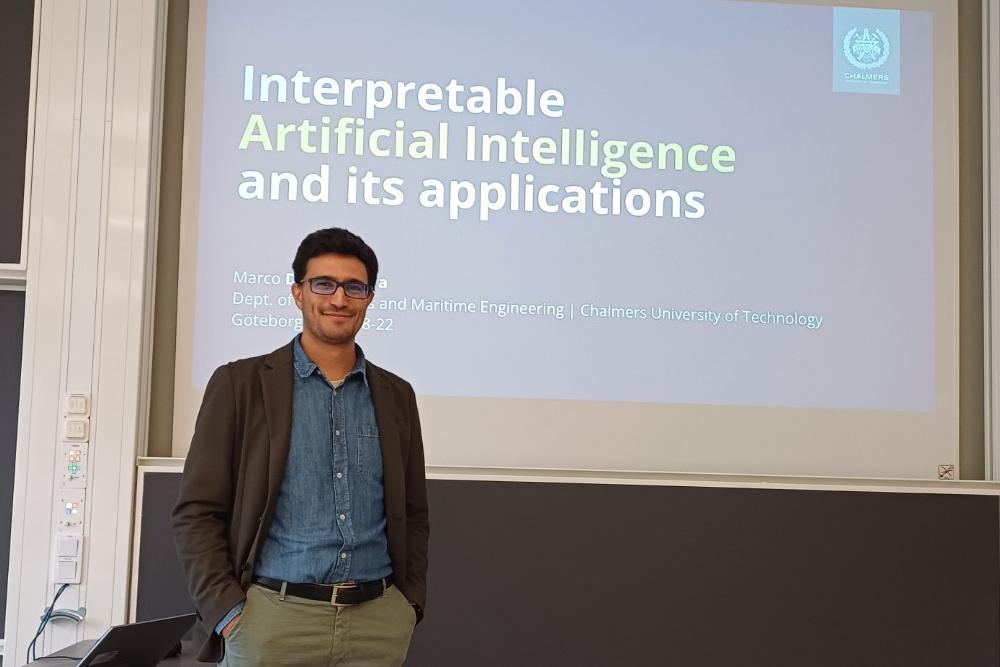
Marco L. Della Vedova is a Senior Lecturer in Applied Artificial Intelligence at Chalmers University of Technology, Sweden. He works in the Vehicle Engineering and Autonomous Systems division within the Department of Mechanics and Maritime Sciences, as part of Prof. Mattias Wahde's research group. Since 2025, he has served as Director of the Data Science and AI master's programme (MPDSC) at Chalmers, where he teaches courses including Introduction to Artificial Intelligence and Digitalization in Sports. Dr. Della Vedova earned his academic foundation at the University of Pavia, Italy, where he completed his BSc (2006), MSc (2009), and PhD (2013) in Computer Engineering. His doctoral research focused on "Real-Time Physical Systems and Electric Load Scheduling" under Prof. Tullio Facchinetti. During his PhD studies, he spent a year at U.C. Berkeley hosted by Prof. Francesco Borrelli at the Model Based Predictive and Distributed Control Lab. His research spans multiple AI domains with a strong emphasis on interpretability. Dr. Della Vedova develops interpretable methods for conversational AI, naturalness evaluation of forests using canopy height models, and geospatial applications. His work bridges theoretical AI with practical societal benefits, particularly in environmental monitoring, transportation systems, and orienteering. He has previously contributed to cloud computing, hate speech detection, and cyber-physical energy systems, demonstrating his interdisciplinary approach to AI research. Dr. Della Vedova's publication record reveals a consistent trajectory of impactful research across multiple domains of artificial intelligence. His recent work shows a strong focus on interpretability in AI systems, with significant contributions to natural language processing, geospatial analysis, and causal inference. The research demonstrates both theoretical depth and practical applications, particularly in environmental monitoring and social media analysis. His methodology often combines traditional machine learning approaches with novel interpretability techniques, creating bridges between complex AI systems and human understanding. Dr. Della Vedova has received several prestigious recognitions for his work: Best PhD thesis award from the Order of the Engineers of Bergamo (2013) Italian champion of Il Cervellone (2012) Top Italian performer in IEEEXtreme 6.0 programming competition (148th overall globally, 2012) Premio Arturo Schena award from Fondazione Credito Valtellinese (2010) With over 50 students supervised through bachelor's and master's theses, Dr. Della Vedova has established himself as a dedicated mentor in the AI community. His current PhD students include Minerva Suvanto working on interpretable NLP and Vivien Lacorre developing AI for railway infrastructure inspection. His supervision spans diverse topics from forest naturalness evaluation to hate speech detection and transportation optimization. Beyond formal supervision, he actively contributes to educational initiatives including serving as Director of Chalmers' Data Science and AI master's program and developing innovative teaching methods that connect theoretical concepts with real-world applications. Dr. Della Vedova is deeply embedded in both academic and professional communities. He leads the Applied Artificial Intelligence research group at Chalmers while maintaining strong connections with European research networks through projects like the ERASMUS+ EUrienteering initiative. His interdisciplinary approach is reflected in collaborations across computer science, environmental science, and social sciences. Notably, he applies his AI expertise to orienteering both as a researcher developing localization methods and as a licensed Event Advisor for the International Orienteering Federation, demonstrating how his professional and personal interests converge in innovative ways.
Professor Gert Brodin is a faculty member at the Department of Physics, Umeå universitet, serving as Deputy Head of Department and Assistant Head of Department. His research focuses on plasma theory, particularly in regimes where quantum mechanics and quantum electrodynamics (QED) intersect with plasma dynamics. Key areas include quantum plasmas in high-density environments, relativistic plasmas under ultrastrong electromagnetic fields, and nonlinear wave phenomena. He leads the Plasma Theory research group, exploring topics such as pair production in vacuum/plasma, QED effects in high-intensity laser interactions, and relativistic kinetic theory for spin-1/2 particles. His work employs advanced methods like von Neumann equations for density matrices, Wigner transformations, and the Dirac-Heisenberg-Wigner formalism. Recent publications address semiclassical theories in strong-field plasmas, relativistic Landau quantization, and radiation reaction effects. Brodin has collaborated extensively with researchers such as Haidar Al-Naseri and Jens Zamanian, advancing theoretical frameworks for quantum plasma dynamics. His research group’s projects include studying plasma behavior at the Schwinger limit, electron-acoustic wave damping via multi-plasmon resonances, and ultrafast electron hole dynamics. Brodin holds a Docent qualification and has contributed to influential journals like Physical Review E , Physics of Plasmas , and Reviews of Modern Plasma Physics .
Dan Petersen is a Professor of Mathematics at Stockholm University, specializing in the intersection of algebraic geometry and algebraic topology with a focus on moduli spaces. His research explores topics such as cohomology theories, homological stability, and geometric structures. He has advised PhD students including Erik Lindell, Louis Hainaut, Josefien Kuijper, and Oliver Lindström. His work frequently intersects with geometric topology, number theory, and representation theory, as seen in his recent publications on handlebody groups, Mumford conjectures, and configuration spaces. Collaborations with postdocs such as Johan Alm, Marcel Rubió, and Sylvain Douteau highlight his involvement in advanced research networks. His contributions to algebraic structures and topological methods have advanced understanding in both pure and applied mathematics contexts.
Giovanni Forchini is a Professor at the Umeå School of Business, Economics and Statistics (USBE), Umeå University, Sweden. His research focuses on econometrics, panel data analysis, and their applications in health economics and epidemiological modeling. He holds the title of Docent, a Swedish academic qualification reflecting advanced expertise. His work bridges theoretical econometrics with practical policy analysis, particularly in pandemic preparedness and healthcare optimization. Research Themes: Econometric methodologies for panel data and structural equation models Quantifying pandemic impacts on healthcare systems and economies Optimization of resource allocation during public health crises Key Contributions: Developed the DAEDALUS model for integrated economic-epidemiological policy simulations Analyzed SARS-CoV-2 transmission dynamics and vaccine impact in multiple countries Pioneered statistical methods for handling multifactor structures in panel data Awards & Grants: USBSE Pedagogical Prize 2020 Funding from Forte (Swedish Research Council for Health, Working Life and Welfare) and Handelsbanken Teaching & Mentorship: Coordinates Master’s theses in Economics at USBSE Teaches advanced courses like Econometrics 1 & 2 and Analysis of Financial Data
Satya Prakash Saraswat is a Postdoctoral Researcher at KTH Royal Institute of Technology's Nuclear Science and Engineering Unit in Stockholm, Sweden. He holds a Ph.D. from the Indian Institute of Technology Kanpur, with expertise in thermal-hydraulics, nuclear reactor safety, computational fluid dynamics (CFD), and system code development. His work spans fission and fusion reactor analysis, including contributions to the VALIDATIO project (University of Pisa) for fusion safety tools and the ATLAS project (Khalifa University) for advanced reactor safety enhancements. Research interests focus on computational modeling, AI integration in nuclear safety, and experimental validation of safety systems. He has developed skills in both experimental and numerical techniques, addressing challenges in multiphase flow, reactor core dynamics, and material compatibility. Key projects include validation of ASYST and SIMMER codes for condensation phenomena and lead-lithium interaction studies. Publications highlight advancements in burn-up wave characterization, code stability analysis (RELAP5/SIMMER), and thermal-hydraulic safety assessments for reactors like ESBWR and ITER systems. His work emphasizes enhancing safety tools through rigorous validation and innovative methodologies.