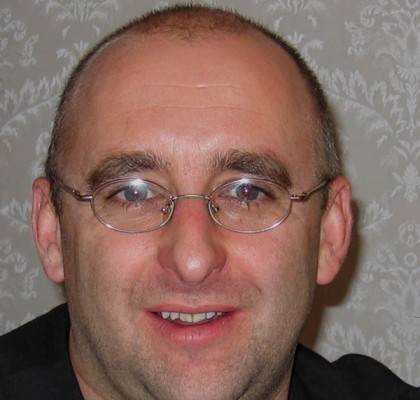
Dr. Aslı Özen is an Associate Professor in the Faculty of Health Sciences at Final International University . Her academic focus lies in human nutrition, functional foods, and dietary behavior analysis. Doctoral Degree : Human Nutrition, Universitat de les Illes Balears (2012) Master's Degree : Food Engineering, Istanbul Technical University (2006) Bachelor's Degree : Food Engineering, Istanbul Technical University (2003) Her research explores functional food consumption, beverage hydration patterns, and dietary shifts influenced by global events like the COVID-19 pandemic , with cross-cultural studies comparing European and international populations. Her work emphasizes Mediterranean diet adherence and the structural properties of food products. Key publication trends focus on nutritional epidemiology , public health interventions , and food science applications , particularly in fermented dairy products and sustainable gastronomy tourism.
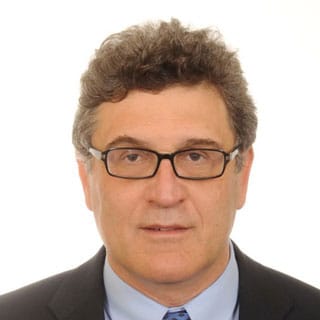
Christos Nicolaides is an Assistant Professor at the Department of Business and Public Administration within the School of Economics and Management at the University of Cyprus (UCY), holding a secondary appointment as a Digital Fellow at MIT's Initiative on the Digital Economy. Previously, he spent three years as a James McDonnell Foundation-funded Postdoctoral Fellow at MIT Sloan School of Management. His educational background includes a PhD in Engineering from Massachusetts Institute of Technology (2014), SM from MIT (2011), MSc in Applied Mathematics from Imperial College London (2009), and BSc in Physics from University of Thessaloniki (2008). Nicolaides' research applies mathematical, statistical, and computational tools to large-scale empirical questions in social influence mediated by digital technologies. His work spans Data Science , Machine Learning , Social Networks , and Computational Social Science , with significant contributions to understanding human mobility patterns, disease transmission dynamics, and social contagion effects. His research has established novel methodologies for analyzing complex network structures in mobility data and social interactions. Analysis of his 15 most recent publications reveals a consistent focus on applying network science to real-world problems, particularly in pandemic response (12 publications), human mobility analytics (9 publications), and social contagion dynamics (7 publications). His work demonstrates increasing interdisciplinary integration, combining computer science, epidemiology, and organizational behavior since 2020. Marie S. Curie Fellow Two Highly Cited Papers by Web of Science (2017, 2020) Best Paper Award by Risk Analysis Society (2019) Professor of The Week by Poets & Quants (2020) As principal institutional investigator, Nicolaides has secured over €1 million in research funding from the European Commission, industry partners, Cyprus Innovation and Research Foundation, and Cyprus Ministry of Health. His current teaching includes Social Networks and Entrepreneurship, Introduction to Operations Management, and Quantitative Methods in Management. Media coverage of his work spans major outlets including The New York Times, CNN, Nature, and Science, with significant impact on public health policy discussions during the COVID-19 pandemic.
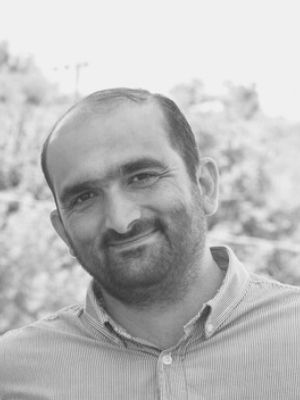
George N. Papageorgiou is a Professor of Management & Information Systems at the Gregoriou School of Business Administration, European University Cyprus. He serves in leadership roles including Deputy Dean (2012–2017) and PhD Programme Coordinator (2015–2017). He holds a PhD in Systems Modelling and Simulation from City University, London (1997), along with an MBA (1994) and First Class Honours in Engineering (1992). His research focuses on digital marketing competencies, smart urban mobility systems, entrepreneurship education, and system dynamics modeling for healthcare and sustainability. Notable projects include the SPN (Smart Pedestrian Network) system, funded by Horizon 2020, and the DIMAS project addressing digital marketing frameworks. Awarded the IEEE Best Paper Award (2017) and Innovation Distinction (SPARKS 2019), his work spans over 50 publications in journals like IEEE and Emerald. He actively reviews for IEEE, Emerald, and the System Dynamics Society. His consulting roles include EU research proposal evaluation and editorial work for Emerald. Key achievements include developing frameworks for sustainable urban mobility and green entrepreneurship education. He has led EU-funded projects totaling millions in grants, emphasizing interdisciplinary approaches to innovation and education.
Christodoulou Chris is a Professor at the Department of Computer Science, University of Cyprus. He joined in 2005 and holds a Visiting Research Fellowship at Birkbeck College, University of London. His educational background includes a BEng in Electronic Engineering from Queen Mary and Westfield College (1991), a PhD in Neural Networks from King's College London (1997), and a BA in German from Birkbeck College (2008). His research focuses on Computational Neuroscience, Neural Networks, and Machine Learning, with specific interests in neural coding, self-control modeling, computational neuronal modeling, multi-agent reinforcement learning, and practical machine learning applications. Recent publications (2013-2025) demonstrate interdisciplinary approaches combining neuroscience, computer science, and optimization techniques, with emerging emphasis on protein structure prediction and biomedical applications. Scientific awards include: Best Paper Award, ICSR 2015 Best Paper Award, MODELS 2008 Doctoral Symposium He leads the Computational Intelligence and Neuroscience (CIN) research group and has secured funding from European projects (SocioCoast, CYberSafety, TAMIT). He mentors students through Google Summer of Code and collaborates internationally.
Assoc. Prof. Dr. Wayne FULLER is a faculty member at Near East University's Faculty of Veterinary Medicine, Department of Genetics. He earned his BSc in Zoology from the University of Oxford before pursuing doctoral research at Exeter Universities' Centre for Ecology and Conservation in North Cyprus. Specializing in Mediterranean marine turtle conservation and ecology, his work spans climate change impacts, plastic pollution, and stable isotope applications. Education: BSc in Zoology, PhD in Marine Ecology Current Roles: Head of Department of Genetics, Near East University Key Projects: IUCN Marine Turtle Specialist Group (2017-present), EU Nature 2000 implementation in Cyprus (2008) His recent research explores phenological shifts in sea turtle offspring under climate change, macroplastic ingestion patterns, and avian conservation in Mediterranean forests. Publications emphasize ecological monitoring, habitat connectivity, and conservation technology applications like GPS and stable isotopes. Scientific recognition includes: Member of IUCN Marine Turtle Specialist Group
Costas S. Patrickios is a Professor in the Department of Chemistry at the University of Cyprus, within the School of Natural and Applied Sciences. His academic career spans over two decades, beginning as an Assistant Professor in 1998 and progressing to his current position as Professor. His research is centered on advanced polymer systems with applications spanning materials science, nanotechnology, and biomaterials. Dr. Patrickios received his Diploma in Chemical Engineering from the National Technical University of Athens (NTUA) in 1988, followed by a Master of Science in Chemical Engineering Practice from MIT in 1990. He completed his PhD at MIT in 1993 and conducted postdoctoral research at the University of Sussex from 1994-1996. His academic journey continued with a lectureship at UMIST before joining the University of Cyprus in 1998. His research focuses on dynamic covalent chemistry , amphiphilic copolymer networks , and microphase separation in polymer systems. Patrickios has made significant contributions to the understanding of polymer synthesis , controlled polymerizations , and degradable polymer networks . His work often bridges experimental and computational approaches, particularly in coarse-grained molecular dynamics simulations of polymer behavior. Recent research has expanded into applications related to RNA and DNA yield , demonstrating the versatility of his polymer systems. Analysis of his publication record reveals a strong focus on amphiphilic polymer conetworks, with consistent exploration of their synthesis, characterization, and applications. His work shows increasing integration of computational methods with experimental approaches, particularly in understanding structure-property relationships. The research spans fundamental polymer science to applied areas including energy materials, biomaterials, and smart responsive systems. Dr. Patrickios has also contributed significantly to the field through book editing, including the comprehensive volumes Amphiphilic Polymer Co-networks: Synthesis, Properties, Modelling and Applications (2020) and Polymer Networks: Synthesis, Properties, Theory and Applications (2010), which have become important references in the field. His collaborative research approach is evident through numerous international partnerships, with co-authors from institutions across Europe and beyond. This collaborative network has enabled multidisciplinary research that bridges chemistry, materials science, and engineering perspectives.
Constantine Spyrakos is a Professor in the Department of Civil Engineering at Neapolis University Pafos, serving as Vice-Head of the Department of Engineering. He previously held roles as Professor and Director of the Laboratory of Earthquake Engineering at the National Technical University of Athens (NTUA), and Professor at West Virginia University, USA. His expertise spans seismic behavior of structures, structural strengthening, and preservation of historical monuments. He actively participates in regulatory committees such as ASCE, ACI, TCLEE, and TEE, contributing to national seismic codes in Greece. His professional service includes roles in the Central Archaeological Council (CAC), Central Council of Modern Monuments (CCMM), and Earthquake Planning Protection Organization. His consultancy work includes high-profile projects like the Vault of the Holy Sepulcher in Jerusalem and the Louvre-Abu Dhabi Museum. As an author of four scientific textbooks, his research focuses on earthquake engineering, structural resilience, and heritage preservation. His academic contributions bridge engineering practice with cultural heritage conservation.
Assoc. Prof. Dr. Rasime Uyguroğlu is an academic at Eastern Mediterranean University, specializing in antenna engineering and biomedical applications. She holds the rank of Associate Professor and has contributed to research in electromagnetic systems, medical imaging, and health monitoring technologies. Her work focuses on antenna design for cancer detection, wireless body channel communication, and advanced microwave systems. Her research interests include the development of antennas for biomedical diagnostics, optimization of antenna arrays, and application of metamaterials in antenna systems. She has served as an associate editor and reviewer for academic journals, demonstrating her active role in the scientific community. Prof. Uyguroğlu's publications span topics such as breast cancer detection using patch antennas, fracture healing monitoring via implanted antennas, and millimeter-wave massive MIMO systems. Her work bridges engineering and medicine, with a focus on practical solutions for healthcare challenges. She actively supervises master's and PhD students in thesis projects related to antenna design and biomedical applications. Her contributions reflect a commitment to advancing both theoretical and applied aspects of electromagnetic engineering in health-related contexts.
Dimitrios Loukidis serves as Associate Professor in the Department of Civil and Environmental Engineering at the University of Cyprus, where he has been a core faculty member since January 2009. His academic foundation includes a Civil Engineering degree from the National Technical University of Athens (1999) and advanced geotechnical specialization through MSCE (2000) and PhD (2006) degrees from Purdue University, followed by postdoctoral research there (2006-2008). Educational Background: Civil Engineering, National Technical University of Athens (1999) MSCE in Geotechnical Engineering, Purdue University (2000) PhD in Geotechnical Engineering, Purdue University (2006) Professor Loukidis maintains a robust research program addressing critical geotechnical challenges through both theoretical and applied approaches. His work spans foundations engineering , expansive soils behavior (particularly Nicosia marl), slope stability and landslide mechanics , offshore geotechnics for pipeline systems, and advanced computational geomechanics including constitutive modeling and seismic analysis. Recent investigations integrate machine learning with traditional geotechnical methods to enhance landslide susceptibility mapping. His 15-year publication trajectory reveals evolving expertise: early work focused on fundamental soil-pile interaction and bearing capacity mechanisms (2008-2012), transitioning toward complex geohazard analysis including fault-rupture propagation (2009), offshore pipeline-fault interactions (2020-2023), and sophisticated modeling of expansive soil behavior (2018-2024). The 2025 publication demonstrates cutting-edge integration of machine learning with geotechnical parameters for landslide prediction in Southwestern Cyprus. No scientific awards are documented in the provided materials. While specific student advising details and grant information aren't disclosed, his collaborative publications with researchers like Triantafyllaki, Tzampoglou, and Papanastasiou indicate active participation in Cyprus-focused geotechnical research teams. Current investigations center on urban development impacts on paleolandslides (Pissouri case study) and machine learning-enhanced geohazard assessment. Laboratory work appears centered on computational geomechanics modeling, with recent publications utilizing advanced numerical techniques for large deformation analysis and hybrid optimization algorithms. The research group maintains strong field validation components, particularly for Nicosia marl behavior and offshore pipeline performance under tectonic stresses.
Professor HADJINICOLAS GEORGE holds a faculty position at the University of Cyprus, Department of Business Administration and Public Administration under the School of Economics and Management. His research focuses on production-marketing interface, international manufacturing systems, and product positioning methods. He earned a Ph.D. in Business Administration (Operations Management) from the University of Southern California in 1993, preceded by MS degrees in Statistics (1990) and Computer Engineering (1989), and a BS in Electrical Engineering (Cum Laude, 1988). His research interests emphasize optimizing production systems through interdisciplinary approaches, integrating marketing and operational decisions. Key themes include cost reduction in serial production systems, resource allocation for service quality, and strategic product positioning using advanced analytics like self-organizing maps. His publication trends reflect sustained contributions to operations management and decision sciences, with notable work on journal evaluation metrics and production-marketing interface challenges. Over two decades, his research has addressed both theoretical frameworks (e.g., asymptotic distribution analysis) and practical applications (e.g., hotel service optimization). He has advised numerous studies on manufacturing systems and marketing strategies, though specific student names are not listed here. His work bridges engineering and business disciplines, addressing global operational challenges through quantitative methodologies.
Dr. Panayiotis Polycarpou is an Associate Professor and Programme Coordinator of Civil & Environmental Engineering at the University of Nicosia. He holds a BSc from Aristotle University of Thessaloniki (2004), an MSc in Earthquake Resistant Design (2005), and a PhD in Civil Engineering from the University of Cyprus (2009). His research focuses on earthquake engineering, structural pounding mitigation, and computer-aided structural analysis, with expertise in object-oriented software development (Java) and numerical algorithms. He has taught at multiple institutions, including the University of Cyprus and Cyprus University of Technology, and has conducted postdoctoral research at UCY (2010–2014). His research interests include seismic isolation systems, earthquake-induced structural pounding, ancient column dynamics, and parametric studies of ground motion effects. He has published extensively on topics such as impact modeling, mitigation techniques for pounding, and historical structure vulnerability. His work integrates computational methods with experimental validation, emphasizing practical applications in engineering. Dr. Polycarpou’s contributions span academic roles, software development, and interdisciplinary projects, such as RFID systems for healthcare. He is a member of the Cyprus Technical Chamber of Engineers (ETEK) and actively engages in collaborative research, as evidenced by his 64+ publications and 841 citations (h-index 13).
Prof. Dr. KHALED HAMED MARAR is a distinguished faculty member in the Civil Engineering Department at Eastern Mediterranean University's Faculty of Engineering. His office is located in CE 132 with contact number +90 392 630 2027 and email khaled.marar@emu.edu.tr. He maintains an active academic profile with a dedicated staff webpage at https://staff.emu.edu.tr/khaledmarar. His educational background includes: PHD in İNŞAAT MÜHENDİSLİĞİ (2000) MS in İNŞAAT MÜHENDİSLİĞİ (1994) BS in İNŞAAT MÜHENDİSLİĞİ (1988) Professor Marar's research focuses on advanced concrete technologies, particularly steel fiber reinforced concrete systems and sustainable construction materials. His work examines the mechanical properties, durability, and performance characteristics of innovative concrete mixtures incorporating waste materials and alternative aggregates. He has made significant contributions to understanding the relationship between material composition and structural performance in concrete systems. His publication record shows consistent research activity from 1996 through 2018, with a concentration on material testing methodologies, fiber reinforcement effects, and sustainable material applications. The research demonstrates progression from fundamental concrete properties to more specialized applications involving waste materials and high-performance concrete systems. Professor Marar has actively supervised numerous graduate students, mentoring both Master's and PhD candidates through their research in concrete technology and sustainable construction materials. His supervision record extends from 2008 through ongoing projects scheduled for completion in 2025, indicating sustained research leadership and academic mentorship. He teaches specialized courses including Fiber Reinforced Concrete (CIVL685), Repair and Maintenance of Concrete (CIVL484), and Surveying (CIVL261), contributing directly to civil engineering education at EMU. His academic service includes roles as Associate Editor and Session Chair for professional conferences, demonstrating his standing within the civil engineering research community.
Kristis Alexandrou is a Researcher at the Science and Technology in Archaeology and Culture Research Center (STARC) of The Cyprus Institute. He holds a Master’s degree in Architecture (MA) and a Ph.D. in Architectural Engineering from the University of Cyprus, focusing on hybrid bending-active structural systems. His research emphasizes Structural Design, Computational Methods, and BIM applications in heritage conservation. He contributes to projects like ENI-CBC-MED BEEP, RIF-UrbanPeriscope, and Horizon Infra, advancing BIM interoperability for cultural heritage data management. His professional experience includes architectural design and heritage retrofitting in Cyprus. At STARC’s Virtual Environments Lab (VElab), he develops BIM-based workflows to address data interoperability challenges in arts and humanities. Key projects include 'BIM to BPS interoperability' leadership in the BEEP Project and semantic data integration for Mediterranean heritage sites. His work bridges computational innovation with sustainable heritage preservation.
Eleni Moushi is an Associate Professor of Pharmaceutical Chemistry at the Department of Life Sciences, European University Cyprus. She holds a PhD in Chemistry (2009) from the University of Cyprus, following MSc (2005) and BSc (2003) degrees in Chemistry from the same institution. Her research focuses on materials chemistry, coordination chemistry, and the synthesis of novel magnetic materials, including metal-organic frameworks and single-molecule magnets. She has led projects funded by the Cyprus Research Promotion Foundation, including the 2016 Cyprus Research Award as a Young Researcher in Physical Sciences & Engineering. Eleni’s academic career includes prior roles as a Researcher at the University of Cyprus (2009–2017) and visiting positions at Northwestern University (USA). Her work bridges inorganic synthesis, crystal engineering, and application-driven materials science. Key research themes include designing porous materials for gas adsorption, developing metallodrugs for cancer therapy, and exploring magnetic properties in molecular aggregates. Her publications span over 30 peer-reviewed articles, emphasizing structural innovations in coordination polymers and clusters. Awards include the 2016 Cyprus Research Award, recognizing her contributions to physical sciences. She actively advises research projects on nanoscale magnetism and functional materials, with grants supporting her exploration of hybrid organic-inorganic systems.
Professor Mavronicolas Marios is a faculty member in the Department of Computer Science at the University of Cyprus. His academic journey includes a Diploma in Electrical Engineering (Summa Cum Laude) from the National Technical University of Athens (1985) and a Ph.D. in Computer Science from Harvard University (1992). His research focuses on Algorithm Theory, Game Theory, Distributed Computing, Networking, and Internet Systems. He has held visiting positions at institutions such as the University of Connecticut and the University of Paderborn. Over 100 publications in top-tier venues highlight his contributions to computational complexity, Nash equilibria, and network security. His work bridges theoretical computer science with practical applications, emphasizing strategic decision-making and distributed systems. Research areas include the computational complexity of Nash equilibria, game-theoretic models for network security, and algorithmic challenges in distributed systems. He has explored topics like risk-averse equilibria, congestion games, and the structural properties of multi-player games. His recent work addresses decision problems in win-lose scenarios and the existence of equilibria under varying valuation functions.