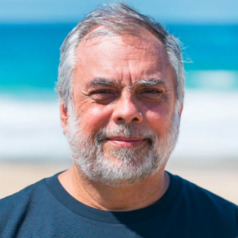
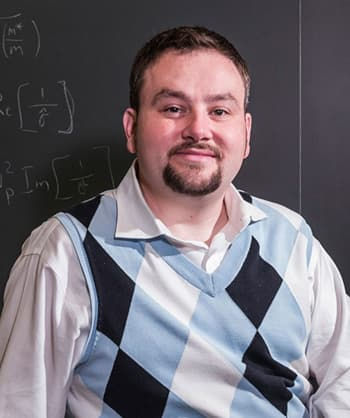
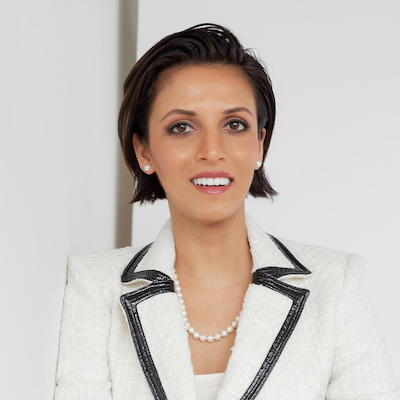
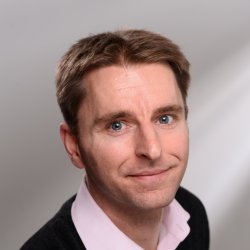
Niklas Rorsman is a Research Professor at the Microwave Electronics group, part of the Department of Microtechnology and Nanoscience at Chalmers University of Technology . His work focuses on advanced semiconductor devices, particularly gallium nitride (GaN) and silicon carbide (SiC) high-electron-mobility transistors (HEMTs) for microwave and cryogenic applications. Expertise : Semiconductor device physics, microwave electronics, cryogenic transistor characterization Key Technologies : GaN HEMTs, SiC MESFETs, graphene FETs Rorsman's research investigates trapping effects, thermal management, and material optimization in GaN/SiC devices. Recent studies explore field plates for cryogenic stability, recessed ohmic contacts, and high-κ dielectric interfaces. His publications demonstrate a focus on improving device linearity, noise performance, and reliability through structural and process innovations. Selected trends in his work include: Cryogenic GaN HEMTs with superconducting Nb gates Buffer-free AlGaN/GaN heterostructures for high breakdown voltage Graphene integration for millimeter-wave communication systems Advanced SiNx passivation and gate stack engineering Contact: niklas.rorsman@chalmers.se
Professor Jana Zaumseil is a distinguished academic at Heidelberg University, holding the position of Professor for Applied Physical Chemistry at the Faculty of Chemistry and Earth Sciences since 2014. She also maintains a co-opted position with the Faculty of Physics and Astronomy since 2016. Currently serving as Executive Director of the Institute for Physical Chemistry and Spokesperson for the DFG Research Training Group GRK 2948, she leads the Zaumseil research group (also known as the Nanomaterials for Optoelectronics group) at Heidelberg University's Institute for Physical Chemistry. Her educational background includes a PhD in Physics from the University of Cambridge (2003-2007) with a Gates Cambridge Trust Scholarship, and a Diplom (equivalent to M.Sc.) in Chemistry from the University of Leipzig (1997-2022). Prior to her position at Heidelberg, she served as Professor for Nanoelectronics at Friedrich-Alexander-Universität Erlangen-Nürnberg (2009-2014), and completed postdoctoral work at Argonne National Laboratory (2007-2009) following an internship at Bell Laboratories (2002-2003). Zaumseil's research program focuses on the optical and electronic properties of carbon-based nanomaterials, particularly single-walled carbon nanotubes (SWCNTs) and organic semiconductors. Her group specializes in processing, functionalization, characterization and application of these unconventional semiconductors for optoelectronic devices and sensors. They investigate charge transport and light-matter interaction using a wide range of experimental techniques including synthesis, optical spectroscopy, atomic force microscopy, device fabrication, and electrical/optical device characterization. Their work bridges fundamental understanding with potential applications in sensing, imaging, circuits, and energy conversion. Analysis of her recent publications reveals a strong trend toward defect engineering in carbon nanotubes, particularly creating and optimizing luminescent sp 3 defects for near-infrared applications. Her research increasingly integrates fundamental studies of charge transport with practical device applications, especially in neuromorphic computing, biosensors, and thermoelectrics. The interdisciplinary nature of her work is evident in the combination of chemistry, physics, and materials science approaches across her publication record. Dan Maydan Prize for Nanoscience and Nanotechnology (2024) Jahrespreis der Universität Heidelberg (2023) ERC Consolidator Grant (2019) ERC Starting Grant (2012) Alfried-Krupp-Award for Young University Professors (2010) Professor Zaumseil has secured substantial research funding including multiple ERC grants and leads several major collaborative projects such as the ERC Advanced Grant SCALE-NT, Collaborative Research Center SFB 1249, Cluster of Excellence 3D Matter Made to Order, and Research Training Group GRK 2948. She has mentored numerous doctoral and master's students, with her group recently receiving recognition including a Student Poster Presentation Award for Niklas Herrmann. As Dean of the Faculty of Chemistry and Earth Science (2019-2021) and current Vice Dean (2021-), she has played significant leadership roles within the university structure. The Zaumseil research group operates within Heidelberg University's Institute for Physical Chemistry, utilizing advanced facilities for nanomaterial synthesis, optical spectroscopy, and device characterization. The group participates in several major collaborative initiatives including the Cluster of Excellence 3D Matter Made to Order and the Collaborative Research Center SFB 1249, reflecting its integration within Heidelberg's broader research ecosystem focused on molecular systems and materials science.
Pearl Sandick is a Professor in the Department of Physics and Astronomy and Interim Dean in the College of Science at the University of Utah. She has previously served as Associate Chair of the Department of Physics and Astronomy and Associate Dean for Faculty and Research in the College of Science. Her academic journey at the University of Utah began in 2011 as an Assistant Professor, progressing to Associate Professor in 2017, and achieving the rank of Professor in 2022. Her educational background includes: BA in Mathematics from New York University (2003) PhD in Physics from the University of Minnesota (2008) Sandick is a theoretical particle physicist whose research focuses on physics beyond the Standard Model, with particular emphasis on dark matter. Her work spans theoretical modeling, connections to astrophysical observations, and implications for experimental detection. She investigates various dark matter candidates and their potential signatures in current and future experiments, including collider searches, direct detection experiments, and indirect detection through astrophysical observations. Her research also extends to connections between particle physics and cosmology, including early universe phenomena and implications for cosmic structure formation. She has developed computational tools like MADHAT for dark matter analysis and has made significant contributions to understanding how stellar evolution can constrain axion physics. Her scholarly contributions have been recognized with several prestigious awards: University of Utah Early Career Teaching Award (2016) University of Utah Distinguished Mentor Award Linda K. Amos Award for Distinguished Service to Women University of Utah Presidential Scholar Sandick has been actively involved in mentoring graduate students, as evidenced by her teaching of PhD thesis research and Master's research courses. She has secured significant research funding from the National Science Foundation and other agencies to support her work on dark matter, dark energy, and new physics. Her grant portfolio includes projects on theoretical particle physics, connections to astrophysical observations, and studies on graduate education reform following a departmental tragedy. She is an active member of the American Physical Society, having served as Chair of the regional Four Corners Section in 2021-2022, demonstrating her commitment to the broader physics community and leadership in her field.
Gerhard (Gerry) F. Swiegers is a Professor of Chemistry at the University of Wollongong , with affiliations to the Australian Institute for Innovative Materials and Intelligent Polymer Research Institute . He holds an Australian Research Council Industry Laureate Fellowship (2023 - present) and has been a key figure in commercializing fundamental research, bridging academia and industry. Previously, he was a Principal Research Scientist at CSIRO (1998-2009) and has founded 7 spin-off companies, licensing 3 technologies. PhD in Chemistry (1991) , University of Connecticut BSc with Honours (1982) , Nelson Mandela University His research focuses on electrochemical catalysis , particularly hydrogen generation from water using renewable electricity. He explores electrocatalytic process engineering and synergistic effects in catalysis with interacting supports. His book Bioinspiration and Biomimicry in Chemistry (Wiley) received a Prose Award (2012). Recent publications highlight advancements in capillary-fed electrolysis for cost-competitive green hydrogen, DFT studies on oxygen evolution by manganese complexes, and electrochemical process modeling . His work spans materials engineering , renewable energy , and industrial electrochemistry . American Publishers Award (Prose Award) for Chemistry (2012) DuPont Innovation Awards (2011, 2008) for 'Intelliseed' and 'Datatrace' National Australia Bank Excellence in Agribusiness Award (2010) Copper Theft Campaign Award (2009) for 'Datatrace' Professor Swiegers has participated in $24.5 million of competitive academic grants and is actively supervising PhD students in electrochemical engineering. His inventions are deployed in pharmaceuticals, energy, and agriculture industries through 66 patent families and 436 individual patents .
Kenneth Burch is the John H. Rourke Professor of Physics and Chairperson of the Department of Physics at Boston College. He holds a Ph.D. from the University of California at San Diego, with prior degrees from UC Santa Cruz. His research focuses on spectroscopic investigations of novel solids, interfaces, and nano-materials, particularly in topological insulators, unconventional superconductors, and 2D atomic crystals. His work explores phenomena such as spin/valleytronics, thermoelectrics, and magnetic proximity effects. Education: B.S., University of California at Santa Cruz M.S., University of California at San Diego Ph.D., University of California at San Diego Research Interests: His studies emphasize the interplay between electronic structure, magnetism, and light-matter interactions in quantum materials. Key areas include: 2D van der Waals heterostructures Magnetic and topological phase transitions Ultrafast carrier dynamics in photodoped systems Design of novel materials for energy and sensing applications Recent Work Trends: Recent publications highlight advancements in layered magnetism (e.g., Cr2Te3 ferromagnetism), correlated insulators (La2O3Mn2Se2), and ultrafast dynamics in Mott insulators. His work often integrates optical spectroscopy, nanofabrication, and theoretical modeling to uncover emergent phenomena. Labs & Collaborations: His research group focuses on experimental condensed matter physics, with access to advanced facilities for nanoscale material synthesis and characterization. Collaborative projects include developing graphene-based sensors for environmental monitoring and studying topological phases in kagome lattices.
Dr. Prineha Narang is a Professor of Physical Sciences and Electrical and Computer Engineering at the University of California, Los Angeles (UCLA). Previously, she held positions as an Assistant Professor at Harvard University and a Research Scholar at MIT. Her research focuses on quantum materials, quantum information science, and non-equilibrium dynamics, with interdisciplinary contributions to photonics, topological materials, and cavity quantum electrodynamics (QED). She leads the Narang Lab, which develops theoretical and computational methods to design quantum systems and explores applications in quantum networks and energy conversion. Dr. Narang has held leadership roles in major initiatives such as the DOE Quantum Science Center and the NSF Center for Quantum Networks. She is also the founder and CTO of Aliro Quantum, a company advancing quantum networking technologies. Education: M.S. and Ph.D. in Applied Physics from the California Institute of Technology (Caltech). Her work has been recognized with prestigious awards, including the Mildred Dresselhaus Prize, NSF CAREER Award, and being named a Moore Inventor Fellow. She serves on editorial boards for journals like ACS Nano and Applied Physics Letters , and chairs international conferences. Outside academia, she advises organizations like arXiv and actively engages in promoting quantum technologies through industry collaborations. Research Interests: Quantum materials engineering, quantum networks, non-equilibrium phenomena, topological quantum states, and quantum defect physics. Current projects include designing scalable quantum repeaters, developing error-corrected quantum systems, and studying light-matter interactions in novel materials. Her lab’s SpaRTaNS code enables spatially-resolved transport simulations, advancing understanding of electron and phonon dynamics. Awards and Grants: Over 20 major awards, including the Guggenheim Fellowship (2023), ONR Young Investigator Award (2022), and leadership roles in DOE and NSF-funded centers. Her work bridges academia and industry, with partnerships at companies like Applied Materials and Northrop Grumman.
Dr. Stefan Klus is a Lecturer at the School of Mathematics and Physics, University of Surrey. His research focuses on data-driven model reduction, transfer operator approximation, and kernel-based machine learning applied to dynamical systems. He specializes in interdisciplinary applications across quantum physics, fluid dynamics, and computational biology. Education: PhD in Industrial Mathematics (2011, Paderborn University) and Habilitation (2020, Freie Universität Berlin). Research Interests : Data-driven modeling and reduced-order methods Koopman operator theory and transfer operators Machine learning for dynamical systems (e.g., Deeptime library) Tensor decompositions and quantum systems analysis Graph-based analysis (e.g., microbiome dynamics) Publications : Klus has contributed to over 50 peer-reviewed articles, with recent work emphasizing: Kernel methods for quantum chemistry and physics Tensor-based approaches for high-dimensional systems Applications in climate science (e.g., Pacific SST modeling) Agent-based modeling and social systems Technical Contributions : Co-developer of the Deeptime Python library for dynamical modeling Pioneer in Koopman operator-based model reduction Advanced graph kernel methods for microbiome analysis
Teru Nakagawa is an Associate Professor in the Department of Molecular Physiology and Biophysics at Vanderbilt University School of Medicine. He specializes in structural biology, particularly using cryo-electron microscopy (cryo-EM) to study membrane proteins and their interactions with lipids. His research focuses on elucidating the biological significance of lipid-associated membrane proteins, which has implications for understanding cellular physiology and disease mechanisms. Dr. Nakagawa has received notable awards including the Stanley Cohen Innovation Fund (2021), NARSAD Young and Independent Investigator Awards, and the Kazato Prize in Electron Microscopy. His work on high-resolution structures of membrane proteins, such as the 2019 Science paper on glutamate receptors, demonstrates his expertise in cryo-EM and structural biology. His current project, supported by the Cohen Fund, investigates the functional and structural roles of lipids in membrane protein biology—a frontier that could revolutionize understanding of membrane protein behavior in health and disease. Dr. Nakagawa’s research bridges foundational biomedical science and translational applications, with potential impacts on drug development and disease treatment strategies.
Sandy Irani is a Full Professor at the University of California, Irvine (UCI) in the Department of Computer Science within the Donald Bren School of Information and Computer Sciences. She received her Ph.D. from UC Berkeley in 1991 and has been at UCI since 1992. Her research focuses on algorithm design, computational complexity theory, and quantum computing, with notable contributions to online algorithms and quantum complexity theory. She currently serves as Associate Director of the Simons Institute for the Theory of Computing at UC Berkeley, a role she has held since 2022. This position allows her to collaborate with researchers across theoretical computer science and related disciplines. Irani’s teaching excellence is recognized through the UCI Distinguished Faculty Award for Teaching (2021), and she has contributed to education through her zyBook on Discrete Mathematics, used by over 94,000 students globally. Her work bridges foundational computer science with practical applications, including power management strategies and distributed computing algorithms. Notably, she has collaborated with industry leaders like Mike Luby on optimizing distributed systems. Her research in quantum computing explores computational problems inspired by condensed matter physics, aiming to understand quantum advantage over classical systems. She has also authored influential papers on topics like cache hierarchy design, scheduling algorithms, and the theoretical limits of electronic structure calculations. Awards: ACM Fellow (2022), UCI Distinguished Faculty Award for Teaching (2021). Key Roles: Associate Director, Simons Institute; Vice Chair, Computing Division at UCI. Recent Projects: Quantum algorithms for condensed matter systems, maximal independent set algorithms in distributed networks.
Hatsuo Ishida is a Peter A. Asseff Professor of Organic Chemistry at the Case School of Engineering, Case Western Reserve University. He holds a PhD in Macromolecular Science from CWRU (1976) and specializes in polymer chemistry, particularly focusing on benzoxazine resins, green materials, and advanced composite systems. Research Interests: Development of benzoxazine-based thermosetting resins from renewable resources Flame-retardant systems using ultra-thin nanocomposite coatings High-performance composites for aerospace and electronic applications Molecular design of polybenzoxazine for enhanced thermal and mechanical properties Recent Research Trends: Dr. Ishida’s work emphasizes sustainable materials, such as bio-based benzoxazines and flame-retardant polymers without additives. His studies on nanocomposite coatings and radiation-shielding materials highlight applications in aerospace and high-energy environments. Scientific Awards: Peter A. Asseff Professor of Organic Chemistry (CWRU, 2020) Advising & Patents: Dr. Ishida’s research includes patents on adhesive formulations and contributions to collaborative projects involving graphene oxide-reinforced polymers and CO₂-capture aerogels. Labs & Teams: His work spans interdisciplinary teams in materials science, focusing on polymer synthesis, nanocomposite fabrication, and green chemistry innovations.
Muralee Murugesu is a Full Professor and Associate Vice-Rector of Innovation, Partnership & Entrepreneurship at the University of Ottawa's Department of Chemistry and Biomolecular Sciences within the Faculty of Science. His research focuses on designing nanoscale inorganic materials to study magnetic, conductive, and optical properties, with emphasis on molecular magnets, hybrid materials, and quantum applications. Notable projects include the development of single-molecule magnets (SMMs), lanthanide-based cluster-aggregates, and energetic materials. The Murugesu Group explores applications in quantum computing, molecular-scale electronics, and luminescence thermometry. Education details are not explicitly provided, but his academic career spans over two decades, initiating the Murugesu research program in 2006. Research interests include inorganic/organometallic chemistry, molecular magnetism, quantum properties, and nanomaterials. Key techniques used are X-ray diffraction, NMR, and SQUID magnetometry. Recent publications highlight advancements in SMMs, hybrid fullerene/carbon nanotube systems, and lanthanide-based optical/thermometric materials. Articles emphasize magnetic relaxation, luminescence thermometry, and energy transfer processes in nanostructured systems. The group's work intersects energy storage (e.g., photocatalytic hydrogen production), security (fingerprint detection), and quantum technologies. While no awards are listed, the research portfolio demonstrates significant contributions to materials science and magnetism. Advising and grants are not detailed here, though the group’s sustained output suggests strong institutional and external support. The lab’s focus on cluster-aggregates and molecular-scale devices reflects a vision for next-generation optomagnetic and energy systems.
Thulasi Mylvaganam is a Senior Lecturer in Control Engineering at the Department of Aeronautics, Imperial College London. They specialize in nonlinear control theory, dynamic optimization, and applications to robotics and renewable energy systems. Mylvaganam holds an M.Eng. in Electrical and Electronic Engineering from Imperial College London (2010) and a Ph.D. in Control and Power (2014). They have held roles including Postdoctoral Research Associate (2014–2016), Research Fellow (2016–2017), Lecturer (2017), and Senior Lecturer (2021). Research interests include distributed control, data-driven control, and optimal control strategies for complex systems. They teach courses such as Mechatronics and Computing and Numerical Methods 2 for Aeronautics students. Their work spans robotics, renewable energy systems, and multi-agent systems. Affiliations include the Computational Methods and Mathematical Modelling group and the Robotics Forum. Mylvaganam actively supervises PhD students focusing on advanced nonlinear control topics and emphasizes rigorous academic preparation for prospective candidates.
Ed Pickering is a Senior Lecturer in Metallurgy and Materials Engineering at the University of Manchester. He has held roles since 2015, advancing to Reader in 2023. His affiliations include the Henry Royce Institute (Research Area Lead for Advanced Metals Processing), the Advanced Metallics System CDT and Fusion CDT Management Boards, and industrial technical advisory panels. Ed’s work bridges academic and industrial collaboration with Rolls-Royce, UKAEA, Airbus, EDF, and Sheffield Forgemasters. Ed completed his undergraduate studies (2011) and PhD (2014) in Materials Science at the University of Cambridge, followed by a Research Associate role in Cambridge’s Rolls-Royce UTC. His academic trajectory includes: Senior Lecturer (2019–present) Reader (2023–present) Ed’s research focuses on phase transformations, microstructural characterization, and alloy development for nuclear (fission/fusion) and aerospace applications. Key themes include optimizing processing routes to enhance material properties while minimizing waste and environmental impact. His studies frequently address steel, high-entropy alloys, and novel refractory alloys, emphasizing their service performance under extreme conditions. His scientific contributions span structural integrity assessment of welded joints, machine learning applications in metallurgy, and material flow uncertainties in forging. He has also advanced heat treatment optimization for reactor steels and explored cobalt-free hardfacing alloys. Frank Fitzgerald Medal (2017) Grunfeld Memorial Medal (2021) In advising and grants, Ed leads the Materials Performance Centre (MPC) and co-leads the NEWAM project on wire-additive manufacturing. He supervises research across these initiatives and collaborates with over 30 PGR students in interdisciplinary teams. His work also involves managing technical facilities like the Advanced Metal Processing platform. Ed’s laboratory affiliations include the MPC and WAAM-based Engineering and Process Metallurgy groups, where he explores sustainable materials solutions for energy and aerospace industries.
Maureen O’Hara is the Robert W. Purcell Professor of Finance at Cornell University’s Johnson Graduate School of Management and holds a Professorship at the University of Technology Sydney. She earned her Ph.D. in Finance from Northwestern University and holds honorary doctorates from FUCAM (Belgium), Universität Bern (Switzerland), and University College Dublin. Her research focuses on market microstructure, liquidity dynamics, and corporate governance in banking. O’Hara has served as President of major finance associations including the American Finance Association and is an advisor to regulators such as the SEC Equity Market Structure Advisory Board. She has authored over 100 journal articles and books, including *Market Microstructure Theory* (1995) and *Something for Nothing: Arbitrage and Ethics on Wall Street* (2016). Education: Ph.D., Finance, Northwestern University, 1979 M.S., Economics, Northwestern University B.S., Economics, University of Illinois Honorary Doctorates from FUCAM, Universität Bern, and University College Dublin Research Interests: Her work spans market microstructure theory, ETFs’ impact on market stability, liquidity in corporate bond markets, banking governance, and ethics in financial markets. Recent studies examine high-frequency trading’s regulatory challenges and liquidity fragmentation. Recent Article Trends: Focus on algorithmic trading’s effects (e.g., flow toxicity, opaque trading), regulatory frameworks for HFT, and liquidity dynamics in fragmented markets. Key themes include market stability, transparency, and institutional governance. Awards & Recognition: Three honorary doctorates President of American Finance Association, Western Finance Association, and others Recipient of multiple academic leadership roles Advisory & Board Roles: Serves on boards of NewStar Financial, TIAA-CREF, and advisory committees like the SEC Equity Market Structure Board. Previously chaired Investment Technology Group’s board and advised firms like Microsoft and the NYSE. Labs/Teams: Engaged in policy research through affiliations with the Office of Financial Research (U.S. Treasury) and the Securities Exchange Board of India (SEBI).
Jim W Evans is a Professor of Physics & Astronomy and Mathematics at Iowa State University, and a Faculty Scientist at the Ames Laboratory (USDOE). His research focuses on non-equilibrium statistical physics and multi-scale modeling of nanoscale systems, including metallic nanoclusters, epitaxial thin films, catalytic surface reactions, and nanoporous materials. Evans holds a B.Sc. (Hons) in Mathematics from the University of Melbourne (1975) and a Ph.D. in Mathematical Physics from the University of Adelaide (1979). He has authored over 360 publications and maintains editorial roles at journals like Nanomaterials and Surface Science . His research interests span: Stability and dynamics of metallic nanocrystals Coarsening mechanisms in epitaxial films Reaction-diffusion systems and non-equilibrium phase transitions Interfacial catalysis and nanoporous transport phenomena Recent work includes: Real-time KMC simulations of nanocrystal intermixing Thermodynamic modeling of intercalated metal systems Statistical mechanics of surface dynamics Honors include APS Fellowship (2002), APS Outstanding Referee (2015), and an h-index of 58 (Google Scholar). He leads DOE-funded projects on exascale software for catalysis modeling and intercalation chemistry in layered materials.