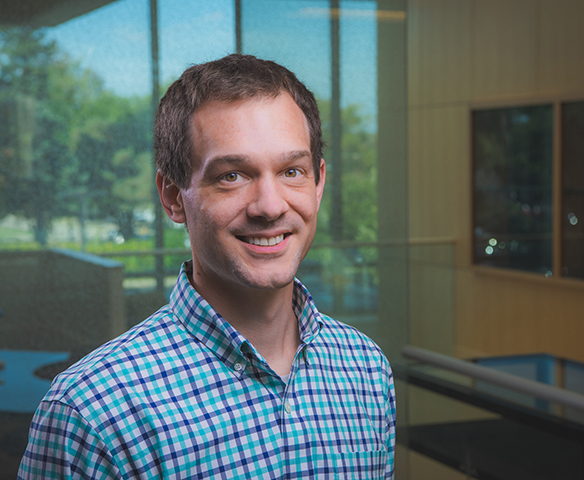
Jose Apesteguia is an ICREA Research Professor at the Department of Economics and Business , Universitat Pompeu Fabra (Barcelona). His research bridges behavioral economics and decision theory , focusing on bounded rationality and stochastic choice modeling. PhD in Economics (Public University of Navarra, 2001) Postdoctoral work at University of Bonn Academic career at UPF since 2006 His work examines how individuals deviate from classical rationality through random utility models , reference dependence , and sequential decision rules . Articles in journals like Econometrica and Journal of Political Economy analyze the computational and empirical foundations of behavioral heterogeneity. Recent studies include air pollution's impact on adolescent attention and stochastic representative agent models . Collaborations span Miguel A. Ballester, Albert Costa, and Jörg Oechssler across economics, psychology, and business domains.
Ekaterina Fokina is an associate professor at the Institute of Discrete Mathematics and Geometry, Vienna University of Technology. Her research focuses on computable model theory, equivalence relations, and algorithmic properties of structures. Projects: Stand-alone Project P27527, Elise Richter Project V206, Stand-alone Project P23989, Lise Meitner Project M1188. Collaborators: V. Harizanov, D. Turetsky, N. Bazhenov, L. San Mauro, P. Semukhin, S. Goncharov, J. Knight, R. Miller. Her work investigates categoricity spectra, bi-embeddability, and the complexity of equivalence relations. Key contributions include solving the long-open Covering Problem for Martin-Löf randomness and analyzing the computational complexity of the Finite Intersection Principle. She has published in journals like Annals of Pure and Applied Logic , Archiv für Mathematische Logik und Grundlagenforschung , and Journal of Symbolic Logic . Articles supported by FWF grants explore computable categoricity, equivalence relation complexity, and parameterized complexity theory. Her recent work includes bi-embeddability spectra, degree spectra, and intrinsic complexity bounds. Scientific Awards: Elise Richter Fellowship (FWF V206) Lise Meitner Fellowship (FWF M1188) She has contributed to understanding algorithmic randomness, effective versions of the Axiom of Choice, and hyperarithmetic isomorphism complexity.
Prof. Dr. Daniel Guhl is an Assistant Professor of Consumer Behavior at the School of Business and Economics, Humboldt University Berlin. He serves as an incoming Principal Investigator for project A05 within the CRC TRR 190 Rationality and Competition, collaborating with Daniel Klapper (HU) and Martin Spann (LMU). His academic career includes ongoing postdoctoral research at Humboldt University Berlin since 2014, complemented by industry experience as Head of Econometric Research & Development and Data Scientist at So1 GmbH from 2012-2016. Daniel Guhl earned his Dr.rer.pol. from TU Clausthal in 2014 and his Dipl.-Kfm. from RWTH Aachen University in 2006. His educational foundation spans business administration with a strong quantitative focus, preparing him for his research in consumer behavior and econometric modeling. Dr. Guhl's research focuses on consumer choice behavior at the intersection of marketing, economics, and applied econometrics. He specializes in developing and applying discrete choice models using both classical and Bayesian methods to analyze market and experimental data. His work aims to deepen understanding of individual consumer decision-making, particularly where it diverges from neoclassical economic assumptions. His research interests span Discrete Choice Models, Consumer Behavior, Applied Econometrics, Behavioral Economics, and Machine Learning. Methodologically, he excels in discrete choice modeling, econometric analysis of panel data, and experimental design for consumer research, with particular expertise in time-varying parameters and attribute non-attendance in choice models. Dr. Guhl's publication record demonstrates consistent scholarly productivity with a clear evolution toward increasingly sophisticated modeling techniques and dynamic aspects of consumer behavior. His recent work integrates machine learning approaches with traditional econometric methods to address complex marketing challenges including brand equity measurement, loyalty program effectiveness, and retail marketing optimization. His research consistently bridges theoretical insights with practical marketing applications, contributing significantly to both academic literature and industry practice. Dr. Guhl maintains active engagement with the academic community through multiple professional affiliations. He is a member of the VHB (MARK) since 2018, a member of CRC TRR 190 (Rationality and Competition) since 2017, a Fellow at the Berlin Centre for Consumer Policies (BCCP) since 2016, and a member of the European Marketing Academy since 2016. These connections position him at the forefront of marketing and consumer behavior research. As an Assistant Professor, Dr. Guhl likely mentors graduate students and participates in research collaborations. His role in the CRC TRR 190 project indicates active involvement in securing research funding and leading collaborative research teams focused on rationality and competition in market contexts. His industry background provides valuable practical perspective for student training and research design. Dr. Guhl's work is closely associated with the Berlin Centre for Consumer Policies (BCCP), where he serves as a Fellow. This affiliation suggests interdisciplinary collaboration with economists, legal scholars, and policy experts, extending the impact of his research beyond traditional marketing boundaries into consumer policy domains.
CHEN Yen-Tsang is an Assistant Professor at Neoma Business School , specializing in Information Systems, Supply Chain Management, and Decision Support . He earned his PhD in Business Administration from FGV EAESP in 2015 after a decade-long career as an engineer and project manager at firms like Alstom and Metro of Rio de Janeiro. Currently, he leads the MSc Management de Projet program at Neoma's Paris campus and teaches Operations Management, Purchasing, and Operations Research . Education : PhD in Business Administration (FGV EAESP, 2015), Mechanical Engineering background His research focuses on behavioral operations , resilient supply chains , and project management , employing controlled experiments , discrete choice analysis , and surveys . Recent work examines cross-national supply chain resilience , dynamic control systems , and ethical challenges in purchasing , with publications in IJOPM , JCLP , and conferences like POMS and EUROMA . Recent article trends reveal a focus on sustainability , resilience in global supply chains , and behavioral impacts in operations . Notable collaborations include studies on structural complexity validation and forecasting biases . Chen integrates experimental methods and cross-cultural analysis in his work, addressing multitasking inefficiencies , collaboration risks , and management control systems . He contributes to experimental pedagogy through Neoma's Experimental Lab and participates in international research partnerships like VISTA AR and BluePrint Intao .
Andries de Grip is Professor of Economics at the Research Centre for Education and the Labour Market (ROA), School of Business and Economics (SBE), Maastricht University. He is also a Research Fellow at the Graduate School of Business and Economics (GSBE), IZA (Bonn), and Netspar (Tilburg University). He serves on the Labour Market Committee of the Dutch Social Economic Council (SER) and the Scientific Advisory Board of the Federal Institute for Vocational Education and Training (BIBB), Germany. He earned his PhD cum laude from the Free University of Amsterdam. His educational background in economics forms the foundation of his extensive research in labor market dynamics. His research centers on labour economics with a focus on training, skill mismatches, sustainable employability, human resource management, labour mobility, retirement, and manpower forecasting. He investigates how skills are acquired and become obsolete, how firms manage human capital, and how structural changes affect employment outcomes. His work often employs advanced empirical methods such as discrete choice experiments and longitudinal cohort studies. The recent publications highlight a consistent focus on training, employability, retirement, and labour market behavior. Themes include the impact of training vouchers, informal learning, sustainable employability frameworks, personality in recruitment, and financial decision-making in retirement. His work bridges economics, organizational behavior, and public policy, with strong methodological rigor. Research Fellow, GSBE, Maastricht University Research Fellow, IZA, Bonn Research Fellow, Netspar, Tilburg University Member, Scientific Advisory Board, BIBB, Germany Member, Labour Market Committee, Dutch Social Economic Council (SER) Andries de Grip has led numerous research projects on behalf of Ministries, Dutch Public Employment Services, and the European Commission. His advisory roles reflect significant influence on national and European labour market and education policy. He has not explicitly listed grants or students in the provided text, but his project leadership implies extensive grant acquisition and mentorship. His research is conducted primarily through ROA, a leading research center at Maastricht University focused on education and labour market issues. He collaborates with multidisciplinary teams across institutions, particularly on projects involving sustainable employability and skill development.
Teresa Backhaus is a postdoctoral researcher at the Institute for Applied Microeconomics (IAME) within the Department of Economics at the University of Bonn. She is a member of the CRC TRR 224 EPoS (Project C1), a visiting research affiliate at IZA, and actively contributes to the open-source tax-transfer simulator GETTSIM. Since 2024, she represents research associates in the faculty council, advocating for academic staff interests in resource allocation and policy decisions. Her interdisciplinary research sits at the intersection of applied microeconometrics, labor economics, and behavioral economics. Her educational background includes a PhD in Economics from Freie Universität Berlin (2022), an M.Sc. in Economics from the same institution (2017), and a B.Sc. in Economics from the University of Bonn (2015). She also completed coursework in the Berlin Doctoral Program in Economics and Management Science (BDPEMS), now the Berlin School of Economics (BSE), and spent a semester abroad at the University of New Mexico. Teresa's research focuses on labor market dynamics, particularly retirement decisions, life-cycle employment, and the behavioral aspects of economic choices. She investigates how individuals form expectations about wages, how policy interventions affect training participation, and how cognitive limitations influence retirement planning. Her work on the German minimum wage evaluates its effectiveness in reducing poverty and inequality, while her experimental research explores strategy use in repeated games like the Prisoner’s Dilemma, identifying distinct behavioral types such as defectors and cooperators. Her recent publications, appearing in journals such as Labour Economics , Journal of European Social Policy , and Games and Economic Behavior , reflect a strong trend toward integrating structural modeling with behavioral insights. She frequently employs survey data (e.g., SOEP, NEPS) and experimental methods to study causal misperceptions, learning dynamics, and household decision-making. Her work bridges theoretical models with real-world policy implications, particularly in welfare and labor market reforms. Her scientific awards include the WZB World Merit Fellowship (2020) and the PROMOS Scholarship from DAAD (2011). She has also served in leadership roles, including as a student representative in BDPEMS (2016–2018) and currently as the elected representative of academic staff in the faculty council. Teresa collaborates with prominent economists such as Yves Breitmoser, Peter Haan, Steffen Huck, and Hans-Martin von Gaudecker. She has held research positions at WZB Berlin and DIW Berlin and has conducted research stays at University College London. Her involvement in GETTSIM highlights her commitment to open science and policy-relevant computational tools. She is actively engaged in departmental governance and supports institutional transparency and equity through her representation role. Her research lab or team affiliations include the Institute for Applied Microeconomics (IAME), CRC TRR 224, and the GETTSIM development team. She is embedded in a vibrant network of behavioral and labor economists in Germany and internationally, contributing to both theoretical and applied advancements in economics.
Mats Aigner is an Associate Professor in the Department of Mathematics at Linköping University, Sweden, affiliated with the research division of Algebra, Geometry and Discrete Mathematics (ALGD). His work is rooted in pure mathematics, focusing on abstract algebraic and topological structures. Research Interests: Mats Aigner's research lies at the intersection of algebra, set theory, and topology. His work explores semigroups of sets, properties of families of sets in topological spaces (particularly those lacking the Baire property), and connections to mathematical logic and combinatorics. He has also contributed to mathematical physics through analysis of the Ginzburg-Landau model. Publication Trends: His publications from 2001 to 2015 reflect a sustained focus on foundational mathematical structures. The articles demonstrate expertise in both pure algebraic constructions and deep topological analysis, with methodological rigor in set-theoretic and axiomatic frameworks. Scientific Awards: No awards or honors are mentioned in the available text. Advising and Grants: There is no information provided about graduate students, supervision, or external research grants. Labs and Research Teams: Mats Aigner is part of the Algebra, Geometry and Discrete Mathematics (ALGD) division within the Department of Mathematics at Linköping University. This group conducts research in algebra, geometry, topology, combinatorics, and discrete mathematics, and includes around twenty academics and doctoral students.
Joel Hasbrouck is the Kenneth G. Langone Professor of Business Administration and Professor of Finance at the Leonard N. Stern School of Business, New York University, where he has been a faculty member since 1983. His research focuses on market microstructure, financial econometrics, and the design and regulation of securities markets. He is the author of the influential book Empirical Market Microstructure and has published extensively in top finance journals. Ph.D., Finance, University of Pennsylvania B.S., Chemistry, Haverford College His research interests include market microstructure, financial econometrics, high-frequency trading, liquidity, price discovery, and decentralized exchanges . His recent work analyzes trading mechanisms in decentralized exchanges, FX market networks, and high-resolution price formation. He has made significant contributions to the understanding of limit order behavior, trading costs, and the impact of low-latency trading. His publications demonstrate a strong focus on empirical analysis of trading data , with recurring themes in market design, liquidity measurement, and the impact of technology on financial markets . He frequently employs advanced econometric techniques to analyze high-frequency and daily market data. 1986 Iddo Sarnat Prize by the European Finance Association Fellow, Society of Financial Econometrics Fellow, Columbia Law School Program in the Law and Economics of Capital Markets Advisory Editor, Journal of Financial Markets Associate Editor, Journal of Financial Econometrics Hasbrouck has advised numerous public and private institutions, including the SEC, CFTC, NYSE, Nasdaq, and the Federal Reserve Bank of New York. He has served on editorial boards of major journals such as the Journal of Finance , Review of Financial Studies , and Journal of Financial Markets . He co-developed the TORQ database, a comprehensive dataset used by researchers worldwide. He teaches graduate courses including Foundations of Finance and Principles of Securities Trading, and organizes the annual Stern Microstructure Conference.
Masakazu Ishihara is an Associate Professor of Marketing at the Leonard N. Stern School of Business, New York University, where he has been a faculty member since 2011. His research is centered on quantitative marketing and empirical industrial organization, employing structural econometric models to study consumer and firm behavior in dynamic markets. Leonard N. Stern School of Business, New York University Department of Marketing His academic training includes a Ph.D. in Marketing from the Rotman School of Management at the University of Toronto, and both a B.S. and M.S. in Economics from the University of Wisconsin-Madison. Professor Ishihara's research interests span quantitative marketing , empirical industrial organization , the dynamic effects of marketing strategies , forward-looking consumer and firm decision-making , and marketing in the entertainment and luxury industries . He frequently investigates how consumers and firms make intertemporal choices, particularly in durable goods markets such as video games, pharmaceuticals, and alcohol. His work often integrates economic theory with large-scale consumer data to estimate structural models of demand, adoption, and competition. The recent publications highlight a consistent trend in applying dynamic structural models to analyze consumer behavior in complex markets. His research spans topics such as rational addiction (e.g., soda and alcohol), price promotions, scarcity marketing, advertising causality, software piracy, and brand extensions. The keywords across his publications indicate strong expertise in econometrics , consumer behavior , pricing , and empirical IO , with applications in entertainment, healthcare, and digital platforms. His scientific awards include: Inaugural 2010 ISMS Doctoral Dissertation Competition Award 2021 Best Paper Award, Journal of Advertising Research Honorable Mention, 2011 Dick Wittink Prize Professor Ishihara has collaborated extensively with leading scholars such as Andrew Ching, Tülin Erdem, and Eric Yanfei Zhao. He has secured research funding implicitly through publication in top journals and active working paper pipeline, though specific grants are not listed. He advises emerging scholars and contributes to the academic community through peer-reviewed publications and methodological advancements in structural modeling. There is no mention of specific labs or research teams in the provided text, though his work suggests involvement in quantitative marketing and empirical IO research groups at NYU Stern.
Jiawei Zhang is the Michael Armellino Professor in Business and Professor of Information, Operations and Management Sciences at the Leonard N. Stern School of Business, New York University. He chairs the Department of Technology, Operations, and Statistics and serves as Academic Director of the Master of Science in Data Analytics & Business Computing program. He joined NYU Stern in September 2004 and held a joint position at NYU Shanghai from 2014 to 2017. PhD in Management Science and Engineering, Stanford University, 2004 MS in Operations Research, Tsinghua University, 1999 BS in Applied Mathematics, Tsinghua University, 1996 Professor Zhang's research centers on business analytics, optimization, and operations management. His work integrates machine learning, robust optimization, and stochastic modeling to solve complex problems in supply chain management, healthcare operations, pricing, and revenue management. He investigates decision-making under uncertainty, online learning, and algorithmic approaches to resource allocation. His recent publications reveal a strong focus on theoretical and applied aspects of stochastic optimization, prophet inequalities, assortment optimization, and process flexibility. These works appear in top journals such as Operations Research , Management Science , and Mathematics of Operations Research , reflecting deep contributions to both methodological innovation and practical applications in operations. His editorial service highlights scholarly leadership: Associate Editor, Management Science (2014–present) Associate Editor, Manufacturing & Service Operations Management (2021–present) Associate Editor, Mathematics of Operations Research (2009–present) Associate Editor, Operations Research (2006–present) Professor Zhang teaches a range of courses from undergraduate to PhD levels, including Decision Models and Analytics, Convex Optimization, and Dynamic Programming. He advises PhD students and contributes to executive education programs, including in Risk and Decision Analytics and FinTech. His research is supported by theoretical rigor and real-world applicability, with implications for technology, finance, and healthcare operations.
Gianluca Fiorentini is a Full Professor in the Department of Economic Sciences at the University of Bologna. His work focuses on health economics, public policy, and healthcare systems, with a particular emphasis on regulatory frameworks and resource allocation. He has contributed extensively to understanding healthcare utilization patterns, disease management strategies, and the impact of policy interventions on health outcomes. His research spans topics such as pandemic response strategies, clinical guideline compliance, and the economic implications of pharmaceutical patent expiries. Fiorentini has analyzed healthcare systems in multiple countries, including Italy, Germany, and Australia, highlighting the importance of integrated care models and evidence-based decision-making. Recent publications emphasize the role of behavioral economics in preventive healthcare and the interplay between healthcare providers and policy incentives. Fiorentini’s work frequently intersects with public health challenges, offering insights into achieving equitable and efficient healthcare delivery systems.
Maria Jose Serna Iglesias is a Full Professor at the Faculty of Informatics of Barcelona (FIB), Universitat Politècnica de Catalunya (UPC)-BarcelonaTech, where she is affiliated with the Department of Computer Sciences. She is a leading member of the ALBCOM research group, focusing on Algorithmics, Bioinformatics, Complexity, and Formal Methods, and serves as the coordinator of the PhD program in Computing. Her academic leadership and research excellence are central to UPC's contributions in theoretical computer science. Licenciado en Ciencias Matemáticas Licenciado en Informática Doctorat en Informàtica (Doctorate in Computing) Her research interests lie at the intersection of theoretical computer science and game theory, with a strong focus on algorithmic game theory , social network analysis , and computational complexity . She investigates influence propagation models, cooperative games, weighted voting systems, and graph algorithms. Her work often involves the design and analysis of algorithms for discrete structures, with applications in network science and decision-making systems. The analysis of her recent publications reveals a consistent trend in studying strategic interactions in networks, particularly through influence models and cooperative game theory . Her work spans both theoretical foundations—such as complexity and dimensionality of games—and practical applications in social networks, education, and synthetic data validation. The keywords across her articles highlight a deep engagement with discrete mathematics, optimization, and algorithmic decision theory. She has received scientific recognition, including competitive awards and active participation in scientific committees of major international conferences such as the International Conference on Algorithmic Decision Theory and the Discrete Mathematics Days. Premiada (Awarded) Scientific committee member for multiple international conferences Maria Jose Serna has led and participated in numerous competitive R+D+i projects, often in collaboration with other prominent researchers in the ALBCOM group. She has advised multiple students and researchers, contributing to the training of the next generation of computer scientists. Her collaborations span institutions in Spain and internationally, particularly in the domains of algorithms and game theory. She is a core member of the ALBCOM research group (Algorísmia, Bioinformàtica, Complexitat i Mètodes Formals) at UPC, which is a leading force in theoretical computer science in Spain. The group fosters interdisciplinary research in algorithms, complexity, and formal methods, with strong ties to mathematical and computational sciences.
Jim Wiseman is a Professor of Mathematics at Agnes Scott College, where he is affiliated with the Department of Mathematics within the College of Arts and Sciences. He teaches a wide range of courses including Calculus, Linear Algebra, Probability, and Chaotic Dynamical Systems, and remains actively involved in both undergraduate instruction and research mentorship. His research focuses on dynamical systems from a topological perspective, with significant contributions to recurrence, the Conley index, rigorous computation, and applications in social choice and voting theory. His work bridges pure mathematics and interdisciplinary applications, particularly in political science and public policy. The recent publications highlight a strong trend in topological dynamics and symbolic systems, with increasing interest in recurrence structures and interdisciplinary modeling. His collaborative work, such as on NOMINATE and political history, reflects a growing engagement with data-driven social science. While no formal scientific awards are listed in the provided texts, his sustained scholarly output in high-quality journals demonstrates recognition within the mathematical community. Jim Wiseman advises students in senior research projects and senior seminars, and integrates research into his teaching, especially in advanced modeling and dynamical systems courses. Although specific grants are not mentioned, his publication record suggests ongoing research activity supported by institutional or external funding. He collaborates with scholars across disciplines and institutions, including statisticians, political scientists, and computer scientists. He maintains active research interests in topological data analysis and rigorous computational methods in dynamics, often working on theoretical frameworks that can be applied to real-world systems. His professional network includes colleagues from Northwestern University, Swarthmore College, and Dickinson College, reflecting long-standing academic collaborations.
Min Xu is an Assistant Professor in the Department of Statistics at Rutgers University – New Brunswick. He is affiliated with the School of Arts and Sciences and focuses his research on theoretical and methodological aspects of machine learning and high-dimensional statistics, with applications in network analysis and nonparametric estimation. Education: Ph.D. in Machine Learning, Carnegie Mellon University (2015) B.S. in Electrical Engineering and Computer Science (with minor in Mathematics), UC Berkeley Research Interests: Min Xu’s research lies at the intersection of machine learning , high-dimensional statistics , and network science . He develops computationally scalable methods with strong theoretical guarantees for complex data structures, particularly in nonparametric estimation , network analysis , and large-scale inference . His work addresses fundamental challenges in estimating high-dimensional distributions and understanding the structure of evolving networks, with applications in economics and social sciences. Grants & Funding: NSF Grant DMS-2113671 NSF Grant DMS-2311299 Research Trends: Across his publications, a consistent theme is the development of statistically rigorous methods for high-dimensional and network data. His work spans optimal estimation in stochastic block models, convex M-estimation, and inference on dynamic network structures, with a strong emphasis on theoretical guarantees and practical scalability. Affiliations: Previously, Min Xu served as a departmental postdoctoral researcher in the Statistics Department at the Wharton School, University of Pennsylvania. He is currently based at Hill Center, Rutgers University.
Seth Meyer is a Professor of Computer Science and Mathematics at St. Norbert College, where he has taught courses in mathematics, math education, and computer science since 2012. He emphasizes building strong student relationships and employs diverse assessment methods to support mathematical and personal development. Meyer has authored 13 research papers and mentored five undergraduate research projects. Education: B.A. in Mathematics and Computer Science (Carleton College) M.A. in Mathematics (University of Wisconsin-Madison) Ph.D. in Mathematics (University of Wisconsin-Madison) Research Focus: Meyer's work spans combinatorics, linear algebra, discrete mathematics, theoretical computer science, inverse problems, and mathematics education. His interdisciplinary approach often involves undergraduate collaborators and addresses challenges in pure and applied mathematics. Publication Trends: Recent articles (2016-2022) reflect a progression from linear algebra and matrix theory to behavioral economics and graph theory, demonstrating consistent emphasis on combinatorial optimization and mathematical modeling. Awards: Leonard Ledvina Outstanding Teacher Award Student Mentorship: Supervised five summer research projects in graph theory, representation theory, and behavioral economics. No grants are explicitly mentioned.