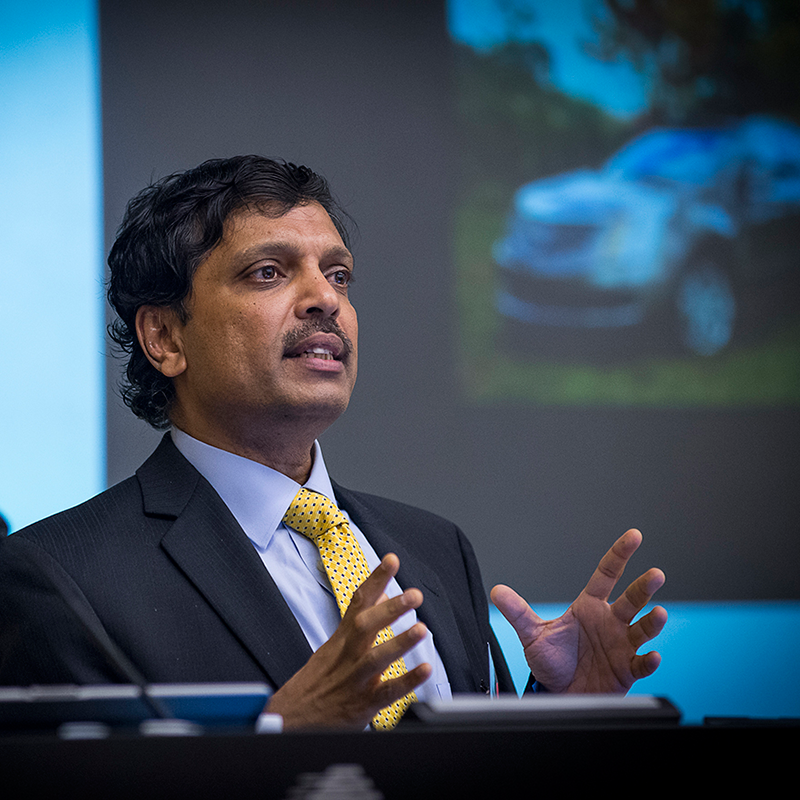
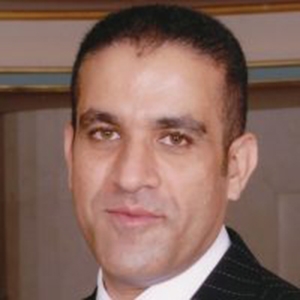
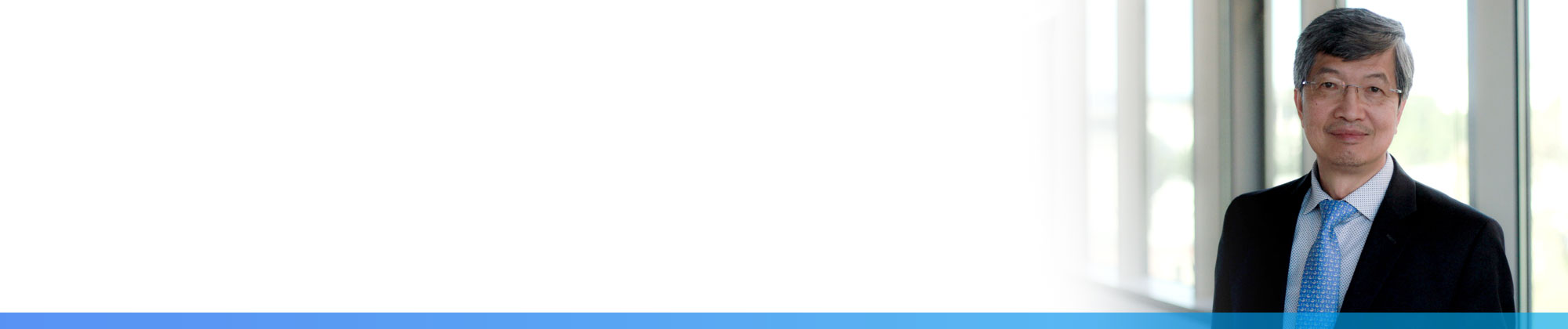
Professor Mohammad FARD is a faculty member at RMIT University's School of Engineering, specializing in Mechanical Engineering and Intelligent Systems. He leads research in autonomous vehicles, crash safety, and driver monitoring using AI. His industry experience includes six years at Nissan Technical Centre, focusing on vehicle body design. He holds a PhD from Tohoku University and has collaborated across Engineering, Health, and Science disciplines, achieving international media coverage for work on driver drowsiness and road safety. Research Interests: Autonomous Vehicles Advanced Crash Safety Driver State Monitoring AI in Noise/Vibration Human Factors/Ergonomics Teaching & Projects: Teaches Advanced CAE, Vehicle NVH, and research supervision in areas like crash simulation and vibration control. Current projects include Formula One safety barriers and driver education for autonomous vehicles. Awards & Labs: No awards listed. Active in cross-disciplinary teams and labs addressing automotive innovation and safety.
Associate Professor Ng Bing Feng leads research in Additive Manufacturing, Aerospace Engineering, and Thermofluids at Nanyang Technological University's School of Mechanical & Aerospace Engineering. As Cluster Director for Smart & Sustainable Building Technologies at NTU's Energy Research Institute, he oversees projects spanning energy-efficient cooling technologies, advanced filtration systems, and bio-inspired materials. His interdisciplinary work integrates advanced manufacturing with environmental engineering, focusing on sustainable solutions for air quality management and thermal regulation. Current research explores radiative cooling technologies, acoustic agglomeration for emissions control, and crashworthy structures via biomimetic design. Professor Ng's publications demonstrate consistent innovation in multi-scale manufacturing and fluid dynamics, with growing emphasis on sustainable urban technologies. Methodologies combine experimental fluid dynamics with computational modeling and AI-driven design. Leadership Roles: Cluster Director, Energy Research Institute @ NTU Principal Investigator for multiple industry collaborations in sustainable materials Research Output: 42+ publications in high-impact journals Multiple patents in filtration technologies and cooling systems
Professor Hong Hao is a John Curtin Distinguished Professor at Curtin University, affiliated with the School of Civil and Mechanical Engineering and the Curtin Research Centre for Infrastructural Monitoring & Protection. His expertise spans Structural Dynamics, Earthquake Engineering, Blast and Impact Engineering, and Structural Health Monitoring. He holds prestigious roles like Fellow of ATSE, ISEAM, and ASCE, and has led organizations such as the International Association of Protective Structures and the Australian Earthquake Engineering Society. Education: BE (Tianjin University, 1982), MSc (UC Berkeley, 1985), PhD (UC Berkeley, 1989). Awards include the Tan Chin Tuan Fellowship and multiple Ko Medals. He has authored over 200 journal articles, with recent work focusing on blast-resistant materials, seismic fragility, and AI-driven structural health monitoring. His research emphasizes resilient infrastructure, including metaconcrete structures, corrosion-resistant materials, and sensor-based damage detection. Ongoing projects involve smart tunnel safety under BLEVE explosions and modular building systems.
Adrian Lew is a Professor of Mechanical Engineering at Stanford University, specializing in computational solid mechanics and numerical algorithms. His research focuses on hydraulic fracturing simulation, embedded boundary methods, and material model design. He holds a PhD in Mechanical Engineering from Caltech (2003). His work bridges advanced numerical techniques with real-world applications in geophysics, material science, and structural engineering. Education: PhD, Mechanical Engineering, California Institute of Technology, 2003 Research Interests: Lew's group develops algorithms for time-integration embedded boundary methods and hydraulic fracturing simulations. Key areas include curvilinear crack propagation, universal meshing for complex geometries, and high-fidelity fracture mechanics. His work on variational integrators and discontinuous Galerkin methods has advanced computational efficiency in nonlinear elasticity and thermodynamics. Publications: Recent articles emphasize mesh optimization (DVRlib), fracture path instabilities, and magma chamber dynamics. His methodologies address challenges in 3D crack modeling, fluid-structure interaction, and high-order approximations in domains with singularities. Advising & Grants: Lew's research is supported by projects in computational geophysics and material science. Though no advisees are listed, his work involves collaborative teams focused on algorithmic innovation and high-performance computing.
Raj Rajkumar is the George Westinghouse Professor of Electrical and Computer Engineering at Carnegie Mellon University (CMU), with a courtesy appointment in the Robotics Institute. He holds leadership roles as Director of the USDOT Mobility21 and Safety21 National University Transportation Centers, and Director of the Metro21: Smart Cities Institute. His work focuses on cyber-physical systems, autonomous driving, and vehicular networking. Education: Ph.D. in Electrical and Computer Engineering from CMU (1989). Research interests include connected/autonomous vehicles, cyber-physical systems, embedded systems, and vehicular networking. Key projects include the General Motors-CMU Collaborative Research Lab and the development of autonomous vehicle protocols like Ballroom Intersection Protocol. Notable awards include the 2016 National Academy of Inventors Fellowship and the 2017 Pittsburgh Business Times Innovation Award. His publications span real-time systems, sensor networks, and automotive cyber-physical frameworks. Rajkumar advises on autonomous vehicle safety, energy efficiency, and societal impacts, with frequent media engagements on self-driving technologies.
Dr. Ahmad Baroutaji is a prominent researcher at Aston University's School of Engineering and Technology, specializing in Additive Manufacturing, Metamaterials, and Energy Systems. His work focuses on advancing materials science for biomedical, acoustic, and energy applications. He holds a strong academic affiliation within the College of Engineering and Physical Sciences. Research Interests: Optimizing 3D-printed metamaterials for energy absorption and crashworthiness Development of advanced materials for fuel cells and hydrogen technologies Acoustic metamaterials for noise reduction in buildings Biomaterials for orthopedic and tissue engineering applications Notable contributions include pioneering studies on cobalt-chromium-molybdenum meta-scaffolds for bone reconstruction and acoustic panels using titanium perforated structures. His 2024 review on PEM hydrogen technologies has been widely cited. Collaborations span global institutions, emphasizing practical material innovations. Grants and Advising: While specific grants are not detailed, his extensive publication record indicates sustained research funding. No formal advisee list is provided, but co-authorships suggest collaborative mentorship. Labs/Teams: Engaged in multidisciplinary teams focusing on additive manufacturing applications, though specific lab names are not mentioned in the text.
Dr. Ali Kashani is a Senior Lecturer at the University of New South Wales (UNSW) within the School of Civil and Environmental Engineering. His research focuses on sustainable and low-carbon concrete materials, robot-aided construction (particularly 3D printing), and Circular Economy-aligned applications. Leadership in cementitious materials innovation Expertise in 3D printing for construction Advocate for waste valorisation and carbon capture Dr. Kashani has secured approximately $7 million in research funding and holds a patent in lightweight concrete foam. His work spans 70+ publications with 9,000+ citations, including media coverage in the Sydney Morning Herald and The Fifth Estate. He actively contributes to professional organizations such as MECLA, RILEM, and ASTM. Recent research trends include AI and optimization algorithms for sustainable concrete mix design, chloride diffusion modeling, and 3D printing performance analysis. His publications often address waste material integration, durability assessment, and eco-friendly construction practices. Scientific Awards: National and NSW Awards for 'Excellence in Concrete' (Technology and Innovation) from the Concrete Institute of Australia Churchill Fellowship for Digital Construction and 3D Printing sponsored by AVJennings Dr. Kashani serves as Co-Chair of the cement and concrete working group at MECLA and contributes to RILEM and ASTM committees. His email is ali.kashani@unsw.edu.au , and his office is located in the Civil Engineering Building (H20), Level 2, Room CE204, UNSW.
Professor Evangelos Boulougouris is Head of the Department of Naval Architecture, Ocean and Marine Engineering at the University of Strathclyde, where he also serves as Chair of the Maritime Safety Research Centre. He is a chartered professional engineer with over 28 years of internationally recognized research in maritime safety, design for safety, and holistic ship design. His work spans damage stability, autonomous vessels, alternative fuels, and ship survivability, with strong impact on international regulations through roles in IMO, ITTC, SNAME, and RINA. Research Interests: His primary research focuses on safety of marine operations, including damage and intact stability in waves, collision avoidance, ship evacuation, crashworthiness, and the integration of alternative fuels like ammonia and hydrogen. He leads cutting-edge work in multi-objective ship design optimization, risk modeling, and decarbonization strategies for advanced marine vehicles. The recent 15 publications highlight a strong trend toward digitalization and sustainability in shipping, combining machine learning for propeller optimization, CFD simulations for catamaran performance, real-time decision support in emergencies, and hybrid propulsion systems for zero-emission vessels. His work increasingly emphasizes climate resilience, port risk under extreme weather, and energy management in CTVs, aligning with global SDGs. Scientific Awards: 2020 Denny Medal SNAME ABS Captain Joseph H. Linnard Prize (2023) Safety 2020 Best Paper Award (2022) Honorable Mention for Vice Admiral E. L. Cochrane Award (2022) EU CHAMPIONS of Transport Research (HOLISHIP, TRA 2014) Greek Technical Innovation Award, Lloyd’s List (2009) 1st Prize, International SAFER SHIP Competition (1999) Advising and Grants: He actively supervises PhD students and has led numerous EU and UK-funded projects such as SEASTARS, SAFARI, EcoShipYard, and Digital Shipwright. As Principal Investigator and Co-I, he secures substantial research funding, coordinates knowledge exchange (KE) initiatives, and leads training programs across Europe. Labs and Teams: He leads the Maritime Safety Research Centre at Strathclyde, fostering interdisciplinary collaboration on ship safety, stability, and sustainable design. His team works closely with industry partners RCG and DNV, and engages in international networks through STAB, ITTC, and IMO committees.
Dr. Shabnam Sadeghi Esfahlani is an Associate Professor in Robotics at the School of Engineering and the Built Environment, Anglia Ruskin University , where she serves as Deputy Leader of the BORI research group and leads the Automation & Robotics MSc program. Her interdisciplinary expertise spans mechatronics, artificial intelligence, virtual reality, and serious games , with a focus on applications for rehabilitation, medical training, and autonomous systems . As a Chartered Engineer and Senior Fellow of the Higher Education Academy , she has secured significant funding from Innovate UK, Horizon 2020, and GCRF , with grants exceeding £3 million. Education PhD in Mechanical Engineering, Anglia Ruskin University BSc (First Class) in Statistics & Mathematical Science, Shahid Beheshty University Her research integrates AI with robotics for societal impact, exemplified by the open-source SROBO ground robot and projects like Rehabgame and the Assistive Feeding Robot . She has published over 45 peer-reviewed articles and contributes to academic communities as a journal guest editor and conference organizer . Key collaborations include IET, IMechE, and the Nuffield Foundation as a mentor for young students. Scientific Awards & Recognitions: Chartered Engineer (CEng), Engineering Council UK Senior Fellow (SFHEA), Higher Education Academy Student-Voted 'Made a Difference Award' (2018) Post-Graduate Certificate in Higher Education
Professor Felix Schmid holds the position of Honorary Professor in the School of Civil Engineering at the University of Birmingham. He specializes in railway systems engineering, focusing on train control, signaling, economics, and strategic management. He directs the MSc in Railway Systems Engineering and Integration and has developed short programs for organizations like Bechtel and London Underground. His professional affiliations include memberships in the Institution of Mechanical Engineers and the Institution of Railway Signalling Engineers, with roles such as Councillor in the Union of European Railway Engineers’ Associations. Education and Qualifications: Dip.El.Ing.ETH (Swiss Federal Institute of Technology Zurich) PhD in Civil Engineering Chartered Engineer (CEng) European Railway Engineer (EurailIng) Research interests revolve around railway safety, operational efficiency, and systems integration. His work addresses challenges in mega railway projects, urban rail innovation, and infrastructure resilience. He has contributed to over a dozen peer-reviewed articles on topics such as reliability management, accident analysis, and safety-performance relationships. Prof. Schmid’s academic contributions extend to external examining roles at institutions like the University of East London and Kingston University. He delivers lectures on railway capacity management and straw-bale construction. His professional service includes committee roles at Brunel University and the Union of European Railway Engineers’ Associations. Notable awards include Fellowships from the Institution of Mechanical Engineers and the Institution of Railway Signalling Engineers. His external engagements emphasize promoting railway transport and advancing training facilities in the West Midlands.
Prof Arun Arjunan is a Professor in Research at the University of Wolverhampton , affiliated with the Faculty of Science and Engineering and the School of Engineering . He serves as the Director of the Centre for Engineering Innovation and Research (CEIR) and leads the Additive Manufacturing of Functional Materials (AMFM) research group. His roles span academic leadership, research, and teaching in advanced manufacturing and materials science. PhD in Structural Mechanics and Vibro-Acoustics (University of Wolverhampton, 2014) PgCert in Higher Education (2014) Senior Fellow of the Higher Education Academy (SFHEA, 2015) His research focuses on additive manufacturing of metamaterials , including auxetic structures, meta-biomaterials for tissue regeneration, infection-resistant implants, and acoustic metamaterials for noise control. He has pioneered the development of Herschel Quincke-Arjunan waveguides for passive noise cancellation. His work integrates numerical modeling, mechanical testing, and advanced fabrication techniques. His recent publications span biomedical engineering , sustainable materials , environmental technology , and energy systems , with a strong emphasis on 3D printing applications. Themes include personalized implants, water purification using natural coagulants, and sustainable manufacturing. His work demonstrates a multidisciplinary approach bridging engineering, biology, and environmental science. Vice Chancellor’s Award for Outstanding Contribution to Research (2020) UK Engineering Innovation Award (2021) THE ENGINEER UK Collaborate to Innovate Finalist (2021) Nominated for Blavatnik Awards (2019, 2020) GKN Award (2011) Senior Fellow, Higher Education Academy (2015) Arun actively supervises PhD students and has secured research grants from the UK Department of Transport (DfT) , Innovate UK , European Union (ERASMUS+) , and industrial partners. He previously served as Course Leader for Mechanical Engineering (BEng/MEng) and led TEF and NSS enhancements in the School of Engineering. He teaches advanced modules such as Advanced FEA and Applied Stress Analysis . He leads the AMFM Research Group and CEIR , fostering interdisciplinary collaboration with post-docs, research technicians, and PhD students. He is also a member of the BSI AMT/8 Additive Manufacturing standards committee and has served as an external examiner for the University of Greenwich.
Håkan Johansson is a Professor in the Dynamics division of the Department of Mechanics and Maritime Sciences at Chalmers University of Technology. His research focuses on computational methods to analyze controlled mechanical systems, with applications in wind turbines, heavy vehicle drivelines, and wave propagation in soft biological tissues. Professor Johansson's primary research interests include computational mechanics, wind turbine dynamics, railway system dynamics, biomechanics, condition monitoring systems, optimization methods, and structural dynamics. His work bridges theoretical computational methods with practical engineering applications across multiple domains, particularly in renewable energy systems and transportation infrastructure. Analysis of his publication record reveals a strong focus on computational modeling applied to real-world engineering problems. His recent work demonstrates significant contributions to wind turbine technology, railway infrastructure monitoring, and biomechanical modeling. The publications show a consistent pattern of applying advanced computational techniques to solve complex mechanical system challenges, with increasing emphasis on digital twin technology and model-based condition monitoring systems. Professor Johansson leads or participates in multiple research projects including 'Towards Digital Twins of the Human Body for Personalized Safety' (2025-2026), 'AI-Driven Constrained Optimal Control for Bi-manual Loco-Manipulation' (2024-2029), and 'A Digital Twin for Durability to Accelerate Development and Enable Predictive Maintenance' (2024-2027). His research has received funding from various sources including VINNOVA, Wallenberg AI program, and Swedish Wind Power Technology Center. His research group focuses on computational methods for mechanical systems with applications across multiple domains. The work involves developing advanced computational models, validation through experimental data, and implementation in real-world monitoring and optimization systems. Current efforts emphasize digital twin frameworks and model-based condition monitoring for various engineering systems.
Mostafa El Sayed is an Associate Professor in the Department of Mechanical and Aerospace Engineering at Carleton University. He serves as Director of the Aerospace Structures and Materials Engineering Laboratory (ASME-Lab). His academic credentials include a B.Sc. and M.Sc. from the Military Technical College and a Ph.D. from McGill University, supplemented by postdoctoral research at MIT. Prior to academia, he worked as an Aircraft Loads Engineering Specialist at Bombardier Aerospace, contributing to structural design and optimization of new aircraft programs. His research focuses on multiscale mechanics of meta-materials, additive manufacturing for green technologies, fluid-structure interaction, and structural optimization for aerospace applications. Key projects include developing lightweight materials for aircraft and spacecraft, enhancing energy absorption mechanisms, and optimizing designs for future transport concepts. Publications span topics such as lattice material characterization, aeroelasticity, and fatigue analysis. He actively mentors students through ASME-Lab, offering opportunities in cutting-edge research aligned with industry needs. His work bridges theoretical advancements with practical applications in aerospace structural design and materials innovation. El Sayed is a Professional Engineer (PEO) in Ontario and has contributed to industry collaborations through Bombardier and MIT affiliations. His lab emphasizes hands-on experience with advanced manufacturing techniques and computational modeling tools.
Jenn-Ming Yang is a Distinguished Professor in the Department of Materials Science and Engineering at the University of California, Los Angeles (UCLA), holding the Collins Aerospace Term Chair for Excellence. His work focuses on advanced composite materials for aerospace and transportation applications, with significant contributions to high-temperature material systems. Professor Yang's research centers on fundamental problems in processing, microstructure development, and mechanical behavior of high-temperature composites. His investigations target critical applications in aerospace structural systems and ground transportation, with emphasis on material durability, failure mechanisms, and performance under extreme conditions. This work bridges materials science, mechanical engineering, and aerospace engineering through experimental and analytical approaches. His recent publications (2007-2008) reveal a concentrated focus on composite material systems, including titanium-based laminates, carbon nanotube reinforcements, ultra-incompressible transition metal diborides, and ceramic composites. Key research themes involve mechanical property characterization, failure analysis, and microstructure-property relationships, with direct applications to aircraft structures, propulsion systems, and energy storage technologies. Professor Yang's scientific achievements have been recognized through numerous prestigious awards: Scholars Award from National Engineering Research Center for Composite Manufacturing Science & Engineering (1987) Faculty Career Development Award (1989) Presidential Young Investigator Award from the National Science Foundation (1990-1995) Alcoa Foundation Award (1992) Ford Foundation Award (1993) Best Paper Award from the Japan Society of Mechanical Engineers (2007) His research program addresses critical challenges in advanced material systems for next-generation aerospace and transportation applications, with ongoing investigations into novel composite architectures and high-temperature material solutions.
Dr. Mike Bambach is a Senior Lecturer at the University of Sydney's School of Civil Engineering, where he also serves as Director of the Centre for Advanced Structural Engineering and Undergraduate Program Director for Civil Engineering. His research spans composite materials, crashworthiness, and structural optimization. Structural Engineering Composite Material Analysis Road Safety & Impact Mechanics Research Interests Dr. Bambach investigates advanced structural systems using fiber-reinforced polymers (FRP), natural fiber composites for sustainable construction, and crash energy absorption in transportation systems. His work combines experimental testing with numerical modeling to improve structural performance under extreme loads. Recent Publications (2025-2018) Current research focuses on natural fiber composites for structural applications, hybrid metal-composite energy absorption systems, and innovative buckling control mechanisms. Key trends include sustainable material development and dynamic structural response analysis. Teaching & Supervision He teaches foundational civil engineering courses and supervises PhD/Master's students working on projects like AI-based quality control in steel fabrication, sustainable cementitious composites, and deep foundation reuse solutions.