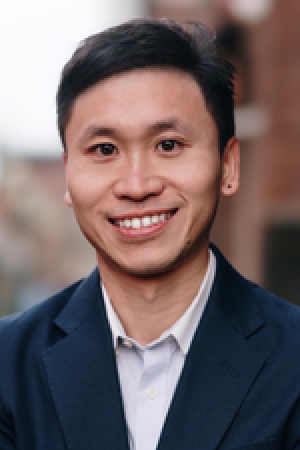
Sverre Steen is a Professor and Head of the Department of Marine Technology at the Norwegian University of Science and Technology (NTNU). He leads the Kongsberg Maritime University Technology Centre focused on 'Ship Performance and Cyber-physical Systems' and is a member of the standing committee for the Symposium of Marine Propulsors. His research emphasizes ship propulsion, hydrodynamics, and big data analysis of in-service vessel performance. Key interests include seakeeping, high-speed marine vehicles, and model testing techniques. Steen teaches TMR 4217 Hydrodynamics of High-Speed Marine Vehicles , covering cavitation, experimental hydrodynamics, and propulsion systems. He collaborates internationally on projects like the Norwegian Ocean Technology Centre. His recent work explores wave-energy extraction via hydrofoil vessels, resistance modeling for fast ferries, and propulsion efficiency in real sea states. He has contributed to global shipping emission models (MariTEAM) and reliability analysis of structural components under vibration. Steen's publications span propulsion in waves, engine-propeller dynamics, and data-driven methods for ship performance monitoring. His applied research bridges experimental testing and computational modeling to address challenges in sustainable maritime transport and operational safety.
Professor Alexander J. Hartemink holds dual appointments in the Department of Computer Science and Department of Biology at Duke University, Trinity College of Arts & Sciences. He is also a Bass Fellow in Computer Science. His research focuses on computational biology, machine learning, and systems biology, with applications to genomics, epigenomics, and transcriptional regulation. Hartemink leads the Duke Office of University Scholars and Fellows and has directed the Computational Biology and Bioinformatics graduate program. He earned a PhD from MIT (2001), MPhil from the University of Oxford (1996), and BS from Duke (1994). Research Interests His work integrates computational methods to study chromatin dynamics, transcriptional networks, and epigenetic mechanisms. Key areas include modeling chromatin accessibility, predicting transcription factor binding, and understanding cell-cycle regulation. Techniques employed include Bayesian networks, dynamic systems modeling, and machine learning algorithms. Publications & Trends Recent work emphasizes single-cell multi-omics integration, chromatin occupancy modeling (RoboCOP framework), and transcriptional regulation in response to genetic perturbations. Themes include epigenetic plasticity, disease-associated enhancers, and systems-level analysis of gene expression. Awards & Grants Hartemink has received the Sloan Research Fellowship (2005) and NSF CAREER Award (2004). Active grants include NIH funding for chromatin-transcription interplay studies and NSF support for regulatory genome research. He collaborates on projects like the Data+ initiative, promoting interdisciplinary data science. Affiliations & Labs Associated with Duke’s Center for Genomic and Computational Biology and Center for Advanced Genomic Technologies. His lab develops computational tools for genomic analysis, including software for chromatin modeling and epigenetic data integration.
James S. Speck is the Seoul Viosys Professor of Solid State Lighting in the Department of Materials at the University of California, Santa Barbara (UCSB), within the College of Engineering. His research focuses on the materials science of wide bandgap semiconductors such as GaN and β-Ga₂O₃, emphasizing epitaxial growth, defect engineering, and device applications. He holds over 725 publications and has co-founded Soraa, a company commercializing GaN-based lighting technologies. Education: Sc.D. in Materials Science (MIT), S.M. in Metallurgy (MIT), B.Sc.Eng (University of Michigan). Research Interests: GaN-based semiconductors, nitride materials, epitaxial growth mechanisms, nonpolar/semipolar GaN, and β-Ga₂O₃. His work addresses threading dislocations, defect dynamics, and optoelectronic device performance. Awards: IEEE Photonics Society Aron Kressel Award, APS Fellowship, MRS Fellowship, and multiple best paper awards. Key Contributions: Pioneered MBE growth of GaN, developed V-defect engineering for LEDs, and advanced β-Ga₂O₃ research. Collaborates on Soraa’s high-brightness LED technologies. Lab/Teams: The Speck Group studies GaN heterostructures, defect mitigation, and wide bandgap semiconductor applications. Recent work includes V-defect-controlled LEDs and β-Ga₂O₃ etching techniques.
Dr. Raha Hassan is an Assistant Professor in the Department of Psychology at Western University and the director of the Social and Emotional Wellbeing (SEW) Lab. She holds a PhD in Clinical Psychology from McMaster University and completed her predoctoral residency at the Royal Ottawa Mental Health Centre. Her research focuses on the role of temperament in social and emotional wellbeing, particularly in children's interactions and interpretations of social environments. She employs a developmental framework and emphasizes naturalistic observation of behavior, with an interest in cultural influences on these processes. Dr. Hassan’s work integrates psychophysiological measures such as EEG studies to explore brain mechanisms underlying shyness and self-regulation. Her articles investigate generational trends in shyness, the relationship between inhibitory control and social behavior, and the physiological underpinnings of social anxiety. Key themes include the double-edged nature of self-regulation, contextual factors affecting temperament, and the interplay between biology and environment in developmental outcomes. No scientific awards are explicitly mentioned in the provided text. Dr. Hassan’s lab, the SEW Lab, focuses on advancing understanding of social-emotional health through interdisciplinary methods.
Lara A. Estroff is a Full Professor and the current Chair of the Department of Materials Science and Engineering at Cornell University's College of Engineering. She has been a faculty member since 2005 and served as Director of Graduate Studies from 2015 to 2019. Her academic leadership and research excellence position her at the forefront of bio-inspired materials and biomineralization research. Her educational background includes a B.A. in Chemistry from Swarthmore College (1997) and a Ph.D. in Chemistry from Yale University (2003), followed by an NIH-funded postdoctoral fellowship at Harvard University in the lab of Prof. George M. Whitesides. Dr. Estroff's research centers on the fundamental mechanisms of crystal growth, biomineralization, and pathological mineralization. She investigates how organisms control mineral formation and applies these principles to engineer synthetic materials with complex structures and functionalities. Her work spans biomaterials, tissue engineering, and energy materials—particularly hybrid organic-inorganic perovskites for photovoltaics. She employs advanced characterization techniques and has pioneered in situ methods to monitor crystallization dynamics. Her recent publications reveal a strong trend toward interdisciplinary research, integrating materials science with cancer biology, immunology, and machine learning. The articles emphasize bio-inspired synthesis, mineral-tissue interactions, and the development of functional crystalline materials for medical and energy applications. Faculty Early CAREER Award, National Science Foundation (2009) Fiona Ip Li '78 and Donald Li '75 Excellence in Teaching Award, Cornell College of Engineering (2007) Marilyn Emmons Williams Award, Cornell Undergraduate Research Board (2009) Keynote Speaker, Gordon Research Seminar on Biomineralization (2012) Lawrence Berkeley National Lab Affiliate (2013) Dr. Estroff leads a major DOE-funded project titled “Formulation Engineering of Energy Materials via Multiscale Learning Spirals,” a $3 million, three-year initiative using machine learning to optimize perovskite synthesis for solar cells. She has advised numerous graduate students and postdoctoral researchers, and her lab is known for fostering collaborative, cross-disciplinary research. She has also contributed to educational initiatives at Cornell, particularly in undergraduate research and materials education. Her research group operates at the intersection of chemistry, engineering, and biology, focusing on high-resolution characterization of biominerals, in situ crystal growth studies, and the design of in vitro models for cell-mineral interactions. The lab actively collaborates with institutions including Lawrence Livermore National Laboratory, National Renewable Energy Laboratory, and Johns Hopkins University.
James Scoates is a Professor in the Department of Earth, Ocean & Atmospheric Sciences at the University of British Columbia (UBC), affiliated with the Faculty of Science. His research focuses on magmatic processes, including the origin and evolution of silicate magmas, geochemical and isotopic studies of layered intrusions and anorthosite suites, and the formation of magmatic ore deposits. He has held positions at UBC since 2002, following roles at Université Libre de Bruxelles (1995-2001). Education: B.Sc. (Honours), 1987, Queen's University at Kingston, Canada Ph.D., 1994, University of Wyoming, USA Research Interests: His work spans igneous petrology, geochronology, and mineral deposit geology. Key areas include physical volcanology of Large Igneous Provinces (LIPs), the geochemical evolution of magma plumbing systems in layered intrusions like the Skaergaard and Bushveld Complexes, and the application of isotopic techniques to trace mantle sources. He also investigates convergent margin Ni-Cu-PGE deposits and their tectonic contexts. Awards: Faculty Teaching Award, 2021 (EOAS-UBC) Killam Teaching Award, 2018 (UBC) Young Scientist Award, 2001 (Mineralogical Association of Canada) Teaching & Leadership: Dr. Scoates teaches courses in mineralogy, geochemistry, mineral deposits, and field geology. He has led initiatives to innovate geoscience education through virtual field experiences and peer-learning strategies. He chairs the MAGNET NSERC CREATE program and serves on the Pacific Centre for Isotopic and Geochemical Research (PCIGR) steering committee. Key Projects: Investigating the geochemical evolution of Hawaiian plumes and mantle heterogeneity. Studying magma storage and differentiation in the Muskox intrusion (Mackenzie LIP). Developing geochronological frameworks for layered intrusions like the Stillwater Complex.
Geoffrey S.D. Beach is the Toyota Professor in Materials Processing and Professor of Materials Science and Engineering at MIT, and Co-director of the Materials Research Laboratory . His research focuses on spin dynamics, spintronics, and nanoscale magnetic materials, aiming to revolutionize data storage and computation through advanced instrumentation. Education: Bachelor of Science in Physics, California Institute of Technology (1997) PhD in Physics, University of California San Diego (2003) Research Interests: Professor Beach investigates the manipulation of magnetic properties using electric fields, voltage-controlled magnetic order, and the dynamics of skyrmions and domain walls. His work emphasizes materials like ferrimagnetic insulators and garnets, leveraging innovations in solid-state hydrogen gating and interfacial phenomena. Awards: Fellow, IEEE (2023) Junior Bose Award (2009) Labs & Teams: His lab, the Beach Group , develops cutting-edge optical and electrical tools to study magnetization dynamics at nanoscale. Key projects include voltage-gated optical devices and magneto-ionic control of magnetism. Grants & Collaborations: His work is supported by initiatives such as MIT’s Materials Research Laboratory and industry partnerships, though specific grants are not listed here.
Rayadurgam Srikant is the Fredric G. and Elizabeth H. Nearing Endowed Professor of Electrical and Computer Engineering at the University of Illinois Urbana-Champaign, affiliated with the Coordinated Science Lab. He co-directs the C3.ai Digital Transformation Institute, focusing on AI-driven solutions for global challenges. His research spans machine learning, communication networks, stochastic systems, and game theory. Srikant has authored influential textbooks including Communication Networks: An Optimization, Control and Stochastic Networks Perspective . He holds IEEE Fellow status and has received prestigious awards like the ACM SIGMETRICS Achievement Award (2021) and IEEE Koji Kobayashi Award (2019). Over 20 of his advisees hold faculty positions globally. Education: PhD (1991), MS (1988) in Electrical Engineering from UIUC; B.Tech (1985) from IIT Madras. He has taught advanced courses on optimization, stochastic systems, and game theory. His work bridges theory and practice, with contributions to congestion control, cloud computing, and reinforcement learning. Current projects include AI applications for pandemic response and digital transformation initiatives. Research highlights include foundational work on Lyapunov drift methods for network stability and distributed algorithms. He serves as Area Editor for Mathematics of Operations Research and has led editorial roles for IEEE/ACM Transactions on Networking. His lab collaborates with industry leaders like Microsoft and C3.ai, leveraging supercomputing resources for societal impact.
Suzanne M. Carbotte is a Bruce Heezen Lamont Research Professor at the Lamont-Doherty Earth Observatory (LDEO) and affiliated with the Columbia Climate School . She holds a PhD in Marine Geophysics from the University of California, Santa Barbara (1992), an M.Sc. in Geophysics from Queen's University (1986), and an H.B.Sc. in Geology and Physics from the University of Toronto (1982). Marine and Polar Geophysics Department, LDEO Key focus areas: Mid-ocean ridges, subduction zones, seismic imaging, geoinformatics Research Interests : Carbotte specializes in marine geophysical studies of oceanic crust formation, subduction zone dynamics, and cyberinfrastructure development for geoscience data. Her work integrates seismic reflection, sonar mapping, and geoinformatics tools to analyze crustal evolution, magma chamber processes, and sediment dynamics in regions like the East Pacific Rise, Juan de Fuca Ridge, and Hudson Estuary. Scientific Trends : Recent publications highlight 3D/4D seismic imaging of magmatic-hydrothermal systems, sediment consolidation in subduction zones, and data infrastructure innovations. Key subfields include melt sill dynamics, fault distribution in oceanic plates, and mantle temperature gradients. Scientific Awards 2015 AGU Fellow 2010 Ridge2000 Distinguished Lecturer 2008 Birch Lectureship & UCSB Distinguished Alumni Award 2007 Bruce C. Heezen Research Chair 1982 Governor General's Silver Medal Grants & Projects : Her career spans funding for initiatives like the Rolling Deck to Repository (R2R) program, EarthCube Building Blocks , and Integrated Earth Data Applications (IEDA) . She has led 16 marine expeditions, emphasizing seismic studies from ridge to trench.
Akshaya Jha is an Associate Professor of Economics and Public Policy at Carnegie Mellon University’s Heinz College of Information Systems and Public Policy , as well as a Faculty Research Fellow at the National Bureau of Economic Research (NBER) . His work combines economic modeling with causal inference to analyze energy and environmental policy impacts on electricity markets. Education: Ph.D. in Economics, Stanford University B.S. in Economics and Statistics, Carnegie Mellon University Research Interests span energy economics , environmental economics , industrial organization , and public policy , focusing on quantifying economic and environmental trade-offs in electricity supply policies. Recent work includes financial trading in California’s electricity market, Germany’s nuclear phase-out, rooftop solar growth in Western Australia, and electricity blackout determinants in India. Scientific Contributions appear in American Economic Review , Management Science , and PNAS . Article trends reveal expertise in regulatory distortions , market design , environmental externalities , and policy communication . Scientific Awards: Hicks-Tinbergen Award (best paper in Journal of the European Economic Association ) Heinz College Martcia Wade Teaching Award (2023) USAEE Young Professional Research Award (2021)
Prof. Dr. Ercan Yüksel is a full Professor in the Department of Civil Engineering at Istanbul Technical University (ITU), College of Engineering. He has been a faculty member at ITU since 1990, progressing from Assistant Professor to Professor in 2017. His research focuses on earthquake engineering, structural dynamics, and numerical modeling, with applications in seismic design, energy dissipation, and structural health monitoring. PhD, Civil Engineering, Istanbul Technical University MS, Structural Engineering (with thesis), Istanbul Technical University BS, Civil Engineering, Istanbul Technical University His research interests are centered on earthquake engineering , particularly seismic input energy analysis , energy dissipation systems , reinforced and precast concrete structures , and seismic isolation . He actively investigates the dynamic behavior of structures under earthquake loads and develops innovative solutions for improving structural resilience. His work integrates advanced numerical modeling with experimental validation. Recent publications (2023–2025) highlight a strong focus on energy-based seismic design, performance of mechanical couplers, damping systems for high-voltage insulators, and fatigue behavior of railway tracks. These works are closely tied to real-world seismic events like the 2023 Kahramanmaraş earthquake, demonstrating applied and impactful research. His scientific recognition includes: Notable Work Award, Turkish Academy of Sciences (TÜBA), 2012 Golden Beam Award, Turkish Prefabricated Association, 2011 Prof. Yüksel is an active Principal Investigator on multiple research projects funded by ITU’s BAP program, covering topics such as smart sleepers for railway monitoring, novel seismic input energy spectra, and earthquake isolation for racking systems. He has supervised numerous theses and is involved in professional organizations including UNESCO-IPRED and the Turkish Earthquake Foundation. He leads research on structural health monitoring of ballasted railway lines using smart sleeper technology and is developing earthquake isolation systems for industrial storage racks. His lab integrates experimental testing with numerical simulation to validate new structural components under cyclic and biaxial loading.
Suyi Li is an Associate Professor in the Department of Mechanical Engineering at Virginia Tech's College of Engineering, where he leads the Dynamic and Architected Robot and structurE (DARE) Lab. Previously, he served as an Assistant Professor at Clemson University from 2016-2022 after completing postdoctoral research at the University of Michigan. Ph.D. in Mechanical Engineering, University of Michigan, Ann Arbor (2014) M.Sc. in Mechanical Engineering, Pennsylvania State University (2008) B.S. Summa Cum Laude in Mechanical Engineering, University of Michigan, Ann Arbor (2006) Dr. Li's research focuses on pioneering new paradigms of intelligent robots and functional structures by exploiting the interplay between geometry, mechanics, actuation, and computation. His work spans origami-inspired morphing structures, physically computing materials that perform machine learning tasks without traditional electronics, and soft/reconfigurable robots that can move like animals or grow like plants. His innovative approach combines mechanical engineering principles with computational thinking to create systems with 'mechano-intelligence'. Analysis of Dr. Li's recent publications reveals a strong trajectory toward embodied intelligence and mechanical computing, where physical structures themselves perform computational tasks. His work increasingly integrates origami/kirigami principles with advanced materials to create systems that can sense, process information, and actuate without conventional electronics. The research shows progression from fundamental mechanics of adaptive structures to sophisticated applications in robotics and computing. Dean's Awards of Excellence – Faculty Fellow, Virginia Tech (2024) C.D. Mote Jr Early Career Award, ASME Design Engineering Division (2022) Gary Anderson Early Achievement Award, ASME Aerospace Division (2021) Junior Researcher of the Year Award, College of Engineering, Clemson University (2020) CECAS Dean's Faculty Fellow, Clemson University (2018) CAREER Award, National Science Foundation (2018) ASME Freudenstein Young Investigator Award Dr. Li has secured nearly two million dollars in research funding, including the prestigious NSF CAREER award and an NSF EFRI project to build mechano-bio hybrid reservoir computers. He advises multiple Ph.D. and Master's students in the DARE Lab, with recent successes including Vishrut Deshpande's Ph.D. defense. His research has generated close to 80 journal and conference papers, demonstrating significant impact in the fields of adaptive structures and materials systems. Dr. Li also serves on editorial boards for several prominent journals including Journal of Intelligent Material Systems and Structures and Philosophical Transactions of the Royal Society A. The DARE Lab at Virginia Tech comprises a multidisciplinary team of researchers working on origami-inspired meta-structures, physically computing materials, and soft robotics. Current projects include developing electronics-free crawling robots with mechanical central pattern generators, creating kirigami-based wearable medical devices, and engineering metamaterials with programmable mechanical properties. The lab actively collaborates with institutions across the country and has received recognition for its innovative approaches to combining mechanical design with computational capabilities.
Thomas Gunther is a Professor of Managerial Accounting and Control at the Department of Economics, Technical University of Dresden. His research focuses on business accounting, controlling of non-profit organisations, value-based management, and the evaluation of intangible resources. University: Technical University of Dresden Department: Department of Economics Academic Rank: Professor Gunther's work explores performance measurement systems, brand valuation, and time-oriented cost accounting, with empirical studies across German companies and the public education sector. He has led research groups on value-oriented leadership in SMEs and intangible assets in accounting. As a consultant, he works with medium-sized businesses and public institutions on implementing controlling systems, including AOK Saxony, Dresden Transport Company, and the Saxon State Ministry of Education. He serves as Managing Editor for the Journal of Management Control (JoMaC) and is a founding member of PRISMA (Centre for Sustainability Assessment and Policy) at TU Dresden.
Kamal H. Khayat serves as the Jones Professor of Civil Engineering at Missouri University of Science and Technology and directs the Center for Infrastructure Engineering Studies (CIES), focusing on advancing concrete technology for sustainable infrastructure development. His research spans high-performance concrete (HPC), ultra-high-performance concrete (UHPC), self-consolidating concrete (SCC), and concrete rheology, with specialized expertise in 3D printing applications, fiber reinforcement systems, and shrinkage mitigation techniques. He investigates innovative materials like superabsorbent polymers and alternative binders to enhance durability and sustainability in concrete infrastructure. Analysis of his recent publications reveals dominant trends in digital fabrication of concrete, particularly 3D printing optimization and rheological modeling for structural build-up. His work increasingly integrates machine learning for material property prediction while emphasizing eco-friendly formulations using recycled aggregates and carbon-mineralization techniques. As Director of CIES, Khayat leads multidisciplinary research initiatives in infrastructure materials engineering, overseeing projects related to concrete rehabilitation, sustainable construction methods, and advanced material characterization techniques for civil infrastructure systems.
Ka I Ip is an Assistant Professor at the Institute of Child Development , University of Minnesota. As director of the D.A.N.C.E. Lab , Dr. Ip employs multimodal methods including neuroimaging, cortisol assays, and cross-cultural experiments to study emotion regulation and developmental psychopathology. PhD in Developmental Psychology (University of Michigan) Susan Nolen-Hoeksema Postdoctoral Fellow (Yale University) Research focuses on how cultural contexts and early adversity shape emotional development, with particular attention to racial-ethnic minorities and immigrant families . His work applies findings to social policy reform and health equity initiatives. Recent publications analyze neighborhood socioeconomic impacts on brain development , discrimination effects in bilingual adolescents , and cortisol dynamics in immigrant families . Key journals include Biological Psychiatry and Developmental Psychology . APA Editor’s Choice Article (2024) Yale Health Equity Research Finalist (2022) Accepting PhD students for Fall 2026. Collaborates with teams in neuroimaging , cross-cultural research , and pediatric biomarker studies .