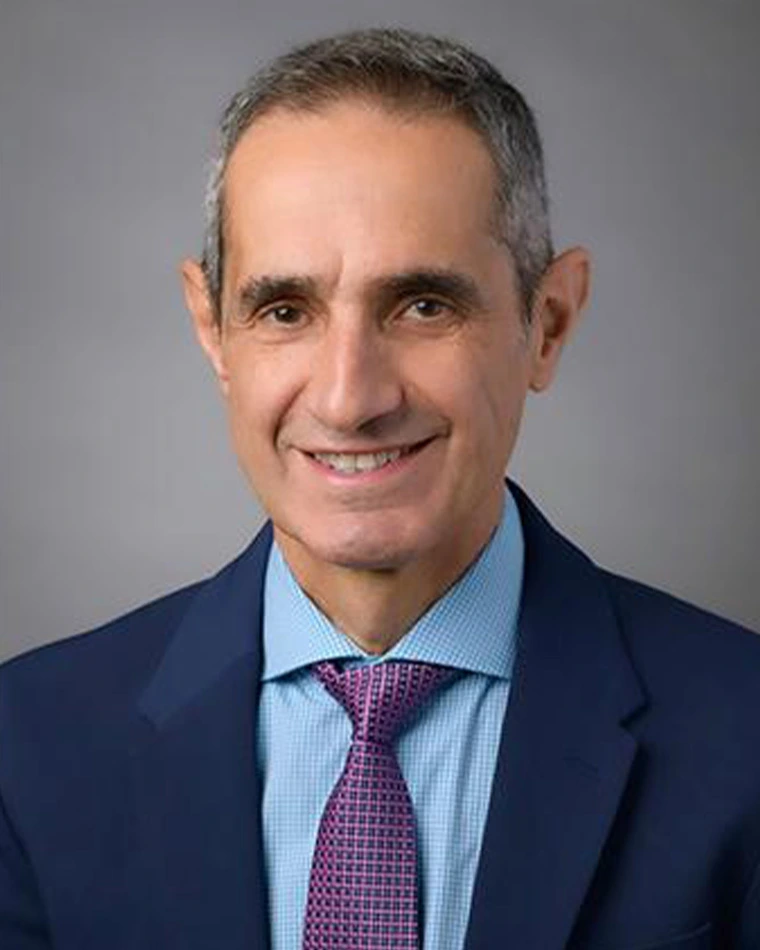
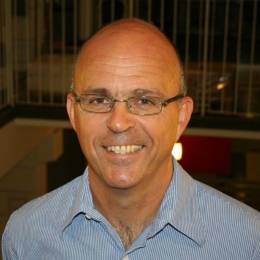
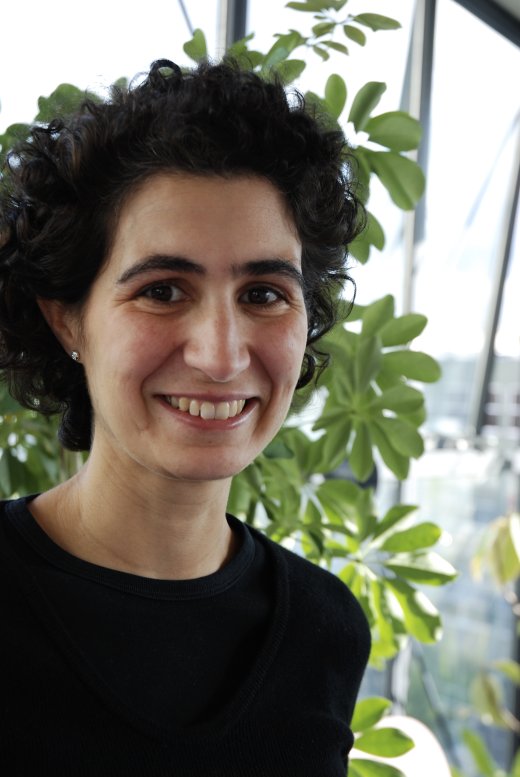
Peter Gingell is a Researcher at the University of Warwick's Physics Centre for Fusion, Space and Astrophysics. His work focuses on plasma dynamics in fusion and space environments, particularly ion-gyro-scale blobs in magnetically confined plasmas. He developed a 2D hybrid code for simulating plasma blob evolution, combining kinetic ion treatments with electron fluid models. His research addresses coherent plasma structures critical to understanding energy transport in fusion devices like tokamaks. Funded by the Engineering and Physical Sciences Research Council (EPSRC), his project is supervised by Prof Sandra Chapman and Prof Richard Dendy. He has published in Plasma Physics and Controlled Fusion , contributing to advancements in plasma simulation methodologies. His office is PS143, and he can be reached at p.gingell@warwick.ac.uk.
Farzad Mashayek is a Professor and Department Head of Aerospace and Mechanical Engineering at the University of Arizona, College of Engineering. He is a member of the Graduate Faculty and leads the Computational Multiphase Transport Laboratory. His research integrates high-fidelity simulations, machine learning, and experimental validation across diverse domains in fluid dynamics and energy systems. Educational Background: PhD in Mechanical Engineering, State University of New York at Buffalo, Buffalo, NY MS in Mechanical Engineering, Sharif University of Technology, Tehran, Iran BS in Mechanical Engineering, Sharif University of Technology, Tehran, Iran His research interests include turbulent reacting flows, plasma dynamics, electrostatic atomization, solid-ion and lithium batteries, computational fluid dynamics, and machine learning applications in engineering. He employs high-order spectral element methods, phase-field modeling, and deep neural networks to study complex multiphysics phenomena such as drop impact, battery degradation, and turbulence modeling. The recent publications reflect a strong trend toward integrating machine learning with multiphysics simulations, particularly in battery safety (thermal runaway prediction), materials characterization (STEM image analysis), and fluid dynamics (modal analysis of turbulence). His work often involves collaboration with experimental groups to validate models, especially in dental aerosol suppression and electrohydrodynamics. Scientific Awards: Sustained Service Award, American Institute of Aeronautics and Astronautics (AIAA), Spring 2022 Best Presentation Award, The 20th International Conference on Computational Mathematics, Parallel and Distributed Computing, Summer I 2018 Dr. Mashayek has secured funding from NSF (GOALI program) for controlled coating via charged droplet deposition. He advises graduate students and postdoctoral researchers in computational mechanics and energy systems, fostering interdisciplinary research. He has contributed to engineering education, particularly during the pandemic, with active learning strategies in online instruction. He leads a dynamic research team focused on advancing simulation tools and applying them to real-world challenges in energy, manufacturing, and public health.
Professor Thomas Bein is affiliated with the Department of Chemistry at Ludwig-Maximilians-Universität München (LMU) , where he leads the Functional Nanosystems research group. His work focuses on synthesizing and characterizing nanostructured materials with applications in energy, catalysis, and biomedical delivery. Mesoporous nanoparticles for drug delivery Semiconductor nano-morphologies for photovoltaics Photoelectrochemical water splitting Metal-organic frameworks (MOFs) Electroactive networks His research emphasizes atomic-scale control of material architectures using self-assembly, hydrogen bonding, and covalent interactions, enabling precise tuning of electronic, optical, and catalytic properties. A review of his recent publications reveals cutting-edge investigations into covalent organic frameworks (COFs), perovskite-inspired solar materials, and functional nanoparticle systems. Key trends include optimizing energy conversion efficiency, enhancing stability in optoelectronic devices, and exploring bio-compatible nanocarriers for targeted therapies. Professor Bein’s group actively contributes to interdisciplinary projects at the intersection of chemistry, physics, and biomedical engineering, with ongoing collaborations in solar energy, sustainable materials, and nanomedicine.
Alane Suhr is an Assistant Professor at UC Berkeley's Electrical Engineering and Computer Sciences (EECS) department and a member of the Berkeley Artificial Intelligence Research Lab (BAIR). Her research focuses on natural language processing (NLP), machine learning, and computer vision, emphasizing systems that interact with humans through language. She designs models and datasets for language grounding (e.g., NLVR) and develops algorithms for learning through interaction. Education: PhD in Computer Science, Cornell University (2022), advised by Yoav Artzi Bachelor's in Computer Science and Engineering, Ohio State University (2016), with a Linguistics minor Research Interests: Interactive systems for collaborative language use (e.g., CerealBar) Language grounding in multimodal contexts Embodied agents and reinforcement learning Generalization in NLP and the role of language in learning Key Contributions: Developed the NLVR dataset for visual reasoning with natural language Pioneered work on SWE-Gym for training software engineering agents Contributed to research on language models' sensitivity and commonsense reasoning Awards: ACM Doctoral Dissertation Award (2022) Outstanding Paper Awards at ACL 2023 and EMNLP 2021 Professional Activities: Organized workshops at ICML, NeurIPS, and ACL on topics like agents, generalization, and theory of mind Active in academic outreach and conference speaking (e.g., ICML, NeurIPS, CVPR) Labs/Teams: Berkeley Artificial Intelligence Research (BAIR) Lab SWE-Gym research group
Christopher G. Atkeson is a Professor at the Robotics Institute at Carnegie Mellon University (CMU), where he has been since 2000 after previously holding positions at MIT and Georgia Institute of Technology. His research focuses on fulfilling the science fiction vision of machines achieving human levels of competence in perception, cognition, and action, with particular emphasis on understanding how to get machines to generate and perceive human behavior. Atkeson's work spans two complementary approaches: humanoid robotics and human aware environments. His research interests include nonparametric learning, memory-based learning, reinforcement learning, learning from demonstration, and modeling human behavior. He is particularly known for his work on robot learning of challenging dynamic tasks such as juggling, trajectory-based optimization, and soft robotics (including his contributions to the Baymax character in Disney's Big Hero 6). His recent publications demonstrate a strong focus on tactile sensing (FingerVision), human-in-the-loop optimization for exoskeletons, deep learning for locomotion control, and trajectory-based optimization methods. His work consistently bridges theoretical foundations in machine learning with practical implementations on physical robots. Among his scientific recognitions are an NSF Presidential Young Investigator Award, a Sloan Research Fellowship, and a Teaching Award from the MIT Graduate Student Council. Atkeson has advised numerous students who have gone on to successful careers in academia and industry, including notable researchers like Andrew Moore and Stefan Schaal. His teaching includes courses on dynamic optimization, humanoids, kinematics, dynamics, and control.
Gianluca Iaccarino is a Professor of Mechanical Engineering at Stanford University and the Robert Bosch Chairholder. He serves as Director of the PSAAP Center and leads large-scale computational research initiatives in uncertainty quantification, exascale computing, and multiphysics simulations. His academic journey includes a PhD in Mechanical Engineering from Politecnico di Bari (2005), postdoctoral work at Stanford's Center for Turbulence Research, and progression from Research Engineer to full Professor. Education : PhD (Politecnico di Bari), MS/BS in Aeronautical Engineering (University of Naples) Research : Computational engineering, turbulence modeling, uncertainty quantification, biomedical fluid dynamics, and exascale-ready algorithms Publications : 15+ recent articles focus on turbulence modeling, data-driven simulations, and uncertainty quantification across diverse applications in aerospace, biomedical, and energy systems Awards : PECASE (2010), APS Fellow (2019), multiple best paper awards (AIAA, ASME), Terman Fellow (2007) Students : Advises doctoral and master's students in mechanical engineering and computational methods Leadership : Director of PSAAP Center (2014-present), Chair of Mechanical Engineering Department (2024-present)
Alexei A. Efros is a Professor in the Department of Electrical Engineering and Computer Sciences (EECS) at UC Berkeley, where he holds the Howard Friesen Professorship and is affiliated with the Berkeley Artificial Intelligence Research (BAIR) Lab. He previously served on the faculty at the Robotics Institute of Carnegie Mellon University (CMU) and completed a postdoctoral fellowship at the University of Oxford. His research spans data-driven computer vision, self-supervised learning, computational photography, and applications to computer graphics and robotics. His research interests include: Data-Driven Computer Vision Self-Supervised and Unsupervised Learning Generative Models and Image Synthesis Visual Representation Learning Applications in Robotics and Human-Computer Interaction Intersections with Human Vision and the Humanities The recent publications highlight a strong trend toward self-supervised learning, visual reasoning, and generative modeling, particularly diffusion models and 3D scene understanding. His work increasingly bridges computer vision with language, robotics, and cognitive science, emphasizing interpretability and real-world applicability. There is a clear focus on leveraging unlabeled data and developing methods for robust, generalizable AI systems. His scientific awards and recognitions include: Berkeley Fellowship Google Fellowship Soros Fellowship NSF Fellowship SIGGRAPH Outstanding Doctoral Dissertation Award Facebook Fellowship Adobe Fellowship CMU School of Computer Science Distinguished Dissertation Award ACM Doctoral Dissertation Honorable Mention Alexei Efros has advised numerous PhD students and postdocs, many of whom have gone on to faculty positions at top institutions including CMU, Stanford, MIT, Columbia, NYU, and Georgia Tech. His lab has received research funding from major tech companies and federal agencies, though specific grants are not detailed in the text. He teaches core computer vision and machine learning courses at both undergraduate and graduate levels at UC Berkeley. His research group is highly active, with ongoing projects in 3D perception, generative modeling, and vision-language systems. He leads a vibrant research lab at UC Berkeley, part of the BAIR consortium, collaborating with leading researchers such as Jitendra Malik, Trevor Darrell, Pieter Abbeel, and Angjoo Kanazawa. His lab fosters strong interdisciplinary connections with institutions worldwide, including Oxford, INRIA, and École Normale Supérieure.
Anette Mikes is an Associate Professor of Accounting at the University of Oxford’s Saïd Business School and a Hertford College Fellow. She specializes in risk management, corporate governance, and sustainability, with a focus on the intersection of ethics and organizational control systems. Her research explores how risk frameworks shape corporate decision-making, particularly in climate change and decarbonization contexts. Education: PhD in Accounting from the London School of Economics (2005) Pre-doctoral work in the City of London (2006–2007) studying Chief Risk Officer roles Research Interests: Behavioral approaches to risk management Management control systems for sustainability Ethics in corporate governance Decarbonization strategies in heavy industries Her 2012 Harvard Business Review article (with Robert Kaplan) on risk frameworks remains influential, while her documentary on the Kursk submarine disaster highlights crisis management failures. Awards: 2025 Honorary Doctorate from Uppsala University 2017 ACA Prize for Risk Management Contributions 2014 Global Risk Forum Film Award Key Contributions: Co-developed Harvard’s Risk Management executive program Leads research on ‘Values at Risk’ and corporate purpose Published widely on climate risk governance and ethical leadership Her recent work emphasizes decarbonization strategies and moral accountability in business, bridging accounting practices with environmental and ethical imperatives.
Richard M. Murray is the Thomas E. and Doris Everhart Professor of Control and Dynamical Systems and Bioengineering at the California Institute of Technology (Caltech). He holds a B.S. from Caltech (1985), M.S. from UC Berkeley (1988), and Ph.D. from UC Berkeley (1990). He has served in academic roles from Assistant Professor (1991–1997) to his current endowed professorship. He chaired the Engineering and Applied Science division (2000–2005) and Biology and Biological Engineering (2020–2024). His research focuses on feedback control in biological and autonomous systems, synthetic cells, and networked control systems. Collaborators include experts in robotics, synthetic biology, and systems biology. Key awards include the IEEE Control Systems Award and election to the National Academy of Engineering. His educational contributions span courses on control systems, robotics, and bioengineering. Current research projects include the Developer Cell initiative (Sloan Foundation), layered testing for autonomous systems (AFOSR), and microbiome-based environmental solutions (CHARMME, ARO). He advises numerous graduate students and postdocs, with notable alumni in academia and industry. Labs include facilities in Keck and Steele laboratories at Caltech. His work bridges control theory, synthetic biology, and autonomous systems to address societal challenges like environmental monitoring and safe autonomy.
Tomas Palacios is a Professor of Electrical Engineering at the Massachusetts Institute of Technology (MIT) , where he directs the Center for Graphene Devices and 2D Systems and leads the Microsystems Technology Laboratories (MTL). His research focuses on pushing the boundaries of microelectronics through novel semiconductor materials and device architectures, including Gallium Nitride (GaN) and 2D materials like graphene and molybdenum disulfide (MoS2). Professor, MIT Electrical Engineering and Computer Science Director, MIT Center for Graphene Devices and 2D Systems Clarence J. LeBel Professor, MIT Faculty Director, Northeast Microelectronics Internship Program (NMIP) Research Interests span multiple cutting-edge domains: High-frequency electronics (>300 GHz) for 6G and quantum applications High-voltage power devices (600V–10kV) for energy conversion Post-silicon logic devices using 2D materials High-temperature electronics (e.g., Venus rover applications) Distributed neural networks on large-area 2D materials Graphene-based biosensors and chemical detection systems Scientific Contributions include: Double recipient of the IEEE George Smith Award for groundbreaking GaN transistor work Co-invented first MoS2 electronic circuits Developed world’s first Wi-Fi-to-electricity conversion antenna Led MIT’s Microsystems Technology Laboratories since 2021 Advising Philosophy emphasizes cross-layer expertise, with students gaining experience from materials synthesis to system-level prototyping. His lab has incubated startups like Vertical Horizons , focused on GaN power devices for AI and EVs.
Rolf Halden is a Professor and Center Director at Arizona State University, holding appointments in the School of Sustainable Engineering and the Built Environment, the Biodesign Center for Environmental Health Engineering, and the Global Futures Scientists and Scholars program. He is a leading expert in environmental health engineering, wastewater-based epidemiology, and bioremediation. Education: Ph.D. in Civil (Environmental) Engineering, University of Minnesota (1997) M.S. in Civil (Environmental) Engineering, University of Minnesota (1994) M.S. in Biology, Technical University of Braunschweig, Germany (1992) Postdoctoral Fellow, Environmental Science, Lawrence Livermore National Laboratory (1998) Research Focus: Halden’s research integrates environmental chemistry, public health, and sustainability to understand how anthropogenic chemicals affect ecological and human health. His lab uses advanced mass spectrometry (LC-MS/MS, MALDI-TOF) to track pollutants such as PPCPs, microplastics, pesticides, and dioxins across air, water, soil, and biological systems. He pioneered the use of wastewater treatment plants as public health observatories, enabling real-time tracking of disease, drug use, and environmental exposures. Scientific Awards & Recognition: Leadership Award, Arizona State University (2018) Rocky Mountain Emmy Award (2018) Leroy E. Burney Lecturer, Johns Hopkins School of Public Health (2011) ACS Expert Program Member (2014–present) NIEHS Superfund R01 Working Group National Leader (2012–2014) Labs & Teams: Halden is the Founding Director of the Biodesign Center for Environmental Health Engineering at ASU, where he leads a multidisciplinary team focused on environmental proteomics, bioremediation, and diagnostic tool development. He also co-leads the Human Health Observatory , a national wastewater monitoring network. Grants & Funding: Halden has secured major funding from NSF, NIH, EPA, DoD, and private industry. Notable projects include the development of in-situ groundwater monitoring devices, national wastewater surveillance of SARS-CoV-2, and studies on microplastics and neurodegenerative disease.
Mauro Bambi is an Associate Professor at Durham University Business School and an Associate Fellow at the Institute of Advanced Studies. His research focuses on Macroeconomic Theory, Endogenous Growth, Habit Formation, and Behavioral Economics. He earned his PhD from the European University Institute (2007) and held positions at ETH Zurich and the University of York. He directs the Centre for Macroeconomic Policy (CEMAP) and has been recognized with the 2008 Italian Association of Applied Mathematics award for his PhD thesis. Education: PhD in Economics (European University Institute, 2007); Postdoctoral Fellowships at Université Catholique de Louvain (Belgium) and ETH Zurich (Switzerland). Research Interests: Macroeconomic Theory and Policy Design Endogenous Growth and Fluctuations Habit Formation in Economic Models Behavioral Economic Preferences Mathematical Methods in Macroeconomics Key Contributions: His work on habit formation models, time-to-build frameworks, and policy design has influenced macroeconomic theory. Recent studies analyze post-COVID demand shifts and pandemic economic impacts. Awards: 2008 Graduate Prize for Best PhD Thesis (Italian Association of Applied Mathematics). Advising and Leadership: Supervised PhD students like Federico Bertoni and Xinyi Xu. Directed CEMAP from 2019–2022, fostering macroeconomic policy research. Active in interdisciplinary collaborations at the Institute of Advanced Studies. Labs/Teams: Leader of CEMAP, collaborating with global institutions on macroeconomic policy analysis.
Per Krusell is Professor of Economics at Stockholm University and holds the Torsten and Ragnar Söderberg Chair at the Institute for International Economic Studies (IIES). He is a Fellow of the Econometric Society and served as President of the European Economic Association in 2020. He is currently the Secretary of the Prize Committee for the Sveriges Riksbank Prize in Economic Sciences in Memory of Alfred Nobel. Education: PhD in Economics, University of Minnesota Research Interests: Per Krusell’s research spans macroeconomics , inequality , climate economics , labor markets , and political economy . He has made foundational contributions to understanding incomplete markets, wealth distribution, optimal taxation, and the macroeconomic effects of climate change. His work often integrates dynamic stochastic general equilibrium (DSGE) models with heterogeneous agents to study long-run outcomes and policy impacts. Publications Trend: His recent publications (2022–2025) reflect a strong focus on climate policy , integrated assessment modeling , and macro-labor dynamics . Key themes include carbon taxation, labor supply responses to productivity growth, fiscal multipliers in heterogeneous-agent settings, and the macroeconomic consequences of vaccination and epidemic control. Awards & Honors: Fellow of the Econometric Society Torsten and Ragnar Söderberg Chair in Economics President, European Economic Association (2020) Secretary, Nobel Prize Committee in Economic Sciences Advising & Grants: While specific student names are not listed, his leadership roles in global economic associations and policy committees indicate extensive academic advising and grant involvement in macroeconomic policy and climate economics. Labs & Teams: He is affiliated with the Institute for International Economic Studies (IIES) at Stockholm University, a leading research institute in macroeconomics and international economics.
Lourdes Agapito is a Professor of 3D Vision at the Department of Computer Science, University College London (UCL), within the Faculty of Engineering Sciences. She leads research in Non-Rigid Structure from Motion (NR-SFM) and 3D reconstruction from monocular video sequences. Her work addresses dynamic scenes, deformable objects, and articulated structures, with applications in robotics and computer vision. She holds an ERC Starting Grant (2008–2014) and led the EU Horizon 2020-funded Second Hands project (2014–2019), collaborating with institutions like EPFL and KIT to develop robots with 3D visual perception for maintenance tasks. Her research group focuses on dense optical flow estimation, video registration, and deformable tracking. Agapito’s research interests include monocular 3D reconstruction, non-rigid motion analysis, and neural approaches to 3D modeling. She has supervised multiple PhD students and postdocs, including notable researchers such as Ravi Garg and Marco Paladini (Sullivan Prize recipient). Her contributions to conferences include roles as Program Chair for CVPR 2016 and CVPR 2017, and she has authored influential papers on topics like Video-Popup (ECCV 2014) and Modal Space (CVPR 2017). Current projects involve advancing neural parametric models and real-time 3D reconstruction techniques. Awards include the ERC Starting Grant and recognition for her team’s work in non-rigid reconstruction. She actively mentors students and collaborates on grants, with recent openings for postdocs and PhD candidates in 3D vision and robotics.
Jiaxuan You is an Assistant Professor at the Siebel School of Computing and Data Science, University of Illinois at Urbana-Champaign, leading the U Lab focused on achieving Artificial General Intelligence (AGI) in digital environments. His research spans graph neural networks (GNNs), relational data, foundation models, and machine learning systems. PhD and MS in Computer Science from Stanford University (2021) Developed GraphGym and PyTorch Geometric (PyG) for graph learning Core member at Kumo AI (2021-2023) His research explores: Graph-enhanced LLMs: Integrating relational structures into foundation models AGI Development: Self-optimizing AI agents and tool utilization ML Systems: Scalable architectures and redundancy-free computation Interdisciplinary Applications: Financial networks, crop yield prediction, and metro systems Recent publications focus on temporal reasoning, multi-agent dynamics, and hybrid architectures for LLMs. He actively develops open-source tools like DBGYM and GraphRouter. Scientific recognition includes: JPMC PhD Fellowship Baidu Scholarship Best Student Paper at AAAI 2017 World Bank Big Data Innovation Challenge winner He mentors PhD and intern students, emphasizing machine learning systems expertise. His lab collaborates on AGI workshops (e.g., ICLR 2024) and industry projects.