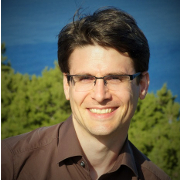
Prof. Dr. Alexander Stroh-Steckelberg is Professor of Political Science with a focus on African Politics & Development Policy at the University of Bayreuth since 2022. He serves as Deputy Head of the Bayreuth International Graduate School of African Studies (BIGSAS) until 2025 and has held prior roles as Junior Professor and Senior Fellow at BIGSAS (2015–2021). His academic career includes research associate positions at the GIGA German Institute of Global and Area Studies (2006–2015) and teaching roles at the Universities of Abomey-Calavi, Heidelberg, and Lüneburg. Stroh-Steckelberg’s research spans comparative democracy studies , judicial politics , electoral systems , political party dynamics , and development policy in Africa, with regional expertise in Francophone West Africa and Rwanda . His work emphasizes institutional diffusion, informal networks in courts, and the interplay between formal and informal governance structures. Recent publications reveal a focus on judicial appointment policies , electoral manipulation , and local governance challenges across Africa. He contributes to methodological advancements in comparative area studies and network analysis , particularly in non-Western democracies. Stroh-Steckelberg is actively involved in academic communities including the American Political Science Association , German Political Science Association , and Association for African Studies in Germany .
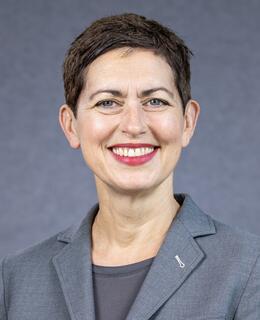
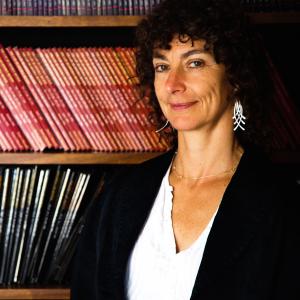
Kathleen R. McNamara is Professor of Government and Foreign Service at Georgetown University, where she also co-founded the Global Political Economy Project with Professor Abe Newman. Her work centers on the European Union, globalization, and the cultural and political foundations of market authority. Her research interests include the political economy of the European Union, monetary politics, culture and identity in global markets, institutional change, and the democratic legitimacy of supranational governance. She examines how ideas, norms, and collective identities shape economic integration and state formation, especially in Europe. Her recent publications (2020–2024) reveal a strong focus on the EU’s geopolitical turn, industrial policy transformation, the impact of crises like COVID-19 on globalization, and the interplay between democracy and populism. These works reflect a deep engagement with both theoretical and policy-relevant dimensions of contemporary European and global political economy. International Studies Association 2018 Distinguished Scholar in International Political Economy ISA 2020 SWIPE Award for Mentoring Women in International Political Economy German Marshall Fund Fellow Fulbright Fellow Simone Veil Fellow at the European University Institute (2023) McNamara has been a visiting scholar at the Russell Sage Foundation, taught at Princeton University and Sciences Po (Paris), and advised the US National Intelligence Council. She is active in public scholarship, writing for Foreign Affairs , Foreign Policy , and The Washington Post . She is a founding figure in the Global Political Economy Project, which aims to reframe the study of global markets through interdisciplinary and critical lenses.
Marcela Echeverri Muñoz is an Associate Professor in the Department of History at Yale University, affiliated with the Faculty of Arts and Sciences. Her scholarship bridges history, anthropology, and political theory, with a focus on Latin America, the Atlantic World, and the Spanish Empire. She is recognized for her interdisciplinary approach to understanding political subjectivities, state formation, and social transformation during the Age of Revolutions. PhD in Latin American and Caribbean History, New York University, 2008 MA in History of the Hispanic World, Fundación MAPFRE-Tavera and CSIC, Madrid, 2006 MA in Social and Political Theory, The New School for Social Research, 2001 BA in Anthropology, Universidad de los Andes, Bogotá, 1997 Her research centers on the interplay of race, gender, law, and political theory in colonial and 19th-century Latin America. She investigates how enslaved and Indigenous peoples navigated imperial and republican transitions, particularly through royalist affiliations. Her work challenges peripheral narratives of Spanish America in Atlantic slavery studies, positioning the region as a central site of abolitionist and constitutional experimentation. The trends in her recent publications reveal a sustained focus on slavery, abolition, and political transformation in the Spanish American mainland. She analyzes how anti-slavery movements were intertwined with republicanism, citizenship, and state formation, especially in Gran Colombia. Her scholarship spans legal history, Atlantic processes, and transimperial dynamics, often highlighting marginalized voices in revolutionary contexts. She frequently contributes to major reference works and edited volumes on Atlantic revolutions and Latin American independence. Her scientific awards and fellowships reflect her standing in the field: James Alexander Robertson Prize Michael Jiménez Prize Bolton-Johnson Prize Honorable Mention Yale Heyman Prize for Outstanding Scholarly Publication Alexander von Humboldt Research Fellowship MacMillan Research Fellow, Yale Mellon Residential Fellow, CUNY NEH Summer Institute Participant, Johns Hopkins Fellowships from John Carter Brown Library, CSIC, Fundación Mapfre, and Instituto Colombiano de Antropología e Historia Echeverri has secured significant research grants from Harvard’s Atlantic History Seminar, CUNY Research Foundation, and Yale. She has co-edited special issues on Gran Colombian history and Spanish American abolition, and led key academic initiatives including the Race and Slavery in the Atlantic World Working Group and the Early Modern Empires Workshop at Yale. Though student advising is not explicitly detailed, her role as a senior scholar implies mentorship of graduate students. She is affiliated with several research networks and has been a visiting scholar at institutions such as Freie Universität Berlin. Her ongoing book project on Gran Colombian slavery underscores her commitment to redefining the hemispheric significance of Latin American abolition. She remains an active contributor to both scholarly and pedagogical conversations in Atlantic and Latin American history.
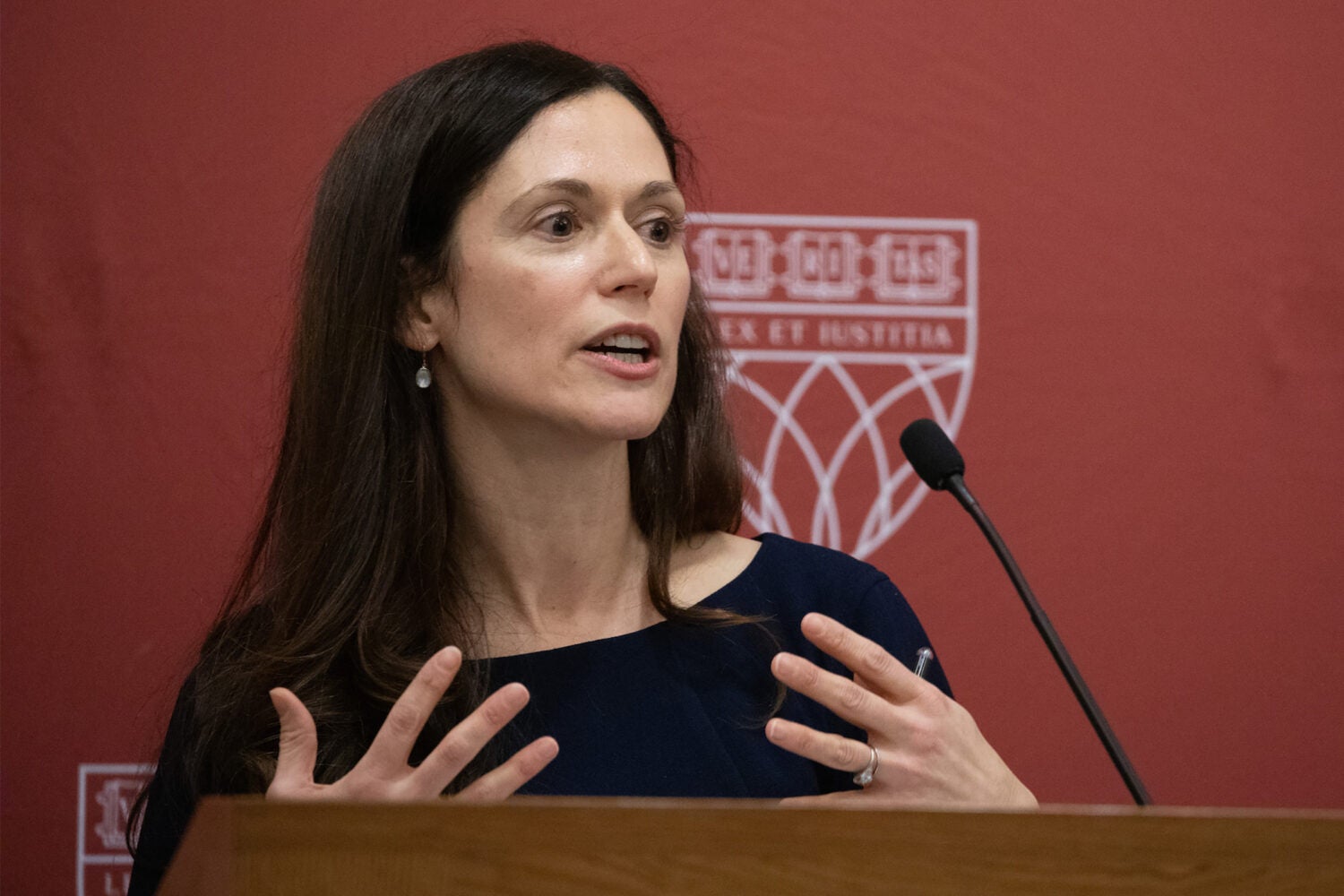
Daphna Renan is the Peter B. Munroe and Mary J. Munroe Professor of Law at Harvard Law School. Her work focuses on the U.S. presidency and the design of American democracy from the perspective of administrative and structural constitutional law. She has published extensively in leading law journals including the Columbia Law Review, Harvard Law Review, Stanford Law Review, Virginia Law Review, and Yale Law Journal. Renan received her B.A. in East Asian Studies from Yale College in 2000, summa cum laude. She earned an M.A. in International and Comparative Legal Studies from the University of London's School of Oriental and African Studies in 2001, and her J.D. from Yale Law School in 2004, where she served as an articles editor of the Yale Law Journal. Professor Renan's research centers on constitutional theory, particularly the relationship between judicial supremacy and democratic governance. She argues for 'a more political constitutionalism' that would distribute constitutional authority beyond the Supreme Court to democratically elected bodies. Her work explores presidential powers, the separation of powers, and how constitutional meaning is developed through political contestation rather than judicial finality. She contends that constitutional rights are 'only as secure as our politics can make them,' emphasizing the role of Congress and the executive in shaping constitutional interpretation. Renan's publications reveal a consistent focus on the provisional nature of constitutional order and the role of political institutions in constituting constitutional meaning. Her scholarship spans from historical analyses of political abolitionism's constitutional theories to contemporary critiques of judicial supremacy. A recurring theme is how unwritten norms and practices shape constitutional governance, particularly regarding presidential power. Her recent work with Nikolas Bowie examines the historical roots of judicial supremacy and advocates for congressional reclamation of constitutional authority. Professor Renan has held significant government positions, having served from 2009-2012 in the U.S. Department of Justice as a Counsel to the Deputy Attorney General and then as an Attorney Advisor in the Office of Legal Counsel. She also served on President-Elect Obama's Justice Department transition team. Prior to her government service, she clerked for Justice Ruth Bader Ginsburg of the U.S. Supreme Court and Judge Harry T. Edwards of the U.S. Court of Appeals for the District of Columbia Circuit.
Prof. Dr. Christian Volk is a Professor of Political Theory at Humboldt-Universität zu Berlin's Department of Social Sciences since 2020. Previously, he led the 'Politics and Law' research area at Freie Universität Berlin (2016–2020). His research focuses on democratic theory, legal and constitutional frameworks, and civil disobedience in modern democracies. He leads an ERC-funded project ('Protest and Order') exploring protest dynamics in Western democracies. Education: RWTH Aachen University (Political Science/Economics/Economic History), with a doctorate (2010) on Hannah Arendt's legal theory. Postdoctoral roles included managing DFG-funded projects on sovereignty concepts and coordinating research on international dissidence. Research Interests: Political Theory & Philosophy Democratic/Social Theory Legal/Constitutional Theory Civil Disobedience & Protest Movements Transnational Governance His work bridges classical thinkers like Arendt with contemporary issues like postcolonial critique and global order challenges. Publications Highlight: Over 30 peer-reviewed articles and monographs, including Arendtian Constitutionalism (2015) and Die Ordnung der Freiheit (2010). Recent work examines protest's democratic gestus and transnational civil society partnerships. Awards: Summa Cum Laude PhD (2010), 2013 'Outstanding Work' award for thesis. Active in academic leadership roles, including editorial boards for Democratic Theory and Zeitschrift für Politische Philosophie . Teaching: Offers courses on political terminology, Hannah Arendt's thought, and migration/postcolonial theory. Supervises doctoral candidates and maintains a public blog analyzing protest movements.
Laura Spitz is Dean and Professor at the University of Calgary Faculty of Law, with a concurrent Visiting Professorship at Université Paris 1 Panthéon-Sorbonne Law School. Her academic and professional journey spans multiple institutions, including Seattle University, University of New Mexico, Cornell University, and Thompson Rivers University. Educational Background: JSD, Cornell University JD, University of British Columbia BA, University of Toronto Spitz's research interrogates the legal construction of borders and identities, blending contracts, commercial law, and critical analyses of personhood in corporate and environmental contexts. Her work explores the limits of subject-object dichotomies in law and society. Notable awards include multiple Graduation Hooding Professor distinctions at the University of New Mexico and Colorado Law School, alongside teaching accolades. She contributes to constitutional pluralism debates and has co-authored influential works on legal personhood. A nonpracticing member of the Law Society of British Columbia, Spitz serves as a legal expert in contracts and business law, with experience in First Nations economic development and nonprofit law. She has advised on Supreme Court cases and held leadership roles in global engagement and international affairs.
Frederic Bloom is a Professor of Law at the University of Colorado College of Law, where he has taught since 2012. His scholarship focuses on structural, methodological, and design issues in modern federal courts. He earned his J.D. from Stanford Law School (Order of the Coif) and a B.A. from Washington University in St. Louis. Education: J.D., Stanford Law School (Order of the Coif) B.A., Washington University in St. Louis Bloom's research spans federal courts, constitutional law, jurisdictional design, and procedural frameworks. His work explores temporal dynamics in legal systems, judicial accountability mechanisms, and institutional constraints. Key publication themes include Judicial structure and supermajoritarianism Temporal analysis in adjudication Jurisdictional myths and realities Court litigation dynamics Awards: Order of the Coif (Stanford Law School) As a former clerk for Judge Sidney Thomas (9th Circuit) and Judge Marilyn Hall Patel (N.D. Cal), his academic practice integrates doctrinal analysis with institutional critique.
Associate Professor Mariah Zeisberg researches constitutional theory and American political development at the University of Michigan's Department of Political Science. Her work examines constitutional interpretation by non-judicial branches, executive authority in national security contexts, and democratic legitimacy. Her award-winning book 'War Powers: The Politics of Constitutional Authority' developed a relational theory of constitutional interpretation for elected branches. Current projects investigate antislavery constitutionalism, including Frederick Douglass's constitutional thought and the role of abolitionist family networks in shaping constitutional change. Teaching includes courses on constitutional politics, war powers, and legal theory. Her research bridges political theory, legal studies, and American political development to understand how political actors maintain constitutional fidelity outside judicial channels.
Carlos Portugal Gouvêa is an Associate Professor at the University of São Paulo Law School, where he leads multiple research centers including the Center for Corporate Governance (CGC-USP), Asian Legal Studies Center (CELA-USP), and Law and Poverty Group (GDP-USP). He is also the Chief Executive Officer of the Global Law Institute (IDGlobal), a leading think tank in Brazil focusing on environmental and social justice. Educational background includes S.J.D. from Harvard Law School and LL.B. and Livre-Docência from the University of São Paulo Research interests span corporate governance, ESG, human rights, and distributive justice in private law He has coordinated impactful projects including mapping global litigation on homelessness and analyzing carbon offset mechanisms in indigenous territories His scholarly work has influenced major rulings in the Brazilian Supreme Court, particularly regarding intellectual property and health rights. He is a human rights activist and founding member of influential non-profits like Instituto Sou da Paz and Conectas Human Rights. With a focus on high-impact research, his recent publications address racial diversity in corporate leadership, class action trends in Brazil, and social rights for marginalized populations. He actively engages in public policy and legal innovation through his roles in regulatory commissions and academic organizations.
Dr. David L. Smith is a Fellow and Director of Studies in History at Selwyn College, Cambridge, and an Affiliated Lecturer in the Faculty of History. He has held roles such as Graduate Tutor at Selwyn College, and previously served as Admissions Tutor (1992-2003) and Praelector (1996-2006). He was appointed to his current position in 1992 after completing his PhD under John Morrill's supervision, having earned his BA, MA, and PGCE in History from the University of Cambridge. His research focuses on early modern British political, constitutional, and legal history, particularly the seventeenth century, emphasizing the history of Parliament, monarchy, Royalism, and Oliver Cromwell’s career. He teaches undergraduate courses on British political history (1485-1714), MPhil modules on absolutism and state formation in Europe, and weekend/summer programs via Cambridge’s Institute of Continuing Education. His publications span edited volumes, book chapters, and reviews, reflecting expertise in revolution dynamics, monarchical governance, and historical analysis through film and manuscripts. Awards include Fellowship of the Royal Historical Society and leadership in the Cambridge History Forum. Smith actively supervises graduate research in early modern British history and is known for engaging adult learners through primary-source discussions and fieldtrips. His pedagogical approach highlights interdisciplinary connections between history and other fields, such as theater and legal studies.
James Hampshire is a Professor of Politics at the University of Sussex's School of Law, Politics and Sociology. He holds a BA in Modern History from the University of Oxford (1997), an MA in Political Philosophy from the University of York, and a D.Phil in Politics from Oxford (2002). His career includes positions as Research Fellow at Oxford's Department of Social Policy and Social Work and ESRC Postdoctoral Fellow in Oxford's Department of Politics and International Relations before joining Sussex in 2004. Hampshire's research examines the politics and governance of international migration, focusing on tensions between representative democracy, constitutionalism, capitalism, and nationhood in liberal states. His current project explores the political economy of migration, capitalism and inequality. He serves as Deputy Editor of the Journal of Ethnic and Migration Studies. His publications demonstrate consistent focus on immigration policy mechanisms in liberal democracies, especially the UK and EU contexts. Key themes include Brexit impacts, political economy of migration, EU governance structures, and discursive institutionalism. Recent work examines investor migration trends and post-Brexit policy transformations. Hampshire has secured multiple research grants including: CEASEVAL - Evaluation of Common European Asylum System (EU, 2017-2019) RDF8: Post-Referendum data collection (Sussex, 2017-2018) TEMPER project on temporary migration (EU FP7, 2014-2018) Citizens' Resilience in Times of Crisis (AHRC, 2012-2013) Migration to Europe in the digital age (Volkswagen Foundation, 2009-2012) He has supervised eight PhD students to completion on topics spanning UK immigration policy, EU-Turkish relations, border controls, and citizenship studies. He currently teaches undergraduate modules in Modern Political Thought and Immigration and the Liberal State, plus a postgraduate course on Managing Migration: Law, Governance and Politics.
William W. Burke-White is Professor of Law at the University of Pennsylvania Carey Law School , where he is a leading scholar at the intersection of international law and international relations. He also serves as Non-Resident Senior Fellow at the Brookings Institution and Senior Advisor to White & Case LLP , bridging academic research with policy and legal practice. He previously held leadership roles as Inaugural Director of Perry World House (2014–2019) and Deputy Dean of Penn Law (2011–2014). Harvard University – A.B., J.D. University of Cambridge – Ph.D. in International Relations (Fulbright Scholar) Burke-White’s research focuses on global governance, multilateral institutions, U.S. foreign policy, human rights, and international economic law . His work examines how shifting power dynamics affect international legal structures and how sub-state actors influence global norms. He has significant regional expertise in Russia, Eastern Europe, and Latin America . His current book project explores the new geography of global governance . His recent scholarly output reveals a consistent trend toward analyzing institutional reform, legal pluralism, and the interplay between domestic and international law . He frequently publishes in top journals on topics such as investor-state arbitration, complementarity in international criminal law, and the legitimacy of global legal regimes. His work often combines doctrinal legal analysis with political science theory. A. Leo Levin Award (2008) Robert A. Gorman Award for Excellence in Teaching (2007) Burke-White has advised governments, law firms, and investment funds on sanctions, sovereign debt, and international litigation. He has served as an expert witness in international arbitrations and currently advises sovereign states on cases before the International Court of Justice . He is also active in media commentary, contributing to The Hill, CNN, The Atlantic , and others. He has taught as a visiting professor at institutions including Harvard Law, Hebrew University, and Moscow State Institute of International Relations .
Sandra Fredman is Professor of the Laws of the British Commonwealth and the United States at the University of Oxford, with a professorial fellowship at Pembroke College. A leading scholar in equality and human rights law, she has authored seminal works including Human Rights Transformed and Discrimination Law . Her research focuses on comparative equality frameworks, socio-economic rights, and the intersection of gender with legal structures. Fredman holds degrees from the Universities of Witwatersrand and Oxford, and has advised governments globally on anti-discrimination legislation. She founded the Oxford Human Rights Hub in 2012, directing its interdisciplinary research on rights-based approaches to labor, education, and marginalized populations. Her academic contributions span 48 peer-reviewed articles addressing contemporary issues like gig economy labor rights, pandemic-era equality obligations, and platform work regulation. Fredman has received significant recognition including British Academy Fellowship (2005) and honorary QC status (2012). Her work emphasizes 'substantive equality' as a proactive duty, challenging traditional legal paradigms through intersectional analysis. Key research initiatives include the Oxford Martin Programme on Human Rights for Future Generations and the Fairwork Foundation, addressing modern work challenges. Fredman's scholarship bridges theory and practice, influencing global policy through engagement with UN agencies, the EU, and international NGOs. Her teaching encompasses human rights law, labor law, and equality jurisprudence.
Dr Andrew Woodhouse is a Lecturer in Law at the University of Liverpool and Director of the Liverpool Public Law Unit. He holds an academic position within the School of Law and Social Justice, Faculty of Humanities and Social Sciences. His research focuses on critical approaches to EU and UK public law, particularly through Marxist and political economy lenses, examining the EU’s climate policies and the role of national parliaments in EU governance. He completed his PhD in 2018 on national parliaments and EU law, leading to publications in top journals like the Common Market Law Review and European Law Review. Woodhouse has held visiting roles at the University of Antwerp and the University of Michigan (Grotius Research Scholar, 2019), and is currently a visiting fellow at the Amsterdam Centre for European Law and Governance (UvA). His recent work critiques the EU Emissions Trading System using commodity-form theory, arguing for democratic control over decarbonisation. He teaches EU law, public law, and comparative constitutional law, supervising critical dissertations and PhDs in these areas. Professional activities include organizing the EU Law and Critique of Capitalism webinar series (2021), and serving on the Education Team for the LLM program. His scholarly awards include the Grotius Research Scholarship (2019).
Matthew J. Nelson is a Professor of Politics and Head of the Department of Politics and International Studies at SOAS University of London. He holds a BA from Bowdoin College and a PhD from Columbia University. His research focuses on South Asian politics, particularly the intersection of religion, law, and democracy. He has held academic positions at institutions such as UC Santa Cruz, Yale University, and the Institute for Advanced Study (IAS) in Princeton. Professor Nelson's work examines topics including Islamic law, constitutionalism, non-elite politics, and the dynamics of democracy in Pakistan, Bangladesh, Afghanistan, and India. He is a member of the SOAS South Asia Institute and a founding member of the Centre for Comparative Political Thought and the Centre for Conflict, Rights, and Justice. He has served on boards for organizations like the American Institute of Pakistan Studies and the Religion and Politics Section of the American Political Science Association. His recent publications analyze Taliban governance, religious opposition forces in Bangladesh, and the interplay between constitutional frameworks and religious freedom. He has also contributed to policy consultations with institutions like the Brookings Institution and the British Foreign, Commonwealth, and Development Office. His advising includes supervising PhD theses on topics such as Pakistan’s constitutional changes and bureaucratic appointments. His academic contributions span authored books, peer-reviewed articles, book chapters, monographs, and opinion pieces on South Asian politics and Islamism.