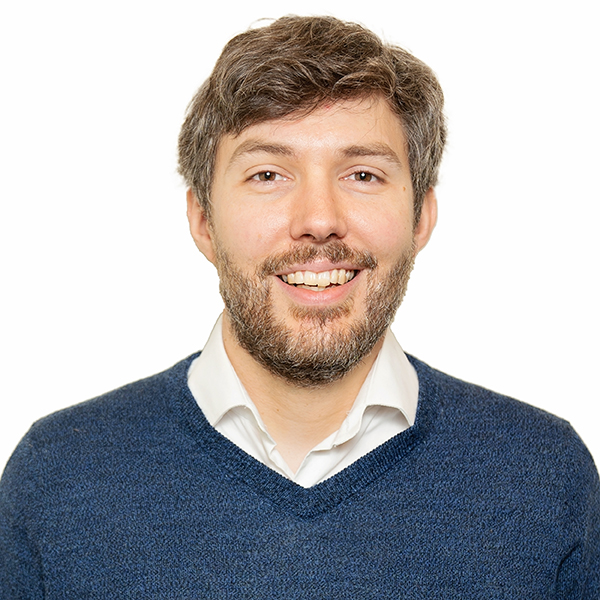
Liam O’Loughlin is an Associate Professor in the Department of English at Capital University, where he researches postcolonial literatures, environmental humanities, and cultural studies. His current project examines disaster representations in contemporary South Asian fiction. He holds a PhD in Critical and Cultural Studies from the University of Pittsburgh and a BA in English from the University of Maryland. His research intersects postcolonial theory, environmental criticism, and media studies, with a focus on: Industrial/environmental disasters in literature Global Black and South Asian cultural relationships Institutional critiques of academic fields Documentary film and anti-colonial narratives His publications consistently explore postcolonial disaster narratives, institutional power structures, and transnational solidarity, with recent work emphasizing South Asian-Black diasporic connections and ecological crises. Thematically, articles engage with trauma, representation politics, and decolonial theory across literary and visual media. Professor O’Loughlin co-edits scholarly collections, including a special issue of South Asian Review on disaster representations. He teaches courses spanning Postcolonial/Global Literatures, Literature and the Environment, and Academic Composition.
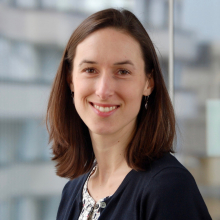
Christine Tardif is an Assistant Professor in the Department of Biomedical Engineering and the Department of Neurology and Neurosurgery at McGill University. As head of the McConnell Brain Imaging Centre lab at the Montreal Neurological Institute, she develops advanced MRI techniques for in-vivo brain imaging, focusing on quantitative mapping of myelin and cortical microstructure. Her work spans methodological innovation (e.g., multi-modal biophysical modeling) and translational applications across preclinical (7 Tesla) and clinical (3 and 7 Tesla) systems. Undergraduate: B.Eng. in Computer Engineering, McGill University (2004) Master's: M.Sc. in Bioengineering, Imperial College London (2006) PhD: Biomedical Engineering, McGill University (2011) Her research explores myelin dynamics in health and disease, emphasizing its role in neural conduction, brain plasticity, and cognitive functions. The lab investigates dysmyelination in psychiatric disorders (e.g., bipolar disorder) and neurodegenerative conditions (e.g., multiple sclerosis) using relaxometry , magnetization transfer , and diffusion-weighted imaging . Recent methodological work includes 3D MERMAID sequences for motion-insensitive diffusion imaging and optimization of magnetization transfer saturation maps. Current projects integrate ultra-high field MRI with histological validation in preclinical models (e.g., marmoset brain sections), aiming to bridge microstructural metrics with macro-scale brain function. Applications span Alzheimer's disease risk assessment via white matter alterations, synaptic density mapping in psychosis, and cortical laminar differentiation studies.
Nuno Miguel Fonseca Ferreira is a Full Professor at the Instituto Superior de Engenharia de Coimbra (ISEC), part of the Polytechnic of Coimbra, where he currently serves as President of the Scientific Council. His academic career spans over 25 years at ISEC, progressing from Assistant to Professor Coordenador Principal. He has held significant leadership positions including Vice-President of ISEC (2001-2005), Pro-President of the Polytechnic of Coimbra (2009-2010), President of ISEC (2010-2013), and Vice-President of the Polytechnic of Coimbra (2013-2017), where he was responsible for internationalization initiatives. His educational background includes a degree in Electrical Engineering from the University of Porto (1996), a Doctorate in Electrical Engineering from the University of Trás-os-Montes and Alto Douro (2006), and a Habilitation Title (Aggregation) from the same institution (2020). His research focuses on Robotic Systems, with specialization in cooperative robotic systems as evidenced by his Habilitation work. Professor Ferreira's research spans multiple domains of robotics and intelligent systems, with particular emphasis on multi-robot coordination, environmental applications, and medical robotics. His work bridges theoretical control systems with practical applications across diverse fields including forestry, healthcare, manufacturing, and education. He has developed innovative approaches to robotic manipulation, sensor integration, and human-robot interaction, often incorporating advanced techniques from artificial intelligence and machine learning. His recent publications demonstrate a strong trend toward practical applications of robotics in real-world environments, particularly in forestry maintenance, industrial automation, and medical applications. The research shows progression from theoretical control systems to applied robotics in challenging environments, with increasing integration of computer vision, deep learning, and collaborative systems. His work spans both fundamental robotics research and immediate industrial applications, reflecting a balance between academic inquiry and practical implementation. Professor Ferreira has supervised two doctoral theses and participated in numerous research projects with substantial funding. His leadership extends to coordinating 15 of the 33 national and international R&D projects he has participated in, demonstrating significant grant acquisition and management capabilities. His international collaborations through Erasmus+ and other European programs highlight his role in fostering global research partnerships. He is an integrated member of GECAD (Research Group in Engineering and Intelligent Computing for Innovation and Advanced Development), a Portuguese R&D unit classified as Excellent by the Portuguese Science and Technology Foundation. Additionally, he is a member of LASI (Associated Laboratory for Intelligent Systems), the Portuguese laboratory associated with Artificial Intelligence, connecting him to a broader national research ecosystem.
Professor Michael Ramage is a Senior Lecturer in the Department of Architecture at Cambridge University , where he directs the Centre for Natural Material Innovation . He is also a fellow of Sidney Sussex College and co-founder of Light Earth Designs . His academic background includes architecture studies at MIT and professional experience at Conzett Bronzini Gartmann in Switzerland. His research focuses on low-energy structural materials , natural material innovation , and sustainable housing in developing regions, with particular emphasis on engineered timber and bamboo . The 15 most recent publications highlight trends in modular timber construction , 3D printed earthen materials , and climate action in the building sector . Key subfields include circular economy , resource optimization , structural testing , and behavioral impacts on decarbonization . He has secured research funding from the Leverhulme Trust , Engineering and Physical Sciences Research Council (EPSRC) , Royal Society , and British Academy .
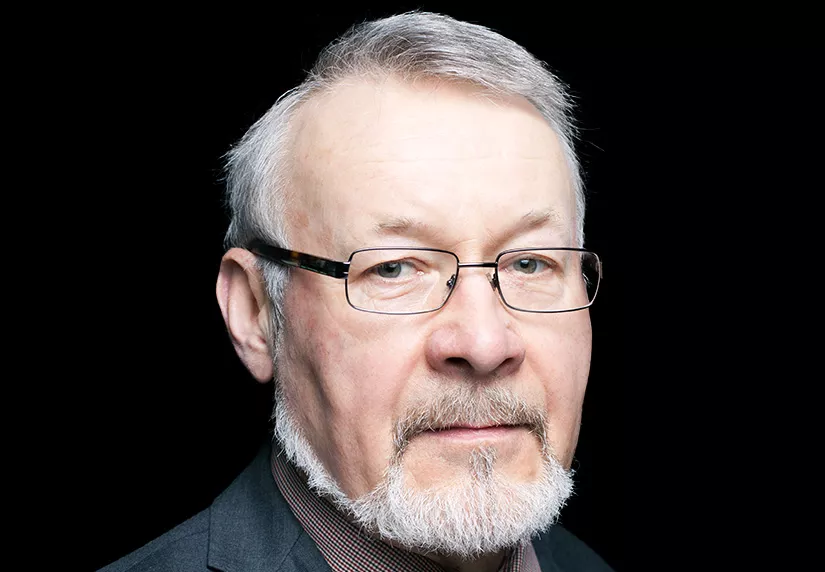
Thomas W. Malone is the Patrick J. McGovern Professor of Management at the MIT Sloan School of Management. He holds joint appointments as Professor of Information Technology and Professor of Work and Organizational Studies. As founding director of the MIT Center for Collective Intelligence, he leads pioneering research on how people and computers can connect intelligently. Previously, he founded the MIT Center for Coordination Science and co-directed the MIT Initiative on 'Inventing the Organizations of the 21st Century'. His teaching focuses on organizational design, IT, and leadership. His research examines how new organizations leverage information technology, with groundbreaking predictions about electronic business in 1987. Major works include the influential books The Future of Work (2004) and Superminds (2018). Research areas span: Collective Intelligence: Designing systems combining human and machine intelligence Organizational Structure: Decentralization, coordination, and future work models Climate Solutions: Crowdsourcing through Climate CoLab AI Implications: Human-AI collaboration in business strategy His publications demonstrate consistent focus on collective problem-solving, with recent emphasis on AI-workforce integration, remote team intelligence, and computational group metrics. Key research projects include the Collective Intelligence Design Lab, Minglr, Climate CoLab, and Measuring Collective Intelligence. Honors include an honorary doctorate from the University of Zurich . He co-founded four software companies and holds 11 patents in collaboration systems and organizational modeling. He directs the MIT Center for Collective Intelligence, leading interdisciplinary teams on global challenges. Current initiatives explore AI-enhanced prediction markets, collective intelligence genomes, and hybrid human-machine systems for organizational design.
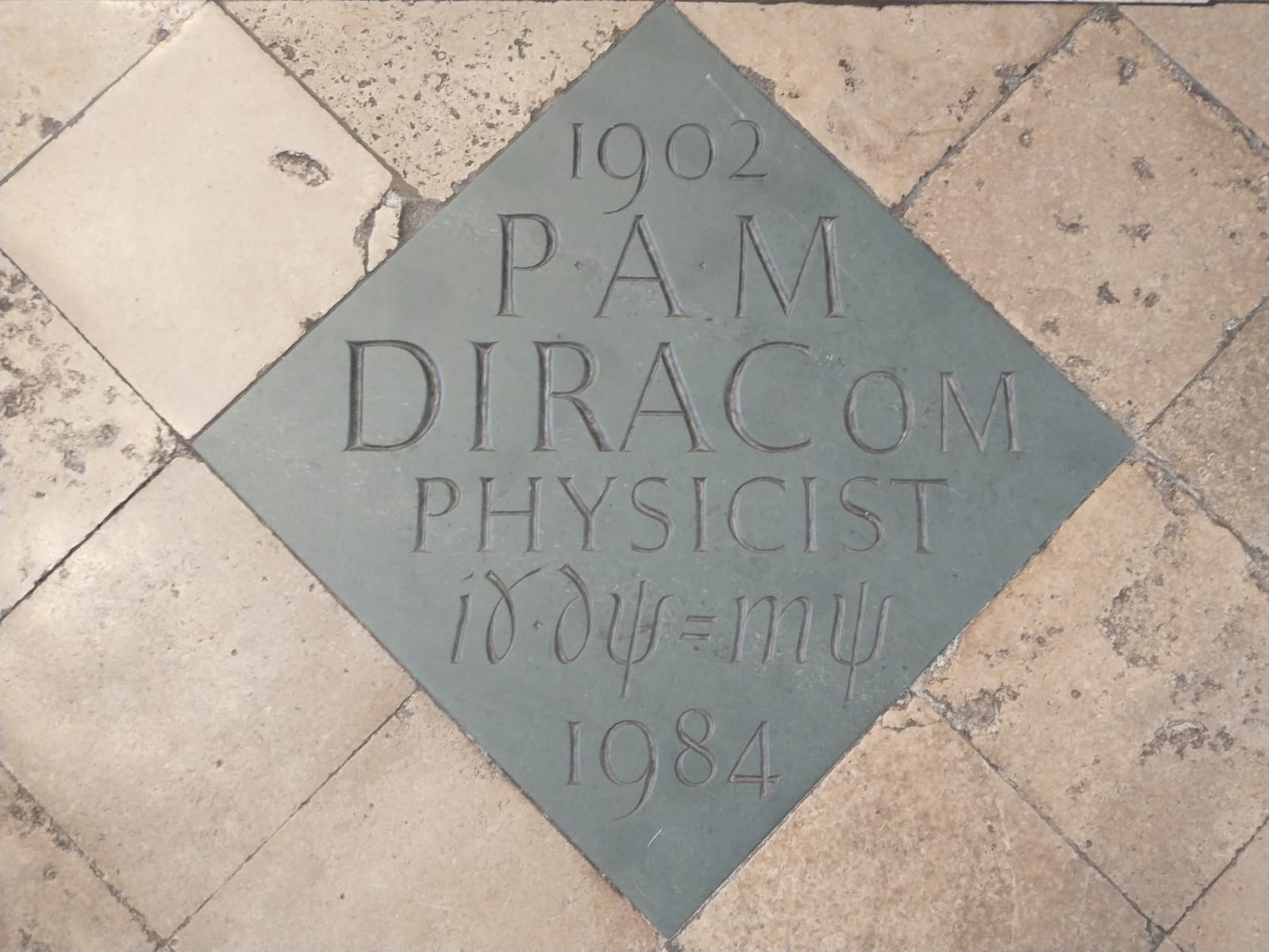
Dan Ciubotaru is Professor of Mathematics at the University of Oxford's Mathematical Institute and Diana Brown Fellow and Tutor in Pure Mathematics at Somerville College. He completed his PhD at Cornell University in 2004 and maintains active research and teaching roles within the university's Mathematical, Physical and Life Sciences Division. His educational background includes: PhD in Mathematics, Cornell University (2004) Ciubotaru specializes in representation theory of reductive Lie groups and p-adic groups, with core focus areas including the unitary dual, local Langlands correspondence, affine Hecke algebras, Coxeter groups, and Dirac operators. His work bridges algebraic structures with harmonic analysis and number theory, particularly through the study of wavefront sets and unipotent representations. This research contributes significantly to understanding automorphic forms and geometric aspects of the Langlands program. Analysis of his 2022-2025 publications reveals concentrated advancement in wavefront set theory for p-adic groups, with recurring themes in unipotent representations, Langlands parameters, and symplectic Dirac operators. His work consistently connects representation-theoretic structures with geometric and arithmetic properties, demonstrating strong collaboration networks across international mathematics communities. His scientific recognition includes: Diana Brown Fellowship (Somerville College) MPLS Teaching Award (2017) Ciubotaru has secured significant research funding as Principal Investigator for EPSRC grants including "New Horizons" EP/V046713/1 (2021-2023) and EP/N033922/1 (2016-2020). He serves on editorial boards for Documenta Mathematica (2015-2024) and Quarterly Journal of Mathematics (2017-present), and teaches advanced courses including "Representations of semisimple Lie algebras" (C2.3). While no dedicated research labs are specified, his extensive co-authorship with scholars like Mason-Brown, Okada, and Barbasch indicates active participation in global representation theory networks, particularly through collaborations on p-adic group representations and Langlands program applications.
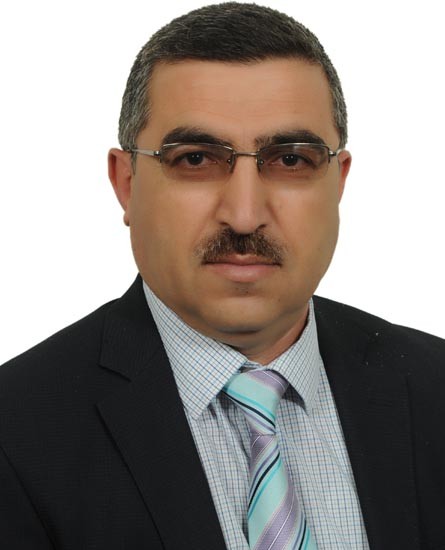
MUSTAFA KESKİN serves as an Associate Professor in the Department of Arabic Language and Rhetoric within the Faculty of Theology at Gaziantep University, Turkey. Appointed to this position in 2021 after serving as a Doctor Lecturer since 2013, his academic career is deeply rooted in Islamic theological studies with specialized expertise in Arabic linguistics and rhetoric. His institutional affiliation spans both the Department of Fundamental Islamic Sciences and the specialized Department of Arabic Language and Rhetoric, reflecting his dual focus on theological scholarship and linguistic analysis. His educational trajectory includes: Doctorate (2013-2017): Gaziantep University, Institute of Social Sciences, Department of Basic Islamic Sciences Master's (2011-2013): Harran University, Institute of Social Sciences, Tafsir (Thesis) Licence (2008-2010): Ankara University, Faculty of Theology, Theology Undergraduation Completion (Distance Education) Associate Degree (2006-2008): Anadolu University, Faculty of Open Education, Department of Theology Licence (1995-2002): Anadolu University, Faculty of Business Administration Professor Keskin's research centers on the intersection of Arabic linguistic structures and Islamic theological texts, with particular emphasis on rhetorical devices in the Quran and Hadith literature. His work explores how classical Arabic grammatical frameworks inform Quranic exegesis, analyzes historical linguistic schools like the Baghdad tradition, and investigates poetic devices in early Islamic literature. This scholarship bridges philological precision with theological interpretation, revealing how linguistic choices shape religious meaning in foundational Islamic texts. His publications consistently demonstrate methodological rigor in applying classical Arabic linguistic theories to theological source materials. Analysis of his 15 most recent publications (2018-2024) reveals three dominant scholarly trajectories: systematic examination of rhetorical devices in Quranic surahs (particularly tibāq and metaphor), critical engagement with classical Arabic grammatical treatises (including works by Müberred and al-Fārisī), and historical studies of Islamic scholarly networks connecting Anatolia and Syria. His work demonstrates growing international collaboration, with increasing co-authorship in Arabic-language publications alongside Turkish and English outputs. The research consistently applies linguistic analysis to theological questions, creating a distinctive niche in Quranic stylistics and classical Arabic rhetoric. No scientific awards were documented in the source materials. Professor Keskin has supervised 15 graduate students across doctoral and master's programs, with thesis topics reflecting his core research interests. Doctoral work includes semantic analysis of Quranic roots (e.g., 'krm') and classical rhetorical poetry, while master's research spans prophetic traditions in poetry, Quranic command structures, and human values in early Arabic poetry. His editorial work on 6 academic volumes complements this mentoring role, particularly in publishing classical Arabic texts with contemporary commentary. Conference presentations (9 international venues) demonstrate active scholarly engagement, though specific research grants were not documented in the source materials. No dedicated research laboratories or formal research teams were mentioned in the institutional documentation.
Louis Collins is a Professor in the Department of Biomedical Engineering and Department of Neurology and Neurosurgery at McGill University, with associate membership at the Center for Intelligent Machines. His work focuses on advanced medical imaging techniques for neurological applications. Key Expertise: Non-linear image registration, model-based segmentation, neuroimaging, MRI analysis Applications: Alzheimer's disease, Parkinson's disease, multiple sclerosis, epilepsy, schizophrenia Methodology: Development of computer vision algorithms for image-guided neurosurgery (IGNS), automated atlasing, and biomarker quantification Collins' research combines computational neuroanatomy with clinical translation, particularly in: Quantifying brain atrophy and anatomical variability across populations Optimizing MRI templates for improved diagnostic accuracy Developing tools like SEEGAtlas for surgical electrode classification Exploring neurophysiological fingerprints of neurodegenerative diseases His lab (NIST-Lab) actively pursues CIHR-funded projects on ultrasound-based image-guided neurosurgery and machine learning applications in clinical trials.
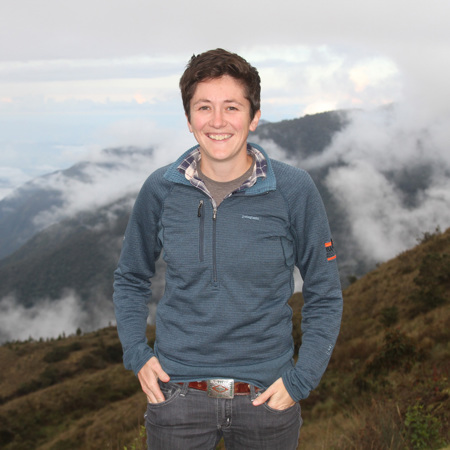
Sarah W Fitzpatrick is an Associate Professor at the Kellogg Biological Station, Michigan State University, with a focus on evolution, ecology, and conservation of natural populations. Her research integrates genomic tools, mark-recapture methods, and experiments to study gene flow, drift, and selection in population dynamics. University: Michigan State University School: Kellogg Biological Station Department: Integrative Biology Email: sfitz@msu.edu Research Interests: Her work emphasizes genetic rescue mechanisms, population persistence under environmental stress, and the interplay of genomic variation with conservation strategies. Key areas include adaptive traits, demographic modeling, and wildlife management. Recent Publications: Her studies span from 2025 to 2009, with a focus on genetic rescue in endangered species (e.g., Florida Scrub-Jays, Trinidadian guppies), genomic tools in conservation, and environmental stress effects on populations. Articles highlight translocation strategies, local adaptation, and microbiome interactions.
Francesco Lin serves as an Associate Professor in the Department of Mathematics at Columbia University, with his office located in Room 613. He is actively engaged in research and teaching, with upcoming responsibilities including a topics course at the University of Pisa during Fall 2025 leave and Modern Analysis II in Spring 2026. Lin's research centers on low-dimensional topology and geometric analysis, specializing in gauge theory, Floer homology, hyperbolic geometry, and spectral theory. His work critically examines the Dirac and Maxwell equations, exploring their implications for geometric structures and topological invariants in three and four-dimensional manifolds. This focus bridges analytical methods with deep topological questions. Recent publications demonstrate a cohesive trajectory in applying spectral methods and Floer theory to hyperbolic manifolds. Key investigations include Dirac spectral flow, adjunction inequalities, integral rigidity in Seiberg-Witten theory, and the topology of Dirac equations on spectrally large manifolds. These works reveal consistent emphasis on three-manifold geometry, spectral invariants, and the interplay between gauge theory and hyperbolic structures. His research program is supported by two National Science Foundation grants: "New directions in monopole Floer homology" (DMS-2203498) and "Monopole Floer homology and the torus of flat connections" (DMS-2503714). While no current advisees are documented, Lin maintains active teaching commitments and collaborates with researchers including M. Lipnowski, B. Martelli, and M. Miller Eismeier.
Michael Parzer is an Associate Professor in the Department of Sociology at the Faculty of Social Sciences. His academic work focuses on migration studies, refugee integration, and the intersection of artistic practice with social integration processes. He maintains an active research profile with extensive publication output and ongoing research projects that address contemporary migration challenges. Parzer's research interests encompass Migration Studies, Refugee Integration, Cultural Production, Social Inequality, Artistic Practice, and Transdisciplinary Research . His work often examines how migrants, particularly refugees, navigate social structures and cultural landscapes through artistic expression and musical activities. A significant portion of his recent research has focused on Ukrainian refugees and their integration processes in Austria. His publication record shows substantial scholarly output with 91 publications documented, including numerous articles in 2023 and 2024. His recent work demonstrates a strong focus on refugee experiences, particularly examining how artistic practices facilitate integration and shape social identities in post-migrant societies. The publications reveal a consistent engagement with methodological innovation, often employing transdisciplinary and participatory approaches. Parzer is currently leading or participating in multiple research projects including: MUsikCOnnect (MU_CO) (2023-2025): Developing an online platform for inclusive music education The Art of Arriving (2021-2024): Reframing refugee integration through artistic practices Migration Ties (2020-2022): Examining transnational connections based on migrants' social milieu His academic contributions connect with UN Sustainable Development Goals, particularly those addressing social inequality and inclusive societies. Parzer actively engages with public discourse through media contributions and academic presentations, demonstrating commitment to translating research into practical insights for policymakers and practitioners working in migration and integration fields.
Dr. hab. Witold Maciejewski is a linguist and Scandinavianist at SWPS University in Krakow, Poland. He serves as faculty in the Interdisciplinary Faculty's Department of Humanities, where he teaches courses on Swedish language grammar and history, comparative grammar of Scandinavian languages, and contrastive grammar. Specializing in general linguistics, Scandinavian and Polish studies, and regional studies, Dr. Maciejewski focuses particularly on Polish-Swedish contrastive linguistics. His research examines linguistic differences between Polish and Scandinavian languages and cultures, including work approaches between Poland and Scandinavia, particularly regarding working hours and efficiency. He has made significant contributions to understanding cross-cultural communication patterns and linguistic structures across these language families. Dr. Maciejewski co-authored the book "Runy" (2011), has published numerous book chapters and scholarly articles, and serves as editor-in-chief of "Acta Sueco-Polonica," a journal dedicated to Polish-Scandinavian relations. His publication history shows consistent research in Scandinavian linguistics, translation studies, and Polish-Scandinavian cultural comparisons, with particular emphasis on historical documents, Bible translations, and grammatical structures. Order of the Polar Star (2011) - One of Sweden's most important decorations awarded to foreigners for outstanding contributions to Sweden and promoting its culture worldwide As a leading scholar in Scandinavian studies in Poland, Dr. Maciejewski has been instrumental in developing academic programs and research initiatives in this field. He served as head of the Department of Scandinavian Studies at SWPS University and participated in the inauguration of the Institute of Scandinavian Studies at SWPS University in Warsaw in March 2006. His work has helped establish and strengthen academic connections between Polish and Scandinavian institutions.
Hao Shen is a Professor in the Department of Mathematics at the University of Wisconsin-Madison. His academic work focuses on stochastic partial differential equations and their connections with quantum field theory, statistical mechanics, and geometric flows. Dr. Shen's educational background includes a PhD from Princeton University in 2013 under the supervision of Weinan E. He completed postdoctoral training at the University of Warwick with Martin Hairer (2014-2015) and served as a Ritt Assistant Professor at Columbia University with Ivan Corwin (2015-2018) before joining UW-Madison. Hao Shen's research interests span multiple areas of mathematical physics and probability theory: Stochastic partial differential equations (SPDEs) Quantum field theory, particularly Yang-Mills theory and gauge theories Statistical mechanics and interacting particle systems Geometric flows, including Ricci flow Stochastic quantization methods Renormalization theory for singular SPDEs His recent publications demonstrate a strong focus on the mathematical foundations of quantum field theories through stochastic methods, with particular attention to Yang-Mills theory in various dimensions and the O(N) sigma model. Shen's work often bridges rigorous mathematical analysis with physical applications, employing advanced techniques from regularity structures, paracontrolled distributions, and stochastic analysis. Simons Fellow in Mathematics (2024-2025) NSF CAREER DMS-2044415 (2021-2026) NSF DMS-1954091 (2020-2023) NSF DMS-1712684 / DMS-1909525 (2017-2020) As an academic leader, Dr. Shen serves on the editorial boards of prestigious journals including Annals of Probability, Stochastics and Partial Differential Equations: Analysis and Computations, and Annales de l'Institut Henri Poincaré. He actively contributes to the mathematical community through organizing conferences and summer schools, such as the 2024 MSRI/SLMath Summer Graduate School on "Stochastic quantization" and the upcoming 2025 SLMath semester program "Recent Trends in Stochastic Partial Differential Equations." Dr. Shen's teaching portfolio includes advanced courses in probability theory, stochastic analysis, and specialized topics in stochastic partial differential equations. His commitment to education is evident in his development of graduate-level courses that bridge theoretical mathematics with applications in physics.
G. Petur Nielsen, MD is a Professor of Pathology at Harvard Medical School and serves as Subspecialty Head, Bone and Soft Tissue Pathology at Massachusetts General Hospital . With a clinical focus on bone and soft tissue tumors, his expertise spans diagnostic pathology, molecular genetics of neoplasms, and ancillary testing applications. Research interests center on Pathology and biology of bone/soft tissue tumors Molecular genetics of bone and soft tissue neoplasms Chordoma and sarcoma research Epithelioid vascular tumor differentiation Mesenchymal tumors of the female genital tract His work includes landmark studies on tumor misdiagnosis rates, immunohistochemical profiling, and genomic analysis of chordomas. Scientific contributions appear in leading journals like Nature and American Journal of Surgical Pathology , with major emphasis on Molecular tumor classification Mutational signature analysis Translational oncology Diagnostic accuracy improvement Genomic instability mechanisms
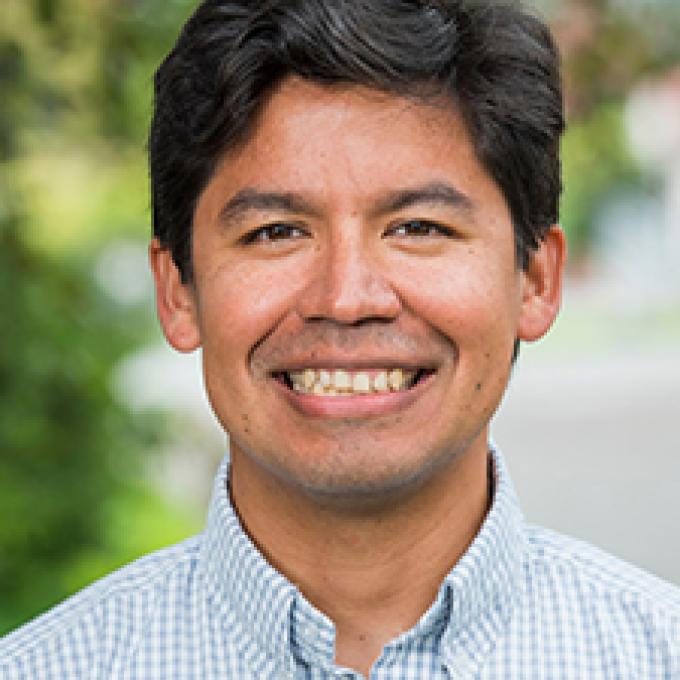
Jose Marin Jarrin is an Associate Professor in the Department of Fisheries Biology at Cal Poly Humboldt's College of Natural Resources. Originally from Ecuador, he holds a B.Sc. in Biology from the University of Guayaquil (2002), an M.Sc. in Marine Biology from the Oregon Institute of Marine Biology (2007), and a Ph.D. in Fisheries Science from Oregon State University (2012). Before joining Cal Poly Humboldt, he served as a Senior Fisheries Ecologist at the Charles Darwin Foundation (2016-2018), a Prometeo Research Fellow at Escuela Superior Politecnica del Litoral in Ecuador (2015-2016), and completed postdoctoral research at Central Michigan University (2013-2015). Dr. Marin Jarrin's research focuses on high-use and data-limited fisheries species, with particular emphasis on providing vital early and adult life history data for fishes and crustaceans. His work examines impacts from local fishery pressures and climate change, primarily through the lens of tropical Eastern Pacific ecosystems, especially the Galapagos Islands, and temperate systems along the California coast. He leads the Marine Fisheries Ecology Lab and has developed innovative approaches to studying sandy beach surf zones as critical habitats for juvenile fish species. His research spans multiple methodologies including otolith analysis, population dynamics, trophic ecology, and collaborative fisheries management approaches. Analysis of Dr. Marin Jarrin's recent publications reveals a strong focus on Galapagos Island fisheries, with significant attention to species life history parameters, impacts of climate variability, and marine protected area effectiveness. His work bridges temperate and tropical systems, connecting research in Northern California with Ecuadorian and Galapagos waters. A notable trend is the increasing emphasis on community-based and collaborative research approaches, particularly with tribal communities along the North Coast of California and artisanal fishers in Ecuador. His publications demonstrate expertise in both field ecology and advanced analytical techniques for fisheries assessment. Dr. Marin Jarrin actively mentors graduate students, with several recent theses focusing on surf zone ecology, fisheries management, and species life history. His teaching portfolio includes courses in Ichthyology, Fisheries Science Communication, US and World Fisheries, Advanced Ichthyology (with specialization in Sharks and Rays), Marine Fish Ecology, and Techniques in Fisheries Biology. His research program has secured funding for projects including the Sandy Beach Surf Zone MPA project and the Northern California Tribal Fisheries Collaborative, demonstrating his commitment to applied fisheries science that directly informs management decisions.