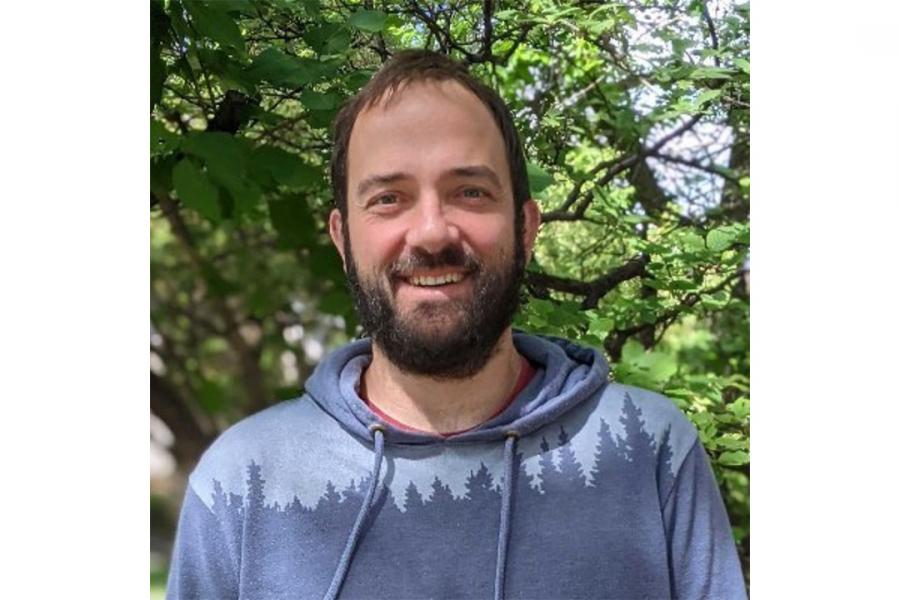
Marc Habash is an Associate Professor at the School of Environmental Sciences, University of Guelph. His work focuses on microbial interactions in environmental systems, particularly pathogen detection, microbial biofilms, and water quality. He holds a BSc in Cellular and Molecular Biology from the University of Toronto, an MSc in Microbiology and Immunology from the University of Western Ontario, and a PhD in Environmental Biology from the University of Guelph. Research interests include molecular and culture-based detection of waterborne pathogens, microbial source tracking using Bacteroidales spp., and biofilm formation studies involving probiotics. Collaborative efforts examine proteomic analysis via mass spectrometry techniques. His lab is located in the Edmund C. Bovey Building (Room 3238). Publications emphasize environmental microbiology applications: from yeast tolerance mechanisms to advanced PCR methods for microbial viability quantification. Recent work explores bacterial surface dynamics, insect pest diapause induction, and enzymatic dehalogenation processes. Research consistently bridges fundamental microbiology with practical environmental monitoring solutions. No scientific awards are listed. Advising and grants sections remain unpopulated in available records. His interdisciplinary approach connects environmental engineering, molecular biology, and ecological systems analysis.
Ryan B. Jensen is an Associate Professor of Therapeutic Radiology and Pathology at Yale School of Medicine. His research is primarily focused on DNA repair mechanisms, with a special emphasis on the BRCA2 protein and homologous recombination pathways. He directs the Jensen Lab, which is affiliated with multiple Yale research centers including the Yale Cancer Center, Women's Health Research at Yale, and the Yale Combined Program in the Biological and Biomedical Sciences. Yale School of Medicine - Therapeutic Radiology Department (Primary Appointment) Yale School of Medicine - Pathology Department (Secondary Appointment) DNA Damage and Genome Integrity Research Group Molecular Medicine, Pharmacology, and Physiology Program WHRY Pilot Project Program Investigators Yale Ventures Dr. Jensen's research centers on understanding the molecular mechanisms of DNA double-strand break repair, particularly the role of BRCA2 in homologous recombination. His lab employs a multi-disciplinary approach combining biochemistry, genetics, cell biology, structural biology, and proteomics to investigate how BRCA2 and other proteins involved in homologous recombination signal and catalyze DNA repair reactions. A major focus is on understanding the functional consequences of BRCA2 interactions with proteins like PALB2, BRCA1, FANCD2, EMSY, DMC1, and DSS1, and how disruptions in these pathways lead to cancer development. Analysis of Dr. Jensen's recent publications (2019-2025) reveals a consistent research trajectory focused on BRCA2 function, DNA repair mechanisms, and cancer biology. His work spans fundamental biochemical characterization of DNA repair proteins, development of novel methodologies for studying replication dynamics, and translational research connecting DNA repair defects to cancer therapeutics. A notable trend is the increasing focus on clinical applications, particularly regarding BRCA2 variants of uncertain significance and their implications for personalized cancer treatment. Dr. Jensen has collaborated extensively with researchers across Yale, with frequent co-authors including Peter M. Glazer, Ranjit S. Bindra, Adam Krysztofiak, Faye Rogers, Fengshan Liang, and Joann Sweasy. His work has appeared in high-impact journals including Nature, Molecular Cell, and ELife. As a mentor, Dr. Jensen oversees graduate and undergraduate students in his lab, including Jennifer Garbarino and Joshua Matthew. His research has been supported by various funding mechanisms that enable the multi-disciplinary approach to studying DNA repair mechanisms and their implications for cancer biology and treatment. Dr. Jensen leads the Jensen Lab, which maintains a strong focus on understanding the molecular basis of DNA repair and its connection to cancer development. The lab has developed specialized techniques for purifying and characterizing large DNA repair proteins like BRCA2, which has enabled groundbreaking biochemical studies of these critical cancer-related proteins.
Vincent Vargas is a French mathematician and Associate Professor at the University of Geneva, where he joined in 2021 after holding a research position at CNRS. He completed his PhD in mathematics at Paris-Diderot University under the supervision of Francis Comets. His primary research interests include: Probability Mathematical Physics Statistical Mechanics Quantum Field Theory Gaussian Multiplicative Chaos Liouville Quantum Gravity Vargas has made significant contributions to the rigorous probabilistic construction of Liouville field theory and the proof of the DOZZ formula, work that was featured in Quanta Magazine. His research bridges mathematics and theoretical physics through probabilistic methods applied to quantum gravity. Analysis of his recent publications reveals a strong focus on mathematical structures underlying conformal field theory, with particular attention to Liouville quantum gravity across various geometries and the connections between probability and quantum physics. His notable scientific achievements have been recognized with prestigious awards: Marc Yor Prize (2019) George Pólya Prize (2022) Vincent Vargas has mentored several PhD students including Romain Allez, Yichao Huang, Guillaume Rémy, and Tunan Zhu. He has been actively involved in the academic community through organizing conferences and workshops, including a trimester at the Institut Henri Poincaré in 2015 and a conference on 'Probability and quantum field theory' in 2019. His professional activities extend to industry applications through his previous consultancy with Capital Fund Management (2007-2013) and his current role on the board of their research foundation.
Isabel Gabbe , University Professor of Piano & Piano Didactics at Mozarteum University Salzburg's Innsbruck Department since 2016, is a German-French pianist and music educator with extensive international experience. She heads the Music Education Department and contributes to artistic higher education through her work with the European Piano Teachers Association (EPTA) and the Austrian Society for Music and Medicine (ÖGFMM). Studied with Hans Leygraf and Rainer Becker Certified music physiologist Founder of "Moments Musicaux" festival in France Active in teacher training across Europe and South America Her research focuses on music education , physiological piano teaching methods , and musicians' health . Isabel integrates creative approaches to piano instruction for children, emphasizing cross-cultural communication through music. Her recent work explores alternative keyboard techniques and inclusive pedagogy. Professor Gabbe's publications analyze piano didactics, including " Alles ist erlaubt, nur nicht Alles spielen! " on practical repertoire use and " Musizieren lernen? Ein Kinderspiel! " on playful learning approaches. She contributes to Schott Verlag's "Üben&Musizieren" series and Waxmann Verlag's music education publications. Scientific recognitions include: German Music Council Artist List (2000) EPTA Austria Vice Chair (2018–present) Deutsche Tonkünstlerverband Deputy Chair (2015–2023) Richard Wagner Association Stipend (2002) Aspen Music Festival Stipend (1995,1996) Isabel Gabbe actively mentors educators through workshops and masterclasses across Europe and South America, focusing on sustainable teaching practices and physiological approaches to piano instruction. She has participated in numerous festivals and serves on academic committees for music education curricula.
Insa Feinkohl is a Professor at the Chair of Medical Biometry and Epidemiology within the Faculty of Health at the University of Witten/Herdecke . Her research focuses on risk factors for cognitive dysfunction and mental health in older adults, particularly post-surgery, with emphasis on metabolic and cognitive risk factors. Bachelor of Science (BSc) in Psychology (1 st class honors) – University of Dundee (2006-2009) Master of Science (MSc) in Psychology of Individual Differences (with distinction) – University of Edinburgh (2009-2010) PhD in Community Health Sciences – University of Edinburgh (2010-2014) Post Doc in Knowledge Construction Group – Leibniz Institute for Knowledge Media, Tübingen (2014-2015) Postdoc in Molecular Epidemiology Group – Max Delbrück Center, Berlin (2015-2022) Habilitation in Molecular Epidemiology – Charité Universitätsmedizin Berlin (2021) Her research integrates medical biometry and epidemiology to study postoperative cognitive dysfunction (POCD), delirium, and aging-related cognitive decline. Key areas include biomarker validation (e.g., leptin, interleukins), brain connectivity (dopaminergic networks, thalamus), and metabolic risk factors (diabetes, obesity). She contributed to the BioCog project , an EU-funded initiative for personalized risk prediction of postoperative cognitive impairment. Her recent publications highlight trends in perioperative neuroscience, including brain mineralization, cytokine associations with neurocognitive disorders, and structural/functional imaging in delirium. Articles also explore metabolic syndrome, cognitive reserve, and delirium prediction models using machine learning. Insa Feinkohl is affiliated with major academic societies, including the German Society for Epidemiology , German Society for Medical Informatics, Biometry and Epidemiology , and the German University Association .
Revd Dr Brian Mac Cuarta, SJ is a Research Fellow at Campion Hall and an Associate Member of the Faculty of Theology and Religion at the University of Oxford . He previously served as Director and Academic Director at the Jesuit Archives in Rome from 2010 to 2021, focusing on post-1814 Jesuit history and preparing provincial correspondence (1939-1958) for researchers. PhD (Trinity College Dublin, 2004) DLitt (National University of Ireland, 2022) Fellow of the Royal Historical Society His research centers on early modern Irish history, specifically the Catholic community's resilience during the colonial period (pre-1641) and religious conversion in the Caroline era. He explores intersections of Gaelic culture, plantation policies, and cross-community dynamics, drawing on extensive archival work. Recent publications analyze Ulster's plantation structures , Jesuit missionary networks , and colonial violence , reflecting his interdisciplinary approach combining history, theology, and archival science. He has contributed to the Oxford Dictionary of National Biography and Dictionary of Irish Biography . Scientific Awards: Fellow of the Royal Historical Society
Tamás Keleti is a Professor in the Department of Analysis at Eötvös Loránd University (ELTE) in Budapest, Hungary. He has been actively teaching various mathematics courses since at least 2006, including Univariate Analysis, Multivariate Analysis, Real Function Theory, Geometric Measure Theory, and Descriptive Set Theory. His office is located at Pázmány Péter sétány 1/c, Budapest, 1117 Hungary, with contact information including phone (36-1)-209-0555 / ext. 8510. Professor Keleti's research primarily focuses on Geometric Measure Theory , with special emphasis on Hausdorff Dimension and dimensional properties of sets in Euclidean spaces. His work investigates how dimension behaves under transformations, projections, and other operations, making significant contributions to understanding sets avoiding certain patterns and structures. He has developed deep connections between geometric measure theory, combinatorial geometry, and harmonic analysis. Analysis of his recent publication record reveals a consistent research trajectory in dimensional properties, with particular attention to Fubini-type theorems for Hausdorff dimension, Kakeya-type problems, and tiling problems with connections to Diophantine approximation. His work often bridges pure mathematical theory with applications in fractal geometry and combinatorial number theory. Scientific Awards and Achievements: Led ELTE's team to win the International Mathematics Competition for University Students in 2007 Led ELTE's team to win the International Mathematics Competition for University Students in 2008 As an advisor and mentor, Keleti has cultivated exceptional mathematical talent. In the 2007 and 2008 International Mathematics Competitions, his students Endre Csóka, Demeter Kiss, Péter Pál Pach, Roland Paulin, András Béla Rácz, and Balázs Strenner won first prizes, while Márton Hablicsek won a second prize. Several achieved remarkable individual rankings, with Roland Paulin placing 3rd overall and András Béla Rácz 5th in 2008. Professor Keleti has developed extensive course materials and problem sets for his analysis courses, contributing significantly to mathematics education at ELTE. His teaching spans from introductory analysis for first-year mathematics teacher training students to advanced topics like Geometric Measure Theory and Descriptive Set Theory for specialized students, demonstrating his commitment to both research and education.
Professor Alex Richter is a Professor of Information Systems at the School of Information Management, Victoria University of Wellington, where he also serves as Director of the Executive MBA program and PhD Director. He leads the Digital Work Lab and edits the Digital Work Diaries. With over 150 refereed publications cited more than 11,500 times, Professor Richter is a leading researcher in the field of Information Systems, recently ranked 285th globally among 18,561 researchers in the Information Systems sub-field on the Top 2% Scientists List. Professor Richter's research focuses on how digital technologies transform work to enhance innovation, productivity, and employee satisfaction. His primary areas of interest include Human-AI Collaboration , Digital Work and Innovation , Value-driven design , and The Future of Work . He explores practical applications of human-AI collaboration with global industry partners, identifying use cases, benefits, risks, and enablers of adoption. His conceptual work emphasizes value-driven, context-aware, and adaptive approaches to create meaningful sociotechnical systems. His recent publications demonstrate a strong trend toward understanding the evolving relationship between humans and AI in workplace settings. Professor Richter's work examines trust in generative AI across organizational departments, the transformation of innovation practices through human-AI collaboration, and the implementation challenges of emerging technologies like augmented reality. His research consistently bridges theoretical frameworks with practical applications, focusing on how organizations can effectively integrate AI while maintaining human-centered values. Top 2% Scientists List (2024), ranking 285th globally among 18,561 researchers in Information Systems 'Innovation in Teaching Award' from the Association for Information Systems (2024) Research Fellow (2022) Multiple best paper awards throughout his career Professor Richter actively supervises numerous PhD students working on human-AI collaboration topics, including Carlos Forero, Chloe Latto, Ghazaleh Moqadam, Hedi Bigham Sohanaki, Jingyu Zheng, Mina Sanabadi, Shafiqul Alam, and Yao Zhang. He has successfully led research projects funded by the European Union, national governments, and organizations across Germany, Switzerland, Denmark, Australia, and the USA. His engaged scholarship approach connects academic research with practical industry applications. As Director of the Digital Work Lab, Professor Richter leads a team exploring the future of work in the digital age. The lab investigates how digital technologies transform work practices, with particular focus on hybrid work environments, visibility in digital workplaces, and human-AI collaboration. Through the Digital Work Diaries initiative, the lab documents and analyzes real-world digital work transformations, providing practical insights for organizations navigating digital change.
Holger Dette is a Professor and Chair Holder of Stochastics (specializing in Statistics) at the Faculty of Mathematics, Ruhr University Bochum. He leads the prominent Group Dette within the Institute of Statistics, overseeing a team of researchers, doctoral students, and administrative staff including Birgit Tormöhlen as team assistant. His research group is deeply integrated within the university's mathematical ecosystem, collaborating with other research groups across algebra, analysis, numerics, and topology. Dette's research spans mathematical statistics with strong applications in real-world problems. His primary interests include optimal experimental design, time series analysis, functional data, change point problems, nonparametric regression, biostatistics, special functions, goodness-of-fit tests, and random matrices . His work bridges theoretical statistics with practical applications, particularly evident in his collaborations with pharmaceutical giants Novartis and Bayer AG in biostatistics, as well as Quasol, a spin-off company from his statistics institute. His recent publications (2024-2025) reveal a research program increasingly focused on high-dimensional and functional data analysis, privacy-preserving statistics, and novel methodological approaches to longstanding statistical problems. Dette's work shows strong interdisciplinary connections, particularly with biomechanics (analyzing joint angles during fatigue phases) and data science (addressing challenges in the era of big data). His research group is actively involved in multiple DFG-funded projects including the newly established 'Small Data' collaborative research center (Sonderforschungsbereich 1597) and the Spatio-temporal Statistics for the Transition of Energy and Transport (Transregio 391). Dette has received significant recognition including the prestigious Humboldt Research Award . His paper 'With Great Power Come Great Side Channels: Statistical Timing Side-Channel Analyses with Bounded Type-1 Errors' achieved second place at the CSAW'24 Applied Research Competition MENA. His research group has also secured multiple significant funding awards from the German Research Foundation (DFG). As an advisor, Dette supervises numerous doctoral and master's students including Pascal Quanz, Marius Kroll, and Carina Graw. His group offers statistical consulting services for scientists and students across bachelor's, master's, and doctoral phases. The group maintains strong industrial partnerships, particularly in biostatistics applications, demonstrating Dette's commitment to translating theoretical statistics into practical solutions for real-world challenges.
Anders Backlund is Professor of Pharmacognosy at Uppsala University's Department of Pharmaceutical Biosciences, with dual institutional roles including Garden Director at Uppsala Linnaean Gardens. His work bridges pharmaceutical sciences and botanical heritage through the university's historic gardens. His research centers on pharmacognosy and natural products chemistry, with pioneering development of the ChemGPS-NP platform for chemical space navigation. This computational tool maps biological activity in chemical property space, enabling prediction of pharmacological effects and mechanisms of action. His work spans plant metabolomics, evolutionary chemography, and drug discovery from natural sources including marine organisms, fungi, and medicinal plants. Recent publications (2019-2023) demonstrate strong continuity in applying ChemGPS-NP to diverse problems: predicting membrane permeability of Alpinia galanga constituents (2022), evaluating Ononis isoflavonoids for CNS targeting (2022), and decoding multi-functional bioactivities in Maca (2021). His work increasingly integrates computational prediction with experimental validation across anti-inflammatory, anti-allergic, and antimicrobial domains. As Garden Director of Uppsala Linnaean Gardens, he maintains institutional connections to botanical heritage while advancing modern pharmacognosy. His dual roles exemplify the integration of historical plant knowledge with contemporary drug discovery methodologies.
Nigel Fabb is a Visiting Professor of Literary Linguistics at the University of Strathclyde, set to become Emeritus Professor in September 2024. He holds a BA from the University of Cambridge (1980) and a PhD in Linguistics from MIT (1984), supervised by Noam Chomsky. His research focuses on the intersection of linguistics and literary form, with notable works analyzing meter, rhyme, and cognitive responses to literature. Fabb has authored influential books like A Theory of Thrills, Sublime and Epiphany in Literature (2022) and What is Poetry (2015), and edited volumes including Rhyme and Rhyming in Verbal Art (2022). He has held prestigious fellowships, including the Leverhulme Major Research Fellowship (2014–2017), and served as editor of the Journal of Linguistics (1997–2014). His current projects include co-authoring a book on songs and linguistics with Myfany Turpin. Fabb’s research interests span metrical theory, cognitive approaches to literary experiences, and linguistic universals in poetry. He has explored topics such as the psychological basis of thrills in literature, the role of working memory in poetic form, and cross-linguistic verse structures. His work bridges linguistics, literature, and cognitive science, with interdisciplinary contributions to palaeography, cultural studies, and economics. Fabb has been actively involved in academic leadership roles, including Head of Department (2002–2005), Acting Dean (2010), and Vice-Dean for Research (2010–2013). He remains an editor of the Literary Universals Project and has delivered keynote lectures globally. His Erdös-Bacon number of 8 reflects his unique interdisciplinary reach, combining academic collaboration with a connection to theater through Russell T Davies.
Dr. Marina Bock is a Chartered Civil Engineer and Lecturer in Civil Engineering at Aston University's College of Engineering and Physical Sciences. She specializes in structural engineering with expertise in metallic structures, additive manufacturing, and numerical modeling. Currently accepting PhD students, her work bridges academic research and industry applications in sustainable construction. Her educational background includes: PG Cert in Building and Design and Construction Technology, University of Wolverhampton (2017-2018) PhD in Local Buckling and Web Crippling Response of Stainless Steels, Universitat Politècnica de Catalunya (2010-2015) MSc in Patch Loading of Hybrid Plate Girders, Universitat Politècnica de Catalunya (2004-2010) Dr. Bock's research integrates laboratory experiments and numerical modeling to advance metallic structural systems, with pioneering work in additive manufacturing for construction. Her investigations span stainless steel design code development, corrosion prevention in reinforced concrete using hydrogels, and cold-formed steel behavior. Recent projects focus on sustainable infrastructure solutions through novel composite materials. Analysis of her 2022-2025 publications reveals dominant themes in additive manufactured aluminum structures, cold-formed steel design methodologies, and sustainable paving materials for urban heat island mitigation. Her work consistently addresses practical engineering challenges through experimental validation and code-compliant design solutions. Scientific recognition includes: IStructE Academic Research Award Commendation (2021) for research on aluminum SHS/RHS under biaxial bending Dr. Bock has secured significant research funding including a Royal Society Research Grant (£20k, 2023) for additive manufactured Al7075 aluminum and Innovate UK funding (£437k) for UV-reflective resin-based paving. Previous internal projects (£20k) focused on structural aluminum applications. She supervises PhD research in additive manufacturing and corrosion prevention while maintaining industry collaborations. Her experimental work utilizes advanced university laboratories for structural testing, with collaborations spanning European research consortia and industrial partners. Current projects involve multi-institutional teams developing reusable structural systems and solar-energy-harvesting building envelopes.
Yuhan Jiang is a Research Fellow in the Department of Mathematics at the University of California, Berkeley, where they work under the mentorship of Professor Sylvie Corteel. Previously, Jiang completed their PhD at Harvard University under the supervision of Professor Lauren K. Williams. Their academic address is 931 Evans Hall, Berkeley. Education: PhD in Mathematics from Harvard University, advised by Professor Lauren K. Williams Dr. Jiang specializes in algebraic combinatorics, with research spanning polytope theory, matroid theory, and algebraic statistics. Their work connects combinatorial structures with algebraic geometry and representation theory, particularly focusing on coinvariant rings, poset dynamics, and Ehrhart theory. Jiang's research demonstrates a strong interplay between discrete mathematics and geometric structures, often revealing deep connections between seemingly disparate areas of mathematics. Analysis of Jiang's recent publications shows a consistent focus on combinatorial structures with geometric interpretations. Their work on alternating diagonal coinvariants, echelonmotion, and positroid polytopes demonstrates expertise in connecting algebraic combinatorics with geometric reasoning. The publications reveal a progression from foundational combinatorial structures to applications in probability (through Markov chain analysis) and statistics (through algebraic statistical models). A notable trend is Jiang's ability to bridge theoretical combinatorics with concrete computational results, as seen in their work on Ehrhart series and k-ellipses. Dr. Jiang teaches Math 185: Complex Analysis for Fall 2025 at UC Berkeley, indicating active participation in the department's educational mission. While specific grant information isn't provided in the available text, their productive research output across multiple mathematical domains suggests successful funding support for their scholarly activities.
Christopher T. Bavitz is the WilmerHale Clinical Professor of Law and Vice Dean for Experiential and Clinical Education at Harvard Law School. He serves as Managing Director of the Cyberlaw Clinic at the Berkman Klein Center for Internet & Society and is a Faculty Co-Director of the Center. His expertise spans intellectual property, media law, AI governance, and technology policy. Bavitz teaches courses like Music & Digital Media and Counseling and Legal Strategy in the Digital Age . His research focuses on algorithmic fairness, intermediary liability, and regulatory frameworks for emerging technologies. Bavitz holds a B.A. from Tufts University and a J.D. from the University of Michigan Law School. Before joining HLS, he was Senior Director of Legal Affairs at EMI Music and practiced litigation at Sonnenschein Nath & Rosenthal. Key initiatives include work on the Lumen Database for transparency in content takedowns, the AGTech Forum for state attorneys general, and policy analysis on AI ethics, facial recognition, and algorithmic risk assessment tools. He advises on startup legal strategy, digital finance, and generative AI accountability.
Dr. Colin Garroway is an Associate Professor in the Department of Biological Sciences at the University of Manitoba, Faculty of Science. His research focuses on understanding how population-level processes influence biodiversity at genetic, population, and species levels. He employs interdisciplinary approaches, including genomics, ecological modeling, and data synthesis, to address challenges in conservation and climate change impacts. His work often targets systems undergoing significant environmental changes, such as urbanized areas and Arctic ecosystems. Dr. Garroway teaches advanced courses in Evolutionary Genetics and Evolutionary Biology. His research emphasizes the interplay between human-driven environmental changes—such as urbanization and climate warming—and their effects on genetic diversity, species distribution, and adaptation. He leads the Garroway Lab, which collaborates on global projects like biodiversity assessments in protected areas and epigenetic studies in wildlife. Key research themes include: biodiversity conservation, climate adaptation genetics, urban evolution, and the genetic consequences of human activities. His work integrates field studies, genomic analyses, and computational models to provide actionable insights for conservation strategies.