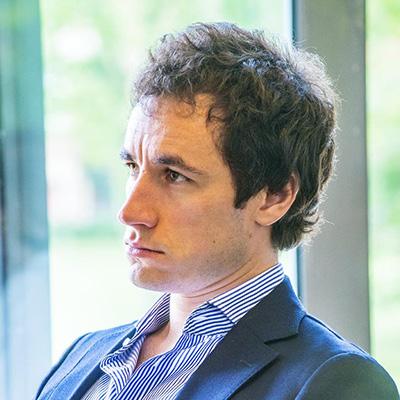
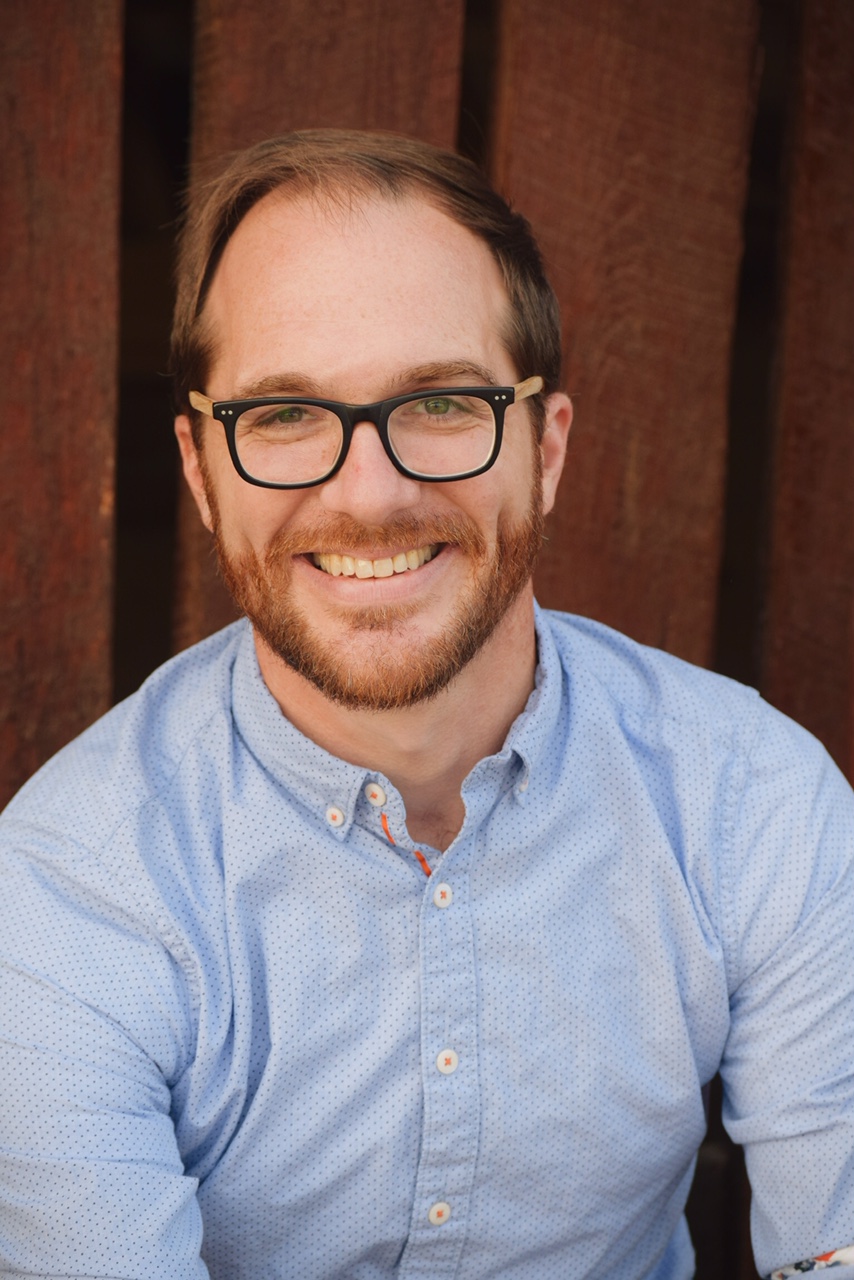
Ivano Cardinale is a Professor and Head of the Institute of Management Studies at Goldsmiths, University of London. He previously held a Junior Research Fellowship at Emmanuel College, Cambridge, and has been a Visiting Fellow at Clare Hall, Cambridge. He founded and directs the Structural Economic Analysis Unit and serves as Editor-in-Chief of Structural Change and Economic Dynamics . PhD, University of Cambridge 2022 Feltrinelli Giovani Prize for Social Sciences (Italy's top award for researchers under 40) 2019 Guest Faculty, Learning Innovation Laboratory, Harvard University His research in Structural Political Economy examines how material, social, and cognitive structures shape economic conflicts and policy outcomes. Key areas include institutional theory, industrial dynamics, and energy transition frameworks. He analyzes systemic interests, sectoral conflicts, and structural conditions through theoretical and empirical studies. Recent publications explore gas market vulnerabilities in EU energy policy, Pasinetti's institutional theory, and networked economic structures. His work appears in Structural Change and Economic Dynamics , Energy Economics , and Cambridge Journal of Economics . Scientific awards include: 2022: Feltrinelli Giovani Prize (Social Sciences) 2019: Political Economy Research Fellowship (ISRF) 2016: Life Membership, Clare Hall, Cambridge He contributes to academic governance through editorial roles and co-edited major handbooks including The Palgrave Handbook of Political Economy (2018) and The Political Economy of the Eurozone (2017).
Kerri Kotta is a Professor of Music Theory and Head of Musicology at the Estonian Academy of Music and Theatre. She holds a PhD in Musicology (2004) and an MA in Composition (1997) from the same institution. Her research focuses on music theory, tonal analysis, Estonian music history, and contemporary composition, with special expertise in the works of Eduard Tubin and Dmitri Shostakovich. She coordinates the International Eduard Tubin Society and edits the composer's complete works. Her research interests span music theory , compositional techniques , Estonian cultural heritage , and interdisciplinary performance studies . Recent publications explore modernism in Estonian art music, Beethoven's structural rhetoric, and socio-psychological dimensions of contemporary opera. Kotta received the Reet Neimar Criticism Award (2023) for her contributions to music scholarship. She leads the project How to share the ardor? Conveying complex musical structures through animated scores (2024-2025), funded by the Estonian Ministry of Culture. Administratively, she chairs the Estonian Musicological Society (2013–present) and the International Eduard Tubin Society (2015–present), while serving on the board of the Estonian Composers Union (2022–present).
Katherine Rush is an Assistant Professor in the Department of Chemistry and Biochemistry at Auburn University. Her research focuses on metalloenzyme catalysis, bioinorganic chemistry, and X-ray spectroscopic techniques. She has held academic positions including Visiting Assistant Professor at Reed College (2020–2022) and Postdoctoral Fellow at Oregon Health and Science University (2018–2023). She earned a Ph.D. in Chemical Biology from the University of Michigan (2013–2018) and a B.S. in Chemistry from the University of Tennessee (2010–2013). Research Interests: Rush’s laboratory investigates the molecular mechanisms of metalloenzymes involved in thyroid hormone regulation, oxygen activation, and antimicrobial natural product biosynthesis. A key focus is selenium-containing amino acids as tools for element-specific spectroscopic characterization. Techniques employed include X-ray absorption spectroscopy (XAS), biochemical assays (SDS-PAGE, Western blotting), and analytical methods (ICP-OES, LC-MS). Teaching: She instructs BCHE 7270 – Biochemical Research Techniques, emphasizing hands-on experience with advanced biochemical methodologies. Grants & Advising: While specific grants are not listed, her research reflects significant interdisciplinary collaboration in environmental and biomedical chemistry. No current advisees are explicitly noted. Labs/Teams: The Rush Lab at Auburn University specializes in integrating spectroscopic and biochemical approaches to study metalloenzymes, particularly targeting systems relevant to human health such as copper-dependent monooxygenases and selenium-labeled proteins.
Rachel Walker is a Professor of Linguistics at the University of California, Santa Cruz (UCSC), affiliated with the Department of Linguistics. Her research focuses on phonology, phonetics, and their intersections with morphology and psycholinguistics, particularly exploring segmental distribution patterns, harmony systems (vowel, consonant, nasal), and the articulatory basis of complex consonants like liquids. She collaborates on documenting the phonetics/phonology of Ladin varieties spoken in the Italian Central-Eastern Alps. Key research themes include: - Long-distance consonantal interactions - Vowel harmony transparency mechanisms - Articulatory phonetics of English liquids - Theoretical phonology (Optimality Theory, Harmonic Serialism) - Language documentation (Ladin, Kinyarwanda, Menominee) Her recent work (2020-2024) emphasizes consonant phonotactics in Ladin, privileged positions in vowel harmony, and articulatory coordination in consonant clusters. Over 80 peer-reviewed publications span journals like Journal of Phonetics , Phonology , and Language , along with influential books such as Vowel Patterns in Language (2011). She holds a PhD in Linguistics and has advised graduate researchers on phonological fieldwork and theoretical analysis.
Professor Alex Copley holds the position of Professor of Tectonics at the Department of Earth Sciences, University of Cambridge. His research focuses on understanding Earth's crustal deformation, tectonic forces, and earthquake dynamics across scales from microcrystalline to continental. He employs integrated approaches combining field geology, geophysical data, numerical modeling, and petrological analysis. His work addresses key questions on earthquake controls, tectonic force origins, and crustal material properties, with global field projects spanning Asia, the Middle East, Europe, Africa, and South America. Research interests include: Earthquake mechanics and seismic hazard mitigation Continental tectonics and mountain belt evolution Crustal rheology and lithospheric dynamics Metamorphic petrology and continental collision processes Large-scale controls on critical mineral distributions Recent publications highlight studies on fault mechanics in Iran, Himalayan shortening, and the thermal evolution of mountain ranges. His work bridges fundamental geoscience with societal applications, including earthquake resilience and tectonic influences on resource formation. Affiliations include Bullard Laboratories and collaborations with global institutions. No formal awards are listed in the provided text, though his research has been published in high-impact journals like Nature and Geophysical Research Letters .
Seth Herzon is the Milton Harris '29 Ph.D. Professor of Chemistry at Yale University, with joint appointments in the Departments of Pharmacology and Therapeutic Radiology at the Yale School of Medicine. He is also a Member of the Yale Cancer Center and co-founder of Modifi Biosciences, which was acquired by Merck in Fall 2024. Herzon joined Yale in 2008 after completing his PhD at Harvard University and an NIH postdoctoral fellowship at the University of Illinois, Urbana-Champaign. Her research focuses on organic synthesis with an emphasis on the molecular mechanisms of action of DNA-damaging compounds, particularly anticancer and microbiome-derived natural products. His laboratory has made significant contributions to understanding colibactin, a gut microbiome metabolite that induces colorectal cancer, and has developed novel chemotherapies targeting DNA repair defects in tumors. His work spans synthetic chemistry, chemical biology, and translational medicine, with projects ranging from total synthesis of complex natural products to developing antibacterial agents. His recent publications reveal a strong trend toward microbiome-cancer interactions, particularly focusing on colibactin's role in carcinogenesis, alongside continued innovation in synthetic methodology and therapeutic development for drug-resistant cancers. His work bridges fundamental chemistry with clinical applications, particularly in cancer therapeutics. Among his numerous accolades are the NSF CAREER Award, Searle Scholar Award, Packard Fellowship, Sloan Fellowship, Arthur C. Cope Scholar Award, and the 2024 Yale Cancer Center Class of '61 Cancer Research Award. He served as Associate Editor for The Journal of Organic Chemistry from 2018-2023 and was a member of the United States Defense Science Study Group from 2018-2019. Herzon has mentored numerous PhD students and postdoctoral researchers who have gone on to successful careers in academia and industry. His laboratory at Yale continues to be at the forefront of chemical research with significant translational impact, particularly in cancer drug discovery. The lab maintains active collaborations with researchers across Yale, including in pharmacology, radiobiology, and cancer biology.
Golnoosh Farnadi is an Associate Professor at the Department of Computer Science and Operational Research at the University of Montreal and an Assistant Professor at the School of Computer Science at McGill University. She holds a Canada-CIFAR Chair in Artificial Intelligence and serves as a Senior Academic Member at Mila - Quebec Institute for Artificial Intelligence. Her interdisciplinary work bridges computer science, operations research, and ethical AI considerations. Her educational background includes a Ph.D. in Computer Science from KU Leuven and Ghent University (2017), followed by postdoctoral positions at the University of Montreal/MILA (2018-2020) and the University of California, Santa Cruz (2017-2018). Her research focuses on algorithmic fairness, responsible AI, deep learning, and probabilistic models, with applications spanning healthcare, recommender systems, and public policy. Farnadi's recent publications demonstrate a strong emphasis on addressing fairness in machine learning systems, with particular attention to cultural diversity in recommender systems, fairness in healthcare optimization (particularly kidney exchange programs), and mitigating hallucinations in large language models. Her work consistently combines theoretical rigor with practical applications, often employing novel mathematical frameworks to tackle complex ethical challenges in AI. Among her notable recognitions are the Google Scholar Award (2021), Facebook Research Award (2021), Google Award for Inclusion Research (2023), and being named one of the 100 Brilliant Women in AI Ethics (2023). She was also recognized as a Rising Star in AI Ethics in 2021. Farnadi supervises numerous graduate students through her EQUAL Lab (EQuity & EQuality Using AI and Learning algorithms), which focuses on developing AI systems that promote fairness and equity. Her teaching includes courses on Responsible AI, Machine Learning, and Trustworthy Machine Learning at both McGill University and HEC Montreal.
Ivana Brekalo is a Researcher at the Ruđer Bošković Institute in Zagreb, Croatia, affiliated with the Division of Physical Chemistry and the Laboratory for Applied and Sustainable Chemistry. She holds a Ph.D. in Chemistry from Georgetown University (2019), with a thesis on "Solid State Synthesis and Study of Porous Materials," and completed her Master's (2012) and Bachelor's (2010) degrees in Chemistry at the University of Zagreb. Her work bridges mechanochemistry and materials science, focusing on scalable synthesis methods for functional materials. Doctor of Philosophy, Chemistry, Georgetown University (2013–2019) Master of Science, Chemistry, University of Zagreb (2010–2012) Bachelor of Science, Chemistry, University of Zagreb (2007–2010) Her research emphasizes mechanochemical synthesis, particularly for porous materials like metal-organic frameworks (MOFs) and coordination polymers. She explores solvent-free methods, polymorphism control, and the role of gas-phase catalysts in solid-state reactions. Recent publications highlight thermally controlled milling for agrochemical cocrystals, conductivity in alkali metal coordination polymers, and real-time monitoring of mechanochemical processes. Key publications include Nature Reviews Chemistry perspectives on advanced mechanochemical synthesis and Inorganic Chemistry studies on low-dimensional magnetism in MOF-74 materials. Her work appears in journals like ACS Sustainable Chem. Eng. and Chemical Science , with a focus on green and scalable methods. Scientific Awards Scholarship of the Polish National Agency for Academic Exchange – Ulam Programme (2020) Bepina Sabalić Kunin Fellowship (2013-2015, 2017-2018) Ludo Frevel Crystallography Scholarship, IUCr (2017) CCDC award for best presentation (2022) Brekalo contributes to outreach as the 2019 ACS Volunteer of the Year and has received recognition for her work on solvent-free polymorphism and mechanochemical templation of ZIFs.
Xiaoqing Pan is a Professor and Henry Samueli Endowed Chair in Engineering at the University of California, Irvine, with dual appointments in the Department of Materials Science and Engineering and the Department of Physics and Astronomy. He serves as Director of the Irvine Materials Research Institute (IMRI) and the Center for Complex and Active Materials (NSF MRSEC). A renowned electron microscopy expert, Pan has developed advanced transmission electron microscopy (TEM) techniques for atomic-scale material characterization. Ph.D., Universität des Saarlandes, Germany (1991) His research focuses on atomic-scale structure-property relationships in oxide heterostructures, ferroelectrics, nanocatalysts, and 2D functional materials. Pan leads development of novel 4D-STEM and momentum-resolved vibrational electron microscopy methods to study single-atom catalysts and complex oxides. With over 400 high-impact publications in Nature , Science , and Nature Materials , his work has been recognized by major fellowships and awards from the American Ceramic Society, American Physical Society, and National Science Foundation. Pan's recent work includes: Atomic-scale analysis of grain boundary phonon anisotropy Advances in FeSe/SrTiO 3 interface electron-phonon coupling Plastic waste upcycling through carbon intermediate interception Control of metal-support interactions in photocatalysts Strain engineering in high-entropy oxide films His laboratory at UCI represents the forefront of materials characterization technology development.
Martin Nilsson Jacobi serves as President and CEO of Chalmers University of Technology, holding the position of the institution's fourteenth President since September 2023. He simultaneously maintains his academic standing as Professor of Complex Systems at the university, demonstrating his dual commitment to academic leadership and scholarly work. Professor Nilsson Jacobi's research portfolio spans theoretical physics, complex systems theory, and ecological applications. His work bridges multiple disciplines, creating innovative approaches to understanding natural systems through mathematical and computational frameworks. His research trajectory shows an evolution from theoretical physics to complex ecological systems, with particular emphasis on spatial patterns, ecosystem stability, and marine conservation strategies. His scholarly output demonstrates consistent productivity across multiple domains. The most recent publications (2020-2022) focus on complex ecological communities, spatial coherence in heterogeneous landscapes, and species-area relationships, while earlier work (2010-2015) explored self-assembly systems, hierarchical dynamics, and theoretical approaches to complex systems. This progression reflects his ability to apply fundamental theoretical concepts to increasingly complex real-world ecological challenges. Lifetime member of the Swedish Royal Academy of Engineering Sciences (IVA) Professor Nilsson Jacobi has held significant leadership roles beyond his current presidency, including serving as chairman of the Faculty Senate and Head of Department at Chalmers. His international research experience includes collaborations with Los Alamos National Laboratory and the Nordic Institute for Theoretical Physics (NORDITA), highlighting his global scientific engagement. He has successfully secured research funding through multiple projects supported by the Swedish Research Council and the European Commission, demonstrating his ability to lead substantial research initiatives.
Professor Roland J. Pieters is a distinguished academic at Utrecht University's Faculty of Science, where he serves as a full Professor in the Department of Chemical Biology and Drug Discovery. With over two decades of experience at the institution, he has progressed from Assistant Professor (1998) to Associate Professor (2005) and ultimately to Full Professor (2010-present). His research group is internationally recognized for groundbreaking work at the intersection of carbohydrate chemistry, chemical biology, and drug discovery, with particular emphasis on developing novel therapeutic approaches against bacterial infections and pathogenic mechanisms. Full Professor, Utrecht University (2010-present) Associate Professor, Utrecht University (2005-2010) Assistant Professor, Utrecht University (1998-2005) NWO Talent Post-doctoral Fellow, ETH-Zürich (1995-1996) Postdoctoral Researcher, University of Groningen (1996-1998) Professor Pieters earned his M.Sc. in Organic Chemistry from the University of Groningen in 1990, where he worked with Professor Ben Feringa, and completed his Ph.D. at MIT in 1995 under the supervision of Professor Julius Rebek Jr. His doctoral research focused on molecular recognition and template effects in bisubstrate systems, establishing the foundation for his lifelong interest in molecular interactions. Professor Pieters' research primarily centers on glycodrugs and the strategic interference with protein-carbohydrate interactions using multivalent systems of varying architectures. His laboratory has made significant contributions to understanding how rigid spacers in multivalent ligands can dramatically enhance binding affinity to target proteins, with applications against viral and bacterial adhesion proteins, toxins, galectins, and glycosidases. A particular focus has been on developing inhibitors for Pseudomonas aeruginosa lectin LecA, cholera toxin, influenza virus hemagglutinin, and more recently, SARS-CoV-2 spike protein interactions with host cell receptors. His group also pioneered the use of glyco- and peptide-microarrays for high-throughput screening of carbohydrate-protein interactions and drug discovery, particularly in the area of O-GlcNAcylation research. The publication record of Professor Pieters demonstrates consistent innovation in the field of multivalent carbohydrate-based therapeutics. His recent work (2020-2024) shows a strategic expansion into viral pathogenesis (particularly influenza and SARS-CoV-2), immune modulation through glycan recognition, and novel approaches to vaccine development. A notable trend is the increasing sophistication of multivalent architectures, moving from simple divalent systems to tetra- and hexavalent ligands with precisely engineered spatial arrangements. His research bridges fundamental chemical principles with practical therapeutic applications, maintaining strong connections to pharmaceutical development while advancing basic science understanding of carbohydrate-mediated biological processes. Professor Pieters' scientific achievements have been recognized with prestigious awards including a Fellowship from the Royal Netherlands Academy of Arts and Sciences (KNAW) in 1999 and a VICI personal grant from the Netherlands Organisation for Scientific Research (NWO) in 2008. These competitive awards reflect the significance and innovation of his research program. He has also served on editorial advisory boards, notably as Section Editor-in-Chief for Chemical Biology in the journal Molecules (2018-2022), contributing to the scholarly community through peer review and academic leadership. Fellowship of Royal Netherlands Academy of Sciences (KNAW), 1999 VICI, personal grant, NWO, 2008 Section Editor-in-Chief Chemical Biology for Molecules (2018-2022) Throughout his career, Professor Pieters has coordinated significant research projects including the EU project POLYCARB and secured competitive funding that has sustained his innovative research program. His laboratory has fostered numerous collaborations across Europe and internationally, creating a vibrant research environment that has trained many scientists now working in academia and industry. His research on multivalent carbohydrate systems represents a sustained intellectual contribution to chemical biology with direct relevance to developing new anti-infective strategies and therapeutic approaches. Professor Pieters leads an active research group within Utrecht University's Department of Chemical Biology and Drug Discovery, situated in the David de Wied Building. His laboratory maintains strong connections with other research groups both within Utrecht University and internationally, particularly in the fields of glycobiology, infectious diseases, and drug discovery. The research environment he has cultivated emphasizes interdisciplinary approaches, combining synthetic chemistry, biophysical analysis, and biological testing to address fundamental questions in carbohydrate-mediated biological processes with therapeutic applications.
Dustin M. Hoffman is an Associate Professor of Creative Writing in the English Department at Southern Illinois University Carbondale, part of the College of Humanities and Social Sciences. He teaches within the university's renowned creative writing program, bringing his unique perspective as a former house painter to his academic work. Hoffman specializes in fiction focused on working-class experiences and labor narratives. His research interests include contemporary American short fiction, working-class literature, character development techniques, and the intersection of manual labor and artistic expression. He has developed a distinctive voice in contemporary literature through his exploration of everyday workers' lives and struggles. Hoffman's scholarly output centers on his three critically acclaimed short story collections that have established him as a significant voice in contemporary American fiction. His work frequently examines the complexities of working-class identity, labor, and the American experience through precise, evocative prose. His publications have appeared in prestigious literary journals including Alaska Quarterly Review, Ninth Letter, Witness, The Threepenny Review, Gulf Coast, and One Story. Prairie Schooner Book Prize (2015) Hoffman maintains an active presence in the literary community through his publications, readings, and participation in the academic creative writing sphere. His work bridges the gap between academic literary studies and practical creative writing, offering students a practitioner's perspective on the craft of fiction writing.
Alexander Westkamp is a Professor in Economics at the University of Cologne since 2018. His research focuses on matching markets , mechanism design , and behavioral economics , with significant contributions to understanding stability, strategy-proofness, and exchange mechanisms in complex market structures. Current position: Associate Professor (W2) with tenure , University of Cologne Prior roles: Assistant Professor , Maastricht University (2013–2015); Visiting Scholar , Stanford University (2012–2013) Affiliated with interdisciplinary research clusters like ECONtribute: Markets & Public Policy , Germany’s first Cluster of Excellence in economics. His work has been published in top journals including the Journal of Political Economy , Games and Economic Behavior , and Theoretical Economics . Recent articles explore topics such as: Generalized matching with contracts and networks Stability and strategy-proofness in trading networks Tie-breaking mechanisms in priority-based matching systems Westkamp’s research often intersects with quantum computing and social behavior through collaborations at the University of Cologne’s Key Profile Area: Social and Economic Behaviour .
Mihye Won is an Associate Professor at Monash University’s Faculty of Education, specializing in innovative science education strategies. Her research integrates dialogic teaching, student-generated diagrams, immersive Virtual Reality (VR), and generative AI to enhance scientific understanding and creativity. She has secured Australian Research Council (ARC) funding for projects like Using Immersive Virtual Reality to Enhance Science Visualisation (2019–2025) and Drawing Science Diagrams to Enhance Scientific Creativity (2018–2025). Her work supports students, teachers, and early-career researchers, aligning with the UN Sustainable Development Goal for Education. PhD, University of Illinois at Urbana-Champaign: Inquiry-based science education via Dewey’s theory of inquiry Her research focuses on: Dialogic teaching to foster student reasoning Student-generated diagrams for conceptual understanding VR for visualizing complex science topics Generative AI in science learning Creative and critical thinking in science education Recent articles span VR applications, AI in physics education, collaborative drawing techniques, and curriculum-aligned creative pedagogy. Awards include the Most Valuable Paper Award 2024 for her work on enzyme-substrate interactions in VR. She serves on the advisory board for Chemistry Education Research and Practice and the editorial board of the International Journal of Science Education .
Francesco Maisano, MD , is Full Professor of Cardiac Surgery at Vita-Salute San Raffaele University (Milan) since 2021, where he also serves as Director of the Cardiac Surgery Clinic and of the Valve Center at IRCCS San Raffaele Hospital. From 2014 to 2020 he held the Chair of Cardiac Surgery and directed the Department at University Hospital Zurich. Education & Training 1990 – MD, Catholic University of Rome 1994 – Clinical Fellowship, University of Alabama at Birmingham 1995 – Specialization in Cardiac Surgery, La Sapienza University of Rome Research Interests Professor Maisano’s work centres on innovative therapies for heart-valve disease, spanning surgical reconstruction, catheter-based interventions (TAVI, MitraClip, transcatheter tricuspid devices), and hybrid approaches. He leads translational programmes in biomedical engineering, multimodality cardiac imaging, and artificial-intelligence-guided interventions, with emphasis on the multidisciplinary “Heart Team” model for complex cardiovascular disease. His recent publications (2024-2025) demonstrate intense activity in transcatheter mitral and tricuspid repair, long-term durability of surgical mitral repair, AI-driven procedural guidance, and renal protection strategies during mechanical circulatory support. A dominant theme is translating imaging innovations and device concepts into first-in-human studies and large-scale registries. Scientific Awards & Recognitions European Society of Cardiology Silver Medal (2018) ICI Lifetime Achievement in Research & Teaching (2018) ICI Best Technology Parade Presentation (2010) C. Walton Lillehei Young Investigator Award (1999) Leadership & Grants He directs multiple postgraduate programmes, including Certificate of Advanced Studies (CAS) tracks at the University of Zurich in multimodality imaging, aortic valve, and mitral–tricuspid interventions. He is principal investigator on investigator-initiated grants, coordinates industry-partnered device trials, and mentors numerous doctoral and post-doctoral researchers. His team has filed >24 patents and spun off several cardiovascular start-ups. Labs & Teams At IRCCS San Raffaele he leads the Valve Science Center , a multidisciplinary hub integrating cardiac surgeons, interventional cardiologists, imaging specialists, biomedical engineers, and data scientists focused on next-generation valve repair/replacement technologies and personalised cardiovascular medicine.