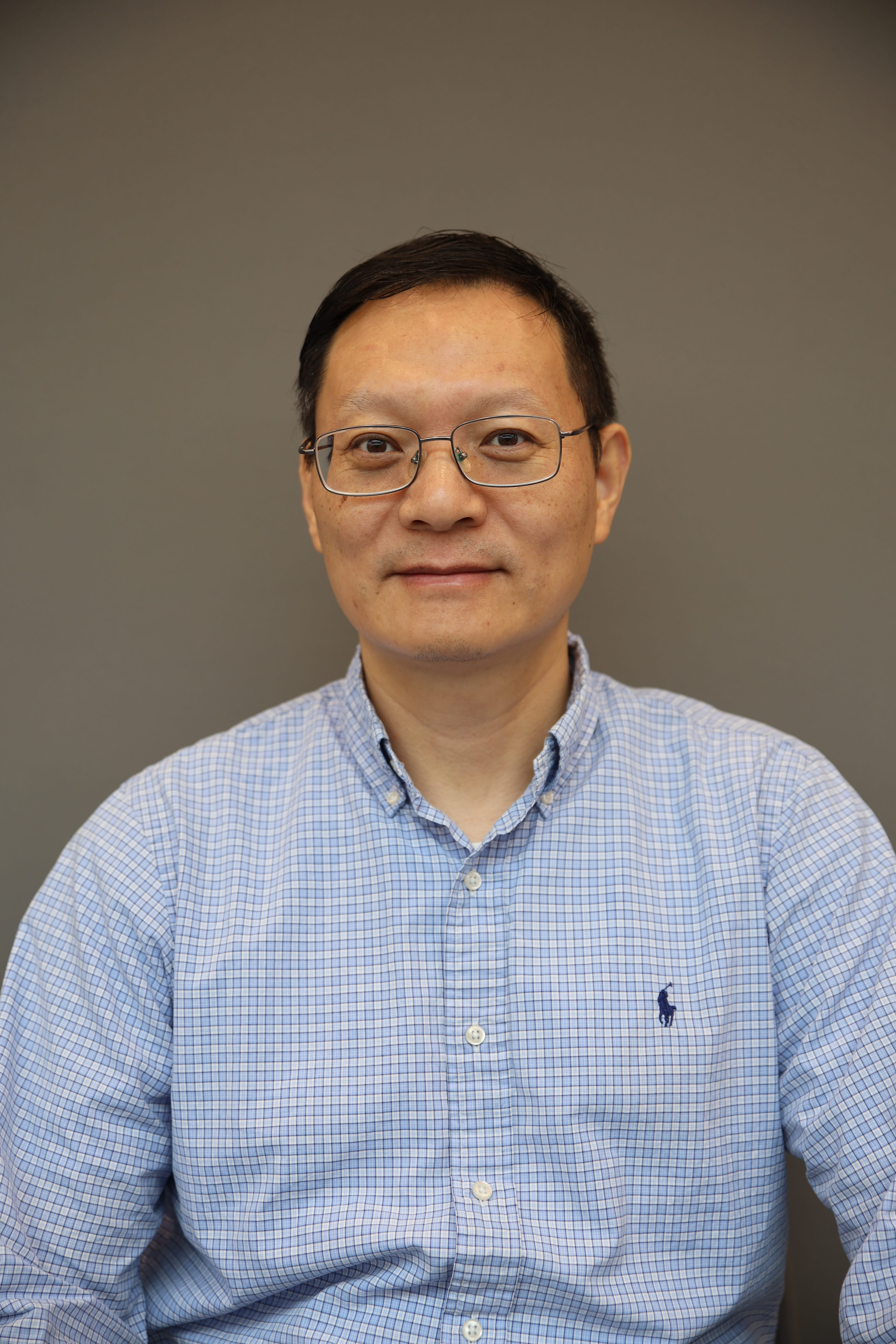
Hongbo Su is an Associate Professor at the College of Engineering and Computer Science , Florida Atlantic University , specializing in Civil, Environmental and Geomatics Engineering . With a Ph.D. from Princeton University, he leads the Laboratory for Remote Sensing and Hydrometeorology , focusing on land surface-atmospheric interactions and water-energy cycle dynamics. Research Interests : Land Surface-Atmospheric Interactions Hydrology and Climate Science Quantitative Remote Sensing Geographic Information Systems (GIS) Scientific Focus : His work spans flood risk modeling, urban heat island analysis, evapotranspiration estimation, and coastal resilience. Recent studies integrate machine learning with remote sensing for aquaculture mapping, vegetation dynamics, and seawall detection. Publications emphasize spatiotemporal modeling, data fusion techniques, and climate adaptation strategies.
David Auty is an Associate Professor and Executive Director in the School of Forestry at Northern Arizona University. His research focuses on wood properties, forest management practices, and innovative applications of LiDAR technology in forestry. He leads projects investigating the impact of environmental factors on tree physiology, wood quality, and forest dynamics. Notable contributions include developing the sgsR toolbox for LiDAR-based forest inventories and studying radial profiles of specific gravity in conifers. His work bridges ecological and engineering disciplines, addressing challenges in sustainable forestry and climate resilience. Collaborations include international studies on wildfire impacts, carbon modeling, and wood mechanics. David actively contributes to datasets on tree growth dynamics and has authored over 45 scholarly works, emphasizing practical solutions for forest management and conservation. Key Focus Areas: Forest Management, Wood Quality, Remote Sensing, Climate Adaptation Tools & Innovations: sgsR LiDAR Toolbox, Acoustic Wood Testing, Stand Dynamics Models Collaborations: Global networks studying boreal forests, wildfire impacts, and conifer physiology David’s research highlights the interplay between ecological processes and industrial forestry needs, with implications for bioenergy, carbon sequestration, and resilient forest systems.
Harindra J. Fernando is a Professor at Arizona State University (ASU), where he has held roles from Assistant Professor (1984–1987) to his current position since 1992. He is also the Wayne and Diane Murdy Endowed Professor of Engineering and Geosciences at the University of Notre Dame (since 2010) and an Emeritus Professor at ASU. His research focuses on geophysical turbulence, urban environmental dynamics, and fluid mechanics in complex systems. Education: B.S. in Mechanical Engineering (UNESCO Gold Medal recipient, 1979) M.A. and Ph.D. in Fluid Mechanics (Johns Hopkins University, 1982–1983) Postdoctoral training at California Institute of Technology (1983–1984) Research Interests: Urban air pollution, double diffusive phenomena, internal waves, and climate change mitigation. Current projects include 10 active studies on topics like turbulence measurements and nuclear power-related environmental issues. Awards and Honors: UNESCO Gold Medal for Best Engineering Student (1979) Gilman Fellow (Johns Hopkins University, 1980) Wayne and Diane Murdy Endowed Professorship (2010) Labs and Affiliations: Director (1994–2009) of ASU's Center for Environmental Fluid Dynamics. Currently leads the Environmental Fluid Dynamics Group at Notre Dame. Active in interdisciplinary projects linking urban systems, climate science, and oceanography.
Bill Tomlinson is a Professor of Informatics and Education at the University of California, Irvine (UCI), and a researcher at the California Institute for Telecommunications and Information Technology (Calit2). His work bridges artificial intelligence, ICT for sustainability, and environmental policy, focusing on leveraging technology to address global ecological challenges. He authored *Greening through IT* (MIT Press, 2010), which examines how information technology can enable sustainable practices, and has published over 100 academic works across computing, education, and sustainability. Education: A.B. in Biology (Harvard College), M.F.A. in Experimental Animation (CalArts), and S.M./Ph.D. in Media Arts & Sciences (MIT). Professional service includes roles on the EPA’s Board of Scientific Counselors (2014–2017) and as a Sloan Research Fellow (2008). His research spans sustainable food systems (e.g., the Plant Guild Composer tool), AI ethics, and legal frameworks for technology governance. Key research interests include computational sustainability, AI’s environmental impact, and interdisciplinary approaches to ecological challenges. Recent work explores AI certification systems, biodiversity law frameworks, and educational tools for fostering systems thinking. His projects often integrate technical innovation with policy design, such as simulations modeling corporate governance reforms or climate policy. Scientific awards include the NSF CAREER Award (2007) and recognition from major media outlets (e.g., *Wall Street Journal*, BBC). His grants and collaborations emphasize real-world impact, such as designing equitable energy systems or analyzing AI’s role in environmental decision-making. Bill co-founded initiatives like *SAGE Community Coordinator* and *Collapse Informatics*, which use participatory simulations to engage communities in sustainability challenges. He teaches courses on global disruption and technology’s societal role, emphasizing ethical and ecological responsibility.
Hassan Al Razi is a Bangladeshi zoologist and biodiversity conservationist currently pursuing his Doctor of Philosophy at the School of Human Sciences, University of Western Australia. His research focuses on primate behavioral ecology, with particular emphasis on endangered species in Bangladesh including Bengal slow lorises, hoolock gibbons, and Phayre's langurs. Affiliated with the university's research programs, he contributes to multiple international conservation initiatives addressing primate conservation challenges. His educational background includes a Master of Science in Wildlife and Biodiversity Conservation (2017) and a Bachelor of Science in Zoology (2016), both from Jagannath University in Bangladesh. His thesis work examined Population Status, Habitat Preference and Threats of Phayre's Leaf Monkey in Satchari National Park. Al Razi's research interests span primate behavioral ecology, primate morphology and evolution, conservation biology, and biodiversity management. His work particularly emphasizes loris and chimpanzee conservation, with field studies conducted in Bangladesh's tropical forests. His fingerprint analysis reveals significant contributions to National Parks management, Lorisidae conservation, Anura studies, New Species discovery, Hylobatidae research, Nycticebus conservation, Sciuridae studies, and Tropical Forest ecology. Analysis of his 15 most recent publications (2021-2025) reveals a strong focus on primate conservation challenges in Bangladesh, with particular attention to road infrastructure impacts, wildlife trafficking, habitat fragmentation, and community-based conservation strategies. His work spans multiple primate species including hoolock gibbons, slow lorises, and langurs, with increasing emphasis on digital monitoring of wildlife trade and climate change adaptation strategies. His scientific recognition includes the award for Population Status, Threats, and Conservation of Bengal Slow Loris (Nycticebus bengalensis) in Northeast Bangladesh (2017), which received significant media attention with coverage from 9 news outlets, mentions by 3 X users, and 5 readers on Mendeley. Al Razi actively collaborates with international researchers across multiple countries, contributing to global conservation initiatives including the Global Primate Roadkill Database. His work aligns with UN Sustainable Development Goals related to biodiversity conservation and environmental protection. While specific lab affiliations aren't detailed in the provided text, his research involves extensive fieldwork in Bangladesh's forest ecosystems and collaboration with international conservation networks.
Chao Zhang is an Assistant Professor in Human-Centered AI at the Human-Technology Interaction group, Eindhoven University of Technology. His research bridges psychology and technology through data-driven methods and psychological theories, focusing on behavior change, AI-human dynamics, and trustworthy systems. MSc in Human-Technology Interaction (TU/e) PhD in Intelligent Systems (TU/e, 2019) Postdoc at Utrecht University Research interests span Human-Centered AI , Explainable AI , and Behavioral Data Science . Key contributions include: Integrating psychological principles with machine learning Modeling longitudinal behavioral data Developing interpretable AI systems for lifestyle interventions Investigating social characteristics in AI-driven environments Current work includes the ENFIELD project on Trustworthy Green AI. Scientific contributions appear in CHI Conference , arXiv , and International Journal of Social Robotics . Recognized with a TU/e PhD Thesis Award nomination in 2021.
David Rizzo is a Professor of Plant Pathology and Department Chair at the University of California, Davis. His research focuses on fungal pathogens impacting forest ecosystems, particularly Phytophthora species and their roles in sudden oak death. He investigates mycology, fungal ecology, and the interactions between pathogens, climate, and forest management practices. Dr. Rizzo's work emphasizes understanding disease dynamics, biodiversity impacts, and mitigation strategies in California's diverse ecosystems. His studies combine field observations, molecular techniques, and interdisciplinary approaches to address global plant health challenges. Key research areas include: Phytophthora species distribution and evolution Forest pathogen interactions with wildfire One Health frameworks for plant disease control Ecological consequences of sudden oak death Recent work highlights the importance of environmental factors (e.g., microclimate, soil conditions) in pathogen survival and spread. His publications address disease management strategies, restoration approaches, and the integration of genetic data for pathogen identification. Collaborations with land managers and policymakers ensure practical applications of his research.
Jason Steffener is an Associate Professor at the University of Ottawa’s Faculty of Health Sciences. His research focuses on neuroplastic changes in aging brains, cognitive reserve mechanisms, and neuroimaging techniques. He holds a PhD in Biomedical Engineering from NJIT and has held academic positions at Columbia University Medical Center, Concordia University, and now Ottawa. His work integrates neuroimaging (fMRI, structural MRI), statistical modeling, and computational approaches to study brain adaptability. Education: BS (1997), MS (2002), PhD (2005) in Biomedical Engineering from NJIT Postdoctoral training (2006–2009): Columbia University under Dr. Yaakov Stern Research emphasizes how education, physical activity, and lifetime exposures influence brain resilience against aging and disease. Key methodologies include moderated-mediation analysis, neurovascular coupling studies, and high-performance computing. He develops open-source tools for neuroimaging data standardization (e.g., NIDM framework). Recent work investigates semantic memory networks in aging, trigeminal sensory processing, and olfactory training effects on brain structure. His grants likely support interdisciplinary projects combining clinical neuroscience with big data analysis. Labs/Teams: Likely leads neuroimaging research groups focused on aging and cognitive reserve at University of Ottawa. Collaborates internationally on projects like the SABE Study and Canadian Longitudinal Study on Aging.
Professor Rein Houben is a Professor of Infectious Disease Epidemiology at the London School of Hygiene & Tropical Medicine (LSHTM), where he is affiliated with the Department of Infectious Disease Epidemiology and Dynamics within the Faculty of Epidemiology and Population Health. He co-leads the LSHTM TB modelling group and has been instrumental in developing and implementing the TIME model to support countries in their TB policy decision-making. Professor Houben's research focuses on redefining our understanding of tuberculosis beyond the traditional binary view of 'latent' versus 'active' TB to recognize a complex spectrum of disease states. His work combines empirical data with mathematical modeling to address key scientific and policy questions related to TB. He has made significant contributions to understanding subclinical TB, transmission dynamics, and the structural determinants of TB including nutrition, climate health, and poverty. His research examines the full TB spectrum from Mtb infection through various stages of disease, including non-infectious and subclinical forms that may be infectious but not traditionally detected. His recent publications reveal a strong focus on the intersection of TB with climate change, nutritional status, and social determinants, while also developing sophisticated modeling tools to inform policy decisions. Professor Houben's work consistently addresses the practical implementation challenges of TB control programs and seeks to bridge the gap between theoretical models and real-world application. Professor Houben currently co-supervises 5 PhD students exploring questions around TB natural history, subclinical TB, post-TB sequelae, and community-wide screening for TB. His research has been funded by major organizations including the National Institutes of Health (US), National Institute for Health and Care Research (UK), Wellcome Trust, European Research Council, Bill and Melinda Gates Foundation, and the World Health Organisation. He is actively involved in teaching at LSHTM, serving as a module co-organizer for EP202: Statistical Methods in Epidemiology and running the Virtual Ethics Committee exercise for the Online MSc Epidemiology course. He has supervised more than 20 MSc projects throughout his career and continues to mentor the next generation of TB researchers.
Susanna Ho is a Professor at the Research School of Accounting, Australian National University (ANU). She holds a PhD from the Hong Kong University of Science and Technology (2004) and has held academic roles at the University of Melbourne (2004–2008) and ANU since 2008, where she became a full Professor in 2013. Her research focuses on decision-making, big data analytics, internal control weaknesses, and social media ethics. She has published in top journals like MIS Quarterly and serves as Senior Editor for MIS Quarterly and co-editor for special issues on Fake News and Next-Generation IS Theories. Education : PhD in Information Systems, Hong Kong University of Science and Technology (2004) Research Interests : Judgment and decision-making in auditing and IT governance Big data analytics and its ethical implications Social media's role in corporate responsibility Mobile health service adoption and personalization Recent Research Trends : Her articles emphasize cybersecurity governance, HCI frameworks for detecting deception, and strategic IT control mechanisms. She explores how emotional factors influence health technology adoption and the impact of CIO leadership on organizational IT resilience. Awards : 2020 Vice-Chancellor’s Citation for Teaching Excellence 2018 MISQ Outstanding Associate Editor Award 2010 Information Systems Research Best Reviewer Grants and Supervision : Lead researcher on projects like 'Enhancing Auditors' Professional Scepticism' (2018–2022) and 'CIOs in IT Controls' (2021) Registered to supervise research students but no named advisees listed Labs/Teams : Active in editorial roles and conference organizing, contributing to the ICIS and PACIS communities through research tracks and doctoral mentoring.
Professor Samantha Walton is a faculty member in the School of Writing, Publishing and the Humanities at Bath Spa University, specializing in Modern Literature. As a leading scholar in environmental and health humanities, she directs the Research Centre for Environmental Humanities. Her work bridges ecocriticism, wellbeing studies, and innovative poetry. Walton holds a PhD from the University of Edinburgh and teaches modules on environmental writing, literature and psychology, and ecological crisis. Her research has been supported by prestigious fellowships including the Arts and Humanities Research Council and Rachel Carson Centre awards. Education: PhD (University of Edinburgh), MSc (Birkbeck, University of London), BA (King's College London). Professional qualifications include a Certificate in Professional Learning in Higher Education. Research focuses on intersections of nature and mental health, Scottish women writers, and experimental ecopoetry. Key projects include the 'Landscaping Change' initiative fostering interdisciplinary environmental dialogue. She co-edits Green Letters: Studies in Ecocriticism and will serve as ASLE UKI President from 2023. Her poetry collections Self Heal and Bad Moon explore ecological themes, while her monographs like Everybody Needs Beauty critically examine nature's role in wellbeing. Awards: British Academy Rising Star Engagement Award (2015), Carson Writing Fellowship (2018–2019) Grants: AHRC Early Career Leadership Fellowship (2015), Landscaping Change conference funding (2016) Labs/Teams: Research Centre for Environmental Humanities, collaborative projects with acoustic geographer Jonathan Prior and environmental artist Sage Brice
Associate Professor Hannah Power is a coastal morphologist and geologist at the University of Newcastle , affiliated with the School of Environmental and Life Sciences and the Earth Sciences department. She specializes in coastal processes, sediment transport, and climate change impacts on coastal environments, with a focus on hazards like tsunamis and storm surges. Her work bridges field studies, remote sensing, and numerical modeling, and she actively collaborates with government agencies for coastal management. PhD in Coastal Geomorphology, University of Queensland BSc (Marine Science) Honours, University of Sydney Research Interests : Coastal hazard assessment (tsunamis, storms, sea level rise) Swash zone and surf zone hydrodynamics Coral reef wave interactions and sediment transport Continental shelf wave dynamics and climate drivers Coastal management policy and science communication Recent article trends show a focus on continental shelf waves , tsunami modeling , and intermittent estuaries under climate change. Her publications emphasize hydrodynamic modeling , field measurements , and remote sensing across diverse environments. Scientific Awards : 2021 Science Technology Australia Superstars of STEM 2020 Newcastle Herald Hunter Hero Award Finalist 2015 APEC ASPIRE Finalist 2021 Australian Institute of Policy and Science Young Tall Poppy Award Hannah's teaching integrates science fundamentals, critical thinking, and evidence-based solutions. She contributes to undergraduate and postgraduate courses, emphasizing coastal dynamics and climate adaptation. Her NSW Coastal Council role (2020) informs policy on collaborative coastal management. Labs & Teams : Collaborates with the Environmental and Climate Change Research Group (ECCRG), Australian Forum for Operational Oceanography, and multidisciplinary teams for field experiments and modeling.
Timothy Melbourne is a Professor at Central Washington University, specializing in seismology, continental dynamics, and GNSS geodesy. He holds a Ph.D. from the California Institute of Technology (1999). His research focuses on advancing real-time geodetic monitoring systems for earthquake early warning and tsunami forecasting, leveraging Global Navigation Satellite System (GNSS) technologies. He is a key contributor to initiatives like the Pacific Northwest Geodetic Array and the ShakeAlert system. His work emphasizes integrating geodetic data with seismological observations to improve disaster risk reduction strategies. Major contributions include developing algorithms for rapid earthquake source characterization and enhancing the performance of GNSS networks in detecting tectonic deformation during seismic events. Melbourne collaborates internationally on projects such as the GeTEWS Oceania workshop and the CRESCENT Working Group, aiming to standardize global Earth observation systems (GGOS). His publications highlight advancements in noise mitigation for real-time GNSS data, spatial analysis of crustal deformation, and vertical land motion studies related to sea-level rise. He has been pivotal in demonstrating the operational feasibility of GNSS-based early warning systems through synthetic testing and real-world applications like the 2019 Ridgecrest earthquakes.
Hamish Campbell is a Professor of Spatial Science and Associate Dean of Research, Innovation, and Research Training at Charles Darwin University (CDU), leading the Faculty of Science and Technology. He directs the North Australia Centre for Autonomous Systems (NACAS), focusing on applying autonomous technologies to environmental and societal challenges in Northern Australia. His research integrates novel technologies like Remotely Piloted Aircraft Systems (RPAS) to address ecological monitoring, wildlife conservation, and infrastructure logistics. He leads projects on crocodile ecology, freshwater turtle conservation, and the use of drones for healthcare delivery in remote regions. Professor Campbell has received the CDU Vice-Chancellor's Prize for Exceptional Performance in Research (2019) and supervises HDR students in areas including animal biotelemetry and drone applications. His work spans collaborations with industry and government to enhance environmental management and reduce remoteness challenges. He actively leads initiatives such as assessing flood impacts on freshwater turtles and evaluating autonomous systems in supply chains. Key research interests include spatial science, conservation biology, and the development of technologies for remote area surveillance. His lab, The Movement and Landscape Ecology Lab, emphasizes interdisciplinary approaches to solving complex environmental problems. He is a core member of projects like the ecological impact of large carnivore restoration and crocodile-human interaction studies. Notable contributions include studies on crocodile thermoregulation, Gouldian finch foraging behavior, and the use of drones for healthcare logistics in Indigenous communities. His research bridges theoretical ecology with applied solutions, fostering innovation in autonomous systems and conservation strategies.
Prof. Dr. Dr. habil. Robert Rieg is a faculty member at Aalen University, affiliated with the Faculty of Management, Business Studies and Health within the Department of Management and Business Studies . His academic role is that of a full Professor. His primary research focuses on Controlling, Digitalization in Business, and Strategic Planning, with notable contributions in fields like Value-Based Management, Risk Management, and Forecasting. He actively collaborates with institutions such as the Strascheg Institute for Innovation and Entrepreneurship, exploring topics such as heuristics in planning, performance measurement, and forecast accuracy in accounting contexts. Prof. Rieg’s research has addressed critical issues such as the dynamics of intangible assets, E-Mobility Infrastructure market potential, and the effectiveness of Balanced Scorecard implementations. His work integrates interdisciplinary approaches, combining system dynamics modeling with empirical studies to analyze organizational behavior and strategic execution. He has presented at international conferences including the System Dynamics Society and the European Accounting Association. As a supervisor, he guides master’s theses on topics like AI-driven Controlling automation, CFO turnover determinants, and digitalization impacts in management accounting. His teaching spans Financial Management and International Business Studies, emphasizing practical relevance through case studies and industry partnerships with companies like Voith Group and Horvath Unternehmensberatung. Prof. Rieg’s academic engagement includes advising on audit strategies for detecting planning biases, analyzing enterprise risk management efficacy, and exploring the future of work with AI agents. His research bridges theoretical frameworks with real-world applications, contributing to both academic discourse and professional practice in controlling and management accounting.