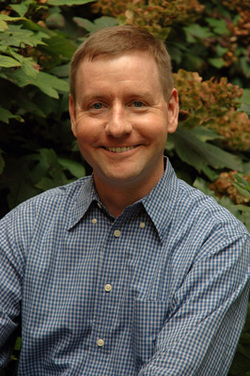
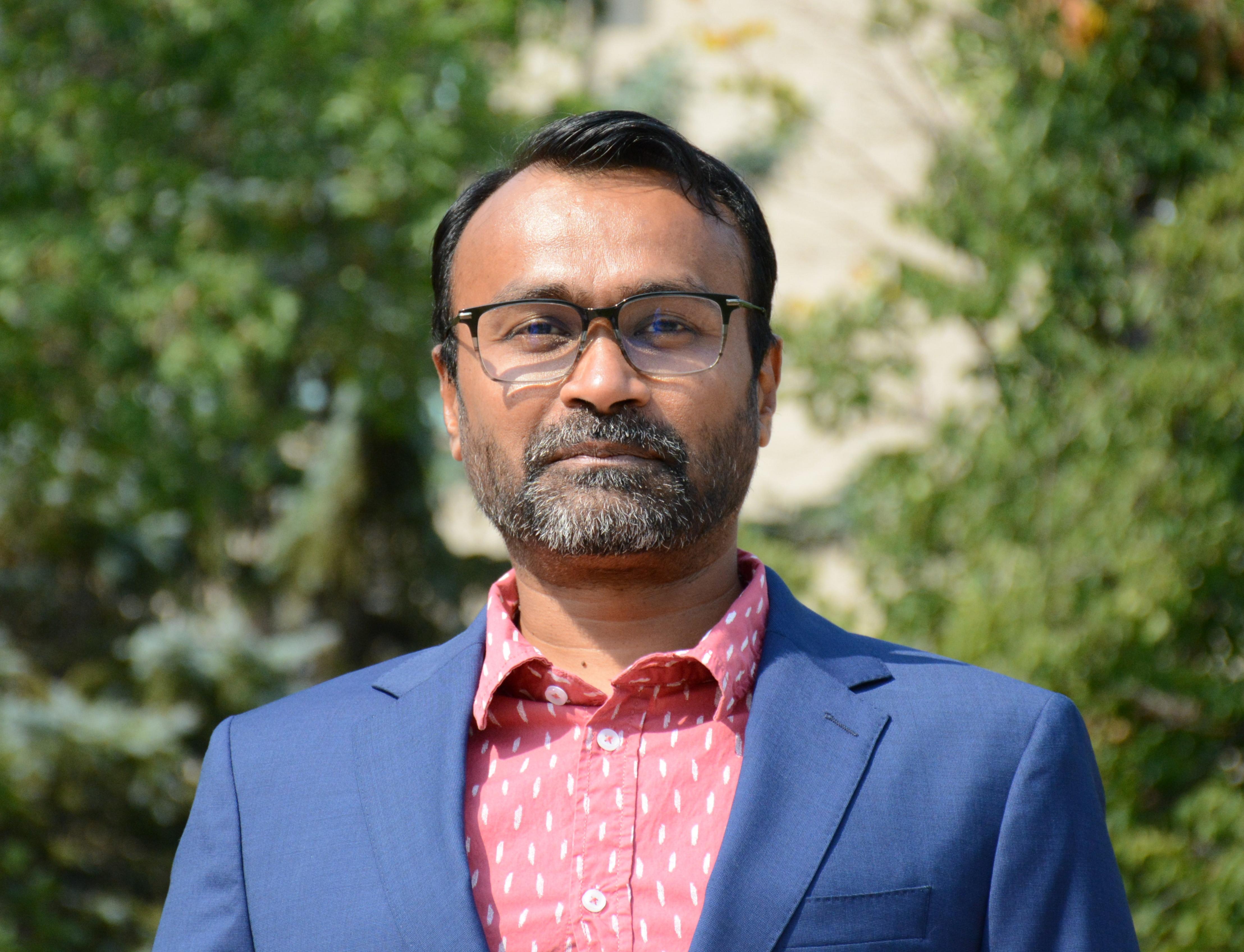
Chao Zhang is an Assistant Professor in Human-Centered AI at the Human-Technology Interaction group, Eindhoven University of Technology. His research bridges psychology and technology through data-driven methods and psychological theories, focusing on behavior change, AI-human dynamics, and trustworthy systems. MSc in Human-Technology Interaction (TU/e) PhD in Intelligent Systems (TU/e, 2019) Postdoc at Utrecht University Research interests span Human-Centered AI , Explainable AI , and Behavioral Data Science . Key contributions include: Integrating psychological principles with machine learning Modeling longitudinal behavioral data Developing interpretable AI systems for lifestyle interventions Investigating social characteristics in AI-driven environments Current work includes the ENFIELD project on Trustworthy Green AI. Scientific contributions appear in CHI Conference , arXiv , and International Journal of Social Robotics . Recognized with a TU/e PhD Thesis Award nomination in 2021.
Dr. Christina Boucher is an Associate Professor in the Department of Computer and Information Science and Engineering at the University of Florida. Her research focuses on bioinformatics, with a particular emphasis on developing algorithms and software for genomic data analysis, antimicrobial resistance monitoring, and metagenomics. She is known for her contributions to succinct data structures and alignment methods, and her work on tools like MEGARes and AMRPlusPlus has significantly impacted antibiotic resistance classification. Dr. Boucher holds a Ph.D. from the University of Waterloo, where she was supported by prestigious awards including the Google Anita Borg Memorial Scholarship and NSERC Fellowships. Her research interests span computational genomics, algorithm design, and software development for high-throughput sequencing. She has pioneered methods for pangenome indexing, long-read haplotype reconstruction, and portable metagenomics analysis. Dr. Boucher actively promotes diversity in bioinformatics through her roles on committees such as the NSF Research Traineeships Program advisory board and the University of Florida’s Implicit Bias committee. Key Awards: ESA 2016 Best Paper Award, NSERC Doctoral Award, Google Anita Borg Memorial Scholarship Software Contributions: MEGARes, AMRPlusPlus, METAMarc, Moni Professional Roles: NIH BDMA Study Section Standing Member, Board Member of SIG BIO Dr. Boucher’s publications reflect a blend of algorithmic innovation and applied genomic research. Recent work addresses challenges in portable sequencing device security, resistome-mobilome colocalization detection, and high-accuracy assembly polishing. Her interdisciplinary collaborations span microbiology, veterinary medicine, and clinical sciences, underscoring the translational impact of her computational approaches. Her teaching and mentorship efforts focus on curriculum development and fostering inclusive environments in STEM. She has been a key figure in advancing computational tools for antimicrobial resistance monitoring and has contributed to NIH-funded initiatives aimed at improving antibiotic therapy through causal modeling techniques.
Katharina von Kriegstein is a Professor of Cognitive and Clinical Neuroscience at Technische Universität Dresden (since 2017). Previously, she held positions at Humboldt University Berlin (2013–2017) and led a Max Planck Research Group (2009–2018). Her research focuses on sensory processes underlying human communication, employing neuroimaging, neurostimulation, and behavioral techniques. She explores communication impairments in developmental disorders and neurological patients, particularly investigating auditory and visual thalamic dysfunction in dyslexia and autism. Her work is supported by an ERC Consolidator Grant (2015) and has contributed to understanding sensory pathway roles in speech-in-noise recognition and voice identity processing. Key findings include thalamic structural abnormalities linked to dyslexia and autism, as well as predictive coding mechanisms in auditory pathways. Education: Medical License (Approbation), 2003 Dr. med., summa cum laude, University of Göttingen (1994–2001) Philosophy studies, University of Göttingen (1995–1997) Studium generale, Leibniz-Kolleg, Tübingen (1993–1994) Key Projects: Leading Subproject A11 in CRC 940 (goal-directed behavior) Investigating thalamic roles in communication (e.g., auditory/visual speech perception) Her research integrates clinical, cognitive, and computational approaches. Recent work highlights multisensory learning benefits for auditory processing and the causal role of sensory cortices in vocabulary translation. Awards include the Max Planck Research Group (2009) and best doctoral thesis in Experimental Medicine (2002).
Vilte Baltramonaityte is a Researcher in the Department of Psychology at the University of Bath. Her work focuses on understanding the causal pathways linking early life stress to mental and physical health problems, with a particular emphasis on comorbidity and genetic influences. She holds a PhD in Psychology from the University of Bath, awarded in 2024 under the supervision of Dr. Esther Walton, Prof. G. Fairchild, and Dr. A. Ward. Her research interests include childhood maltreatment, Mendelian randomization, genome-wide association studies (GWAS), and the interplay between psychological and cardiometabolic health. She has contributed to studies on biological pathways linking early adversity to multimorbidity, the moderating role of stress reactivity in depression, and the epigenetic effects of prenatal stress on child psychiatric symptoms. Notable projects include a multivariate GWAS of psycho-cardiometabolic multimorbidity, published as a dataset in 2023 (DOI: 10.15125/BATH-01179). She collaborates internationally, with recent work involving researchers from institutions in the Netherlands, France, and the UK. Her research outputs often involve advanced statistical methods like structural equation modeling and Mendelian randomization. She has contributed to open-source tools for genetic analysis, as seen in her GitHub repository 'Psycho-cardiometabolic-multimorbidity'.
Trevor Chong is an Associate Professor in Cognitive Neuroscience at Monash University, leading the Cognitive Neurology Laboratory at the Turner Institute for Brain and Mental Health. He is a neurologist and cognitive neuroscientist with clinical appointments at St Vincent's Hospital Melbourne and Alfred Health. Chong holds an ARC Future Fellowship and an NHMRC Neil Hamilton Fairley Early Career Fellowship. His research bridges basic cognitive neuroscience and clinical neurology, focusing on decision-making, learning, and memory in neurological diseases. Education: BMedSc (Hons) and MBBS (Hons) from Monash University (2002), PhD in Neuroscience from the University of Melbourne (2007). Clinical training included neurology residencies at St Vincent's and Alfred Hospitals, culminating in FRACP certification (2013). He conducted postdoctoral research at Oxford with Masud Husain before establishing his lab at Monash. Key research areas include neurobiological mechanisms of cognitive impairments in neurological disorders, leveraging methodologies like EEG, fMRI, and computational modeling. Current projects address curiosity neurobiology, decision-making pharmacology, and statin impacts on cognition. He supervises students in psychology, biomedical science, and honors programs. Notable awards: NHMRC Fellowship (2013), ARC Future Fellow. External roles include Board Director of the Cure for MND Foundation and senior staff specialist roles at major hospitals. His work contributes to UN SDGs related to health and well-being.
Aurina Arnatkeviciute is a Research Fellow at Monash University's Turner Institute for Brain & Mental Health within the Faculty of Medicine, Nursing and Health Sciences. Her work focuses on the intersection of neuroscience, genetics, and psychiatry, with particular emphasis on brain connectivity, neuroimaging, and the genetic underpinnings of psychiatric disorders. She actively contributes to large-scale international collaborations including the ENIGMA consortium. Dr. Arnatkeviciute's research interests span multiple domains of cognitive neuroscience and psychiatric research. She investigates how genetic factors influence brain connectivity and network organization, with applications to understanding conditions like schizophrenia, ADHD, and autism spectrum disorders. Her work bridges molecular neuroscience with systems-level brain organization, utilizing advanced neuroimaging techniques combined with genetic and transcriptomic data. She has made significant contributions to imaging transcriptomics - the integration of brain-wide gene expression data with neuroimaging findings. Her publication record demonstrates expertise across multiple methodologies including genome-wide association studies, diffusion MRI connectomics, and large-scale international collaborations. Her recent work examines how socioeconomic factors like gender inequality impact brain structure, how genetic variations affect inhibitory control, and the neuroanatomical signatures of schizotypy across diverse populations. Australasian Cognitive Neuroscience Society (ACNS) Emerging Researcher Award (2020) Australasian Neuroscience Society Paxinos-Watson Award for the most significant neuroscience paper published by a member of the Society (2022) Discovery Early Career Researcher Award (DECRA) (2022) Monash University Dean's Award for Doctoral Thesis Excellence for "Genetics of brain network hubs" (2020) Monash University Early Career Researcher Publication Prize for "A practical guide to linking brain-wide gene expression and neuroimaging data" (2020) Dr. Arnatkeviciute serves as a supervisor for Honours students at Monash University, teaching units including PSY4215: Advanced Data Science and PSY4130: Developmental Psychology and Clinical Neuroscience. She is a Chief Investigator on the NHMRC-funded project "Neuropharmacology of decision-making: causal brain network modelling across species" (2022-2026), demonstrating her leadership in securing competitive research funding. Her supervisory activities extend through 2025, indicating ongoing commitment to mentoring the next generation of neuroscience researchers. As a member of the Turner Institute for Brain & Mental Health, Dr. Arnatkeviciute collaborates with a multidisciplinary team of neuroscientists, clinicians, and data scientists. Her work within the ENIGMA consortium connects her with researchers across more than 30 countries, facilitating large-scale analyses of brain structure and function across diverse populations. This collaborative environment supports her research at the intersection of genetics, neuroimaging, and psychiatric disorders.
Michael E. Sobel is a Professor in the Department of Statistics at Columbia University. His research focuses on causal inference, functional magnetic resonance imaging (fMRI), and social statistics. He has contributed extensively to methodologies for analyzing causal effects in complex observational and experimental data, particularly in neuroimaging, social policy evaluation, and longitudinal studies. His work bridges statistical theory and applied social science, addressing challenges such as mediation analysis, compliance modeling, and interference effects in randomized trials. Notable contributions include advancements in causal inference for fMRI data and frameworks for interpreting mobility effects in sociological studies. Sobel’s research spans interdisciplinary applications, including public health, political science, and urban policy. He has authored influential papers on topics like the causal interpretation of fMRI connectivity, the analysis of treatment effects with all-or-nothing compliance, and the evaluation of housing mobility programs. His methodologies have been adopted in diverse fields, emphasizing rigorous statistical approaches to real-world problems.
Caspar Oesterheld is a doctoral student and Researcher at the Computer Science Department of Carnegie Mellon University, supervised by Vincent Conitzer . He focuses on foundational topics in theoretical computer science, game theory, and AI safety. His work includes program equilibrium, decision theory, and cooperative AI. Education : Pursuing PhD in Computer Science at CMU Advisor : Vincent Conitzer Teaching : Co-instructor for CMU CS 15-784 – Foundations of Cooperative AI (Fall 2022), and TA at Duke University (2019–2020). His research spans game theory, decision theory, and AI safety. Notable contributions include simulation-based program equilibria, analysis of imperfect recall games, and cooperative AI foundations. His work often intersects with multi-agent systems, Pareto improvements, and ethical AI design. Caspar has published extensively at top venues like AAAI, ICML, and NeurIPS. His recent work explores surrogate goals, observational interference, and dataset creation for decision-theoretic reasoning. He received the AI Alignment Prize and Duke CS Outstanding TA award . Grants : FLI AI existential risk fellowship Peer-reviewed publications : 15+ papers on game theory, AI safety, and decision theory Reviewing : EC, ICML, NeurIPS, and others
Dobrik Georgiev is a Lecturer in the Department of Computer Science and Technology within the School of Technology at the University of Cambridge. His research centers on bridging algorithmic reasoning with neural architectures, focusing on how neural networks can execute and generalize algorithmic processes. His primary research interests include: Neural algorithmic reasoning and its applications to combinatorial problems Graph neural networks and hypergraph learning systems Explainable AI through concept-based interpretability Deep equilibrium models for algorithmic execution Biological data analysis using neural architectures Georgiev's publication record demonstrates consistent innovation in neural execution models, with recent work exploring bottlenecks in algorithmic reasoning (2025), multi-solution reasoning frameworks (2024), and generalization beyond synthetic graph models (2023). His research shows strong interdisciplinary connections between theoretical computer science, machine learning, and computational biology. While no formal awards are documented in available sources, his work has established significant contributions to neural algorithmic reasoning frameworks. Georgiev maintains active research collaborations through the Department of Computer Science and Technology's initiatives, particularly in the areas of machine learning and neural architectures. His technical leadership is evident in software contributions like the LENs library for logic-explained networks.
Kristopher J. Preacher is a Professor in the Quantitative Methods (QM) program at Vanderbilt University's Department of Psychology & Human Development. He specializes in bridging theoretical frameworks with multivariate statistical techniques for analyzing complex longitudinal and correlational data. Lois Autrey Betts Chair in Education & Human Development Associate Chair, Department of Psychology & Human Development Editorial Board Member: Behavior Research Methods, Organizational Research Methods His methodological research focuses on: Structural Equation Modeling (SEM) Multilevel Modeling (MLM) Mediation and Moderation Effects Model Fit Evaluation Factor Analysis Continuous Time Modeling Recent publications emphasize model selection strategies, nonlinear treatment effects in cluster trials, and challenges in power analysis for complex models. Key collaborations span nutrition science, educational interventions, and clinical psychology applications. Scientific contributions include: Developing open-source statistical tools (e.g., semTools) Advancing multilevel SEM frameworks Promoting best practices for variable centering He advises graduate students and teaches courses in: Applied Nonparametric Statistics Multilevel Modeling
Natalia Serna, PhD, is an Assistant Professor of Health Policy at Stanford University School of Medicine. Her research focuses on the impact of government policies and insurance market structures on healthcare access through hospital networks, health outcomes, and costs. She investigates these dynamics within Colombia's healthcare system, offering insights relevant to low-middle income countries globally. Dr. Serna holds a BA in Economics from Icesi University and a PhD in Economics from the University of Wisconsin-Madison. She is a Faculty Fellow at the Stanford Institute for Economic Policy Research (SIEPR) and works from Encina Commons at Stanford. Her awards include the Rosenkranz Prize for research on contraceptive price controls. Current projects examine causal effects of hospital networks on patient mortality, payment contracts' impact on medical decisions, and pharmaceutical price regulation efficiency.
Alper Gormus, Ph.D., is an Associate Professor of Finance at Coastal Carolina University's College of Business. He holds a Ph.D. in Finance from the University of Texas at Arlington and prior degrees from Texas Tech University. His research focuses on international financial markets, energy investments, and mutual funds, with recent work exploring ESG factors, commodity financialization, and cryptocurrency-ETF interactions. He has held academic leadership roles, including Department Chair at the University of Texas at Permian Basin and Director of Finance Programs at Texas A&M University-Commerce. Education: Ph.D. in Finance, University of Texas at Arlington M.S. in Economics, Texas Tech University B.B.A. in Business Administration, Texas Tech University Professional Experience: Associate Professor of Finance, Coastal Carolina University (current) Department Chair, Accounting, Finance, and Energy, University of Texas at Permian Basin Director of Finance Programs, Texas A&M University-Commerce His research interests include analyzing geopolitical risks, energy market dynamics, and the impact of ESG factors on financial instruments. Recent publications examine sectoral integration between emerging and developed markets, volatility transmission mechanisms, and cryptocurrency-ETF dependencies. He is an active member of professional organizations such as the Financial Management Association and the Southwestern Finance Association. Dr. Gormus’s work bridges empirical finance and practical applications, with a focus on emerging markets and energy sectors. His articles highlight trends like ESG integration into commodity markets and the asymmetric impacts of volatility on global asset classes. He has no listed scientific awards but maintains a robust record of peer-reviewed publications and academic leadership roles. His professional affiliations include roles as a Senior Financial Analyst at Trammell Crow Holdings and Managing Partner at Gorpas Investments Group, demonstrating industry-academia synergy. His advising and grant activities are not explicitly detailed in the provided texts. He contributes to academic discourse through his research on energy mutual funds, oil-price linkages, and financial sector interdependencies, often employing advanced statistical methods like Fourier analysis and K-means clustering.
Dr. Chris Stewart is a Senior Lecturer in Economics at Kingston University's Department of Economics within the School of Law, Social and Behavioural Sciences. He joined Kingston University in February 2013 after previously teaching at London Metropolitan University and London Guildhall University. His primary academic responsibilities include teaching econometrics and microeconomics courses across undergraduate programs including Business Economics BSc, Economics BSc, and Financial Economics BSc. Stewart's research focuses on applied econometrics with particular expertise in time series analysis, bank efficiency, purchasing power parity, and foreign direct investment determinants. His work demonstrates methodological innovation in unit root testing, cointegration analysis, and financial econometrics. Recent research projects include generalizing the ARDL bounds test for I(0) variables, analyzing bank profitability determinants, and re-evaluating purchasing power parity testing methodologies. His publication record includes over 40 refereed journal articles in high-impact economics journals such as Applied Economics, Economic Modelling, Empirica, Journal of International Money and Finance, and Socio-Economic Review. His research has been submitted to multiple Research Excellence Framework (REF) assessments at Kingston University and previous institutions. Stewart serves as an assessor for internal REF mock exercises at Kingston University. Fellow of the Higher Education Academy (FHEA), 2024 Stewart's administrative roles include serving as Assessment Officer and Level 6 tutor in the Economics Department, coordinating external examiner moderation and reviewing draft assessments. His research collaborations span international institutions with co-authors from universities worldwide. He maintains active profiles on academic networking platforms including Google Scholar, ResearchGate, and Academia.edu to disseminate his research findings.
Dr. Shakil M. Khan is the SaskPower Assistant Professor in Artificial Intelligence at the University of Regina's Department of Computer Science. His primary research develops formal models for causal reasoning in artificial intelligence, focusing on knowledge representation and rational agent systems. He holds a Ph.D. from York University and leads the PRACToR lab. Education: Ph.D. Computer Science, York University (2018) B.Sc. Computer Science, University of Windsor Dr. Khan's research program develops logical frameworks for actual causation in nondeterministic domains, with applications to explainable AI and multi-agent systems. His work combines situation calculus with game-theoretic approaches to model causal relationships and responsibility attribution. Current projects investigate abstraction techniques for concurrent game structures and root cause analysis in hybrid dynamic systems. His publications demonstrate strong theoretical foundations in logic-based AI, with recent articles exploring the semantics of causality, knowledge representation, and agent modeling. Research keywords frequently include situation calculus, formal verification, and multi-agent systems. Dr. Khan supervises graduate students working on causal reasoning projects and has received NSERC Discovery funding (2022-2027). He serves on program committees for leading AI conferences including AAAI, IJCAI, and KR. Dr. Khan teaches courses in discrete structures, artificial intelligence, and knowledge representation.
Erik Curiel is an Assistant Professor at the Munich Center for Mathematical Philosophy (MCMP) at Ludwig-Maximilians-Universität München. He is also a Senior Research Fellow at the Black Hole Initiative at Harvard University and an Erasmus Fellow at the University of Florence's Dipartimento di Lettere e Filosofia. His academic journey includes degrees from Harvard University (A.B.) and the University of Chicago (Ph.D.), with interdisciplinary training in physics and philosophy. Curiel's work straddles philosophy of physics, general relativity, quantum field theory, and the philosophy of science, with a focus on black holes, spacetime structure, and scientific methodology. **Education**: A.B. (Honors), Harvard University (Physics and Philosophy) Ph.D., University of Chicago (Philosophy, with extensive coursework in physics) **Research Interests**: Curiel explores the intersection of physics and philosophy, including general relativity, black hole thermodynamics, and the semantics of scientific theories. He critiques the semantic view of theories and emphasizes pragmatism in epistemology. His work spans ancient Greek philosophy, the history of analytic philosophy, and classical mechanics' mathematical foundations. **Awards & Fellowships**: While no specific prizes are listed, his roles as a Senior Research Fellow at Harvard and Smithsonian Astrophysical Observatory highlight his scholarly contributions. His research has been supported by institutions like the Erasmus Programme. **Grants & Advising**: Not explicitly detailed, but his academic positions suggest involvement in funded research and mentorship. He collaborates with institutions globally, reflecting his interdisciplinary and international engagement. **Labs & Teams**: Affiliated with MCMP, Harvard's Black Hole Initiative, and the University of Florence's philosophy department, fostering collaborative research in foundational physics and philosophy.