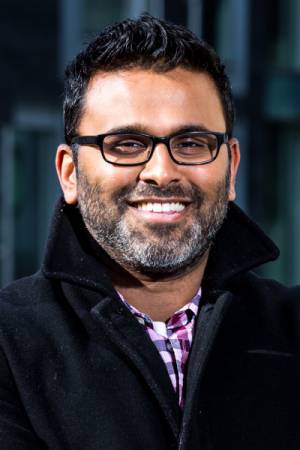
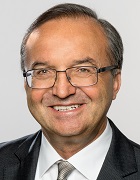
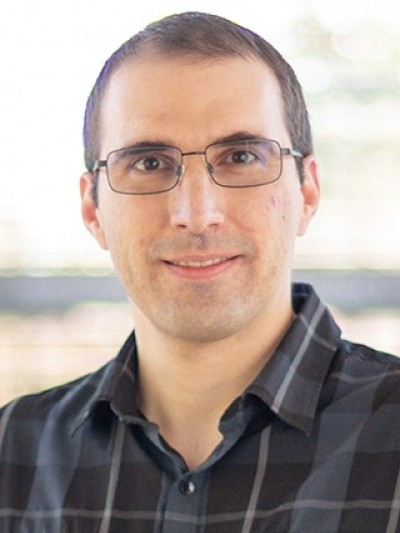
Jean Oh is a Researcher at the Robotics Institute of Carnegie Mellon University (CMU) , leading the interdisciplinary Bot Intelligence Group (BIG) . Her work focuses on developing persistent robots that co-exist and collaborate with humans in shared environments, emphasizing continuous improvement through training, exploration, and human interaction. Education: Ph.D. in Language and Information Technologies, CMU M.S. in Computer Science, Columbia University B.S. in Biotechnology, Yonsei University Oh's research integrates vision, language, and planning systems in robotics, with applications in human-robot teaming , self-driving cars , disaster response , eldercare , and creative robotics . She has pioneered projects like socially-compliant robot navigation in human crowds and AI-driven robotic painting systems. Recent publication trends highlight her work in vision-language planning , social navigation , computational creativity , and human-robot collaboration . Notable contributions include the StyleCLIPDraw algorithm for text-to-art generation and Social-PatteRNN for human-like trajectory prediction. Scientific Awards: Best Paper Award in Cognitive Robotics (ICRA'18, ICRA'15) Best Systems Paper Finalist (HRI'25) Best Oral Paper Finalist (Humanoids'24) Best Paper in Entertainment (IROS'24) Argoverse Challenge Winner (CVPR'24) Best Student Paper (AIAA'24) Best Demo Finalist (RoboSoft'24) Oh mentors a diverse team of PhD, MS, and undergraduate students from CMU departments including Robotics, Computer Science, and Mechanical Engineering. Her research is funded by US Army Research Lab , DiDi Chuxing , and DARPA , with collaborations across industry and academia .
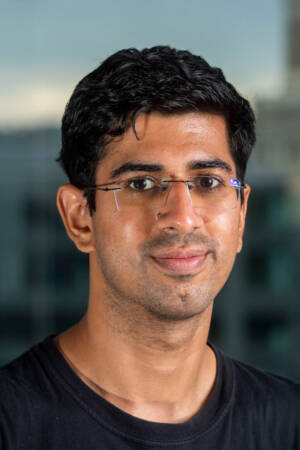
Deva Kannan Ramanan is a Professor at the Robotics Institute of Carnegie Mellon University , focusing on computer vision , machine learning , and human-centered robotics . His work bridges neurorobotics and visual perception , with applications in autonomous driving and 4D reconstruction . Research Topics Computer Vision 3-D Vision and Recognition Visual Servoing Neurorobotics Human-Centered Robotics Graphics & Creative Tools His recent publications in CVPR , ICRA , and ICCV emphasize 4D human reconstruction , neural rendering , and vision-language models for autonomous systems. He serves as General Chair of CVPR 2027 and Program Chair of CVPR 2018 , with IARPA funding for aerial-ground rendering (2023-2027). Current students include PhD candidates Sally Chen, Kangle Deng, and Zhiqiu Lin, while past advisees like Arun Vasudevan and Olga Russakovsky now hold positions at Amazon and Meta respectively.
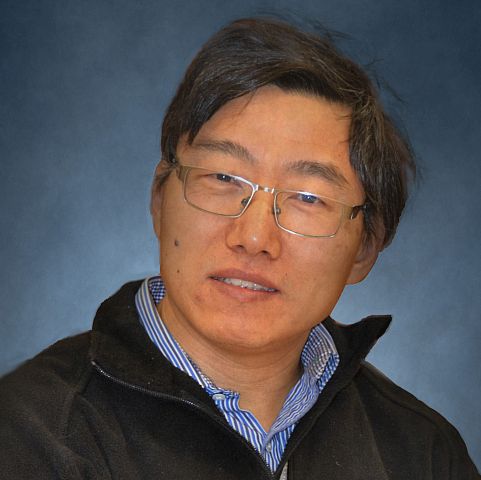
Katerina Fragkiadaki is the JPMorgan Chase Associate Professor of Computer Science in the Machine Learning Department at Carnegie Mellon University. She works at the intersection of Artificial Intelligence, Computer Vision, Machine Learning, Language Understanding, and Robotics. PhD from GRASP Lab, University of Pennsylvania Postdoctoral researcher at UC Berkeley (with Jitendra Malik) and Google Research Recipient of NSF CAREER, DARPA Young Investigator, Amazon, Google, Sony, UPMC, and AFOSR awards Organizer of CoRL 2023 Workshop on Generalist Robots ICLR 2024 Program Chair, multiple area chair roles Her research group focuses on developing machines that autonomously improve world models through human-environment interactions, with specific emphasis on: Representation learning and video understanding 2D/3D unified vision-language models Generative simulation and reinforcement learning Real2Sim/Sim2Real robot learning Continual learning and spatial common sense 3D scene reconstruction and dynamics Recent publications highlight advancements in: 3D mesh generation with compositional transformers Unified 2D/3D perception frameworks Physics-aware generative models Diffusion-based robotic manipulation policies Embodied agents with memory prompting Awards include: 2024: DARPA Young Investigator Award 2023: Amazon Faculty Award 2022: Sony Faculty Research Award 2021: UPMC Faculty Research Award 2020: NSF CAREER Award 2019: Google Faculty Award Key collaborations span institutions including UC Berkeley, Google Research, Stanford, MIT, and University of Tsukuba. Her work bridges theoretical innovation with practical applications in: Autonomous robot manipulation 4D world modeling Language-grounded perception Visual dynamics prediction Embodied program synthesis Physics-based simulation engines
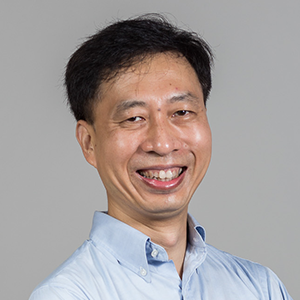
Shubham Tulsiani is an Assistant Professor at Carnegie Mellon University's Robotics Institute, where he leads the Computer Vision group and the Physical Perception Lab. His research focuses on inferring physically and spatially grounded representations from perceptual inputs, with applications in 3D vision, robot manipulation, and neural scene reconstruction. He directs an active research group with multiple PhD and Master's students. Research interests center on 3D scene understanding , robot learning , and generative modeling , with specific emphasis on: self-supervised perception, neural rendering, multi-view geometry, manipulation from visual inputs, and physics-based reasoning. The lab develops methods that leverage physical world constraints as supervisory signals. Recent publications demonstrate strong focus on diffusion models for 3D tasks , sparse-view reconstruction , and robotic manipulation transfer . Key trends include neural inverse rendering, view synthesis from limited observations, and translating human interactions to robot actions. Awards include: Best Student Paper Award at CVPR 2015 Advising includes supervision of 5 PhD students, 4 MS students, and undergraduates. Lab alumni hold positions at Google, Stanford, Meta, and Princeton. The Physical Perception Lab collaborates with FAIR Pittsburgh and the CMU Computer Vision group.
Eduardo Miranda is a Professor of Civil and Environmental Engineering at Stanford University. He specializes in structural engineering, with a focus on performance-based earthquake engineering. His work involves analyzing ground motion impacts on structures and society, and developing methods to improve seismic design and construction. He holds a PhD from the University of California, Berkeley (1991), an MSc from UC Berkeley (1988), and a Civil Engineering degree from UNAM (1986). Education: PhD in Structural Engineering, UC Berkeley (1991) MSc in Structural Engineering, UC Berkeley (1988) Civil Engineer, National Autonomous University of Mexico (UNAM) (1986) Research Interests: His primary research areas include seismic risk assessment, ground motion analysis, and the development of computational tools for structural analysis. He investigates the directional effects of earthquakes on building responses and has contributed to methodologies for regional seismic risk evaluation. His work also focuses on improving seismic isolation techniques and nonstructural component design. Recent Research Trends: Miranda’s recent publications emphasize directional ground motion effects, particularly in earthquakes like those in Türkiye and Taiwan. He explores novel friction models for seismic isolation bearings and evaluates the seismic performance of structures on soft soils. His work bridges theoretical analysis and practical application, aiming to enhance building resilience. Advising & Grants: No specific grants or advisees are listed, but his research is funded through collaborations with institutions like EERI and StEER for field assessments and computational studies. Labs/Teams: Collaborates with the Stanford Earthquake Engineering Research (StEER) Group, contributing to post-earthquake reconnaissance reports and regional risk assessments.
Qingguo Li is a Professor and Associate Head at the Department of Mechanical and Materials Engineering , Queen's University , and a member of the Ingenuity Labs Research Institute . He specializes in biomechanical system design, energy harvesting, wearable sensors, gait analysis, and load carriage systems. His research integrates robotics, biomedical engineering, and sensor technology to develop human-centric devices and mobility aids. Current Roles : Professor, Associate Head, Queen's University Research Institute : Ingenuity Labs Research Institute Lab : Bio-Mechatronics and Robotics Laboratory His work focuses on biomechanical energy harvesting , IMU-based motion analysis , and assistive device development . Key applications include stroke rehabilitation, gait monitoring, and wearable power generation systems. Articles span cable-driven robots , smart walkers , and 3D printing mechanisms , emphasizing human-robot interaction and dynamic modeling . The lab explores sensor calibration , adaptive control algorithms , and human movement optimization . Areas of impact include rehabilitation engineering , load carriage stability , wearable sensor accuracy , and assistive robotics . His team develops solutions for gait asymmetry detection , post-stroke mobility , and low-cost energy systems , leveraging machine learning and kinetic modeling .
Ares J. Rosakis is the Theodore von Kármán Professor of Aeronautics and Mechanical Engineering at the California Institute of Technology (Caltech), where he served as Chair of the Division of Engineering and Applied Science from 2009-2015 and previously as Director of the Graduate Aerospace Laboratories (GALCIT). He has held numerous prestigious visiting professorships including at Nanyang Technological University, Northwestern University, Columbia University, Oxford University, and École Normale Supérieure in Paris. Rosakis earned his B.A. and M.A. in Engineering Science from Oxford University in 1978, followed by his Sc.M. (1980) and Ph.D. (1982) in Engineering (Solid Mechanics) from Brown University. He joined Caltech as an Assistant Professor in 1982, was promoted to Associate Professor in 1988, and to full Professor in 1993. In 2004, he was named the Theodore von Kármán Professor, one of Caltech's most distinguished named chairs. Rosakis is globally recognized as the foremost expert in dynamic failure mechanics of solid materials. His pioneering contributions span the dynamic failure of metals, composites, and interfaces. He invented Coherent Gradient Sensing (CGS) interferometry, a novel optical method sensitive to gradients of optical path differences that has been widely adopted in fracture mechanics and thin film stress measurements. His research encompasses dynamic shear-dominated rupture of heterogeneous materials, rupture mechanics of crustal earthquakes (where he experimentally discovered 'intersonic' or 'supershear' ruptures), and reliability of thin films and in-situ wafer level metrology. His work bridges engineering science, materials mechanics, and geophysics with remarkable interdisciplinary impact. His recent publications demonstrate a strong focus on earthquake mechanics and laboratory simulations of seismic events, particularly supershear earthquake ruptures. The research connects fundamental fracture mechanics with real-world geophysical phenomena, revealing how laboratory-scale experiments can illuminate the physics of large-scale earthquakes. His work has established critical links between theoretical models, experimental observations, and geological field evidence. Rosakis has received numerous prestigious awards including: 2024 Foreign Member of the Royal Society, UK 2023 Honorary PhD from National Technical University of Athens 2023 Honorary Degree of Doctor of Engineering from University of Illinois 2021 Zdeněk P. Bažant Medal for Failure and Damage Prevention 2018 Timoshenko Medal from ASME 2016 Elected to the National Academy of Sciences 2011 Elected to the National Academy of Engineering Throughout his distinguished career at Caltech, Rosakis has mentored numerous graduate students and postdoctoral researchers, many of whom have become leaders in their fields. His research has been continuously supported by major grants from the National Science Foundation, Department of Energy, and other federal agencies, focusing on dynamic fracture, earthquake mechanics, and advanced optical measurement techniques. He has served on numerous editorial boards and advisory committees for major scientific organizations. At Caltech, Rosakis leads research in the Graduate Aerospace Laboratories (GALCIT), where he has established world-class experimental facilities for studying dynamic fracture and earthquake mechanics. His laboratory features high-speed imaging systems capable of millions of frames per second, infrared diagnostics for temperature field measurements, and specialized equipment for simulating earthquake ruptures at laboratory scale. His research group combines experimental, theoretical, and computational approaches to address fundamental questions in solid mechanics and their applications to geophysics and materials engineering.
Tariq Iqbal is an Assistant Professor at the University of Virginia , with joint appointments in the Department of Systems and Information Engineering and Department of Computer Science . He leads the Collaborative Robotics Lab (CRL) , specializing in human-robot teams and embodied AI . Previously, he was a Postdoctoral Associate at MIT's CSAIL , advised by Prof. Julie Shah , and earned his Ph.D. in Computer Science from University of California San Diego (UCSD) under Prof. Laurel Riek . Ph.D. in Computer Science, University of California San Diego (2017) M.S. in Computer Science, University of Texas at El Paso (2012) B.S. in Computer Science and Engineering, Bangladesh University of Engineering and Technology (2007) His research lies at the intersection of artificial intelligence and robotics , focusing on human-robot collaboration in dynamic environments. Key areas include motion prediction , multimodal fusion , trust modeling , and collaborative learning . His work integrates cognitive science and deep learning to enhance robotic fluency in naturalistic settings. Recent publications (2023–2025) highlight advancements in human-robot team dynamics , multimodal dataset creation , and motion prediction algorithms . Notable works include Energy-Based Transformers for scalable AI, PoseTron for motion prediction, and Accessible Navigation Mapping for assistive robotics. These contributions span trust modeling , cloud robotic infrastructure , and safety in close-proximity collaboration . National Science Foundation (NSF) CAREER Award Air Force Office of Scientific Research (AFOSR) Young Investigator Program (YIP) Award Commonwealth Center for Advanced Manufacturing (CCAM) Innovation Award As faculty, he has secured grants from NSF and AFOSR , mentored research students, and taught courses like Stochastic Modeling I (SYS 6005) and Robots and Humans (SYS 4582/6465, ECE 4502/6465, CS 6465) . His prior industry roles at IBM Watson Lab and Grameenphone Ltd. inform his applied research in telecom infrastructure and cognitive robotics . He leads the Collaborative Robotics Lab (CRL) at UVA, which develops multimodal datasets , real-time coordination algorithms , and adaptive pathfinding systems . Current projects explore human motion prediction , team synchrony , and embodied question-answering , reflecting his commitment to advancing human-robot fluency and contextual AI .
Prof. Dr. Johan Robertsson is a Full Professor of Applied Geophysics and Head of the Exploration and Environmental Geophysics (EEG) Group at ETH Zürich's Department of Earth and Planetary Sciences. He holds a MSc from Uppsala University (1991) and a PhD in Geophysics from Rice University (1994). Before joining ETH in 2012, he spent 15 years at Schlumberger in R&D roles, leading projects that revolutionized marine seismic data acquisition. His research focuses on wave propagation physics, seismic data inversion, and applications in exploration and environmental geophysics. He pioneered the use of Distributed Acoustic Sensing (DAS) for landslide monitoring and contributed to Mars seismology via the InSight mission. Education: MSc in Engineering Physics, Uppsala University (1991) PhD in Geophysics, Rice University (1994) Research Interests: Seismic wavefield modeling and inversion Planetary seismology (Mars, Moon) Acoustic metamaterials and wave control Environmental geohazard monitoring Marine seismic acquisition techniques His work on the Martian soil properties using InSight data and lunar exploration instrumentation (ALGEP) reflects his cross-disciplinary approach. He holds 90+ patents and has secured prestigious grants like the ERC Advanced Grant. Awards: EAGE Guido Bonarelli Award (2020) ERC Advanced Grant MATRIX (2017) EAGE Conrad Schlumberger Award (2018) Grants & Advising: Led the MATRIX ERC project advancing seismic imaging algorithms Advised over 20 PhD/MS students (names not listed) Secured Schlumberger's largest R&D project in marine seismic sampling His EEG Group operates cutting-edge labs for immersive wave experimentation and planetary geophysical instrumentation. Current initiatives include lunar subsurface exploration and acoustic invisibility experiments.
David Hsu is Provost's Chair Professor in the Department of Computer Science at the National University of Singapore (NUS) School of Computing, where he founded and directs the NUS Artificial Intelligence Laboratory (NUSAIL) and leads the Smart Systems Institute. His academic leadership includes chairing major conferences such as Robotics: Science & Systems (2015) and IEEE ICRA (2016), alongside editorial roles in IEEE Transactions on Robotics and the Journal of Artificial Intelligence Research. He earned a B.Sc. in Computer Science & Mathematics from the University of British Columbia and a Ph.D. in Computer Science from Stanford University. His research spans robotics, AI, and computational biology, with recent focus on robot planning under uncertainty and human-robot collaboration. Current work integrates machine learning with decision-theoretic planning to enable robust human-robot co-existence in unstructured environments. Analysis of his 2023-2025 publications reveals dominant trends in deformable object manipulation (e.g., clothes handling via semantic keypoints), open-world navigation using scene graphs, and LLM-driven multi-agent reasoning for complex tasks. Key innovations include perspective-aware visual grounding for human-centric interaction and functional object arrangement through compositional generative models, reflecting a strong emphasis on real-world applicability. His scientific contributions have earned prestigious recognition: IJCAI-JAIR Best Paper Prize (2022) for foundational AI research Robotics: Science & Systems Test of Time Award (2021) IEEE Fellowship (2018) for contributions to robotic planning RSS Best Systems Paper Award (2017) RoboCup Best Paper Award at IROS (2015) Humanitarian Robotics Award at ICRA (2015) As director of the Adaptive Computing Laboratory, Hsu drives research on fundamental computational frameworks for human-robot interaction. The lab's work on uncertainty-aware decision-making has secured significant research funding through grants from Singapore's National Research Foundation and industry partnerships with robotics firms. While specific student names aren't publicized, his leadership in the NUSAIL indicates extensive mentorship of doctoral candidates in AI and robotics.
Dr. Peter Fokker is a Researcher at Utrecht University's Faculty of Geosciences, specifically within the Department of Earth Sciences and the Experimental Rock Deformation/HPT group. He is affiliated with the Research Programme in Earth Sciences Utrecht (DES/IVAU) and has been actively publishing in geomechanics, subsidence modeling, and induced seismicity for over three decades. His work primarily focuses on the application of geomechanical principles to understand and model subsurface processes related to resource extraction and geothermal energy. Dr. Fokker's research interests span several interconnected domains in geomechanics and subsurface engineering. His primary focus is on experimental rock deformation , studying how rocks behave under various stress conditions. He has made significant contributions to subsidence modeling , particularly in the context of gas field depletion in the Netherlands. His work on induced seismicity has helped understand the relationship between subsurface operations and seismic events. Additional interests include geothermal energy systems , reservoir engineering , and the application of data assimilation techniques to improve subsurface characterization. His research often bridges theoretical models with practical applications in energy resource management. An analysis of Dr. Fokker's recent publications (2020-2025) reveals a strong focus on practical applications of geomechanics to real-world challenges. His work increasingly integrates InSAR technology and data assimilation methods to monitor and model subsidence processes. There's a clear emphasis on geothermal energy applications , reflecting growing interest in sustainable energy solutions. His research also demonstrates a sophisticated approach to modeling complex reservoir behaviors across multiple scales, from laboratory experiments to field-scale operations. The interdisciplinary nature of his work is evident in collaborations spanning geology, engineering, and environmental science. Dr. Fokker has supervised multiple research projects and students throughout his career, as indicated by the "Supervised Work (4)" reference in his profile. His research has been supported by various grants focused on subsidence modeling, geomechanics of energy resources, and induced seismicity. He has been involved in significant collaborative efforts, including the Dutch National Scientific Research Program on Land Subsidence. Dr. Fokker is part of the Experimental Rock Deformation/HPT group at Utrecht University, which conducts laboratory experiments and develops theoretical models to understand rock behavior under various conditions. His work contributes to the broader research ecosystem focused on sustainable resource management and understanding subsurface processes, with particular relevance to the Dutch context of gas extraction and land subsidence.
Prof. Dr.-Ing. Gerhard Müller is a Full Professor at the Chair of Structural Mechanics within the TUM School of Engineering and Design at Technical University of Munich (TUM). Since 2004, he has held this distinguished position, and since 2014, he has served as Executive Vice President for Academic and Student Affairs at TUM. His research focuses on structural dynamics and vibroacoustics, with specific expertise in dynamic soil-structure interaction, sound radiation analysis, and seismic risk assessment. Professorship: Structural Mechanics University: Technical University of Munich School: TUM School of Engineering and Design Department: Chair of Structural Mechanics in Civil Engineering Prof. Müller's research spans multiple domains, including: Structural Dynamics : Examining building and vehicle vibrations, seismic soil-structure interaction, and advanced model order reduction techniques Vibroacoustics : Investigating sound radiation from vibrating structures and developing acoustic metamaterials for noise control Computational Methods : Pioneering hybrid deterministic-statistical approaches, Wave Based Methods (WBM) for saturated elastodynamic structures, and parametric model order reduction His recent publications demonstrate expertise in: Wave propagation analysis in poroelastic media Bayesian parameter updating for structural models Acoustic metamaterials for vibration control Advanced numerical methods for seismic risk assessment Hybrid ITM-FEM approaches for soil-structure interaction Energy flow analysis in timber structures Awarded the Spindler Prize in 1984 , Prof. Müller also holds significant academic leadership roles: President of European Association for Structural Dynamics (EASD) Chairman of Bavarian-French University Center (BayFrance) Active member of ASIIN accreditation agency and Bavarian Chamber of Engineers Previously served as Dean of Civil Engineering and Surveying at TUM (2010-2014) He leads the Structural Dynamic Lab (formerly Vibroacoustics Lab) and has developed interactive web apps for engineering education. His work bridges theoretical advancements with practical applications in construction acoustics, transportation noise control, and geothermal energy infrastructure analysis.
Prof. Dr. Ercan Yüksel is a full Professor in the Department of Civil Engineering at Istanbul Technical University (ITU), College of Engineering. He has been a faculty member at ITU since 1990, progressing from Assistant Professor to Professor in 2017. His research focuses on earthquake engineering, structural dynamics, and numerical modeling, with applications in seismic design, energy dissipation, and structural health monitoring. PhD, Civil Engineering, Istanbul Technical University MS, Structural Engineering (with thesis), Istanbul Technical University BS, Civil Engineering, Istanbul Technical University His research interests are centered on earthquake engineering , particularly seismic input energy analysis , energy dissipation systems , reinforced and precast concrete structures , and seismic isolation . He actively investigates the dynamic behavior of structures under earthquake loads and develops innovative solutions for improving structural resilience. His work integrates advanced numerical modeling with experimental validation. Recent publications (2023–2025) highlight a strong focus on energy-based seismic design, performance of mechanical couplers, damping systems for high-voltage insulators, and fatigue behavior of railway tracks. These works are closely tied to real-world seismic events like the 2023 Kahramanmaraş earthquake, demonstrating applied and impactful research. His scientific recognition includes: Notable Work Award, Turkish Academy of Sciences (TÜBA), 2012 Golden Beam Award, Turkish Prefabricated Association, 2011 Prof. Yüksel is an active Principal Investigator on multiple research projects funded by ITU’s BAP program, covering topics such as smart sleepers for railway monitoring, novel seismic input energy spectra, and earthquake isolation for racking systems. He has supervised numerous theses and is involved in professional organizations including UNESCO-IPRED and the Turkish Earthquake Foundation. He leads research on structural health monitoring of ballasted railway lines using smart sleeper technology and is developing earthquake isolation systems for industrial storage racks. His lab integrates experimental testing with numerical simulation to validate new structural components under cyclic and biaxial loading.
Manolis Savva is an Associate Professor in the School of Computing Science at Simon Fraser University and holds the Canada Research Chair in Computer Graphics. He specializes in 3D scene analysis, generative methods for 3D content, and computer graphics for AI. His research bridges computer graphics, vision, and robotics. Education: Ph.D. (Computer Science, Stanford University, 2016), MS (Computer Science, Stanford, 2012), B.A. (Physics & Computer Science, Cornell, 2009). Research Interests: Human-centric 3D scene analysis, generative 3D content creation, AI-driven rendering, and applications in robotics. Key projects include Habitat (Embodied AI platform), ScanNet , and ShapeNet datasets. Recent Articles: Focus on articulated object modeling, 3D scene synthesis, and AI-driven visualization. Notable work includes SceneMotifCoder (generating object arrangements) and R3DS (panoramic scene understanding). Awards: CHCCS Early Career Award (2022), ICLR 2023 Outstanding Paper Award, ICCV 2019 Best Paper Nomination, and SGP 2020 Dataset Award (ScanNet). Lab/Teams: Leads research groups in 3DLG (3D Learning and Graphics) and GrUVi (Graphics and Vision). Collaborates on projects like AI Habitat and HomeRobot .
Prof. Dr. Hakkı Polat Gülkan is a Professor at Başkent University's Civil Engineering Department. With a PhD (1971) and Master's (1968) from the University of Illinois in Civil Engineering and a Bachelor's (1966) from METU, his career spans over five decades in earthquake engineering, structural dynamics, and disaster management. PhD: University of Illinois, Civil Engineering (1971) Master's: University of Illinois, Civil Engineering (1968) Bachelor's: Middle East Technical University, Civil Engineering (1966) His research focuses on seismic risk assessment, structural behavior under extreme loads, and disaster mitigation strategies. Key contributions include earthquake simulator development, ground motion analysis, and retrofitting techniques for masonry and reinforced concrete structures. He has published extensively on deformation limits, response spectra, and historical building preservation. Recent work includes 15+ articles from 2024-2012 analyzing Istanbul's seismic hazards, Marmara region dynamics, and post-earthquake structural integrity. Conference papers address Turkey's endemic building vulnerabilities and deformation thresholds for seismic isolation systems. Scientific Achievements: Elected to U.S. National Academy of Engineering (2023) As an active journal reviewer for 13+ publications (2023-2024), he contributes to advancing earthquake engineering discourse. His teaching portfolio includes advanced structural analysis, concrete mechanics, and seismic design courses.