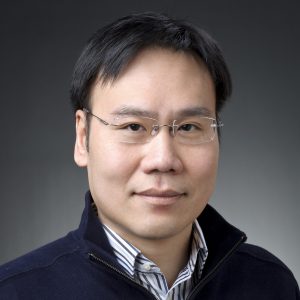
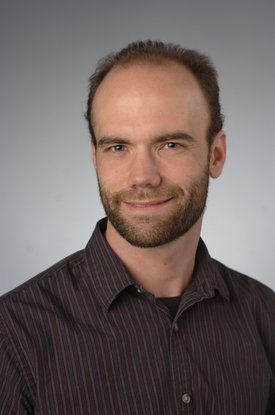
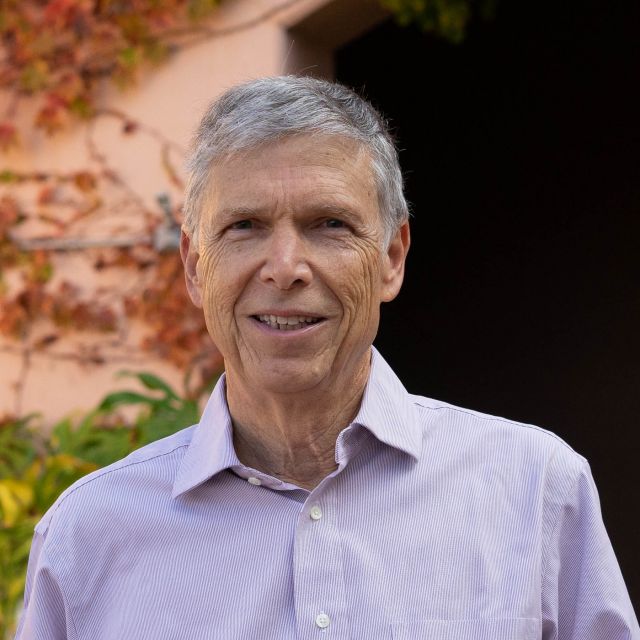
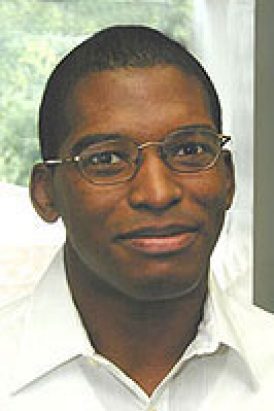
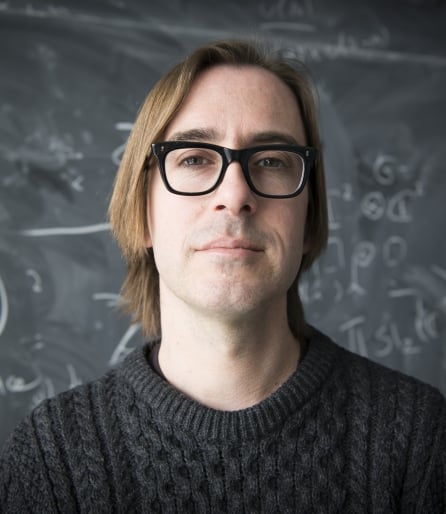
Dr Mike Blake is an Associate Professor in Theoretical Physics at the School of Mathematics , University of Bristol. His research bridges quantum physics, holography, and chaos theory through gravitational dualities. Education: BA, MMath, PhD Blake’s work focuses on: Quantum chaos and scrambling in black holes Holographic models of many-body systems Thermalization and operator dynamics Applications of AdS/CFT correspondence Pole-skipping phenomena in rotating black holes Quantum gravity insights from string theory His publications reveal interdisciplinary trends combining quantum information , high-energy physics , and condensed matter systems , particularly in understanding chaotic dynamics through gravitational analogies. Dr Blake actively contributes to academic discourse and welcomes collaborations via his contact details: Email: mike.blake@bristol.ac.uk Address: Fry Building, Woodland Road, Bristol, BS8 1UG
Prof. Gary Shiu is a Professor of Physics at the University of Wisconsin-Madison, leading research at the intersection of string theory, particle physics, and cosmology. He is affiliated with the Department of Physics and has held academic appointments at institutions like the Hong Kong University of Science and Technology and the CERN. His research focuses on quantum gravity, the Swampland program, inflationary cosmology, and AI applications in physics. He has received notable awards including the Guggenheim Fellowship, Kavli Frontiers Fellowship, and Chancellor’s Distinguished Teaching Award. Education: PhD in Physics (Cornell University, 1998), BSc in Physics (Chinese University of Hong Kong, 1993). Academic roles include founding director of the Center for Fundamental Physics at HKUST and co-initiator of the Physics ∩ ML seminar series. He advises graduate and undergraduate students in theoretical physics and cosmology, with notable advisees contributing to projects in dark energy, string vacua, and machine learning. Research highlights include formulating the Weak Gravity Conjecture in AdS space, developing methods for cosmological parameter inference using topological data analysis, and exploring the String Genome Project. His work bridges theoretical physics with experimental observables, leveraging advanced computational techniques and interdisciplinary collaborations. Key awards include the Kellett Mid-Career Award, Vilas Associate Award, and multiple fellowships from prestigious societies. He actively participates in international conferences and editorial boards, contributing to initiatives like the Gordon Research Conference on String Theory and Cosmology. Labs/Teams: Theoretical and Computational Cosmology Group, AI ∩ Universe Initiative, and collaborations in string phenomenology and machine learning applications.
Jay Hubisz is a Professor of Physics at Syracuse University's College of Arts and Sciences. He holds a Ph.D. in Theoretical Particle Physics from Cornell University (2006) and a B.S. in Physics from the California Institute of Technology (2001). His research focuses on Physics Beyond the Standard Model, Quantum Field Theory, Cosmology/Astrophysics, and Quantum Information Science. Recent work explores cosmological quasiparticles, holographic phase transitions, and quantum algorithms for lattice field theory. Hubisz has led major grants including a decade-long Department of Energy grant on Theoretical Particle Physics and Cosmology (2013-2025). He teaches advanced courses like Quantum Computing Demystified and serves as Director of Undergraduate Studies in Physics. Awards include the 2024 Undergraduate Majors Teaching Award. He chairs the Joint CAS|MAX Faculty Council and contributes to curriculum development, faculty mentoring, and physics outreach initiatives.
Andrew Liam Fitzpatrick is an Associate Professor at Boston University, specializing in theoretical physics with a focus on quantum field theory and its applications to gravity. His research emphasizes effective field theories, scale-invariant systems, and dualities in quantum gravity. He holds a B.S. in Physics and Mathematics from the University of Chicago and a Ph.D. in Physics from Harvard University. His work explores the interplay between quantum mechanics and gravity, particularly through the lens of conformal field theories and the AdS/CFT correspondence. Key topics include operator product expansions, non-unitary systems, and the behavior of small black holes. Honors: Sloan Research Fellow Office: PRB, Room 577 Email: fitzpatr@bu.edu His recent publications (2016) address foundational questions in quantum gravity, black hole thermodynamics, and the information paradox. While no grants or advising roles are explicitly listed, his research aligns with cutting-edge theoretical frameworks bridging high-energy physics and cosmology.
Gary Horowitz is a distinguished Professor of Physics at the University of California Santa Barbara, with a research career spanning over four decades. He holds appointments in the Department of Physics at UCSB and maintains an active research program in theoretical gravitational physics. Horowitz's research interests focus on both classical and quantum aspects of gravitational physics, particularly gravity under extreme conditions including the big bang in cosmology and spacetime inside black holes. His work centers on understanding spacetime singularities through string theory, examining black holes in higher dimensions, quantum properties of black holes, and quantum descriptions of singularities. He has made significant contributions to the application of gauge/gravity duality to understand quantum gravity and aspects of particle physics. His scholarly work shows consistent focus on theoretical foundations of gravity, with publications spanning from foundational work in the 1990s through recent contributions to the field. His research trajectory demonstrates deep engagement with the most challenging problems in gravitational physics. Scientific Recognition: Elected Member of the National Academy of Sciences (2010) Elected Member of the American Academy of Arts and Sciences (2013) Horowitz has held significant leadership positions including President of the International Society on General Relativity and Gravitation (2013-2016), head of the Astrophysics, Gravity, and Cosmology panel at the National Academy of Sciences (2014-2017), and chair of the Division of Gravitational Physics at the American Physical Society (2019-2020). His work continues to influence both theoretical physics and cosmology through innovative applications of string theory to gravitational phenomena.
Alex Buchel is a Professor at the University of Western Ontario, affiliated with the Departments of Applied Mathematics and Physics and Astronomy. His research focuses on quantum properties of black holes, string theory applications to cosmology, and holographic methods for understanding strongly coupled systems. He holds an M.S.(Hons) from the Moscow Institute of Physics and Technology and a Ph.D. from Cornell University. His career includes roles as a Research Fellow at the Michigan Center for Theoretical Physics (2002–2003), Assistant Professor (2003–2007), and Associate Professor (2007–2012) at Western University. He has been a Professor since 2012 and an Associate Member at the Perimeter Institute for Theoretical Physics since 2003. Key awards include NSERC Discovery Grants (2021–2027) and an Early Researcher Award (2007). Recent work explores gravitational instabilities, holographic plasma dynamics, and cosmological models derived from string theory flux compactifications. His grants support investigations into quantum gravity and holography, while his seminars address topics like transport coefficients in strongly coupled systems and dynamical fixed points in holography.
Leopoldo Pando Zayas is a Professor of Physics at the University of Michigan, specializing in Theoretical Elementary Particle Physics within the High Energy Theory group. His work is affiliated with the Michigan Center for Theoretical Physics (MCTP), where he conducts cutting-edge research at the intersection of quantum gravity, string theory, and black hole physics. Professor Pando Zayas' research focuses on quantum aspects of black holes, particularly examining how quantum corrections affect black hole entropy beyond the classical Bekenstein-Hawking formula. His work demonstrates how logarithmic corrections to black hole entropy can be matched to microscopic descriptions using the AdS/CFT correspondence. Additional research interests include quantum mechanical descriptions of gravity, quantum chaos, irreversibility theorems in renormalization group (RG) flows, gravitational collapse in Anti-de Sitter (AdS) space, Wilson loops in gauge theories, and implementing disorder within the AdS/CFT framework. His recent publications reveal a strong focus on precision calculations in holography, with particular attention to black hole thermodynamics across various dimensions, quantum corrections to Hawking radiation, and the application of quantum information concepts like complexity to gravitational systems. His work often bridges high-energy theory with mathematical physics, exploring connections between gauge theories and gravitational phenomena. Scientific Awards: UROP's Outstanding Research Mentor Award recognizing exceptional guidance of undergraduate researchers Honorable Mention in the Gravity Research Foundation Essay Competition (2014) for work connecting quantum chaos to the black hole information paradox Honorable Mention in the Gravity Research Foundation Essay Competition (2012) addressing AdS stability and gravitational collapse Professor Pando Zayas has actively mentored undergraduate research projects and advised diploma students at ICTP in Italy, demonstrating commitment to training the next generation of theoretical physicists. His teaching portfolio includes advanced courses in quantum mechanics, general relativity, string theory, and statistical physics. He has organized theoretical physics seminars and participated in numerous international collaborations with institutions including IAS Princeton, KITP Santa Barbara, and ICTP Italy.
Andreas Athenodorou is an associate research scientist at the Computation-based Science & Technology Research Center (CaSToRC) of The Cyprus Institute. He holds a PhD in Theoretical Particle Physics from the University of Oxford (2004–2008) and has held postdoctoral positions at DESY Zeuthen, Swansea University, and the University of Cyprus. Prior to his current role, he was a Marie Sklodowska Curie Individual Fellow at the University of Pisa (2019–2021). He currently leads a work package in the NI4OS-Europe project. His research focuses on theoretical and computational aspects of particle physics, including lattice gauge theories, large-Nc limits, hadron structure, and beyond Standard Model physics. He specializes in applying high performance computing (HPC), data science, and machine learning to solve complex problems in quantum field theory. Notable areas include confinement dynamics via effective string theory, glueball spectroscopy, and topological susceptibility studies in QCD. His computational work spans lattice QCD simulations, development of reproducible open science workflows, and application of machine learning to phase transition analysis. He has contributed to understanding mass hierarchies in strongly-coupled systems and the neutron electric dipole moment using advanced simulation techniques. Key contributions include advancing effective string theory descriptions of flux tubes, analyzing Z_N gauge theories, and exploring β-function behaviors in SU(2) adjoint fermion systems. His work bridges fundamental theory with computational innovation, addressing both particle physics questions and methodological challenges in large-scale simulations.
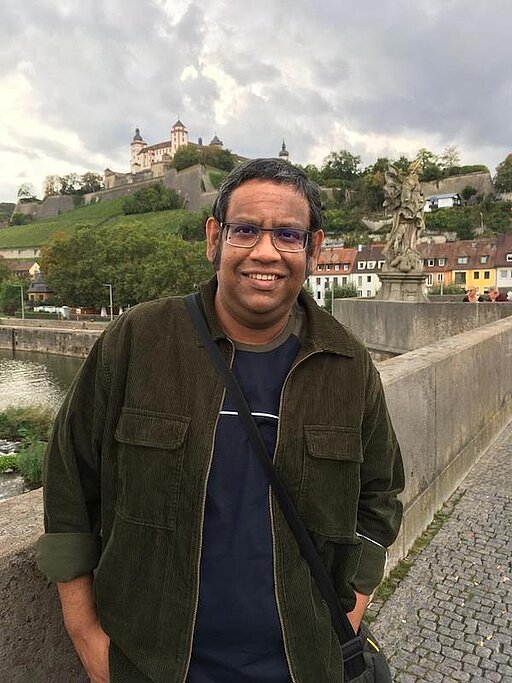
Souvik Banerjee is a Temporary Lecturer at the Institute for Theoretical Physics and Astrophysics , University of Würzburg, Germany. His research focuses on theoretical physics, particularly at the intersection of string theory, quantum gravity, and holography. Education: PhD from Institute of Physics, Bhubaneswar (India), followed by postdoctoral positions at University of Groningen (Netherlands), Uppsala University (Sweden), and University of Würzburg (Germany). Research interests include AdS/CFT correspondence, classical and quantum black holes, string cosmology, braneworld holography, and non-equilibrium holographic systems. He has taught courses on General Relativity and Gauge/Gravity duality since 2020. His work is associated with the Würzburg Seminar on Quantum Field Theory and Gravity . He has received prestigious recognition as an Alexander von Humboldt Postdoctoral Fellow .
Arkady Tseytlin is a Professor of Theoretical Physics at Imperial College London's Department of Physics, part of the Faculty of Natural Sciences. His research focuses on string theory, quantum field theory, and quantum gravity, with emphasis on connections between string theory and gauge theories. He is affiliated with the Abdus Salam Centre for Theoretical Physics at Imperial College. Research interests include advanced topics such as AdS/CFT correspondence, M-brane dynamics, integrable deformations of string backgrounds, and quantum gravity effects in holographic models. His recent work explores non-planar corrections in ABJM theory, semiclassical quantization of M5 branes, and strong coupling expansions in supersymmetric field theories. Publications span topics like Wilson loops in large-N gauge theories, quantum corrections to sigma models, and supergravity solutions in AdS spaces. Despite significant contributions, no specific student advisees or scientific awards are explicitly listed in the provided texts.
Joseph Minahan is a Professor at Uppsala University, affiliated with the Department of Physics and Astronomy (Theoretical Physics) and the Department of Mathematics (Centre for Geometry and Physics). He holds dual Swedish and American citizenship. His research focuses on string theory, quantum field theory, and the AdS/CFT correspondence, with particular emphasis on integrability and localization techniques to derive exact results in supersymmetric theories. Education: BSc in Physics (MIT, 1982), MA and PhD in Physics (Princeton University, 1984–1987). He has held visiting positions at MIT, Harvard, and other institutions. Awards include the Lily och Sven Thuréus Prize (2013) and Bjoerkénska priset (2018), Uppsala University's highest science honor. His work spans topics like Hagedorn temperatures in supersymmetric gauge theories, integrable systems in the ABJM model, and dimensional analysis in supersymmetric Yang-Mills. He has led grants from the Swedish Research Council, Knut and Alice Wallenberg Foundation, and others. His research often bridges high-energy physics and mathematical structures, with contributions to the thermodynamic Bethe ansatz and AdS/CFT integrability.
Kenneth Intriligator is Distinguished Professor of Physics at UCSD, holding the Dan Broida Chair. PhD from Harvard University (1992). Research advances fundamental understanding of quantum field theory through symmetry-based methods exploring dualities, exact results, and mathematical connections. Investigates strongly coupled quantum fields, supersymmetry applications, and conformal symmetry. Current Simons Collaboration explores categorical symmetries bridging quantum field theory and advanced mathematics. Recognized with Sloan Fellowship and APS Fellowship for contributions revealing surprising phenomena in quantum fields. Publications develop frameworks for analyzing anomalies, RG flows, and AdS/CFT correspondences. Research connects particle physics with string theory and mathematical structures, generating novel insights into Nature's fundamental fabric.
Christoph Schweigert is full Professor (W3) of Mathematics at the University of Hamburg , based in the Department of Mathematics within the Faculty of Mathematics, Informatics and Natural Sciences (MIN-Fakultät). Since 2003 he has held this permanent chair, and he currently serves as a Principal Investigator and Area Coordinator for Quantum Theories in the Cluster of Excellence “Quantum Universe” . In addition he is a member of the Centre for Mathematical Physics , the DFG Collaborative Research Centre SFB 1624 and the Research Training Group 1670 “Mathematics inspired by string theory and quantum field theory” . Education & Career Path: 1987–1992: Degree in Physics, Universität Heidelberg 1995: PhD in Mathematics, University of Amsterdam (supervisor: Robbert Dijkgraaf) 1995–1996: Postdoc, IHÉS, Bures-sur-Yvette 1997–1998: Fellow, CERN, Geneva 1999–2002: Lecturer (tenured), LPTHE, Université Paris 6; Habilitation 2000 2002–2003: Professor (C3) for Physics, RWTH Aachen Since 2003: Professor (W3) for Mathematics, Universität Hamburg Research Interests: Schweigert’s work lies at the intersection of algebra, category theory, topology and mathematical physics . He focuses on tensor categories , Hopf algebras and quantum groups , topological and conformal field theories , string-net models , and modular functors . These structures find applications in quantum topology, knot theory, 3-manifold invariants, quantum codes and quantum information theory . Editorial & Service Roles: Editor, Communications in Mathematical Physics (since 2017) Editor, Letters in Mathematical Physics (since 2009) Editor, Journal of Mathematical Physics (since 2006) Editor, Springer book series Algebra and Applications (since 2005) Spokesperson/Deputy spokesperson, DFG-RTG 1670 Member, steering committee, DFG Priority Program “Representation theory” Henriette-Herz scout for the Humboldt Foundation (since 2020) Teaching & Supervision: Schweigert regularly teaches advanced courses in linear algebra, Hopf algebras, quantum groups and topological field theory at bachelor, master and graduate levels. He organises the research seminar Algebra and Mathematical Physics and the joint seminar Quantum Physics and Geometry . Office hours are by appointment via email. Laboratory & Research Group: He leads an active research group based in the Geomatikum building (Room 313), collaborating closely with PhD students, postdocs and visiting researchers on projects in tensor categories, TQFT and related areas.
Kevin Costello holds the Krembil William Rowan Hamilton Chair in Theoretical Physics at the Perimeter Institute for Theoretical Physics as Research Faculty and Perimeter Research Chair. His work establishes rigorous mathematical frameworks for string theory and quantum field theory, targeting precise formulations of string dualities through advanced mathematical tools. Costello's research centers on Mathematical Physics with emphases on String Theory and Quantum Field Theory. He pursues twisted forms of the AdS/CFT correspondence, integrable systems in gauge/string theory, and applications to four-dimensional particle physics models. Recent efforts bridge celestial holography with mathematical structures like factorization algebras to decode gravitational scattering and asymptotic symmetries in flat spacetime. His 2022-2025 publications reveal dominant trends in celestial holography (33%), twisted holography (20%), and mathematical structures for QFT (27%), frequently intersecting with integrable systems and gravitational physics. Key journals include Journal of High Energy Physics and arXiv preprints, highlighting theoretical breakthroughs in Burns space, hyperbolic string vertices, and bootstrapping methods. Awards and honors include: Simons collaboration in celestial holography, Simons Foundation, 2023-2027 John L. Synge award, Royal Society of Canada, 2022 Discovery Grant, Natural Sciences and Engineering Research Council of Canada (NSERC), 2021 Leonard Eisenbud Prize for Mathematics and Physics, American Mathematical Society, 2020 Honorary Member, Royal Irish Academy, 2020 Fellow, Royal Society, 2018 Berwick Prize, London Mathematical Society, 2017 Costello secures major research funding through the Simons collaboration (2023-2027) and NSERC Discovery Grant (2021), enabling exploration of mathematical physics frontiers. His extensive seminar series—including the Twisted Holography Mini-Course and PHYS 777 lectures—demonstrates active mentorship despite no listed advisees in the source material.
Professor James Drummond is a leading theoretical physicist affiliated with the School of Physics and Astronomy at the University of Southampton . His research spans quantum field theory, string theory, and integrable systems, with a focus on scattering amplitudes and holography. He is a member of the Southampton High Energy Physics (SHEP) group and the Southampton Theory Astrophysics and Gravity (STAG) Research Centre , contributing to interdisciplinary projects on particle physics, cosmology, and gravity. His recent work addresses quantum gravity, AdS/CFT correspondence, and mathematical structures in field theory. Research Interests Quantum field theory String theory Scattering amplitudes Integrable systems Holography Mathematics of quantum field theory Awards ERC Consolidator Grant (648630, 2015-2021) Advising : Supervising current PhD students in physics, including Matthew Anthony Ward, Pratyusha Chowdhury, Rowan Wright, Matthew Joseph Rochford, and Yuheng Lin. Labs & Teams : Active in the SHEP and STAG research groups, collaborating on projects funded by the Science and Technology Facilities Council and European Union grants.