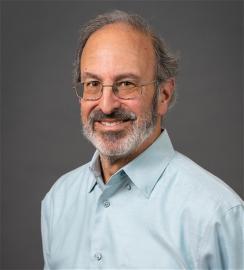
Maureen E. O'Boyle serves as an Associate Professor of Music at The University of Tulsa within the Kendall College of Arts & Sciences, where she directs the TU Chamber Camp and performs as concertmaster of the Signature Symphony at Tulsa Community College (TCC). Education: Bachelor of Music (B.M.) from the University of New Mexico Master of Music (M.M.) from Yale University Research Expertise: Professor O'Boyle specializes in violin performance pedagogy, with deep focus on Suzuki methodology, orchestral training techniques, string ensemble instruction, and chamber music collaboration. Her teaching integrates performance practice with educational theory to develop comprehensive musicianship. Professional Experience: She maintains an active performance career including guest concertmaster roles with Poland's Symphony Orchestra of Torun, associate concertmaster of the Tulsa Philharmonic, concertmaster of the Tulsa Opera Orchestra, and positions with the Omaha Symphony, New Mexico Symphony, New Haven Symphony, Grand Teton Music Festival, and Santa Fe Concert Association. Recent solo engagements feature collaborations with both the Signature Symphony and University of Tulsa Symphony Orchestra.
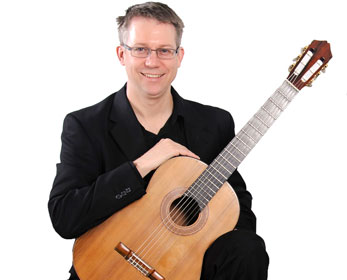
Associate Professor Jonathan Paget serves as Associate Dean (Music) at the Western Australian Academy of Performing Arts (WAAPA), Edith Cowan University. A classical guitarist with international performance experience, he leads the classical guitar program and is a member of the Centre for Keyboard Heritage and Performance Research. His research focuses on Australian music, 19th-century guitar works, and historical performance practices. Doctor of Musical Arts (Eastman School of Music, 2003) Master of Arts and Master of Music (USA, 2002 and 1998) Bachelor of Music with First Class Honours (University of Western Australia, 1996) Paget’s research explores intersections between historical guitar traditions and contemporary performance, with particular emphasis on Bel Canto repertoire and Australian composers. His 15 most recent outputs span book chapters on 19th-century guitar manuscripts, cross-cultural collaborations with Chinese musicians, and analytical studies of Romantic guitar works. He investigates historical authenticity in Napoleonic-era compositions, Australian minimalist guitar works, and the application of Sonata Theory to Bel Canto music. Scientific awards include the Beazley Medal , Hackett Studentship , and Fulbright Postgraduate Award . He has won international competitions like the Shell Darwin and Rantucci Guitar Competitions. Grants highlight his leadership in projects such as the Historic Keyboard Instruments Restoration ($350,000) and Cross-Continental Inspirations in Australia-China collaborations. As a research supervisor, Paget mentors PhD candidates exploring topics like Beethoven performance traditions in China and Gilbert Biberian’s influence. He has held leadership roles with organizations including the Classical Guitar Society of Western Australia and contributes to the Fulbright Alumni Association .
Davide Silvano Achille Gaiotto is an Italian mathematical physicist currently affiliated with the Perimeter Institute for Theoretical Physics in Waterloo, Ontario, since 2011. His research focuses on quantum field theories, string theory, and mathematical physics, with groundbreaking contributions to the understanding of supersymmetric conformal field theories and dualities. He is best known for his role in developing the AGT correspondence and constructing the Ooguri–Vafa metric. Education : Undergraduate at Scuola Normale Superiore (1996–2000), PhD at Princeton University (2004) under Leonardo Rastelli. Key Positions : Postdoctoral researcher at Harvard University (2004–2007), Institute for Advanced Study (2007–2011), and faculty member at Perimeter Institute since 2011. Gaiotto's work bridges advanced mathematical techniques with theoretical physics. He explored M5-branes compactified on Riemann surfaces, leading to insights into four-dimensional supersymmetric gauge theories via the AdS/CFT correspondence. His 2008 collaboration with Gregory Moore and Andrew Neitzke refined the Ooguri–Vafa metric using the Gibbons–Hawking ansatz, while the 2010 AGT correspondence (with Luis Alday and Yuji Tachikawa) established a duality between 6D (2,0) superconformal field theory and Liouville field theory. Scientific Honors : Gribov Medal (2011) New Horizons in Physics Prize (2013) He represented Italy in the International Mathematical Olympiad (silver, 1996) and International Physics Olympiad (gold, 1995), highlighting his early academic excellence.
Mingfu Shao is an Associate Professor at the Department of Computer Science and Engineering, Pennsylvania State University, and affiliated with the Huck Institutes of the Life Sciences. His research focuses on computational biology and bioinformatics, specifically on RNA-seq data analysis, transcriptome assembly, and genome rearrangement algorithms. Research interests include developing exact and heuristic algorithms for genomic problems such as breakpoint distance computation, double-cut-and-join (DCJ) operations, and accurate assembly of circular RNAs and synthetic long reads. His work integrates machine learning techniques with traditional algorithmic approaches to enhance sequence analysis efficiency. Recent publications highlight advancements in RNA-seq data processing (e.g., Aletsch, TERRACE, Anchorage) and theoretical contributions to edit distance and k-mer analysis. His projects, funded by the National Science Foundation and the National Human Genome Research Institute, aim to improve isoform-level regulatory network inference and allele-specific transcript assembly.
Lubomír Spurný serves as Professor and Deputy Head of the Department of Musicology at Masaryk University's Faculty of Arts in Brno, Czech Republic, maintaining an active academic presence with office N/N.703 and contact spurny@phil.muni.cz. His leadership extends to the Faculty of Arts Scientific Council and Industry Council for Theatre and Film Studies, reflecting institutional influence within Central European humanities. Spurný's research centers on 20th-century Central European musicology, specializing in microtonal compositions (particularly Alois Hába's quarter-tone systems), Holocaust-era musical legacies (Viktor Ullmann, Gideon Klein, and Pavel Haas in Terezín), and Czech modernist traditions. His methodological approach integrates historical musicology with performance practice analysis, examining how political trauma shapes artistic expression and preservation efforts for suppressed musical works. Recent publications reveal three dominant scholarly trajectories: computational analysis of string quartet interpretations across cultural boundaries, rediscovery of exiled composers like Hans Winterberg, and pedagogical adaptations of Romantic repertoire. His work consistently bridges archival research with contemporary relevance, notably through Terezín-related conferences that connect historical scholarship to modern commemorative practices. As a supervisor, Spurný mentors emerging scholars in musicology through structured academic guidance, though specific student names aren't publicly listed. His project leadership includes the Terezín Summer School and international conferences that facilitate cross-border collaboration among European musicologists, with recent initiatives focusing on manuscript preservation techniques and computational musicology frameworks.
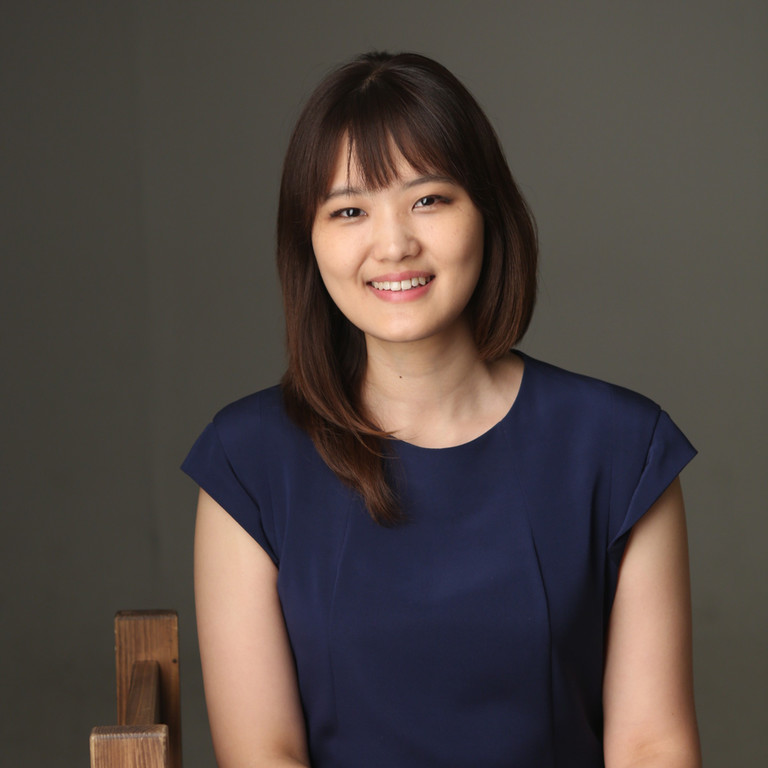
Eunjin Bang serves as a Visiting Academic Specialist in Chamber and Collaborative Music at Indiana University's Jacobs School of Music, where she is an active performer and collaborative artist. A South Korean pianist based in the United States since 2007, she maintains a global performance profile across North America, Europe, and Asia. Her academic credentials include a Bachelor of Music in Piano Performance from Oberlin College and Conservatory under Haewon Song, followed by advanced degrees from the Jacobs School of Music: Master of Music, Performer Diploma, Artist Diploma, and Doctor of Music in Piano Performance under Emile Naoumoff and Arnaldo Cohen, with double minors in music theory and collaborative piano. Bang's artistic focus centers on Piano Performance and Chamber Music, with specialized expertise in Collaborative Piano, Orchestral Collaboration, and Opera. Her work emphasizes interdisciplinary ensemble performance, as demonstrated through radio broadcasts (WCLV, WKAR) and partnerships with ensembles like the Pacifica String Quartet. Key recognition includes: First prize in the ensemble category of the New York International Music Concours with the Zima Piano Trio Professional engagements encompass repetiteur work for Cincinnati Opera's world premiere of Paul McCartney's Liverpool Oratorio and Density512's Eva and the Angel of Death, alongside staff pianist duties at Stephen F. Austin State University (2023-2024). She actively performs with the Zima Piano Trio at festivals including Mineral Point Chamber Music Festival and Absolute Chamber Music Series.
Vatche Sahakian is a Professor in the Department of Physics at Harvey Mudd College, focusing on theoretical physics at the intersection of quantum mechanics and gravity. String theory as a framework for quantum gravity Emergent spacetime and black hole dynamics Non-commutative geometry in high-energy physics Extensions of the Standard Model and cosmology His research explores the quantum structure of spacetime, with publications such as Modern Classical Mechanics (2021) and studies on D0 brane dynamics (2012). Sahakian’s work bridges foundational theoretical physics with applications in cosmology and quantum gravity, emphasizing interdisciplinary approaches to unresolved questions in high-energy physics.
Adrien Bouhon is an Assistant Professor at Nordita, affiliated with the University of Stockholm. His research focuses on condensed matter physics, particularly topological materials and quantum phases, with significant contributions to non-Abelian topology, Euler class systems, and Floquet-driven quantum dynamics. His work explores multi-gap systems, symmetry-protected phases, and experimental realizations in phononic and photonic platforms. Key themes include topological invariants, dynamical observables, and phase transitions under disorder or driving conditions. Recent publications highlight the interplay of crystal symmetry with non-Abelian braiding, acoustic manifestations of topological phases, and bounds for topological invariants. He contributes to theoretical frameworks for topological materials, including synthetic dimensions and driven systems.
Stephan Mescher is a Researcher at the Institute of Mathematics within the Faculty of Natural Sciences II at Martin Luther University Halle-Wittenberg. Based at the Georg Cantor House on Theodor-Lieser-Strasse in Halle (Saale), he conducts advanced research at the intersection of algebraic topology and differential geometry with applications in robotics. His research focuses on: Topological complexity and spherical complexities in motion planning Geodesic analysis in Riemannian and Finsler manifolds Morse theory and A-infinity algebra structures Closed geodesics and critical point theory Geometric properties of configuration spaces for robots Recent publications reveal a cohesive trajectory toward sequential topological complexity and fibered decompositions of cut loci, demonstrating how abstract topological invariants solve concrete problems in robot navigation. His work bridges pure mathematics with engineering applications through rigorous analysis of manifold structures. No scientific awards were documented in available sources. Information regarding student supervision, research grants, or collaborative teams was not provided in the source materials.
Hiroyuki Mishima is a Professor at the School of Human Sciences of Waseda University , where he has been since 2017. His research spans Ecological Psychology , focusing on perceptual-motor coordination , affordance theory , and dynamic touch , with applications in music, sports, and human-robot interaction. Research Themes : Affordance perception, optic flow in navigation, microslips in gestures, and rehabilitation through coordination studies. Key Collaborations : Nobuhiro Furuyama, Shin Maruyama, and international societies like the International Society for Ecological Psychology . His recent publications analyze interpersonal coordination in music , gap passability , and optic flow effects . Notable projects include JSPS-funded work on whole-body coordination in drummers and social affordances . No formal awards are documented, but his leadership in the Japanese Society for Ecological Psychology (as representative since 2017) underscores his influence.
Jeffrey Rabin is a Professor of Mathematics at the University of California, San Diego (UCSD), specializing in mathematical physics and mathematics education. He holds a Ph.D. in Physics from Stanford University (1981) and has held postdoctoral positions at Yale University and the University of Chicago before joining UCSD. His research focuses on supermanifolds, supervarieties, and their applications in string theory and supersymmetric systems. He co-founded the Algebraic Thinking Institute (ATI) at UCSD in 1998, an initiative to enhance high school algebra education, and serves on the faculty of the joint Ph.D. program in Mathematics and Science Education (MSED) between UCSD and San Diego State University (SDSU). Rabin has received notable awards for teaching excellence, including the UCSD Alumni Association Distinguished Teaching Award and the Academic Senate Award for Distinguished Teaching. His work bridges advanced mathematical physics with educational innovation, addressing both theoretical frameworks (e.g., super Riemann surfaces) and pedagogical challenges in STEM education. Current teaching includes advanced math courses like Math 31AH (Honors Linear Algebra) and Math 500 (special topics). His publications span mathematical physics, algebraic geometry, and STEM education. Recent work explores interdisciplinary collaboration in STEM teaching and student challenges in proof-based mathematics. Rabin’s contributions to supermanifold theory and mathematics education reflect a dual commitment to theoretical rigor and practical educational impact.
Kurt Rohde is a Professor of Music at the University of California, Davis, where he serves as a faculty composer. He is also composer-in-residence with Southwest Chamber Music in Pasadena, California, and has participated in international cultural exchange programs such as the U.S. State Department's Ascending Dragon initiative in Vietnam. University: University of California, Davis School: College of Letters and Science Department: Department of Music Role: Professor of Music, Faculty Composer Residency: Southwest Chamber Music, Pasadena Rohde’s research and creative work centers on contemporary classical composition, with deep engagement in form, repetition, narrative, and interdisciplinary collaboration. His music often draws from poetry and philosophical texts, exploring emotional and structural complexity through innovative orchestration and formal experimentation. He is particularly interested in how repetition can disorient, transform, and create new sonic pathways. His recent works, including seeking all that's still unsung (2024), The Hardest Folksongs Never Written (2023), and circling/revealing (2022), reflect a consistent exploration of fractured forms, recursive structures, and hybrid genres. These compositions span solo, chamber, vocal, and large ensemble formats, often incorporating electronics and text. His work has been commissioned by ensembles like the Lydian Quartet and supported by Chamber Music America and The Andrew W. Mellon Foundation. Commission from Chamber Music America Classical Commissioning Program Funding from The Andrew W. Mellon Foundation Rohde actively collaborates with performers and ensembles such as the Grossman Ensemble, Left Coast Chamber Ensemble, and Brooklyn Art Song Society. He mentors emerging musicians and emphasizes inclusivity and belonging in programming. He has no formal PhD or Master’s advisees listed, but his works are frequently performed by dedicated ensembles and soloists. He leads creative projects such as Newtown Odyssey , an open-air opera centered on environmental and social themes.
Sherwin T. Love is a Professor of Physics at Purdue University, where he has been a faculty member since 1984, progressing from Assistant Professor to Associate Professor and finally to Professor in 1991. His academic journey began with undergraduate and master's studies at Drexel University, where he graduated with highest honors in Physics in 1973, followed by a Ph.D. in Physics from Stanford University in 1978. Prior to joining Purdue, he held research associate positions at the University of Washington, Purdue University, Max-Planck-Institut für Physik, and Fermilab. Dr. Love's primary research interests lie in quantum field theory and its applications to elementary particle physics, with a particular focus on dynamical symmetry breaking, supersymmetric field theories, and the renormalization group. His work bridges theoretical frameworks with potential experimental implications, exploring both fundamental aspects of quantum field theory and their applications to phenomena beyond the Standard Model of particle physics. Over his career, he has made significant contributions to understanding symmetry breaking mechanisms, brane world models, holographic theories, and connections between particle physics and cosmology. His extensive publication record, spanning several decades, reveals a consistent focus on theoretical particle physics with evolving interests that have incorporated contemporary developments in the field. Early work concentrated on chiral symmetry breaking and scale invariance in quantum electrodynamics, while more recent publications explore brane world phenomenology, holographic walking technicolor, and connections between the Higgs boson, inflation, and dark matter. His research often involves collaborations with other prominent theoretical physicists, demonstrating the interdisciplinary nature of modern particle physics research. Fellow, American Physical Society, 1999 DOE Outstanding Junior Investigator, 1985-87 Monbusho (Ministry of Education, Science and Culture) of Japan Visiting Professor, 1990 Throughout his career, Dr. Love has maintained an active research program, securing funding from major agencies including the Department of Energy. His work has influenced both theoretical developments and potential experimental signatures in particle physics. While specific details of his mentoring activities are not provided in the available information, his long-standing position as a professor suggests significant contributions to educating and training the next generation of physicists.
Roman Buniy is an Associate Professor in the Department of Physics at Schmid College of Science and Technology , Chapman University. His research spans quantum mechanics, high-energy physics, and topology, with a focus on superoscillations, entanglement, and knot theory applications. Education : Diploma from Ivan Franko National University of Lviv; PhD from University of Kansas Research interests include: Quantum foundations and superoscillatory phenomena Topological structures in spacetime and QCD Entanglement classification and decoherence Publications highlight interdisciplinary work connecting quantum theory, cosmology, and mathematical physics. Collaborators include T. W. Kephart, S. D. H. Hsu, and international institutions like Politecnico di Milano.
Riho Esko Maimets is a part-time Lecturer in Solfeggio and Music Theory at the Estonian Academy of Music and Theatre (EAMT), with a permanent appointment since 2014. He is also a doctoral student at EAMT under Kerri Kotta, focusing on temporality in contemporary music from a composer's perspective. Professional Artist Diploma, Curtis Institute of Music (2012–2014) Master of Music, University of Toronto (2010–2012) Bachelor of Music, EAMT (2006–2010) His research and creative work centers on contemporary music composition, exploring temporal structures, sacred themes, and interdisciplinary collaborations with choral, chamber, and orchestral forms. Recent compositions like riburadapidi (2023) and Ecdysis (2022–2023) integrate experimental temporal frameworks with diverse instrumental ensembles. Key trends in his 15 most recent works (2015–2025) include sacred music motifs ( Two Prayers to the Holy Light ), temporal experimentation ( Three Contemplations ), and collaborations with international ensembles such as the Estonian Philharmonic Chamber Choir and Kitchener-Waterloo Symphony Orchestra. First Prize, Rudolf Tobias Composition Competition (2024)