Emil Bjerrum-BohrView profile
Associate Professor
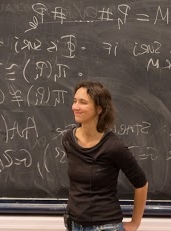
Emil Bjerrum-Bohr is an Associate Professor at the Niels Bohr Institute, University of Copenhagen, where he holds a position in the Theoretical high energy, astroparticle and gravitational physics department within the Faculty of Science. He is also affiliated with the Niels Bohr International Academy and leads the Computations of Amplitudes Group as a Lundbeck Foundation Junior Group Leader. Dr. Bjerrum-Bohr's research focuses on theoretical particle physics with particular emphasis on amplitude analysis and computations. His primary fields of research include amplitude analysis and computations, amplitudes and string theory, and quantum gravity. His current research explores relations between amplitudes from string theory and computation of amplitudes in Quantum Chromodynamics (QCD) for use at the Large Hadron Collider (LHC) at CERN. He has made significant contributions to understanding scattering equations and effective field theory in the context of gravitational physics. His recent publication record demonstrates a strong focus on gravitational scattering amplitudes, quantum gravity, and connections between string theory and particle physics. A notable trend in his research is the application of amplitude techniques to gravitational physics, particularly in the post-Minkowskian expansion framework which has implications for gravitational wave astronomy and black hole physics. His work bridges theoretical concepts with practical applications for collider physics. Scientific awards: Lundbeck Foundation Junior Group Leader As a Lundbeck Foundation Junior Group Leader, Dr. Bjerrum-Bohr oversees the Computations of Amplitudes Group, where he mentors junior researchers and collaborates with international colleagues on cutting-edge theoretical physics problems. His research has involved organizing academic meetings including the "Current Themes in High-Energy Physics and Cosmology" series (2013-2015) and Nordic Winter Schools on Cosmology and Particle Physics (2013, 2015). His work is conducted within the vibrant theoretical physics environment of the Niels Bohr Institute, which provides access to computational resources and collaborative opportunities with both experimental and theoretical physicists across multiple disciplines.
.jpg)