Professor Andreas Gürsching holds a position in Music Theory at the University of the Arts Bremen since 1998. His career includes studies at the Folkwang University of the Arts (Essen) in composition, electronic music, and violin, followed by a DAAD scholarship for composition under Alvin Lucier at Wesleyan University (USA). He has extensive experience with Javanese Gamelan and ethnomusicology. As a composer, his works have been performed internationally by ensembles like Nuove Sincronie and Capricorn Ensemble. His teaching spans music theory and analysis courses, including form studies, ear training, and composition. Publications appear in journals such as Musiktheorie , Positionen , and New Music and Aesthetics in the 21st Century . Education: 1984-1991: Folkwang-Hochschule Essen (Composition, Violin, Music Theory) 1992-1993: DAAD Scholarship at Wesleyan University (Connecticut, USA) Research Focus: Intersections of contemporary composition, acoustic/electronic music, and cultural musicology. Active in analyzing 20th-21st century musical forms and aesthetic theories. Teaching: Leads courses in music theory fundamentals, analysis of string quartets from Baroque to Beethoven, and composition seminars.
University of Applied Sciences and Arts LucerneSwitzerland
Peter Mutter is a Lecturer in Music Theory at the Lucerne School of Music. He holds expertise in contemporary music and traditional Japanese music (hōgaku), blending Western classical training with Japanese koto performance. His affiliations include the Music Performance Research department and the Institute of New Music, Composition and Theory. Education: Studied clarinet under Heinrich Mätzener, composition with Dieter Ammann, and music theory at Lucerne University of Music. Advanced training includes masterclasses with composers like Wolfgang Rihm and Enno Poppe. Research focus centers on cross-cultural musical composition and instrumental techniques. Key projects include expanding the 'musinfo' resource and analyzing Baroque counterpoint techniques from Zanolini’s work. His compositional output emphasizes chamber music, with notable works like Uncertainty Relation and Impuls . Proficient in clarinet, koto, and piano, he founded the Peter Mutter Trio in 2009 focusing on klezmer and global folk traditions. Languages spoken: German, English, French, Polish, Japanese.
Alec O'Leary is a Lecturer in Guitar at the Royal Irish Academy of Music (RIAM), appointed in 2018. A globally renowned classical guitarist, he specializes in Segovia/Bream traditions and modern innovations. His roles include co-director of the Guitar Festival of Ireland and luthier collaboration with his father, Michael J. O'Leary. Educated at the Dublin Conservatory of Music and Drama under John Feeley, he trained with Manuel Barrueco, Roland Dyens, and others. His performances focus on technical precision and creative programming, including RTE Lyric FM broadcasts and collaborations with the RTÉ Concert Orchestra. Research interests span composition commissions (e.g., Leo Brouwer’s Irish Landscape with Rain ), innovative teaching methods (RIAM Junior guitar ensemble), and cross-genre arrangements. He has released acclaimed albums Milonga , From the Olive Tree , and world-premiere recordings of works by Brouwer and York. Teaching emphasizes critical thinking and ensemble skills, with contributions to online modules and progressive group pedagogy. Beyond academia, he promotes Irish guitar culture through festivals and instrument craftsmanship.
Simon Parkin is a Senior Lecturer in Music and Deputy Head of Undergraduate Programmes at the Royal Northern College of Music (RNCM). He leads the Musicianship Department and teaches theory, performance electives, and ensemble coordination. His roles include Year 1 tutoring and panel moderation for recitals. Parkin holds an ARCM, GRNCM, MusB (Manchester), and a PhD in Composition. His research focuses on polystylism and the technique of morphing musical styles, alongside a long-term project composing a piece for every day of the year. Notable works include arrangements for Manchester Camerata, Sheku Kanneh-Mason, and Jess Gillam, featured on four Decca Classics CDs. His arrangements are also published by Faber Music. Parkin’s compositional output includes chamber music, string quartets, and solo instrumental pieces (e.g., flute, oboe, clarinet, bassoon, horn, and bass). As a pianist, he performs duo recitals, including with his wife, Hannah Roberts, and engages in masterclasses globally. His teaching spans composition, improvisation, and aural training, with recent publications on musicianship pedagogy. Professional activities include pianist recitals, commission-based composition, and supervision of a PhD on improvisation’s mentality. He contributes to the RNCM’s academic governance through EC committee roles and is a sought-after arranger for renowned artists and orchestras.
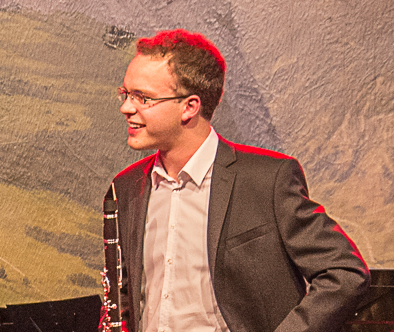
Roeland Hendrikx is a leading Belgian clarinetist currently serving as Professor of Clarinet at the Royal Conservatory of Antwerp, where he succeeded the renowned Walter Boeykens. He maintains an active dual career as both a distinguished educator and internationally acclaimed performer, leading the Roeland Hendrikx Ensemble while collaborating with major orchestras worldwide including the London Philharmonic Orchestra, Rheinische Philharmonie, and Lithuanian Chamber Orchestra. Hendrikx received his musical training in Leuven and Antwerp under Walter Boeykens, further refining his artistry through masterclasses with Thea King and other clarinet legends. His educational background forms the foundation for his nuanced approach to both historical and contemporary repertoire. Specializing in clarinet performance, Hendrikx has established himself as an authority on Romantic repertoire, particularly the works of Carl Maria von Weber, while also championing contemporary Belgian compositions and exploring Eastern European folk traditions through Klezmer and Roma music. His artistic vision bridges classical tradition with innovative cross-cultural interpretations, evident in projects like 'Zayt Gezunterheyt' which explores the folk soul of Eastern clarinet music. His recent discography reveals a pattern of scholarly yet expressive engagement with repertoire spanning from Mozart to contemporary Belgian composers. Hendrikx demonstrates particular excellence in French Romantic works and has made significant contributions to the interpretation of Weber's clarinet concertos, challenging traditional performance approaches through collaborations with arranger Andreas Tarkmann. KLARA-Muziekprijzen (Best Flemish Production) CAECILIAPRIJS (Best Belgian CD of the Year) Hendrikx actively engages in pedagogical work through masterclasses worldwide, including Erasmus Project initiatives in Italy. His Roeland Hendrikx Ensemble serves as both a performance vehicle and artistic laboratory where he explores chamber music repertoire ranging from classical masterworks to contemporary arrangements of Eastern European folk traditions, consistently demonstrating technical mastery and profound musical insight.
Prof. Dr. Knut Andreas is an Honorary Professor of Music History and Music Management in the Cultural Work programme at the University of Applied Sciences Potsdam . A conductor and musicologist, he bridges theory and practice through teaching, orchestral leadership, and international cultural exchange. Education: University of Potsdam (Music Education, German Language/Literature), University of Music and Theatre "Felix Mendelssohn Bartholdy" Leipzig. Doctorate at Ludwig Maximilian University Munich on Paul Graener. His research focuses on 20th and 21st-century music , German-Brazilian cultural exchange , film music , orchestral management , and music education for vulnerable groups . Courses include Music and Film – The Qatsi Trilogy and Music in Totalitarian Systems . Publications span Paul Graener's works, cross-cultural projects, and socio-cultural initiatives like Sinfonieorchester für Senioren . His 15 most recent publications highlight intercultural musicology , 20th-century German composers , and Brazilian-German artistic collaboration , often analyzing orchestral practices, film scores, and educational methodologies. Scientific Awards : Order of Cultural Merit (2012, Rio de Janeiro), Honorary Service Award for Cultural Commitment (2012, Potsdam). He directed the Collegium musicum Potsdam since 1998, initiated Klassik am Weberplatz open-air festival, and led the Youth Symphony Orchestra Berlin . His socio-cultural projects include intercultural exchanges with Brazil and music programs for seniors and socially vulnerable youth.
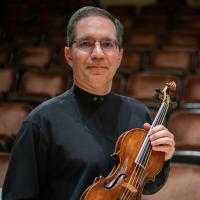
David Sariti is an Associate Professor of Violin at the McIntire Department of Music, University of Virginia, where he has been a faculty member since 2005. He is actively involved in performance, education, and historical music scholarship, serving as Director of the period-instrument Baroque Orchestra and previously as Director of Music Performance (2021–2024). He performs with the Charlottesville Symphony as Principal Violin II and collaborates widely in chamber and early music ensembles. Ph.D. or equivalent studies at Hartt School, University of Akron, Ithaca College Studied with Pamela Gearhart, Katie Lansdale, Emlyn Ngai, Pamela Frank Trained under members of Cleveland Quartet, Miami Quartet, and Meadowmount Trio Taught studio violin and music history at Hartt School David Sariti's research and performance interests center on violin performance, chamber music, and historical performance practices from the 17th to 19th centuries. He is deeply committed to string pedagogy, emphasizing relaxed technique and informed interpretive decision-making. His work bridges early music and contemporary performance, including improvisation and collaborations with jazz artists. He is an advocate for new music and has premiered works by regional composers, including UVA’s Judith Shatin. His recent scholarly output focuses on performance practice and string pedagogy, published in leading journals such as Early Music America , American String Teacher , and American Music Teacher . These works reflect a consistent focus on teaching methodology, historical authenticity, and technical efficiency in string performance. David Sariti has not been publicly recognized with formal scientific awards, but his performances have received critical acclaim, including praise from Classical Voice of North Carolina for high-level chamber music performance that reflects well on academic institutions employing artist-scholars. He advises violin and chamber music students at UVA, emphasizing comprehensive musicianship and technique. While specific grant funding is not mentioned, his leadership roles and performance activities suggest sustained institutional and artistic support. He was part of the inaugural cohort of College Arts Fellows (2016–2017), indicating recognition of interdisciplinary artistic contribution. David Sariti is a core member of several performance ensembles that function as research-practice laboratories: Synnet (17th-century string and wind music), Baroque and Beyond , Vivaldi Project , and Washington Bach Consort . He was a founding member of Mr. Jefferson’s Musicians , which explored Thomas Jefferson’s musical world and produced the CD Music from the Jefferson Collection . He also collaborates with the UVA Jazz Ensemble and prominent jazz musicians like John D'earth and the late Greg Howard.
Irina Rostomashvili is a violin teacher at Temple Music Prep, part of Temple University's Boyer College of Music and Dance, where she trains students in technical excellence while pursuing her Master's Degree in violin performance under Dr. Eduard Schmieder. She maintains active performance roles as a first violinist in the Vox Amadeus Orchestra and the Philadelphia String Quartet, with solo appearances across international ensembles including the Tbilisi Opera and Ballet Theatre Orchestra. Her educational journey includes: Master's Degree in violin performance (current), Temple University Bachelor's Degree and Artist Diploma, Temple University Bachelor of Music in Performance, Tbilisi State Conservatoire Zakaria Paliashvili Central Music School for Gifted Children Rostomashvili specializes in violin performance with emphasis on solo, chamber, and orchestral repertoire. Her pedagogical approach combines rigorous technical training with fostering musical passion, preparing students for competitions, festivals, and youth orchestra placements. Significant honors recognizing her artistry and leadership include: First prize at Georgia's National Music Competition (2017) Temple University Concerto Competition win (2021) Teaching Artist Fellowship (2023) Ovation Award finalist for musical leadership Springboard Grant for performing arts excellence She directs students toward competition and orchestra success through Temple Music Prep. Performance affiliations include the Opus Four String Quartet and collaborations with the Curtis Symphony Orchestra during her Curtis Institute internship.
Sevgünur Tandoğdu Kılıç is an Associate Professor at the State Conservatory of Anadolu University , where she has served since 2023. She also holds an Assistant Professor position at the same institution. Her academic career spans two decades, including leadership as Head of the Music Department since 2015. She teaches courses such as Applied Instrument Education , Orchestral Repertoire , and Chamber Music Repertoire at both undergraduate and postgraduate levels. Education : Competence in Art (Trombone specialization), Anadolu University Institute of Fine Arts (2014-2021) Bachelor’s in Music, Anadolu University State Conservatory (2001-2005) Research and Publications : Her work focuses on music performance techniques , educational frameworks , and historical music analysis . Key publications include studies on Stjepan Šulek's trombone sonata, Bela Bartok's Turkish folk music contributions, Baroque structural developments, and avant-garde trombone techniques. She has published in Scopus-indexed journals and peer-reviewed conferences. Artistic Contributions : Active in performance, she has participated in over 30 concerts (2006-2025), including Trombone Recitals , Symphonic Concerts , and Chamber Music Performances . Notable events include Republic Day Concerts , Hisarlı Ahmet Symposium , and collaborations with the Turkish Trombone Ensemble .
Dr. Alice Ann M. O'Neill serves as Adjunct Faculty in Cello at Mount St. Joseph University's Creative Arts division, teaching cello, string pedagogy, and chamber music. A member of the Sisters of Charity, she actively performs with the Mount St. Joseph Faculty Piano Trio and maintains an international solo career spanning Europe, Japan, Canada, and the U.S. Her academic training includes Boston University and The Ohio State University, where she studied under George Neikrug, Leslie Parnas, Colin Carr, and Janos Starker for cello performance, and Eugene Lehner and the Muir String Quartet for chamber music. She specializes in Suzuki string pedagogy with extensive clinic and workshop experience. Dr. O'Neill's research focuses on music education methodology, evidenced by publications in The Journal of Research in Music Education and the American Suzuki Journal , alongside contributions to Vincentian heritage scholarship. Her performance career includes venues such as Carnegie Hall, Teatro Alla Scala, and Symphony Hall. She has mentored award-winning students who appeared on NPR's "From the Top" and won competitions like St. Paul's String Quartet and Fischoff chamber music events, with alumni attending Juilliard, Cleveland Institute of Music, and Harvard University.
Ostwestfalen-Lippe University of Applied SciencesGermany
Lucia Kilger is Professor of Composition and Sound Design for Digital Media at KreativInstitut.OWL, where she collaborates with interdisciplinary teams to develop innovative projects at the intersection of artistic practice, technology, and education. Her work emphasizes team-oriented creation with the belief that 'with the right team, things that are unimaginable on your own suddenly become tangible.' Her academic background includes: Concert Exam in Composition - University of Music and Dance Cologne (2020-2022) Master's in Sound Direction - University of Music and Performing Arts Frankfurt (2019) Master's in Electronic Composition - University of Music and Dance Cologne (2017) Bachelor of Music Design - Trossingen University of Music (2011) IHK training in media design, image and sound Kilger's research focuses on the integration of composition, sound design, and digital technologies, with particular expertise in intermedia formats, electronic music, and digital humanities. Her creative practice explores the boundaries between acoustic and electronic sound, reality and virtuality, often creating immersive experiences through spatialized audio and multimedia integration. She specializes in developing works for unconventional performance contexts including digital spaces, video walks, and site-specific installations. Her recent compositions reveal a clear trajectory toward increasingly sophisticated digital integration, with works like 'smonize' (2024) - commissioned as the first digital space work by Donaueschinger Musiktage - demonstrating her leadership in creating for virtual environments. The thematic elements across her work frequently explore transformation, fluidity of form, and the interplay between organic and technological elements. As an educator, Kilger holds a teaching assignment at the State University of Music Trossingen since 2022 while maintaining her professorship at KreativInstitut.OWL. Her professional practice as a freelance composer and sound director directly informs her academic work, creating a dynamic exchange between theory and practice. Her collaborative projects typically involve interdisciplinary teams including performers, technicians, costume designers, and other specialists, reflecting her commitment to collective creation. Notable collaborations include work with performers like Lina Andonovska, Carlos Cordeiro, and Ria Rehfuß across multiple productions.
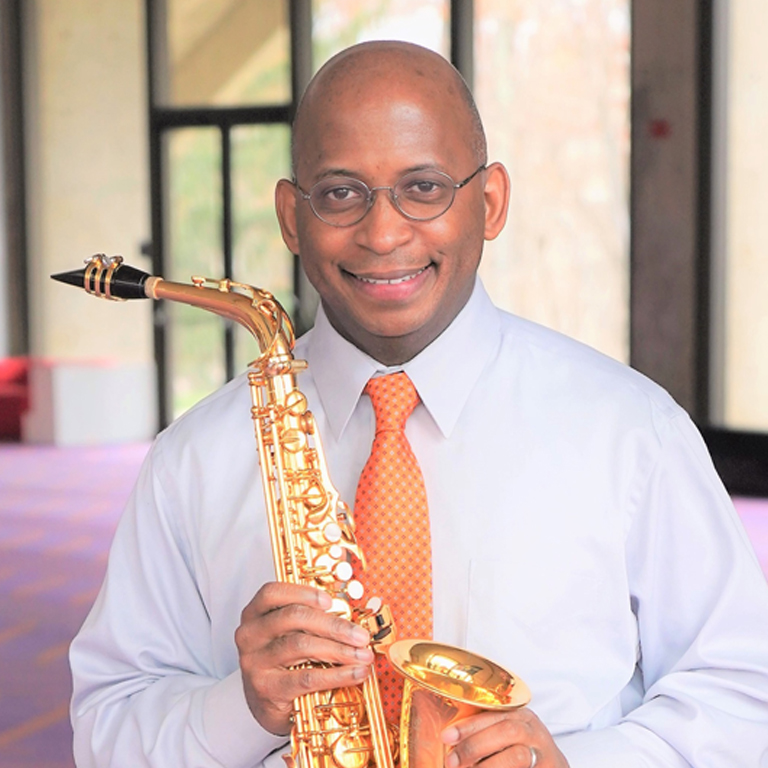
Dr. Otis Murphy serves as Professor of Music in Saxophone and Chair of the Woodwinds Department at the Indiana University Jacobs School of Music, a position he assumed at the remarkably young age of 28, making him one of the youngest faculty members in the institution's history. An internationally acclaimed artist, Murphy maintains an active performance schedule as a soloist and clinician across North America, Europe, Asia, and Australia, with appearances at prestigious venues including Carnegie Hall's Isaac Stern Auditorium, Casals Hall in Tokyo, and Palau de la Música in Valencia. Murphy's academic foundation includes a Doctor of Music (D.M.) and Master of Music (M.M.) from Indiana University Jacobs School of Music, where he earned the Performer's Certificate. His studies continued under a Fulbright Fellowship at the Conservatoire National Régional de Musique in Cergy-Pontoise (France), culminating in the Prix de Perfectionnement à l'unanimité, following undergraduate training with a Bachelor of Music Education (B.M.E.) from the University of Georgia. His scholarly and artistic work centers on advancing saxophone repertoire through performance research, with primary interests in saxophone technique, contemporary classical compositions, and chamber music collaboration. Murphy's dedication to new music is exemplified by his premiere recording of Ellen Taaffe Zwilich's Quintet for Alto Saxophone and String Quartet, featured on the Grammy-winning album 'Contemporary Voices' with the Pacifica Quartet. His four critically acclaimed solo albums and extensive discography demonstrate significant contributions to performance practice literature. Murphy's artistic excellence has been recognized through major international honors including: Prizewinner at the Adolphe Sax International Saxophone Competition (Belgium) Prizewinner at the Jean-Marie Londeix International Saxophone Competition (France) Grammy Award for Best Chamber Music/Small Ensemble Performance (2010) As an educator, Murphy has conducted masterclasses at leading institutions worldwide including the Paris Conservatory, Amsterdam Conservatory, and London Royal College of Music. His pedagogical impact is evident in the success of students who have won international competitions and secured positions as performers, educators, and military band musicians. While specific research grants aren't detailed in available materials, his Fulbright Fellowship and extensive international teaching engagements reflect significant professional recognition and support for his scholarly activities.
Donald Glowinski is a Senior Lecturer and Senior Researcher at the Swiss Center for Affective Sciences (University of Geneva), where he coordinates the Music & Science team and leads a consortium investigating the cognitive and emotional impact of DEMOS orchestras on children. His work bridges neuropsychology, music performance, and applied research to enhance team coordination and resilience in professional settings. He holds an MSc in Cognitive Science (EHESS), Music and Acoustics (CNSMDP), and Philosophy (Sorbonne-Paris IV), with a PhD in Computing Engineering from the University of Genoa. His research focuses on music’s role in emotions, group creativity, and translational science, including developing immersive virtual environments and curricula for interdisciplinary training. He is also involved in public engagement through initiatives like culturehack.art and collaborations with festivals such as Montreux Jazz and NIFFF. Key research interests include the interplay between music, emotion, and social dynamics. He explores how music ensemble performances can model adaptive teamwork, leveraging technologies like virtual reality to simulate real-world scenarios. His projects emphasize practical applications, such as improving safety training for workers and fostering resilience in high-pressure environments. Awards include the Prix pour la Vocation (Bleustein-Blanchet Foundation) and the Declic Award (Fondation de France). He actively contributes to scientific dissemination through public talks and cultural partnerships, advocating for science that directly informs tangible, accessible tools for diverse communities. His advisory roles include coordinating the Music & Science team and leading the DEMOS consortium with the Philharmonie de Paris. He also spearheads a new psychology curriculum using high-fidelity simulations, reflecting his commitment to bridging academic and applied domains.
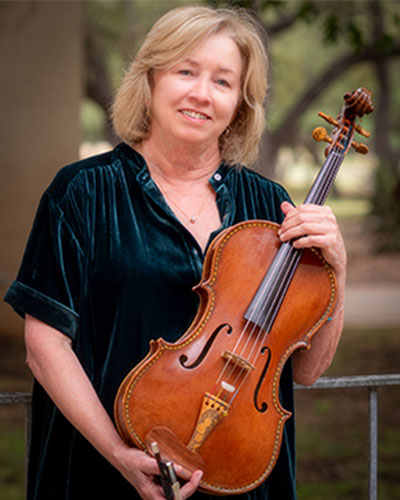
Allyson Dawkins is an Associate Professor in the Department of Music at the University of Texas at San Antonio, affiliated with the College of Liberal and Fine Arts. She serves as Principal Violist of the San Antonio Philharmonic and holds multiple roles in music education, including private teaching, quartet coaching, and directing the Castleman Quartet Program’s student activities. Education: B.F.A. in Music from State University of New York at Purchase (1975) M.M. in Music and Performer's Certificate from Eastman School of Music (1979) Her research and professional focus centers on viola pedagogy, string instrument instruction, and chamber music training. Recent publications include a transcription of Josephine Trott’s Melodious Double-Stops Book II for viola, emphasizing technical and historical approaches to music education. Scientific Awards: Youth Orchestras of San Antonio Private Teacher of the Year Award (2023) Dawkins actively mentors students through civic initiatives like the San Antonio Philharmonic Caroling Project, which engages musicians in community outreach to hospitals, correctional institutions, and shelters. She has held leadership roles in professional organizations such as the American Viola Society and San Antonio Chamber Music Society.
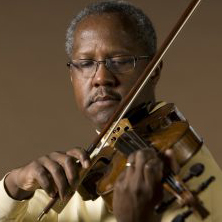
George Taylor is a Professor of Viola at the Eastman School of Music , University of Rochester. As a dedicated educator, he co-hosted the 40th International Viola Congress and founded the "Viola Intensive" workshops, including summer technique sessions at Eastman. His career spans decades as a performer and teacher, with affiliations at institutions like Duke University's Ciompi Quartet (1979-1986) and summer programs including Meadowmount and Chautauqua. Taylor is an acclaimed violist known for his eloquence and sensitivity in performance. He has premiered works by composers such as Bill Dobbins and George Walker, and collaborated with ensembles like the Ritz Chamber Players and the Ying Quartet. His recording Night Strings with Nicholas Goluses received critical praise for its expressive tone and technical mastery. He also advocates for music by African-American composers through groups like the Black Music Repertory Ensemble. His professional activities include serving as a juror for international competitions and roles on the boards of the American Viola Society and Sphinx Organization. Taylor's teaching philosophy emphasizes chamber music training, and he has mentored students at programs such as The Castleman Quartet Program and Le Dormaine Forget. Educationally, Taylor studied at the Manhattan School of Music under Jaime Laredo, Raphael Bronstein, and Burton Kaplan, followed by viola studies with Michael Tree and Abraham Skernick. His chamber music mentors included Arthur Balsam, Joseph Gingold, and members of the Guarneri Quartet.