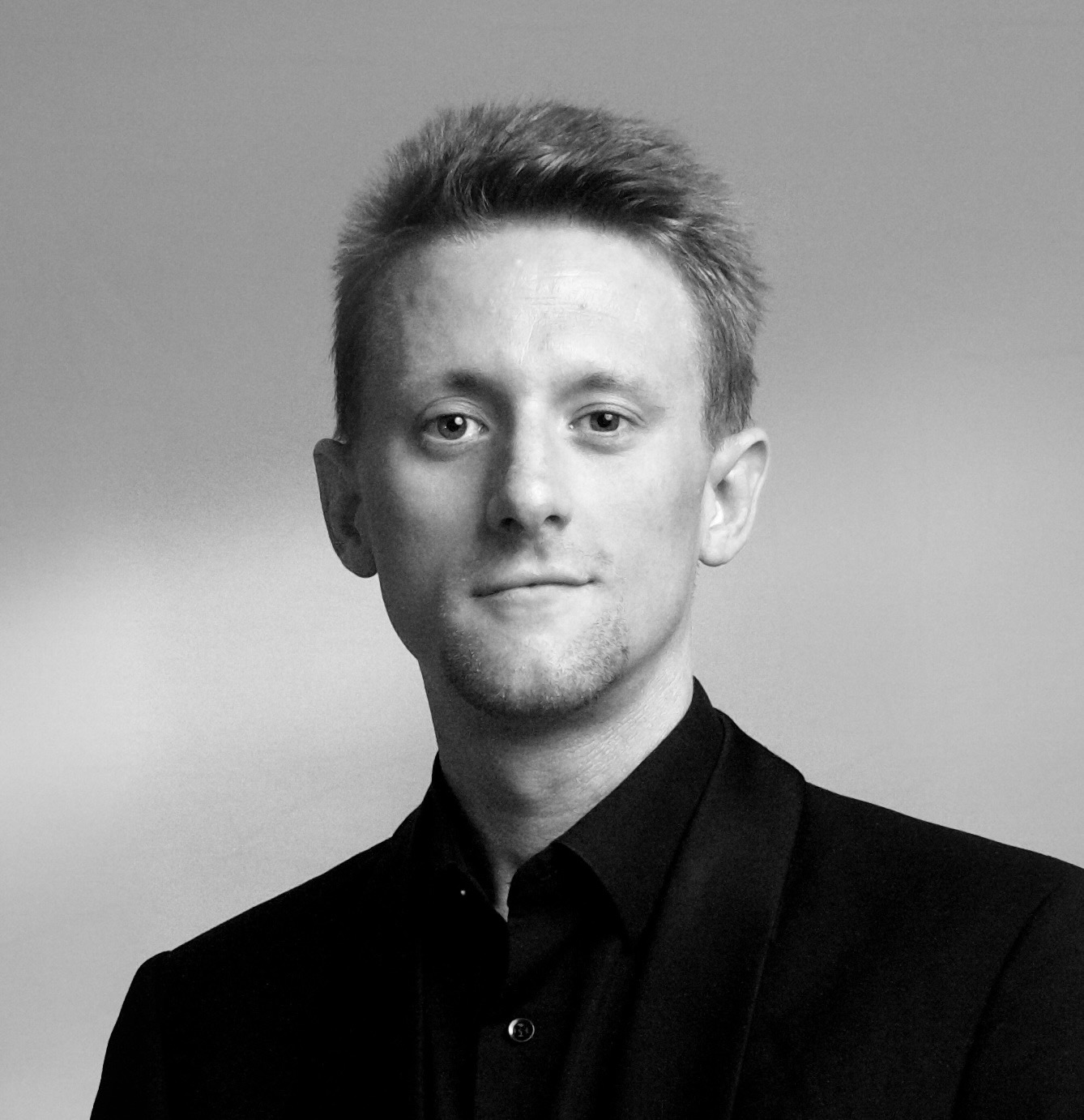
Jonathan Nangle is a Lecturer in Music Technology and Electro-Acoustic Composition at the Royal Irish Academy of Music. His work spans acoustic/electro-acoustic composition, live electronics, installations, and improvisation. Educated at Trinity College Dublin under Donnacha Dennehy, Rob Canning, and later privately with Kevin Volans, his music has been performed by ensembles like RTÉ National Symphony Orchestra and Crash Ensemble. Research interests include spatial music, interactive installations, and hybrid acoustic/digital forms. Notable works include Pause (Ergodos, 2017), Iridescent Cobalt Glow (2015), and our headlights blew softly... which earned a 2009 Rostrum commendation. Awards include dual Irish Rostrum representations (2009/2011) and the 2007 AIC/Music 21 Prize. Recordings span solo piano works to ensemble commissions, often integrating innovative electronic elements. His work has been broadcast internationally and choreographed for stage/film. Current roles include academic teaching and ongoing creative exploration at the intersection of technology and traditional composition.
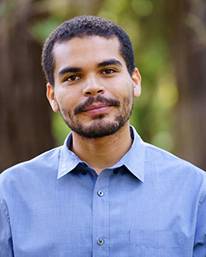
Christopher Castro serves as an Assistant Professor of Composition at Chapman University's College of Performing Arts. A composer and double bassist from Brooklyn, New York, he combines academic rigor with avant-garde experimentation. Ph.D. in Composition and Theory from University of California, Davis Bachelor of Music from Juilliard School (Double Bass & Composition) His research bridges Western Art Music traditions with contemporary innovations , creating works that merge: Johannes Ockeghem's polyphonic complexity John Coltrane's spiritual intensity Modernist structural experimentation Historical reconstruction techniques Jazz-classical hybrid forms Interdisciplinary performance formats Recent compositions demonstrate trends in flexible instrumentation , text-music relationships , and genre synthesis . His output spans chamber works, orchestral pieces, and vocal compositions with equal mastery. Scientific recognition includes: 2023 Fromm Music Foundation Commission (Harvard University) Chamber Music America's 2021 Classical Commissioning Award As a new music advocate , Castro collaborates with ensembles like: Left Coast Chamber Ensemble (artistic advisory board) New Mexico Contemporary Ensemble Los Angeles Philharmonic's Upbeat Live series Lyris Quartet and Sharon Harms
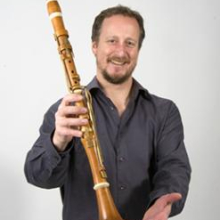
Mark Simons is an Early Clarinet Instructor at the Schulich School of Music, McGill University, and teaches at Marianopolis College. He specializes in early music performance on period instruments such as the chalumeau and classical clarinet. His expertise spans baroque, classical, jazz, and klezmer styles, with a focus on historical performance practices. Education: Studied at Marianopolis College, McGill University, and Temple University. Research interests include exploring sonorities of period instruments and chamber music collaborations. He has performed with renowned ensembles like Les Boréades, Arion Baroque Orchestra, and the Daponte String Quartet. Notable recordings include CDs on the Analekta label: Viole D’Amour and Telemann et les Gitans . No scientific awards listed. His advising and grants details are unspecified. Active in ensembles such as the Arthur Leblanc and Bozzini quartets, and regularly performs with l'Orchestre Symphonique de Québec and I Musici de Montréal.
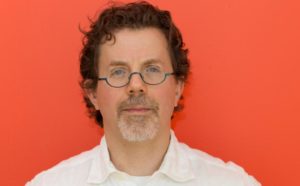
Dmitri Tymoczko is a Professor of Music at Princeton University, where he has taught composition and theory since 2002. His work bridges the gap between academic music theory and contemporary composition, creating a unique interdisciplinary approach that has earned him recognition as a leading figure in modern music scholarship and creation. Tymoczko's research interests focus on the geometric modeling of musical structures, polystylistic composition that draws from genres spanning Renaissance to rock, and the mathematical foundations of tonality. His theoretical work explores how harmonic structures can be represented geometrically, revealing fundamental patterns that connect diverse musical traditions. He approaches composition as 'a logical deduction from absurd premises,' blending rigorous structural thinking with playful musical exploration. His scholarly publications and compositions reveal a consistent interest in the intersection of mathematical precision and expressive freedom. The articles demonstrate expertise across music theory, composition, and the cognitive aspects of musical perception, with recurring themes of geometric modeling, tonal structure, and genre hybridization. His work often challenges traditional boundaries between academic and popular music forms. Guggenheim fellowship Rhodes Scholarship Leonard Bernstein fellowship from Tanglewood Fellowship from the Radcliffe Institute for Advanced Study Block lectureship from the Society for Industrial and Applied Mathematics First music-theory article published in Science magazine Tymoczko maintains an active performance career alongside his academic work, with his compositions performed by leading ensembles including the Brentano Quartet, Newspeak, and Roomful of Teeth. His teaching integrates theoretical insights with practical composition, fostering a generation of musicians who understand music's structural foundations while embracing creative freedom. He has developed innovative tools like the musical programming language 'arca' to explore new compositional possibilities.
Prof. Nicola Jürgensen is a distinguished German clarinetist and Professor of Clarinet at Faculty 1 of Folkwang University of the Arts in Essen, Germany. She also serves as Dean of Faculty 1 and is a Confidential Lecturer for the German Academic Scholarship Foundation. Her career seamlessly integrates performance, education, and artistic leadership. She is the Artistic Director of WDR 3 Campus Concerts and a board member of the Folkwang University Foundation. Professor of Clarinet, Folkwang University of the Arts (2018–present) Dean, Faculty 1 Artistic Director, WDR 3 Campus Concerts Board of Directors, Folkwang University Foundation Principal Clarinet (former), WDR Symphony Orchestra Cologne (2001–2018) Regular coach, German National Youth Orchestra (2020–present) Nicola Jürgensen's research and artistic interests center on clarinet performance, chamber music, and contemporary repertoire. She is deeply committed to historical performance practice, evidenced by her recordings on basset clarinet, and to expanding the global reach of classical music through international masterclasses and festivals. Her work bridges traditional European repertoire and modern experimental works, including performances in avant-garde operatic productions. She has collaborated with leading orchestras and ensembles worldwide, from Berlin and Leipzig to New York, Bangkok, and Auckland. Her recent artistic output reveals a strong focus on rediscovered works (e.g., Wilms' concerto), contemporary compositions (e.g., Kancheli, Zwilich), and cross-cultural collaborations (e.g., German Masters Music Festival in Thailand). She emphasizes pedagogical innovation and performance excellence, mentoring students who now hold principal roles in Germany’s top orchestras. Her recordings and performances consistently highlight expressive depth, technical mastery, and scholarly engagement with historical instruments and arrangements. Scientific and Artistic Awards: Mozart Prize, Wiesbaden Mozart Society German Music Competition Soloists' Prize (1999) Germany Radio Promotion Prize (2002) Nicola Jürgensen has been instrumental in guiding numerous students into prestigious orchestral positions and leads the ensemble 'Folkwang Clarinets' with her students. She holds multiple leadership roles in academic and artistic institutions and continues to perform as a guest principal clarinetist with major orchestras like the Mahler Chamber Orchestra and NDR Elbphilharmonie Orchestra. Her involvement in grants and funding appears indirect through institutional roles and festival organization. She is actively involved with several artistic initiatives, including the 'Spannungen' festival, WDR 3 Campus Concerts, and international masterclass programs. Her ensemble collaborations and educational outreach reflect a sustained commitment to excellence, innovation, and accessibility in classical music.
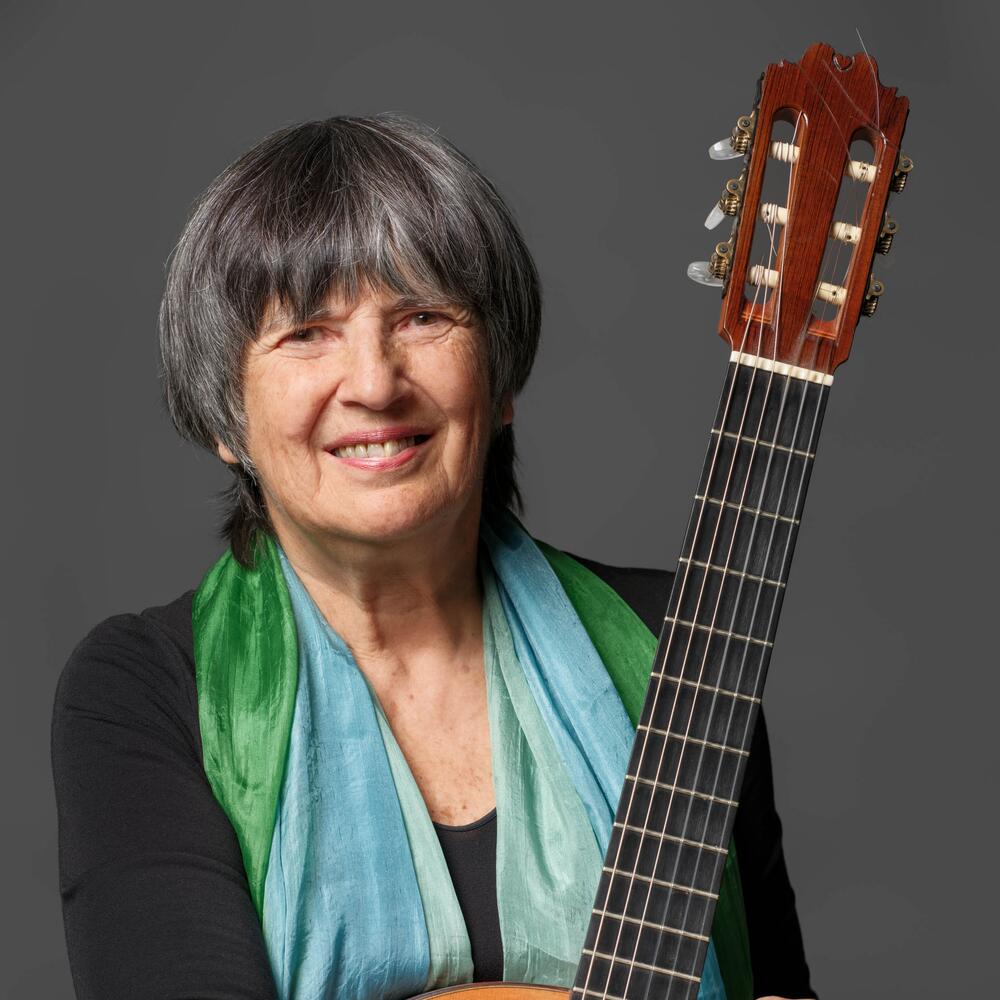
Maria Isabel Siewers De Pazur is a distinguished Professor of Guitar at Mozarteum University in Salzburg, Austria, where she has led the Guitar Department since 1989. She also maintains connections with the Department of Music Education in Innsbruck. Born in Argentina, she has established an international career as both a performer and educator, with her work deeply rooted in Latin American musical traditions while embracing contemporary classical repertoire. Her research and performance interests center on Classical Guitar Performance, Latin American Music, Chamber Music with Guitar, 20th Century Guitar Repertoire, Contemporary Classical Music, Argentine Music, and Guitar Education. Siewers has dedicated her career to expanding the guitar repertoire through commissions of new works and premieres of contemporary compositions, with a particular focus on Latin American composers. Her recordings demonstrate remarkable diversity across musical eras and styles, with special emphasis on 20th century masterpieces, Latin American repertoire, and chamber music collaborations. The trajectory of her work shows a consistent commitment to bridging traditional and contemporary forms, with increasing focus on cross-cultural musical dialogues and innovative arrangements that honor historical contexts while speaking to modern audiences. Critic's choice (Gramophone) Best record of the year (Acoustic Guitar) Latin Grammy Award 2018 in the category Classical Throughout her career, Siewers has maintained a strong commitment to education, founding the Musicampus Classical Guitar program that has nurtured over 170 guitarists from throughout Latin America. Her teaching philosophy emphasizes chamber music, community engagement through public performances, and fostering international musical exchange. She has also been involved in recording projects that serve both educational and artistic purposes, documenting important repertoire and commissioning new works that expand the guitar's expressive possibilities. Siewers maintains active collaborations with composers, orchestras, and fellow musicians worldwide, regularly performing with ensembles such as the Prague Virtuosi, Bohemian Chamber Orchestra, and various string quartets. Her work with the Musicampus program demonstrates her commitment to developing the next generation of guitarists while preserving and innovating within the classical guitar tradition.
Donnacha M. Dennehy is a Professor of Music at Princeton University and Director of the Princeton Sound Kitchen. Previously a tenured lecturer at Trinity College Dublin, he was appointed a Global Scholar at Princeton University in Autumn 2012 and joined the music faculty in 2014. Dennehy founded Crash Ensemble, Ireland's renowned new music group, in 1997 after returning to Ireland from studies in the USA, France, and Holland. Dennehy's research interests focus on contemporary composition with particular emphasis on opera, experimental music theatre, overtone series exploration, and ensemble music. His work bridges traditional composition with innovative approaches to sound and performance, often incorporating elements of Irish musical tradition within contemporary frameworks. He has developed a distinctive compositional voice that has earned him international recognition. His compositions have been performed at major festivals and venues worldwide including the Edinburgh International Festival, Royal Opera House London, Carnegie Hall New York, The Barbican London, and many others. Dennehy's work shows consistent exploration of narrative structures within contemporary classical music, with a particular interest in collaborations across artistic disciplines including theatre, visual arts, and literature. Scientific Awards: Elected to Aosdána (Ireland's Academy of Creative Artists), 2005 Fulbright Scholarship Irish Times Theatre Award for best opera (for The Last Hotel), 2015 International Rostrum of Composers 'recommended' for Crane, 2010 Dennehy has received numerous commissions from prestigious organizations including Carnegie Hall, Wigmore Hall, Metropolitan Museum of Art, BBC, and RTE National Symphony Orchestra. His collaborations extend to renowned artists including Dawn Upshaw, Kronos Quartet, and writers Colm Tóibín and Enda Walsh. As Director of Princeton Sound Kitchen, he leads an ensemble dedicated to innovative contemporary music performance and creation. Dennehy's work with Crash Ensemble has been particularly influential in the new music scene, with their 2011 Nonesuch release of his music, Grá agus Bás, named by NPR as one of its '50 favorite albums' of 2011. His teaching at Princeton includes courses in composition, instrumentation, and music theory through performance.
Mark Gotham is a Senior Lecturer in Cultural Computation at King’s College London’s Department of Digital Humanities. He holds a unique position bridging STEM and the humanities, with prior roles as an Assistant Professor of Computer Science at Durham University and a Professor of Music Theory at Technische Universität Dortmund. His research focuses on computational methods for music theory, corpus creation, and accessibility. Gotham completed a Ph.D. in Music Theory at the University of Cambridge, an MMus in Composition at the Royal Northern College of Music, and a First-Class Bachelor’s in Music from the University of Oxford. His work spans computational musicology, including projects like the OpenScore initiative, which digitizes and opens music scores. He is affiliated with King’s Computational Humanities Research Group and the Centre for Digital Culture. Gotham’s compositions, such as the award-winning CD *Utrumne est Ornatum*, blend theoretical rigor with creative expression. He collaborates with institutions like Deutsche Telekom on projects like *Beethoven X* and leads the Music Computing Lab at King’s. Gotham’s research emphasizes interdisciplinary approaches, using computational tools to explore musical structures and democratize access to music theory. His contributions include frameworks for aligning symbolic music, standards for harmonic analysis, and pedagogical innovations in music education.
Dr. Alexander Hunter is a Lecturer and Composition Convenor at the School of Music, Australian National University (ANU). He holds a PhD in composition from Edinburgh Napier University (2014) and has taught composition, theory, and music history since relocating to Canberra in 2014. Hunter founded ANU's Experimental Music Studio, focusing on open-form compositions that engage performers in fluid interpretive roles. His research spans open musical forms, spectralism, acoustic ecology, and intersectional feminism, with a commitment to disability and autistic advocacy in the arts. Education includes studies at Northern Illinois University (BA 2006) and HNC from Colaisde Bheinn na Faoghla (2007). His work integrates multimedia collaborations with artists like Mike Parr and Martyn Jolly, exploring themes of dis/ability, environmental health, and Métis cultural heritage. Key projects include Helping the River Sing (2018–2021), linking river health with artistic expression, and AI-driven music composition research with Charles Martin. Hunter’s performance-led projects often involve magic lantern technology, reimagining 19th-century projection as a medium for contemporary ecological and historical narratives. Research interests also encompass New York School music, reductionist improvisation, and anarchist philosophies in composition. His collaborations with ensembles like Ensemble Dal Niente and the Edinburgh Quartet highlight his commitment to experimental performance practices. Recent publications (2023–2025) explore AI applications in music creation and interdisciplinary performance frameworks.
Donald Crockett is a Professor and Chair of the Composition Department at the University of Southern California (USC) Thornton School of Music, and Senior Composer-in-Residence with the Bennington Chamber Music Conference. He has held significant roles in contemporary music composition and conducting, including Assistant Dean for Faculty Affairs at USC. His research and creative work spans orchestral and chamber music, opera, and instrumental compositions. Notable projects include conducting and composing for ensembles like SAKURA, HOCKET, and Xtet, with a focus on ecological themes and interdisciplinary collaboration. Major compositions include Carving an Alphabet (2020) for cello quintet, And the River (2018) for piano duo and chamber orchestra, and Night Scenes (2017) for piano trio, alongside a diverse portfolio of chamber operas and concertos. Arts and Letters Award in Music (2013), American Academy of Arts and Letters Guggenheim Fellowship (2006) Grants: Barlow Endowment, Bogliasco Foundation, Copland Fund, National Endowment for the Arts Active as a conductor, Crockett has premiered over a hundred orchestral works by student composers and collaborated with renowned ensembles like the Los Angeles Chamber Orchestra and Hilliard Ensemble. His music is published by Keiser Classical and recorded on labels including Albany, ECM, and New World Records.
Miguel Chuaqui is a Chilean-American composer and Professor at the University of Utah School of Music, where he serves as Chair of the Composition Area since 2009. Born in 1964 in Berkeley, California, and raised in Santiago, Chile, he holds a PhD in Composition from the University of California at Berkeley, with academic roots in both Mathematics and Music. Education: BA in Mathematics and Music (University of California-Berkeley, 1987), MA in Music (University of California-Berkeley, 1989), PhD in Music (University of California-Berkeley, 1994) Chuaqui's creative practice spans orchestral, chamber, vocal, and electroacoustic works, with performances across the U.S. and internationally by ensembles such as Speculum Musicae, Earplay, and the Society for Electro-Acoustic Music in the United States (SEAMUS). His research emphasizes collaborations in diverse areas, including interactive dance systems with Modern Dance and therapeutic musical applications with the School of Medicine. His compositions reflect an intersection of technology and traditional instruments, often incorporating live electronics and interactive elements. Recent compositions like La Búsqueda (2024), Inseparable (2024), and Encuentro Fugaz (2024) highlight his focus on chamber works and electroacoustic innovation. He has also demonstrated a sustained commitment to solo and ensemble works, integrating Latin American cultural motifs with contemporary techniques. Scientific and Musical Awards Award in Music from the American Academy of Arts and Letters Aaron Copland Recording Grant Eisner Prize Nicola de Lorenzo Award Society for Universal Sacred Music award Induction into the National Association of Composers of Chile President’s Award from SEAMUS (2008) 2024-2025 Big 12 Faculty Fellowship As an educator, Chuaqui has taught courses including Advanced Electronic Music Composition, Senior Composition, and PhD-level Composition at the University of Utah since 2024. He hosted the 2008 SEAMUS National Conference and serves as a NASM Visiting Evaluator, maintaining leadership roles in music education and composition pedagogy.
Professor Adam Gorb is a renowned composer and academic, serving as Professor of Composition and former Head of the School of Composition at the Royal Northern College of Music (RNCM) from 2000 to 2023. He holds a PhD in Composition from the University of Birmingham (2013), alongside degrees from Cambridge University (BA 1980) and the Royal Academy of Music (RAM, MMus with Principal’s Prize 1993). His research and creative output focuses on orchestral, operatic, and wind ensemble composition. Notable works include operas Anya 17 (2012) and The Path to Heaven (2018), which explore themes like human trafficking and the Holocaust. His wind ensemble pieces, such as Towards Nirvana and Farewell , have won British Composer Awards and are performed globally. Awards include three British Composer Awards and a House of Commons accolade for Anya 17 . He advises PhD students in composition while maintaining international collaborations, including recent projects in Romania, Australia, and the USA. His music is frequently recorded and performed worldwide, with CDs such as 24 Preludes (2022) and Dancing in the Ghetto (2016) showcasing his diverse output. Teaching roles include undergraduate and postgraduate composition at the RNCM, alongside guest lectures at institutions globally. His current projects include commissions for the Royal Academy of Music and interdisciplinary work with Parkinson’s patients.
Dr David Milsom is a Senior Lecturer in Music at the University of Huddersfield , specializing in performance practice and historical violin techniques. He coordinates classical performance studies and teaches both performance and musicology. University of Sheffield: BMus (1st Class), MMus, PhD His research focuses on 19th-century violin performing practices , including acoustic recordings analysis and annotated score studies. Recent projects explore Brahms and Franck violin sonatas through historically informed approaches. David leads the Historical Performance Research Group and collaborates on digital performance projects via the MMT YouTube channel. He co-founded the professional Brigantes Orchestra and period instrument group Four's Company . Scientific Awards Edison Fellowship (British Library, 2003) AHRC Fellowship (2006) He serves as external examiner for Royal Birmingham Conservatoire and Leeds Conservatoire, and actively supervises PhD students while integrating research into undergraduate teaching.
University of Music and Performing Arts GrazAustria
Alexander Pavlovsky is a founding member and first violinist of the world-renowned Jerusalem Quartet , holding a professorship in string chamber music at the University of Music and Performing Arts Graz (KUG) since 2022. He studied at the Jerusalem Academy of Music and Dance under Professor Matvey Liberman and was influenced by the David Oistrakh violin school. Active globally as chamber musician, soloist, and pedagogue Artistic Director of the Zeist Music Days festival since 2008 Collaborated with artists like Daniel Barenboim and Mitsuko Uchida Plays on a 1696 Antonio Stradivarius violin and a Stefan-Peter Greiner violin (2009) His recordings with Harmonia Mundi include 3 BBC Music Magazine Awards and multiple Diapason D'Or Awards. The Jerusalem Quartet's repertoire spans classical to contemporary works, with a focus on Shostakovich, Bartók, and French string quartets.
Ann-Katrin Zimmermann is an apl. Professor (non-tenured professor) at the Musicological Institute within the Faculty of Philosophy at the University of Tübingen. She has held this position since 2018, following her time as a private lecturer from 2012-2018. In addition to her academic work, she serves as a dramaturg at the Gewandhaus Leipzig since 2013 and has teaching assignments at LMU Munich, Felix Mendelssohn Bartholdy University of Music and Theatre, and Leipzig University since 2012. Her educational background includes: Habilitation (2012) on "Forms of slow movements in the classical cycle" Promotion/PhD (2006) on "Studies on medieval three-part harmony" Master's degree in musicology, philosophy and art history from University of Tübingen and University of Oxford (1998-2003) Professor Zimmermann's research spans multiple eras and aspects of music history and theory. Her work focuses particularly on polyphony of the 12th and 13th centuries, keyboard music from the 15th-18th centuries, early German-language music terminology, and the works of Heinrich Schütz, composers of the Viennese classics, and Richard Strauss. She has made significant contributions to the fields of organology, instrumentation, music iconography, and 19th-century symphonies, with particular interest in cross-temporal aspects of genre, form, and composition. Her extensive publication record shows a consistent focus on historical music analysis, particularly examining compositional strategies across different periods. Her recent work has increasingly focused on Richard Strauss and Mozart, while maintaining her longstanding interest in early music traditions and terminology. She has published numerous articles in prestigious journals and contributed to important edited volumes in musicology. Professor Zimmermann is actively involved in the academic community: Member of the Society for Music History in Baden-Württemberg since 2009 Member of the DHV since 2012 Throughout her career, Zimmermann has balanced academic research with practical musical experience. She has been a bassoonist and leader of various vocal and instrumental ensembles since 1998, and served as a church musician from 1997-2014. Her work as a dramaturg at the Gewandhaus Leipzig since 2013 demonstrates her commitment to connecting scholarly research with contemporary musical practice.