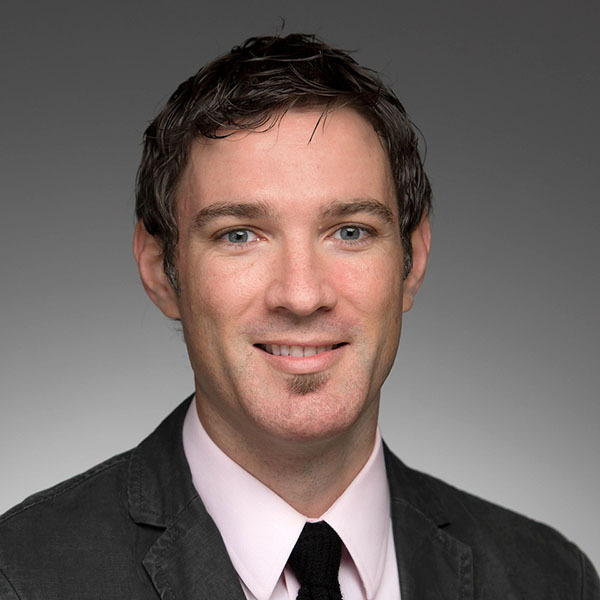
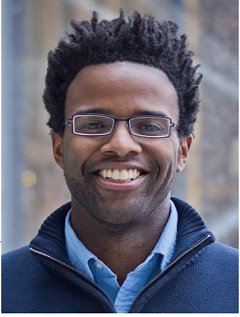
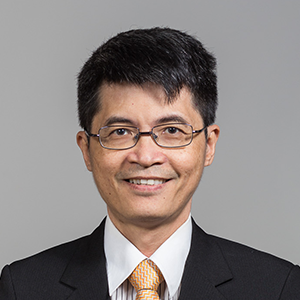
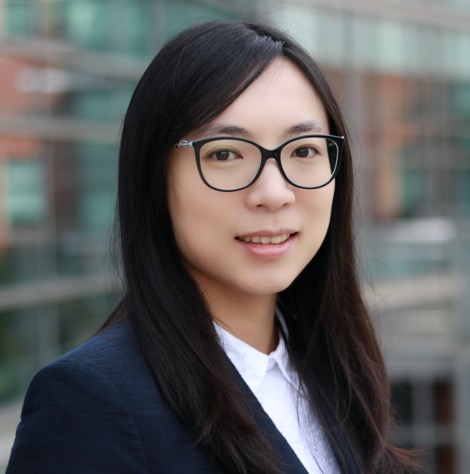
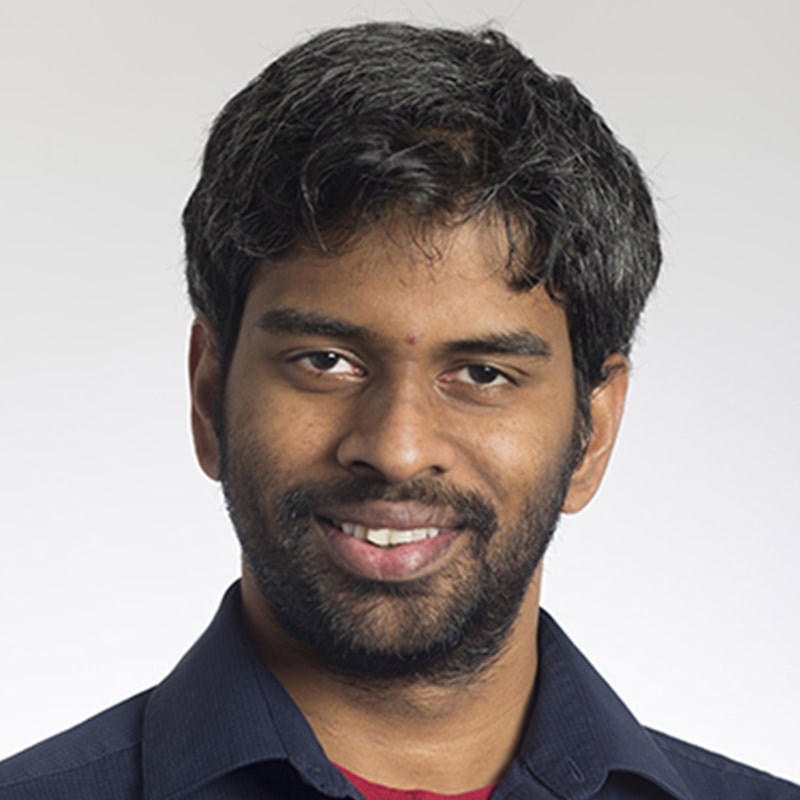
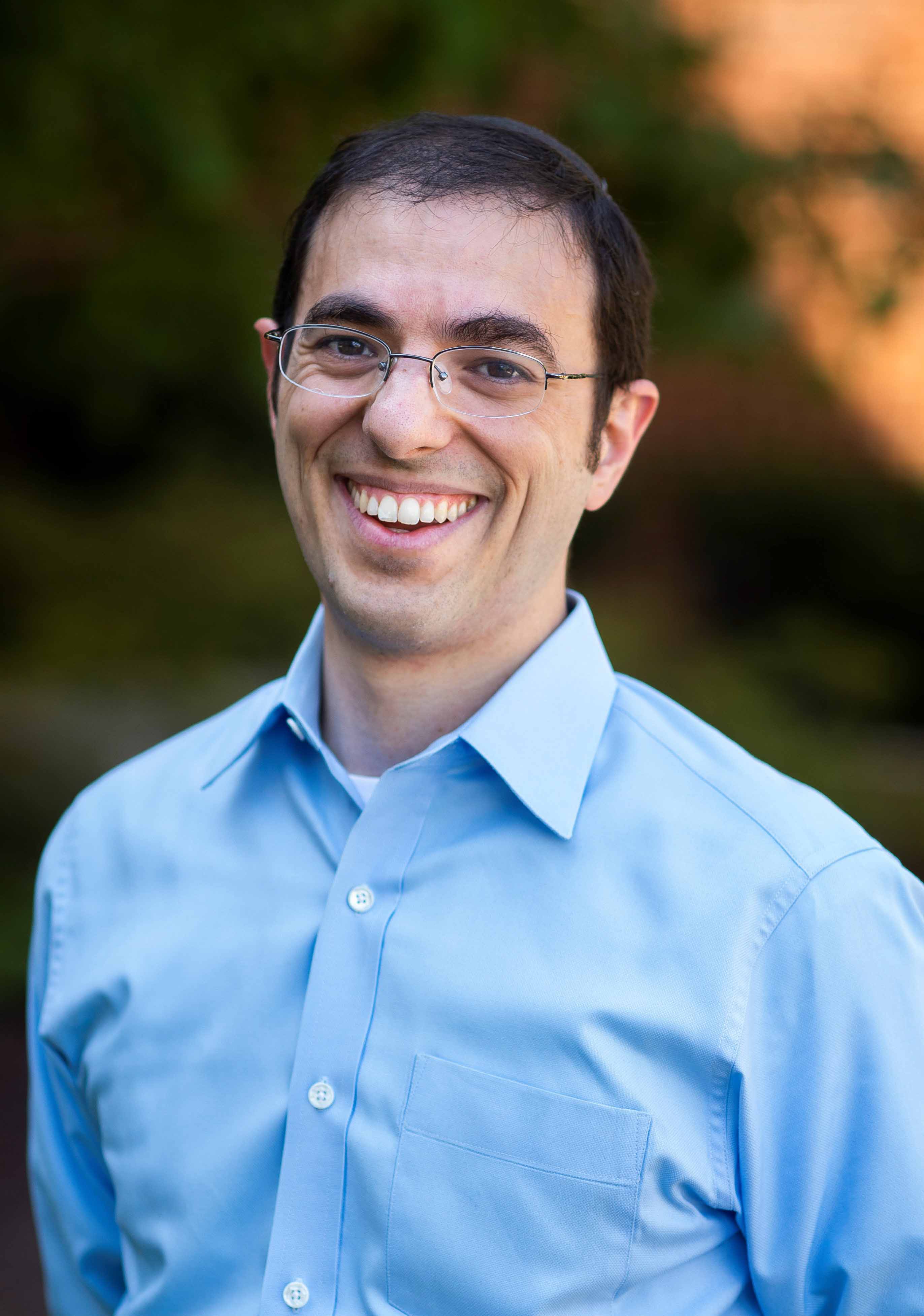
Matthew Thomas Payne is an Associate Professor in the Department of Film, Television, and Theatre at the University of Notre Dame. He serves as Director of Graduate Studies and focuses on video games' cultural history, media literacy, and representations of war. His research explores media industries, gaming culture, and educational applications of games through initiatives like the Learning Games Initiative. Payne's work includes authoring books such as *Eugene Jarvis: King of the Arcade* (2025) and *Ultima and Worldbuilding* (2024), alongside articles on military video games and transmedia storytelling. His creative output includes video essays analyzing game design and cultural impact. Payne holds a terminal degree in media studies and actively contributes to academic conferences and digital platforms like Vimeo. Education: Ph.D. in Media Studies (assumed based on faculty role). Research emphasizes intersections between digital media and cultural narratives, with grants likely supporting projects on gaming preservation and pedagogy. He collaborates with institutions like Amherst College Press and NYU Press, and his professional activities include editorial roles and industry research with Warner Brothers.
Elizabeth M. Belding is a Professor in the Department of Computer Science at the University of California, Santa Barbara (UCSB). She holds leadership roles as an Associate Dean and Faculty Equity Advisor in the UCSB College of Engineering, and serves as Associate Director of the Center for Information Technology and Society (CITS). Her research focuses on mobile/wireless networking, network measurement, and ICTD, with a focus on improving Internet accessibility in underserved regions globally. She has authored over 180 technical papers and led the development of the AODV routing protocol, foundational to standards like 802.11s and Zigbee. Education: Ph.D./M.S. in Electrical and Computer Engineering from UCSB (2000/1997). Awards include ACM and IEEE Fellowships, the 2018 ACM SIGMOBILE Test-of-Time Award, and mentoring accolades. She directs the MOMENT Lab, exploring broadband measurement, rural connectivity, and satellite networks. Recent projects include the NSF-funded PuebloConnect initiative and analysis of US broadband inequities via the Connect America Fund. Research emphasizes socially impactful solutions, including tribal community internet access, disaster communication (e.g., refugee camps), and combating gender-based violence via social media analysis. She has held leadership roles in the UCSB CS department and campus-wide initiatives, including the Chancellor's Advisory Committee on the Status of Women. Key grants include NSF, Bill & Melinda Gates Foundation, and industry partnerships (e.g., ViaSat). Notable students include Udit Paul (2024 SIGCOMM Dissertation Award) and Jiamo Liu. The MOMENT Lab's work spans technical innovations in mesh networks, cellular coverage, and policy-driven broadband analysis.
Michael Carbin is the Jamieson Career Development Assistant Professor of Electrical Engineering and Computer Science at the Massachusetts Institute of Technology (MIT) and leads the MIT Programming Systems Group. His research focuses on programming systems that address system uncertainty to enhance performance, energy efficiency, and resilience, particularly in environments involving neural networks , approximate computing , and unreliable hardware . His work spans probabilistic programming , quantum computing , and machine learning systems . Articles highlight contributions in pruning neural networks , quantum data structures , and compiler optimization , reflecting trends in deep learning , formal verification , and language-driven systems . Scientific Awards : MIT Frank E. Perkins Award (2020) Sloan Research Fellowship (2020) Facebook Research Award (2019) NSF CAREER Award (2018) Best Paper Awards at OOPSLA (2013, 2014) He has advised numerous graduate students and postdocs including Eric Atkinson, Cambridge Yang, and Charles Yuan, and served on program committees for conferences like POPL, OOPSLA, and ICLR. His group collaborates with institutions such as MIT CSAIL and explores applications in quantum algorithms and probabilistic inference .
Anthony Rowe is the Siewiorek and Walker Family Professor of Electrical and Computer Engineering at Carnegie Mellon University (CMU) and a Chief Scientist at Bosch Research. His primary affiliation is with the CyLab and the Wireless, Sensing and Embedded Systems (WiSE Lab) at CMU. He specializes in networked embedded systems, sensor networks, and extended reality (XR) technologies. His research emphasizes energy-efficient sensing, real-time localization, and XR integration with physical systems. Research Focus: His work spans XR systems (e.g., AR/VR edge networking in ARENA), mmWave radar for sensing (e.g., tire wear monitoring via Osprey), distributed edge computing (Silverline), and low-power wide-area networking (OpenChirp). Recent efforts include AI-integrated XR platforms (XaiR) and radar tomography (DART). Grants & Projects: Leads the CONIX Research Center ($27.5M NSF/DARPA grant), Bosch-funded edge computing projects, and DOE initiatives on microgrids. Notable projects include ARENA (XR edge architecture), GridBallast (smart grid control), and rural microgrid deployments in Haiti. Awards: Best Student Paper (ISMAR 2024), Best Paper (IPSN 2020), and the Steven J. Fenves Research Award (2015). Recognized for innovations in localization (MobiCom 2021), radar (ICRA 2023), and energy systems (BuildSys 2010). Teaching: Teaches courses on embedded systems (18-349/18-449), real-time systems, and mixed reality (18-453). Courses emphasize hands-on design and real-world applications. Labs & Teams: Directs the WiSE Lab, collaborating with Bosch Research and industry partners. The lab develops open-source frameworks like ARENA and OpenChirp, and contributes to standards for edge computing and sensing.
Kian-Lee Tan is a Tan Sri Runme Shaw Senior Professor and Professor of Computer Science at the School of Computing, National University of Singapore (NUS). He holds a Ph.D. (1994), M.S. (1992), and B.Sc. (1st Class Honours) from NUS. His academic career spans decades of contributions to database systems and data analytics. Ph.D. in Computer Science, National University of Singapore (1994) M.S. in Computer Science, National University of Singapore (1992) B.Sc. in Computer Science (1st Class Honours), National University of Singapore As a leading researcher in database systems, Tan focuses on query processing and optimization in multiprocessor/distributed systems, database performance, security, and multimedia information retrieval. His work extends to computational biology applications like genome databases and real-time influence analysis on social streams. His recent publications highlight trends in GPU-accelerated graph analytics, trajectory pattern mining, and computational journalism. These works emphasize parallel processing, performance optimization, and social/media data analysis. IEEE Technical Achievement Award (2013) President Science Awards, Singapore (2011) NUS Graduate School Excellent Mentor Award (2010/2011) Outstanding University Researchers Award (1997/1998) Tan has supervised numerous research projects and mentored students contributing to database systems. He secured significant grants including a US$1 million Ripple Foundation grant (2024) for financial technology education. His editorial roles include ACM Transactions on Database Systems and IEEE Transactions on Knowledge and Data Engineering. He leads the FinTech Lab at NUS Computing and has served on the VLDB Endowment Board (2012-2017). His work bridges database foundations with emerging applications in AI, fintech, and computational journalism.
Bo Li is an Associate Professor at the University of Illinois at Urbana-Champaign, affiliated with the Siebel School of Computing and Data Science. Her research focuses on trustworthy machine learning, emphasizing robustness, privacy, and security in AI systems. She leads the Secure Learning Lab (SL²), exploring adversarial attacks and defenses across digital and physical domains. Key contributions include foundational work on adversarial examples, robust learning frameworks, and privacy-preserving techniques. Her academic roles include advisory board positions at the Center for Artificial Intelligence Innovation (CAII) and membership in the Information Trust Institute (ITI). She collaborates with institutions like the Advanced Digital Science Center (ADSC) and the Quantum Information Science and Technology Center (IQUIST). Notable recognitions include the IJCAI Computers and Thought Award (2022), MIT Technology Review's 35 Innovators Under 35 (2020), and multiple best paper awards. Recent work addresses AI safety through frameworks like ShieldAgent and AutoRedTeamer, aiming to enhance system resilience against adversarial threats. Her research spans theoretical guarantees, practical defenses, and ethical AI deployment. Students advised include Chulin Xie, Linyi Li, and Boxin Wang, who have received prestigious fellowships such as the IBM PhD Fellowship and Rising Stars in ML Awards. Advising: Guides PhD students in adversarial ML, privacy, and security. Labs/Teams: Secure Learning Lab (SL²), collaboration with ALERT program. Grants/Funding: NSF CAREER Award, Amazon/Google Faculty Awards, and industry partnerships.
Ryan Stones is a Lecturer at the City Law School , City, University of London, specializing in competition law, behavioral economics, and the intersection of legal philosophy with antitrust enforcement. His work critically examines the application of the formal rule of law to EU competition policy and analyzes historical schools of antitrust thought like the Chicago School and Ordoliberalism.
Maria Gorlatova is an Associate Professor of Electrical and Computer Engineering at Duke University's Pratt School of Engineering, where she leads the Intelligent Interactive Internet of Things (I3T) Lab. She also holds a secondary affiliation as Faculty Network Member of the Duke Institute for Brain Sciences and has previously served as Assistant Professor of Computer Science. Dr. Gorlatova earned her Ph.D. in Electrical Engineering from Columbia University (2013), following M.Sc. and B.Sc. (Summa Cum Laude) degrees in Electrical Engineering from University of Ottawa, Canada. Prior to joining Duke, she was an Associate Research Scholar in the Electrical Engineering Department and Associate Director of the Princeton EDGE Lab at Princeton University (2016-2018). She also has industry experience with Telcordia Technologies, IBM, and D. E. Shaw Research. Her research focuses on advancing intelligent behavior in Internet of Things systems and applications, particularly in mobile pervasive systems and the Internet of Things. Her work crosses traditional discipline boundaries, requiring thinking across multiple layers of system and protocol stacks. Current research themes include breaking barriers for technologies that enable fundamentally new deployments and experiences, such as energy harvesting, artificial intelligence adapted to IoT constraints, and augmented reality. Her lab specifically develops edge- and IoT-enabled intelligent augmented reality platforms, with applications in healthcare and human-robot collaboration. Analyzing her recent publications reveals a strong focus on augmented reality systems, particularly for medical applications. Her work spans computer vision for AR, spatial tracking, SLAM systems, vision-language models for AR security, and VR/AR applications in neurosurgery and rehabilitation. A significant portion of her recent work addresses challenges in mixed reality for medical procedures, demonstrating the translational impact of her research. Google Anita Borg USA Fellowship Canadian Graduate Scholar CGS NSERC Fellowships Columbia University Presidential Fellowship Columbia University Jury Award for Outstanding Achievement in Communications ACM SenSys Best Student Demonstration Award IEEE Communications Society Young Author Best Paper Award IEEE Communications Society Award for Advances in Communications Best Research Artifact Award, IEEE IPSN (2020) N2 Women Rising Star, Networking Networking Women (N2Women) (2019) Dr. Gorlatova's research has been supported by various funding sources that enable her work on edge computing for augmented reality, IoT systems, and medical applications. She actively mentors graduate students who frequently appear as first authors on her publications, indicating strong student involvement in her research. Her I3T Lab at Duke focuses on creating human-facing pervasive mobile computing platforms that enable transformative applications, with recent emphasis on creating advanced augmented reality platforms that integrate edge computing and IoT technologies. The I3T Lab is developing next-generation AR systems with capabilities in edge AI, collaborative spatial awareness, AR user cognitive context sensing, and AR QoS/QoE evaluation. Current projects include applications in healthcare (particularly neurosurgery guidance and rehabilitation) and human-robot collaboration scenarios, demonstrating the lab's focus on real-world impact of pervasive computing technologies.
Peter A. Raymond is the Oastler Professor of Biogeochemistry at Yale University's School of the Environment and Department of Geology and Geophysics. He serves as Senior Associate Dean of Research & Director of Doctoral Studies and is Co-Director of the Yale Center for Natural Carbon Capture. Raymond leads the Raymond Biogeochemistry Lab, which investigates the biogeochemistry of inland waters, enhanced weathering, methane cycling, and blue carbon systems through cutting-edge field, laboratory, and modeling approaches. Education B.S., Marist College Ph.D., College of William and Mary/Virginia Institute of Marine Science Research Focus Raymond's research fundamentally reshapes our understanding of carbon cycling in aquatic systems, demonstrating that rivers serve as dynamic conduits rather than passive pipes in the global carbon cycle. His work examines how biology and watershed variables alter carbon chemistry in streams, rivers, and estuaries, with particular emphasis on understanding global carbon cycles in relation to climate change. Raymond employs radiocarbon measurements to explore the age and turnover of carbon in aquatic ecosystems, revealing that rivers are variable sources of both old and young terrestrial dissolved organic carbon to oceans. The Raymond Lab is particularly known for developing the Pulse-Shunt Concept, which challenges traditional views of riverine biogeochemistry by emphasizing the episodic and dynamic nature of elemental fluxes. Current research directions include enhanced weathering and alkalinity studies for carbon removal, global greenhouse gas budgets through projects like RECCAP 2, natural methane cycling in aquatic systems, and blue carbon ecosystems such as mangroves and salt marshes. Publication Trends Raymond's recent publications (2023-2025) demonstrate a strong focus on global carbon and methane cycling, with particular attention to inland water systems' role in the Earth's climate system. His work increasingly integrates large-scale datasets with field measurements to understand how climate change and human activities affect greenhouse gas emissions from rivers and streams. A significant portion of his recent work contributes to international efforts like the Global Carbon Project, aiming to refine estimates of global carbon and methane fluxes. His research also shows growing emphasis on carbon removal strategies, particularly enhanced rock weathering through the Earthshot-funded GOAL-A project, and their potential for climate mitigation. Scientific Recognition Fellow of the American Association for the Advancement of Science Member of the Connecticut Academy of Science and Engineering Coastal and Estuarine Research Federations Cronin Award for Young Scientists ISI highly cited author Past Editor and Chief of the American Geophysical Union's journal Global Biogeochemical Cycles Mentorship and Funding Professor Raymond currently mentors four doctoral students (Jon Gewirtzman, Shou-En "Samuel" Tsao, Benjamin Saalidong, and Mingyu Zhang) and masters student Bella Garrioch. His research is supported by multiple grants from the National Science Foundation (NSF), including CAREER awards, and participation in the Earthshot-funded GOAL-A (Global Ocean And Land Alkalinization) project. Raymond has also been involved in significant collaborative projects with USGS data to research how climate and land use change alter carbon export from US watersheds, and with Lamont Doherty to develop methods for measuring air-sea gas exchange of CO2 in rivers and estuaries. Research Infrastructure The Raymond Biogeochemistry Lab at Yale is a dynamic research group comprising research scientists, postdocs, doctoral and masters students, and postgraduate researchers. The lab recently acquired a Mini Carbon Dating System (MICADAS) at Yale, significantly expanding their research capabilities in ecosystem carbon turnover and verification of natural climate solutions. The lab collaborates globally on projects in the Arctic, Hudson River, and middle Atlantic Bight, and is actively involved in the NASA Carbon Monitoring System BlueFlux field campaign to assess carbon exchange in coastal wetlands.
Sujaya Maiyya is an Assistant Professor at the Cheriton School of Computer Science, University of Waterloo. Prior to this, she completed a postdoc at Cornell University and earned her PhD from the University of California, Santa Barbara. Her research focuses on distributed systems, databases, and privacy/security, particularly in designing secure and efficient data management systems. She leads projects on oblivious databases, trusted execution environments (TEEs), and scalable privacy-preserving systems. Education: PhD in Computer Science, University of California, Santa Barbara (2018) MSc in Computer Science, University of California, Santa Barbara (2017) BE in Information Science, PESIT Bangalore (2014) Research Interests: Distributed systems, database privacy, oblivious datastores, genomics data security, and secure computation using TEEs. Her work emphasizes practical solutions for privacy-preserving storage and query processing, including tunable-privacy mechanisms and fault-tolerant ORAM systems. Awards and Grants: CFI/ORF Infrastructure Grant (2024-2029) NCC Research Awards (2024-2028) NSERC Discovery Grant (2023-2027) MIT EECS Rising Stars (2021) Teaching: Courses include CS348 (Introduction to Databases) and CS848 (Privacy Enhancing Data Systems). She emphasizes foundational concepts and system internals in database design and secure systems. Professional Service: Chair of Ontario Database Day (2024), PC member for SIGMOD, EDBT, VLDB, and ICDE. Frequent reviewer for journals like TKDE and DKE.
Jyh-An Lee is a Professor and founding Executive Director of the Centre for Legal Innovation and Digital Society (CLINDS) at The Chinese University of Hong Kong (CUHK) Faculty of Law. He leads the New Ventures Legal Team (NVLT) and holds advisory roles at institutions like the European Center for E-Commerce & Internet Law and National University of Singapore. Education : JSD (Stanford), LLM (Harvard), MBA & LLB (National Taiwan University) Admissions : Practicing lawyer in Taiwan His research interests focus on Intellectual Property , AI and the Law , Law & Digital Technology , and Asian Law . He has contributed to landmark studies on NFTs, metaverse legal frameworks, cybersecurity, and IP litigation in Asia. The scientific awards he has received include: CUHK PhD IMPAC Award (2024-25) CUHK Vice-Chancellor’s Exemplary Teaching Award (2023, 2019) CUHK Outstanding Research Impact Award (2022-23) Numerous other university and faculty-level honors His work has been cited by major international courts and agencies. He is also a TRAIL Academic Fellow and active in policy advisory roles for Creative Commons and IP offices in Taiwan and Hong Kong.
Xiaowei Jia is an Assistant Professor in the Department of Computer Science at the University of Pittsburgh. He holds a Ph.D. from the University of Minnesota (supervised by Prof. Vipin Kumar) and B.S./M.S. degrees from the University of Science and Technology of China (USTC) and SUNY Buffalo. His research focuses on integrating scientific theory with machine learning to address societal and environmental challenges, such as climate modeling, hydrology, and fairness in AI. Education: Ph.D., University of Minnesota (2020) M.S., State University of New York at Buffalo B.S., University of Science and Technology of China (USTC) Research Interests: Knowledge-Guided Machine Learning Spatiotemporal Data Mining Fairness in AI for Social Good Applications in Environmental Science and Healthcare Publications showcase his work on physics-integrated neural networks, spatiotemporal modeling (e.g., water temperature prediction), and fairness-aware algorithms. His work has been recognized with Best Paper awards at SIAM SDM (2022, 2023). Awards include the Best Applied Data Science Paper Award at SIAM SDM in 2022 and 2023. He teaches advanced machine learning courses, emphasizing theory integration with real-world applications.
Charalampos Papamanthou is an Associate Professor of Computer Science at Yale University, where he also serves as Co-director of the Yale Applied Cryptography Laboratory and a member of the Yale Institute for Foundations of Data Science. He holds affiliations with the Yale Center for Algorithms, Data, and Market Design. Additionally, he is Chief Scientist at Lagrange Labs. His research focuses on computer security and applied cryptography, particularly verifiable and privacy-preserving computations, leakage-abuse attacks on searchable encryption, and scalable blockchains/cryptocurrencies. He has advised numerous students and postdocs, and his work is supported by NSF, Protocol Labs, and JP Morgan. Research Interests: His primary areas include cryptographic protocols, privacy-preserving systems, blockchain infrastructure, secure cloud computing, and distributed consensus mechanisms. He has pioneered advancements in zero-knowledge proofs, private information retrieval, and dynamic searchable encryption. Awards: He has received prestigious awards such as the CCS Test-of-Time Award (2022), JP Morgan Faculty Research Award (2022), and NSF CAREER Award (2017). His contributions span over 140 publications in top venues like CRYPTO, CCS, and SODA. Teaching: He has taught advanced courses in cryptography, algorithms, and computer systems security at Yale and previously at the University of Maryland and Brown University. Recently, he chairs Yale’s PhD admissions in Computer Science. Labs & Teams: Leads the Yale Applied Cryptography Lab, focusing on real-world applications of cryptographic research. Collaborates with industry partners like Lagrange Labs to develop privacy-preserving technologies.
Siva Balakrishnan is an Associate Professor at Carnegie Mellon University with a joint appointment in the Department of Statistics and Data Science and the Machine Learning Department . He holds an affiliation with the Dietrich College of Humanities and Social Sciences. Previously, he was a postdoctoral researcher at UC Berkeley's Department of Statistics, advised by Martin Wainwright and Bin Yu, and earned his Ph.D. in Computer Science from CMU's Language Technologies Institute under Jaime Carbonell. His research focuses on statistical machine learning, causal inference, and high-dimensional statistics, with notable contributions to domain adaptation, optimal transport, and robust statistics. Education: Ph.D. in Computer Science, Carnegie Mellon University (Language Technologies Institute) Postdoctoral Researcher, University of California, Berkeley (Department of Statistics) Research Interests: His work bridges theoretical foundations and algorithmic development, emphasizing robust statistical methods and their applications in causal inference, public policy, and machine learning. Key areas include nonparametric methods, optimization, and high-dimensional data analysis. He has pioneered techniques in domain adaptation, such as the RLSbench framework for relaxed label shift scenarios. Awards & Grants: Amazon Research Award (2021) Google Research Scholar Award (2021) NVIDIA Pioneer Award (2018) IMS Lawrence D. Brown Student Award (2020, 2022) National Science Foundation Grants (CCF-1763734, DMS-1713003, etc.) Professional Activities: He serves as an Associate Editor for JASA and on the editorial boards of Foundations and Trends in Statistics . His work has been featured in top venues like NeurIPS, ICML, and the Annals of Statistics. He currently holds a sabbatical at UC Berkeley's Department of Statistics (Spring 2025). Labs & Collaborations: He actively participates in the Statistics and Machine Learning Reading Group and the Causal Inference Working Group , fostering interdisciplinary research in CMU's vibrant academic community.
Daniel Abadi is the Darnell-Kanal Professor of Computer Science at the University of Maryland, College Park. He leads the Data Systems Lab at Maryland (DSLAM) and is widely recognized for his groundbreaking contributions to database system architecture and implementation. Previously, he was a faculty member at Yale University where he received the Provost's Teaching Prize. Abadi's research primarily focuses on database system architecture, particularly at the intersection with scalable and distributed systems. He is best known for developing the storage and query execution engines of the C-Store prototype (a column-oriented database system commercialized by Vertica and later acquired by Hewlett-Packard), HadoopDB research (commercialized by Hadapt and acquired by Teradata), and deterministic distributed transactional systems like Calvin (currently being commercialized by Fauna). His work bridges theoretical innovation with practical industrial impact. Analysis of his recent publications reveals a consistent trajectory toward solving fundamental challenges in distributed database systems. His research has evolved from foundational work on column-stores and hybrid database architectures to cutting-edge innovations in geo-replicated transactions, concurrency control mechanisms, and the integration of machine learning with database systems. The trend shows increasing focus on practical implementations that address real-world scalability and performance challenges in large-scale data processing environments. ACM Fellow Churchill Scholarship recipient NSF CAREER Award winner Sloan Research Fellowship recipient VLDB Best Paper Award winner Two VLDB Test of Time Awards (for C-Store and HadoopDB) 2008 SIGMOD Jim Gray Doctoral Dissertation Award 2013-2014 Yale Provost's Teaching Prize 2013 VLDB Early Career Researcher Award Professor Abadi has successfully mentored several PhD students, most notably Alexander Thomson and Jose Falerio, both of whom won the prestigious SIGMOD Jim Gray Doctoral Dissertation Award for their work under his supervision. His research has been generously supported by multiple NSF grants including BIGDATA awards and other funding mechanisms that have enabled significant advances in database technology. He actively collaborates with industry partners, with several of his research projects leading directly to commercial products. At the University of Maryland, Abadi directs the Data Systems Lab at Maryland (DSLAM), which focuses on developing innovative database technologies that address contemporary challenges in data management. The lab's research spans distributed transaction processing, database architecture, and the integration of database systems with emerging computing paradigms. Notable projects include SLOG (Serializable, Low-latency, Geo-replicated Transactions), which eliminates traditional tradeoffs in distributed database design, and ongoing work in deterministic database systems that provide strong consistency guarantees without sacrificing performance.