Lap Chi Lau is a Professor at the University of Waterloo's Cheriton School of Computer Science. His primary research explores algorithms, optimization, and spectral graph theory. His recent publications focus on graph algorithms, spectral methods, and combinatorial optimization, with consistent applications to network design and experimental methodologies. Publications demonstrate advanced techniques in graph sparsification, eigenvalue methods, and efficient algorithm design for complex computational problems. His work frequently intersects theoretical computer science and applied mathematics, contributing to foundational improvements in graph partitioning, spectral clustering, and randomized algorithms.
Hendrik Ernst Andreas Storstein Spilker is a Professor at the Department of Sociology and Political Science, Norwegian University of Science and Technology (NTNU). His research focuses on digital media, streaming technologies, music distribution, and the sociocultural implications of technology. He holds a PhD from NTNU (2005) and has authored influential works like *Digital Music Distribution: The Sociology of Online Music Streams* (2018). Teaching & Outreach: Spilker teaches courses such as *Media and Communication Theory* (MKI3001) and *Media, Communication, and Artificial Intelligence* (MV1110). He actively participates in academic events, including a 2025 symposium on 'The Platformization of Music Production' at the University of Oslo. Research Interests: His work explores streaming platforms, media policy, digital piracy, and the interplay between technology and cultural practices. Key themes include the hybridization of media consumption, the role of algorithms in music distribution, and ethical considerations in healthcare technologies like GPS tracking for dementia care. Publications & Impact: Spilker has published extensively in journals like *Media, Culture and Society* and *Information, Communication & Society*. His recent work critiques EU digital market policies and examines live-streamed concerts during the pandemic. He also contributes to public discourse through feature articles and media criticism.
Dario Fiore is a Research Professor at the IMDEA Software Institute in Madrid, Spain. He holds a Ph.D. in Computer Science from the University of Catania (Italy), supervised by Dario Catalano, with postdoctoral positions at Max Planck Institute for Software Systems (Germany), New York University (USA), and École Normale Supérieure (France). His research focuses on theoretical and practical aspects of Cryptography, emphasizing secure computation, privacy-preserving technologies, and cryptographic protocols. Fiore has authored over 69 conference papers and 19 journal articles, with notable contributions to zero-knowledge proofs, homomorphic encryption, and verifiable computation. He leads a research group involving postdocs and students, and has secured grants such as the ERC Consolidator Grant PICOCRYPT and funding from NEC Laboratories Europe. Education: Ph.D. in Computer Science, University of Catania, 2010 Visiting Student: New York University (2009-2010), IBM Research (2008-2009) Research Interests: Cryptography, Security, Privacy, Zero-Knowledge Proofs, Secure Computation, Homomorphic Encryption His work bridges foundational cryptography with real-world applications, including privacy-preserving systems and blockchain technologies. Recent research highlights include verification-efficient homomorphic signatures, non-malleable zkSNARKs, and efficient zero-knowledge proofs for data streams. Grants & Awards: ERC Consolidator Grant PICOCRYPT (2021-2026, PI) Top Reviewer Award at ACM CCS 2022 Best Short Paper at JNIC 2015 Fiore actively participates in program committees (e.g., Eurocrypt 2025) and has delivered keynotes on cryptographic topics. His team's work is implemented in libraries like 'hsnp' for homomorphic signatures.
Luis Antunes Veiga is an Associate Professor and Senior Researcher at INESC-ID Lisbon, affiliated with the Distributed Systems Group and the Computing Systems and Communication Networks Laboratory. His research focuses on Cloud Computing, Edge Computing, Distributed Systems, and Big Data processing. He teaches courses such as 'Cloud Computing and Virtualization' and 'Operating Systems, Virtualization and Cloud Computing.' His work emphasizes scalable systems, network-aware workflows, and resource-efficient data processing. Research Interests: His primary areas include distributed systems architectures, edge computing frameworks, graph processing algorithms, and software-defined systems. He explores topics like latency-aware network design, resource auction mechanisms for edge environments, and interoperable service workflows. His contributions span theoretical frameworks and practical implementations, such as the RATEE system for edge resource trading and the VeilGraph incremental graph processing framework. Publications: His recent work addresses challenges in distributed systems, such as elastic scaling of stream processing, efficient graph processing in Spark, and latency optimization in internet-scale workflows. These publications reflect a trend toward integrating software-defined approaches with edge and cloud infrastructures. Notable Awards: Best Young Researcher INESC-ID, Excellence in Teaching (IST 2012), and a Best-Paper Award at ACM/IFIP/Usenix Middleware 2007. Labs & Teams: Active in the Computing Systems and Communication Networks Laboratory, leading projects on edge computing and distributed systems.
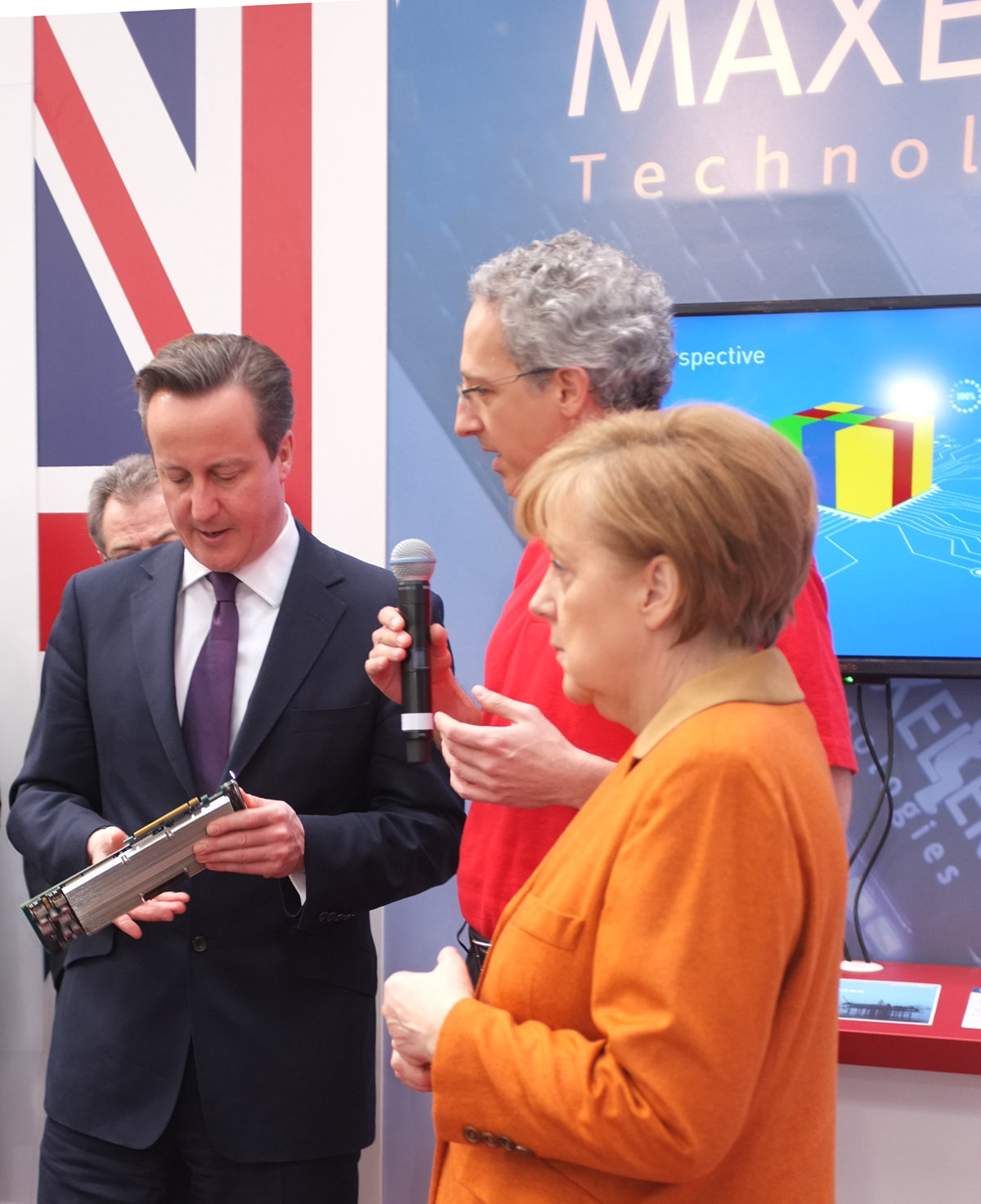
Oskar Mencer is a Professor in the Department of Computing at Imperial College London , where he has been a member of academic staff since 2000. He was also a Consulting Professor at Center for Computational Earth and Environmental Science , Stanford University (2009-2010). His research focuses on Multiscale Dataflow Computing , exploring the interaction of hardware and software systems through domain-specific representations, parallel programming, VLSI design, and compiler methodologies. He has contributed to fields including high-performance computing, FPGA optimization, and computational finance. Dr. Mencer's work has been recognized with a Special Award from Com.sult (2012), Imperial College Research Excellence Award (2007), and a Top EPSRC Advanced Fellowship (2001). He has received multiple best paper awards, including at ICFPT'08 and ASAP 2008, and his 2000 paper on stream architectures was recognized as historically significant in 2015. His publications demonstrate a strong emphasis on FPGA acceleration , custom architectures , and parallel processing across geophysics, finance, and neuroscience applications. Special Award for Dataflow Innovation (2012) Best Paper Award - ICFPT'08 Best Paper Award - ASAP 2008 He has served on technical committees for conferences such as FPL , DATE , and FPT , and leads the Computer Architecture Research Group (currently inactive).
Professor Heinrich Schmidt is an Adjunct Professor in the School of Science at RMIT University, Australia. His research focuses on Software Engineering, Distributed Systems, and Cyber-Physical Systems. He specializes in areas such as formal verification, safety-critical systems, and cloud computing. His work emphasizes practical applications in industrial automation, IoT, and HPC environments. Key research interests include spatio-temporal analysis, fault tolerance, and adaptive systems design. He has supervised projects on IoT data contextualization, software fault characterization, and spatial modeling in PRISM. Over 98 publications highlight his contributions to formal methods, distributed systems, and industrial software solutions. Professor Schmidt collaborates on projects like Chiminey (cloud/HPC integration) and VxLab (industrial visualization). His teaching covers parallel systems, trusted components, and model-based monitoring. No specific awards are listed, but his extensive publication record underscores his academic impact.
Anne-Marie Kermarrec is a Senior Researcher at INRIA (France), with prior roles at Microsoft Research (UK) and the University of Rennes 1 (France). Her work focuses on decentralized systems, including gossip protocols, peer-to-peer networks, social networks, and collaborative filtering. PhD in Computer Science (Rennes, 1996) Her research spans epidemic algorithms, content-based search in large-scale networks, and scalable group communication. She pioneered gossip-based peer sampling and multicast infrastructures like Scribe and SplitStream. Her publications highlight applications in decentralized news recommendation (AllYours), network coding, and privacy-preserving social platforms (Gossple). Key article trends include gossip protocols , P2P systems , social network analysis , decentralized storage , and collaborative filtering . She received the Michel Monpetit Award (2011), ERC Starting Grant (GOSSPLE, 2008-2013), and an ICDCS Best Paper Award (2010). Michel Monpetit Award (2011) ERC PoC AllYours (2013) ERC Starting Grant GOSSPLE (2008-2013) ICDCS Best Paper Award (2010) Kermarrec led program committees for major conferences (e.g., EuroSys, Middleware) and chaired the ACM Software System Award. Her software contributions include AllYours (news recommender), GossipLib (gossip library), and GossipPeer (P2P platform maintenance).
Jesse Hartloff, PhD, is an Associate Professor of Teaching in the Department of Computer Science and Engineering at the University at Buffalo. He holds appointments in the School of Engineering and Applied Sciences. His research focuses on computer science education, with prior work in cybersecurity and biometric authentication systems. Hartloff earned his PhD in Computer Science from the University at Buffalo (2015), alongside dual BS degrees in Computer Science and Business Administration and a BA in Mathematics (all from UB, 2011). His research explores innovative teaching methodologies in computer science, emphasizing student engagement and practical skill development. He has also contributed to biometric security research, including privacy-preserving authentication protocols and secure fingerprint recognition systems. Notably, he received the UB Teaching Innovation Award in 2023 for his educational contributions. Hartloff's publications span both pedagogical advancements and technical cybersecurity solutions. He maintains an active research profile through his Google Scholar page and personal academic website. No formal lab affiliations or grant details are explicitly stated in the provided materials.
Pauli Miettinen is a Professor of Data Science at the University of Eastern Finland, affiliated with the School of Computing within the Faculty of Science, Forestry and Technology. His research focuses on data science methodologies, including matrix and tensor decompositions, redescription mining, and social network analysis. Key applications span ecological niche modeling, health data analysis, and parliamentary candidate opinion analysis. He leads the Algorithmic Data Analysis research group and contributed to the Neuro-Innovation project (2021–2026). Recent work includes advancements in differentially private redescription mining and hyperbolic community graph generation. His publications emphasize efficient algorithms for data mining tasks like biclustering and non-negative matrix factorization. Selected achievements include developing the HyGen graph generator and pioneering techniques for interpretable data representation. His research bridges theoretical method development with practical applications in diverse domains.
Dr. Dimitrios Diochnos is an Assistant Professor in the School of Computer Science at the University of Oklahoma (OU) . His research focuses on theoretical and practical aspects of machine learning, including adversarial learning, semi-supervised learning, and imbalanced data classification. Prior to OU, he was a Hobby Postdoctoral Research Fellow at the University of Virginia and a Research Associate at the University of Edinburgh. He holds a PhD in Mathematics from the University of Illinois at Chicago, an MS in Mathematics from the University of Athens, and a BS in Informatics and Telecommunications from the University of Athens. Research Interests: Dr. Diochnos works on foundational aspects of machine learning, particularly under adversarial conditions. His current projects include developing semi-supervised learning techniques, analyzing online/streaming learning algorithms, and exploring theoretical guarantees for imbalanced classification. He is also involved in the NSF AI Institute for Research on Trustworthy AI in Weather, Climate, and Coastal Oceanography (AI2ES), focusing on trustworthy AI applications in environmental science. Awards and Recognition: He has received NeurIPS Top Reviewer awards (2023, 2019), NSF reviewer status, and the Teaching Award (2009). His postdoctoral fellowship at UVA was supported by the Hobby Endowment. He has held fellowships from the Zossima Brothers Foundation and the University of Illinois at Chicago. Service and Editorial Work: Dr. Diochnos serves as Managing Associate Editor of the Annals of Mathematics and Artificial Intelligence and has been a program committee member for major conferences like NeurIPS, AAAI, and IJCAI. He has organized events such as the Symposium on AI & ML at OU and served on the Scientific Committee for the International Olympiad in Informatics. Grants and Collaborations: His work is supported by NSF grants, including leadership in AI2ES. He collaborates with researchers in meteorology, oceanography, and climate science to address challenges in trustworthy AI for environmental systems. Labs and Affiliations: Dr. Diochnos is affiliated with the OU School of Computer Science and contributes to interdisciplinary initiatives like AI2ES. His research lab focuses on advancing machine learning theory with practical applications in adversarial robustness and environmental forecasting.
Dr. Nada Elnahla is an Assistant Professor/Lecturer at Maynooth University's School of Business, joining in 2022 after roles as an Instructor of Marketing at Carleton University (Canada) and Assistant Professor of English Literature at Alexandria University (Egypt). She holds dual PhDs in Management/Marketing (Carleton, 2021) and Comparative Literature (Cairo, 2012), alongside MA (Comparative Literature, Alexandria, 2008) and BA (English Literature, Alexandria, 2004) degrees. Her research bridges retail surveillance ethics, consumer behavior, and literary analysis, focusing on topics like smart surveillance in retail, loyalty programs, and the intersection of literature and marketing. Education: PhD in Management/Marketing, Carleton University (2021) PhD in Comparative Literature, Cairo University (2012) MA in Comparative Literature, Alexandria University (2008) BA in English Literature, Alexandria University (2004) Research Interests: Dr. Elnahla explores surveillance technologies in retail, consumer ethics, narrative theory, and marketing history. Her work often critiques how retail spaces monitor customers and employs literary frameworks to analyze consumer psychology and corporate practices. Awards & Grants: MUSSI Research Grants Scheme (2024) Maynooth University School of Business Seed Funding (2023) Paul R. Lawrence Fellowship (2017) Donald F. Dixon Scholarship (2019) Labs & Collaborations: She contributes to the Innovation Value Institute’s (IVI) Digital Retail Cluster and is a member of LERO, Ireland’s Science Foundation research center for software engineering. Her work integrates industry partnerships to study evolving retail technologies and consumer dynamics.
Johan Eklund is an Associate Professor in the Department of Computer Science at Karlstad University. He also serves as the Director of Undergraduate Studies and is finalizing his PhD thesis while working part-time as a lecturer. His research focuses on performance issues in computer communication, particularly latency reduction in real-time applications over IP networks, with a strong emphasis on transport layer protocols. He has collaborated extensively with regional industry through initiatives like 'Campus Connect.' Education: B.Sc. (2001) and M.S. (2004) in Computer Science from Karlstad University, followed by doctoral studies. Teaching responsibilities include 'Introduction to Programming and Data Processing' and supervision of bachelor's projects in Computer Science. Research interests span real-time systems, IoT communication, energy efficiency in networks, and transport layer optimization. His recent work includes evaluating NB-IoT energy efficiency and latency reduction in SCTP-based protocols. He has over 20 publications since 2004, with a focus on improving network performance and reducing energy consumption in modern communication systems. Notable collaborations include projects with SNITS (Swedish National Infrastructure for Computing) and industry partners. His work bridges academia and industry, addressing practical challenges in network design and implementation.
Dr. Mario Kolberg is a Senior Lecturer in the Department of Computing Science at the University of Stirling. He holds a PhD from the University of Strathclyde and has held roles at institutions including Humboldt University in Berlin and the University of Strathclyde. His research focuses on Peer-to-Peer (P2P) overlay networks, Home Automation, and IP Telephony, with contributions to areas like distributed feature interaction management and network protocol optimization. Key roles include co-investigator in ESRC’s Interlife and MATCH projects, exploring P2P networks in virtual worlds and healthcare integration. He leads initiatives such as the Sysnet Knowledge Transfer Partnership, developing P2P overlays for mobile devices. Kolberg is an IEEE Senior Member and Series Editor for the IEEE Communications Magazine’s Consumer Communication and Networking series, previously serving as TPC Chair for IEEE CCNC 2011. His research spans P2P multicast, home automation systems, and network efficiency, with recent work addressing IoT protocols (e.g., 6TiSCH), mobile network optimization, and integrating social media data for transport prediction. Over 79 publications highlight his technical depth, including influential papers on feature interaction detection and hybrid multicast systems. Education: PhD in Computer Science from University of Strathclyde Key Projects: Interlife (P2P in 3D virtual education), MATCH (healthcare networks), Sysnet KTP (mobile P2P) Awards: IEEE Senior Member, Series Editor role His work bridges academia and industry, addressing real-world challenges in networking and distributed systems.
Marika Lüders is a Professor at the Department of Media and Communication, University of Oslo. She has held academic roles since 2002, including positions at SINTEF ICT from 2008–2016, leading major innovation projects under EU frameworks. Her research focuses on human-machine interaction, user experiences, and societal impacts of digital technologies. She earned her PhD in 2007 with a thesis on personal media practices. Key projects include leading the HUMANE project and currently directing the 'Global Natives?' research initiative on youth media consumption. Education: Cand. polit. in Media Science (2001), PhD from University of Oslo (2007). Research Interests: Lüders explores media innovation, social media dynamics, and the interplay between technology and society. Her work analyzes user behaviors in streaming platforms, digital well-being, and global media trends. Notable contributions include studies on youth media practices and the societal implications of networked technologies. Publications: Over 50 peer-reviewed articles and book chapters since 2001, focusing on digital media, social networks, and innovation. Recent work addresses streaming media's role in entertainment and societal structures. Awards/Grants: Extensive EU project leadership (FP6, FP7, H2020) and grants, including the HUMANE project and current 'Global Natives?' funding. No specific named awards are highlighted in the text. Labs/Teams: Active in interdisciplinary research teams at UiO, collaborating on projects like the HUMANE initiative and youth media studies. Coordinates the 'Global Natives?' project, investigating youth engagement with global digital platforms.
Paolo Garza is an Associate Professor in the Department of Control and Computer Science (DAUIN) at the Polytechnic University of Turin, where he also serves as Coordinator of the College of Computer, Film and Mechatronics Engineering. He is a member of the DBDM research group and the SmartData@PoliTO laboratory, and actively contributes to academic governance through roles in teaching coordination and PhD program committees. Education: Bachelor’s in Computer Engineering, Polytechnic University of Turin (2001) PhD in Computer and Systems Engineering, Polytechnic University of Turin (2005) His research centers on data science, big data analytics, data mining, and machine learning , with applications in emergency management, real-time communications, Earth observation, and cybersecurity. He has led and participated in numerous national and commercial research projects, including AI4CTI and NODES (PNRR), and has collaborated with industry partners like Cisco Systems. His work bridges theoretical algorithm development and practical deployment in critical systems. The recent publications reflect a strong trend toward multimodal AI, crisis informatics, and intelligent networking . Articles span computer vision for environmental monitoring (e.g., burned area detection, canopy estimation), ML for real-time communication quality, multimodal document understanding, and crisis response systems. His team leverages deep learning, transformers, and vision-language models across diverse domains. Scientific Service: Associate Editor, Knowledge and Information Systems (2024–) Associate Editor, Expert Systems with Applications (2022–) General Co-Chair, IEEE AICT Conferences (2022, 2023) He mentors several PhD students and leads funded research initiatives focused on AI for sustainable industry and cyber threat intelligence. His teaching includes graduate courses on big data processing, distributed architectures, and data science lab methods. He has also directed commercial training programs and research contracts in machine learning and cybersecurity. Research Labs & Teams: DBDM - Database and Data Mining Group (DAUIN) SmartData@PoliTO - Big Data and Data Science Laboratory LAB 5 - Research Laboratory (DAUIN)