Raul Castro Fernandez is a prominent researcher in data management and database systems, with a focus on data discovery, integration, and marketplaces. He has collaborated extensively with leading institutions and researchers, contributing to projects like Data Station and Nexus for secure data sharing. His work bridges theoretical innovation with practical implementations in cloud optimization, differential privacy, and LLM-driven data tools. Key Contributions : Data market frameworks, LLM applications in databases, differential privacy platforms Collaborators : Yue Gong, Samuel Madden, Michael Stonebraker, Eugene Wu, Kyle Chard Research Themes Fernandez explores automated metadata management for data catalogs, spatiotemporal data sharing with privacy guarantees, and LLM-based data discovery . His work on stateful stream processing (e.g., SABER system) and cost optimization in cloud analytics shows technical depth. Recent Trends 2023-2025 publications highlight his pivot toward LLM applications in data management, including tabular data representation and hypothesis assessment tools. He also investigates sustainability in HPC through carbon credit systems.
Olivier Festor is a Researcher at INRIA (French National Institute for Research in Digital Science and Technology), specializing in network security, cloud computing, and IoT. His work focuses on developing scalable solutions for modern network challenges, including in-network computation, cloud service security, and anomaly detection. Research Interests: Dr. Festor investigates vulnerabilities in distributed systems, designs protocols for efficient data processing (e.g., stateful in-network computation), and pioneers frameworks for IoT threat emulation. His recent work emphasizes cloud gaming optimization, automated security for service migrations, and darknet-based threat intelligence. Publication Trends: Over 200 publications (1993–2024) reflect a shift toward cloud/IoT security and programmable networks. Recent articles prioritize machine learning for traffic classification, TOSCA-based cloud orchestration, and P4-enabled data planes, highlighting applied research with industry relevance.
Eric Pardede is a professor at the School of Computing and Mathematics of Western Sydney University . He has an extensive publication record in data management, cybersecurity, and technology-enhanced learning, often collaborating with researchers like Wenny Rahayu, David Taniar, and A. S. M. Kayes. Research Focus: XML database systems, cloud computing security, data stream mining, and educational technology Award-Winning Contributions: Notable work on IoT security frameworks, blockchain risk assessment, and adaptive learning systems Recent Publications: 15 articles from 2021-2025 address topics like concept drift adaptation, cybersecurity in multi-cloud environments, and smart education tools Key Collaborations: Frequent partnerships with researchers in Australia, Indonesia, and Austria
Oleksandr Semeniuta is an active researcher specializing in robotics, computer vision, and industrial automation systems. His work demonstrates consistent contributions to the field with publications spanning from 2015 to 2022, indicating ongoing academic or research activity. His collaborations with researchers like Petter Falkman across multiple publications suggest established research partnerships in the robotics domain. Dr. Semeniuta's research interests center around practical applications of robotics and computer vision in industrial settings. His work encompasses event-driven architectures for data processing and robot control, stereo calibration methods for 3D reconstruction, and resource-aware machine learning for IoT security. His research shows a strong focus on developing practical frameworks and systems that address real-world challenges in manufacturing and industrial automation. The publication trends reveal a consistent focus on robotics systems engineering, with particular emphasis on vision-based solutions and event-driven architectures. His work bridges theoretical computer vision concepts with practical industrial applications, especially in automotive manufacturing and robotic deburring systems. The research demonstrates progression from foundational work on dataflow programming for vision systems to more complex implementations of machine learning on edge devices for security applications. While specific awards are not documented in the available publication records, the consistent output in reputable venues including IEEE conferences and PeerJ Computer Science indicates recognition within the academic community. His work appears in both journal and conference publications, suggesting a balanced approach to disseminating research findings through different academic channels. Dr. Semeniuta's collaborative network includes researchers from various institutions, with Petter Falkman appearing as a frequent co-author across multiple projects. This suggests participation in research teams focused on industrial robotics and computer vision applications. His work on frameworks like EPypes indicates contributions to software infrastructure that enables more efficient development of robotic systems and data processing pipelines.
Floriano Scioscia is a researcher at the Polytechnic University of Bari, Department of Electrical Engineering and Information Technology, with extensive contributions to the Semantic Web, Internet of Things, and knowledge-based systems. His work focuses on developing frameworks for semantic reasoning, resource discovery, and intelligent systems in ubiquitous computing environments. His research interests span multiple domains within computer science: Semantic Web technologies and ontology reasoning Internet of Things and Cyber-Physical Systems Cloud-Edge computing architectures Knowledge representation and semantic matchmaker systems Mobile and ubiquitous computing applications Analysis of his recent publications (2023-2025) reveals a strong focus on edge-based semantic reasoning, with significant work on the Tiny-ME and Cowl frameworks for lightweight OWL reasoning on resource-constrained devices. His research has increasingly incorporated blockchain technologies into IoT systems and explored the concept of "Internet of Conscious Things" with social capabilities for smart objects. The interdisciplinary nature of his work bridges computer science with healthcare applications, particularly in clinical decision support systems. Dr. Scioscia has collaborated extensively with researchers including Michele Ruta, Eugenio Di Sciascio, Giuseppe Loseto, and Filippo Gramegna across numerous projects spanning more than 15 years of research output.
Edward W. Felten is a Professor of Computer Science at Princeton University, with a prolific research career spanning computer security, privacy, cryptocurrencies, and distributed systems. He co-authored the definitive textbook Bitcoin and Cryptocurrency Technologies and has published over 120 refereed works since 1985. Felten’s research often bridges technical depth with policy relevance, influencing both academic discourse and real-world systems. Education: Details of formal degrees are not provided in the source text. Research Interests: His work focuses on securing computing systems and understanding their societal impact. Key themes include cryptographic protocols for blockchains, privacy-preserving technologies, DRM and policy, and the economics of decentralized systems. Recent projects explore rollup economics, fraud proofs, and AI safety. Recent Publication Trends: Between 2022 and 2025, Felten has concentrated on blockchain scalability and economic security, authoring studies on efficient dispute resolution (BoLD), MEV arbitrage, and incentive mechanisms for rollup validators. He also contributed to international AI safety reports, highlighting an expanding focus on emerging technology governance. Scientific Awards & Honors: While specific awards are not listed in the provided text, his repeated keynote invitations (CCS 2015, CSLAW 2019) and high citation counts indicate significant peer recognition. Students & Collaborators: Felten has mentored and collaborated with numerous researchers; frequent co-authors include Akaki Mamageishvili, Joseph Bonneau, Arvind Narayanan, and J. Alex Halderman. Exact advisee names are not extracted from the text. Labs & Teams: He has been associated with Princeton’s Center for Information Technology Policy (CITP) and has led or participated in projects such as the SHRIMP multicomputer system and the Arbitrum scalable smart-contract platform.
Prof. Dr. Holger Hesse serves as Professor and Head of the Institute of Energy and Drive Technology at Kempten University of Applied Sciences' Faculty of Mechanical Engineering, appointed to the Research Professorship in Smart Energy Systems on September 1, 2022. Previously, he was Deputy Head at the Chair of Electrical Energy Storage Technology at Technical University of Munich (TUM). His educational background includes: PhD in Physics on organic photovoltaics from LMU Munich and University of Wollongong, Australia Research stays at UC Santa Barbara and Cambridge University Hesse's research focuses on energy storage systems with emphasis on: Optimization of battery systems for grid services and EV charging infrastructure Modeling of battery degradation and aging-aware control strategies Carbon footprint analysis of storage applications Economic evaluation in evolving energy markets Machine learning for state estimation and lifetime prediction Analysis of his 2023-2025 publications reveals strong trends toward deep reinforcement learning for energy management, probabilistic aging prediction, and real-time optimization of heterogeneous storage systems. Key developments include thermal-aging integrated control, market-adaptive revenue stacking, and environmental impact quantification through frameworks like Energy System Network. As head of the Institute of Energy and Drive Technology, Hesse leads the Stationary Energy Storage Systems (SES) research group, advising graduate students and collaborating with industry partners on smart energy system development and sustainable mobility solutions.
Cédric du Mouza is a full Professor within the CEDRIC Laboratory at the Conservatoire National des Arts et Métiers (CNAM) in Paris, France. His research activities lie at the intersection of database systems, data mining, and digital humanities, with a strong emphasis on social network analysis, knowledge base population, and spatial/temporal data management. Education details are not explicitly provided in the source material. His research interests can be summarized as follows: Database Technologies: scalable indexing, distributed repositories, spatial and temporal data structures. Data Mining & Machine Learning: community detection, influence maximization, recommender systems. Digital Humanities: prosopographic databases, historical social networks, credibility assessment of historical sources. Social Media Analytics: Twitter user profiling, early detection of popular accounts, reducing filter bubbles. Across more than two decades, Prof. du Mouza has produced a rich scholarly record that blends theoretical advances with practical applications. Recent publications (2020-2024) highlight a methodological shift toward end-to-end evaluation frameworks for knowledge base population, uncertainty modeling in historical corpora, and real-time influence maximization in advertising ecosystems. These works are published in premier venues such as SIGIR , VLDB Journal , WISE , CIKM , and leading French conferences (EGC, BDA). No specific scientific awards, funded projects, or doctoral student names are mentioned in the supplied text. Prof. du Mouza collaborates extensively within interdisciplinary teams involving historians, computer scientists, and statisticians, reflecting CEDRIC’s integrative research culture. While no dedicated laboratory or team name is provided, his continuous affiliation with CEDRIC/CNAM confirms an active and ongoing role in both research and graduate-level education.
Ali Dziri is a permanent researcher at CentraleSupélec's Cedric Laboratory , focusing on wireless communications, signal processing, and embedded systems. His work spans 2004–2023 with key contributions in UWB communication, IoT networks, video/image transmission, and real-time tracking algorithms. His research interests include: Wireless Communications Signal Processing Embedded Systems Machine Learning IoT Networks Video/Image Compression Recent publications highlight trends in neural networks for channel equalization, MIMO relays for WSNs, and 5G D2D communication protocols. He has no listed scientific awards or advisees.
Prof. Ofer Shayevitz is a faculty member at the School of Electrical Engineering , Tel Aviv University , holding the academic rank of Professor . He is affiliated with the Department of Systems and leads interdisciplinary research at the intersection of information theory , statistical inference , and data science . His research explores theoretical challenges in interactive communication , machine learning , and quantum information , with applications to communication complexity , graph analysis , and non-stationary environments . Notable work includes advances in high-dimensional regression , entropy estimation , and memory-constrained algorithms . The trends in his recent publications highlight information-theoretic bounds , statistical inference under constraints , and interactive protocols . His group has made significant contributions to quantum key distribution , planted graph detection , and guesswork analysis . Scientific awards include the Best Student Paper Award at ISIT 2020 . His research is supported by major grants from the Israel Science Foundation (ISF) , ERC Starting Grant , and Israel Innovation Authority . Prof. Shayevitz advises current PhD students Assaf Ben-Yishai , Uri Hadar , and Shahar Stein Ioushua , as well as M.Sc. students Inbar Pinsly and Oz Ben Hamo . Former advisees include faculty members at institutions like Kyushu University and University of British Columbia .
Georg Wenzelburger is Professor of Political Science with a focus on Comparative European Research at Saarland University since September 2022. He holds a position within the Faculty of Empirical Humanities and is a member of the CEUS-Collegium. Previously, he served as Professor for Policy Analysis and Political Economy at the University of Kaiserslautern and as an Assistant Professor at the University of Freiburg. His research focuses on comparative political decision-making processes in the European Union, European states, and subnational levels. Wenzelburger examines policy differences and similarities across European states, the impact of European impulses on national political systems, and the role of political actors—particularly parties—in shaping policies. His work also explores how structural changes like digitalization, uncertainty, and social change affect political decision-making. Additional research interests include public policies in Western countries, with emphasis on the welfare state, law and order policies, public finances, and border regions. Wenzelburger's recent publications demonstrate a strong focus on algorithmic decision-making in criminal justice, border region cooperation, European integration, and the interplay between welfare policies and security policies. His work employs both quantitative and qualitative methods within an empirical-analytical framework, drawing on comparative political economy and public policy theories. Jenei Award for article in Public Management Review (2024) Wenzelburger leads significant third-party funded projects including PROTEMO (a Horizon Europe project worth approximately 3 million euros), Strakosim, and the European Cooperation Platform. His research team conducts work published in top journals such as British Journal of Political Science, European Journal of Political Research, Journal of European Public Policy, and West European Politics, as well as monographs with Routledge and Oxford University Press. At Saarland University, Wenzelburger teaches primarily in the European Studies program, offering courses including Introduction to European Governance, Politics between the Nation State and the EU, and advanced seminars in Comparative European Politics. He supervises theses in European and International Politics, European Studies: Politics, Law, and Society, and the Master's program Spaces, Politics, and Societies of Europe.
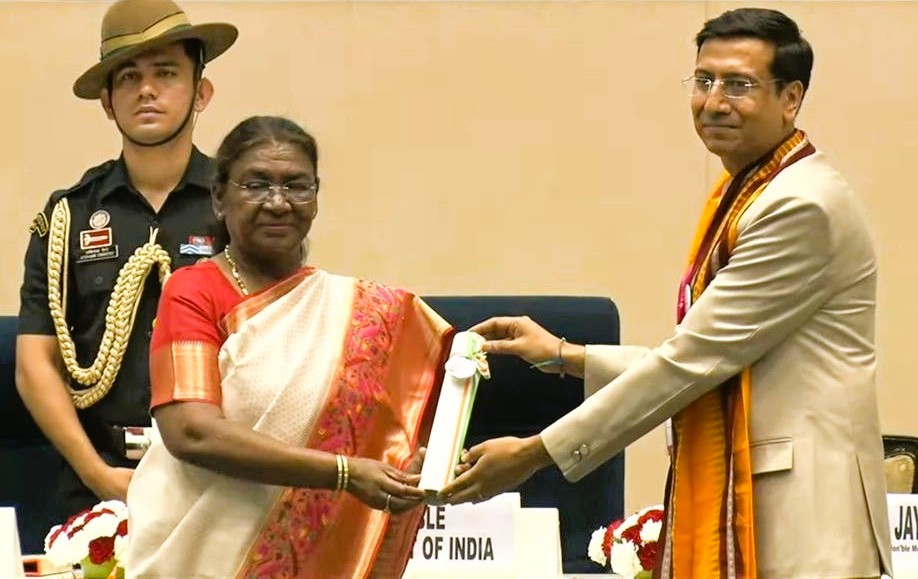
Prof. Kapil Ahuja is a Full Professor in the Department of Computer Science & Engineering at the Indian Institute of Technology Indore (IIT Indore), where he heads the Mathematics of Data Science and Simulation (MODSS) research lab. After completing dual Master's degrees and a Ph.D. from Virginia Tech (USA) followed by postdoctoral work at the Max Planck Institute in Germany, he has held visiting positions at UT Austin, IMT Atlantique, Sandia National Labs, TU Dresden, and TU Braunschweig. His administrative roles include founding Dean of International Affairs and former Head of Computer Science & Engineering at IIT Indore. Education: Ph.D. in Mathematics, Virginia Tech (2011) M.S. in Mathematics, Virginia Tech (2009) M.S. in Computer Science, Virginia Tech (2007) B.Tech. in Mechanical Engineering, IIT (BHU) Varanasi (2001) Research Focus: Prof. Ahuja's work bridges theoretical advances with real-world applications, emphasizing machine learning algorithms for plant/cancer studies, game-theoretic poverty reduction models, exascale climate modeling solvers, and drone trajectory optimization. His interdisciplinary approach integrates numerical linear algebra with network science to solve complex systems problems across healthcare, agriculture, and climate science, supported by 4.85 Crores INR in external funding. Publication Trends: Recent work demonstrates growing emphasis on AI-driven optimization for physical systems (drones, climate models) and biomedical applications (cancer classification). His publications increasingly feature cross-disciplinary collaborations between computer science, biology, and economics, with notable contributions in explainable AI for healthcare and resource allocation algorithms for social networks. Scientific Recognition: National Teacher's Award (2024) from the President of India Five-time recipient of IIT Indore's Best Teacher Award (2013-2023) Best Poster Award at International Workshop on Game Theory & Networks (2019) Steeneck Graduate Research Fellowship (Virginia Tech, 2011) Multiple SIAM travel awards for international conferences Mentorship & Service: Prof. Ahuja has graduated 5 Ph.D. and 4 M.S. (Research) students while mentoring 75 B.Tech. projects. He serves as Associate Editor for Applied Intelligence Journal (Springer Nature) and Knowledge and Information Systems, organizes international conferences, and reviews for 35+ academic sources. His administrative leadership significantly expanded IIT Indore's global partnerships through the Research Park initiative. Research Infrastructure: The MODSS lab maintains active collaborations with Oak Ridge National Lab, Sandia National Labs, and European institutions. Current projects include AI-optimized drone swarms for agricultural monitoring and game-theoretic models for poverty intervention, utilizing high-performance computing resources for large-scale simulations.
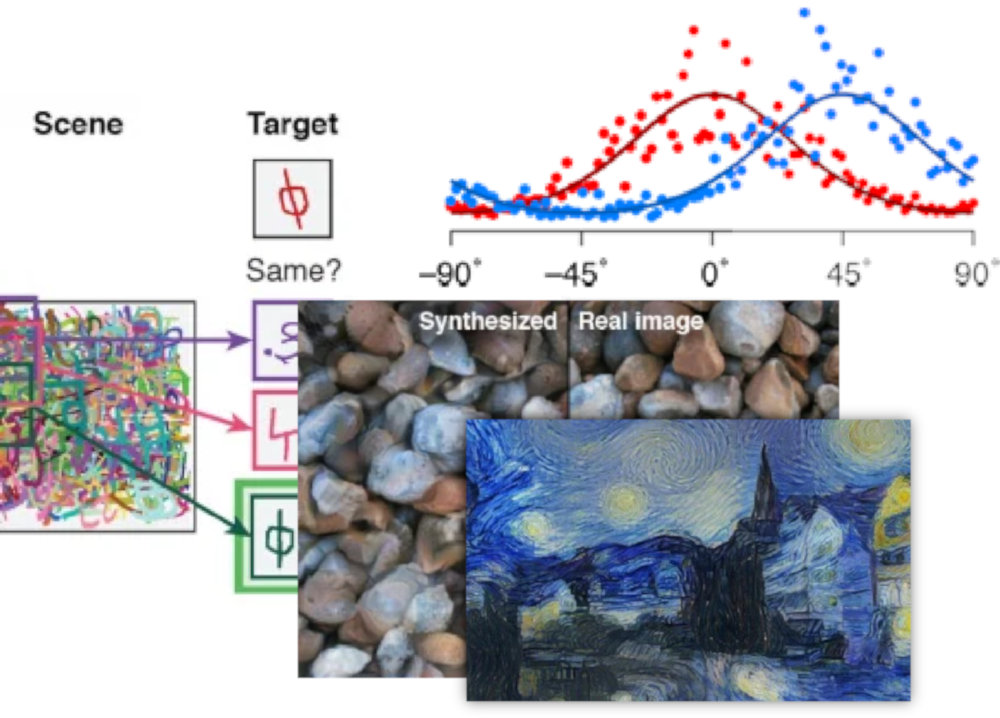
Prof. Dr. Alexander Ecker is Professor of Data Science at the Institute of Computer Science, University of Göttingen, and concurrently holds the prestigious Max Planck Fellow position at the Max Planck Institute for Dynamics and Self-Organization. Since 2020 he also serves on the Executive Board of the Campus Institute Data Science in Göttingen. He leads the Neural Data Science research group, comprising 14 PhD students and 2 postdoctoral researchers, focusing on the interface of machine learning and computational neuroscience. His educational background includes a Dr. rer. nat. in Neuroscience (2014) from the Graduate School of Neural and Behavioral Sciences/IMPRS, University of Tübingen, followed by post-doctoral and group-leader positions at the University of Tübingen and the Max Planck Institute for Biological Cybernetics. Research Interests Machine Learning & Deep Learning: developing novel algorithms for representation learning and generative modeling. Computational Neuroscience: large-scale data-driven modeling of visual cortical circuits. Visual Perception: bridging biological vision and computer vision via biologically inspired architectures. His work has produced a steady stream of influential publications (2019-2025) in leading journals such as Nature Communications , Nature , Nature Methods , PLOS Computational Biology , ICLR , NeurIPS , and CVPR . The publications trend toward integrating high-resolution neural recordings with state-of-the-art machine-learning models to uncover principles of sensory processing, neuron-type classification, and behavior. Scientific Awards & Honors Max Planck Fellow, Max Planck Institute for Dynamics and Self-Organization (ongoing) Executive Board Member, Campus Institute Data Science, Göttingen (since 2020) Teaching, Advising & Grants Regularly teaches advanced courses: “Deep Learning for Image Synthesis”, “Current Topics in Deep Learning”, and “Graph Machine Learning”. Supervises 14 current PhD students and 2 postdocs within the Neural Data Science Group. Offers numerous Bachelor’s and Master’s thesis projects, with topics ranging from neuronal morphology clustering to primate vocalization analysis. Leads or co-leads large collaborative consortia with labs in Göttingen, Tübingen, Baylor College of Medicine, and other institutions across the US and Germany. Labs & Teams The Neural Data Science Group operates at the Institute of Computer Science, University of Göttingen, and is tightly integrated with the Max Planck Institute for Dynamics and Self-Organization. The group maintains active collaborations with over a dozen partner laboratories, including groups led by Fabian Sinz, Andreas Tolias, Thomas Euler, Tim Gollisch, and Viola Priesemann, fostering an interdisciplinary environment that spans computer science, physics, biology, and psychology.
Prof. Kurt Rothermel is a faculty member at the University of Stuttgart, specifically affiliated with the Institute for Parallel and Distributed Systems (IPVS) within the Faculty of Computer Science, Electrical Engineering, and Information Technology. His research focuses on distributed systems with particular expertise in time-sensitive networking, networked control systems, and complex event processing. Prof. Rothermel's research interests span multiple areas in distributed computing and networking: Distributed Systems and Networked Control Systems Time-Sensitive Networking and Deterministic Networking Quality of Service (QoS) Management and Optimization Complex Event Processing and Stream Analytics Edge Computing and Real-Time Video Analytics Digital Twin Systems and Proximity-based Services His recent publications (2022-2025) demonstrate a strong focus on time-sensitive networking, with numerous papers addressing scheduling algorithms, conflict graph creation, and latency management for time-triggered communication. There's also significant work on load shedding techniques for resource-constrained environments, particularly for real-time video analytics at the edge. His research increasingly incorporates digital twin systems and explores novel approaches for distributed mobile simulation, as evidenced by his "Persival" framework for handling 3D meshes on AR devices. Prof. Rothermel has made substantial contributions to the field of complex event processing, developing multiple shedding strategies (gspice, hSPICE, pspice) to manage resource constraints while maintaining utility. His work bridges theoretical networking concepts with practical applications in industrial settings, particularly evident in his research on networked control systems and time-sensitive software-defined networks.
Mathieu Hoyrup is a permanent researcher (Chargé de Recherche) at Inria , affiliated with the Mocqua team at the LORIA research center in Nancy, France. His research bridges mathematical logic, computability theory, and dynamical systems through the lens of computable analysis and algorithmic randomness. Research Interests : Recursion theory, computable analysis, algorithmic randomness, ergodic theory, and dynamical systems. Advising : Supervised PhD students Hugo Férée, Djamel Eddine Amir, Alexis Terrassin, and Rémi Pallen. Academic Service : Organized the Computability and Complexity in Analysis conferences (2013–2022) and the Continuity, Computability, Constructivity (CCC 2017). Education : PhD in Mathematics from Université Paris Diderot (2008); Habilitation à diriger des recherches (2021) on topological aspects of representations in computable analysis.