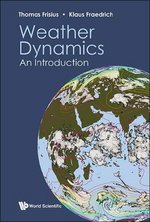
Klaus Fraedrich is a Visiting Professor at the Max Planck Institute for Meteorology in Hamburg, Germany, affiliated with the Department of Climate Physics. His research spans climate dynamics, nonlinear systems, tropical-extratropical weather interactions, and the development of accessible climate models. His work employs advanced diagnostics to study regional climate variability, attribution of extreme events, and multi-scale atmospheric processes. Recent publications focus on precipitation extremes, urbanization impacts on CO2 emissions, and cryosphere-climate interactions. Fraedrich has received prestigious awards including the Lewis Fry Richardson Medal and Max Planck Research Prize. He collaborates globally, with prior positions at universities in Australia, the USA, China, and Germany.
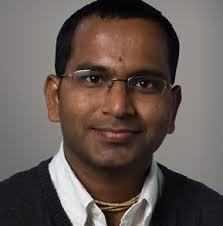
Sreeni Chadalavada is a Senior Lecturer in Water Engineering at the University of Southern Queensland, where he focuses on teaching and research in hydrology, water resources, and environmental engineering. Previously, he served as Principal Hydrogeologist and Research Manager at CRC CARE (University of Newcastle) and Senior Scientist at the University of South Australia. His expertise spans hydrology, environmental risk assessment, contaminated land management, and optimization techniques. Education: BTech (Pondicherry University, 2003), MTech (Indian Institute of Technology, 2005), PhD (University of South Australia, 2009). Research interests include water resources engineering, waste management, environmental monitoring, and the application of AI in environmental systems. He has supervised numerous doctoral and master’s students on topics like groundwater remediation, climate change impacts on hydrology, and machine learning in water quality management. Key affiliations include the Centre for Applied Climate Sciences and the Institute for Life Sciences and the Environment. His recent work emphasizes AI-driven solutions for air and water quality, climate change adaptation, and sustainable remediation strategies.
Dr. Zohreh Sheikh Khozani is a researcher at the Alfred Wegener Institute (AWI) in Bremerhaven, specializing in the Paleoclimate Dynamics department. Her work focuses on applying machine learning techniques to hydrological and environmental challenges, including river water level prediction, sediment transport modeling, and climate impact studies. She has contributed to advancements in ensemble and hybrid machine learning models for streamflow forecasting, drought prediction, and water quality analysis. Her research integrates computational methods with physical processes in hydraulic structures and environmental systems. Dr. Sheikh Khozani’s studies emphasize practical applications, such as optimizing dam safety assessments and improving aquifer management through data-driven approaches. Her research interests span hydrology, machine learning, and sediment dynamics. Key projects include developing novel algorithms for predicting scour around infrastructure, analyzing scour profiles in cohesive sediments, and enhancing effluent quality prediction using hybrid neural networks. She has also explored the use of entropy-based methods and optimization algorithms in hydraulic engineering contexts. Dr. Sheikh Khozani collaborates on interdisciplinary projects, addressing issues like ore grade estimation and ozone pollution forecasting. Publications highlight her contributions to modeling transverse shear stress in channels, optimizing hydraulic systems, and evaluating ecological risks in water bodies. Her work bridges theoretical advancements in machine learning with real-world environmental and engineering challenges, contributing to sustainable resource management and infrastructure resilience.
Sandhya Patidar is an Associate Professor at the School of Energy, Geoscience, Infrastructure and Society, Heriot-Watt University. She holds editorial roles in journals like Geosciences and Frontiers in Environmental Engineering, and is a member of the Royal Academy of Engineering. Her research focuses on interdisciplinary applications of data science (mathematical/statistical/machine learning) to energy, water, climate change, and environmental impact assessment. She has led projects funded by grants like EP/F038240/1 and EP/K013513/1, and developed novel methodologies in stochastic processes, complex networks, and bifurcation analysis. Education & Early Career: Previously affiliated with Shri RGP Gujarati Professional Institute (2001–2004), DAVV Indore, and RGPV Bhopal. Holds expertise in programming (Python, R, MATLAB) and has over 70 peer-reviewed publications. Three outputs won best paper awards, including recognition at climate change and low-energy architecture conferences. Research Interests: Machine learning applications in energy systems, flood risk modeling, and climate change adaptation. Specializes in techniques like Hidden Markov Modeling, time series analysis, and deep learning frameworks for energy demand forecasting and hydrological prediction. Key Contributions: Developed a physics-aware machine learning framework for hydrological models, error correction models for reservoir levels, and AI-driven heat pump usage classification. Pioneered methodologies linking climatic trends to energy demand via stochastic modeling and covariance approaches. Awards: Robert Alfred Carr Prize (2022) Sir David Wallace Prize (2008) Best Paper Awards (2011, 2019) Advising & Grants: Supervises interdisciplinary PhD projects on data analytics in climate-energy-water nexus. Collaborates on initiatives like the CEDRI project for community energy demand reduction in India. Actively engages in grant-funded research on flood inundation modeling and probabilistic climate projections. Labs & Teams: Part of the Institute for Infrastructure & Environment, leading cross-disciplinary teams in energy performance assessments, resilience planning, and environmental risk management.
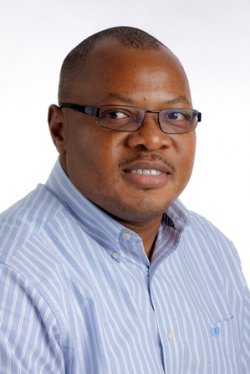
Dr. Clement Alo is Chairperson and Associate Professor in the Department of Earth and Environmental Studies at Montclair State University's College of Science and Mathematics. His research integrates climate modeling, terrestrial ecosystem modeling, hydrological modeling, and observational data to examine biosphere evolution and water resources under climate variability and change. He holds a PhD in Civil and Environmental Engineering from the University of Connecticut (2009), MA in Geographic Information Science from Clark University, and BS in Geomatic Engineering from Kwame Nkrumah University of Science and Technology. His research generates science-based information on environmental vulnerability for effective resource management, with projects including impacts on water supply in New Jersey's Passaic River Basin and climate change effects in West Africa's Volta Basin.
Assoc. Prof. Dr. Tarkan Erdik is an Associate Professor at the Civil Engineering Department of Istanbul Technical University (ITU), specializing in Fluid Mechanics and Coastal Sciences & Engineering. He holds a PhD in Coastal Sciences Engineering from ITU and has conducted postdoctoral research at TU Delft. His work focuses on hydrodynamic modeling of straits (e.g., Dardanelles, Bosphorus), marine energy potential assessment, oil spill dynamics, and AI-driven environmental predictions. Erdik has extensive experience in numerical modeling of coastal systems and infrastructure impact studies, such as the Canal Istanbul project's effects on marine circulation. Education: PhD in Coastal Sciences Engineering (ITU, 2005–2009); MSc in Hydroelectronics (ITU, 2001–2004) Research Interests: Fluid dynamics in confined waterways, coastal protection structures, renewable marine energy, and stochastic environmental modeling. Recent studies include analyzing marine heatwave characteristics in interconnected seas, predicting streamflow patterns using advanced techniques, and evaluating floating structures' impact on estuary circulation. Erdik collaborates on projects addressing Istanbul's environmental challenges, including Golden Horn remediation and Marmara Sea salinity dynamics.
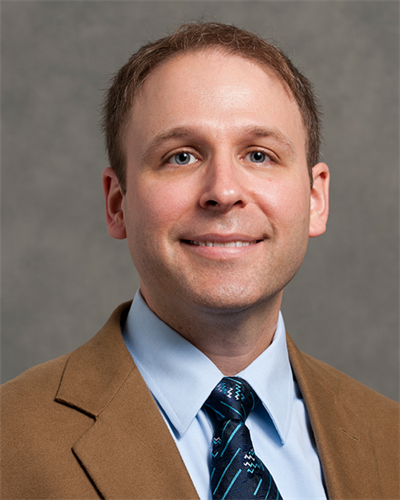
James Limbrunner is a Professor of the Practice in the Department of Civil and Environmental Engineering at Tufts University's School of Engineering. He holds a BSCE (1996), MS (1998), and PhD (2008) from Tufts University. His research focuses on developing optimization models for managing nonpoint source pollution and stormwater systems, with expertise in hydrology, hydraulics, and water resources systems engineering. Dr. Limbrunner is a registered Professional Engineer in New Hampshire (since 2002) and has extensive consulting experience in water supply systems, hydropower management, and river basin planning. He teaches courses on stormwater hydrology and river hydraulics at Tufts. His professional activities include service learning initiatives and international collaboration. Key research contributions include advancements in watershed modeling, decision support systems for BMP placement, and climate-impact studies on streamflow variability. His work bridges theoretical models with practical applications in sustainable urban planning and environmental policy.
Dr. Pallavi Goswami is a Postdoctoral Research Fellow at Monash University's School of Earth Atmosphere and Environment in Australia. Her research focuses on drought mechanisms (meteorological, hydrological, agricultural), flash drought dynamics, and compounding hazards like drought-to-flood transitions. She investigates climate drivers influencing low flow regimes and future extreme events' adaptability. Current work is funded by the National Environmental Science Program (NESP) Climate Systems Hub. Education: Joint PhD in Hydrology & Water Resources Engineering from Monash University (Australia) and IIT Bombay (India), awarded May 2023. Bachelor of Technology in Civil Engineering from Motilal Nehru National Institute of Technology (2014). Research Interests: Drought onset processes, hydroclimatology, data-driven modeling, climate teleconnections. She explores how large-scale climate patterns (e.g., ENSO) influence drought characteristics and extreme event projections. Supervision: Open to mentoring Honours, Masters, and PhD students in drought-related research. Active collaborations on climate adaptation strategies and interdisciplinary approaches to environmental hazards. Labs/Teams: Works under Dr. Ailie Gallant's research group, focusing on climate extremes and hydrological systems. Engages in international collaborations on drought monitoring and modeling.
Aniket Gupta is a Research Fellow at the University of Arizona, specializing in hydrology and climate science. His work focuses on snow hydrology, soil moisture dynamics, and the application of machine learning in environmental modeling. He holds a Ph.D. in Ocean, Atmosphere, Hydrology and Climate from UGA-IGE, France (2022). Research interests include improving streamflow predictions in arid regions, evapotranspiration estimation using advanced models, and understanding the impacts of climate change on water resources. His recent studies address soil moisture memory mechanisms, the role of vegetation dynamics in hydrological fluxes, and the integration of remote sensing data (e.g., SWOT, ECOSTRESS) into hydrological frameworks. Key contributions include developing hyper-resolution modeling frameworks for alpine catchments and assessing atmospheric convection trends in India. Gupta collaborates with institutions worldwide, advancing critical zone modeling and machine learning applications in hydrology.
Dr. Upmanu Lall is the Director of the Columbia Water Center and the Alan and Carol Silberstein Professor of Engineering at Columbia University. He chairs the Department of Earth & Environmental Engineering in the Fu Foundation School of Engineering and Applied Science. His research focuses on hydrology, climate dynamics, water resource systems, risk management, and sustainability, with a particular emphasis on societal outcomes and innovative applications. His major initiatives include the Global Water Sustainability Initiative addressing water scarcity, the Global Flood Initiative for flood prediction and mitigation, and 'America's Water' for sustainable urban infrastructure. These programs leverage systems-level modeling of hydrology, climate, agronomy, and economics. He pioneered techniques in nonlinear dynamical systems, Bayesian models, and climate variability studies. Dr. Lall's work spans over 30 projects, including disaster planning in New York, climate-informed flood risk assessments, and groundwater depletion studies in India. His research integrates interdisciplinary approaches to address water-energy-food nexus challenges, climate adaptation, and community-driven solutions. He leads the Columbia Water Center's educational initiatives, such as the Aquanauts program promoting citizen science and sustainable engineering education. His publications emphasize probabilistic climate projections, flood hazard analysis, and participatory water development strategies. Collaborations with institutions like The Nature Conservancy highlight his focus on practical, scalable solutions to global water crises.
Adrienne Marshall is an Assistant Professor in the Department of Geology and Geological Engineering at the Colorado School of Mines. Her research focuses on computational hydrology, with emphasis on snow dynamics, ecohydrology, permafrost, and hydropower in the context of climate change. She holds a PhD in Water Resources from the University of Idaho, an MS in Energy and Resources from UC Berkeley, and a BA in Biology from Scripps College. Her work integrates data science, physically-based modeling, and statistical approaches to explore climate impacts on water resources. Key themes include understanding snowpack variability, wildfire effects on hydrology, and adaptation strategies for hydropower systems. She has contributed to interdisciplinary projects such as reservoir vulnerability assessments and climate-economy impact studies in Idaho. Marshall's recent publications address topics like precipitation correlation distances, temperature overshoot effects, and post-wildfire snowpack dynamics. She has received funding for collaborative research on reservoir dead pool risks and participates in initiatives like the NSF IGERT program. Her teaching includes courses on integrated surface water hydrology and active learning pedagogy. Key research initiatives include the Marshall Lab at Mines, which investigates climate-driven hydrological changes in boreal forests and mountainous regions. Ongoing work examines interactions between wildfires, permafrost thaw, and vegetation shifts in Alaska, as well as the implications for water resources and energy systems.
Diego Avesani is an Assistant Professor at the Department of Civil, Environmental and Mechanical Engineering, University of Trento. His expertise spans Climate Change, Fluid Mechanics, Hydrological Modeling, and Water Resources Management. He teaches courses such as 'Integrated Water Resources Management' and 'Introduction to Climate Change' within the Environmental Engineering and Territory programs. His research focuses on developing advanced hydrological models to address challenges in hydropower optimization, uncertainty analysis, and sustainable water resource management in mountainous and Alpine regions. Key research interests include elevation-driven biases in weather forecasts, integration of satellite data for hydrological modeling, and the role of machine learning in improving forecast accuracy. He has contributed to projects analyzing the Po watershed basin and Alpine regions, emphasizing the interplay between climate change and hydrological systems. His recent publications highlight work on hydropower system modeling, post-processing of seasonal forecasts using neural networks, and reducing uncertainty in large-scale hydrological simulations. These studies often address practical applications in sustainable infrastructure and climate adaptation strategies.
Dr. Michelle Busch is a Post-doctoral Researcher in Aquatic Ecology at the University of Kansas, affiliated with the Kansas Biological Survey and the Department of Ecology and Evolutionary Biology. Her research focuses on understanding how aquatic communities respond to human impacts on rivers and streams, particularly in non-perennial systems. She investigates drivers of macroinvertebrate assemblage dynamics and the functional consequences of drying-wetting cycles on stream ecosystems. Her work bridges ecology, biogeochemistry, and policy to address freshwater management challenges. Michelle is advised by Dr. Amy Burgin during her postdoctoral fellowship. Her research interests include: Non-perennial river ecology Stream intermittency dynamics Biodiversity responses to environmental change Legacy effects in community assembly Ecological modeling and big data integration Michelle has been recognized with prestigious awards, including the University of Oklahoma’s Nancy Mergler Dissertation Completion Fellowship (2023) and the Outstanding Graduate Student Award (2023). Her recent publications emphasize global patterns of inundation, biogeochemical responses to drying, and the development of standardized terminology for non-perennial waterways. Her collaborative projects include the AIMS initiative (Aquatic Intermittency effects of Microbiomes in Streams), which integrates microbiome data with ecosystem-level processes. She actively participates in interdisciplinary teams to design environmental flow frameworks and improve monitoring strategies for non-perennial systems.
Prasad Daggupati is an Associate Professor in the School of Engineering at the University of Guelph, specializing in Water Resources Engineering. He holds a Ph.D. from Kansas State University and has held academic positions since 2016, including Assistant Professor and Associate Professor roles. His research focuses on watershed processes, climate change impacts, and the application of remote sensing technologies. Key areas include ephemeral gully erosion, critical source area identification, and hydrological modeling. He has been recognized with awards such as the 2022 Young Engineer Award (NABEC) and the 2021 Outstanding Associate Editor Recognition (ASABE Journal). Education includes a Ph.D. (2012) and MS (2012) in Biological and Agricultural Engineering from Kansas State University, and a BS (2004) from Acharya N.G. Ranga Agricultural University. His teaching spans undergraduate courses like ENGG 4360 (Soil-Water Conservation Systems Design) and graduate courses such as ENGG 6800 (Deterministic Hydrological Modeling). Research interests emphasize agricultural management's impact on sediment and nutrient transport, climate change adaptation, and precision agriculture. He leads a team of over 30 graduate students and has collaborated on projects funded by agencies like USDA-NIFA and NRCS. His work integrates machine learning, geospatial tools, and hydrological models to address water security and environmental sustainability challenges. Professional contributions include over 100 peer-reviewed publications, with a focus on SWAT modeling, non-point source pollution, and UAV applications. His lab develops decision frameworks for sustainable watershed management, particularly in Ontario's agricultural regions.
Anne Hoek van Dijke is a PostDoctoral Researcher at the Max Planck Institute for Biogeochemistry in Jena, Germany. Her work focuses on the interplay between vegetation and hydrological processes, particularly examining how plant characteristics influence water fluxes and availability. Key research themes include drought legacy effects, remote sensing of vegetation during water stress, and the impact of land-cover or climate change on water cycles. Her publications highlight collaborations with institutions like the University of Wageningen and contributions to journals such as Nature Geosciences and Biogeosciences . Recent studies emphasize global tree restoration strategies, forest growth dynamics, and the use of FLUXNET data to model land-atmosphere exchanges. Email: annehvd@...