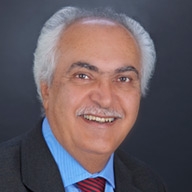
Soroosh Sorooshian is a Professor at the Samueli School of Engineering , University of California, Irvine, with joint appointments in Civil and Environmental Engineering and Earth System Science . He serves as Founding Director of the Center for Hydrometeorology and Remote Sensing (CHRS) and holds the Samueli Endowed Chair in Engineering . His expertise spans hydrometeorology, climate-water interactions, remote sensing applications, and water resource management in arid regions. Education : Ph.D. in Engineering (1978), Engineer Degree in Systems Engineering (1977), M.S. in Operations Research (1973), B.S. in Mechanical Engineering (1971). Leadership & Affiliations : Member of US National Academy of Engineering , International Academy of Astronautics , and multiple scientific bodies (AAAS, AGU, AMS, IWRA). Former advisor to NASA, NOAA, and UNESCO initiatives. Recent research focuses on machine learning integration for hydrological modeling , satellite precipitation product development , and climate change impact assessments . Key trends include deep learning for bias correction , multi-sensor precipitation fusion , and atmospheric river hydrology in California. Awards include the AGU Horton Medal , NASA Distinguished Public Service Medal , and Prince Sultan Bin Abdulaziz International Water Prize . He consults on urban flooding and surface hydrology challenges. Scientific Honors : Chinese Academy of Sciences Einstein Professorship (2014) UNESCO Great Man-Made River Water Prize (2007) AMS Walter Orr Roberts Lecturer (2009) Multiple Distinguished Educator Awards Advisory Roles : Served on committees for NASA, DOE, and World Climate Research Programme's Hydrology Commission.
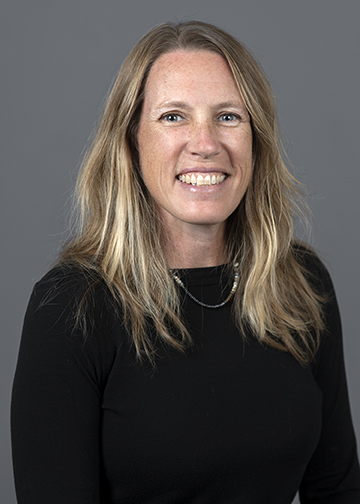
Terri S. Hogue is a Professor in the Department of Civil and Environmental Engineering at the Colorado School of Mines, where she also serves as Dean of Earth and Society Programs and Director of the Center for a Sustainable WE 2 ST. Her work bridges engineering, hydrology, and environmental sustainability, with a strong focus on semi-arid regions. Education: PhD in Hydrology and Water Resources, University of Arizona, 2003 MS in Hydrology and Water Resources, University of Arizona, 1998 BS in Geology, University of Wisconsin-Eau Claire, 1995 Her research focuses on hydrologic and land surface processes, particularly in the context of water resource management, climate variability, urbanization, and natural hazards. She integrates field observations, remote sensing, and modeling to study catchment responses to wildfires, urban development, and climate change. Her work emphasizes improving hydrologic forecasts and understanding human-environment interactions in water-limited systems. The 15 most recent publications highlight consistent themes in hydrologic modeling, remote sensing applications, evapotranspiration estimation, post-wildfire hydrology, and urban water systems. Her research spans both observational and computational methods, with strong applications to real-world water management challenges in the western U.S. Scientific Awards and Honors: NSF Faculty Early Career Development (CAREER) Award, 2009 NSF Fellowship Trainee Award (multiple years) NASA Earth Observing System (EOS) Graduate Fellowship, 2001–2002 AMS Journal of Hydrometeorology Editor’s Award, 2011 UCLA Professor of the Year (2004, 2007, 2010) Appointment to National Academy of Sciences Board on Atmospheric Sciences and Climate, 2013 AMS Science and Policy Colloquium Fellowship, 2002 Multitude of scholarships and fellowships from NASA, NSF, and professional societies Dr. Hogue has been actively involved in advising and research leadership through her Hogue Research Group and the Center for a Sustainable WE 2 ST. She has secured significant grants, including the NSF CAREER Award, and contributes to national science policy through service on the AGU Hydrology Section and the National Academy of Sciences. Her work emphasizes interdisciplinary collaboration, data-driven modeling, and sustainable solutions for water-stressed regions. She leads the Hogue Research Group and the Center for a Sustainable WE 2 ST, both of which focus on integrated water, energy, and environmental systems. These teams bring together engineers, hydrologists, and environmental scientists to tackle pressing sustainability challenges through research, education, and policy engagement.
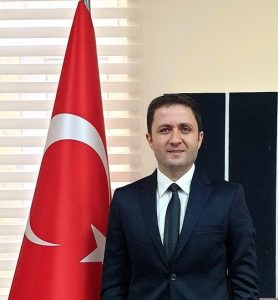
Dr. Veysel Gümüş is an Associate Professor at Harran University's Faculty of Engineering, Department of Civil Engineering, where he has been since 2014. His research focuses on turbulence modeling, computational fluid dynamics, hydrological drought analysis, and time-series trend analysis. Licence (2003), Master's (2006), and Doctorate (2014) in Civil Engineering from Harran and Çukurova Universities. His research interests span hydrological drought , computational fluid dynamics , climate trend analysis , and GIS applications in hydrology . His recent work emphasizes drought risk assessment, wind speed trends, and fluid flow simulations using AI techniques. Publications since 2023 highlight his expertise in Mann-Kendall tests , copula-based drought analysis , and CMIP6 climate projections across Turkey and Morocco. He has supervised over 15 graduate theses and served as an editor/hakem for 10+ journals, including ASCE and Theoretical and Applied Climatology.
Wei Ding is a Professor in the Department of Computer Science at the University of Massachusetts Boston (UMass Boston). She earned her Ph.D. in Computer Science from the University of Houston in 2008. From 2019 to 2023, she served as a Program Director at the National Science Foundation's Division of Information and Intelligent Systems (IIS), overseeing programs in Information Integration, Smart Health, Deep Learning Foundations, and Scalable Systems. Her research integrates knowledge discovery, data mining, and machine learning with applications spanning health sciences, astronomy, geosciences, and environmental sciences. She employs advanced techniques like spatio-temporal modeling, deep neural networks, and semantic analysis to address complex real-world problems such as disease subtyping, physical activity prediction, and environmental forecasting. Her work emphasizes interdisciplinary collaboration and societal impact. Analysis of her recent publications reveals a focus on AI-driven healthcare solutions (e.g., neuroimaging biomarkers, disorder diagnosis), fundamental ML advancements (e.g., generalization, GAN stability), and cross-domain applications (e.g., climate forecasting, animal behavior analysis). Recurring themes include low-data learning, interpretability, and scalable algorithms. Awards & Honors: IEEE Fellow (2023) NSF Director's Award (2022) WISAY Distinguished Woman in Science Award, Yale University (2019) AI for Earth Award (2018) Best Paper Awards (ICTAI 2011, ICCI 2010) Advising & Grants: She mentors PhD and Master’s students in the Knowledge Discovery Lab (KDLab), with alumni at institutions like Facebook, Google, and McKinsey. Her research is funded by NSF, NIH, NASA, and DOE, including: NIH R01: Predicting youth physical activity (2016) NSF EAGER: Machine learning for cancer subtyping (2017) NIH R01: Accelerometer/gyroscope data for activity estimation (2022) Leadership: She directs the KDLab and co-founded the Women in Sciences Club (WINS). She serves as Associate Editor for ACM TKDD, TIST, and KAIS journals.
Dr. Ali Nazemi is an Associate Professor in the Department of Building, Civil, and Environmental Engineering at Concordia University, where he joined in 2015 as a Strategic Hire in Water Resources. He holds adjunct appointments at the University of Saskatchewan's School of Environment and Sustainability and is an Associate Member of the Global Institute for Water Security. His foundational education includes a PhD from the University of Birmingham (UK), an MSc from Ferdowsi University of Mashhad (Iran), and a BSc from KNT University of Technology (Iran). Dr. Nazemi's research advances methodologies for water security challenges under climate change, focusing on: Hydrological modeling and algorithm development Climate change vulnerability assessments Coupled human-water systems Hydroclimatic data diagnostics His recent publications predominantly explore climate model integration, uncertainty quantification in water systems, and hybrid modeling approaches, with consistent themes of climate adaptation and risk management across Canadian and international contexts. He has been recognized with several awards, including: Dorothy Hodgkin Postgraduate Award (UK government, 2005–2009) Best Presentation Award at IEEE World Congress on Computational Intelligence (2006) Post Graduate Teaching Award (University of Birmingham, 2004–2007) Dr. Nazemi actively supervises graduate students through his Water Security and Climate Change (WSCC) lab, with projects on climate downscaling, vulnerability assessment tools, and coupled human-water systems. He leads research collaborations with the Saskatchewan Water Security Agency, NSERC's Changing Cold Region Network, and the Global Water and Energy Cycle Experiment.
Diane M. Styers is an Associate Professor in the Department of Geosciences and Natural Resources at Western Carolina University's College of Arts and Sciences. Her work integrates geospatial technologies with community engagement to address global climate resilience challenges through human-centered research approaches. Her educational qualifications include: Postdoctoral Research in Remote Sensing and Geospatial Analysis, University of Washington Ph.D. in Forest Ecology, Auburn University M.A. in Geography, Georgia State University B.S. in Human Development & Family Studies, University of North Carolina at Greensboro Dr. Styers specializes in public participatory GIS (PPGIS) to incorporate local landscape knowledge into climate adaptation strategies. Her technical expertise spans LiDAR data analysis, object-based image analysis (OBIA), MODIS/Landsat time series, multi-sensor integration, forest ecology, and dendroecology. She investigates how social-ecological processes drive landscape changes affecting Earth's resources, with particular focus on community resilience against climate-related risks. Her publication record reveals strong thematic trends in applying geospatial methods to socio-ecological systems, with increasing emphasis on rivercane conservation, forest community dynamics in Appalachia, biodiversity education using NEON data, and vector-borne disease mapping. Recent works demonstrate sophisticated integration of remote sensing with community-based adaptation frameworks. Dr. Styers actively mentors students through co-authored publications and teaches diverse courses including Introduction to Geospatial Analysis, Remote Sensing, GIS applications, and field-based programs like Sustainability in Costa Rica. Her instructional approach emphasizes authentic science engagement using big data resources.
Prof. Chong-Yu Xu is a Professor of Hydrology at the University of Oslo's Department of Geosciences, affiliated with the Section for Geography and Hydrology (GeoHyd). He has held this position since 2005, having previously served as an Associate Professor at Uppsala University (1998–2005) and Assistant Professor (1994–1998). His research focuses on hydrological modeling, climate change impacts, regional evapotranspiration, and uncertainty analysis. He teaches courses such as GEO4310 (Stochastic Methods in Hydrology) and GEO4320 (Hydrological Modelling). Education: BSc in Hydrology (Nanjing University, 1978–1982), MSc in Regional Hydrological Modeling (Free University Brussels, 1986–1988), and PhD in Hydrological Modelling (Free University Brussels, 1988–1992). He has been honored with prestigious awards, including the NHF Lifetime Achievement Award (2022) and IWA Publishing Award (2022). He serves as an honorary professor at institutions like Hohai University and is a doctoral supervisor at multiple universities. His research spans global, regional, and local hydrological modeling, with a focus on climate change adaptation and water resource management. He leads projects such as the NORHED-II initiative on climate change and ecosystem management in Malawi and Tanzania. His work bridges theoretical hydrology with practical applications, including flood risk reduction and hydropower optimization. Publications highlight advancements in hydrological extremes, non-stationary drought assessment, and AI-driven flood prediction. Collaborative efforts with international networks like the Nordic Hydrological Association underscore his global impact in hydrological sciences.
Jeff Sadler is an Assistant Professor in the Department of Biosystems & Agricultural Engineering at Oklahoma State University, where he also serves as an Extension Specialist for Water Resources with OSU Extension. He leads the WaDE (Water Data and Education) Lab, focusing on data science and machine learning applications in water resources. Education: PhD in Civil and Environmental Engineering, University of Virginia (2019) MS in Civil Engineering, Brigham Young University (2015) BS in Civil Engineering, Brigham Young University (2013) Research Interests: Jeff’s research lies at the intersection of data science and water resources. He specializes in machine learning, particularly physics-guided and process-aware deep learning, for modeling stream temperature, water quality, flood dynamics, and hydrological forecasting. His work emphasizes real-time decision support, reproducible modeling, and integrating domain knowledge into data-driven systems. Recent Research Trends: His recent publications demonstrate a strong focus on advanced deep learning architectures (e.g., graph neural networks, recurrent models), data assimilation, multi-task learning, and surrogate modeling for environmental systems. Applications center on the Delaware River Basin and coastal Virginia, with implications for climate change adaptation and infrastructure resilience. Scientific Awards: No awards explicitly listed in the provided text. Advising and Grants: Jeff mentors graduate students and supervises master's and doctoral research. He is actively funded through multiple grants from the USDA, NOAA, and USGS, supporting projects in water quality monitoring, rural health, evapotranspiration forecasting, and integrated hydrological modeling. Labs and Teams: He leads the WaDE Lab, which develops data-driven tools for water resource education and management. He has collaborated extensively with researchers from the U.S. Geological Survey, University of Virginia, and other institutions on cyberinfrastructure, reproducible modeling, and environmental machine learning.
Jonathan M. Winter is an Associate Professor in the Department of Geography and an Adjunct Associate Professor in the Department of Earth Sciences at Dartmouth College . His research explores climate prediction and the impacts of climate variability and change on human health , water resources , and agriculture . He focuses on drivers of tickborne disease expansion, future water availability for irrigation, high-resolution climate projections, uncertainty in regional climate models, and the predictability of climate extremes in the Northeastern United States. Education : PhD and MS from Massachusetts Institute of Technology , BS from SUNY College of Environmental Science and Forestry . Research Interests : Climate impacts on agriculture and human health, bias correction of climate data, crop modeling, extreme precipitation analysis, and Lyme disease expansion. Teaching : Courses on Global Climate Change , Water Resources , and Climate Change Effects on Agriculture . Labs & Teams : Leads the Dartmouth Applied Hydroclimatology Group (AHCG) , mentoring graduate and undergraduate researchers. Publications : Recent work includes high-resolution climate projections , water scarcity implications , and climate-agriculture interactions , with a focus on the Northeastern U.S. and global croplands. Contact : Jonathan.M.Winter@dartmouth.edu | Phone : 603-646-6456
Li Li is a Professor in the Department of Civil and Environmental Engineering at Pennsylvania State University. She leads the Li Reactive Water research group, focusing on the Critical Zone and its response to climate change and human activities. Her work examines interactions between water, soils, rocks, roots, and microbes, with implications for water quality and sustainability. Research interests include reactive transport modeling, stream chemistry dynamics, and the impacts of climate extremes on hydrological systems. She has contributed to high-profile studies such as the discovery of ancient carbon release via rivers and the effects of extreme rainfall on nutrient loss in American soils. Recent recognitions include dual awards from the Earth and Space Association (2024) and being named an Institute of Energy and the Environment Fellow. Her lab actively collaborates on projects like the BioRT-HBV model and applications of deep learning in hydrological data analysis. Key projects: Facilitating environmental investigations with single-column models, maximizing CO₂ trapping in geological formations Leadership roles: IEE Fellow, Principal Investigator of NSF-funded research
Ibrahim Demir serves as an Adjunct Associate Professor in the Department of Civil and Environmental Engineering at the University of Iowa's College of Engineering, while also holding an Associate Faculty Research Engineer position at IIHR—Hydroscience and Engineering. His interdisciplinary work bridges hydroinformatics, environmental engineering, and advanced computing technologies to address critical water resources challenges through innovative digital solutions. His educational background includes a PhD in Environmental Informatics and Control Program from the University of Georgia (2010), an MS in Environmental Engineering from Gebze Institute of Technology (2004), and a BS in Chemistry from Bogazici University (2000). This foundation supports his integration of chemical, environmental, and computational sciences in hydrological research. Dr. Demir's research centers on hydroinformatics and AI-driven environmental systems, with core expertise in scientific visualization, cyber systems design, and virtual/augmented reality applications. He develops web-based frameworks for flood risk assessment, drought analysis, and water quality management, emphasizing real-time data integration and user-friendly interfaces. Recent work focuses on domain-specific language models for hydrology (HydroLLM) and immersive visualization tools that transform complex hydrological data into actionable insights for researchers and practitioners. Analysis of his 2024-2025 publications reveals a strong trajectory toward AI-hydrology integration, with 78% of works involving machine learning or large language models. Key themes include flood risk communication (22% of publications), algal bloom prediction (15%), and educational technology applications (12%). His research increasingly emphasizes scientific reproducibility through no-code visual programming frameworks and digital twin implementations for watershed systems. Dr. Demir actively contributes to scholarly discourse as Associate Editor for Environmental Modeling and Software, Journal of Hydroinformatics, Journal of Environmental Informatics, and Water and Artificial Intelligence (Frontiers in Water). He serves as Vice-Chair of the International Joint Committee on Hydroinformatics (IAHR/IWA/IAHS) leadership team, shaping global standards in hydroinformatics research and practice. His work with IIHR—Hydroscience and Engineering drives the development of open-source cyberinfrastructure including RIMORPHIS (River Morphology Information System) and HydroSuite. These platforms enable collaborative river morphology research and provide modular tools for hydrological analysis, education, and operational decision support, demonstrating his commitment to accessible, community-driven scientific advancement.
Philip Brunner is a Professor of Hydrogeology at the University of Neuchâtel's Faculty of Science since 2012. He is based at the Center for Hydrogeology and Geothermics (CHYN), leading the Laboratory of Hydrogeological Processes. His work centers on sustainable water resource management through quantitative tools. He earned his PhD from ETH Zurich, focusing on sustainable salt and water management in Western China's agricultural basins. Post-PhD, he conducted three years of postdoctoral research in Australia, developing new approaches for simulating river-aquifer interactions. Brunner's research spans surface water-groundwater interactions, numerical modeling, and remote sensing. He integrates methods from numerical modeling, remote sensing, scientific computing, and isotopic chemistry. His interdisciplinary collaborations with mathematicians, biologists, and physicists address challenges in agriculture, ecohydrology, engineering, and sustainable resource management. Recent publications highlight innovative tracer techniques (noble gases, microbes), low-cost monitoring systems, and advanced numerical models. His work tackles climate change impacts on ecosystems, groundwater in conflict zones, and sustainable practices in diverse environments including mountains and agricultural regions. He teaches courses such as Introduction to Hydrological Processes (Master), Numerical Modeling (Master), Remote Sensing (Master), and Introduction to Soil Physics (Bachelor, in French). His laboratory serves as a center for experimental and computational hydrogeological research.
Summer Rupper is a Professor at the School of Environment, Society & Sustainability at the University of Utah, where she has held her position since July 2019. Her research focuses on understanding the interactions between climate, glaciers, and water resources, with particular emphasis on high mountain regions including High Mountain Asia, the Himalayas, and polar regions. She leads multiple research projects examining glacier dynamics, hydrological processes, and climate change impacts on water security for downstream populations. BS in Geology from Brigham Young University (2001) MS in Geology from University of Washington (2004) PhD in Earth and Space Sciences from University of Washington (2007) Professor Rupper's research spans physical geography, environmental geoscience, and climate change science, with specific expertise in glaciology, hydrology, and atmospheric sciences. Her work integrates field measurements, remote sensing, and numerical modeling to understand glacier dynamics, snow processes, and water resource availability in mountainous regions. She has particular expertise in High Mountain Asia, where glaciers provide critical water resources for over a billion people. Her research addresses fundamental questions about glacier response to climate change, hydrological partitioning, and the implications for water security in vulnerable regions. Her recent publications demonstrate a consistent focus on understanding glacier dynamics, hydrological processes, and climate interactions in mountainous regions. The work spans multiple methodologies including remote sensing analysis, numerical modeling, statistical approaches, and field-based measurements. Key themes include glacier melt contributions to river systems, precipitation patterns in complex terrain, snow density modeling, and the impacts of climate change on water resources in High Mountain Asia and polar regions. Her research often integrates multiple data sources and approaches to address complex questions about cryospheric processes and their societal implications. Superior Research Award (2024, CSBS, University of Utah) G.K. Gilbert Award for Excellence in Geomorphic Research (2022) Outstanding Utah Higher Education Science Teacher (2021) Top Researcher Award, Celebrate U showcase (2017) Antarctic Service Medal (2010, USAF) Professor Rupper actively mentors graduate students through thesis research courses at both the PhD and Master's levels, as well as individual projects. She has secured significant research funding from multiple federal agencies including NSF, NASA, and USAID, with current projects examining climatic controls on Antarctic ice sheets, glacier dynamics in High Mountain Asia, and historical glacier changes. Her collaborative work extends across international boundaries, working with scientists in Pakistan, Bhutan, and other regions to address shared water security challenges. She also engages in community outreach through workshops with school districts and science teacher associations to communicate climate science to broader audiences. Professor Rupper participates in multiple collaborative research teams including the NASA High Mountain Asia Team (HiMAT), where she contributes expertise in glacier dynamics and hydrology. She serves on several scientific committees including the NSF Ice Core Facility Sample Allocation Committee and the American Geophysical Union Cryosphere Section Fellows Committee. Her research often involves interdisciplinary teams combining expertise in glaciology, hydrology, remote sensing, and climate modeling to address complex questions about mountain water systems under changing climate conditions.
Rabin Bhattarai is an Associate Professor in the Department of Agricultural and Biological Engineering at the University of Illinois Urbana-Champaign. His research focuses on understanding climate change impacts on agricultural systems, water quality management, and extreme weather event analysis. He has collaborated on projects involving crop yield optimization, nitrate loss reduction, and the development of novel biochar-based nutrient capture systems. His work integrates modeling tools such as SWAT and DRAINMOD to assess subsurface drainage systems and their environmental impacts. Key contributions include a globally recognized water quality database for lakes and studies on extreme precipitation regimes in Illinois. Bhattarai's publications emphasize interdisciplinary approaches, combining hydrology, climate science, and engineering to address agricultural sustainability challenges. Recent research highlights include analyzing socially vulnerable communities' exposure to compound extreme heat and precipitation events in the Upper Midwest and evaluating probabilistic approaches for extreme weather prediction. His datasets, such as the Framework of Simulating Structural Sediment Perimeter Barriers, demonstrate commitment to practical applications in erosion control and environmental engineering. Research Strengths: Climate-Driven Agricultural Systems, Hydrological Modeling, Sustainable Nutrient Management Notable Projects: Cover Crop Decision Support Tool, DIRECT4AG Project Series
R. Edward Beighley is the COE Distinguished Professor and Interim Chair of Civil and Environmental Engineering at Northeastern University. He is also affiliated with the Marine and Environmental Sciences program. His research focuses on hydrologic and hydraulic modeling, remote sensing of the hydrologic cycle, and flood hazard assessment. He holds a Ph.D. from the University of Maryland (2001), an M.S. from Pennsylvania State University (1996), and a B.S. from the same institution (1995). Key honors include the 2024 Distinguished Faculty Award, 2019 Fostering Engineering Innovation Award, and leadership roles in NASA’s SWOT Satellite Mission. His work emphasizes sustainable water resource management through interdisciplinary approaches combining remote sensing, field data, and hydrologic models. Research projects include evaluating microplastic accumulation in floodplains, global river baseflow analysis via GRACE/GRACE-FO satellites, and improving SWOT discharge estimation algorithms. The Beighley Lab collaborates on flood risk assessment and climate change impacts at local to global scales. Grants: SWOT Science Team (NASA), NSF Microplastics Project, North Carolina Hurricane Relief Research. Students: Advises PhD student Max Rome on floating wetlands and urban water quality. Labs/Teams: Beighley Lab focuses on terrestrial water systems and satellite applications.