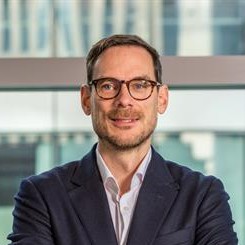
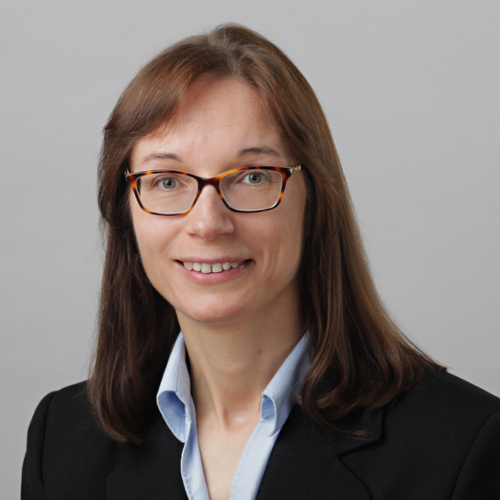
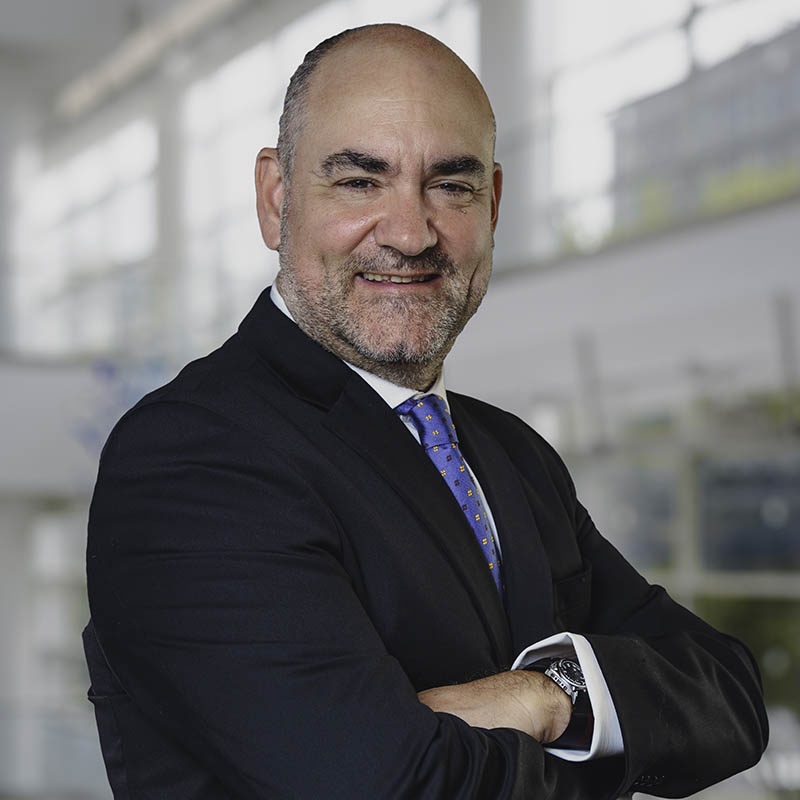
Dhananjay Nanda is a Professor at the Miami Herbert Business School , University of Miami , specializing in Accounting . His research spans corporate governance, financial reporting quality, CEO disclosure behaviors, and nonprofit board dynamics. Academic Rank: Professor Department: Accounting Email: d.nanda@miami.edu Phone: (305)284-3122 Key research themes include: Corporate governance and board composition dynamics CEO disclosure patterns and tenure effects Voluntary disclosure mechanisms and capital market impacts Nonprofit organizational performance International convergence of accounting standards His publications demonstrate interdisciplinary engagement with economics, finance, and organizational theory. He has contributed extensively to top-tier journals including the Journal of Accounting Research , The Accounting Review , and Journal of Management Accounting Research . Current work examines global governance diffusion and regulatory impacts on disclosure practices.
Jeanette Willert is an Associate Professor at the Department of Accounting , Copenhagen Business School , specializing in Management Control Systems and Accounting Information Systems . Her research explores cross-cultural management practices, corporate governance, and digital transformation in accounting. Education: PhD in Management Control Systems, Copenhagen Business School (2016) She has published extensively on cultural influences on management controls, regulatory compliance in digital systems, and organizational performance. Her work includes empirical studies across Nordic, Anglo-Saxon, and Germanic cultural regions. Advising: Supervises graduate and diploma theses in Accounting Information Systems She also contributes to media discussions on Danish accounting legislation and participates in projects analyzing ERP system effectiveness.
Stefan Haefliger is Professor of Strategic Management & Innovation at Bayes Business School, City, University of London. His research focuses on business model innovation, open strategy, and organization theory in technology-driven environments. Key research streams: Business model portfolios and corporate strategy diversification Organization theory and technology-mediated regulation Open strategy and innovation ecosystems His work examines how technology transforms organizational practices, with empirical studies on compliance systems in investment banks and digital infrastructure governance. Recent projects explore modularity in R&D teams, digital resilience, and human-AI interaction in organizations.
Frank T. Rothaermel is Regents' Professor and Russell B. and Nancy H. McDonough Chair in Business at the Scheller College of Business , Georgia Institute of Technology. He is also an Alfred P. Sloan Industry Studies Fellow and recipient of the NSF CAREER Award. Named among the world's top 2% most-cited researchers by Stanford's Meta-Research Innovation Center, his work focuses on strategy, innovation, and entrepreneurship. Ph.D. in Strategic Management, University of Washington MBA, Marriott School of Management, Brigham Young University Diplom-Volkswirt (M.Sc. equivalent), University of Duisburg-Essen, Germany Rothaermel's research examines dynamic capabilities , technological discontinuities , and university entrepreneurship . His empirical studies span biotech/pharma industries, high-tech startups, and interfirm alliances, with particular emphasis on knowledge networks , appropriability strategies , and innovation ecosystems . His 15 most recent publications analyze topics like academic startup performance, coopetition dynamics, disruption processes, and alliance management. Key themes include technology transfer mechanisms , complementary assets , and knowledge flow optimization in innovation contexts. NSF CAREER Award Sloan Industry Studies Best Paper Award Byars Faculty Excellence Award Thomson Reuters World's Most Influential Scientific Minds Poets & Quants Favorite MBA Professor (multiple times) As educator, he authored a leading Strategic Management textbook (6th ed., 2023), translated into four languages, and 70 Harvard Business Publishing case studies (27 bestsellers). His industry collaborations include Amgen, Microsoft, and Mercedes-Benz, while holding visiting professorships at institutions in Germany, Singapore, and Switzerland.
Dr. Jooh Lee is a Professor of Management at Rowan University's William G. Rohrer College of Business. He holds a Ph.D. in Management Science from the University of Mississippi and an M.S. from Colorado State University. His research examines operational linkages between strategy and performance, with emphasis on sustainability, reputation, CEO compensation, and technology impacts. Lee has published over 130 scholarly articles focusing on international business strategy and operational efficiency. His recent work analyzes ESG performance, R&D-exports synergies, and reputation- compensation relationships using advanced modeling techniques. Research methodologies include neural networks, comparative international analyses, and longitudinal performance studies. Honors include holding The Campbell Professorial Chair. His teaching portfolio includes Operations Management, Managerial Decision Making Tools, and Business Forecasting at MBA and undergraduate levels.
Greg Wright is an Associate Professor of Economics at the University of California, Merced , affiliated with the School of Social Sciences, Humanities and Arts and Social Sciences & Management department. He also holds a Non-Resident Senior Fellow position at Brookings . His research focuses on International Trade , Immigration Economics , and Economic Growth , with particular emphasis on: Labor market responses to globalization Immigration's role in economic development ICT's impact on income distribution Trade liberalization effects Workforce planning for energy transitions Policy tools for urban economic growth Recent publications analyze the second wave of globalization's local incidence, immigrant workforce support for U.S. jobs, and workforce development programs' optimization. His work appears in journals like Journal of International Economics , European Economic Review , and American Economic Review . Wright earned his PhD in Economics (2011), MA in Economics (2006) from UC Davis, and BA in Astrophysics (1998) from UC Berkeley. He explores intersections between immigration, offshoring, and technological change through empirical studies and policy analysis.
Laura Poppo, currently the Donald and Shirley Clifton Chair in Leadership at the University of Nebraska-Lincoln, has held faculty positions at Washington University, Virginia Tech, and the University of Kansas. Her research in strategic management influences diverse disciplines, with over 8900 Google citations. Academic Rank: Professor Department: Management Alma Mater: Ph.D. from Wharton School, University of Pennsylvania Her research focuses on outsourcing, alliances, vertical integration, contracting, trust , and business dynamics in China. Current work explores problem-solving, creativity, innovation, identity, and trust-repair in organizational contexts. Notable contributions include publications in top journals like Strategic Management Journal , Organization Science , and Journal of International Business Studies . Her 2019 Dan and Mary Lou Schendel Best Paper Prize recognizes her impactful research on contract and trust complementarity. In teaching, she applies empirically validated frameworks to enhance decision-making for undergraduates, graduates, and professionals, evidenced by the student-voted Bubb Award. Her expertise spans strategic planning, complex problem-solving, and CliftonStrengths®-based leadership development.
Lesia Mitridati is an Assistant Professor at the Department of Wind and Energy Systems, Technical University of Denmark (DTU). Her research focuses on optimizing energy systems, particularly in renewable energy integration, energy market design, and prosumer behavior modeling. She leads and collaborates on projects involving smart grids, distributed energy resources, and privacy-preserving market mechanisms. Her work contributes to UN Sustainable Development Goals related to affordable and clean energy. Key projects include AI-driven electricity market optimization, hydrogen-wind trading strategies, and risk-aware energy communities. She supervises multiple PhD students in areas like VPP bidding strategies and market-based heat-electricity coordination. Dr. Mitridati has published widely on energy communities, grid services, and reinforcement learning applications. Notable contributions include dynamic pricing frameworks for grid services and privacy-preserving market mechanisms. She co-organizes annual DTU summer schools on future energy systems and AI-driven optimization. Her research integrates machine learning with operational research techniques to address challenges in renewable energy integration, market design, and system resilience. Current initiatives focus on electrolyzer plant bidding strategies and feature-driven trading of renewable resources.
Seungjin Han is a Professor in the Department of Economics at McMaster University, specializing in economic theory with applications in game theory, mechanism design, and public policy. His work bridges theoretical rigor with practical economic questions in taxation, matching markets, and corporate finance. His academic foundation includes a Bachelor of Economics from Korea University, Seoul; Master of Arts in Economics from McGill University, Montreal; and PhD in Economics from the University of Toronto. Research interests center on competing mechanism games, signaling theory, and market design. Key contributions address equilibrium analysis in strategic environments, tax incidence in differentiated markets, and incentive structures in matching frameworks. His theoretical work frequently appears in top journals like the Journal of Economic Theory and Journal of Mathematical Economics. Recent publications (2021-2025) reveal consistent focus on competing mechanisms and signaling dynamics, with growing emphasis on policy-relevant applications in public finance and labor markets. Over half his work involves collaborative research networks spanning international institutions. Teaching encompasses graduate-level Microeconomic Theory (ECON 721), Mathematical Methods (ECON 765), and Advanced Economic Theory (ECON 4T03) since 2017, reflecting deep engagement with core economic methodology.
Adam M. Brandenburger is the J.P. Valles Professor at the Leonard N. Stern School of Business, New York University, with additional appointments as Distinguished Professor at the Tandon School of Engineering, Faculty Director of the NYU Shanghai Program on Creativity + Innovation, and Global Network Professor. He previously served as a professor at Harvard Business School from 1987 to 2002. His academic foundation includes a B.A., M.Phil., and Ph.D. from the University of Cambridge. His research focuses on game theory , epistemic game theory , quantum game theory , and business strategy . He has made foundational contributions to the understanding of rationality, belief hierarchies, and the intersection of quantum mechanics with decision theory. His work spans economics, philosophy, computer science, and cognitive neuroscience, reflecting a deeply interdisciplinary approach. The recent publications show a strong trend toward integrating quantum foundations , information theory , and behavioral economics . Themes include epistemic reasoning in non-classical systems, the role of symmetry in strategic interactions, and the neural basis of decision-making. His work increasingly explores the limits of classical probability and cognition, using tools from quantum information and sheaf theory. While no formal scientific awards are listed, his publications in Nature Communications , Econometrica , and Philosophical Transactions of the Royal Society indicate high scholarly impact. His collaborations with leading researchers across disciplines suggest a central role in advancing interdisciplinary science. He advises and collaborates extensively, though specific students are not listed. His leadership in the NYU Shanghai Program on Creativity + Innovation highlights his commitment to global education and innovation. He has not received any grants explicitly mentioned, but his sustained publication output suggests active funding support. He is associated with research initiatives bridging game theory, quantum information, and cognitive science. His recent unpublished work on quantum-assisted observatories and large language models points to forward-looking research at the intersection of AI, quantum technology, and strategic reasoning.
Jan Bena is an Associate Professor and Chair of the Finance Division at the Sauder School of Business, University of British Columbia. He holds dual PhDs in Finance (London School of Economics) and Economics (CERGE-EI). His research focuses on innovation, corporate finance, and entrepreneurship, with notable contributions to understanding corporate innovation dynamics, ownership structures, and the interplay between finance and global markets. He leads initiatives such as the Portfolio Management Foundation Program and advises the UBC SWIFT: Sauder Women in Finance Training Program. He also holds the Bank of Montreal Chair in International Finance. His research interests span corporate innovation (process and technological), decentralized finance (DeFi), private equity ownership structures, and the impact of global factors on firm behavior. He has developed influential datasets, including the Global Corporate Patent Dataset and Process Innovation Patent Dataset, which analyze innovation trends across industries and countries. His work frequently addresses topics like multinational corporation strategies, labor market interactions, and financial market dynamics. Key contributions include studies on how employment protection laws influence innovation, the propagation of economic downturns through multinational firms, and the long-term effects of foreign institutional ownership. His articles consistently address critical questions in corporate finance, combining theoretical models with empirical evidence from large datasets. He teaches courses on entrepreneurial finance and private equity, reflecting his expertise in these areas. Bena collaborates with leading institutions and scholars globally, contributing to both academic discourse and practical frameworks for financial decision-making. His work bridges theoretical innovation with real-world applications, influencing policy and business strategies in areas like sustainability, technological transition, and corporate governance.
Maria Arbatskaya is an Associate Professor in the Department of Economics at Emory University. Her research focuses on Industrial Organization and Applied Game Theory, exploring topics such as contests, consumer behavior, regulatory policies, and referral mechanisms. She holds a PhD in Economics from Indiana University (1999), an MA from the New Economic School in Moscow (1995), and a Diploma in Applied Mathematics from Moscow State University (1993). Her work examines strategic interactions in markets, including dynamic contest structures, regulatory impacts on business practices, and the role of consumer attention in product risk management. Recent studies analyze the effects of anti-corruption legislation on global competitiveness and the design of effective referral systems in chain networks. Arbatskaya’s research often bridges theoretical models with real-world applications, contributing to policy debates on market regulation and competition. Publications span dynamic contests, multi-activity competition, and search market dynamics, reflecting her interdisciplinary approach to economic theory. She maintains an active academic profile through her personal website and contributions to Emory’s economics research initiatives.
Pedro Gardete is a Professor of Marketing at Nova School of Business and Economics (Nova SBE), where he also serves as President of the Scientific Council. He is an active researcher in quantitative marketing, focusing on consumer behavior, pricing, advertising, and data-driven strategies. Prior to joining Nova SBE in 2020, he was a faculty member at Stanford Graduate School of Business from 2011 to 2019. Education: Ph.D. in Business Administration (Marketing), University of California, Berkeley (2011) M.Sc. in Economics, magna cum laude, Catholic University of Portugal (2007) B.A. in Business Administration, Catholic University of Portugal (2003) His research lies at the intersection of marketing, economics, and data science. He investigates how information shapes market outcomes, with a focus on pricing strategies, advertising credibility, privacy policies, and consumer search behavior. His work often combines empirical analysis, game theory, and field data to inform both academic theory and business practice. The recent publications highlight a consistent trend in understanding strategic communication, information design, and consumer decision-making under uncertainty. His work spans domains such as retail, aviation, digital advertising, and technology markets, demonstrating methodological rigor and practical relevance. He frequently publishes in top-tier journals like Marketing Science and Management Science . Scientific Awards: No awards explicitly mentioned in the text. Professor Gardete actively contributes to academic leadership and education. He is involved in organizing the 2026 INFORMS Marketing Science Conference and shares teaching materials, including PhD-level econometrics notes and a data analytics simulation tool. While no formal students are listed, his role at Nova SBE and Stanford suggests an active mentorship and advising capacity. He has collaborated with leading scholars across institutions, reflecting strong academic engagement. His research has practical implications for firms in pricing, advertising, and data strategy. Labs and Teams: While no formal lab is named, his research involves collaboration with interdisciplinary teams and engagement with industry partners in semiconductor, aviation, and retail sectors. His leadership in the Scientific Council at Nova SBE indicates institutional influence and academic governance involvement.
Marco Ceccagnoli is a Professor and Brady Family Professor in Management at the Scheller College of Business, Georgia Institute of Technology. He serves as the PhD Coordinator for the Strategy & Innovation area and teaches strategic management and technology strategy across undergraduate, MBA (full-time, evening, and executive), and PhD programs. His research focuses on the economics and management of innovation, particularly how firms appropriate value from innovation through intellectual property, knowledge spillovers, and strategic governance. His research interests include: Innovation Management and Appropriability Technology Strategy and Markets Intellectual Property and Open Source Software Knowledge Spillovers and Absorptive Capacity Corporate Venture Capital and Digital Platforms Complementary Assets and Organizational Governance The recent articles show a strong focus on empirical investigations of innovation value capture, digital platform ecosystems, and the role of firm capabilities in technology integration. His work spans disciplines including strategic management, information systems, industrial organization, and innovation economics, often bridging theory and practice with data-driven insights from enterprise software, R&D labs, and technology markets. His scientific awards include: William W. Cooper Doctoral Dissertation Award in Management or Management Science European Association for Research in Industrial Economics Award Best Doctoral Dissertation Award (runner-up), Academy of Management (TIM Division) Best Paper Award, Cooperative Strategy Interest Group, Strategic Management Society (SMS) ICIS Best Paper Award (runner-up) Marco Ceccagnoli advises PhD students in the Strategy & Innovation area and contributes to research grants and collaborative projects with institutions globally. He has served as a reviewer for top journals such as Management Science, Strategic Management Journal, and Research Policy. His work is frequently cited and has influenced both academic and practitioner understanding of innovation strategy. He is actively involved in research initiatives such as the Roundtable for Engineering Entrepreneurship Research (REER), which brings together scholars in technology and innovation management.
Armağan GÖZKAMAN is a Professor in the Department of International Relations at Istanbul Beykent University, Faculty of Economics and Administrative Sciences. He has held academic positions at Beykent University since 2012, progressing from Assistant Professor to full Professor in 2021. Previously, he served as Assistant Professor at Istanbul Aydın University and Research Assistant at Istanbul Technical University. Professor, Istanbul Beykent University (2021–present) Associate Professor, Beykent University (2015–2021) Assistant Professor, Beykent University (2012–2015) Assistant Professor, Istanbul Aydın University (2010–2012) Research Assistant, Istanbul Technical University (2004–2010) His research focuses on European Union politics, Turkish foreign policy, EU-Turkey relations, migration diplomacy, and security and defense policy. He has published extensively in international and national peer-reviewed journals, with recent work analyzing Ukraine’s EU accession, EU-NATO complementarity, and Turkey’s foreign policy in the Ukraine war. His teaching includes courses on the European Union, Turkish foreign policy, international law, and political theory. The 15 most recent articles demonstrate a strong focus on the European Union’s role in security, migration, and enlargement, particularly in relation to Turkey and Ukraine. Key themes include normative power, securitization theory, diplomatic framing, and the political economy of conflict. His publications appear in journals indexed in SSCI, ESCI, AHCI, and TR INDEX, reflecting broad academic recognition. Scientific awards and recognitions include: Jean Monnet Scholarship, Ministry of Foreign Affairs, Türkiye (2000) Co-advisory PhD Scholarship, France (2006) He has supervised numerous master’s theses on topics such as Turkish foreign policy, EU integration, energy security, and migration. Administrative roles include Head of Department (2016), Erasmus Coordinator (2014), and Director of a Research and Application Center (2019–2024). He is an active member of the International Political Science Association, American Political Science Association, and International Studies Association. Professor GÖZKAMAN is actively engaged in research, publication, and academic administration, indicating sustained scholarly activity and institutional leadership.