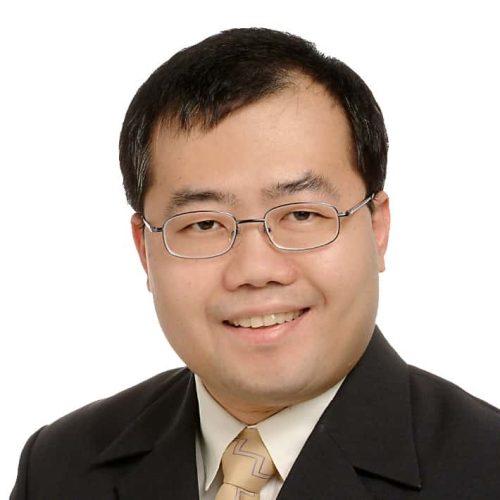
Thibault Laurentjoye is an Assistant Professor at Aalborg University Business School, Faculty of Social Sciences and Humanities, specializing in macroeconomic methodology, theory, and economic policy (MaMTEP). His work focuses on empirical stock-flow consistent models, monetary policy, income distribution, and international economic dynamics. Research Interests Laurentjoye’s research bridges macroeconomics, econometrics, and post-Keynesian economics. Key areas include currency options for political entities (e.g., Wales/Scotland), inflation dynamics, and structural economic modeling for Denmark. His work often addresses real-world policy challenges like unemployment insurance, current account imbalances, and exchange rate mechanisms. Selected Publications His recent publications (2024–2025) emphasize stock-flow consistent models, inflation hierarchies, and currency policy debates. Notably, he has contributed to the Journal of Post Keynesian Economics and edited volumes on sustainability and economic methodology. Academic Activities Active in professional engagements, Laurentjoye has participated in Nordic Post-Keynesian conferences, collaborated with international institutions (e.g., Université de Picardie Jules Verne), and contributed to media discussions on Scottish currency independence since 2022. Labs/Teams He is affiliated with MaMTEP, a research unit dedicated to macroeconomic methodology and policy at Aalborg University Business School.
Richard Martin Lusby is an Associate Professor in the Department of Technology, Management and Economics at DTU Management, Technical University of Denmark. His academic work focuses on Operations Research with specialization in mathematical optimization applied to transportation and energy systems. His research spans railway scheduling, container logistics, maritime transport, and energy storage optimization. Department: Department of Technology, Management and Economics Section: Section for Operations Research, Division for Management Science Location: Building 358, Room 145A, Academy Road, 2800 Kgs. Lyngby, Denmark Contact: rmlu@dtu.dk, Tel: 45253084 ORCID: 0000-0002-8652-6219 Professor Lusby's research interests center around mathematical optimization methods applied to complex transportation and energy systems. His work spans railway scheduling problems, container logistics optimization, maritime transport operations, and energy storage scheduling. He develops advanced algorithms including Lagrangian Relaxation, Benders decomposition, and stochastic programming approaches to solve challenging real-world problems in these domains. His research has practical applications in improving efficiency and sustainability in transportation networks and energy systems. His recent publications demonstrate a strong focus on optimization techniques for transportation systems, particularly in railway operations and container logistics, as well as energy storage scheduling. The research shows a consistent pattern of developing sophisticated mathematical methods to address complex operational challenges in transportation networks, with increasing attention to sustainability considerations in maritime shipping and energy systems. Professor Lusby has been involved in significant research projects including the SWITCH project (Sustainable Network Design - Electrifying Container Shipping), which received funding from Den Danske Maritime Fond. This project explores how battery-powered ships could replace fossil fuels in global shipping through mathematical modeling and AI-driven optimization. He also supervises PhD students, including Georgios Vassos who completed a thesis on "Procurement Policy Analysis in Intermodal Container Logistics". His work has practical implications for improving efficiency in transportation networks, reducing environmental impact in maritime shipping, and optimizing energy systems operations. Through his research, Professor Lusby contributes to both theoretical advances in optimization methods and their practical applications in critical infrastructure sectors.
Christian Riis Flor is a Professor and Head of the Research Unit in Finance at the Department of Business & Management, Faculty of Social Sciences, University of Southern Denmark (SDU). He holds a Ph.D. and an M.Sc. in Mathematics-Economics and is actively engaged in research, teaching, and academic service. Department: Department of Business & Management (DBM) Research Unit: Finance (FIN) Email: crf@sam.sdu.dk ORCID: https://orcid.org/0000-0002-5537-1576 Education: M.Sc. in Mathematics-Economics Ph.D. Research Interests: Christian Riis Flor specializes in corporate finance, with a primary focus on dynamic corporate finance, capital structure, valuation under asymmetric information, real options analysis, and private equity. His work explores how firms make investment, financing, and dividend decisions under uncertainty and information asymmetry. Secondary interests include asset allocation and compensation models (P/A-models). He integrates theoretical modeling with empirical implications, particularly in the context of sustainable finance and incentive design. Recent Research Trends: His most recent publications (2021–2025) center on private equity, capital structure choices (callable vs. convertible debt), real options under imprecise learning, and exit strategies under market fluctuations. These works reflect a consistent theme of decision-making under uncertainty, with applications in both public and private firms. Keywords across these articles include corporate finance, private equity, real options, asymmetric information, and valuation, indicating a cohesive and impactful research trajectory. Scientific Awards: Best paper award: Portuguese Finance Network 4th Finance Conference (2006) Identifying the role of private equity firms in creating value (2016) The Firm's Life Cycle -- Investment and Financing Decisions (2019) Outstanding Reviewer Award 2021, Managerial Finance (2021) Special Teaching Award for Research Based Learning (2021) Supervision and Grants: Flor has supervised academic work and taught courses such as Dynamic Corporate Finance, Derivatives and Risk Management, and Real Options. He has led two major research projects: 'Identifying the role of private equity firms in creating value' (2016–2021) and 'The Firm's Life Cycle -- Investment and Financing Decisions' (2019–2020), both as Principal Investigator. These projects explored value creation in private equity and life-cycle financing strategies, respectively, and were funded within the university research framework. Labs and Research Teams: He is a key member of the Finance (FIN) research unit within the Department of Business & Management at SDU, contributing to a collaborative network focused on corporate finance, private equity, and dynamic information problems. He actively participates in research networks, peer review, and academic conferences, enhancing the unit's visibility and impact.
Hamid Raza is an Associate Professor at Aalborg University Business School, affiliated with The Faculty of Social Sciences and Humanities. His primary research focuses on macroeconomic modeling, stock-flow consistent frameworks, and policy analysis within the context of small open economies like Denmark. Raza leads the MaMTEP (Macroeconomic Methodology, Theory and Economic Policy) research unit and has contributed significantly to understanding unemployment insurance, income distribution, and financial stability through empirical models. Research Interests: Stock-flow consistent (SFC) macroeconomic models Unemployment benefits and macroeconomic policy Denmark's economy and structural dynamics Functional income distribution and wealth dynamics Financial cycles and household debt impacts Crisis analysis in small open economies Publications highlight his work on quarterly empirical models for Denmark, ecological SFC-IO frameworks , and policy simulations . Recent articles (2024–2025) emphasize model flexibility and environmental integration. His 2020 Teacher of the year award reflects his pedagogical contributions. Current projects include developing an Interactive Web-based Platform for Ecological Stock Flow Consistent Input-Output (E-SFC-IO) Model (2024), collaborating with Hamid Bekamiri to advance sustainability-linked macroeconomic tools. Labs/Teams: Active in the MaMTEP research unit, focusing on policy-relevant macroeconomic modeling and interdisciplinary collaboration.
Sebastian Valdecantos is an Associate Professor at Aalborg University Business School (Aalborg University) within the Faculty of Social Sciences and Humanities. His research focuses on macroeconomic modeling, stock-flow consistent frameworks, and the intersection of economic policy with sustainability and social innovation. He specializes in Latin American economies and has contributed to understanding inflation dynamics, green transition challenges, and complementary currency systems. Key research areas include: Stock-flow consistent modeling of national economies (Denmark, Colombia, Argentina, Peru) Economic policy analysis with a focus on income distribution and functional demand Cryptocurrencies' role in social economies (e.g., Moneda PAR in Argentina) Climate transition vulnerabilities in developing economies Recent work highlights tensions between green transition agendas and economic growth in South America, while his Danish economy models explore policy impacts on savings patterns and inflation. He co-led the 2023-2026 project 'Macroeconomics for Justice and Inclusive Growth' and received the 2022 Module Distinction award for teaching Macroeconomics IV. Peer-reviewed articles emphasize empirical rigor with 17+ contributions in 2023-2025 alone, spanning journals like Journal of Post Keynesian Economics and Sustainability Science . His work bridges post-Keynesian theory with policy-relevant applications in peripheral economies.
Simon Fløj Thomsen is a Research Fellow at Aalborg University Business School, part of the Faculty of Social Sciences and Humanities. His research focuses on macroeconomic modeling with an emphasis on ecological sustainability, unemployment policy, and environmental regulations. He holds a PhD Fellow position and is affiliated with the MaMTEP (Macroeconomic Methodology, Theory and Economic Policy) research group. Teaching responsibilities include Mathematics for Economists, Advanced Macroeconomics, Econometrics, and Causal Inference at both BA and MA levels. He has also developed data analysis courses using DataCamp's interactive platform. His key research areas include stock-flow consistent models, input-output analysis, and the evaluation of Danish unemployment policies. Recent work explores the Porter Hypothesis and carbon leakage under environmental regulations, as well as macroeconomic impacts of policy decisions. He has contributed to 6 peer-reviewed publications between 2024-2025. Recipient of the prestigious Inge Røpke Award (2023), he actively participates in academic networks such as the International Input-Output Association and organized/co-organized workshops like the 'Economic Policies in the Socio-Ecological Transition II' conference (2025). His research integrates ecological and economic systems through advanced modeling frameworks.
Santiago Graña Colella is a researcher at Aalborg University Business School, Faculty of Social Sciences and Humanities, specializing in macroeconomic methodology, theory, and economic policy through the MaMTEP research unit. Based in Aalborg, Denmark, he actively contributes to contemporary economic research with a focus on monetary systems and policy frameworks. His research interests center on macroeconomic theory with particular expertise in currency substitution phenomena, dollarization processes, and Post-Keynesian economic frameworks. Dr. Colella's work bridges theoretical economic models with practical policy applications, especially in developing economies as evidenced by his research on Argentina's monetary system between 2003-2019. His recent publication output demonstrates a clear focus on monetary economics and currency dynamics, with his 2024 article in PSL Quarterly Review analyzing alternative explanations for currency substitution patterns in Argentina. This work contributes to broader discussions about monetary sovereignty and foreign currency adoption in emerging economies. Dr. Colella maintains active professional engagement through conference participation and presentations, with upcoming activities scheduled through 2025 including the 6th Nordic Post Keynesian Conference and research on demographic supply constraints in Denmark using E-SFC-IO modeling approaches. He collaborates extensively within ecological economics frameworks, participating in multi-dimensional stock-flow consistent demand-led model research and socio-ecological transition policy analysis. His current work indicates a growing focus on integrating ecological considerations into macroeconomic modeling frameworks.
Robert Smith is a Lecturer at Aalborg University Business School and a Data Scientist within the CLAAUDIA research data services unit at Aalborg University's IT-Services. His academic career spans roles in teaching and research, with a focus on macroeconomics and financial data analysis. He earned his PhD in Economics from Aalborg University in 2020, with a thesis on sectoral balance sheets, and previously obtained a Master of Commerce in Financial Markets from Rhodes University in 2015. Research Interests: Sectoral balance analysis of Scandinavian economies Digital transformation in research data science Micro-data analysis of regional economic dynamics Monetary theory and money stock composition Stock-flow consistent modeling of mortgage markets Teaching Contributions: Mathematics for Economists I & II Statistics I Introduction to Twitter data harvesting and analysis Blended learning pedagogical frameworks Research Outputs: His work combines empirical analysis with theoretical frameworks, focusing on sectoral financial interlinkages and their macroeconomic implications. Key methodologies include data science applications, stock-flow consistent modeling, and micro-data analysis of regional economic patterns. Professional Activities: Member of the Assistant Professor Circle at AAUBS (2021-2025) Organizer of pedagogical workshops on blended learning Participant in Erasmus mobility programs
Jesper Kragh serves as a Senior Researcher at Aalborg University's Department of Construction, Urban and Environmental Engineering within the Faculty of Engineering and Science. His work focuses on sustainable building practices with particular expertise in energy consumption analysis, environmental impact assessment (LCA), indoor climate optimization, and Legionella prevention in building systems. His research interests span Energy Consumption , Life Cycle Assessment , Indoor Climate , Ventilation Systems , and Legionella Prevention , with strong connections to building regulations and energy labeling schemes. His work integrates government consulting, academic research, and practical implementation in the Danish building sector. His publication trends reveal consistent focus on building sustainability, with recent articles emphasizing energy renovation economics , water system optimization , and carbon footprint reduction in construction. The 2023-2025 publications demonstrate increasing emphasis on data-driven approaches and regulatory compliance frameworks. Professional activities include active participation in technical committees including DS/S-316 (Heating and Cooling Systems), DS/S-313 (Ventilation in Buildings), and DS/S-314 (Water Supply), where he contributed to national standard development from 2020-2024. His media engagement demonstrates strong science communication, with 16 press appearances since 2019 addressing topics like energy renovation benefits , ventilation challenges in multi-story housing , and demolition patterns in Danish construction . Current projects through 2027 focus on Legionella prevention, sustainable ventilation solutions, and updating generic data for building regulations.
Mikael Randrup Byrialsen is an Associate Professor at Aalborg University Business School, part of The Faculty of Social Sciences and Humanities. His primary affiliation is with the MaMTEP (Macroeconomic Methodology, Theory and Economic Policy) research unit. He specializes in constructing large-scale empirical macroeconomic models for Denmark, focusing on policy impact assessments and economic sustainability. His work integrates Stock-Flow Consistent (SFC) modeling to analyze topics like unemployment insurance, income distribution, and current account dynamics. Byrialsen's research emphasizes post-Keynesian frameworks, addressing questions about wage-profit led growth, inflation drivers, and sectoral balances. He has been PI on the EPOG-DN doctoral network exploring economic policies for global challenges. His awards include multiple 'Teacher of the Year' recognitions (2018-2022) and the 'Best Module' award for 'Macroeconomics IV' (2022). His publications span over 40 peer-reviewed papers in journals like Journal of Post Keynesian Economics , with a focus on Denmark's economy. Key contributions include ecological SFC models, pandemic policy analysis, and assessments of household debt impacts. Byrialsen actively engages in policy discussions through media contributions and workshops on SFC modeling techniques.
Sofia Topcu Madsen is a Research Fellow at Aalborg University's Department of Sustainability and Planning, part of The Technical Faculty of IT and Design. Her work focuses on environmental sustainability, particularly in modeling household consumption patterns and environmental footprints using input-output analysis. She leads the PhD project Modelling Household Behaviour and Consumption Patterns in Input-Output Tables and contributes to the GTDR: Getting the Data Right project, addressing data rights and climate data. Her research spans household activity-level environmental impact assessment, wild plant trade sustainability, and systematic reviews of input-output methodologies. Education details are not explicitly mentioned in the text. Her research integrates time use analysis, data integration approaches, and sustainable development goals. She frequently presents at conferences like IATUR and participates in workshops on stock-flow consistent models and LCA methodologies. A media feature highlights her work on sustainable trade in wild plants. Her advisory role includes supervising her own PhD project, though specific students are not listed. Grants include funding from the KR Foundation for the GTDR project (2021–2025). She collaborates with institutions on biodiversity conservation and climate policy, contributing to labs focused on life cycle sustainability assessments.
Siew Ann Cheong is an Associate Professor in the Division of Physics and Applied Physics at the School of Physical & Mathematical Sciences, Nanyang Technological University (NTU), Singapore. He is also an External Faculty member at the Complexity Science Hub (CSH) since 2019. Associate Professor, NTU (2016–present) Assistant Professor, NTU (2007–2016) Postdoctoral Associate, Cornell Theory Center (2006–2007) External Faculty, Complexity Science Hub (2019–present) Educational Background: B.Sc. (Hons) in Physics, National University of Singapore (1997) M.Sc., National University of Singapore (2000) M.Sc., Cornell University (2002) Ph.D. in Theoretical Condensed Matter Physics, Cornell University (2006) Siew Ann Cheong’s research centers on understanding the dynamics of complex systems with many degrees of freedom, such as financial markets, earthquakes, infectious diseases, biological sequences, and social systems. He employs both modeling and data-driven approaches to explore fundamental questions: What makes a system complex? How does complexity emerge? His goal is to develop a computational theory of complex systems by treating their dynamics as information processing. He applies methods from statistical physics, network science, time series analysis, and agent-based modeling to uncover universal principles across disciplines. His recent publications reveal a strong trend toward interdisciplinary research, particularly in econophysics, urban science, and computational history. He frequently uses topological data analysis (TDA), persistent homology, and network-based methods to study financial market crashes, urban gentrification, and knowledge evolution. His work bridges physics with social sciences, ecology, and digital humanities, demonstrating a consistent focus on identifying critical transitions and structural changes in complex systems. Scientific Awards: SPMS Excellence in Teaching Award (2008, 2010, 2011) Nanyang Award for Excellence in Teaching (2010) Science Mentorship Programme Outstanding Mentor Award (2010) Best Paper Award, International Conference on Culture and Computing (2013) Siew Ann Cheong has supervised numerous PhD, undergraduate, and high school research students, contributing significantly to academic mentoring. He has received multiple teaching awards, reflecting his commitment to education. His research is supported by interdisciplinary collaborations and grants, particularly in complex systems and data science. He has also contributed to computational history and heritage impact modeling through projects like SHIFT (Sustainable Heritage Impact Factor Theory). He leads a research group focused on complex systems, with former fellows and students now in academic and research positions worldwide. Labs and Research Groups: While no formal lab name is mentioned, his research is conducted within the Division of Physics and Applied Physics at NTU, involving a team of former and current students and fellows working on complex systems, econophysics, and network science. He collaborates with institutions such as the Complexity Science Hub, National University of Singapore, and international universities.
Arthur Matsuo Yamashita Rios De Sousa is an Assistant Professor in the School of Computing at the Tokyo Institute of Technology, where he conducts interdisciplinary research bridging applied mathematics, statistical physics, and data science. His work focuses on the modeling and analysis of complex systems through stochastic processes, time series analysis, and network science. His primary research interests include: Applied Mathematics and Probability Theory Statistical Physics and Econophysics Complex Systems and Network Science Time Series Analysis and Forecasting Symbolic Dynamics and Entropy-Based Methods Power-Law and Heavy-Tailed Distributions His recent publications demonstrate a consistent focus on developing quantitative methods for analyzing financial time series, sales data, and other real-world complex systems. The articles span topics such as volatility modeling, network-based market analysis, multiscale entropy, and symbolic dynamics, reflecting a strong integration of theoretical physics and practical data science applications. Notable trends in his research include the use of entropy measures for regime detection, modeling of heavy-tailed phenomena in economics, and the application of complex networks to multivariate systems. These efforts contribute to both fundamental understanding and practical tools in econophysics and data-driven science. There are currently no listed scientific awards or honors in the provided text. Dr. Yamashita advises students in computational and quantitative research, particularly in areas related to data analysis of complex systems. While specific grant funding is not mentioned, his sustained publication record suggests active research support. He likely contributes to collaborative projects involving financial data modeling, nonlinear dynamics, and interdisciplinary applications of statistical physics. He is involved in academic events such as the Econophysics Colloquium and workshops at the Complexity Science Hub, indicating participation in international research networks focused on complex systems science.